
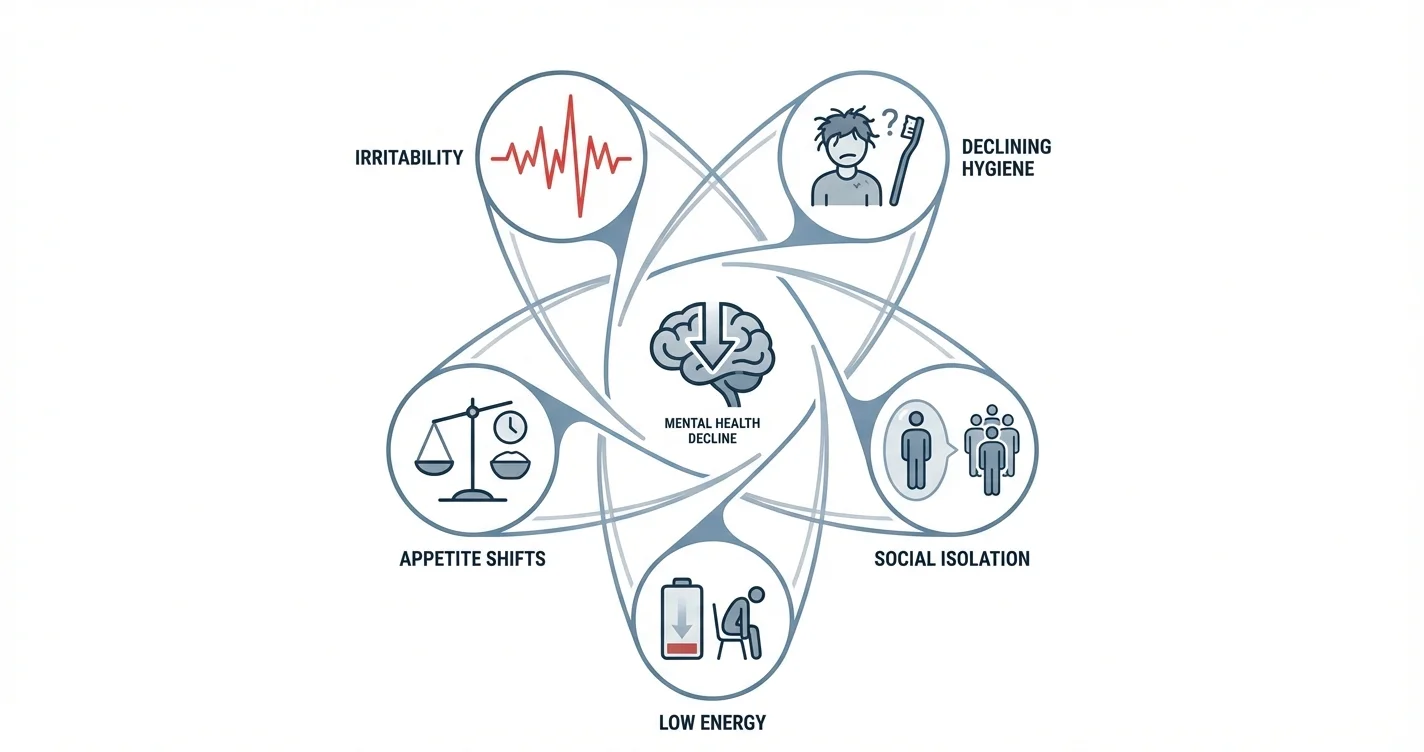
Mental Health Decline Indicators Through Irritability Changes Appetite Shifts Low Energy Social Isolation Declining Hygiene
Mental health doesn't typically deteriorate overnight. Instead, it sends signals—subtle at first, then increasingly evident—that something has shifted beneath

Key Takeaways
- Reduced emotional bandwidth for processing minor frustrations
- Sleep disruption affecting mood regulation
- Underlying anxiety creating a baseline state of tension
- Depression manifesting as irritation rather than sadness
- Overwhelm from unaddressed stressors accumulating over time
Mental Health Decline Indicators Through Irritability Changes Appetite Shifts Low Energy Social Isolation Declining Hygiene
Recognize the warning signs of worsening mental health and learn when behavioral changes signal the need for support
mental-health-decline-indicators-irritability-appetite-isolation
Introduction
Mental health doesn't typically deteriorate overnight. Instead, it sends signals—subtle at first, then increasingly evident—that something has shifted beneath the surface. Understanding mental health decline indicators through irritability changes, appetite shifts, low energy, social isolation, and declining hygiene can help you recognize when you or someone you care about needs support. These behavioral markers often appear gradually, making them easy to dismiss individually, but when viewed together, they form a clear pattern that deserves attention. This article examines the specific ways mental health challenges manifest through observable changes in behavior, drawing on expert insights from mental health practitioners who work with these patterns daily.
Recognizing these signs early creates opportunities for intervention before challenges become entrenched. While everyone experiences occasional mood fluctuations or tired days, persistent changes across multiple areas of functioning suggest something more significant may be occurring.
Understanding the Five Key Behavioral Markers of Mental Health Decline
Mental health practitioners have identified five behavioral patterns that consistently appear when someone's psychological well-being is deteriorating. These indicators matter because they represent observable changes from a person's baseline functioning rather than isolated incidents.
The five primary mental health decline indicators include increased irritability, appetite changes, persistent low energy or fatigue, social isolation, and declining personal hygiene. Research suggests that monitoring changes across multiple domains provides a more accurate picture of mental health status than focusing on any single symptom. Each indicator reflects different aspects of how psychological distress manifests in daily life—from emotional regulation to physical self-care.
What makes these markers particularly valuable is their visibility. Unlike internal experiences such as racing thoughts or emotional numbness, these behavioral changes can be noticed by others and tracked over time. This external quality means friends, family members, and individuals themselves can identify patterns that warrant attention.
Experts emphasize that the critical factor is change from usual behavior. Someone naturally introverted spending time alone doesn't signal decline, but a typically social person withdrawing from all contact does. Context matters enormously when interpreting these signs.
Irritability and Mood Changes as Mental Health Indicators
Increased irritability often appears as one of the earliest signs of declining mental health. This manifests as snapping at people over minor inconveniences, feeling disproportionately frustrated by everyday situations, or experiencing a shortened emotional fuse. Mental health professionals note that this irritability represents a change from someone's typical response patterns—the person who normally handles stress calmly suddenly reacts with sharp impatience to small disruptions.
This heightened irritability reflects the nervous system operating in a state of heightened stress. When mental health declines, the capacity to regulate emotional responses diminishes. The brain's resources become consumed managing internal distress, leaving less capacity for patience and measured responses to external stressors.
Several factors contribute to increased irritability during mental health decline:
- Reduced emotional bandwidth for processing minor frustrations
- Sleep disruption affecting mood regulation
- Underlying anxiety creating a baseline state of tension
- Depression manifesting as irritation rather than sadness
- Overwhelm from unaddressed stressors accumulating over time
For some individuals, particularly men and adolescents, irritability may be the primary outward manifestation of depression rather than visible sadness. This pattern can lead to misunderstanding when others don't recognize the irritability as a mental health symptom.
Tracking the frequency and intensity of irritable responses provides insight into whether this represents a temporary stress response or a sustained pattern indicating deeper challenges. If irritability persists for weeks and occurs alongside other indicators, it warrants closer attention and potentially professional assessment.
Appetite Changes and Their Connection to Mental Health
Changes in eating patterns—either significantly increased or decreased appetite—serve as important mental health decline indicators. These shifts occur because psychological distress directly affects the biological systems regulating hunger, satiety, and food-related behaviors. Mental health professionals observe appetite changes as one of the most consistent physical manifestations of conditions like depression and anxiety.
Some people experience appetite loss during mental health decline, finding that food holds no appeal or that anxiety creates physical sensations that suppress hunger. Others turn to food for comfort, with eating becoming a coping mechanism for managing difficult emotions. Neither pattern is inherently more concerning—both represent disruptions to normal eating regulation.
Research indicates that appetite changes affect energy levels and physical health, creating a feedback loop that can worsen mental health symptoms. Undereating may lead to nutritional deficiencies, blood sugar instability, and decreased energy, while overeating may contribute to physical discomfort, blood sugar fluctuations, and additional emotional distress about eating behaviors.
When evaluating appetite changes as mental health indicators, practitioners look for:
- Sustained changes lasting two weeks or longer
- Eating patterns that differ significantly from the person's baseline
- Weight changes (either gain or loss) that occur without intentional dietary modifications
- Eating becoming either completely mechanical or entirely emotion-driven
- Loss of pleasure in foods previously enjoyed
It's important to distinguish mental health-related appetite changes from those caused by medical conditions. Thyroid disorders, diabetes, gastrointestinal conditions, and numerous other physical health issues can affect appetite. If appetite changes appear without other mental health indicators, medical evaluation should be considered.
For individuals noticing these patterns in themselves, tools like Lovon.app can provide accessible support for processing the emotions underlying disordered eating patterns, offering a space to explore the connection between feelings and food behaviors between therapy appointments.
Low Energy and Persistent Fatigue as Warning Signs
Persistent low energy and fatigue represent one of the most debilitating yet often minimized mental health decline indicators. This isn't the ordinary tiredness that improves with rest—it's a pervasive exhaustion that affects motivation, concentration, and the ability to complete even basic tasks. Mental health practitioners describe this as feeling mentally and physically depleted regardless of sleep duration.
Studies suggest that fatigue associated with mental health conditions involves multiple mechanisms. Depression can disrupt sleep architecture, preventing restorative rest even when someone spends adequate time in bed. Anxiety creates physical tension and mental hypervigilance that drain energy reserves. The cognitive load of managing intrusive thoughts, rumination, or emotional regulation consumes substantial mental resources.
This type of fatigue affects functioning across multiple domains:
- Difficulty initiating tasks that previously felt manageable
- Reduced productivity at work or school
- Decreased participation in physical activities and hobbies
- Cognitive fatigue affecting concentration and decision-making
- Physical heaviness that makes movement feel effortful
The relationship between mental health and energy is bidirectional. While declining mental health causes fatigue, chronic fatigue also worsens mental health by limiting engagement in activities that support well-being—exercise, social connection, and meaningful pursuits. This creates a self-reinforcing cycle that can be challenging to interrupt without intervention.
When low energy persists alongside other indicators such as appetite changes or social withdrawal, it strengthens the case for professional evaluation. However, fatigue can also result from medical conditions including anemia, thyroid disorders, chronic infections, and autoimmune conditions, so comprehensive assessment should consider both psychological and physical factors.
Small behavioral experiments can help differentiate mental health-related fatigue from other causes. If energy improves slightly with brief exposure to enjoyable activities, social connection, or time outdoors, this suggests mental health factors may be contributing. Fatigue that shows no response to these interventions may warrant medical investigation.
Social Isolation and Withdrawal from Relationships
Social isolation and withdrawal from previously enjoyed relationships represent particularly significant mental health decline indicators. This pattern involves pulling away from friends, declining invitations, reducing communication, and spending increasing amounts of time alone. Mental health professionals note that this withdrawal often occurs gradually, making it easy to rationalize each individual instance while missing the overall pattern.
The mechanisms behind social withdrawal during mental health decline are complex. Depression can create a sense of disconnection from others, making social interaction feel pointless or exhausting. Anxiety may generate fears about judgment or rejection that make isolation feel safer. The cognitive distortions common in depression—beliefs like "nobody wants to hear from me" or "I'll just bring others down"—reinforce withdrawal behaviors.
Research indicates that social isolation and mental health decline create a particularly harmful feedback loop. Social connection serves as a protective factor for mental health, providing emotional support, perspective, and a sense of belonging. When someone withdraws, they lose access to these protective elements precisely when they need them most, potentially accelerating mental health deterioration.
Warning signs of problematic social isolation include:
- Canceling plans repeatedly, especially for activities previously enjoyed
- Letting friendships fade through lack of communication
- Avoiding family gatherings or declining calls from close relationships
- Making excuses to limit social contact
- Feeling relieved when plans are canceled rather than disappointed
The distinction between healthy solitude and problematic isolation lies in how it affects overall functioning and whether it represents a change from baseline patterns. Introverts naturally require alone time to recharge, but when someone who typically values social connection begins withdrawing, this signals potential mental health concerns.
Addressing social isolation often requires intentional effort despite feeling unmotivated or anxious about connection. Starting with low-pressure interactions—brief messages to friends, short walks with a trusted person, or conversations with accessible resources like Lovon.app—can help rebuild connection gradually without overwhelming someone already struggling.
Declining Hygiene and Self-Care as Mental Health Indicators
Declining personal hygiene and self-care represent some of the most visible yet stigmatized mental health decline indicators. This pattern may include showering less frequently, wearing the same clothes repeatedly, neglecting dental care, skipping grooming activities, or allowing living spaces to become disorganized. Mental health practitioners recognize these changes as reflecting the profound impact of conditions like depression on motivation and executive functioning.
The connection between mental health and hygiene involves multiple factors. Depression can make even basic self-care tasks feel overwhelmingly effortful. The executive function impairments associated with various mental health conditions affect planning, initiation, and follow-through on routine tasks. When someone's mental resources are consumed managing psychological distress, activities like showering or changing clothes can genuinely feel beyond their current capacity.
Understanding hygiene decline as a symptom rather than a choice is important for reducing stigma and responding compassionately. People experiencing this pattern typically feel distressed about it rather than indifferent, but shame about declining self-care may prevent them from seeking help or discussing the problem.
Declining hygiene often appears alongside other indicators:
- Occurs when energy levels and motivation are persistently low
- Coincides with increased social isolation (reduced external accountability)
- Worsens when depressive symptoms intensify
- May improve slightly during temporary mood uplifts, then decline again
- Often accompanied by neglect of living spaces and personal environment
For people experiencing this pattern, breaking self-care tasks into smaller steps can reduce the overwhelm that prevents initiation. Rather than "take a shower," the task becomes "turn on the bathroom light," then "turn on the water," addressing the executive function challenges that make the complete task feel impossible.
Loved ones noticing declining hygiene in someone they care about face a delicate situation. Approaching the topic with curiosity and concern rather than judgment—"I've noticed some changes and I'm worried about you"—opens conversation without increasing shame.
When to Seek Professional Help
Recognizing when mental health decline indicators warrant professional intervention is crucial for preventing further deterioration and accessing appropriate support. While occasional bad days or weeks happen to everyone, certain patterns signal the need for professional assessment and treatment.
Seek professional help when:
- Multiple indicators appear simultaneously and persist for two weeks or longer
- Daily functioning becomes significantly impaired (difficulty working, attending school, maintaining relationships)
- Symptoms progressively worsen despite self-help efforts
- Thoughts of self-harm or suicide emerge
- Substance use increases as a coping mechanism
- Physical health begins deteriorating due to neglect or stress
Several types of mental health professionals can help depending on the specific situation. Therapists and counselors provide talk therapy to address psychological patterns and develop coping strategies. Psychiatrists can evaluate whether medication might help manage symptoms. Some individuals benefit from working with both types of providers simultaneously.
For conditions involving the patterns discussed—persistent changes in irritability, appetite, energy, social engagement, and self-care—evidence suggests that professional treatment produces significantly better outcomes than attempting to manage these challenges alone. Cognitive-behavioral therapy, interpersonal therapy, and other evidence-based approaches address the thought patterns and behaviors maintaining mental health difficulties.
Between or alongside professional treatment, accessible resources like on-demand support tools provide additional help for processing emotions and working through challenges as they arise. The key is building a support system that matches the severity and nature of the difficulties being experienced.
Conclusion
Understanding mental health decline indicators through irritability changes, appetite shifts, low energy, social isolation, and declining hygiene provides a framework for recognizing when you or someone you care about needs support. These behavioral markers don't appear because someone lacks willpower or chooses to struggle—they reflect genuine changes in brain function and psychological well-being that respond to appropriate intervention.
The most important insight from mental health practitioners is that these patterns represent change from baseline functioning. A naturally quiet person spending time alone differs fundamentally from a typically social person withdrawing from all contact. Context, duration, and the presence of multiple indicators together create a clearer picture than any single sign in isolation.
If you recognize several of these patterns in yourself persisting over time, consider reaching out for professional evaluation. Mental health challenges respond well to treatment, particularly when addressed before they become deeply entrenched. Starting conversations about what you're experiencing—whether with trusted friends, family members, professionals, or accessible support resources—creates opportunities for connection and recovery that isolation prevents.
Disclaimer: This is general information, not medical advice or diagnosis. If symptoms are severe, affecting your daily life, or you're having thoughts of self-harm—seek professional help. In the US: call or text 988 (Suicide & Crisis Lifeline). For immediate danger: 911 or local emergency services.
How AI Support Helps You Heal
AI emotional support isn't about replacing human connection — it's about filling the gaps. The moments when you need to talk at 2 AM, when you don't want to burden your friends again, or when you simply need someone to listen without judgment.
Here's what happens in a typical Lovon session:
You share what's on your mind
There's no script, no intake form, no waiting room. You speak or type whatever you're feeling — in your own words, at your own pace.
Lovon validates and explores
Using frameworks from CBT (Cognitive Behavioral Therapy) and motivational interviewing, Lovon acknowledges your feelings first, then gently helps you explore them. No dismissive "just move on" advice.
You build coping skills together
Lovon doesn't just listen — it actively works with you on evidence-based techniques: thought reframing, urge surfing, behavioral experiments, and more.
What a Session with Lovon Looks Like

When to Seek Professional Help
AI support is a valuable tool, but it's not a replacement for professional care. Please consider reaching out to a licensed therapist if you experience any of the following:
- Persistent thoughts of self-harm or suicide
- Inability to perform daily activities (work, eating, sleeping) for more than 2 weeks
- Turning to alcohol or substances to cope
- Intense anger or desire to harm your ex-partner
- Complete emotional numbness that doesn't improve over time
Crisis Resources (US): If you're in immediate danger, call 988 (Suicide & Crisis Lifeline) or text HOME to 741741 (Crisis Text Line). Available 24/7, free, and confidential.
Outside the US? Find a crisis line in your country
Ready to Start?
Your healing journey can begin right now
A 7-day trial. No judgment. Just a safe space to process what you're going through.
Frequently Asked Questions
Is Lovon a replacement for a real therapist?
Is my conversation with Lovon AI private?
How is Lovon different from ChatGPT for emotional support?
Can I use Lovon if I'm already seeing a therapist?
Can I try Lovon before subscribing?
About the Author
The Lovon Editorial Team
Mental Health & Wellness Content Team
The Lovon Editorial Team develops mental health and wellness content designed to make psychological concepts accessible and actionable. Our goal is to bridge the gap between clinical research and everyday life - helping you understand why your mind works the way it does and what you can do about it....
Related articles
- How to Manage Stress as a Shift Worker (2026 Guide)
Learn how to manage stress as a shift worker in 2026 with sleep timing, light exposure, and coping tools plus 24/7 AI…
- Cyclothymia Rapid Mood Shifts: Understanding 2-3 Day Cycles
Experiencing intense emotional highs and lows that shift every few days can be confusing and exhausting. For many…
- Compassion Fatigue Signs in 2026: Are You Running on Empty
Compassion fatigue signs in 2026: numbness, dread, irritability, and withdrawal. Learn what to watch for and what to do…
- Confirmation Bias in Low Self-Awareness: Agreement Over Understanding
When someone struggles with low self-awareness, they often develop a predictable pattern: they seek out people who will…
See also
Quizzes
- Self Esteem Test: What Is Your Worth Resting On?
See what your sense of worth is resting on.
- Confidence Test: Do You Act Before You Feel Ready?
See which part of your confidence is thin.
Free tools
- How to Say No Politely (Without Over-Explaining)
A chat for how to say no politely when you have already decided and cannot get the word out. Tell it what you were…
- Attachment Trigger Plan for Anxious and Avoidant Patterns
Pick your pattern, tick the moments that set it off, and finish one card for each: your body signal, the thing you will…
From the wiki
- Why do I keep dreaming about the same person?
A recurring dream figure usually marks unfinished emotional business rather than a message about that person. Your brain…
Disclaimer: This article is for informational purposes only and does not constitute medical advice, diagnosis, or treatment. Always seek the advice of your physician or other qualified health provider with any questions you may have regarding a medical condition. If you are in crisis or think you may have an emergency, call 988 (Suicide & Crisis Lifeline) or go to the nearest emergency room. Outside the US? Find a crisis line in your country.