
What 8 Weeks of Meditation Does to Your Amygdala
See what changes in your brain after eight weeks of daily meditation, why you react less to stress, and how to build a routine that actually sticks.
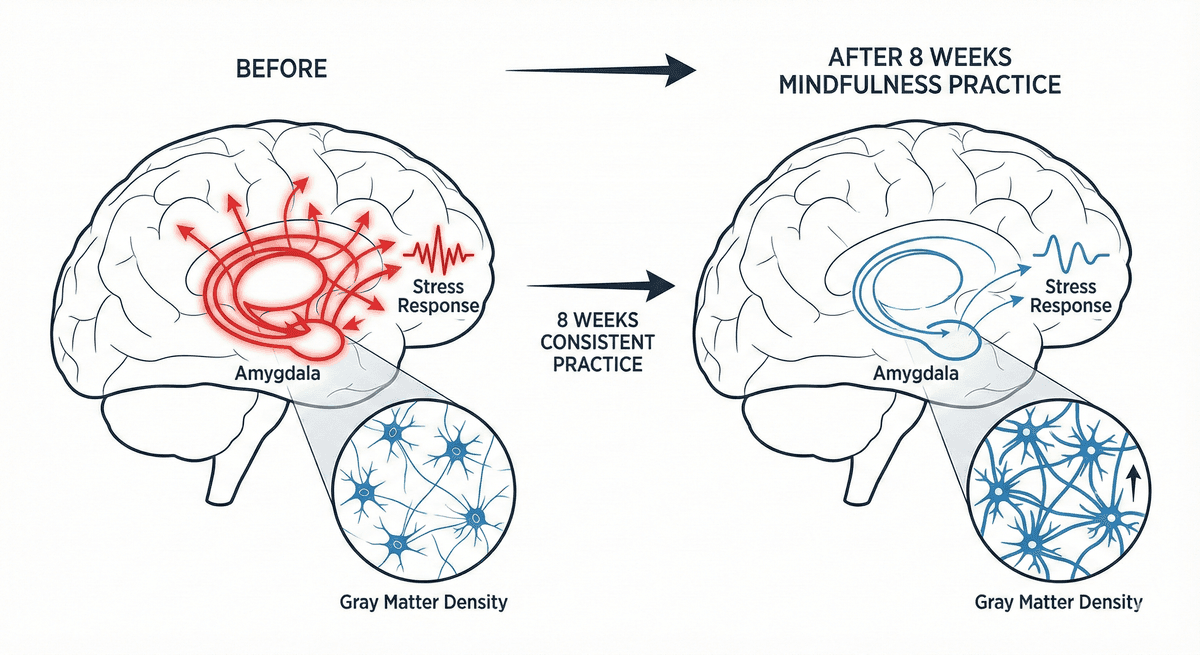

Key Takeaways
- Eight weeks of consistent mindfulness practice can produce measurable changes in brain structure and function.
- The amygdala shows decreased gray matter density and reduced reactivity to stressors after mindfulness training.
- These neural changes translate into practical benefits: improved emotional regulation and stress resilience.
Introduction
The human brain possesses a remarkable capacity to reorganize itself in response to experience, and emerging research suggests that mindfulness practice may be one of the most accessible ways to harness this neuroplasticity. Studies indicate that amygdala reactivity reduction and gray matter changes after eight weeks of mindfulness practice represent measurable transformations in the brain's structure and function. The amygdala, often described as the brain's threat-detection system, appears to become less reactive to stressors following consistent meditation training, while specific brain regions show measurable increases in gray matter density. This article examines the neurobiological mechanisms underlying these changes, drawing on scientific research and practical applications for those seeking to understand how mindfulness reshapes emotional processing at the neural level.
Understanding the Amygdala's Role in Stress and Emotional Reactivity
The amygdala comprises a collection of nuclei deep within the temporal lobes that plays a central role in processing emotional information, particularly related to threat detection and fear responses. When you encounter a potentially stressful situation—whether a looming deadline, an unexpected email, or a challenging conversation—your amygdala activates within fractions of a second, triggering a cascade of physiological responses designed to prepare you for action.
Research from neuroscience laboratories indicates that the amygdala doesn't simply respond to actual threats; it appears to react similarly to perceived psychological stressors and even anticipatory worry. This means your brain may initiate stress responses to situations that pose no physical danger, leading to chronic activation patterns that contribute to anxiety, emotional overwhelm, and difficulty regulating responses to everyday challenges.
The concept of "amygdala reactivity" refers to how readily and intensely this structure responds to emotional stimuli. Higher reactivity is associated with greater susceptibility to stress, anxiety disorders, and difficulty with emotional regulation. Conversely, reduced amygdala reactivity suggests a brain that can evaluate situations more calmly, distinguishing between genuine threats and manageable challenges—a capacity that appears to develop through mindfulness training.
Understanding this baseline helps contextualize why interventions targeting amygdala function have garnered significant research attention. When the brain's alarm system becomes more discerning rather than hypervigilant, individuals may experience improved emotional balance and resilience in their daily lives.
The Eight-Week Mindfulness Protocol and Measurable Brain Changes
Research examining gray matter changes and decreased amygdala reactivity following an eight-week mindfulness program has established this timeframe as a meaningful threshold for neuroplastic changes. The most commonly studied protocol involves structured mindfulness-based stress reduction (MBSR), which typically includes daily meditation practice ranging from body scans and breath awareness to mindful movement exercises.
Studies using magnetic resonance imaging (MRI) technology suggest that participants who complete eight weeks of consistent mindfulness practice show measurable differences in brain structure compared to control groups. These changes appear to include:
- Increased gray matter density in regions associated with learning, memory, and emotional regulation, particularly the hippocampus and posterior cingulate cortex
- Decreased gray matter density in the amygdala, correlating with participants' self-reported reductions in stress levels
- Changes in functional connectivity between the amygdala and prefrontal regions involved in executive control and emotional regulation
- Alterations in brain activity patterns during exposure to emotional stimuli, suggesting more balanced responses
The reduction in amygdala gray matter density may initially seem counterintuitive—wouldn't more brain tissue be beneficial? However, research suggests this decrease reflects a recalibration rather than damage or deterioration. The amygdala appears to become more efficient and less prone to overactivation, similar to how an overly sensitive alarm system might be adjusted to reduce false alarms while maintaining genuine protective functions.
What makes the eight-week timeframe particularly significant is that it represents a practical commitment that most people can realistically maintain. Unlike interventions requiring years of intensive practice, these neurobiological changes appear to emerge within a timeframe accessible to individuals navigating typical work and life responsibilities. However, it's important to note that the research typically involves participants committing to daily practice sessions, not occasional or sporadic meditation.
How Mindfulness Training Reduces Amygdala Reactivity
The mechanisms through which mindfulness practice produces amygdala reactivity reduction and gray matter changes appear to involve several interconnected processes. Understanding these pathways helps clarify why consistent practice over weeks, rather than a single session or sporadic attempts, generates lasting changes.
Shifting from Automatic to Mindful Responding
During mindfulness meditation, practitioners train attention on present-moment experience—breath sensations, bodily feelings, sounds—while observing thoughts and emotions without immediately reacting to them. This repeated practice appears to strengthen connections between prefrontal cortical regions involved in executive control and the amygdala, essentially building neural pathways that support "top-down" regulation of emotional responses.
When you notice anxiety arising during meditation and choose to return attention to the breath rather than following anxious thoughts, you're practicing a form of emotional regulation that may generalize beyond the meditation cushion. Over time, this capacity to observe emotional reactions without being swept away by them appears to reduce the amygdala's tendency toward hair-trigger activation.
Decreasing the Brain's Default Threat Sensitivity
The amygdala's reactivity can become heightened through chronic stress, trauma, or sustained anxiety—essentially learning to perceive threats more readily. Mindfulness practice appears to provide a counterbalancing experience: extended periods where the practitioner sits with various sensations and thoughts without needing to respond urgently to them.
Research suggests this repeated exposure to internal experiences in a safe, non-reactive context may gradually recalibrate the amygdala's threat-detection threshold. The brain may learn, through experience, that not every uncomfortable sensation or worrying thought requires immediate defensive action. This process resembles exposure-based approaches in psychotherapy, where gradual, repeated contact with feared stimuli in safe contexts can reduce fear responses over time.
Enhancing Interoceptive Awareness
Body scan practices and mindful awareness of physical sensations appear to strengthen connections between the insula—a region involved in body awareness—and regulatory brain networks. This enhanced interoceptive awareness may help individuals recognize early signs of stress activation before emotional responses intensify, creating opportunities for intervention earlier in the stress-response cascade.
When you can notice tension building in your shoulders or recognize subtle changes in breathing patterns, you gain windows of opportunity to engage coping strategies before reaching full-blown overwhelm. This early-detection capacity represents a practical benefit of the neuroplastic changes associated with mindfulness training.
Implementing a Mindfulness Practice for Neural Benefits
Understanding that eight weeks of mindfulness practice reduces amygdala reactivity and alters gray matter provides motivation, but translating this knowledge into consistent practice requires practical strategies. Research participants in studies demonstrating these neural changes typically engaged in structured daily practice, suggesting several key elements for implementation.
Establishing a Sustainable Practice Routine
The studies showing measurable brain changes generally involved participants practicing for approximately 30-45 minutes daily, though the exact duration varies across research protocols. Rather than aiming for perfection, starting with a realistic commitment and gradually building consistency appears more sustainable than attempting intensive practice that becomes difficult to maintain.
Consider these practical starting points:
- Begin with shorter sessions (10-15 minutes) and gradually increase duration as the habit solidifies
- Practice at the same time daily to leverage habit-formation mechanisms—many find mornings before daily demands accumulate to be most consistent
- Use guided meditations initially, particularly those based on established protocols like MBSR
- Create a dedicated space that signals to your brain that this time is set apart for practice
- Track practice consistency rather than subjective experience, recognizing that benefits accumulate across sessions rather than necessarily feeling transformative during individual practices
Diversifying Mindfulness Techniques
Structured mindfulness programs typically incorporate multiple approaches rather than a single technique. This variation may help maintain engagement while addressing different aspects of awareness and regulation:
Breath awareness meditation focuses attention on the natural rhythm of breathing, noticing when the mind wanders and gently returning attention to breath sensations. This fundamental practice directly trains the capacity to disengage from thought streams and redirect attention—a skill that appears central to reducing amygdala reactivity.
Body scan practices involve systematically directing attention through different body regions, noticing sensations without judgment. This approach may enhance the interoceptive awareness that supports early recognition of stress responses.
Mindful movement practices like gentle yoga or walking meditation integrate awareness with physical activity, potentially making mindfulness more accessible for those who find seated meditation challenging.
Tools like Lovon.app can complement a formal mindfulness practice by providing opportunities to process emotional experiences through reflective conversation. When something activates strong emotional reactions, talking through the experience with a free AI coach can help you observe your thought patterns and responses—a form of applied mindfulness that extends formal practice into daily life.
Navigating Common Practice Challenges
Research participants who successfully complete eight-week mindfulness programs navigate predictable obstacles that might otherwise derail consistent practice:
The "nothing's happening" experience: Neural changes occur gradually and often aren't immediately apparent during practice sessions. Understanding that the benefits accumulate across weeks rather than feeling transformative during individual sessions helps maintain commitment during periods when practice feels uneventful or even frustrating.
Increased awareness of discomfort: As mindfulness practice enhances awareness, you may initially notice more anxiety, restlessness, or uncomfortable emotions—not because practice creates these experiences, but because you're becoming more conscious of what was previously operating below awareness. This increased noticing, while sometimes uncomfortable, represents progress rather than failure.
Consistency versus intensity: Research suggests that regular, moderate practice produces more reliable neural changes than sporadic intensive sessions. Missing occasional practices is normal and expected; the pattern across weeks matters more than perfect adherence.
Understanding Individual Variation and Realistic Expectations
While research indicates that reduction in amygdala reactivity with gray matter modifications after eight weeks of mindfulness training occurs across groups of practitioners, individual experiences vary considerably. This variation reflects the complexity of neuroplasticity and the multiple factors influencing how any individual brain responds to training.
Factors Influencing Individual Responses
Several variables appear to influence the degree and speed of neural changes from mindfulness practice:
Baseline stress and trauma history: Individuals with higher baseline amygdala reactivity—often associated with chronic stress or trauma—may experience more dramatic changes, though they might also encounter more challenging experiences during practice. Some people find that mindfulness practice brings up difficult emotions or memories that may benefit from professional support to process effectively.
Practice consistency and quality: The degree of engagement during practice—not just time spent—appears relevant. Spending 30 minutes mentally planning your day while sitting on a meditation cushion differs significantly from 30 minutes of genuinely engaged awareness practice.
Genetic and neurobiological factors: Research in contemplative neuroscience suggests that genetic variations and baseline brain organization influence how readily individuals' brains reorganize in response to mindfulness training. Some people may show more pronounced changes with less practice, while others may require longer sustained effort.
Concurrent life circumstances: Attempting to establish mindfulness practice while navigating major life stressors, sleep deprivation, or significant health challenges may influence both consistency and the rate of observable benefits.
Recognizing When Additional Support Is Helpful
Mindfulness practice represents one evidence-based approach to supporting emotional regulation and stress resilience, but it's not universally appropriate as a standalone intervention. Some situations benefit from integration with other forms of support:
When anxiety, depression, or emotional overwhelm significantly interferes with daily functioning, working with a mental health professional provides assessment and treatment planning that mindfulness practice can complement but not replace. Certain mental health conditions, including some trauma-related disorders, may require specialized therapeutic approaches before or alongside mindfulness training.
Similarly, when relationship conflicts, life transitions, or recurring interpersonal patterns contribute to stress, talking through these experiences can provide insight that deepens mindfulness practice. Resources like Lovon.app offer accessible opportunities to process emotional experiences and identify patterns between more formal therapeutic sessions, extending the reflective awareness cultivated in meditation into the complexity of daily relationships and decisions.
For those managing chronic pain or medical conditions, consulting with healthcare providers about integrating mindfulness-based approaches ensures coordination with medical treatment rather than attempting self-management of conditions requiring professional oversight.
Maintaining Neural Changes and Long-Term Practice
Research examining gray matter changes and decreased amygdala reactivity following eight-week mindfulness programs naturally raises questions about maintenance: do these neural changes persist if practice stops, or does sustaining benefits require ongoing commitment?
The Trajectory of Neural Changes Beyond Eight Weeks
While studies documenting measurable brain changes after eight weeks have established this timeframe as a meaningful threshold, research into longer-term practitioners suggests that neural benefits may deepen with continued practice. Some studies indicate that experienced meditators with years of practice show more pronounced differences in brain structure and function compared to those with several months of experience.
However, the relationship between practice duration and neural changes doesn't appear strictly linear. Some research suggests that initial practice produces relatively rapid changes, with subsequent practice maintaining and refining these alterations rather than producing continuously increasing magnitude of change indefinitely.
Integrating Mindfulness Into Daily Life
Sustaining the neural benefits associated with formal meditation practice appears to involve two complementary approaches: maintaining some level of formal practice while also integrating mindful awareness into daily activities.
Even practitioners who don't maintain the intensive daily practice characteristic of initial training periods may preserve many benefits by incorporating shorter regular sessions—perhaps 15-20 minutes several times weekly. This maintenance practice appears sufficient for many people to sustain reduced amygdala reactivity and preserve changes in emotional regulation capacity.
Additionally, extending mindfulness principles beyond formal practice—bringing full attention to routine activities like eating, walking, or conversations—may help maintain the neural pathways strengthened during meditation. This integration represents the practical application of amygdala reactivity reduction: navigating daily challenges with greater awareness and less automatic reactivity.
Building Sustainable Long-Term Practice
Research on meditation adherence suggests several factors that support long-term maintenance:
Connecting practice to values and meaningful goals rather than purely outcome-focused motivation helps maintain commitment during periods when immediate benefits feel less apparent. Understanding why mindfulness matters to you—whether supporting important relationships, managing health challenges, or cultivating qualities you value—provides motivation beyond symptom reduction.
Participating in communities of practice, whether in-person meditation groups or online communities, appears to support sustained engagement. The social dimension of practice provides both accountability and normalized expectations around the challenges and variations inherent in long-term meditation.
Adapting practice to life circumstances rather than abandoning it during busy or challenging periods helps maintain continuity. A 10-minute practice during overwhelming weeks preserves the thread of consistency, making it easier to return to longer sessions when circumstances allow.
Conclusion
The evidence that amygdala reactivity reduction and gray matter changes after eight weeks of mindfulness practice represent measurable neural transformations offers compelling support for meditation as a tool for emotional regulation and stress resilience. Research indicates that consistent practice over this timeframe may produce decreased amygdala reactivity alongside structural brain changes in regions involved in learning, memory, and emotional processing. These neurobiological alterations appear to translate into practical benefits: greater capacity to respond rather than react to stressors, improved emotional balance, and enhanced resilience in navigating daily challenges.
Understanding the mechanisms through which mindfulness reshapes emotional processing—strengthening regulatory brain networks, recalibrating threat-detection systems, and enhancing awareness of internal experiences—clarifies why consistent practice over weeks generates lasting changes. For those seeking to harness these benefits, establishing a sustainable daily practice that incorporates various mindfulness techniques while navigating common challenges represents a practical path forward. Tools that support emotional processing and self-reflection can complement formal meditation practice, extending mindful awareness into the complexity of relationships and daily decisions.
If you're interested in building this practice, start with a realistic commitment you can sustain, recognizing that the neural benefits accumulate through consistency across weeks rather than intensity during individual sessions. The brain's capacity to reorganize in response to experience represents one of its most remarkable features—one that mindfulness practice appears uniquely positioned to engage.
Disclaimer:
This is general information, not medical advice or diagnosis. If symptoms are severe, affecting your daily life, or you're having thoughts of self-harm — seek professional help. In the US: call or text 988 (Suicide & Crisis Lifeline). For immediate danger: 911 or local emergency services.
How AI Support Helps You Heal
AI emotional support isn't about replacing human connection — it's about filling the gaps. The moments when you need to talk at 2 AM, when you don't want to burden your friends again, or when you simply need someone to listen without judgment.
Here's what happens in a typical Lovon session:
You share what's on your mind
There's no script, no intake form, no waiting room. You speak or type whatever you're feeling — in your own words, at your own pace.
Lovon validates and explores
Using frameworks from CBT (Cognitive Behavioral Therapy) and motivational interviewing, Lovon acknowledges your feelings first, then gently helps you explore them. No dismissive "just move on" advice.
You build coping skills together
Lovon doesn't just listen — it actively works with you on evidence-based techniques: thought reframing, urge surfing, behavioral experiments, and more.
What a Session with Lovon Looks Like

When to Seek Professional Help
AI support is a valuable tool, but it's not a replacement for professional care. Please consider reaching out to a licensed therapist if you experience any of the following:
- Persistent thoughts of self-harm or suicide
- Inability to perform daily activities (work, eating, sleeping) for more than 2 weeks
- Turning to alcohol or substances to cope
- Intense anger or desire to harm your ex-partner
- Complete emotional numbness that doesn't improve over time
Crisis Resources (US): If you're in immediate danger, call 988 (Suicide & Crisis Lifeline) or text HOME to 741741 (Crisis Text Line). Available 24/7, free, and confidential.
Outside the US? Find a crisis line in your country
Ready to Start?
Your healing journey can begin right now
A 7-day trial. No judgment. Just a safe space to process what you're going through.
Frequently Asked Questions
Is Lovon a replacement for a real therapist?
Is my conversation with Lovon AI private?
How is Lovon different from ChatGPT for emotional support?
Can I use Lovon if I'm already seeing a therapist?
Can I try Lovon before subscribing?
About the Author

The Lovon Editorial Team
Mental Health & Wellness Content Team
The Lovon Editorial Team develops mental health and wellness content designed to make psychological concepts accessible and actionable. Our goal is to bridge the gap between clinical research and everyday life - helping you understand why your mind works the way it does and what you can do about it....
Related articles
- Best AI for ADHD: Tools That Help You Focus (2026)
The best AI for ADHD in 2026 — from task-breakdown tools to emotional support apps. Find out which tools match how an…
- EMDR Therapy Using Bilateral Stimulation for Trauma Memory Processing
EMDR Therapy Using Bilateral Stimulation for Trauma Memory Processing
- Amygdala Hijack: What It Is & How to Stop It (2026)
An amygdala hijack fires in under 200ms, overriding rational thought. Learn the 7-step sequence to recognize, interrupt…
- Polyvagal Theory Applications for Stress Response
Your heart races before a difficult conversation. Your stomach tightens during conflict. You feel exhausted after a…
See also
Quizzes
- Empath Test: Do Other People's Moods Become Yours?
See how much of other people's moods you take on.
- Alexithymia Test: Can You Name What You Feel?
See where your feelings lose their names, in 3 minutes.
Free tools
- How to Reconnect With an Old Friend
A chat for how to reconnect with an old friend, starting with the text you have been meaning to send for a year. Tell it…
- Am I Overreacting, or Is This a Big Deal?
A chat for the small thing you cannot stop turning over. Say what happened and what you have already told yourself about…
From the wiki
- What to do if you have no friends?
Pick one activity that repeats weekly with the same people, and go for six to eight weeks straight. Repetition, not…
Disclaimer: This article is for informational purposes only and does not constitute medical advice, diagnosis, or treatment. Always seek the advice of your physician or other qualified health provider with any questions you may have regarding a medical condition. If you are in crisis or think you may have an emergency, call 988 (Suicide & Crisis Lifeline) or go to the nearest emergency room. Outside the US? Find a crisis line in your country.