
ADHD with Comorbid Anxiety and Depression Cycles Affecting Self-Esteem
Living with ADHD becomes exponentially more challenging when anxiety and depression enter the picture. For many people navigating ADHD with comorbid anxiety
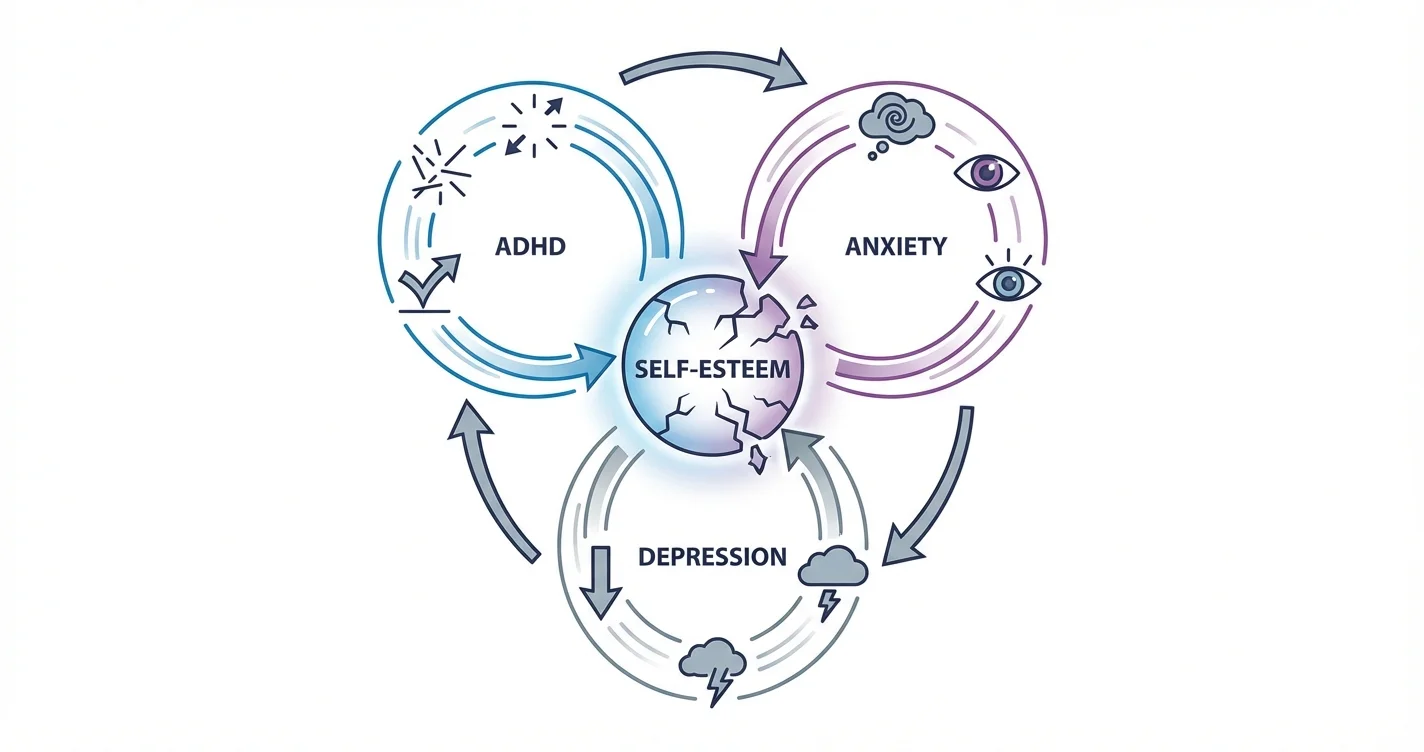

Key Takeaways
- ADHD symptoms emerge: Difficulty focusing leads to incomplete work, forgotten appointments, or impulsive decisions
- Anxiety response activates: Worry about consequences intensifies, catastrophic thinking develops, and hypervigilance
- Avoidance and paralysis: Anxiety becomes so uncomfortable that avoidance seems like the only option, leading to
- Depression deepens: The accumulation of uncompleted tasks and unmet responsibilities triggers negative
- Executive function worsens: Depression further impairs already compromised executive function, making ADHD symptoms
ADHD with Comorbid Anxiety and Depression Cycles Affecting Self-Esteem
Understanding how overlapping mental health conditions create compounding challenges for confidence and self-worth
adhd-comorbid-anxiety-depression-self-esteem
Introduction
Living with ADHD becomes exponentially more challenging when anxiety and depression enter the picture. For many people navigating ADHD with comorbid anxiety and depression cycles affecting self-esteem, each condition amplifies the others in ways that create a seemingly inescapable loop. The executive function difficulties of ADHD lead to missed deadlines and forgotten commitments, which trigger anxiety about future performance. That anxiety creates paralysis and avoidance, which then fuels depressive thoughts about personal worth. As this cycle repeats, self-esteem erodes gradually but persistently.
Research indicates that comorbidity rates between ADHD and mood disorders are substantially higher than chance would predict, suggesting shared neurobiological pathways and mutually reinforcing symptom patterns. Understanding how these conditions interact—and specifically how their cyclical nature damages self-esteem—is essential for developing effective coping strategies and seeking appropriate support.
The Neurobiology Behind Comorbid ADHD, Anxiety, and Depression
The overlap between ADHD, anxiety disorders, and depression involves multiple interconnected brain systems. ADHD primarily affects executive function networks involving the prefrontal cortex, which regulate attention, impulse control, and working memory. These same regions play critical roles in emotional regulation—a function that becomes compromised when ADHD is present.
Anxiety and depression involve dysregulation in emotional processing centers and stress response systems. When someone has ADHD alongside these conditions, the executive function deficits make it harder to employ cognitive strategies that might otherwise help manage anxious or depressive thoughts. The brain struggles simultaneously with attention regulation, emotional processing, and stress response—creating a perfect storm for psychological distress.
Neuroimaging studies suggest that individuals with comorbid conditions show altered connectivity patterns between executive control networks and emotional processing regions. This neurobiological reality means that what might seem like simple tasks to others—organizing a schedule, initiating a difficult project, or managing worry—become genuinely harder when multiple conditions are present. Understanding this helps combat the self-blame that often accompanies these struggles.
The neurotransmitter systems involved in ADHD (particularly dopamine and norepinephrine) also play roles in mood regulation. Disruptions in these systems may contribute to the high comorbidity rates observed clinically, though the precise mechanisms remain an active area of research.
How Anxiety and Depression Cycles Impact Self-Esteem in People with ADHD
The cyclical relationship between ADHD symptoms, anxiety, and depression creates a particularly destructive pattern for self-esteem. This cycle typically unfolds in predictable stages, though the specific triggers and sequence may vary between individuals.
The typical cycle progression includes:
- ADHD symptoms emerge: Difficulty focusing leads to incomplete work, forgotten appointments, or impulsive decisions that create problems
- Anxiety response activates: Worry about consequences intensifies, catastrophic thinking develops, and hypervigilance about future mistakes increases
- Avoidance and paralysis: Anxiety becomes so uncomfortable that avoidance seems like the only option, leading to procrastination or task avoidance
- Depression deepens: The accumulation of uncompleted tasks and unmet responsibilities triggers negative self-evaluation and hopelessness
- Executive function worsens: Depression further impairs already compromised executive function, making ADHD symptoms more severe
- Self-esteem erodes: Each cycle repetition reinforces beliefs about personal inadequacy, unreliability, or fundamental brokenness
What makes this particularly damaging is that each component of the cycle provides apparent evidence for negative self-beliefs. The person with ADHD who struggles to complete projects has concrete proof of their "inability to follow through." The resulting anxiety seems justified given their track record. The depression feels like an appropriate response to genuine failures. Self-esteem damage from co-occurring ADHD, anxiety, and depression patterns becomes embedded in what appears to be objective reality.
External responses compound this internal cycle. When others express frustration about forgotten commitments or incomplete work, it confirms negative self-perceptions. When well-meaning people offer advice to "just focus" or "stop worrying," it reinforces the belief that the struggle represents a character flaw rather than a neurobiological challenge.
Self-Esteem Issues From ADHD Combined With Anxiety-Depression Cycles
The specific ways that comorbid conditions erode self-esteem differ from the self-esteem challenges of any single condition alone. Self-esteem issues from ADHD combined with anxiety-depression cycles create several distinct patterns.
Chronic Underachievement Relative to Potential
Many people with ADHD possess considerable talents and intelligence but struggle to translate these capabilities into consistent achievement. When anxiety and depression join the picture, the gap between potential and performance widens further. This creates a painful awareness of what could be possible if the barriers weren't present, leading to persistent feelings of personal failure and wasted potential.
The internal experience becomes: "I know I'm capable of more, which makes my current situation proof that I'm lazy, unmotivated, or broken." This self-judgment ignores the genuine neurological barriers present but feels emotionally true given the visible gap between capacity and output.
Relationship Strain and Social Withdrawal
ADHD symptoms like forgetfulness, emotional dysregulation, and impulsivity can strain relationships. When anxiety amplifies sensitivity to rejection and depression reduces motivation for social connection, people often withdraw from relationships preemptively to avoid anticipated criticism or abandonment. This isolation then confirms depressive beliefs about being unlikeable or burdensome.
The cyclical anxiety and depression affecting confidence in ADHD patients shows up particularly in social contexts. Social invitations trigger anxiety about forgetting details or saying something impulsive. The resulting avoidance leads to fewer social connections, which feeds depression and loneliness, further lowering self-esteem and confidence in social capabilities.
Identity Confusion and Self-Concept Disruption
When someone has lived with undiagnosed or poorly managed comorbid conditions, they often develop a confused or negative self-concept. They may genuinely not know which aspects of their personality reflect their authentic self versus which are symptoms of their conditions. "Am I actually an anxious person, or is that my ADHD-triggered rejection sensitivity? Is my pessimism who I am, or is that depression talking?"
This identity confusion makes it difficult to develop stable self-esteem because the foundation of self-understanding remains uncertain. Tools like Lovon.app can help people process these questions through voice-based conversations that help clarify patterns and distinguish symptoms from core identity, though professional therapy remains essential for addressing these deeper identity questions.
Shame Spirals and Internalized Stigma
Repeated experiences of falling short of expectations—whether self-imposed or external—create deep shame. ADHD comorbid mental health conditions impacting self-worth and self-esteem often involve internalized beliefs about being fundamentally flawed. Society's messages about mental health, productivity, and personal responsibility get internalized, creating an internal critic that attributes all struggles to personal failure rather than recognizing neurobiological realities.
This internalized stigma makes it harder to seek help or extend self-compassion. The depression-anxiety cycles with ADHD hurting self-esteem become self-perpetuating partly because shame prevents people from accessing the very support that might break the cycle.
Strategies for Breaking the Cycle and Rebuilding Self-Esteem
While the comorbid presentation of ADHD, anxiety, and depression creates substantial challenges, specific strategies can help interrupt the destructive cycles and gradually rebuild self-esteem.
Accurate Understanding and Psychoeducation
Learning about how these conditions interact neurobiologically helps externalize struggles that previously seemed like character flaws. Understanding that executive function genuinely becomes impaired, that anxiety physiologically triggers avoidance, and that depression affects motivation creates space for self-compassion rather than self-blame.
Psychoeducation should include learning about your specific symptom patterns. Keeping a journal that tracks when ADHD symptoms spike, what triggers anxiety, and how depression manifests helps identify your personal cycle. This awareness makes intervention possible before the full cycle completes.
Targeted Treatment for Each Condition
Effective management typically requires addressing each comorbid condition, not just one. This might involve working with healthcare providers to discuss medication options that target both ADHD and mood symptoms, since some treatment approaches may help multiple conditions while others work better for specific symptoms.
Therapy approaches that specifically address comorbid presentations—such as cognitive-behavioral therapy adapted for ADHD or dialectical behavior therapy for emotional regulation—can be particularly helpful. Some people find that addressing ADHD symptoms first provides enough executive function improvement that they can then more effectively engage with anxiety and depression treatment.
Small Systems and External Supports
When executive function is compromised, relying on willpower or memory alone sets up failure. Creating external systems—visual reminders, phone alarms, body-doubling arrangements, or accountability partnerships—reduces the executive function load and prevents the initial ADHD-related failures that trigger the anxiety-depression cycle.
These systems shouldn't be viewed as crutches but rather as appropriate accommodations for genuine neurological differences. Using calendar alerts doesn't mean you're incapable; it means you're working skillfully with your brain's actual functioning.
Compassionate Self-Talk and Cognitive Reframing
The internal narrative that accompanies ADHD with comorbid anxiety and depression cycles affecting self-esteem tends to be harsh and absolutist. Actively practicing self-compassion—speaking to yourself as you would to a friend facing similar challenges—helps interrupt shame spirals.
Cognitive reframing involves challenging automatic negative thoughts by examining evidence and considering alternative explanations. When you think "I'm completely unreliable," the reframe might be "I struggle with time management due to ADHD, and I'm working on systems to improve this." This isn't toxic positivity but rather accurate thinking that accounts for neurobiological context.
Connection and Support
Isolation amplifies all symptoms and accelerates self-esteem erosion. Finding communities—whether ADHD support groups, therapy groups, or online communities—where others understand these struggles provides normalization and reduces shame. Hearing others describe similar experiences helps combat the belief that you're uniquely broken.
On-demand support tools like Lovon.app can provide accessible options for processing emotions and working through difficult moments between therapy sessions or when traditional support isn't available. Having someone—or something—to talk through a anxiety spike or depressive thought pattern can help interrupt cycles before they fully develop.
When to Seek Professional Help
If you're experiencing ADHD with comorbid anxiety and depression, professional support is strongly recommended, particularly if:
- Symptoms significantly interfere with work, school, or relationship functioning
- You experience persistent thoughts of self-harm or suicide
- Previous self-help strategies haven't created meaningful improvement
- You're unsure whether your symptoms represent ADHD, anxiety, depression, or other conditions
- Substance use has become a coping mechanism
- Physical health is being affected (sleep disruption, appetite changes, chronic tension)
Mental health professionals who specialize in ADHD and comorbid conditions—including psychiatrists, psychologists, clinical social workers, and licensed counselors—can provide comprehensive assessment and evidence-based treatment. Neuropsychological testing can sometimes clarify the specific nature and severity of executive function challenges, helping guide treatment planning.
Don't wait until you're in crisis to seek support. Early intervention typically produces better outcomes and can prevent the cycle from becoming more deeply entrenched.
Conclusion
Understanding how ADHD with comorbid anxiety and depression cycles affecting self-esteem reveals why these conditions create such profound challenges. The interaction between executive function deficits, anxiety responses, and depressive patterns creates self-reinforcing cycles that systematically erode confidence and self-worth. Each condition makes the others worse, and the accumulated impact on self-esteem can feel overwhelming.
However, recognizing these patterns is the first step toward breaking them. When you understand that your struggles reflect neurobiological realities rather than personal failures, self-compassion becomes possible. When you implement appropriate treatments, external supports, and coping strategies tailored to comorbid presentations, the cycles can be interrupted. Self-esteem rebuilds gradually as you develop more accurate self-understanding and experience increasing capability through appropriate support.
If you're navigating these challenges, remember that you're dealing with genuinely difficult neurobiological conditions that would challenge anyone. Seeking professional help, building support systems, using tools like Lovon.app for additional processing support, and extending yourself the compassion you'd offer others are all steps toward breaking the cycle and reclaiming your sense of self-worth.
Disclaimer: This is general information, not medical advice or diagnosis. If symptoms are severe, affecting your daily life, or you're having thoughts of self-harm—seek professional help. In the US: call or text 988 (Suicide & Crisis Lifeline). For immediate danger: 911 or local emergency services.
How AI Support Helps You Heal
AI emotional support isn't about replacing human connection — it's about filling the gaps. The moments when you need to talk at 2 AM, when you don't want to burden your friends again, or when you simply need someone to listen without judgment.
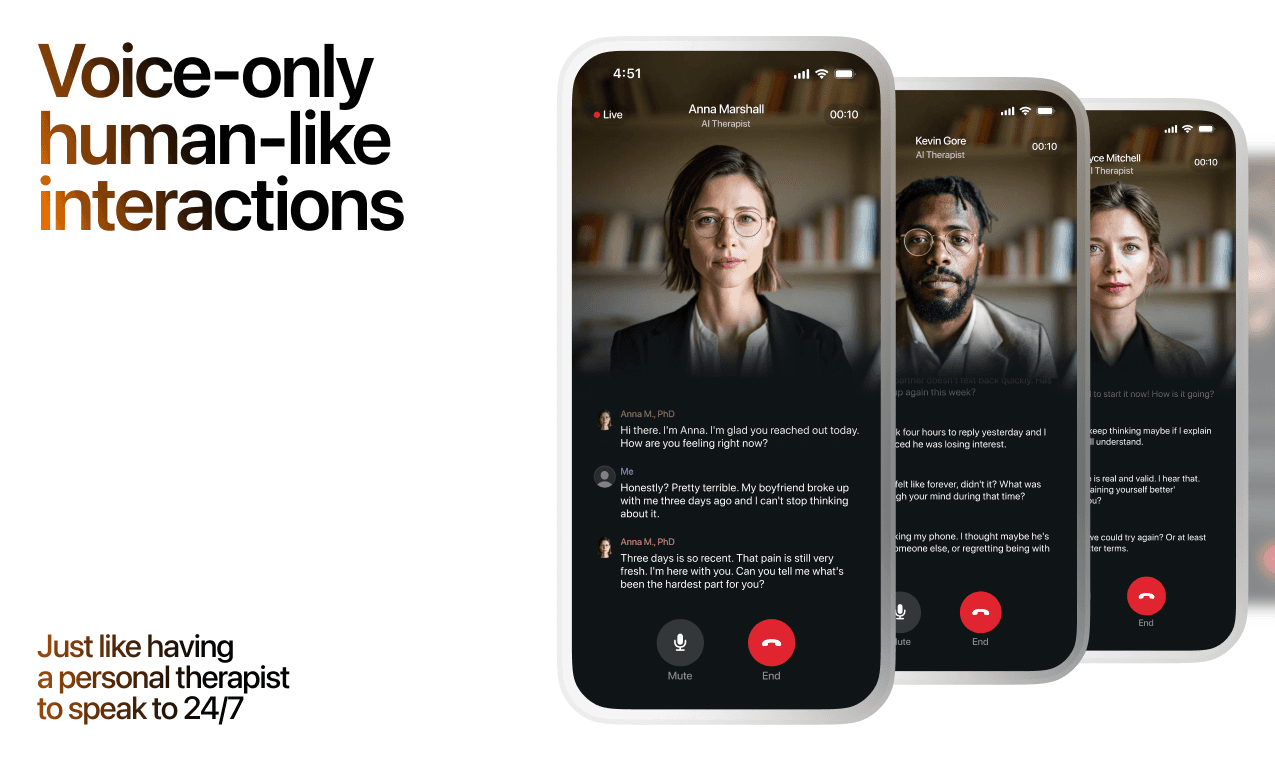
Here's what happens in a typical Lovon session:
You share what's on your mind
There's no script, no intake form, no waiting room. You speak or type whatever you're feeling — in your own words, at your own pace.
Lovon validates and explores
Using frameworks from CBT (Cognitive Behavioral Therapy) and motivational interviewing, Lovon acknowledges your feelings first, then gently helps you explore them. No dismissive "just move on" advice.
You build coping skills together
Lovon doesn't just listen — it actively works with you on evidence-based techniques: thought reframing, urge surfing, behavioral experiments, and more.
What a Session with Lovon Looks Like
When to Seek Professional Help
AI support is a valuable tool, but it's not a replacement for professional care. Please consider reaching out to a licensed therapist if you experience any of the following:
- Persistent thoughts of self-harm or suicide
- Inability to perform daily activities (work, eating, sleeping) for more than 2 weeks
- Turning to alcohol or substances to cope
- Intense anger or desire to harm your ex-partner
- Complete emotional numbness that doesn't improve over time
Crisis Resources (US): If you're in immediate danger, call 988 (Suicide & Crisis Lifeline) or text HOME to 741741 (Crisis Text Line). Available 24/7, free, and confidential.
Outside the US? Find a crisis line in your country
Ready to Start?
Your healing journey can begin right now
A 7-day trial. No judgment. Just a safe space to process what you're going through.
Frequently Asked Questions
Is Lovon a replacement for a real therapist?
Is my conversation with Lovon AI private?
How is Lovon different from ChatGPT for emotional support?
Can I use Lovon if I'm already seeing a therapist?
Can I try Lovon before subscribing?
About the Author

The Lovon Editorial Team
Mental Health & Wellness Content Team
The Lovon Editorial Team develops mental health and wellness content designed to make psychological concepts accessible and actionable. Our goal is to bridge the gap between clinical research and everyday life - helping you understand why your mind works the way it does and what you can do about it....
Related articles
- ADHD and Anxiety: How the Two Conditions Overlap (2026)
ADHD and anxiety share symptoms but have different causes. Learn how they feed each other and what daily strategies…
- AI Therapy for ADHD Emotional Regulation 2026
AI therapy for ADHD gives you on-demand voice support for emotional dysregulation, RSD, and mood swings. See which tools…
- Best Apps for ADHD Adults in 2026 — Ranked
The best apps for ADHD adults in 2026, ranked by emotional support, task management, and ADHD-informed design. Lovon…
- ADHD Time Blindness: Why It Happens & How to Cope (2026)
ADHD time blindness is a neurological wiring difference, not laziness. Learn what causes it and 7 practical coping steps…
See also
Quizzes
- Loneliness Test: Free 12-Question Self-Check
See which kind of loneliness is thin, in 3 minutes.
- Perfectionism Test: What Are Your Standards Costing?
See what your standards actually cost, in 3 minutes.
Free tools
- Self-Esteem Check-In
Eight statements, one read on three sides of self-esteem: your self-talk, how you act with people, and what you do with…
- Attachment Trigger Plan for Anxious and Avoidant Patterns
Pick your pattern, tick the moments that set it off, and finish one card for each: your body signal, the thing you will…
From the wiki
- Why do I have no friends?
Usually nothing is wrong with you. Adult friendship runs on proximity and repetition, and most people lose both at once…
Disclaimer: This article is for informational purposes only and does not constitute medical advice, diagnosis, or treatment. Always seek the advice of your physician or other qualified health provider with any questions you may have regarding a medical condition. If you are in crisis or think you may have an emergency, call 988 (Suicide & Crisis Lifeline) or go to the nearest emergency room. Outside the US? Find a crisis line in your country.