
ADHD Sleep Cycle Disruption: Melatonin Delay and Bedtime Procrastination Patterns
Understanding how attention regulation difficulties interfere with natural sleep timing and the nightly wind-down process

Key Takeaways
- Difficulty with transitions: Shifting from a stimulating activity to the quiet of bedtime requires executive
- Time blindness: Poor perception of time passing means "just five more minutes" easily becomes an hour. Without an
- Revenge bedtime procrastination: After a day of managing demands and time constraints, late evening may feel like
- Stimulation-seeking: As natural melatonin levels remain low, the brain doesn't receive strong "wind down" signals.
Introduction
Sleep problems affect a substantial portion of people with ADHD, often creating a frustrating cycle that worsens daytime symptoms. ADHD sleep cycle disruption stems from biological timing differences—particularly delayed melatonin production—combined with behavioral patterns like bedtime procrastination that make it difficult to fall asleep at a conventional hour. This isn't simply a matter of poor sleep hygiene or willpower. Research suggests that ADHD involves fundamental differences in how the brain regulates circadian rhythms and manages the transition from wakefulness to sleep. Understanding these interconnected mechanisms can help explain why standard sleep advice often falls short for people with ADHD, and what strategies may actually help. This article examines the neurobiological and behavioral factors behind ADHD-related sleep disturbances, drawing on current understanding of circadian biology and attention regulation.
The Biology Behind ADHD Sleep Cycle Disruption
The relationship between ADHD and sleep disruption operates at multiple levels, from neurotransmitter systems to circadian clock mechanisms. People with ADHD appear to have altered patterns of melatonin production—the hormone that signals to the body that it's time for sleep. Studies indicate that melatonin release may be delayed in many individuals with ADHD, meaning their biological signal for sleep arrives later than in neurotypical individuals.
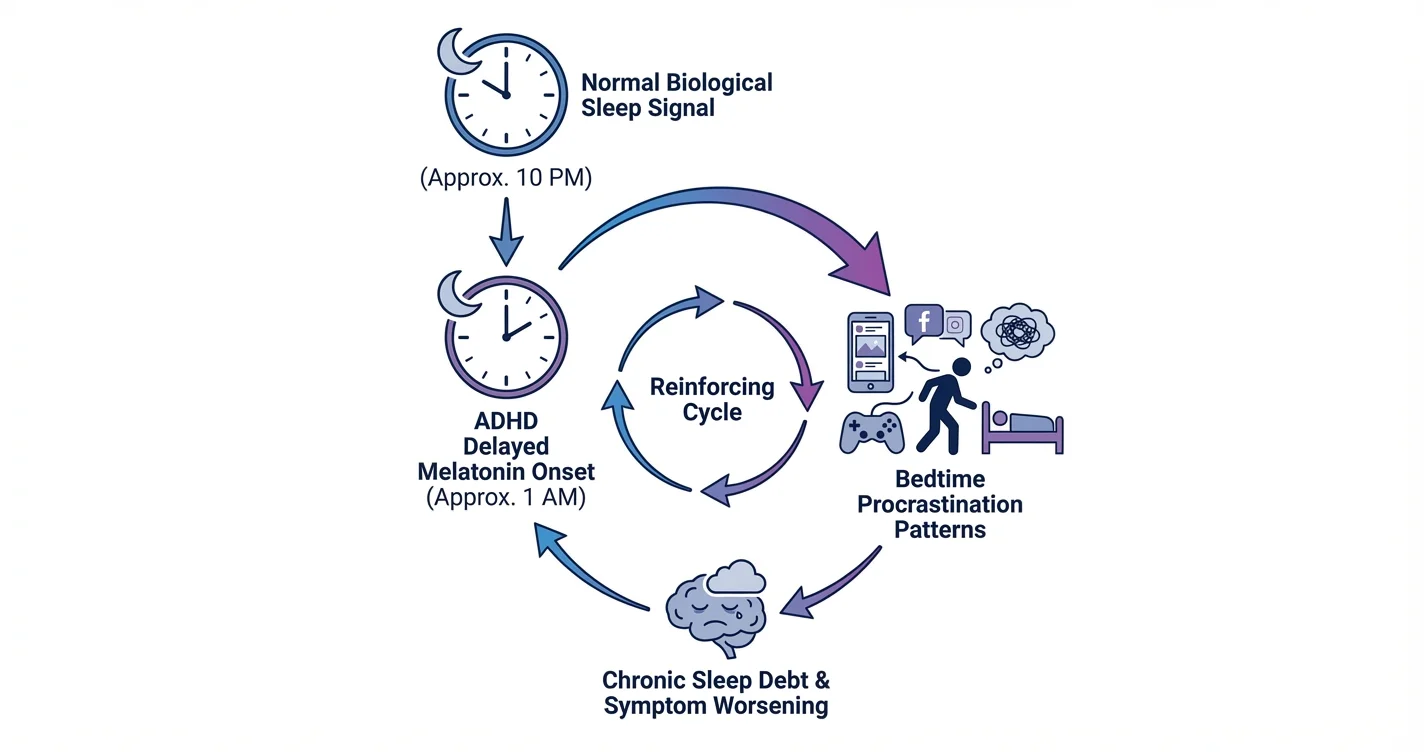
This delayed melatonin timing isn't just about staying up late. It represents a genuine shift in the body's internal clock, creating what researchers describe as a delayed sleep phase. When melatonin production is postponed, the entire sleep-wake cycle shifts later. Someone with this pattern may not feel genuinely sleepy until well past midnight, regardless of when they need to wake up in the morning. This creates chronic sleep debt when morning obligations remain fixed.
The dopamine system—already implicated in ADHD—also plays a role in circadian regulation. Dopamine influences the suprachiasmatic nucleus, the brain's master clock, and affects how light exposure and other time cues reset daily rhythms. Differences in dopamine signaling may contribute to less stable circadian rhythms in ADHD, making it harder to maintain consistent sleep-wake patterns. Additionally, arousal regulation difficulties mean that stimulating activities or thoughts can more easily override sleepiness signals, even when the body is physiologically ready for sleep.
Melatonin Delay and Bedtime Procrastination in ADHD Sleep Disruption
While biological timing differences create the foundation for sleep problems, behavioral patterns amplify them. Bedtime procrastination—delaying sleep despite having the opportunity and intention to sleep—is particularly common in ADHD. This isn't the same as insomnia, where someone wants to sleep but cannot. Instead, it's an active (though often unintentional) postponement of bedtime through continued engagement in activities.
Several mechanisms drive bedtime procrastination in ADHD:
-
Difficulty with transitions: Shifting from a stimulating activity to the quiet of bedtime requires executive function skills that ADHD affects. The mental effort needed to stop what you're doing and begin a wind-down routine can feel overwhelming.
-
Time blindness: Poor perception of time passing means "just five more minutes" easily becomes an hour. Without an accurate internal sense of duration, bedtime repeatedly gets pushed back.
-
Revenge bedtime procrastination: After a day of managing demands and time constraints, late evening may feel like the only genuinely discretionary time. Sacrificing sleep to claim this personal time becomes a pattern, even when someone recognizes it's counterproductive.
-
Stimulation-seeking: As natural melatonin levels remain low, the brain doesn't receive strong "wind down" signals. Without that biological pull toward sleep, seeking out more stimulation (scrolling, gaming, researching topics) feels more compelling than preparing for bed.
These behavioral patterns interact with delayed melatonin timing in a reinforcing cycle. Staying up late further delays circadian rhythms, making it even harder to feel sleepy at an earlier time the next night. Bright screen exposure in the evening suppresses whatever melatonin is being produced, extending the delay. The combination creates a progressively later sleep schedule that becomes difficult to shift forward.
How Sleep Disruption Compounds ADHD Symptoms
Sleep deprivation doesn't just cause fatigue—it specifically impairs the executive functions that ADHD already affects. Even moderate sleep debt worsens attention regulation, impulse control, emotional regulation, and working memory. For someone with ADHD, inadequate sleep can make symptoms significantly more pronounced.
Research indicates that the prefrontal cortex—critical for executive functions—is particularly vulnerable to sleep loss. After poor sleep, people with ADHD may experience heightened distractibility, more difficulty initiating tasks, increased emotional reactivity, and greater impulsivity. These intensified symptoms make it even harder to implement evening routines or resist bedtime procrastination, perpetuating the cycle.
The relationship works both ways. ADHD symptoms during the day can increase stress and mental exhaustion, which paradoxically may make it harder to sleep despite feeling tired. A day spent struggling with focus and task management can leave the nervous system in a state of elevated arousal that doesn't easily resolve at bedtime. Some individuals describe feeling simultaneously exhausted and "wired"—physically tired but mentally unable to settle.
Chronic sleep disruption also affects mood regulation over time. Emerging research suggests associations between inadequate sleep and increased anxiety and depression symptoms, both of which commonly co-occur with ADHD. The cumulative effect can significantly impact quality of life, relationships, and functional capacity.
Practical Strategies for ADHD-Related Sleep Problems
Addressing ADHD sleep cycle disruption requires approaches that account for both biological timing differences and behavioral challenges. Standard sleep hygiene advice matters, but it may need modification and often isn't sufficient on its own.
Working with circadian timing:
Rather than fighting against delayed melatonin timing, some strategies work with it initially. Gradually shifting bedtime earlier—by increments of fifteen minutes every few days—may be more sustainable than attempting an immediate change. Bright light exposure in the morning (ideally outdoor light within the first hour of waking) helps reset circadian rhythms earlier. Conversely, dimming lights in the evening several hours before the target bedtime supports natural melatonin production.
Blue light from screens suppresses melatonin, but the timing matters. Using blue-light filters or reducing screen brightness in the evening may help, though the stimulation from content (social media, engaging videos, work emails) can be just as problematic as the light itself. Creating a technology sunset—a designated time when screens are set aside—addresses both issues.
Addressing bedtime procrastination:
Since bedtime procrastination involves executive function challenges, reducing the number of decisions and transitions required can help. Establishing a simplified evening routine with clear cues creates structure that requires less moment-to-moment decision-making. Setting alarms not just for wake-up but for "begin bedtime routine" can provide an external reminder when internal time perception is unreliable.
Some people find helpful starting their wind-down routine before they feel sleepy, since waiting for sleepiness may mean waiting until very late. Building in transition activities—something engaging but genuinely relaxing—can bridge the gap between stimulating daytime activities and sleep preparation. This might include listening to podcasts, audiobooks, music, or gentle stretching.
Tools like Lovon.app can provide support when racing thoughts or emotional processing make settling down difficult. Being able to talk through what's on your mind—whether it's processing the day's stressors or working through worries about tomorrow—can sometimes help clear mental space before sleep. Having an accessible option to process thoughts when they're interfering with sleep may prevent the extended rumination that keeps many people awake.
Environmental modifications:
Creating a bedroom environment that compensates for arousal regulation difficulties can make a meaningful difference. This includes temperature (cooler environments generally support better sleep), sound management (white noise or fans may help mask disruptive sounds and provide steady sensory input), and minimizing clutter that creates visual stimulation or stress.
Some individuals with ADHD find that certain types of sensory input help rather than hinder sleep. Weighted blankets, particular textures of bedding, or specific sleep positions may promote better rest. This varies considerably between individuals, so experimentation within safe parameters can help identify what works.
When to Seek Professional Support
If sleep disruption significantly affects daily functioning despite implementing behavioral strategies, professional guidance becomes important. A healthcare provider can assess whether evaluation for specific sleep disorders (like sleep apnea or restless leg syndrome, both more common in ADHD) is warranted. They can also discuss whether medication options—either for ADHD or specifically for sleep—might be appropriate.
Some people with ADHD find that low-dose melatonin taken several hours before target bedtime helps shift circadian timing earlier, but appropriate timing and dosing varies individually and should be discussed with a healthcare provider. Prescription medication options exist for both sleep and ADHD symptoms, with some ADHD medications potentially affecting sleep patterns (either improving or worsening them depending on timing and individual response).
Cognitive behavioral therapy for insomnia (CBT-I) has evidence for effectiveness, though it may need adaptation for ADHD-specific challenges. Working with a therapist familiar with ADHD can help address the executive function aspects of implementing sleep strategies. For some individuals, platforms like Lovon.app can complement professional treatment by providing accessible support for processing the emotions and thoughts that interfere with sleep between formal therapy sessions.
Sleep studies may be recommended if there's suspicion of primary sleep disorders separate from (though possibly worsened by) ADHD. Conditions like sleep-disordered breathing can both mimic and worsen ADHD symptoms, making accurate diagnosis important.
Advanced Considerations: Individual Variation and Long-Term Management
ADHD sleep cycle disruption manifests differently across individuals. Some people struggle primarily with delayed sleep phase, others with bedtime procrastination, and many with both. Some experience difficulty falling asleep but sleep well once asleep, while others also have frequent nighttime awakenings or non-restorative sleep. Age, hormones, medication timing, co-occurring conditions, and life circumstances all influence the specific pattern and severity.
What works for sleep improvement also varies substantially. Strategies effective for one person may be ineffective or even counterproductive for another. This necessitates individualized approaches and patience with trial and error. Tracking sleep patterns (bedtime, wake time, sleep quality, daytime symptoms) can help identify what changes make meaningful differences versus what doesn't help.
It's important to acknowledge that some individuals with ADHD may never achieve "normal" sleep patterns on a conventional schedule, particularly if work or school demands conflict with their biological timing. For some, accommodations like flexible work hours or scheduling important activities during peak alertness periods may be more realistic than forcing an incompatible sleep schedule. This isn't giving up—it's recognizing that working with rather than against one's biology may sometimes be the most health-promoting approach.
Seasonal variations can affect sleep in ADHD, with reduced light exposure in winter potentially worsening both circadian timing and ADHD symptoms. Being aware of these patterns can help with implementing preventive strategies (like light therapy) before disruption becomes severe.
Conclusion
ADHD sleep cycle disruption reflects the intersection of altered melatonin timing, circadian rhythm differences, and executive function challenges that manifest as bedtime procrastination patterns. These aren't separate problems but interconnected aspects of how ADHD affects the natural transition to sleep. Understanding that delayed sleep doesn't simply reflect poor habits—but involves genuine biological differences in timing systems—can shift the approach from one of blame to one of accommodation and strategic intervention.
Effective strategies typically combine circadian-focused approaches (light exposure timing, gradual schedule shifts) with behavioral supports that account for executive function limitations (simplified routines, external cues, reduced decision-making demands). Environmental modifications and stress management also play important roles. For some individuals, melatonin supplementation or medication may be appropriate additions when discussed with healthcare providers.
The relationship between sleep and ADHD symptoms is bidirectional, meaning that improving sleep often improves daytime functioning, which in turn can support better sleep habits. Breaking into this cycle at any point—whether through better sleep creating improved daytime executive function, or improved symptom management enabling better sleep hygiene—can begin a positive shift. Small, sustainable changes often prove more effective than dramatic overhauls that exceed executive function capacity to maintain.
If you're experiencing persistent sleep disruption that affects your daily life, consider tracking your patterns and discussing them with a healthcare provider familiar with ADHD. Support options like Lovon.app can help you process the thoughts and emotions that often interfere with sleep, providing accessible support when you need it. Addressing sleep problems in ADHD isn't a luxury—it's a foundational aspect of managing symptoms and improving overall quality of life.
This is general information, not medical advice or diagnosis. If symptoms are severe, affecting your daily life, or you're having thoughts of self-harm—seek professional help. In the US: call or text 988 (Suicide & Crisis Lifeline). For immediate danger: 911 or local emergency services.
How AI Support Helps You Heal
AI emotional support isn't about replacing human connection — it's about filling the gaps. The moments when you need to talk at 2 AM, when you don't want to burden your friends again, or when you simply need someone to listen without judgment.
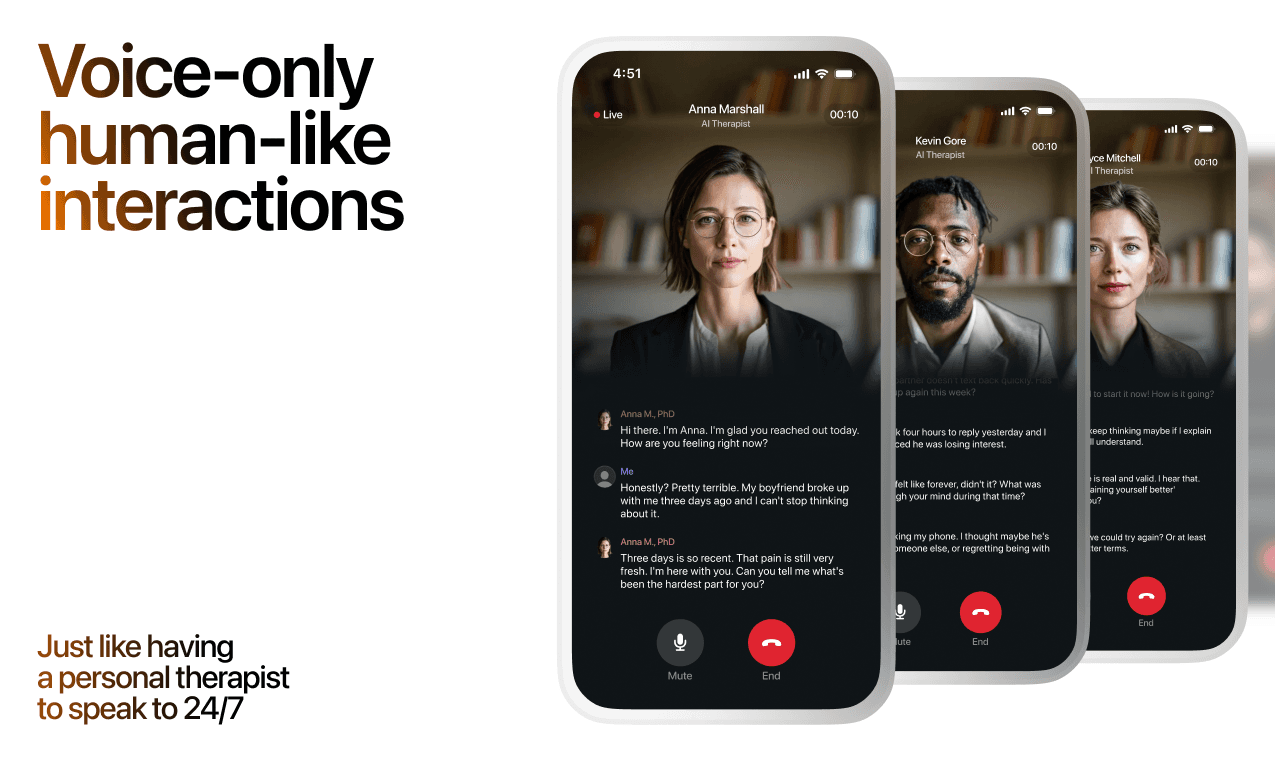
Here's what happens in a typical Lovon session:
You share what's on your mind
There's no script, no intake form, no waiting room. You speak or type whatever you're feeling — in your own words, at your own pace.
Lovon validates and explores
Using frameworks from CBT (Cognitive Behavioral Therapy) and motivational interviewing, Lovon acknowledges your feelings first, then gently helps you explore them. No dismissive "just move on" advice.
You build coping skills together
Lovon doesn't just listen — it actively works with you on evidence-based techniques: thought reframing, urge surfing, behavioral experiments, and more.
What a Session with Lovon Looks Like
When to Seek Professional Help
AI support is a valuable tool, but it's not a replacement for professional care. Please consider reaching out to a licensed therapist if you experience any of the following:
- Persistent thoughts of self-harm or suicide
- Inability to perform daily activities (work, eating, sleeping) for more than 2 weeks
- Turning to alcohol or substances to cope
- Intense anger or desire to harm your ex-partner
- Complete emotional numbness that doesn't improve over time
Crisis Resources (US): If you're in immediate danger, call 988 (Suicide & Crisis Lifeline) or text HOME to 741741 (Crisis Text Line). Available 24/7, free, and confidential.
Outside the US? Find a crisis line in your country
Ready to Start?
Your healing journey can begin right now
A 7-day trial. No judgment. Just a safe space to process what you're going through.
Frequently Asked Questions
Is Lovon a replacement for a real therapist?
Is my conversation with Lovon AI private?
How is Lovon different from ChatGPT for emotional support?
Can I use Lovon if I'm already seeing a therapist?
Can I try Lovon before subscribing?
About the Author

The Lovon Editorial Team
Mental Health & Wellness Content Team
The Lovon Editorial Team develops mental health and wellness content designed to make psychological concepts accessible and actionable. Our goal is to bridge the gap between clinical research and everyday life - helping you understand why your mind works the way it does and what you can do about it....
Related articles
- Best Apps for ADHD Adults in 2026 — Ranked
The best apps for ADHD adults in 2026, ranked by emotional support, task management, and ADHD-informed design. Lovon…
- ADHD Emotional Dysregulation: Tools That Work (2026)
ADHD emotional dysregulation floods your brain before you can react. These 7 evidence-based tools — from breathwork to…
- How to Manage Stress as a Shift Worker (2026 Guide)
Learn how to manage stress as a shift worker in 2026 with sleep timing, light exposure, and coping tools plus 24/7 AI…
- ADHD Motivation: Why You Freeze and How to Start (2026)
ADHD motivation stalls because of how the brain regulates dopamine, not willpower. Learn 7 steps to break the freeze and…
See also
Quizzes
- Emotional Intelligence Test: Your EQ in a Relationship
Find where your EQ slips when things get tense.
- Relationship Schema Test: Are Your Feelings Welcome?
See which belief edits what you share, in 3 minutes.
Free tools
- What to Say to Someone Who Is Grieving
Get sentences that fit this person and this week, not a list of things people say at funerals. Describe who they lost…
- Family Boundary Plan
Pick the person, the one topic, and how much you want to see them. You get a three-rung ladder, the guilt lines to…
From the wiki
- Why do I feel lonely all of a sudden?
Sudden loneliness usually traces back to something that quietly ended in the last few months: a routine, a shared class…
Disclaimer: This article is for informational purposes only and does not constitute medical advice, diagnosis, or treatment. Always seek the advice of your physician or other qualified health provider with any questions you may have regarding a medical condition. If you are in crisis or think you may have an emergency, call 988 (Suicide & Crisis Lifeline) or go to the nearest emergency room. Outside the US? Find a crisis line in your country.