
Amygdala and Prefrontal Cortex Connection: Training Emotional Regulation Through Mindfulness
How mindfulness practices reshape neural pathways to strengthen emotional control and reduce reactivity

Key Takeaways
- Increased prefrontal cortex activation: During mindfulness meditation, brain imaging studies show heightened
- Reduced amygdala reactivity: Some research suggests that individuals with consistent mindfulness practices show
- Enhanced connectivity: Studies examining structural brain changes have found that mindfulness practitioners may show
- Neuroplastic adaptation: The brain's capacity to reorganize and form new neural connections—neuroplasticity—appears
- Recognize: Identify that an emotional reaction is occurring
Introduction
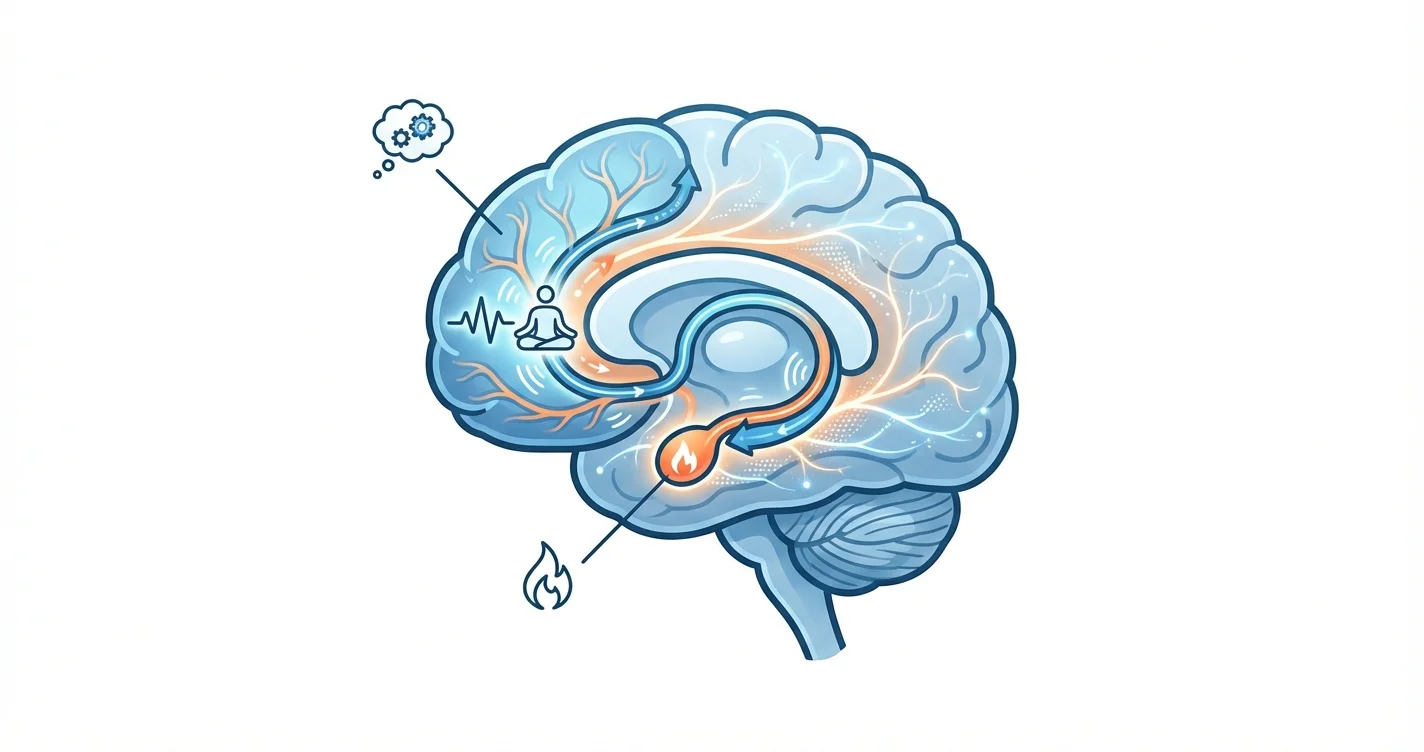
The way your brain processes emotions involves a constant dialogue between two key regions: the amygdala, which rapidly detects threats and triggers emotional responses, and the prefrontal cortex, which evaluates situations and regulates those reactions. When this amygdala and prefrontal cortex connection functions smoothly, you can pause before reacting, choose measured responses, and maintain composure during stress. When the connection weakens or becomes imbalanced, emotional reactivity can feel overwhelming and difficult to control. Research from neuroscience laboratories suggests that mindfulness training may strengthen this neural pathway, offering a practical approach to training emotional regulation through mindfulness practices. This article examines the biological mechanisms behind this connection, how mindfulness appears to influence these brain regions, and specific practices that may help you develop greater emotional control.
Understanding the Amygdala-Prefrontal Cortex Relationship
The amygdala processes incoming sensory information and activates emotional responses, particularly related to fear, anxiety, and perceived threats. This ancient brain structure operates rapidly, often triggering bodily reactions within fractions of a second before conscious awareness fully registers what's happening. The prefrontal cortex, particularly the medial prefrontal cortex and ventromedial regions, plays a crucial role in evaluating these emotional signals and modulating the amygdala's activity.
Think of this relationship as a system of checks and balances. The amygdala acts as an early warning system, alerting you to potential dangers or emotionally significant events. The prefrontal cortex then interprets the context, assesses whether the threat is real or perceived, and can down-regulate the amygdala's response when appropriate. This process involves neural pathways that carry signals between these regions, allowing for communication and regulation.
When this connection functions well, you experience what researchers call "cognitive reappraisal"—the ability to reframe situations and adjust emotional responses accordingly. When the pathway is disrupted or weakened, the amygdala may continue firing intensely without adequate prefrontal modulation, resulting in prolonged anxiety, reactive anger, or difficulty recovering from emotional triggers. Studies from major research institutions suggest that chronic stress, trauma, and certain mental health conditions may be associated with altered communication between these regions.
How Mindfulness Training Influences Neural Pathways
Mindfulness practices involve directing attention to present-moment experiences with an attitude of curiosity and acceptance rather than judgment or reactivity. This apparently simple shift in attention appears to engage and strengthen the prefrontal cortex while gradually changing how the amygdala responds to stimuli.
Research conducted at universities studying contemplative neuroscience indicates that regular mindfulness training may be associated with several neural changes:
-
Increased prefrontal cortex activation: During mindfulness meditation, brain imaging studies show heightened activity in prefrontal regions involved in attention regulation and emotional control. This repeated activation may strengthen these neural networks over time, similar to how physical exercise strengthens muscles.
-
Reduced amygdala reactivity: Some research suggests that individuals with consistent mindfulness practices show decreased amygdala activation when exposed to emotional stimuli. The amygdala may still detect potential threats but appears to respond with less intensity.
-
Enhanced connectivity: Studies examining structural brain changes have found that mindfulness practitioners may show increased white matter connections between the prefrontal cortex and amygdala, potentially allowing for more efficient communication between these regions.
-
Neuroplastic adaptation: The brain's capacity to reorganize and form new neural connections—neuroplasticity—appears to play a central role in how mindfulness creates lasting changes. Regular practice may gradually reshape the neural architecture that governs emotional responses.
These changes don't happen immediately or uniformly. Individual responses vary considerably based on factors including practice consistency, type of mindfulness technique, baseline neural patterns, and overall mental health. The timeline for noticeable changes may range from several weeks to months of regular practice, and emerging research continues to refine our understanding of these mechanisms.
Practical Mindfulness Techniques for Emotional Regulation
Training emotional regulation through mindfulness involves specific practices that target the amygdala and prefrontal cortex connection. These techniques share common elements but approach the work from different angles.
Focused Attention Meditation
This foundational practice strengthens prefrontal control by repeatedly redirecting wandering attention to a chosen anchor—typically the breath, bodily sensations, or a neutral object. When your mind drifts to thoughts or emotions, you gently notice the distraction and return focus to the anchor. This cycle of noticing and redirecting appears to exercise the prefrontal cortex's attention-regulation circuits.
To practice: Sit comfortably and direct attention to the physical sensations of breathing. When you notice your mind has wandered to thoughts, emotions, or external sounds, acknowledge this without criticism and return attention to the breath. Start with shorter sessions and gradually extend duration as the practice becomes more familiar.
Open Monitoring Meditation
Rather than focusing on a single object, this practice involves observing whatever enters awareness—thoughts, emotions, sounds, sensations—without attaching to any particular experience. This approach may help reduce amygdala reactivity by cultivating a detached observer perspective, where emotional content arises but doesn't automatically trigger reactive patterns.
Practitioners describe this as "watching clouds pass across the sky"—emotions and thoughts appear, are noted, and are allowed to dissolve without intervention or judgment. This practice directly addresses the tendency to identify with emotional states, which often amplifies their intensity and duration.
Body Scan Practice
Systematically directing attention through different body regions appears to strengthen the connection between awareness and physical sensations, which can interrupt automatic emotional reactions before they escalate. Since the amygdala connects closely with bodily responses, noticing early physical signs of emotional activation (tension, temperature changes, heart rate shifts) provides an opportunity for prefrontal intervention.
Move attention slowly from feet to head, observing sensations without trying to change them. When you notice areas of tension or emotional holding, simply observe these patterns with curiosity rather than attempting to force relaxation.
RAIN Technique
This structured approach provides a framework for working with difficult emotions when they arise:
- Recognize: Identify that an emotional reaction is occurring
- Allow: Permit the emotion to be present without pushing it away
- Investigate: Observe where you feel the emotion in your body and what thoughts accompany it
- Non-identification: Recognize that you are experiencing an emotion, not that you are the emotion
This method directly engages the prefrontal cortex in examining emotional experiences, potentially strengthening the regulatory pathway while reducing automatic reactivity. Tools like Lovon.app can provide guided support for working through this process when emotions feel particularly intense or confusing, offering real-time reflection with an AI coach that helps you identify patterns and practice new responses.
Integrating Mindfulness Into Daily Emotional Challenges
The true test of mindfulness training occurs during actual emotional challenges, not just during formal practice sessions. Translating meditation skills to real-world situations requires intentional integration strategies.
Creating Pause Points
Research suggests that one of the most valuable effects of strengthening the amygdala-prefrontal cortex connection is the creation of a "response gap"—a brief interval between emotional trigger and reactive behavior. In this space, choice becomes possible. Regular mindfulness practice appears to widen this gap, giving the prefrontal cortex time to engage before automatic reactions dominate.
To cultivate this in daily life, identify your common emotional triggers and establish micro-practices at those moments. When you notice early signs of reactivity (physical tension, racing thoughts, urge to speak or act impulsively), pause and take three conscious breaths before responding. This brief interval activates prefrontal regions and may reduce amygdala intensity.
Labeling Emotions
Studies examining the effects of emotional labeling—simply naming what you're feeling—suggest this practice activates prefrontal language centers and may help down-regulate amygdala activity. When strong emotions arise, mentally or verbally name them: "This is anxiety," "I'm feeling anger," "This is disappointment." This simple act of labeling engages cognitive processing and creates some distance from the raw emotional experience.
Some people find it helpful to use resources like Lovon.app when emotions feel too overwhelming to process alone. Speaking through what you're experiencing with an attentive listener—even an AI-based one—can help you name feelings, identify patterns, and develop language for internal states that might otherwise remain chaotic and unnamed.
Noticing Thought Patterns
The amygdala doesn't just respond to external events; it reacts to thoughts and memories as if they were immediate threats. Catastrophic thinking, rumination, and worst-case scenario planning can all trigger amygdala activation. Mindfulness training helps you recognize these thought patterns as mental events rather than accurate predictions, reducing their emotional impact.
When you notice repetitive worry or catastrophic thoughts, practice observing them as thoughts rather than facts: "I'm having the thought that everything will go wrong" rather than "Everything will go wrong." This subtle shift engages the prefrontal cortex in metacognitive awareness—thinking about thinking—which appears to help regulate emotional responses.
Progressive Exposure
As your capacity for emotional regulation develops, gradually expose yourself to mildly challenging situations while maintaining mindful awareness. This progressive approach allows you to practice the skills in increasingly complex contexts without becoming overwhelmed. Start with situations that trigger mild emotional reactions and gradually work toward more challenging scenarios as your regulatory capacity strengthens.
Understanding Individual Variation and Limitations
While research indicates that mindfulness training may strengthen the amygdala and prefrontal cortex connection for many people, individual responses vary considerably. Several factors influence how and whether these practices produce noticeable benefits.
Baseline Neural Patterns
People begin mindfulness practice with different neurological starting points. Those who've experienced significant trauma, chronic stress, or certain mental health conditions may have amygdala-prefrontal connectivity patterns that respond differently to standard mindfulness approaches. Some individuals find that mindfulness alone isn't sufficient and works most effectively when combined with professional therapy, medication, or other interventions.
Practice Consistency
Emerging research suggests that regular practice matters more than occasional intensive sessions. Brief daily practice appears more effective for creating lasting neural changes than sporadic longer sessions. However, maintaining consistency presents real challenges given competing demands for time and attention. Finding sustainable practice rhythms—even just a few minutes daily—may yield better long-term results than ambitious schedules that prove difficult to maintain.
Type of Mindfulness Training
Different mindfulness traditions and techniques emphasize different elements—concentration, open awareness, compassion, body-focused attention—and these variations may engage neural circuits differently. What works well for one person may feel ineffective or even uncomfortable for another. If initial attempts at mindfulness practice don't resonate, exploring different approaches may prove more helpful than abandoning the effort entirely.
When Mindfulness Isn't Enough
It's important to acknowledge that mindfulness training represents one tool among many for emotional regulation, not a universal solution. Some situations call for professional mental health support, medication, trauma-specific therapies, or other interventions. If you're experiencing severe anxiety, depression, trauma symptoms, or emotional dysregulation that significantly impairs daily functioning, mindfulness practices may complement but shouldn't replace professional treatment. Working with a therapist who integrates mindfulness-based approaches within a broader treatment framework often provides more comprehensive support than self-guided practice alone.
Conclusion
The amygdala and prefrontal cortex connection forms a crucial neural pathway for emotional regulation, and evidence suggests that training emotional regulation through mindfulness may strengthen this connection over time. By repeatedly engaging prefrontal attention and regulatory circuits while cultivating non-reactive awareness of emotional experiences, mindfulness practices appear to create both functional and structural changes in how these brain regions communicate. The specific techniques—focused attention, open monitoring, body scanning, and emotion-focused practices—provide practical methods for developing greater emotional control.
However, individual responses vary, and mindfulness works most effectively when integrated consistently into daily life rather than treated as an occasional intervention. For complex emotional challenges, combining mindfulness with other resources can provide more comprehensive support. Whether you're working independently, using tools like Lovon.app to process emotions between therapy sessions, or engaging in professional treatment, understanding the neural basis of emotional regulation can help you approach the work with realistic expectations and greater self-compassion.
Start where you are, with whatever capacity you currently have. Even brief moments of mindful awareness, practiced regularly, may begin strengthening the neural pathways that support more balanced emotional responses.
Disclaimer: This is general information, not medical advice or diagnosis. If symptoms are severe, affecting your daily life, or you're having thoughts of self-harm—seek professional help. In the US: call or text 988 (Suicide & Crisis Lifeline). For immediate danger: 911 or local emergency services.
How AI Support Helps You Heal
AI emotional support isn't about replacing human connection — it's about filling the gaps. The moments when you need to talk at 2 AM, when you don't want to burden your friends again, or when you simply need someone to listen without judgment.
Here's what happens in a typical Lovon session:
You share what's on your mind
There's no script, no intake form, no waiting room. You speak or type whatever you're feeling — in your own words, at your own pace.
Lovon validates and explores
Using frameworks from CBT (Cognitive Behavioral Therapy) and motivational interviewing, Lovon acknowledges your feelings first, then gently helps you explore them. No dismissive "just move on" advice.
You build coping skills together
Lovon doesn't just listen — it actively works with you on evidence-based techniques: thought reframing, urge surfing, behavioral experiments, and more.
What a Session with Lovon Looks Like

When to Seek Professional Help
AI support is a valuable tool, but it's not a replacement for professional care. Please consider reaching out to a licensed therapist if you experience any of the following:
- Persistent thoughts of self-harm or suicide
- Inability to perform daily activities (work, eating, sleeping) for more than 2 weeks
- Turning to alcohol or substances to cope
- Intense anger or desire to harm your ex-partner
- Complete emotional numbness that doesn't improve over time
Crisis Resources (US): If you're in immediate danger, call 988 (Suicide & Crisis Lifeline) or text HOME to 741741 (Crisis Text Line). Available 24/7, free, and confidential.
Outside the US? Find a crisis line in your country
Ready to Start?
Your healing journey can begin right now
A 7-day trial. No judgment. Just a safe space to process what you're going through.
Frequently Asked Questions
Is Lovon a replacement for a real therapist?
Is my conversation with Lovon AI private?
How is Lovon different from ChatGPT for emotional support?
Can I use Lovon if I'm already seeing a therapist?
Can I try Lovon before subscribing?
About the Author

The Lovon Editorial Team
Mental Health & Wellness Content Team
The Lovon Editorial Team develops mental health and wellness content designed to make psychological concepts accessible and actionable. Our goal is to bridge the gap between clinical research and everyday life - helping you understand why your mind works the way it does and what you can do about it....
Related articles
- Mindfulness for Anxiety: Techniques That Work in 2026
The best mindfulness techniques for anxiety in 2026 — body scan, 4-6 breathing, and 5-4-3-2-1 grounding — with…
- Polyvagal Theory by Stephen Porges for Understanding Stress
When you feel your heart race during a tense conversation, or notice yourself shutting down emotionally after an…
- Amygdala and Prefrontal Cortex Partnership in Emotional Regulation
The partnership between the amygdala and prefrontal cortex represents one of the most crucial relationships in your…
- ADHD Emotional Dysregulation: Tools That Work (2026)
ADHD emotional dysregulation floods your brain before you can react. These 7 evidence-based tools — from breathwork to…
See also
Quizzes
- Emotional Intelligence Test: Your EQ in a Relationship
Find where your EQ slips when things get tense.
- Rejection Sensitivity Test: Free 12-Question Check
See how strongly you expect and read rejection.
Free tools
- Am I Overreacting, or Is This a Big Deal?
A chat for the small thing you cannot stop turning over. Say what happened and what you have already told yourself about…
- What to Say When They Are Struggling
A chat, not a list. Tell the coach who this person is to you, what they are going through, and what you already said…
From the wiki
- Why do I feel lonely all of a sudden?
Sudden loneliness usually traces back to something that quietly ended in the last few months: a routine, a shared class…
Disclaimer: This article is for informational purposes only and does not constitute medical advice, diagnosis, or treatment. Always seek the advice of your physician or other qualified health provider with any questions you may have regarding a medical condition. If you are in crisis or think you may have an emergency, call 988 (Suicide & Crisis Lifeline) or go to the nearest emergency room. Outside the US? Find a crisis line in your country.