
How to Use Gradual Exposure to Tolerate Uncertainty and Emotional Discomfort
Learning how to use gradual exposure to tolerate uncertainty and emotional discomfort represents one of the most effective approaches for managing chronic...

Key Takeaways
- External reassurance: Repeatedly asking others for confirmation that feared outcomes won't occur, that you made the
- Internal reassurance: Engaging in repetitive self-talk designed to neutralize anxious thoughts, mentally reviewing
- High dropout rates: The intense distress can feel overwhelming, leading people to discontinue treatment
- Risk of sensitization: For some individuals, flooding can actually strengthen fear responses rather than reduce them
- Potential for retraumatization: Particularly for those with trauma histories, overwhelming exposure can be harmful
Introduction
Learning how to use gradual exposure to tolerate uncertainty and emotional discomfort represents one of the most effective approaches for managing chronic anxiety and building psychological resilience. Unlike strategies that provide temporary relief through avoidance or distraction, gradual exposure works by fundamentally retraining how your brain and nervous system respond to uncomfortable situations. This method teaches your mind that uncertainty, discomfort, and even emotional pain are tolerable experiences rather than threats requiring immediate elimination. As of January 2026, mental health practitioners increasingly recognize that the inability to tolerate uncertainty remains one of the primary drivers of persistent anxiety, making exposure-based techniques essential tools for long-term emotional well-being.
This article examines the science behind gradual exposure therapy, distinguishes it from other exposure-based approaches, and provides actionable steps for implementing these techniques in daily life. Drawing on insights from practicing therapists and current psychological research, we'll explore how systematic desensitization can help you develop greater emotional tolerance without overwhelming your nervous system.
Understanding Gradual Exposure and Its Role in Anxiety Management
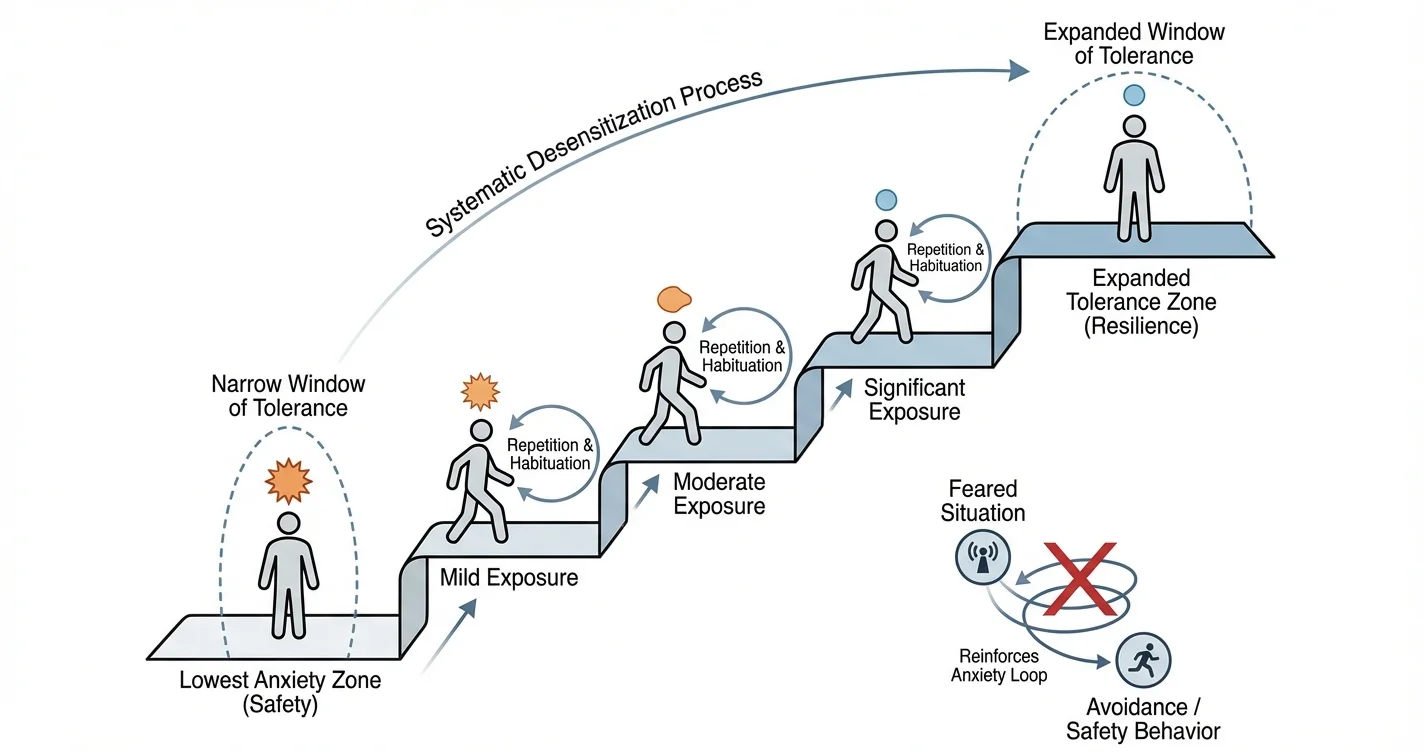
Gradual exposure therapy operates on a straightforward yet powerful principle: repeated, controlled contact with feared situations or emotions reduces their power over time. This process, known as habituation, allows your nervous system to learn through direct experience that many situations you perceive as threatening are actually manageable.
According to research in cognitive behavioral therapy, anxiety functions as a protective mechanism designed to shield you from perceived danger—including emotional pain. When you consistently avoid situations that trigger discomfort, your brain interprets this avoidance as confirmation that the situation truly is dangerous. This creates a self-reinforcing cycle where avoidance temporarily reduces anxiety but ultimately strengthens it over the long term.
What makes gradual exposure particularly effective is its systematic approach. Rather than forcing immediate confrontation with your most feared situations, this method builds tolerance progressively. You start with situations that trigger mild to moderate discomfort and gradually work toward more challenging scenarios as your capacity increases. This measured progression prevents the overwhelm that can occur with more intensive approaches while still providing the sustained exposure necessary for meaningful change.
Mental health professionals emphasize that gradual exposure isn't about eliminating anxiety entirely—it's about expanding your window of tolerance for discomfort. The goal is developing confidence that you can experience uncertainty and emotional distress without needing to immediately escape or seek reassurance.
The Problem with Reassurance-Seeking and Avoidance
Before implementing gradual exposure techniques, it's essential to understand why common coping strategies often backfire. Many people dealing with anxiety develop patterns of reassurance-seeking—repeatedly looking for confirmation that everything will be okay or that their fears won't materialize.
Reassurance-seeking functions similarly to a short-acting relief medication: it provides immediate comfort but requires increasingly frequent doses to maintain the effect. When you constantly seek reassurance from others or engage in internal reassuring self-talk, you inadvertently communicate to your brain that the situation genuinely requires this intervention to be safe. This mirrors the dynamics of toxic positivity, where forced reassurances like "everything will definitely work out" ring hollow because your mind recognizes that no such guarantees exist.
Practitioners identify two primary forms of reassurance-seeking:
- External reassurance: Repeatedly asking others for confirmation that feared outcomes won't occur, that you made the right decision, or that you're safe
- Internal reassurance: Engaging in repetitive self-talk designed to neutralize anxious thoughts, mentally reviewing situations to confirm you handled them correctly, or creating mental contingency plans for every possible scenario
Similarly, avoidance and distraction provide temporary relief while reinforcing the underlying anxiety. When you avoid situations that trigger uncertainty or distract yourself the moment discomfort arises, you never give your nervous system the opportunity to learn that it can handle these experiences. Each avoidance strengthens the neural pathways associating that situation with danger.
This understanding reveals why gradual exposure represents such a fundamental shift: instead of trying to eliminate discomfort, you systematically teach your brain that discomfort itself isn't dangerous.
Gradual Exposure Techniques Versus Flooding Therapy
When exploring exposure-based approaches for building emotional tolerance, it's important to distinguish between gradual exposure and flooding therapy. While both involve confronting feared situations, they differ significantly in intensity and application.
Flooding therapy involves immediate, prolonged exposure to highly anxiety-provoking situations without gradual buildup. For example, someone with intense fear of social judgment might be asked to give an impromptu speech to a large audience as an initial intervention. The theory behind flooding is that when escape isn't possible and the feared consequence doesn't occur, anxiety will eventually decrease through a process called extinction.
While research suggests flooding can be effective for specific phobias when conducted under professional supervision, it carries several drawbacks:
- High dropout rates: The intense distress can feel overwhelming, leading people to discontinue treatment
- Risk of sensitization: For some individuals, flooding can actually strengthen fear responses rather than reduce them
- Potential for retraumatization: Particularly for those with trauma histories, overwhelming exposure can be harmful
- Limited applicability: Flooding works less well for diffuse anxiety or uncertainty intolerance, where there isn't a single discrete feared situation
Gradual exposure, also called systematic desensitization, takes a more measured approach. You create a hierarchy of situations ranked by difficulty and systematically work through them from least to most challenging. This allows you to build confidence and develop coping skills at each level before advancing.
Experts in anxiety treatment emphasize that gradual exposure offers several advantages for developing uncertainty tolerance. The progressive nature prevents overwhelming your nervous system, which is particularly important when working with intolerance of uncertainty—a more abstract, pervasive concern than specific phobias. You learn not only that you can tolerate discomfort, but also develop practical skills for managing it as it arises.
For most people working independently on building emotional tolerance, gradual exposure represents the safer, more sustainable approach. Tools like Lovon.app can provide on-demand support as you navigate this process, helping you process emotions that arise during exposure work and maintain perspective when discomfort feels overwhelming.
Step-by-Step Guide to Gradual Exposure for Uncertainty Tolerance
Implementing gradual exposure therapy for managing anxiety and uncertainty requires thoughtful planning and consistent practice. Here's a practical framework for developing your own exposure program:
Identify Your Avoidance Patterns
Begin by noticing what situations, emotions, or uncertainties you typically avoid. These might include:
- Delaying important decisions because the "right" choice isn't clear
- Avoiding conversations that might lead to conflict or rejection
- Refusing to start projects unless you can guarantee success
- Immediately distracting yourself when uncomfortable emotions arise
- Constantly checking for reassurance from others
Create Your Exposure Hierarchy
List situations related to uncertainty or emotional discomfort, then rate each from 0-100 based on how much anxiety it would trigger. Your hierarchy might include:
- 20-30: Making a small decision without researching every possible option (choosing a restaurant without reading all reviews)
- 40-50: Sending a text without knowing exactly how someone will respond
- 60-70: Having a difficult conversation without scripting it completely beforehand
- 80-90: Making a significant decision with incomplete information
- 95-100: Sitting with intense emotional discomfort without any distraction or reassurance
Start with Manageable Challenges
Choose an item from the lower end of your hierarchy (20-40 range) for your first exposure. The goal is to deliberately place yourself in this situation and resist your usual avoidance or reassurance-seeking behaviors.
During the exposure, practice these techniques:
- Notice without neutralizing: Observe anxious thoughts without trying to argue them away or seek reassurance
- Name the discomfort: Identify what you're feeling ("I'm noticing uncertainty about this outcome" or "I'm experiencing fear of judgment")
- Stay present: Resist the urge to escape through distraction—remain engaged with the uncomfortable situation
- Observe habituation: Notice how anxiety often peaks and then naturally decreases if you don't fight it
Repeat Until Habituation Occurs
Research in exposure therapy indicates that repeated practice with the same level situation is essential. Continue exposing yourself to similar scenarios at this difficulty level until your anxiety rating drops by at least 50%. This might require 5-10 repetitions over several days or weeks.
Progress Gradually
Only move to the next level of your hierarchy once you've achieved significant habituation at the current level. Rushing this process increases the risk of becoming overwhelmed and abandoning the approach entirely.
Differentiate Influence from Control
An important cognitive component of exposure work involves understanding the distinction between influence and control. Confusing these concepts intensifies anxiety because you exhaust yourself trying to control inherently uncertain situations.
You have influence over many situations—you can increase the likelihood of positive outcomes through your actions. But absolute control is an illusion. Recognizing this difference reduces your brain's compulsion to achieve total certainty before feeling safe.
Mental health professionals note that this practice works best when approached with self-compassion rather than self-criticism. You're not trying to tough it out or prove you're strong enough—you're gently expanding your capacity through repeated, manageable challenges.
Building Emotional Tolerance Through Systematic Desensitization
Beyond situational uncertainty, gradual exposure proves equally valuable for building tolerance to emotional discomfort itself. Many people with chronic anxiety have developed a relationship with their emotions that treats any negative feeling as an emergency requiring immediate resolution.
Practitioners emphasize that anxiety often exists to protect you from emotional pain—the hurt of rejection, disappointment, grief, or shame. When you view these emotions as intolerable, your nervous system maintains high anxiety as a shield. By changing your relationship with emotional pain, you reduce your brain's perceived need for this protective mechanism.
Exposure to Emotional Experiences
Systematic desensitization can be applied directly to emotions:
Create an emotional exposure hierarchy identifying feelings you typically avoid:
- Mild disappointment or frustration
- Moderate sadness or loneliness
- Significant vulnerability or shame
- Intense grief or heartbreak
Practice deliberate contact with these emotions in controlled ways:
- Watch films or listen to music that evokes specific feelings
- Write about past experiences that triggered these emotions
- Imagine scenarios that would create these feelings and sit with the resulting discomfort
- Engage in activities where these emotions might naturally arise (sharing something personal, trying something where you might fail)
Develop distress tolerance skills to use during emotional exposure:
- Mindful observation of physical sensations associated with emotions
- Self-validation ("This feeling is uncomfortable but it makes sense given the situation")
- Grounding techniques that keep you present rather than dissociating
- Reminder phrases ("Emotions are temporary; I can experience this without acting on it")
According to current approaches in dialectical behavior therapy, distress tolerance doesn't mean you enjoy painful emotions or seek them out unnecessarily. Rather, it means developing confidence that you can experience emotional discomfort without it destroying you or requiring immediate escape.
This capacity proves essential for living a meaningful life. Virtually all activities that matter—building relationships, pursuing goals, creating something new—involve uncertainty and the risk of painful emotions. When you can tolerate these experiences, you stop limiting your life to only what feels completely safe and predictable.
Some people find that on-demand resources like Lovon.app provide valuable support during this process, offering a space to process intense emotions as they arise during exposure work without falling into reassurance-seeking patterns.
Advanced Considerations and Common Challenges
As you develop your gradual exposure practice, several nuances and potential obstacles warrant attention:
Individual Variation in Habituation
People habituate to uncertainty and discomfort at different rates. Some individuals notice significant anxiety reduction after just a few exposures, while others require more repetitions. Research suggests this variation relates to multiple factors including genetics, trauma history, and current stress levels. If you're not experiencing habituation after numerous exposures at the same level, this might indicate the need for professional guidance rather than a personal failing.
The Role of Safety Behaviors
Subtle avoidance can undermine exposure work. Safety behaviors are actions you take during exposure that provide a sense of security but prevent full habituation. Examples include:
- Having your phone available to call someone if anxiety becomes too intense
- Mentally rehearsing exactly what you'll say before a conversation
- Distracting yourself with music or podcasts during uncomfortable situations
- Arranging an easy escape route "just in case"
While completely eliminating all safety behaviors immediately can be overwhelming, gradually reducing them over time enhances the effectiveness of your exposure practice.
When Exposure Isn't Appropriate
Gradual exposure represents a powerful tool, but it isn't suitable for all situations. This approach should not be used for:
- Processing significant trauma without professional support (may require specialized trauma-focused therapies)
- Situations involving actual danger (the goal is tolerating discomfort, not ignoring genuine threats)
- Active suicidal ideation or severe depression (requires immediate professional intervention)
- Severe panic disorder with significant physical symptoms (may need medical evaluation and potentially medication support)
Combining Approaches
Gradual exposure often works most effectively when combined with other evidence-based practices. Cognitive restructuring can help you identify and modify thinking patterns that maintain anxiety. Mindfulness practice develops the observational skills necessary for staying present during discomfort. Lifestyle factors including sleep, exercise, and social connection influence your capacity for tolerating stress.
The Limitation of Self-Directed Work
While many people successfully implement gradual exposure independently, working with a mental health professional provides important advantages. A trained therapist can help you design an appropriate hierarchy, identify subtle avoidance patterns, provide support during challenging exposures, and adjust the approach based on your response. They can also recognize when exposure might not be the appropriate intervention or when other issues require attention first.
When to Seek Professional Help
While gradual exposure techniques can be practiced independently for managing everyday anxiety and uncertainty, certain situations warrant professional support:
- Functional impairment: If anxiety significantly interferes with work, relationships, or daily activities
- Safety concerns: If you experience thoughts of self-harm or harming others
- Persistent symptoms: If anxiety remains severe despite consistent self-help efforts over several weeks
- Trauma history: If your anxiety relates to past traumatic experiences, specialized trauma-focused therapy may be more appropriate than self-directed exposure
- Physical symptoms: If you experience significant physical symptoms during anxiety (chest pain, difficulty breathing, dizziness) that haven't been medically evaluated
- Co-occurring conditions: If you're dealing with depression, substance use, eating disorders, or other mental health concerns alongside anxiety
Mental health professionals who can help include licensed therapists specializing in cognitive behavioral therapy, psychologists trained in exposure-based treatments, and psychiatrists who can evaluate whether medication might be a helpful adjunct to therapy.
Conclusion
Learning how to use gradual exposure to tolerate uncertainty and emotional discomfort offers a path toward genuine, lasting anxiety reduction rather than temporary symptom management. By systematically teaching your nervous system that uncertainty and emotional discomfort are tolerable rather than threatening, you address anxiety at its root rather than simply managing symptoms.
The key principles worth remembering include starting with manageable challenges, repeating exposures until habituation occurs, progressively increasing difficulty, reducing safety behaviors and reassurance-seeking, and applying the approach to both situational uncertainty and emotional discomfort. This process requires patience and self-compassion—you're fundamentally changing long-established patterns in your nervous system, which doesn't happen overnight.
As you build your capacity for uncertainty tolerance, remember that the goal isn't eliminating all anxiety or becoming comfortable with every possible situation. Rather, you're expanding your window of tolerance so that normal life uncertainties and emotional experiences don't trigger overwhelming distress. This expanded capacity allows you to pursue meaningful activities, build genuine relationships, and make important decisions despite the inherent uncertainty they involve.
Whether you work independently using these principles, utilize support tools like Lovon.app for processing emotions during exposure work, or engage with a mental health professional for guided treatment, gradual exposure remains one of the most well-established approaches for building lasting emotional resilience. The discomfort you experience during this process isn't a sign that something is wrong—it's evidence that you're actively developing new capacities that will serve you throughout your life.
Disclaimer: This is general information, not medical advice or diagnosis. If symptoms are severe, affecting your daily life, or you're having thoughts of self-harm — seek professional help. In the US: call or text 988 (Suicide & Crisis Lifeline). For immediate danger: 911 or local emergency services.
How AI Support Helps You Heal
AI emotional support isn't about replacing human connection — it's about filling the gaps. The moments when you need to talk at 2 AM, when you don't want to burden your friends again, or when you simply need someone to listen without judgment.
Here's what happens in a typical Lovon session:
You share what's on your mind
There's no script, no intake form, no waiting room. You speak or type whatever you're feeling — in your own words, at your own pace.
Lovon validates and explores
Using frameworks from CBT (Cognitive Behavioral Therapy) and motivational interviewing, Lovon acknowledges your feelings first, then gently helps you explore them. No dismissive "just move on" advice.
You build coping skills together
Lovon doesn't just listen — it actively works with you on evidence-based techniques: thought reframing, urge surfing, behavioral experiments, and more.
What a Session with Lovon Looks Like

When to Seek Professional Help
AI support is a valuable tool, but it's not a replacement for professional care. Please consider reaching out to a licensed therapist if you experience any of the following:
- Persistent thoughts of self-harm or suicide
- Inability to perform daily activities (work, eating, sleeping) for more than 2 weeks
- Turning to alcohol or substances to cope
- Intense anger or desire to harm your ex-partner
- Complete emotional numbness that doesn't improve over time
Crisis Resources (US): If you're in immediate danger, call 988 (Suicide & Crisis Lifeline) or text HOME to 741741 (Crisis Text Line). Available 24/7, free, and confidential.
Outside the US? Find a crisis line in your country
Ready to Start?
Your healing journey can begin right now
1 free conversation. No credit card. No judgment. Just a safe space to process what you're going through.
Frequently Asked Questions
Is AI therapy a replacement for a real therapist?
Is my conversation with Lovon AI private?
How is Lovon different from ChatGPT for emotional support?
Can I use Lovon if I'm already seeing a therapist?
Can I try Lovon for free?
About the Author

The Lovon Editorial Team
Mental Health & Wellness Content Team
The Lovon Editorial Team develops mental health and wellness content designed to make psychological concepts accessible and actionable. Our goal is to bridge the gap between clinical research and everyday life - helping you understand why your mind works the way it does and what you can do about it....
Similar Articles
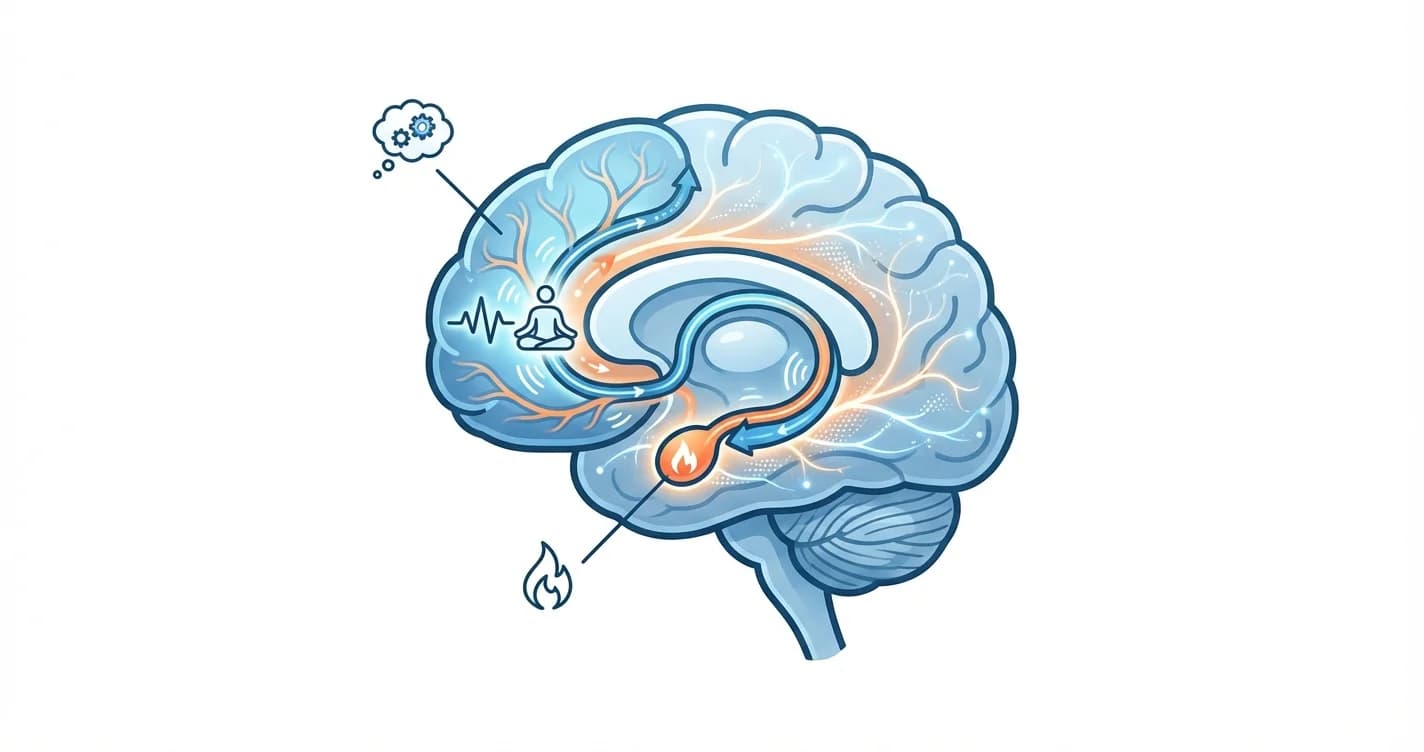
Amygdala and Prefrontal Cortex Connection: Training Emotional Regulation Through Mindfulness
How mindfulness practices reshape neural pathways to strengthen emotional control and reduce reactivity

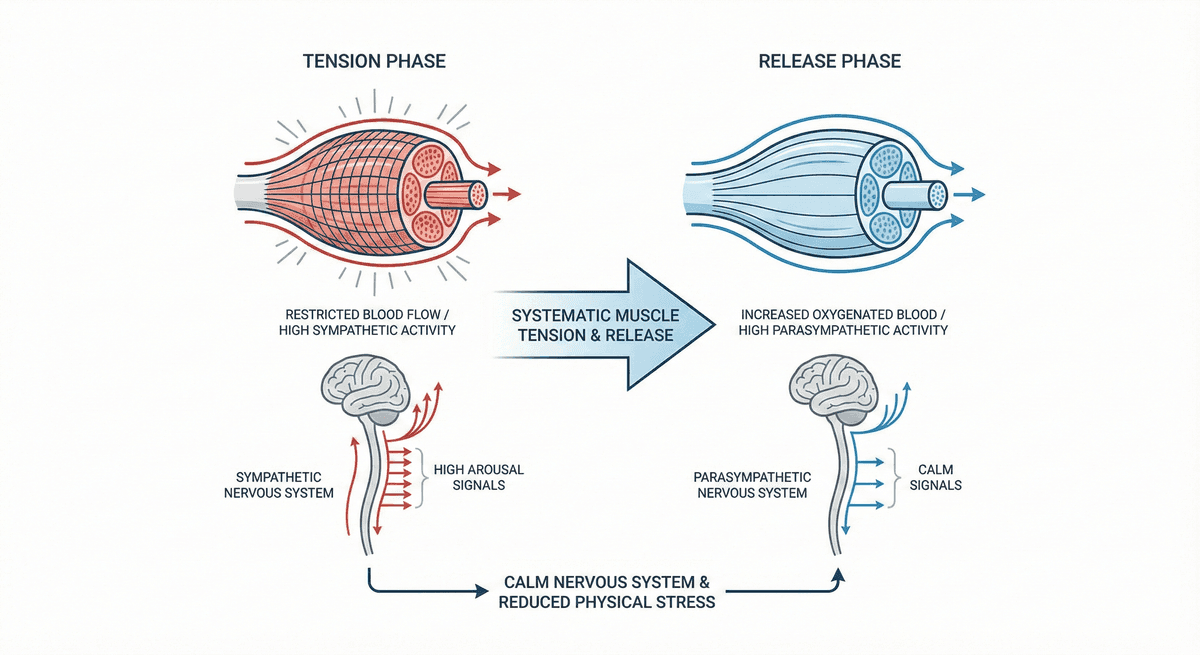
Progressive Muscle Relaxation for Stress Reduction
A systematic muscle group tension and release technique that calms the nervous system and reduces physical stress.
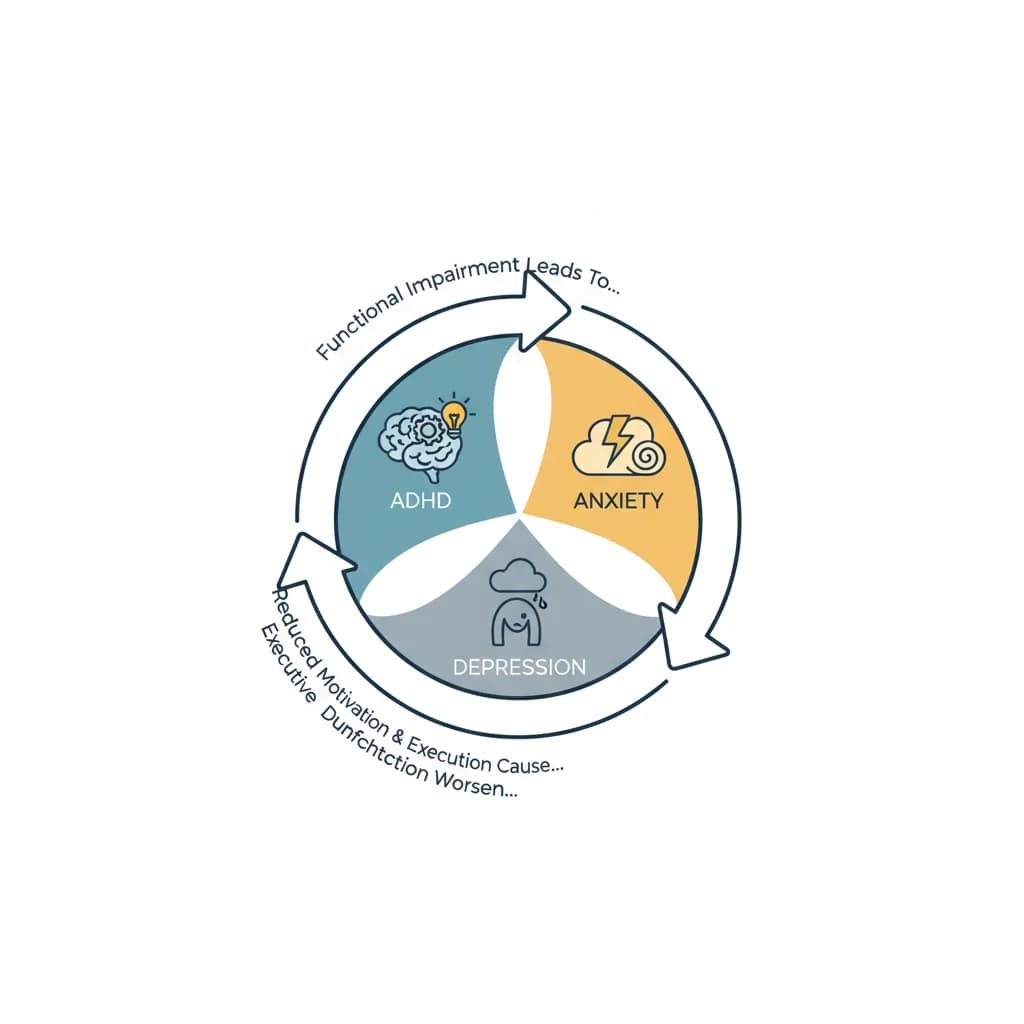
ADHD Comorbidity with Anxiety and Depression Cycles
Understanding the Complex Interplay Between ADHD and Recurring Mental Health Patterns
Disclaimer: This article is for informational purposes only and does not constitute medical advice, diagnosis, or treatment. Always seek the advice of your physician or other qualified health provider with any questions you may have regarding a medical condition. If you are in crisis or think you may have an emergency, call 988 (Suicide & Crisis Lifeline) or go to the nearest emergency room. Outside the US? Find a crisis line in your country.