
Somatic Experiencing for Stress Processing Through the Body
When stress lodges itself in your body—tight shoulders, shallow breathing, a racing heart that won't slow down—traditional talk therapy doesn't always reach
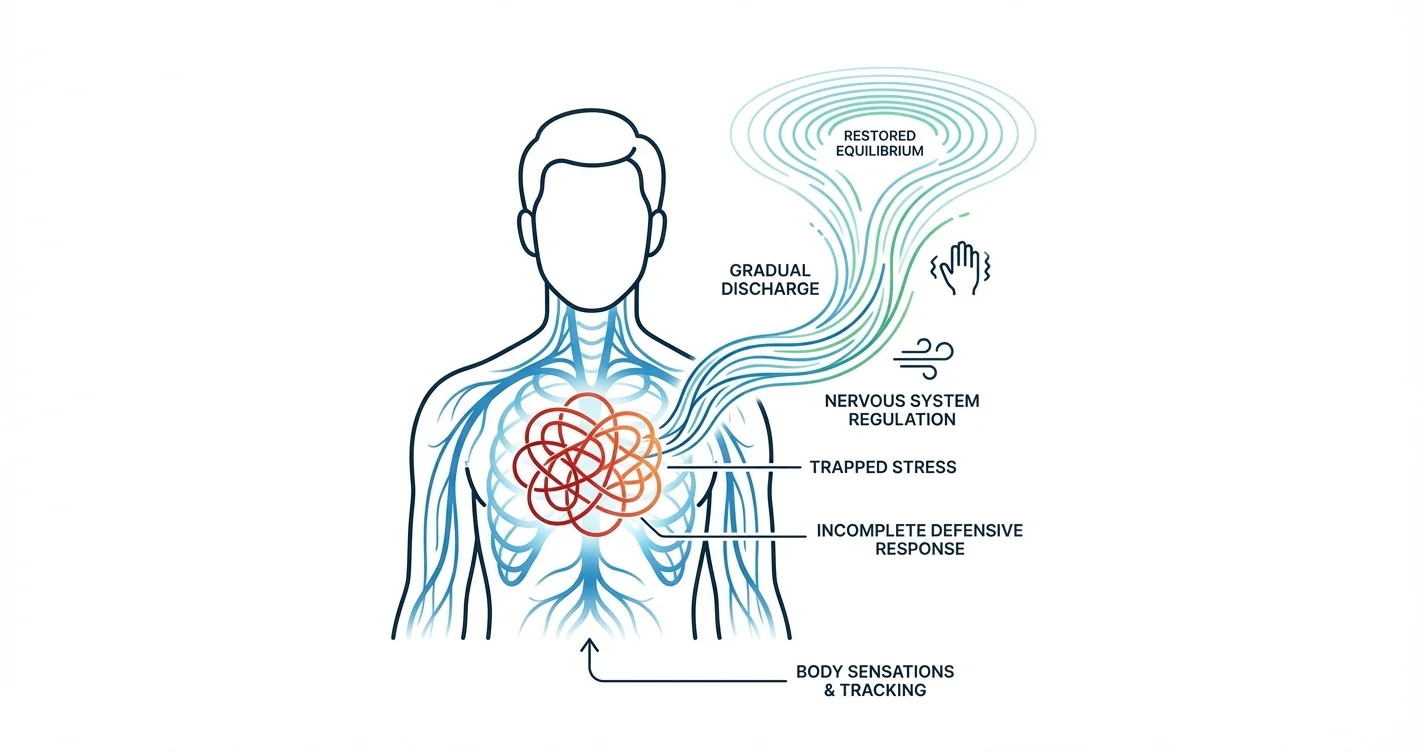

Key Takeaways
- Tracking physical sensations associated with stress and activation
- Supporting the gradual discharge of incomplete defensive responses
- Helping the nervous system differentiate between past threats and present safety
- Restoring natural regulation rhythms through attention to body signals
- Awareness of parts of the body that feel comfortable or neutral
Somatic Experiencing for Stress Processing Through the Body
Understanding Peter Levine's approach to releasing stress reactions held in the nervous system
somatic-experiencing-stress-processing-body
Introduction
When stress lodges itself in your body—tight shoulders, shallow breathing, a racing heart that won't slow down—traditional talk therapy doesn't always reach it. Somatic Experiencing for stress processing offers a different path, one that works directly with the physical sensations where stress gets trapped. Developed by Peter Levine, this body-oriented approach recognizes that unprocessed stress reactions remain stored in the nervous system, creating patterns that persist long after the stressful event has passed. This article explores how Peter Levine's method addresses bodily stress reactions, the principles underlying the approach, and practical ways to work with stress through somatic awareness. The insights presented here draw on established trauma research and clinical applications used by practitioners working with nervous system regulation.
Understanding Peter Levine's Somatic Experiencing Method
Peter Levine's Somatic Experiencing approach emerged from observations of how animals in the wild process threat responses. Unlike humans, animals naturally discharge stress energy after danger passes—through shaking, trembling, or completing interrupted movements. Humans, however, often inhibit these natural discharge mechanisms due to social conditioning or overwhelming circumstances, leaving the nervous system in a state of incomplete activation.
Research in neurobiology suggests that stress responses originate in subcortical brain regions that operate faster than conscious awareness. When threat is perceived, the body mobilizes defensive responses—fight, flight, or freeze—within fractions of a second. These responses involve specific physiological changes: increased heart rate, muscle tension, altered breathing patterns, and redirected blood flow. When these activated states don't complete their natural cycle, the nervous system may remain in a state of partial arousal or shutdown.
Somatic Experiencing works with these bodily stress reactions by:
- Tracking physical sensations associated with stress and activation
- Supporting the gradual discharge of incomplete defensive responses
- Helping the nervous system differentiate between past threats and present safety
- Restoring natural regulation rhythms through attention to body signals
The method doesn't rely on recounting traumatic narratives or re-experiencing intense emotions. Instead, it focuses on what the body needs to complete in order to return to equilibrium.
Key Principles of Processing Stress Through the Body
Peter Levine's approach to bodily stress reactions rests on several core principles that distinguish it from other therapeutic modalities. Understanding these principles helps clarify how the method works with the nervous system's innate capacity for self-regulation.
Titration and Pendulation
Titration refers to working with stress activation in small, manageable doses rather than overwhelming the system. Practitioners guide clients to notice sensations briefly, then shift attention to areas of relative comfort or neutrality. This oscillation—called pendulation—allows the nervous system to gradually build tolerance for activation without becoming flooded.
When someone touches into a stress response, they might notice tightness in the chest or rapid heartbeat. Rather than staying with that intensity, the Somatic Experiencing approach encourages shifting attention to perhaps the feet on the ground or hands resting in the lap. This back-and-forth movement helps prevent re-traumatization while slowly expanding the window of tolerance for difficult sensations.
Discharge and Completion
The body holds interrupted defensive responses as unfinished business. A person who froze during a threatening situation may still carry that immobility in their nervous system. Somatic Experiencing creates conditions for these incomplete responses to finish safely.
This might appear as spontaneous trembling, deep breaths, warmth spreading through the body, or subtle movements like turning the head or extending the arms. These aren't manufactured or forced—they emerge naturally when the nervous system feels safe enough to complete what couldn't happen during the original stressful event.
Resourcing
Before working with stress activation, Somatic Experiencing emphasizes building internal and external resources—anything that helps the nervous system feel more grounded and safe. Resources might include:
- Awareness of parts of the body that feel comfortable or neutral
- Connection to supportive relationships or environments
- Recalling moments of competence or success
- Sensory experiences that bring calm (textures, sounds, images)
Strong resourcing creates a foundation from which the nervous system can safely explore stress reactions without becoming overwhelmed.
Present-Time Orientation
Bodily stress reactions often involve the nervous system responding to current situations as though past threats are occurring now. Somatic Experiencing helps establish present-time awareness by anchoring attention in current sensory experience. This isn't about cognitive reassurance ("I'm safe now") but about helping the body register safety through direct sensory information—what you see, hear, feel, and sense right now.
Practical Application of Somatic Experiencing Techniques
Working with stress processing through the body involves specific practices that can be learned with guidance and gradually integrated into daily life. While formal Somatic Experiencing typically occurs with a trained practitioner, understanding the basic approaches offers insight into how the method operates.
Body Scanning with Curiosity
Rather than immediately trying to change uncomfortable sensations, Somatic Experiencing encourages simple noticing. This involves slowly bringing attention to different body areas and observing what's present without judgment. You might notice temperature, texture, pressure, movement, or absence of sensation.
The practice differs from body scans aimed at relaxation. Here, the goal isn't to create a particular state but to develop awareness of what actually exists in your nervous system. This awareness itself begins to shift stuck patterns, as the act of mindful attention can initiate natural regulation processes.
Tracking Activation and Settling
Practitioners guide clients to notice subtle signs that indicate nervous system states. Activation might show up as increased heart rate, shallow breathing, muscle bracing, or fidgeting. Settling might appear as a spontaneous deeper breath, softening in the jaw or shoulders, slowing heart rate, or a sense of ease spreading through the body.
Learning to recognize these signals helps you understand your nervous system's language. Over time, this awareness allows for earlier intervention when stress begins building, before it becomes overwhelming.
Working with Impulses and Movements
Incomplete defensive responses often contain blocked movements—the impulse to push away, run, or curl inward that couldn't happen during the stressful event. Somatic Experiencing creates space for these movements to emerge and complete safely in small increments.
This might involve noticing an impulse to extend your arms and slowly, mindfully allowing that extension to happen while tracking how your body responds. Or feeling the desire to turn away and gradually making that turn, checking what shifts as the movement completes. These aren't dramatic actions but subtle, often slow explorations of what the body wants to do.
Tools like Lovon.app can complement this work by offering on-demand support when you're processing bodily stress reactions between formal sessions. Because stress often surfaces outside office hours—late at night, after a difficult encounter, or when physical symptoms suddenly intensify—having accessible resources helps maintain momentum in nervous system healing.
Creating Boundaries and Containment
Many bodily stress reactions relate to boundary violations—times when your protective responses were overridden or insufficient. Somatic Experiencing includes practices for establishing a felt sense of boundary and safety.
This might involve imagining or sensing a protective space around you, noticing what distance feels comfortable with others, or exploring sensations of "yes" and "no" in your body. These practices help the nervous system establish clearer signals about safety and threat, reducing chronic hypervigilance or collapse.
Integrating Somatic Awareness into Daily Life
While formal Somatic Experiencing sessions provide structured support for processing stress, the principles can inform everyday approaches to stress management. This integration extends the benefits beyond therapy sessions and builds ongoing nervous system resilience.
Recognizing Early Stress Signals
As you develop somatic awareness, you become more attuned to early signs that stress is accumulating. These might include tension patterns, breathing changes, digestive shifts, or alterations in energy level. Catching these signals early allows for smaller interventions before stress becomes overwhelming.
Someone might notice their shoulders creeping toward their ears during a tense work meeting. Rather than waiting until the end of the day when tension has solidified into a headache, they could take a brief moment to roll their shoulders, take a few deeper breaths, and shift their sitting position. These micro-adjustments support ongoing regulation.
Building Regular Discharge Practices
Physical movement that isn't goal-oriented can support the natural discharge of stress energy. This differs from exercise aimed at fitness or achievement. Instead, it's movement done with attention to internal sensation and allowing the body to move in ways that feel satisfying or releasing.
Some people find this through shaking, dancing without structure, stretching guided by internal impulses, or spontaneous vocalizations. The key is following the body's wisdom rather than imposing a predetermined routine.
Creating Environmental Supports
Your physical environment influences nervous system regulation. Somatic Experiencing principles suggest paying attention to sensory factors that support settling: lighting that feels comfortable, sounds that don't trigger hypervigilance, textures and temperatures that feel regulating, and spaces that provide adequate privacy and safety.
These adjustments aren't luxuries but practical supports for a nervous system working to process accumulated stress. Someone recovering from chronic stress might benefit from weighted blankets, particular music, specific lighting conditions, or regular time in natural settings—whatever helps their system find equilibrium.
Combining Somatic Work with Relational Support
Stress processing doesn't happen in isolation. The nervous system co-regulates through connection with safe others. Combining somatic awareness with relationships that provide attunement and support enhances the healing process.
This might mean talking with someone who can simply listen while you process, attending group settings where you feel safe, or working with practitioners who understand nervous system approaches. Services like Lovon.app offer an accessible option for those times when you need to talk through what's happening in your body but traditional support isn't immediately available—late at night when bodily symptoms intensify, or when you're working to integrate a difficult experience and need real-time reflection.
Limitations and Considerations for Somatic Approaches
While Peter Levine's Somatic Experiencing method offers valuable tools for stress processing, it's important to acknowledge what this approach does and doesn't address. No single method works universally, and understanding appropriate applications helps set realistic expectations.
When Professional Guidance Is Essential
Some stress reactions stem from severe trauma that requires specialized professional support. If you experience flashbacks, dissociation, self-harm urges, or symptoms that significantly impair daily functioning, working with a trauma-informed therapist trained in Somatic Experiencing or similar approaches is important. Self-guided somatic work can complement professional treatment but shouldn't replace it for serious conditions.
Additionally, certain medical conditions can produce physical sensations similar to stress activation. Persistent chest tightness, breathing difficulties, or other concerning physical symptoms should be evaluated medically to rule out underlying health issues.
Individual Variation in Response
People differ in how readily they can access body awareness. Some find it natural to notice and track sensations, while others have learned to disconnect from physical experience as a survival strategy. For those who experience numbness or disconnection, developing somatic awareness may require patience and gentle persistence.
Similarly, the pace of stress processing varies considerably. Some people experience relatively quick shifts as their nervous system discharges accumulated activation. Others work with patterns that have been present for years or decades, requiring longer-term support and realistic expectations about the timeline for change.
Cultural and Contextual Factors
Approaches that emphasize internal sensation and body awareness reflect particular cultural values that may not align with everyone's background or worldview. Additionally, for people facing ongoing external threats—unsafe living situations, discrimination, economic instability—focusing on internal nervous system states must be balanced with practical attention to real environmental dangers.
Somatic work is most effective when it acknowledges that stress reactions often reflect rational responses to difficult circumstances, not simply internal dysregulation requiring correction.
When to Seek Professional Help
If you're experiencing any of the following, professional support is important:
- Stress reactions that significantly interfere with work, relationships, or daily activities
- Physical symptoms that persist despite self-care efforts or medical evaluation
- Intrusive thoughts, nightmares, or flashbacks related to past traumatic events
- Difficulty feeling safe in your body or persistent sense of being under threat
- Dissociation or feeling disconnected from your body and surroundings
- Thoughts of self-harm or harm to others
Professionals who can help include trauma-informed therapists, particularly those trained in Somatic Experiencing, Sensorimotor Psychotherapy, or other body-based approaches. When seeking support, look for practitioners who demonstrate understanding of nervous system regulation and can create conditions for safe exploration of bodily stress reactions.
Conclusion
Somatic Experiencing for stress processing offers a pathway through the body rather than around it. Peter Levine's approach recognizes that stress lives not just in thoughts and emotions but in the nervous system itself—in holding patterns, incomplete defensive responses, and chronic states of activation or shutdown. By working directly with bodily stress reactions through tracking sensations, supporting natural discharge, and building resources, this method helps complete what the nervous system couldn't finish when stress originally occurred.
The practical applications of these principles extend beyond formal therapy into daily life: noticing early stress signals, creating small opportunities for discharge, building environments that support regulation, and developing the somatic literacy that allows you to understand what your body is communicating. Whether you're working with a trained practitioner, using accessible support tools like Lovon.app for between-session processing, or simply beginning to pay closer attention to your body's wisdom, the core insight remains the same—your nervous system holds innate capacity for healing when given appropriate conditions and support.
Processing stress through the body isn't about forcing change or overriding natural responses. It's about creating enough safety and awareness that what's been held can finally release, allowing your system to return to its natural rhythms of activation and rest.
Disclaimer: This is general information, not medical advice or diagnosis. If symptoms are severe, affecting your daily life, or you're having thoughts of self-harm—seek professional help. In the US: call or text 988 (Suicide & Crisis Lifeline). For immediate danger: 911 or local emergency services.
How AI Support Helps You Heal
AI emotional support isn't about replacing human connection — it's about filling the gaps. The moments when you need to talk at 2 AM, when you don't want to burden your friends again, or when you simply need someone to listen without judgment.
Here's what happens in a typical Lovon session:
You share what's on your mind
There's no script, no intake form, no waiting room. You speak or type whatever you're feeling — in your own words, at your own pace.
Lovon validates and explores
Using frameworks from CBT (Cognitive Behavioral Therapy) and motivational interviewing, Lovon acknowledges your feelings first, then gently helps you explore them. No dismissive "just move on" advice.
You build coping skills together
Lovon doesn't just listen — it actively works with you on evidence-based techniques: thought reframing, urge surfing, behavioral experiments, and more.
What a Session with Lovon Looks Like

When to Seek Professional Help
AI support is a valuable tool, but it's not a replacement for professional care. Please consider reaching out to a licensed therapist if you experience any of the following:
- Persistent thoughts of self-harm or suicide
- Inability to perform daily activities (work, eating, sleeping) for more than 2 weeks
- Turning to alcohol or substances to cope
- Intense anger or desire to harm your ex-partner
- Complete emotional numbness that doesn't improve over time
Crisis Resources (US): If you're in immediate danger, call 988 (Suicide & Crisis Lifeline) or text HOME to 741741 (Crisis Text Line). Available 24/7, free, and confidential.
Outside the US? Find a crisis line in your country
Ready to Start?
Your healing journey can begin right now
A 7-day trial. No judgment. Just a safe space to process what you're going through.
Frequently Asked Questions
Is Lovon a replacement for a real therapist?
Is my conversation with Lovon AI private?
How is Lovon different from ChatGPT for emotional support?
Can I use Lovon if I'm already seeing a therapist?
Can I try Lovon before subscribing?
About the Author

The Lovon Editorial Team
Mental Health & Wellness Content Team
The Lovon Editorial Team develops mental health and wellness content designed to make psychological concepts accessible and actionable. Our goal is to bridge the gap between clinical research and everyday life - helping you understand why your mind works the way it does and what you can do about it....
Related articles
- Why Chest Feels Tight When Anxious (2026 Fix)
Chest tight when anxious? Tensed muscles and shallow breathing are the cause in 2026 guidance. Get the 7-step fix and…
- Polyvagal Theory by Stephen Porges for Understanding Stress
When you feel your heart race during a tense conversation, or notice yourself shutting down emotionally after an…
- Progressive Muscle Relaxation for Stress Reduction
A systematic muscle group tension and release technique that calms the nervous system and reduces physical stress.
- How to Heal Inner Child Trauma with Somatic Therapy Guide
Many adults carry unresolved childhood wounds that manifest as anxiety, relationship difficulties, or emotional…
See also
Quizzes
- Emotional Intelligence Test: Your EQ in a Relationship
Find where your EQ slips when things get tense.
- Do I Miss My Ex or Am I Just Lonely? 12-Question Quiz
Find out what the missing is actually about.
Free tools
- Write a Letter to Someone You Lost
Tell it who they were to you and what you never got to say, and it writes the letter back in your words. No account, no…
- How to End a Friendship Without a Scene
A chat for working out how to end a friendship clearly, without a grievance list or a slow ghost. Tell it how long you…
From the wiki
- Why do I feel sad when I'm alone?
Being alone does not create the sadness. It removes the noise that was keeping it out of earshot, so whatever queued up…
Disclaimer: This article is for informational purposes only and does not constitute medical advice, diagnosis, or treatment. Always seek the advice of your physician or other qualified health provider with any questions you may have regarding a medical condition. If you are in crisis or think you may have an emergency, call 988 (Suicide & Crisis Lifeline) or go to the nearest emergency room. Outside the US? Find a crisis line in your country.