
Why Your Partner Shuts Down When You Ask for Reassurance
The shutdown is not rejection. See what avoidant attachment does to a request for closeness, how to ask so it lands, and where accommodating should stop.

Key Takeaways
- When you ask your partner for emotional consistency or reliable presence, and they suddenly become distant,
- These shutdown responses aren't simply stubbornness or lack of care—they reflect deeply ingrained psychological
- Research from developmental psychology suggests that avoidant attachment patterns develop as protective adaptations,
Introduction
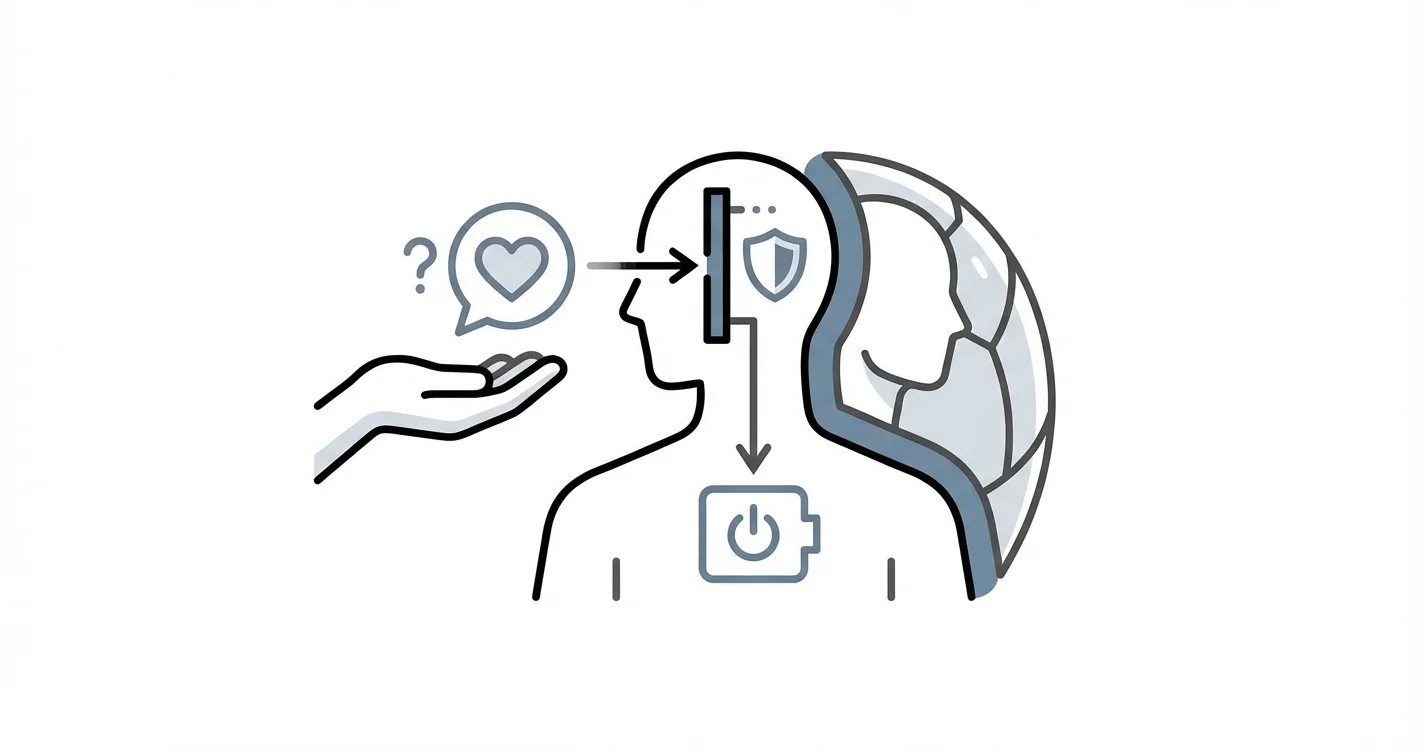
When you ask your partner for emotional consistency or reliable presence, and they suddenly become distant, dismissive, or shut down entirely, you may be witnessing a core pattern of avoidant attachment. These shutdown responses aren't simply stubbornness or lack of care—they reflect deeply ingrained psychological mechanisms that emerge when attachment needs collide with internalized fears. Research from developmental psychology suggests that avoidant attachment patterns develop as protective adaptations, often rooted in early experiences where emotional expression or dependence led to rejection or unavailability. Understanding these patterns can help you recognize what's happening beneath the surface when requests for emotional presence trigger withdrawal rather than connection. This article examines the psychological mechanisms behind avoidant shutdown responses, why requests for consistency feel threatening to avoidantly attached individuals, and how to navigate these dynamics with greater awareness.
Understanding Avoidant Attachment Patterns
Avoidant attachment represents a relational strategy built around self-sufficiency and emotional distance. Contrary to common assumptions, avoidantly attached individuals typically do experience feelings and attachment needs—but they've learned to suppress or minimize these needs as a protective mechanism. Clinical research indicates that this attachment style often develops when caregivers were unavailable, dismissive of emotional needs, or inconsistent in their responses during formative years.
The core organizing principle of avoidant attachment is maintaining autonomy and avoiding vulnerability, a dynamic that gets easier to read once you know your own attachment style and see how it collides with theirs. Individuals with this pattern learn early that depending on others leads to disappointment or rejection, so they develop strategies to minimize their apparent need for others. This doesn't mean they lack capacity for connection—many avoidantly attached people pursue relationships initially and experience genuine attraction and affection.
What distinguishes avoidant attachment is what happens when relationships deepen and expectations for emotional consistency emerge. As intimacy increases and partners begin requesting reliable emotional presence, the avoidantly attached person's protective mechanisms activate. The very closeness they may have initially pursued begins to feel threatening to their sense of autonomy and safety.
Neurobiological research suggests that for avoidantly attached individuals, closeness may activate stress responses rather than the comfort and safety responses seen in secure attachment. This helps explain why requests for emotional presence—which seem reasonable and even desirable to securely attached people—can trigger shutdown responses in those with avoidant patterns.
Why Requests for Consistency Trigger Shutdown
When partners ask for emotional consistency or reliable presence, avoidantly attached individuals often interpret these requests as demands that threaten their autonomy. Practitioners who work with attachment dynamics observe that avoidantly attached people tend to shut down and minimize when asked for consistency or emotional presence, often responding with phrases like "I just need time" or "you're asking for too much."
These shutdown responses serve multiple psychological functions. First, they create distance that feels safer than the vulnerability required to meet emotional requests. Acknowledging a partner's need for consistency would require the avoidantly attached person to confront their own attachment needs—something their defensive structure is designed to avoid.
Second, minimizing or dismissing requests protects against the fear of dependence. If they fully acknowledge their partner's emotional needs and their importance, they risk becoming dependent themselves—a state that feels dangerous based on their attachment history. The shutdown response maintains the illusion of self-sufficiency that their psychological system relies upon.
Third, these responses reflect what attachment researchers describe as deactivating strategies—automatic responses that reduce proximity and emotional engagement when attachment systems become activated. While securely attached individuals respond to emotional needs with approach and engagement, avoidantly attached people's systems trigger withdrawal and minimization.
Research from relationship psychology indicates that avoidantly attached individuals often experience requests for emotional presence as criticism or demands for change rather than bids for connection. What a partner intends as "I need to know you'll be there for me" may be heard as "You're not good enough" or "You need to change who you are." This perception intensifies the defensive response.
The timing of these shutdowns is also significant. Avoidant individuals may pursue enthusiastically in early relationship stages when emotional stakes are lower and autonomy isn't yet challenged. As relationships progress and partners naturally request greater consistency, the avoidant person often pulls back, creating a confusing pattern for partners who wonder what changed.
The Internal Experience Behind the Shutdown
Understanding what avoidantly attached individuals experience internally during these shutdown moments provides important context. Contrary to how it may appear externally, these individuals aren't simply indifferent or uncaring—they're typically experiencing significant internal distress that their defensive structure is designed to manage.
When asked for emotional consistency, avoidantly attached people often experience what feels like overwhelming pressure. The request activates conflicting internal states: a part that may genuinely want to provide reassurance and maintain the relationship, and a more dominant part that experiences the request as threatening to their fundamental sense of safety and autonomy.
Practitioners working with attachment patterns note that avoidantly attached individuals often describe feeling trapped or suffocated by requests for emotional presence, even when those requests are reasonable and infrequent. This reaction reflects their core fear: that meeting emotional needs will lead to complete loss of self or will expose them to rejection when their inevitable inadequacy becomes apparent.
The shutdown response, while painful for partners, serves as emotional regulation for the avoidantly attached person. By minimizing the importance of the request and creating distance, they manage anxiety that would otherwise feel intolerable. Studies on attachment and emotion regulation suggest that avoidantly attached individuals have difficulty recognizing and processing their own emotional states, making requests for emotional presence particularly challenging to navigate.
Many avoidantly attached people genuinely believe they're being reasonable when they say partners are "asking for too much." Their baseline for what constitutes appropriate emotional presence is calibrated to their defensive needs rather than to the realities of secure relationship functioning. What seems like basic consistency to a securely attached person genuinely feels excessive to someone whose attachment system is organized around self-reliance.
Impact on Relationship Dynamics
The pattern of shutdown responses to requests for consistency creates predictable relationship dynamics that can become increasingly entrenched over time. Partners of avoidantly attached individuals often find themselves in a painful cycle: they need reassurance or consistent presence, they make a request, their partner shuts down or minimizes, they feel rejected and may either withdraw or escalate their requests, which further intensifies the avoidant person's shutdown response.
This dynamic frequently leads to what attachment researchers call the pursuer-distancer pattern. The more one partner seeks reassurance and consistency, the more the avoidantly attached partner withdraws, which increases the pursuing partner's anxiety and need for reassurance. Without intervention, this cycle typically escalates, with each person feeling increasingly misunderstood and frustrated.
Relationship research indicates that secure relationships don't require one partner to shrink their needs to keep the peace. However, partners of avoidantly attached individuals often find themselves doing exactly this—learning to never ask for reassurance, suppressing their own emotional needs, and walking on eggshells to avoid triggering withdrawal. This adaptation may reduce overt conflict but typically increases resentment and relationship dissatisfaction over time.
The shutdown pattern also affects the avoidantly attached person, though they may not recognize this immediately. By consistently avoiding emotional vulnerability and connection, they miss opportunities for the corrective experiences that could gradually shift their attachment patterns toward security. The defensive structure that protects them from perceived threats also prevents the very experiences that might demonstrate that emotional dependence can be safe.
For some relationships, understanding these dynamics creates opportunity for change. When both partners recognize the pattern and the avoidantly attached person is willing to work on their attachment responses, gradual shifts toward greater security become possible. Tools like Lovon.app can provide support for individuals working to understand their attachment patterns, offering a space to process emotional responses without the immediate pressure of a partner's needs.
However, it's important to acknowledge that not all avoidantly attached individuals are willing or able to recognize and work on these patterns. Some remain convinced that their partners are simply too demanding and that maintaining emotional distance is appropriate. In these situations, partners must make difficult decisions about whether the relationship can meet their legitimate needs for emotional consistency.
Navigating Avoidant Shutdown Responses
For partners experiencing these shutdown responses, several strategies may help navigate the dynamics more effectively. First, understanding that the shutdown isn't personal—though it certainly feels that way—can reduce reactivity. The avoidantly attached person's response reflects their attachment history and defensive structure, not the legitimacy of your needs.
When making requests for emotional presence, framing matters. Requests framed as specific, behavioral, and time-limited may be less threatening than broad emotional demands. Rather than "I need you to be more emotionally available," try "When I share something difficult, I need you to listen without immediately trying to solve it." This reduces the perception of overwhelming, undefined demands.
Timing also influences responses. Requests made during calm moments rather than during conflict or high emotion may be received more openly. Avoidantly attached individuals need time to process emotional information, and immediate requests during activated states typically trigger stronger defensive responses.
However, adapting your communication style doesn't mean accepting consistent emotional unavailability. Practitioners emphasize that accommodating attachment styles has limits—you can understand the psychological mechanisms while still maintaining that your needs for basic consistency and emotional presence are legitimate and necessary for relationship health.
For avoidantly attached individuals recognizing these patterns in themselves, several approaches support gradual change. Therapy focused on attachment, particularly approaches that help identify and work with defensive responses, can create meaningful shifts over time. Support resources like Lovon.app offer opportunities to explore emotional patterns and practice recognizing when defensive shutdowns are occurring.
Developing awareness of the physical sensations and thoughts that accompany shutdown responses helps create space between trigger and reaction. When you notice tension, the urge to withdraw, or dismissive thoughts arising in response to your partner's emotional needs, pausing and acknowledging these responses creates opportunity for different choices.
Small, incremental steps toward remaining present during emotional requests build tolerance gradually. Rather than attempting to completely override defensive responses, focusing on staying engaged for slightly longer periods, or offering one small reassurance before needing space, creates sustainable progress.
When Professional Support Becomes Necessary
Attachment patterns are deeply ingrained and shifting them typically requires sustained effort and often professional support. If you're in a relationship characterized by consistent shutdown responses to emotional needs, several signs indicate that professional help would be beneficial.
When the pursuer-distancer dynamic has become entrenched and both partners feel increasingly frustrated and hopeless, couples therapy with a practitioner trained in attachment-focused approaches can help. These professionals can identify the cycle, help both partners understand their roles in maintaining it, and provide structured support for trying different responses.
For the avoidantly attached individual, therapy becomes particularly important when their defensive patterns are causing significant relationship problems they genuinely want to address, when they recognize their responses but feel unable to change them, or when they experience significant distress about their relationship patterns but don't know how to approach them differently.
Individual therapy for partners of avoidantly attached people can also be valuable, helping you understand your own attachment patterns, identify whether you're compromising your needs excessively, and develop clarity about what you need from relationships and whether your current relationship can provide it.
Signs that a relationship may not be workable despite understanding attachment dynamics include: the avoidantly attached partner refusing to acknowledge any pattern or need for change, consistent dismissal or contempt for your emotional needs, or your own increasing anxiety, depression, or loss of self in attempting to accommodate their defensive structure.
Conclusion
Avoidant attachment patterns and shutdown responses to requests for consistency reflect deep psychological mechanisms developed as protective adaptations to early relational experiences. When partners ask for emotional presence or reliable connection, avoidantly attached individuals often experience these requests as threatening to their autonomy and safety, triggering withdrawal and minimization rather than engagement. Understanding these dynamics provides important context—the shutdown isn't about your worth or the legitimacy of your needs, but about their defensive structure and fear of dependence.
However, understanding attachment patterns doesn't require accepting emotional unavailability as unchangeable. With awareness, willingness, and often professional support, avoidantly attached individuals can gradually develop greater capacity for emotional presence and consistency. For partners navigating these dynamics, maintaining your own needs while understanding attachment mechanisms creates the balance necessary for determining whether the relationship can become more secure over time. Whether working individually to understand your patterns, using resources like support tools, or engaging in couples therapy, addressing avoidant shutdown responses requires acknowledging both the psychological validity of defensive patterns and the relational necessity of emotional consistency.
Disclaimer: This is general information, not medical advice or diagnosis. If symptoms are severe, affecting your daily life, or you're having thoughts of self-harm — seek professional help. In the US: call or text 988 (Suicide & Crisis Lifeline). For immediate danger: 911 or local emergency services.
How AI Support Helps You Heal
AI emotional support isn't about replacing human connection — it's about filling the gaps. The moments when you need to talk at 2 AM, when you don't want to burden your friends again, or when you simply need someone to listen without judgment.
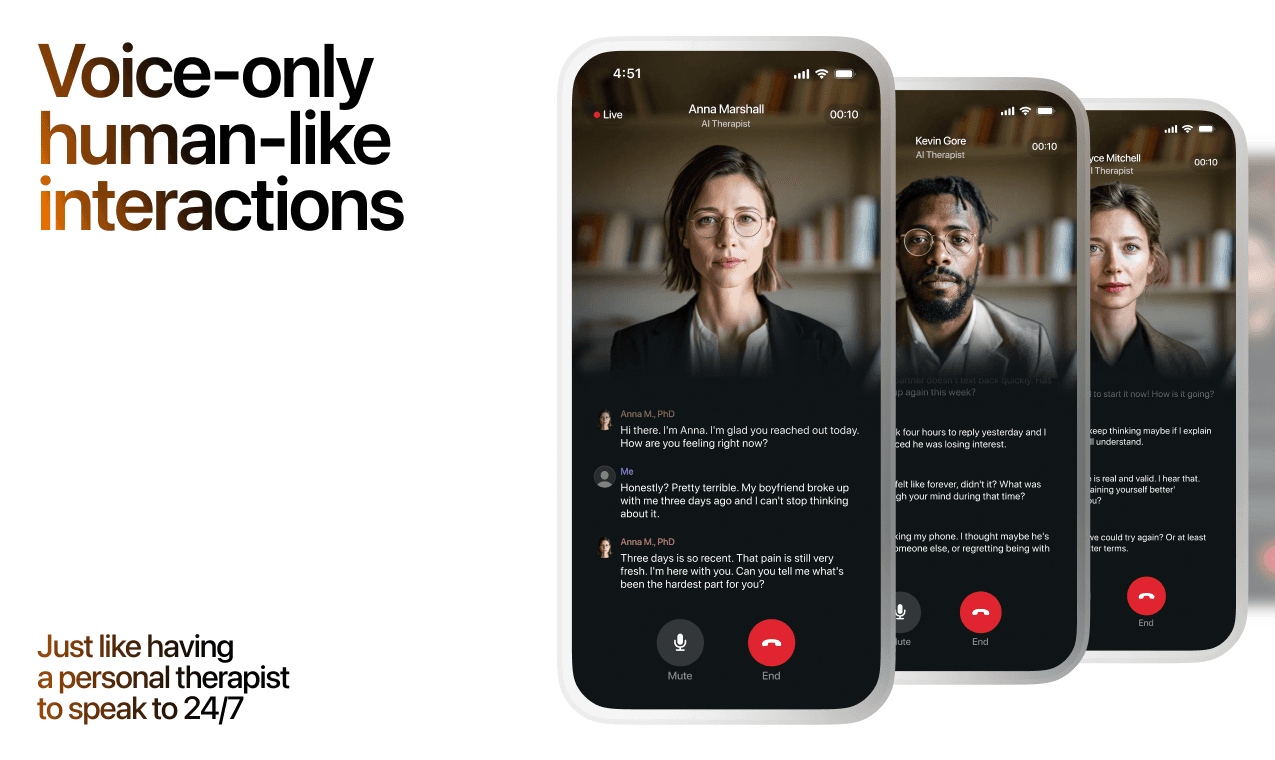
Here's what happens in a typical Lovon session:
You share what's on your mind
There's no script, no intake form, no waiting room. You speak or type whatever you're feeling — in your own words, at your own pace.
Lovon validates and explores
Using frameworks from CBT (Cognitive Behavioral Therapy) and motivational interviewing, Lovon acknowledges your feelings first, then gently helps you explore them. No dismissive "just move on" advice.
You build coping skills together
Lovon doesn't just listen — it actively works with you on evidence-based techniques: thought reframing, urge surfing, behavioral experiments, and more.
What a Session with Lovon Looks Like
When to Seek Professional Help
AI support is a valuable tool, but it's not a replacement for professional care. Please consider reaching out to a licensed therapist if you experience any of the following:
- Persistent thoughts of self-harm or suicide
- Inability to perform daily activities (work, eating, sleeping) for more than 2 weeks
- Turning to alcohol or substances to cope
- Intense anger or desire to harm your ex-partner
- Complete emotional numbness that doesn't improve over time
Crisis Resources (US): If you're in immediate danger, call 988 (Suicide & Crisis Lifeline) or text HOME to 741741 (Crisis Text Line). Available 24/7, free, and confidential.
Outside the US? Find a crisis line in your country
Ready to Start?
Your healing journey can begin right now
A 7-day trial. No judgment. Just a safe space to process what you're going through.
Frequently Asked Questions
Is Lovon a replacement for a real therapist?
Is my conversation with Lovon AI private?
How is Lovon different from ChatGPT for emotional support?
Can I use Lovon if I'm already seeing a therapist?
Can I try Lovon before subscribing?
About the Author
The Lovon Editorial Team
Mental Health & Wellness Content Team
The Lovon Editorial Team develops mental health and wellness content designed to make psychological concepts accessible and actionable. Our goal is to bridge the gap between clinical research and everyday life - helping you understand why your mind works the way it does and what you can do about it....
Related articles
- Why Do I Push People Away? 2026 Fix Guide
Why do I push people away, answered with steps that work in 2026: name the urge, pause 90 seconds, repair fast. Fearful…
- Avoidant Attachment Style: Patterns & How to Change (2026)
Avoidant attachment style affects 1 in 4 adults. Learn the 7-step process to identify your patterns and build earned…
- Attachment Patterns Assessment Through Behavioral Observation
Understanding attachment patterns through behavioral observation has become an essential skill for mental health…
- Secure Attachment in Relationships: What It Looks Like (2026)
See exactly what secure attachment in relationships looks like in 2026 — 6 real signs, common misreads, and how to build…
See also
Quizzes
- Emotionally Unavailable Test: 12-Question Self-Check
See which part of you closes off, in three minutes.
- Rejection Sensitivity Test: Free 12-Question Check
See how strongly you expect and read rejection.
Free tools
- Attachment Trigger Plan for Anxious and Avoidant Patterns
Pick your pattern, tick the moments that set it off, and finish one card for each: your body signal, the thing you will…
- How to Reassure Your Partner (and When It Stops Helping)
A chat for working out how to reassure your partner when the same worry keeps coming back. Say what sets it off and how…
From the wiki
- What does clingy mean in a relationship?
Clingy is what people call behavior that asks for more contact or reassurance than the other person wants to give…
Disclaimer: This article is for informational purposes only and does not constitute medical advice, diagnosis, or treatment. Always seek the advice of your physician or other qualified health provider with any questions you may have regarding a medical condition. If you are in crisis or think you may have an emergency, call 988 (Suicide & Crisis Lifeline) or go to the nearest emergency room. Outside the US? Find a crisis line in your country.