
Cycle Breakers Experiencing Difficulty During Holiday Gatherings
For those breaking generational cycles of dysfunction, the holiday season often brings an unexpected emotional weight. While others anticipate joyful reunions,

Key Takeaways
- Scheduling therapy sessions or support calls before and after the gathering
- Identifying a trusted friend you can text or call during difficult moments
- Planning specific self-regulation practices you can access discreetly (breathing exercises, grounding techniques,
- Using tools like Lovon.app to process feelings in real-time when you need immediate support but can't access your
- Decide in advance how long you'll stay and arrange your own transportation so you can leave when needed
Cycle Breakers Experiencing Difficulty During Holiday Gatherings
Understanding why family celebrations trigger old patterns and how to navigate dysfunctional dynamics while honoring your healing journey
cycle-breakers-holiday-gatherings-difficulty
Introduction
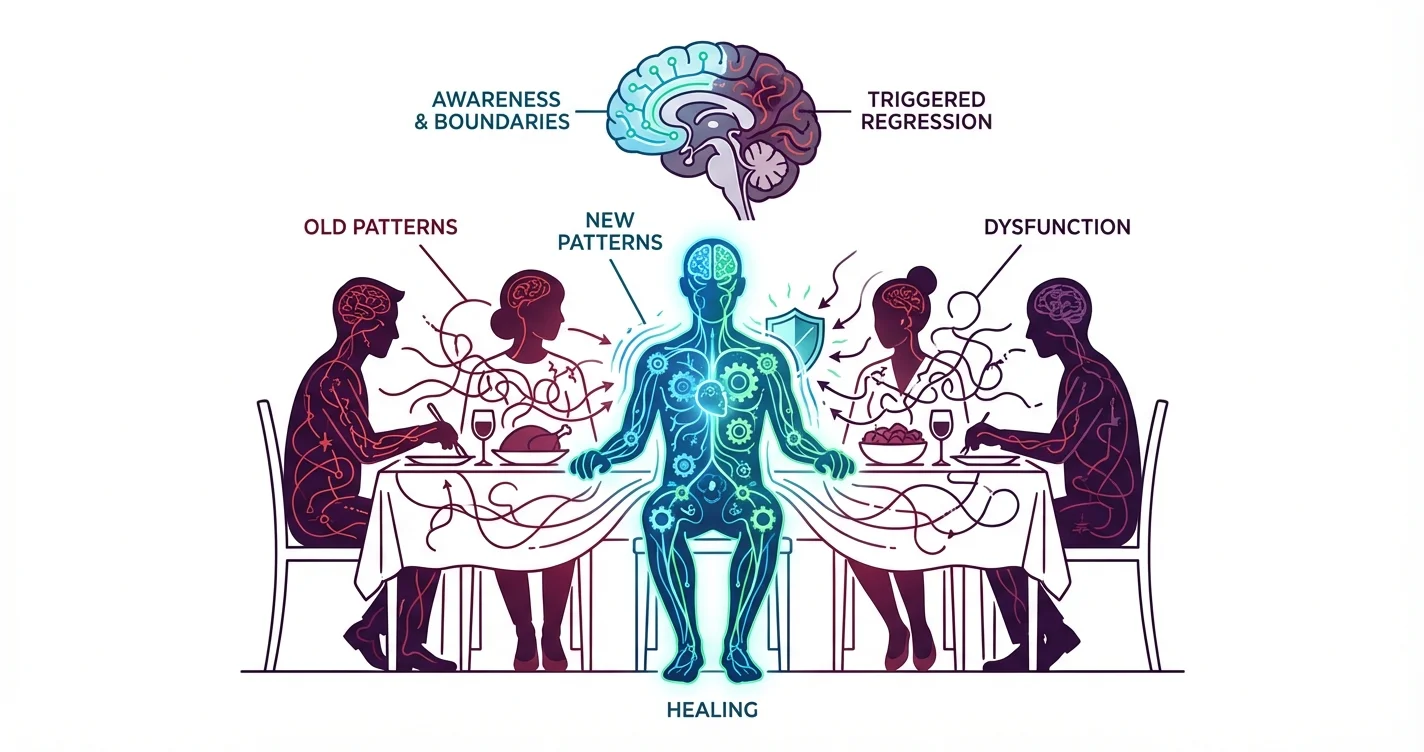
For those breaking generational cycles of dysfunction, the holiday season often brings an unexpected emotional weight. While others anticipate joyful reunions, cycle breakers experiencing difficulty during holiday gatherings with dysfunctional families face a unique challenge: returning to the environment where old wounds originated, armed with new awareness but surrounded by unchanged dynamics. The decorated table and festive atmosphere can't mask the underlying patterns that made healing necessary in the first place. This difficulty isn't a sign of failure in your growth—it's a natural consequence of bringing your evolved self into a system that operates by rules you've worked hard to unlearn. Understanding why these gatherings feel so challenging can help you navigate them with greater clarity and self-compassion.
Why Holiday Gatherings Are Uniquely Difficult for Cycle Breakers
The holiday season creates a perfect storm of challenges for those working to break intergenerational patterns. Unlike casual family interactions, holidays come with cultural expectations of togetherness, gratitude, and harmony that can feel suffocating when your family history involves trauma, neglect, or emotional manipulation.
Research suggests that returning to childhood environments can trigger neural patterns associated with earlier developmental periods—essentially, your brain may partially revert to old response patterns when surrounded by the same people and settings where those patterns formed. For cycle breakers, this means the emotional regulation skills you've built through therapy or personal work may feel suddenly inaccessible when you're back at your parents' dining table.
Dysfunctional family systems typically operate through power and control rather than addressing actual issues or emotions directly. According to mental health professionals specializing in toxic family dynamics, these systems maintain stability through unspoken rules: don't question, don't feel, don't challenge the established hierarchy. When you've done the work to develop healthy boundaries and emotional awareness, you're essentially bringing a new operating system into an environment running old, incompatible software.
The concentrated time together during holidays intensifies these dynamics. A brief phone call allows you to maintain your boundaries and exit when needed, but multi-day gatherings or extended celebrations offer fewer escape routes and more opportunities for triggering interactions.
The Specific Challenges Cycle Breakers Face
Walking on Eggshells Around Emotional Dysregulation
Many dysfunctional families organize themselves around members who struggle with emotional regulation. Therapists who work with adult children of emotionally immature parents note that families often develop elaborate systems of accommodation—monitoring tone, avoiding certain topics, managing others' reactions—all to prevent emotional outbursts or withdrawal.
When you've worked to recognize these patterns, returning to them creates cognitive dissonance. You can now see the emotional labor everyone performs, the constant anxiety in the air, the way conversations get redirected away from anything real. This awareness doesn't make you immune to the pattern; instead, you may find yourself unconsciously falling back into the caretaking or monitoring role, only to recognize hours or days later that you've abandoned your own boundaries.
The Invalidation of Your Growth
Families invested in maintaining dysfunction often respond to a member's growth with subtle or overt invalidation. Your attempts to communicate differently may be met with dismissal ("you're too sensitive now"), mockery ("look who thinks they're better than us"), or the silent treatment. Some families simply refuse to acknowledge that you've changed, continuing to treat you according to the role you occupied years ago.
This invalidation can be deeply destabilizing for cycle breakers. You've worked hard to develop healthier patterns, perhaps through therapy, self-help resources, or tools like Lovon.app that help you process complex family dynamics between therapy sessions. Having that growth ignored or pathologized can trigger doubt about your own perceptions—a echo of the gaslighting that may have characterized your upbringing.
The Absence of Genuine Connection
Perhaps the most painful aspect of these gatherings is the facade of intimacy without actual connection. Dysfunctional families may go through the motions of holiday traditions while avoiding any authentic emotional exchange. Questions remain surface-level, conflicts get swept aside, and everyone performs their assigned role in the family narrative.
For cycle breakers who've experienced genuine vulnerability and connection in healthier relationships or therapeutic settings, this hollow performance of family feels especially stark during holidays. You're surrounded by people who share your history, yet you may feel profoundly alone because no one is truly present or authentic.
Understanding the Psychological Mechanics
Trauma Responses Don't Follow Logic
Even when you intellectually know that your family's patterns are unhealthy, your nervous system may respond as if you're still the child who needed to adapt to survive in that environment. Studies in trauma research indicate that environmental cues associated with past experiences can activate physiological stress responses regardless of current safety or cognitive awareness.
This explains why cycle breakers often report feeling physically exhausted after family gatherings, experiencing sleep disruption, or noticing old anxiety symptoms resurface. Your body is responding to learned associations between these people, places, and past threats to your emotional or physical safety—even when nothing overtly threatening occurs.
The Grief of What Never Was
Holidays amplify the grief that many cycle breakers carry: mourning the family you needed but didn't have. Media portrayals of warm, functional family celebrations can intensify this loss. You may find yourself grieving not just for your childhood, but for the present moment—the reality that your family still can't provide the connection and safety you deserve.
Mental health professionals working with individuals breaking generational patterns note that this grief often surfaces most intensely during holidays because these occasions explicitly celebrate family bonds. When those bonds are strained, superficial, or harmful, the cultural emphasis on family gratitude can feel like salt in an open wound.
The Double Bind of Participation
Cycle breakers often face an impossible choice: participate in family gatherings and risk your mental health, or decline and face guilt, social judgment, or family retaliation. This double bind—damned if you do, damned if you don't—creates significant psychological stress.
Some family members may use holidays as leverage, implying that your absence would devastate elderly relatives or ruin the celebration for everyone. This manipulation places responsibility for others' emotions on you, replicating the dynamic you've worked to escape. Yet setting boundaries around holiday participation can trigger intense guilt, especially when broader culture reinforces messages about family obligation.
Strategies for Navigating Dysfunctional Family Holidays
Prepare Your Emotional Infrastructure in Advance
Before attending family gatherings, establish support systems and coping strategies. This might include:
- Scheduling therapy sessions or support calls before and after the gathering
- Identifying a trusted friend you can text or call during difficult moments
- Planning specific self-regulation practices you can access discreetly (breathing exercises, grounding techniques, brief walks)
- Using tools like Lovon.app to process feelings in real-time when you need immediate support but can't access your regular therapist
Mental health professionals emphasize that preparation isn't about armoring yourself against your family—it's about maintaining connection to your adult self and the resources you've built.
Set Concrete Boundaries Around Time and Topics
Vague intentions to "do better with boundaries" often crumble under the pressure of family dynamics. Instead, establish specific, actionable limits:
- Decide in advance how long you'll stay and arrange your own transportation so you can leave when needed
- Identify topics you won't discuss (your therapy, relationship choices, career decisions) and prepare brief redirects ("I'm not discussing that today")
- Determine which behaviors you'll exit from (yelling, substance abuse, personal attacks) and follow through
Boundaries work best when you frame them as information about your actions rather than demands for others to change: "I'll need to leave if voices get raised" rather than "You need to stop yelling."
Release the Hope for Different
One of the most painful aspects of family gatherings for cycle breakers is the persistent hope that this time will be different—that your family will finally see you, acknowledge their patterns, or respond to your growth. Research on family systems suggests that significant change in entrenched dynamics is rare without collective commitment to that change.
Releasing the hope for different doesn't mean accepting abuse or abandoning your boundaries. Instead, it means attending (if you choose to attend) with realistic expectations. When you stop hoping your emotionally immature parent will suddenly offer genuine support, their typical response stings less. You've already grieved that loss instead of having the wound reopened by unmet expectations.
Observe Rather Than Absorb
Creating psychological distance while physically present can help protect your emotional wellbeing. Therapists specializing in family trauma sometimes recommend adopting an observer stance—noticing family dynamics with curiosity rather than getting swept into them.
This might sound like internal narration: "There's the deflection pattern when Mom's drinking comes up" or "I notice Dad's using humor to avoid this serious topic." This practice isn't about judgment or superiority—it's about maintaining awareness of the patterns so you don't unconsciously replicate your old role in them.
Limit Substance Use
Alcohol often flows freely at holiday gatherings, and it can be tempting to use it to numb uncomfortable feelings. However, substances lower your capacity to maintain boundaries, make you more vulnerable to saying things you'll regret, and can intensify emotional dysregulation.
If you choose to drink, set a specific limit in advance. Better yet, consider staying completely sober so you can remain fully present to your boundaries and able to leave if necessary.
When to Consider Not Attending
Despite cultural pressure to prioritize family during holidays, sometimes the healthiest choice for cycle breakers is not attending dysfunctional family gatherings. Consider declining if:
- Previous gatherings have triggered severe mental health symptoms (panic attacks, suicidal ideation, dissociation, or significant regression in your healing)
- Family members have been verbally, emotionally, or physically abusive and show no acknowledgment or change
- Attending would require you to expose your own children to harmful dynamics
- The recovery time needed after gatherings significantly impairs your functioning for weeks
Your healing matters more than tradition. Some cycle breakers find that taking several years away from family holidays allows them to strengthen their sense of self before determining whether limited contact might be sustainable.
Creating Alternative Celebrations
If you decide not to attend family gatherings—whether for one year or permanently—creating alternative celebrations can help address the cultural void while honoring your needs:
- "Friendsgiving" gatherings with chosen family who respect your boundaries
- Volunteer work that provides purpose and connection during holiday periods
- Solo retreats focused on rest, reflection, or activities you enjoy
- Small celebrations with your immediate family (partner, children) that establish new, healthier traditions
These alternatives aren't "lesser than" traditional family gatherings. For many cycle breakers, they become profoundly meaningful precisely because they're built on authenticity, mutual respect, and genuine care—the qualities absent from their families of origin.
Processing the Aftermath
Even with excellent boundaries and preparation, family gatherings can leave cycle breakers feeling emotionally depleted, confused, or destabilized. The days and weeks following these events require intentional recovery:
- Expect to feel exhausted and build in rest time rather than immediately returning to full responsibilities
- Process your experience through journaling, therapy, or conversations with trusted support people who understand family dysfunction
- Notice if old coping mechanisms (people-pleasing, self-criticism, numbing) have resurfaced and gently redirect yourself toward healthier patterns
- Acknowledge what you did well in maintaining boundaries rather than focusing on perceived failures
Many cycle breakers find that talking through the specific interactions that triggered them helps restore perspective. This is where accessible support resources can be valuable—sometimes you need to process a particular comment or dynamic immediately rather than waiting for your next scheduled therapy appointment.
When to Seek Professional Help
If you're struggling with decisions about family contact during holidays, or if family gatherings consistently trigger significant mental health symptoms, professional support can be invaluable. Consider seeking help from therapists who specialize in:
- Family systems and intergenerational trauma
- Adult children of dysfunctional families
- Complex PTSD related to developmental trauma
- Boundary-setting and assertiveness skills
Signs that professional support would be particularly beneficial include: feeling unable to function normally for extended periods after family contact, experiencing intrusive thoughts or nightmares about family interactions, struggling with decisions about whether to maintain family relationships, or noticing that family dynamics are negatively affecting your other relationships.
Professional help isn't only for crisis situations. Many cycle breakers work with therapists specifically around holiday planning, processing family interactions, and developing long-term strategies for managing family relationships in ways that honor both their healing and their values.
Conclusion
Cycle breakers experiencing difficulty during holiday gatherings with dysfunctional families are navigating genuinely complex terrain. You're attempting to maintain your hard-won growth while interfacing with the system where your wounds originated, all under the cultural pressure to perform gratitude and harmony. This difficulty isn't a personal failing—it's the natural result of bringing health into an environment organized around dysfunction.
Understanding why these gatherings feel so challenging—the neural triggering, the invalidation of your growth, the absence of genuine connection—can reduce the self-blame that many cycle breakers experience. You're not "too sensitive" or "unable to get over the past." You're appropriately responding to an environment that remains unhealthy, even as you've changed.
Whether you choose to attend family gatherings with strong boundaries, take time away to strengthen your foundation, or create alternative celebrations, the priority is protecting your healing while honoring your values. Your growth matters. The patterns you're breaking matter. And the difficulty you experience during these gatherings is a sign of your awareness, not your weakness.
Disclaimer: This is general information, not medical advice or diagnosis. If symptoms are severe, affecting your daily life, or you're having thoughts of self-harm—seek professional help. In the US: call or text 988 (Suicide & Crisis Lifeline). For immediate danger: 911 or local emergency services.
How AI Support Helps You Heal
AI emotional support isn't about replacing human connection — it's about filling the gaps. The moments when you need to talk at 2 AM, when you don't want to burden your friends again, or when you simply need someone to listen without judgment.
Here's what happens in a typical Lovon session:
You share what's on your mind
There's no script, no intake form, no waiting room. You speak or type whatever you're feeling — in your own words, at your own pace.
Lovon validates and explores
Using frameworks from CBT (Cognitive Behavioral Therapy) and motivational interviewing, Lovon acknowledges your feelings first, then gently helps you explore them. No dismissive "just move on" advice.
You build coping skills together
Lovon doesn't just listen — it actively works with you on evidence-based techniques: thought reframing, urge surfing, behavioral experiments, and more.
What a Session with Lovon Looks Like

When to Seek Professional Help
AI support is a valuable tool, but it's not a replacement for professional care. Please consider reaching out to a licensed therapist if you experience any of the following:
- Persistent thoughts of self-harm or suicide
- Inability to perform daily activities (work, eating, sleeping) for more than 2 weeks
- Turning to alcohol or substances to cope
- Intense anger or desire to harm your ex-partner
- Complete emotional numbness that doesn't improve over time
Crisis Resources (US): If you're in immediate danger, call 988 (Suicide & Crisis Lifeline) or text HOME to 741741 (Crisis Text Line). Available 24/7, free, and confidential.
Outside the US? Find a crisis line in your country
Ready to Start?
Your healing journey can begin right now
A 7-day trial. No judgment. Just a safe space to process what you're going through.
Frequently Asked Questions
Is Lovon a replacement for a real therapist?
Is my conversation with Lovon AI private?
How is Lovon different from ChatGPT for emotional support?
Can I use Lovon if I'm already seeing a therapist?
Can I try Lovon before subscribing?
About the Author

The Lovon Editorial Team
Mental Health & Wellness Content Team
The Lovon Editorial Team develops mental health and wellness content designed to make psychological concepts accessible and actionable. Our goal is to bridge the gap between clinical research and everyday life - helping you understand why your mind works the way it does and what you can do about it....
Related articles
- ADHD with Comorbid Anxiety and Depression Cycles Affecting Self-Esteem
Living with ADHD becomes exponentially more challenging when anxiety and depression enter the picture. For many people…
- Amygdala and Prefrontal Cortex Partnership in Emotional Regulation
The partnership between the amygdala and prefrontal cortex represents one of the most crucial relationships in your…
- How to Break a Trauma Response Cycle (2026 Guide)
Learn how to break a trauma response cycle with 7 concrete steps, troubleshooting fixes, and where AI voice therapy fits…
- Intergenerational Trauma & Mental Health: Break the Cycle of Generational Trauma
Some things that happen to people do not stay only with them. A bad experience in one generation can affect the next…
See also
Quizzes
- Toxic Masculinity Test: Which Rules Are You Running?
See which learned rules cost you most, in 3 minutes.
- Toxic Femininity Test: Are You Running an Old Script?
See which learned script is running your relationship.
Free tools
- Am I Overreacting, or Is This a Big Deal?
A chat for the small thing you cannot stop turning over. Say what happened and what you have already told yourself about…
- Vent to an AI
Need to vent and there is nobody to call, or nobody you want to tell? Type it here. You are talking to an AI listener…
From the wiki
- Why do I keep dreaming about the same person?
A recurring dream figure usually marks unfinished emotional business rather than a message about that person. Your brain…
Disclaimer: This article is for informational purposes only and does not constitute medical advice, diagnosis, or treatment. Always seek the advice of your physician or other qualified health provider with any questions you may have regarding a medical condition. If you are in crisis or think you may have an emergency, call 988 (Suicide & Crisis Lifeline) or go to the nearest emergency room. Outside the US? Find a crisis line in your country.