
Cyclothymia and Rapid Mood Swings Under Four Days
Cyclothymia represents one of the most challenging mood disorders to diagnose accurately, largely because its defining characteristic involves rapid mood
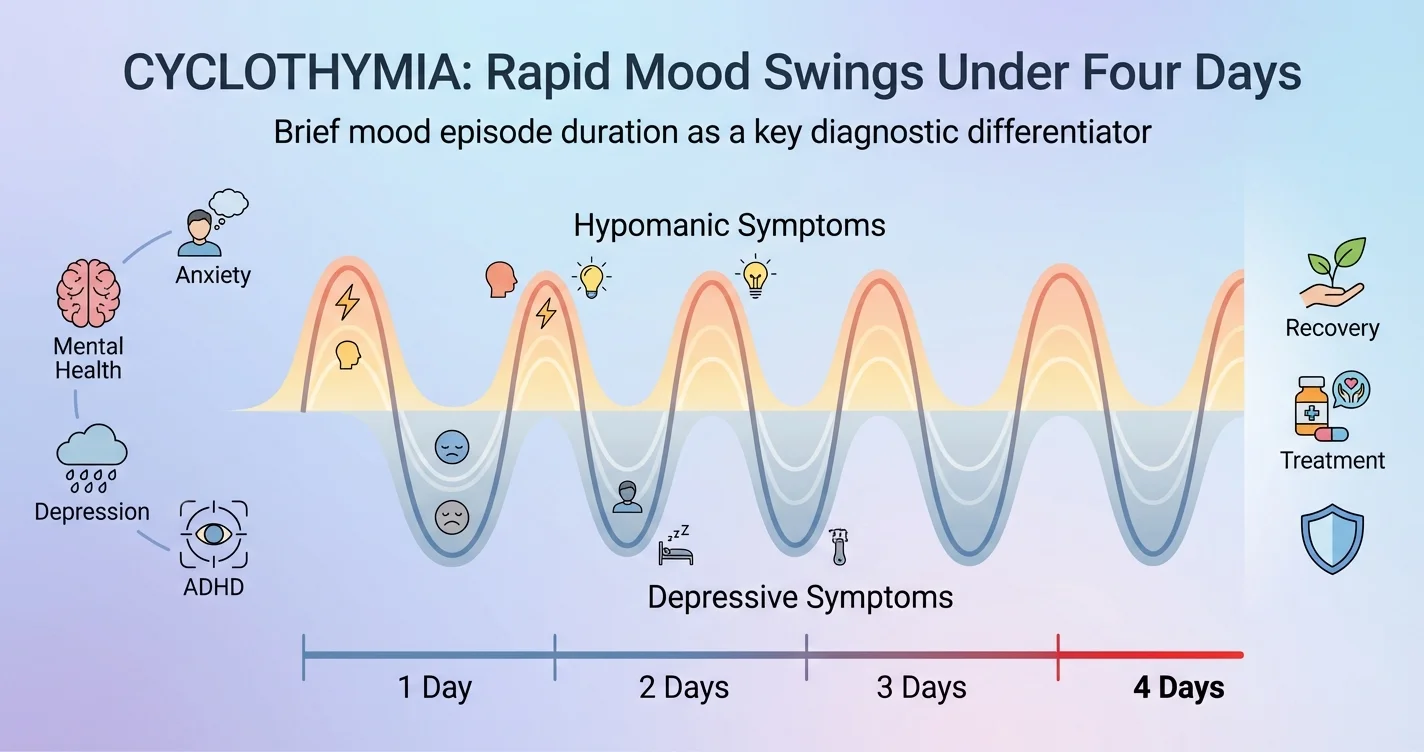

Key Takeaways
- Cyclothymia: Hypomanic and depressive symptoms typically resolve within hours to four days, with frequent
- Bipolar II Disorder: Hypomanic episodes last at least four consecutive days, while major depressive episodes persist
- Bipolar I Disorder: Manic episodes extend for at least one week (or require hospitalization), with depressive
- Major Depressive Disorder: Depressive episodes persist for at least two weeks without the hypomanic shifts seen in
- Mood shifts occurring frequently enough to disrupt work, relationships, or other important activities
Introduction
Cyclothymia represents one of the most challenging mood disorders to diagnose accurately, largely because its defining characteristic involves rapid mood swings under four days that distinguish it from other mood conditions. Unlike bipolar disorder, where mood episodes persist for extended periods, cyclothymia presents with frequent oscillations between hypomanic and depressive symptoms that shift quickly—often within hours or a few days. This pattern of brief, fluctuating mood changes creates significant diagnostic complexity for mental health professionals who must differentiate cyclothymia from bipolar disorder, borderline personality disorder, and other conditions with mood instability. Understanding the specific duration criteria for mood episodes provides essential clarity in identifying this often-overlooked condition and ensuring individuals receive appropriate support.
Understanding Cyclothymia Through Mood Episode Duration
Cyclothymia, clinically known as cyclothymic disorder, involves chronic mood fluctuations characterized by numerous periods of hypomanic symptoms alternating with depressive symptoms. What fundamentally distinguishes cyclothymia from bipolar I and II disorders is the duration and intensity of these mood states. Research indicates that cyclothymic mood episodes typically last hours to a few days—significantly shorter than the week-long manic episodes or two-week depressive episodes required for bipolar disorder diagnosis.
The four-day threshold serves as a practical clinical marker. When hypomanic or depressive symptoms consistently resolve within approximately four days rather than persisting for the extended durations seen in bipolar disorder, this pattern suggests cyclothymia. These rapid mood swings under four days create a distinctive instability that feels like an emotional rollercoaster, where individuals experience elevated mood, increased energy, and creativity one day, then shift to low mood, fatigue, and pessimism within the same week.
Clinical observations suggest that people with cyclothymia may experience dozens of these brief mood shifts throughout a year, creating persistent instability without the severe, prolonged episodes that characterize bipolar disorder. This chronicity—symptoms present for at least two years in adults—combined with the brief duration of individual episodes forms the diagnostic foundation.
Four Day Mood Swing Criteria as a Diagnostic Differentiator
The specific duration of mood episodes provides critical differentiation between cyclothymia and other mood disorders. Understanding these temporal boundaries helps clarify why cyclothymia occupies a distinct diagnostic category.
Key duration-based differentiators include:
- Cyclothymia: Hypomanic and depressive symptoms typically resolve within hours to four days, with frequent oscillations creating chronic instability
- Bipolar II Disorder: Hypomanic episodes last at least four consecutive days, while major depressive episodes persist for at least two weeks
- Bipolar I Disorder: Manic episodes extend for at least one week (or require hospitalization), with depressive episodes lasting two weeks or longer
- Major Depressive Disorder: Depressive episodes persist for at least two weeks without the hypomanic shifts seen in cyclothymia
This temporal distinction matters because brief mood episodes suggest different underlying mechanisms and treatment approaches. The rapid cycling nature of cyclothymia—with mood shifts occurring within days rather than weeks—indicates a pattern of emotional regulation difficulty that differs from the more sustained mood states in bipolar disorder.
Mental health professionals assess not just the presence of mood symptoms but their duration and pattern over time. When someone reports that their elevated or depressed moods consistently shift before reaching the four-day threshold for hypomania or the two-week threshold for major depression, cyclothymia becomes a more likely explanation than bipolar disorder.
However, this differentiation requires careful clinical assessment. Some individuals with bipolar disorder experience rapid cycling (four or more mood episodes per year), which can appear similar to cyclothymia but involves full-threshold episodes of longer duration. The distinction lies in whether individual episodes meet the full duration criteria for hypomania, mania, or major depression.
Diagnostic Criteria for Cyclothymia Based on Brief Mood Duration
The diagnostic process for cyclothymia centers on identifying this pattern of less than four day mood changes over an extended period. Clinical criteria establish several requirements that must be met for a cyclothymia diagnosis.
First, numerous periods of hypomanic symptoms and depressive symptoms must be present, occurring frequently over at least two years in adults (one year in children and adolescents). These symptoms don't meet the full criteria for hypomanic episodes or major depressive episodes—partly because they resolve too quickly to meet duration thresholds.
Second, during this two-year period, the hypomanic and depressive periods must be present for more than half the time, with symptom-free intervals lasting no longer than two months. This establishes the chronic, persistent nature of cyclothymia rather than isolated mood episodes.
Third, the individual has never met criteria for a major depressive episode, manic episode, or hypomanic episode. This exclusion is crucial—if someone experiences even one full-threshold episode meeting duration criteria, the diagnosis shifts from cyclothymia to bipolar disorder.
Fourth, the symptoms cause significant distress or impairment in social, occupational, or other important areas of functioning. The rapid mood shifts under four days, while less severe than bipolar episodes, create substantial life disruption through their unpredictability and chronicity.
Mental health professionals typically gather this information through detailed clinical interviews, mood tracking over several weeks or months, and careful history-taking to establish the pattern and duration of symptoms. Mood charting becomes particularly valuable, allowing both clinician and individual to visualize the rapid fluctuations and confirm that episodes consistently resolve within the brief timeframe characteristic of cyclothymia.
Tools like Lovon.app can support this process by providing on-demand opportunities to talk through mood shifts as they occur, helping individuals identify patterns and articulate their experiences more clearly when working with mental health professionals. Tracking these conversations over time may reveal the characteristic rapid oscillations that distinguish cyclothymia.
What Makes Cyclothymia Different: Rapid Mood Shifts Under Four Days
Beyond duration criteria, cyclothymia presents with distinctive experiential qualities that emerge from its pattern of brief, frequent mood changes. Understanding these characteristics helps differentiate cyclothymia from other conditions with emotional instability.
The experience of cyclothymia involves constant anticipation of the next mood shift. Unlike bipolar disorder, where individuals may have periods of mood stability between episodes, cyclothymia creates persistent uncertainty. Someone might feel energized and optimistic in the morning, then notice their mood darkening by afternoon or the next day, only to shift again within days. This unpredictability affects planning, relationships, and self-understanding.
Personality disorders, particularly borderline personality disorder, also involve rapid mood changes but differ in important ways. In borderline personality disorder, mood shifts typically occur in response to interpersonal triggers and may change within hours or even minutes. These shifts are often described as "reactive mood instability"—intense emotional responses to environmental events. In cyclothymia, mood changes appear more autonomous, shifting independent of immediate circumstances, and while rapid, tend to persist for at least several hours to days rather than minutes.
Studies suggest that cyclothymia may represent a temperamental variation—a baseline tendency toward mood fluctuation that some individuals manage without significant impairment while others experience functional difficulties requiring intervention. This dimensional perspective acknowledges that rapid mood swings under four days exist on a spectrum, with cyclothymia diagnosed when this pattern creates substantial distress or impairment.
The brief duration of cyclothymic episodes also influences treatment considerations. Mood stabilizers commonly used for bipolar disorder may help some individuals with cyclothymia, but the rapid cycling pattern sometimes requires different approaches. Psychotherapy focusing on mood monitoring, identifying triggers, developing coping strategies, and managing the unpredictability of mood shifts often forms the foundation of treatment.
Differential Diagnosis and Clinical Considerations
Accurately distinguishing cyclothymia from other conditions requires consideration of several overlapping presentations. The four day mood swing criteria provides one important differentiator, but comprehensive assessment considers multiple factors.
When evaluating whether rapid mood changes indicate cyclothymia, borderline personality disorder, or another condition, clinicians examine the relationship between mood shifts and environmental triggers. Cyclothymic mood changes occur with less obvious environmental provocation, while borderline mood instability typically connects to interpersonal events, perceived rejection, or abandonment fears.
Substance use can mimic cyclothymia, creating periods of elevated mood during use and depressive symptoms during withdrawal or recovery. Medical conditions including thyroid disorders, neurological conditions, and hormonal changes may also produce mood fluctuations. Thorough evaluation rules out these alternative explanations before attributing symptoms to cyclothymia.
Attention-deficit/hyperactivity disorder (ADHD) sometimes resembles cyclothymia, particularly in adults, because both involve energy fluctuations and mood variability. However, ADHD primarily affects attention, impulsivity, and activity regulation, with mood changes secondary to these core symptoms. The less than four day mood changes in cyclothymia represent primary mood shifts rather than secondary responses to attention difficulties.
Some individuals experience cyclothymia alongside other mental health conditions, creating complex presentations. Anxiety disorders frequently co-occur with cyclothymia, as the unpredictability of mood shifts may generate anticipatory anxiety. Substance use sometimes develops as individuals attempt to manage mood fluctuations, creating additional diagnostic complexity.
Resources like Lovon.app offer accessible support for processing the confusion and distress that accompanies uncertain diagnosis, providing a space to explore experiences and develop language for discussing symptoms with mental health professionals. This reflection can clarify patterns that assist in accurate differential diagnosis.
Treatment Approaches for Cyclothymia With Rapid Mood Cycling
Managing cyclothymia requires approaches that address the distinctive challenge of rapid mood swings under four days while supporting long-term stability. Treatment typically combines several strategies tailored to individual needs and symptom patterns.
Psychotherapy forms the foundation of cyclothymia treatment for many individuals. Cognitive-behavioral therapy (CBT) helps identify thought patterns that exacerbate mood fluctuations and develops skills for managing emotional responses. Interpersonal and social rhythm therapy (IPSRT), developed for bipolar disorder, shows promise for cyclothymia by emphasizing routine establishment—regular sleep, meal, and activity schedules that may help stabilize mood cycling.
Medication options for cyclothymia remain less established than for bipolar disorder, partly because the condition receives less research attention. Some individuals benefit from mood stabilizers or other medications used in bipolar treatment, though responses vary. The decision to use medication involves weighing potential benefits against side effects, considering symptom severity and functional impairment. These discussions should occur with psychiatrists or other prescribers experienced in mood disorders.
Self-monitoring becomes particularly valuable in cyclothymia. Tracking mood patterns, energy levels, sleep, and potential triggers helps individuals recognize the early signs of shifts and implement coping strategies proactively. This awareness transforms the experience from feeling at the mercy of unpredictable mood changes to having some agency in managing them.
Lifestyle factors that support mood stability warrant attention. Research suggests that consistent sleep schedules, regular physical activity, stress management, and avoiding alcohol and recreational drugs may help reduce mood fluctuation intensity and frequency. While these approaches don't eliminate cyclothymia, they may decrease symptom severity.
Building a support network that understands the nature of cyclothymia helps manage its impact on relationships and daily functioning. Educating close friends, family, or partners about the condition's pattern—that mood shifts occur rapidly but aren't personal reactions to them—can reduce misunderstandings.
When to Seek Professional Help
If you experience persistent mood fluctuations that create distress or interfere with your daily life, professional evaluation is important. Specific signs indicating the need for mental health consultation include:
- Mood shifts occurring frequently enough to disrupt work, relationships, or other important activities
- Difficulty maintaining consistent performance at work or school due to unpredictable energy and motivation changes
- Relationship conflicts arising from others perceiving you as unpredictable or inconsistent
- Periods of impulsive behavior during elevated moods that create problems
- Difficulty planning or committing to activities due to uncertainty about how you'll feel
- Emerging thoughts of self-harm or suicide during depressive periods
Mental health professionals who can provide assessment and treatment for cyclothymia include psychiatrists, psychologists, licensed clinical social workers, and licensed professional counselors, particularly those with experience in mood disorders. Seeking consultation from a psychiatrist may be especially valuable for medication evaluation if needed.
Remember that while self-awareness and self-help strategies support wellness, they complement rather than replace professional treatment when cyclothymia creates significant life impact. Early intervention often prevents worsening symptoms and helps develop effective management strategies before patterns become deeply entrenched.
Conclusion
Understanding cyclothymia through the lens of rapid mood swings under four days provides essential clarity in distinguishing this condition from bipolar disorder and other mood conditions. The brief duration of mood episodes—typically resolving within hours to approximately four days rather than persisting for weeks—represents a key diagnostic differentiator that shapes both identification and treatment approaches. While the four day mood swing criteria offers an important temporal boundary, accurate diagnosis requires comprehensive assessment of symptom patterns over extended periods, ruling out alternative explanations, and evaluating functional impact. For individuals experiencing frequent mood fluctuations that create uncertainty and disruption, recognizing cyclothymia's distinctive pattern of less than four day mood changes can validate their experience and guide them toward appropriate support. Whether through professional treatment, therapeutic tools like Lovon.app for processing mood shifts as they occur, or self-management strategies, understanding the brief, cyclical nature of cyclothymic mood episodes represents the first step toward managing this challenging condition effectively.
Disclaimer: This is general information, not medical advice or diagnosis. If symptoms are severe, affecting your daily life, or you're having thoughts of self-harm — seek professional help. In the US: call or text 988 (Suicide & Crisis Lifeline). For immediate danger: 911 or local emergency services.
How AI Support Helps You Heal
AI emotional support isn't about replacing human connection — it's about filling the gaps. The moments when you need to talk at 2 AM, when you don't want to burden your friends again, or when you simply need someone to listen without judgment.
Here's what happens in a typical Lovon session:
You share what's on your mind
There's no script, no intake form, no waiting room. You speak or type whatever you're feeling — in your own words, at your own pace.
Lovon validates and explores
Using frameworks from CBT (Cognitive Behavioral Therapy) and motivational interviewing, Lovon acknowledges your feelings first, then gently helps you explore them. No dismissive "just move on" advice.
You build coping skills together
Lovon doesn't just listen — it actively works with you on evidence-based techniques: thought reframing, urge surfing, behavioral experiments, and more.
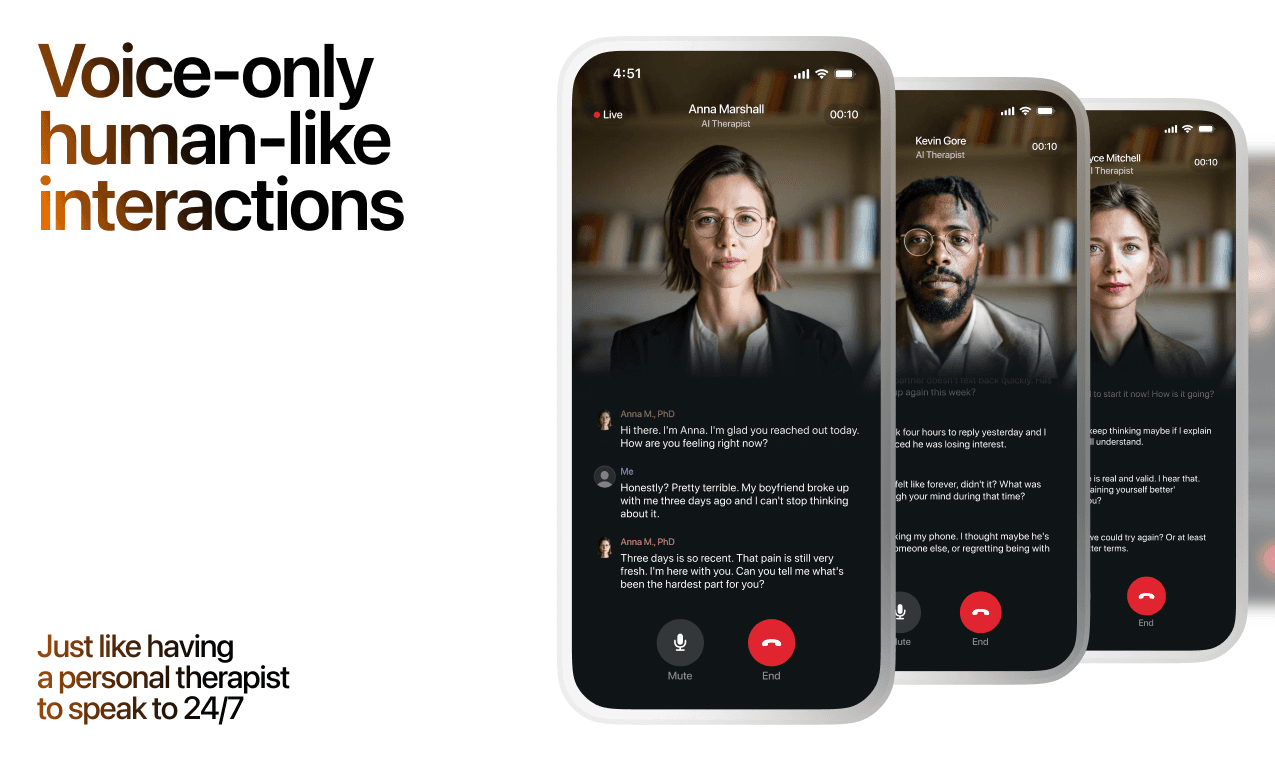
What a Session with Lovon Looks Like
When to Seek Professional Help
AI support is a valuable tool, but it's not a replacement for professional care. Please consider reaching out to a licensed therapist if you experience any of the following:
- Persistent thoughts of self-harm or suicide
- Inability to perform daily activities (work, eating, sleeping) for more than 2 weeks
- Turning to alcohol or substances to cope
- Intense anger or desire to harm your ex-partner
- Complete emotional numbness that doesn't improve over time
Crisis Resources (US): If you're in immediate danger, call 988 (Suicide & Crisis Lifeline) or text HOME to 741741 (Crisis Text Line). Available 24/7, free, and confidential.
Outside the US? Find a crisis line in your country
Ready to Start?
Your healing journey can begin right now
A 7-day trial. No judgment. Just a safe space to process what you're going through.
Frequently Asked Questions
Is Lovon a replacement for a real therapist?
Is my conversation with Lovon AI private?
How is Lovon different from ChatGPT for emotional support?
Can I use Lovon if I'm already seeing a therapist?
Can I try Lovon before subscribing?
About the Author

The Lovon Editorial Team
Mental Health & Wellness Content Team
The Lovon Editorial Team develops mental health and wellness content designed to make psychological concepts accessible and actionable. Our goal is to bridge the gap between clinical research and everyday life - helping you understand why your mind works the way it does and what you can do about it....
Related articles
- Cyclothymia Rapid Mood Shifts: Understanding 2-3 Day Cycles
Experiencing intense emotional highs and lows that shift every few days can be confusing and exhausting. For many…
- Bipolar Disorder Diagnostic Criteria Explained
Distinguishing between Bipolar 1, Bipolar 2, and cyclothymia depends primarily on understanding the Bipolar Disorder…
- Understanding the Four PTSD Symptom Categories: Reexperiencing, Trigger Reactivity, Mood Alterations, and Altered Reactivity
A comprehensive guide to recognizing and understanding the core symptom groups that define post-traumatic stress…
- ADHD and Anxiety: How the Two Conditions Overlap (2026)
ADHD and anxiety share symptoms but have different causes. Learn how they feed each other and what daily strategies…
See also
Quizzes
- Self-Concept Clarity Test: Do You Know Who You Are?
See how clearly you know yourself, in 3 minutes.
- Am I Codependent? 12-Question Self-Check
See how much of you is left over, in 2 minutes.
Free tools
- What to Say to Someone Who Is Grieving
Get sentences that fit this person and this week, not a list of things people say at funerals. Describe who they lost…
- Write a Letter to Someone You Lost
Tell it who they were to you and what you never got to say, and it writes the letter back in your words. No account, no…
From the wiki
- Why do I feel lonely all of a sudden?
Sudden loneliness usually traces back to something that quietly ended in the last few months: a routine, a shared class…
Disclaimer: This article is for informational purposes only and does not constitute medical advice, diagnosis, or treatment. Always seek the advice of your physician or other qualified health provider with any questions you may have regarding a medical condition. If you are in crisis or think you may have an emergency, call 988 (Suicide & Crisis Lifeline) or go to the nearest emergency room. Outside the US? Find a crisis line in your country.