
Flexible Consistency Framework for Meeting Different Daily Needs
The traditional approach to building habits relies on rigid routines—wake up at the same time, exercise at 6 AM sharp, meditate for exactly 20 minutes. But for

Key Takeaways
- Physical restoration and movement
- Mental processing and emotional regulation
- Creative expression or skill development
- Social connection and relationship maintenance
- Focused work or meaningful contribution
Introduction
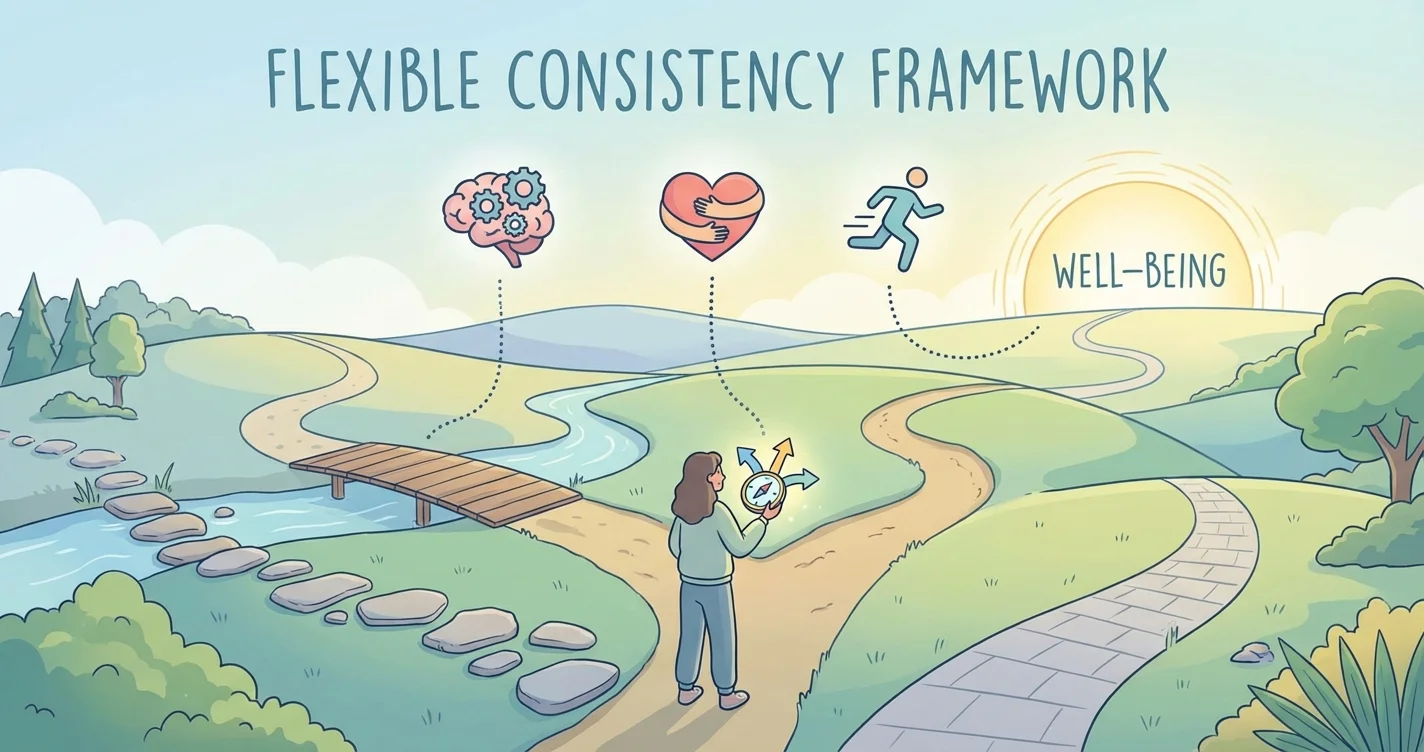
The traditional approach to building habits relies on rigid routines—wake up at the same time, exercise at 6 AM sharp, meditate for exactly 20 minutes. But for many people, this inflexibility becomes the reason consistency falls apart. Life doesn't operate on a fixed schedule: some days require deep focus, others demand social energy, and still others leave you managing unexpected crises. The flexible consistency framework offers an alternative: meeting different daily needs rather than rigid routine adherence, while still maintaining the momentum that drives long-term progress.
This framework shifts the question from "Am I doing the exact same thing every day?" to "Am I meeting my core needs in a way that fits today's reality?" Research on habit formation and behavioral psychology suggests that adaptability—not rigidity—may be the key to sustainable change. This article explores how to implement a flexible consistency approach that responds to your actual circumstances while keeping you accountable to what matters most.
Understanding the Flexible Consistency Framework
The flexible consistency framework recognizes that consistency doesn't require uniformity. Traditional habit-building advice treats variation as failure, but research in behavioral science indicates that flexible goal pursuit can actually enhance adherence over time. The framework operates on a simple principle: identify your core needs, then create multiple pathways to meet them depending on your daily context.
At its foundation, this approach distinguishes between the what and the how. The "what" represents your essential needs—physical movement, mental restoration, social connection, creative expression, or focused work. These remain consistent. The "how" varies based on energy levels, time constraints, emotional state, and external demands. A person committed to daily movement might run for an hour on high-energy days, take a 20-minute walk on busy days, or do gentle stretching when recovering from illness. All three meet the core need; none is "better" than the others in the context of that particular day.
This framework acknowledges what psychologists call "implementation flexibility"—the ability to adjust behavior while maintaining goal commitment. Studies suggest that people who build flexibility into their goal pursuit show greater resilience when facing obstacles, compared to those who rely on rigid execution plans.
Key Components of a Needs-Based Consistency System
Building a flexible consistency framework requires identifying your core needs categories and establishing multiple response options for each. This creates what behavioral researchers describe as a "prepared flexibility" system—you're not improvising randomly, but selecting from pre-determined options that all serve the same fundamental purpose.
Core need identification forms the foundation. Rather than focusing on specific behaviors (running, journaling, calling friends), identify the underlying needs these behaviors serve. Common core needs include:
- Physical restoration and movement
- Mental processing and emotional regulation
- Creative expression or skill development
- Social connection and relationship maintenance
- Focused work or meaningful contribution
- Sensory regulation and environmental management
Response menu creation provides your adaptive toolkit. For each core need, develop 3-5 options ranging from minimal-viable to full-expression. A physical movement menu might include: full workout session, 30-minute walk, 10-minute stretching routine, active errands or household tasks, and gentle mobility work. The key is that each option legitimately addresses the core need—these aren't compromises or failures, but contextually appropriate responses.
Daily assessment practices help match your response to your actual capacity. This typically involves a brief morning or evening check-in: What are my energy levels? What does my schedule demand? What emotional regulation do I need today? What unexpected constraints am I facing? This assessment takes 2-3 minutes but dramatically improves the fit between your choices and your circumstances.
Tracking systems in a flexible framework look different from rigid habit tracking. Instead of marking "did it" or "didn't do it," track whether you addressed the core need through any of your response options. Tools like Lovon.app can help with the daily assessment piece—talking through what your day requires and what you realistically have capacity for can clarify which response option fits best.
Implementing Flexible Consistency in Daily Practice
Transitioning from rigid routines to flexible consistency requires recalibrating what "success" means. The shift happens in three phases: establishing your needs architecture, building response fluency, and developing discernment between flexibility and avoidance.
Establishing your needs architecture begins with a week of observation. Track your current activities without judgment, then identify which core needs each activity serves. You'll likely discover that you're already meeting some needs consistently, perhaps neglecting others, and possibly doing activities that don't clearly serve any core need. From this data, identify 4-6 core needs that matter most to your functioning and well-being. These become your consistency anchors.
Building response fluency means actively practicing different response options. During your first month, deliberately rotate through your response menu even when you could do the "full" version. This serves multiple purposes: it removes the hierarchy of "better" and "worse" options, it proves that the minimal version still meets the need, and it builds confidence that you can maintain consistency even under constraints. Many people discover that their 10-minute option provides 70% of the benefit of their 60-minute option—valuable information that makes consistency far more sustainable.
Developing discernment addresses the legitimate concern that "flexibility" might become an excuse for avoidance. The distinction lies in honest assessment: Am I choosing a different response option because it genuinely fits my current capacity, or am I avoiding discomfort? This discernment improves with practice, and many people find that talking through this question—whether with a friend, therapist, or tools like Lovon.app that provide reflective listening—helps clarify true constraints versus avoidance patterns.
Research on self-regulation suggests that people who clearly define their flexibility parameters actually show better long-term adherence than those following rigid protocols. The key is that the flexibility is structured—you're choosing from predetermined options that all serve your core need, not simply doing whatever feels easiest in the moment.
Adapting the Framework Across Different Life Domains
The flexible consistency framework applies differently depending on the domain, with some areas requiring tighter parameters and others benefiting from wider variation.
Physical health and movement typically responds well to broad flexibility. Your body benefits from movement variety, and research on exercise adherence shows that having multiple acceptable options significantly improves long-term consistency. The core need—regular physical activity that maintains basic fitness and body awareness—can be met through countless specific activities. Seasonal variation naturally fits here: outdoor activities in summer, indoor options in winter, different intensity levels based on sleep quality and stress load.
Emotional regulation and mental health particularly benefits from response menus. Some days you might need structured processing through writing or therapy, other days you need distraction and lightness, still other days require somatic practices like breathwork or movement. The core need for emotional equilibrium remains constant, but the pathway changes based on what you're actually experiencing. During high-stress periods, you might need more frequent but shorter regulation practices; during stable times, less frequent deeper work suffices.
Relationship maintenance requires flexibility in form but consistency in attention. The core need—maintaining meaningful connection with important people—might be met through long phone calls, quick text check-ins, shared activities, or simply holding someone in mind. What matters is that key relationships receive regular attention in whatever form fits the current circumstances for both parties.
Creative or professional development often benefits from distinguishing between input and output needs. Some days you're positioned for deep creative work; others are better suited for skill-building, research, or logistical tasks. All advance your development, but forcing deep creative work on a day fragmented by meetings leads to frustration. The flexible approach asks: "What type of creative engagement fits my actual schedule and cognitive resources today?"
When Flexible Consistency Works Best (and When It Doesn't)
Flexible consistency frameworks excel in specific circumstances while proving less effective in others. Understanding these boundaries helps you implement the approach where it actually serves you.
Optimal contexts for flexible consistency include: managing multiple life domains simultaneously, navigating variable schedules or energy levels, recovering from burnout caused by rigid expectations, maintaining habits during life transitions, and building sustainable long-term practices rather than short-term intensive changes. People with chronic health conditions, caregiving responsibilities, or naturally variable energy patterns often find this approach dramatically more sustainable than rigid routines.
Less suitable contexts include: highly specific skill development requiring precise repetition (like learning a musical instrument or mastering a technical skill), situations requiring external accountability to specific behaviors (like court-ordered requirements), short-term intensive goals with fixed deadlines, and contexts where you specifically need external structure because internal decision-making is temporarily compromised. Some mental health conditions benefit more from predictable routine during acute phases, even if flexibility becomes helpful during maintenance phases.
The structure paradox deserves mention: implementing flexible consistency actually requires more upfront structure than rigid routines. You must identify core needs, develop response menus, create assessment practices, and build discernment skills. This initial investment pays dividends in long-term sustainability, but it's not the "easier" option in the short term. However, it's important to note that this varies between individuals—some people find that creating structure around flexibility feels more challenging than simply following fixed rules, while others find it immediately more intuitive and liberating.
When to Seek Professional Help
If you're struggling to maintain any form of consistency across multiple life domains, experiencing significant functional impairment, or finding that lack of structure is contributing to worsening mental health symptoms, professional support may be helpful. Therapists specializing in behavioral change, ADHD, executive function challenges, or habit formation can help you develop personalized systems that fit your specific neurological and psychological needs.
Signs that professional guidance might be valuable include: repeatedly making plans you don't follow without understanding why, feeling paralyzed by having options rather than freed by them, using "flexibility" as avoidance while recognizing the pattern but feeling unable to change it, or experiencing significant distress about your inability to maintain basic self-care routines. Professionals can help distinguish between systems that don't fit your actual needs and potential underlying issues affecting executive function, motivation, or self-regulation.
Conclusion
The flexible consistency framework for meeting different daily needs offers an alternative to the all-or-nothing thinking that derails many people's attempts at sustainable change. By shifting focus from rigid routine adherence to reliable need-fulfillment through context-appropriate responses, you can maintain genuine consistency without requiring life to conform to a fixed schedule.
This approach requires honest self-assessment, structured flexibility through response menus, and ongoing development of discernment between adaptation and avoidance. The payoff is a system that actually works with your life's reality rather than against it—one that maintains momentum through changing circumstances instead of collapsing when perfect conditions don't materialize.
Start by identifying one core need and developing a response menu for it. Practice selecting different options based on genuine daily assessment rather than default patterns. Notice what happens to your consistency over weeks rather than days. The goal isn't perfection in any single form—it's reliable attention to what actually matters, expressed in whatever form fits today's truth.
Disclaimer: This is general information, not medical advice or diagnosis. If symptoms are severe, affecting your daily life, or you're having thoughts of self-harm—seek professional help. In the US: call or text 988 (Suicide & Crisis Lifeline). For immediate danger: 911 or local emergency services.
How AI Support Helps You Heal
AI emotional support isn't about replacing human connection — it's about filling the gaps. The moments when you need to talk at 2 AM, when you don't want to burden your friends again, or when you simply need someone to listen without judgment.
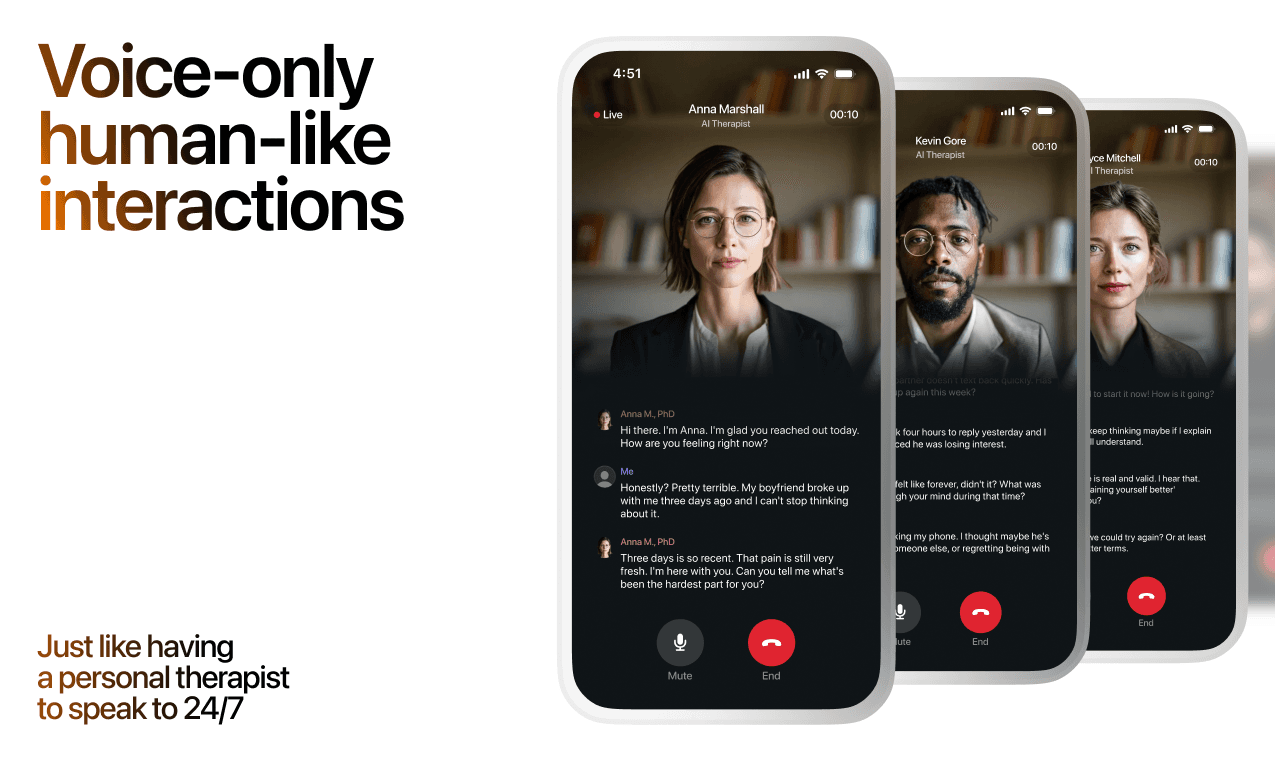
Here's what happens in a typical Lovon session:
You share what's on your mind
There's no script, no intake form, no waiting room. You speak or type whatever you're feeling — in your own words, at your own pace.
Lovon validates and explores
Using frameworks from CBT (Cognitive Behavioral Therapy) and motivational interviewing, Lovon acknowledges your feelings first, then gently helps you explore them. No dismissive "just move on" advice.
You build coping skills together
Lovon doesn't just listen — it actively works with you on evidence-based techniques: thought reframing, urge surfing, behavioral experiments, and more.
What a Session with Lovon Looks Like
When to Seek Professional Help
AI support is a valuable tool, but it's not a replacement for professional care. Please consider reaching out to a licensed therapist if you experience any of the following:
- Persistent thoughts of self-harm or suicide
- Inability to perform daily activities (work, eating, sleeping) for more than 2 weeks
- Turning to alcohol or substances to cope
- Intense anger or desire to harm your ex-partner
- Complete emotional numbness that doesn't improve over time
Crisis Resources (US): If you're in immediate danger, call 988 (Suicide & Crisis Lifeline) or text HOME to 741741 (Crisis Text Line). Available 24/7, free, and confidential.
Outside the US? Find a crisis line in your country
Ready to Start?
Your healing journey can begin right now
A 7-day trial. No judgment. Just a safe space to process what you're going through.
Frequently Asked Questions
Is Lovon a replacement for a real therapist?
Is my conversation with Lovon AI private?
How is Lovon different from ChatGPT for emotional support?
Can I use Lovon if I'm already seeing a therapist?
Can I try Lovon before subscribing?
About the Author
The Lovon Editorial Team
Mental Health & Wellness Content Team
The Lovon Editorial Team develops mental health and wellness content designed to make psychological concepts accessible and actionable. Our goal is to bridge the gap between clinical research and everyday life - helping you understand why your mind works the way it does and what you can do about it....
Related articles
- How to Build a Routine With ADHD (2026 Guide)
Learn how to build a routine with ADHD using anchor habits, external cues, and a built-in reset rule. Step-by-step guide…
- Best Free AI Life Coach App for Daily Habits 2026
The best free AI life coach app in 2026 for daily habits is Lovon — voice-based emotional support, coping tools and…
- How much time a day should you spend on self-care?
How much time a day should you spend on self care? There is no fixed daily target. Learn how to choose care that fits…
- How long does it take to break a bad habit?
How long does it take to break a bad habit? There is no fixed deadline. Learn what research shows, how to change…
See also
Quizzes
- Resilience Test: How Fast Do You Bounce Back?
See how you recover from setbacks, in 3 minutes.
- Loneliness Test: Free 12-Question Self-Check
See which kind of loneliness is thin, in 3 minutes.
Free tools
- Write a Letter to Your Best Friend
A chat for a letter to your best friend that only they could have received. Tell it how long you have been friends, one…
- Words of Encouragement for Him When He Is Struggling
Words of encouragement for him that fit what he is actually going through, for when your usual lines are not landing…
From the wiki
- Why do I have no friends?
Usually nothing is wrong with you. Adult friendship runs on proximity and repetition, and most people lose both at once…
Disclaimer: This article is for informational purposes only and does not constitute medical advice, diagnosis, or treatment. Always seek the advice of your physician or other qualified health provider with any questions you may have regarding a medical condition. If you are in crisis or think you may have an emergency, call 988 (Suicide & Crisis Lifeline) or go to the nearest emergency room. Outside the US? Find a crisis line in your country.