
Mel Robbins "Let Them" Theory Criticism: Emotional Avoidance vs Emotional Maturity
The "let them" theory popularized by motivational speaker Mel Robbins has gained significant traction across social media platforms, offering what appears to
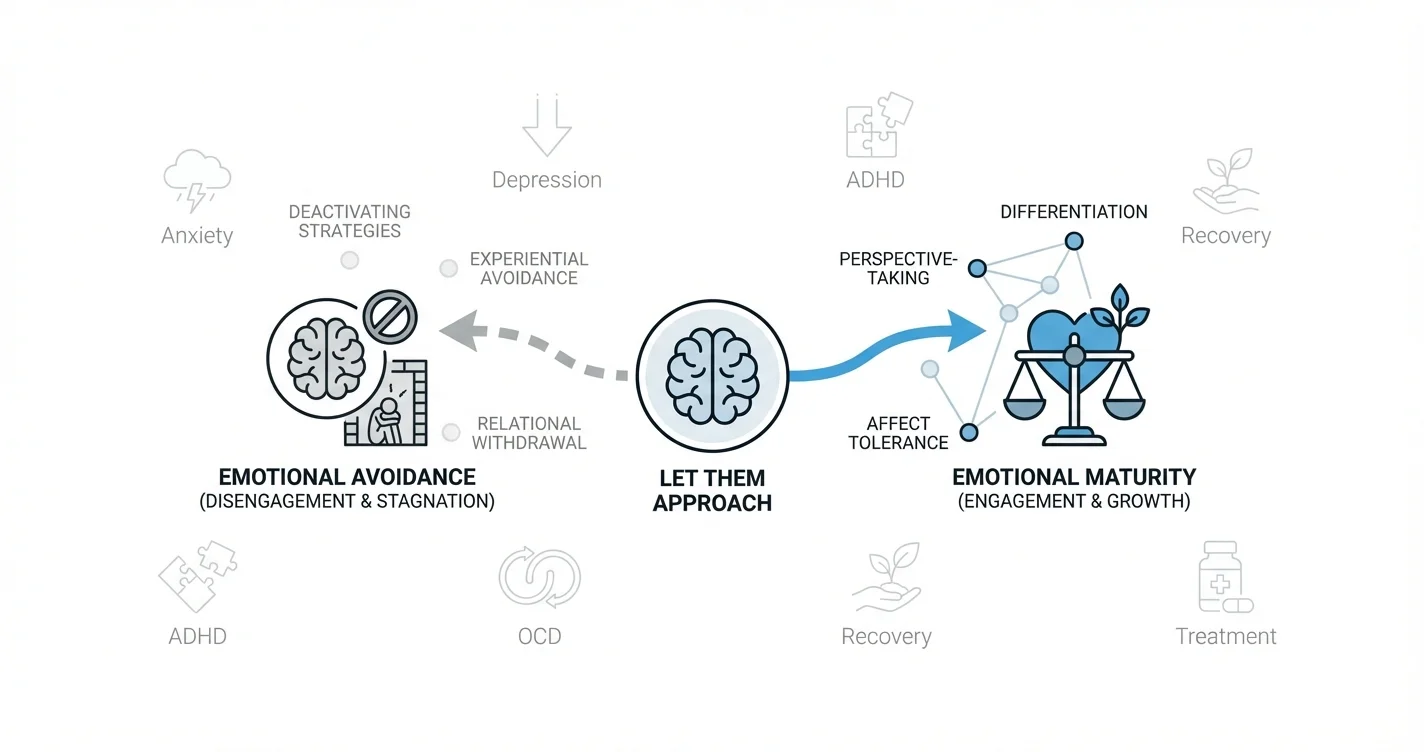

Key Takeaways
- Affect tolerance: The ability to experience difficult emotions without needing to immediately escape or suppress them
- Differentiation: Maintaining a sense of self while remaining emotionally connected to others, without either
- Perspective-taking: Recognizing that others' behaviors reflect their own experiences and psychological patterns
- Response flexibility: Choosing responses based on values and context rather than reacting reflexively to emotional
- Am I using this framework after processing my emotions, or to avoid feeling them in the first place?
Introduction
The "let them" theory popularized by motivational speaker Mel Robbins has gained significant traction across social media platforms, offering what appears to be a liberating framework for managing difficult relationships and emotional turbulence. The core message—essentially allowing others to make their own choices without attempting to control or change them—resonates with people seeking relief from relational anxiety and codependent patterns. However, mental health professionals and relationship experts have raised important questions about whether this approach represents genuine emotional maturity or inadvertently promotes emotional avoidance. This Mel Robbins "let them" theory criticism centers on a nuanced distinction: does the framework help people develop healthy boundaries and emotional regulation, or does it provide permission to disengage from the challenging work of relational accountability and emotional processing?
Understanding this distinction matters because the psychological outcomes differ significantly. Emotional maturity involves the capacity to experience difficult feelings, maintain perspective during conflict, and remain relationally engaged even when uncomfortable. Emotional avoidance, by contrast, uses detachment strategies to escape distressing emotions—a pattern that research suggests is associated with poorer long-term mental health outcomes and relationship satisfaction.
The Core Premise of the "Let Them" Approach
The "let them" philosophy encourages individuals to release their attempts to control others' behaviors, choices, and opinions. At its foundation, the approach suggests repeating variations of "let them" when faced with others' actions that trigger frustration, disappointment, or anxiety: let them be wrong, let them make that choice, let them think what they want.
Proponents frame this as a boundary-setting tool that reduces unnecessary suffering caused by attempting to change unchangeable circumstances—particularly other people. The appeal lies in its simplicity and the immediate emotional relief it can provide. When someone feels consumed by another person's decisions or behaviors, the "let them" mantra offers a cognitive off-ramp from rumination and control-seeking patterns.
From a psychological perspective, the approach shares territory with acceptance-based therapies and concepts from Stoic philosophy—distinguishing between what lies within one's control (one's own responses) and what doesn't (others' choices). Studies indicate that acceptance of uncontrollable circumstances can reduce anxiety and improve emotional wellbeing in certain contexts.
However, the simplicity that makes the approach accessible also creates potential for misapplication. Without nuance about when detachment serves emotional health versus when it functions as avoidance, the framework risks oversimplifying complex relational dynamics.
The Emotional Avoidance Critique
Mental health professionals have voiced concerns that the "let them" theory, particularly as it circulates in brief social media formats, may inadvertently validate emotional avoidance patterns. This criticism of Mel Robbins let them theory emotional avoidance or emotional maturity centers on several key points.
First, the approach may encourage premature disengagement from relationships that require difficult conversations rather than detachment. Emotional maturity involves the capacity to tolerate discomfort while remaining relationally engaged—to express needs, address conflicts directly, and work through ruptures. When "let them" becomes a reflexive response to relational tension, it can short-circuit these necessary processes.
Some therapists note that clients using this framework sometimes apply it to avoid addressing legitimate concerns in their relationships. Rather than initiating a difficult conversation with a partner about a repeated pattern, they "let them" continue the behavior while internally building resentment. This represents avoidance of emotional vulnerability rather than mature boundary-setting.
Second, the framework may reinforce what attachment researchers call deactivating strategies—psychological maneuvers that minimize the importance of connection and suppress attachment needs. For individuals with avoidant attachment patterns, "let them" can feel like permission to maintain emotional distance rather than working toward earned security through relational engagement.
Research on emotional avoidance consistently finds associations between experiential avoidance strategies and increased anxiety, depression, and relationship dissatisfaction over time. When people habitually avoid emotional experiences—even uncomfortable ones—they miss opportunities to develop distress tolerance and emotional regulation capacities.
Third, critics point to an excessive individualism embedded in the approach that may obscure relational interdependence and mutual responsibility. Relationships inherently involve some degree of mutual influence, negotiation, and accountability. The "let them" framing can position any attempt to address another's behavior as problematic control, potentially leaving no space for legitimate feedback or boundary communication in relationships.
Tools like Lovon.app can help individuals explore whether their application of detachment principles serves emotional health or functions as avoidance, offering a space to process the distinction between healthy boundaries and emotional withdrawal.
Distinguishing Emotional Maturity from Avoidance
Understanding whether the "let them" approach promotes emotional avoidance or emotional maturity requires examining what genuine emotional maturity entails and how it differs from avoidance strategies.
Emotional maturity involves several interconnected capacities:
- Affect tolerance: The ability to experience difficult emotions without needing to immediately escape or suppress them
- Differentiation: Maintaining a sense of self while remaining emotionally connected to others, without either enmeshment or isolation
- Perspective-taking: Recognizing that others' behaviors reflect their own experiences and psychological patterns rather than simply being about you
- Response flexibility: Choosing responses based on values and context rather than reacting reflexively to emotional discomfort
When "let them" functions as genuine emotional maturity, it looks like conscious choice after emotional processing. A person might feel hurt by a friend's comment, sit with that feeling, consider what it reveals about their own sensitivities, decide the friendship's overall pattern is healthy, and choose not to make the comment into a larger issue. The emotional experience was acknowledged and processed; the decision not to pursue it further came from a place of clarity rather than avoidance.
By contrast, when "let them" serves emotional avoidance, it bypasses emotional processing entirely. The same person might immediately deploy "let them say that" as soon as hurt arises, never examining why the comment stung, whether it touches on a pattern in the relationship, or what their own emotional response might be signaling. The discomfort is shut down rather than metabolized.
Research on psychological flexibility—considered central to mental health across various therapeutic approaches—emphasizes that healthy functioning involves approaching rather than avoiding internal experiences, even uncomfortable ones. This doesn't mean dwelling in negative emotion, but rather allowing emotional experiences to arise, providing information, and then choosing responses aligned with one's values.
Several questions can help distinguish mature detachment from avoidance:
- Am I using this framework after processing my emotions, or to avoid feeling them in the first place?
- Does this approach help me stay engaged in relationships while maintaining boundaries, or does it help me disengage entirely?
- Am I choosing not to address something because it genuinely doesn't warrant response, or because addressing it would require uncomfortable vulnerability?
- Does this pattern bring me closer to the relationships I value, or create more distance?
Platforms offering accessible support, such as Lovon.app, provide opportunities to reflect on these questions when the distinction feels unclear, helping users process whether their relational strategies serve long-term emotional wellbeing.
When "Let Them" Works and When It Doesn't
The debate around whether Mel Robbins let them approach critique does it promote emotional avoidance instead of maturity resolves somewhat when we consider context. The framework appears most beneficial in specific circumstances and potentially problematic in others.
Situations where "let them" may support emotional health:
- Clearly defined boundaries already communicated: When you've directly expressed needs or limits and another person continues crossing them, detachment may protect your wellbeing
- Acquaintance or distant relationships: With people who don't play central roles in your life, extensive emotional processing of every slight may not be proportional
- Unchangeable circumstances: When someone's fundamental values or life choices differ from yours but don't directly impact you, acceptance reduces unnecessary suffering
- Compulsive control patterns: For people recognizing their own tendency toward excessive control or codependency, "let them" can interrupt unhelpful patterns
Situations where "let them" may facilitate avoidance:
- Close relationships with unaddressed patterns: When someone important repeatedly behaves in ways that affect you, premature detachment bypasses necessary communication
- Situations requiring accountability: When someone's behavior causes genuine harm, "letting them" may abdicate appropriate boundary-setting or consequence-setting
- Avoidance of vulnerable communication: When the real discomfort comes from expressing needs or disappointment rather than from the other person's behavior itself
- Chronic relational distancing: When the approach becomes a default that prevents emotional intimacy and interdependence
Clinical perspectives suggest that healthy relationships require both the capacity for detachment (not being consumed by others' choices) and the capacity for engagement (addressing ruptures, expressing needs, maintaining connection through difficulty). Problems with Mel Robbins let them theory emotional maturity vs avoidance debate emerge when the framework is applied unilaterally without this balance.
Relationship researchers consistently find that relationship satisfaction correlates with constructive conflict engagement rather than conflict avoidance. Couples who address disagreements directly—while managing emotional flooding—report greater long-term satisfaction than those who avoid conflict. This doesn't mean every issue requires lengthy processing, but patterns affecting relationship quality generally need direct attention rather than detachment.
The wisdom lies in discernment: knowing when acceptance serves you and when engagement does, rather than defaulting to either pattern reflexively.
Developing Genuine Relational Maturity
For those concerned that their use of detachment frameworks might lean toward avoidance, developing genuine emotional and relational maturity involves building specific capacities that complement healthy boundary-setting.
Cultivating emotional awareness and tolerance: Before deciding whether to address something or "let it go," spend time identifying and sitting with the emotional response. What specifically did you feel? Where did you notice it in your body? What does this feeling remind you of from past experiences? This processing phase—which some people find helpful to explore through on-demand support tools like Lovon.app—ensures that decisions about engagement or detachment come from clarity rather than reactivity.
Practicing differentiation: Work on maintaining your sense of self and emotional equilibrium while staying relationally connected. Differentiation allows you to hear criticism without collapsing into shame or defensiveness, to witness someone's distress without taking responsibility for fixing it, and to express disagreement without fearing relationship rupture. This differs from detachment, which creates safety through distance rather than through internal stability within connection.
Developing communication skills: Emotional maturity includes the capacity to express needs, boundaries, and concerns directly and constructively. This might involve learning to use "I" statements, expressing the impact of behaviors without attacking character, or requesting specific changes rather than demanding someone become fundamentally different. When avoidance masquerades as acceptance, it's often because the alternative—vulnerable, direct communication—feels too threatening.
Building distress tolerance: Rather than immediately deploying strategies to eliminate uncomfortable feelings, practice allowing them to be present for longer periods. Notice that emotions intensify and then naturally begin to dissipate without intervention. This builds confidence that you can survive emotional discomfort, reducing the urgency to avoid it through premature detachment or other strategies.
Examining attachment patterns: Understanding your own attachment style—whether secure, anxious, avoidant, or disorganized—provides insight into whether frameworks like "let them" serve your growth or reinforce existing patterns. Those with anxious attachment might benefit from practicing some detachment from others' moods and choices, while those with avoidant patterns might need to work in the opposite direction, practicing tolerance for interdependence and vulnerability.
When to Seek Professional Help
If you notice patterns of chronic relationship dissatisfaction, difficulty maintaining close relationships, or recognition that you habitually avoid emotional experiences, professional support may be valuable. Specific signs that warrant consultation with a therapist include:
- Repeated relationship patterns where you suddenly disengage when conflict or vulnerability arises
- Awareness that you use detachment strategies to avoid feeling emotions rather than to maintain boundaries
- Difficulty identifying your own emotional experiences or needs in relationships
- Feedback from multiple people that you seem emotionally distant or unavailable
- Recognition that relationship avoidance is affecting your life satisfaction or sense of connection
Therapists specializing in attachment, emotion-focused therapy, or relational approaches can help you develop the capacities for both healthy autonomy and healthy connection. They can assist in distinguishing when detachment serves you versus when it perpetuates patterns that ultimately limit relational fulfillment.
Conclusion
The criticism of Mel Robbins let them theory emotional avoidance or emotional maturity reveals an important distinction that extends beyond any single framework: the difference between mature, boundaried engagement and self-protective avoidance. The "let them" approach itself is neither inherently healthy nor problematic; its impact depends entirely on the psychological function it serves for each individual and the context in which it's applied.
Emotional maturity involves the capacity to feel fully, maintain perspective, communicate directly, and choose engagement or detachment based on clarity rather than fear. When "let them" supports this—helping someone release futile control attempts after appropriate communication, or maintaining emotional equilibrium in the face of others' choices—it serves genuine psychological health. When it becomes a reflexive strategy to avoid the discomfort of vulnerability, conflict engagement, or emotional processing, it reinforces patterns associated with poorer relational and mental health outcomes.
The most useful approach integrates both acceptance and engagement: accepting what truly cannot be changed or what lies outside your responsibility, while remaining willing to feel difficult emotions, express needs, address patterns, and stay present in relationships even through discomfort. This balance—rather than detachment alone—characterizes genuine emotional and relational maturity.
For those navigating this distinction, resources offering space for reflection—whether through traditional therapy, peer support, or accessible tools that provide on-demand processing opportunities—can support the development of discernment about when to engage and when to release, ensuring that your choices serve long-term wellbeing rather than temporary comfort.
Disclaimer: This is general information, not medical advice or diagnosis. If symptoms are severe, affecting your daily life, or you're having thoughts of self-harm — seek professional help. In the US: call or text 988 (Suicide & Crisis Lifeline). For immediate danger: 911 or local emergency services.
How AI Support Helps You Heal
AI emotional support isn't about replacing human connection — it's about filling the gaps. The moments when you need to talk at 2 AM, when you don't want to burden your friends again, or when you simply need someone to listen without judgment.
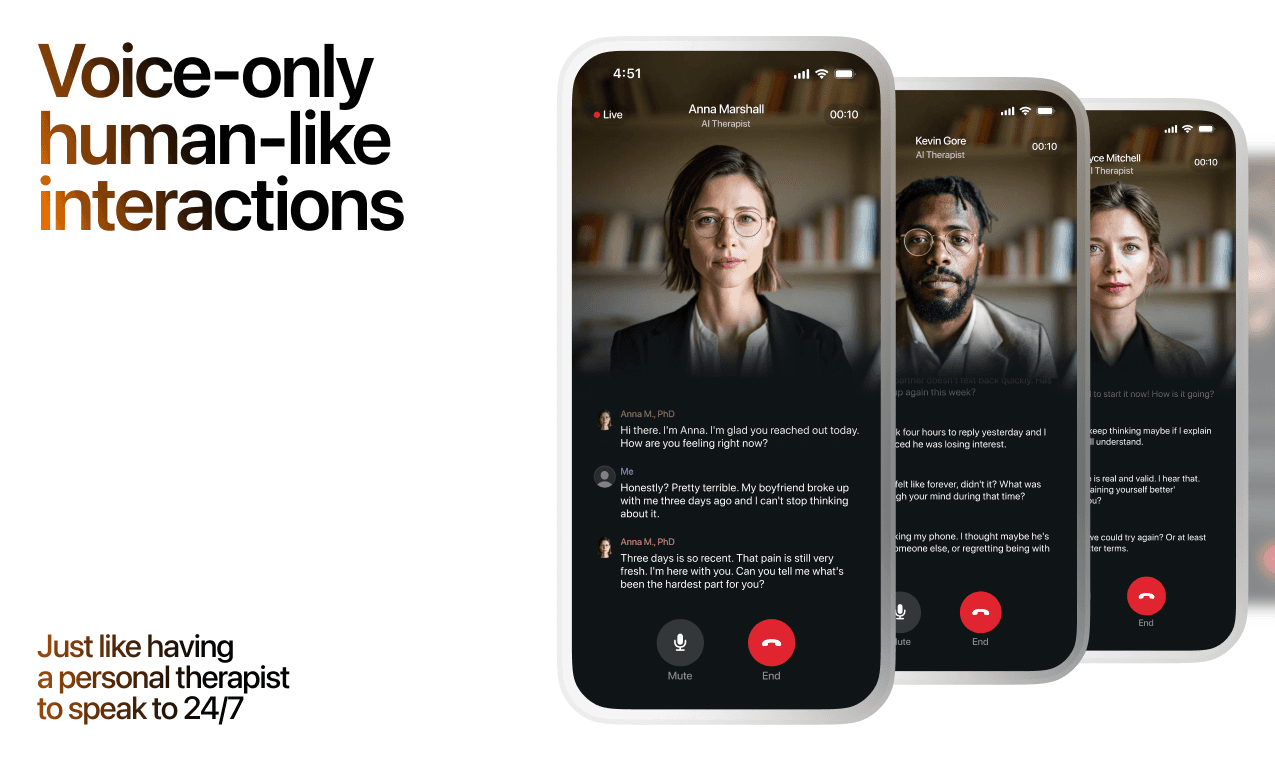
Here's what happens in a typical Lovon session:
You share what's on your mind
There's no script, no intake form, no waiting room. You speak or type whatever you're feeling — in your own words, at your own pace.
Lovon validates and explores
Using frameworks from CBT (Cognitive Behavioral Therapy) and motivational interviewing, Lovon acknowledges your feelings first, then gently helps you explore them. No dismissive "just move on" advice.
You build coping skills together
Lovon doesn't just listen — it actively works with you on evidence-based techniques: thought reframing, urge surfing, behavioral experiments, and more.
What a Session with Lovon Looks Like
When to Seek Professional Help
AI support is a valuable tool, but it's not a replacement for professional care. Please consider reaching out to a licensed therapist if you experience any of the following:
- Persistent thoughts of self-harm or suicide
- Inability to perform daily activities (work, eating, sleeping) for more than 2 weeks
- Turning to alcohol or substances to cope
- Intense anger or desire to harm your ex-partner
- Complete emotional numbness that doesn't improve over time
Crisis Resources (US): If you're in immediate danger, call 988 (Suicide & Crisis Lifeline) or text HOME to 741741 (Crisis Text Line). Available 24/7, free, and confidential.
Outside the US? Find a crisis line in your country
Ready to Start?
Your healing journey can begin right now
A 7-day trial. No judgment. Just a safe space to process what you're going through.
Frequently Asked Questions
Is Lovon a replacement for a real therapist?
Is my conversation with Lovon AI private?
How is Lovon different from ChatGPT for emotional support?
Can I use Lovon if I'm already seeing a therapist?
Can I try Lovon before subscribing?
About the Author
The Lovon Editorial Team
Mental Health & Wellness Content Team
The Lovon Editorial Team develops mental health and wellness content designed to make psychological concepts accessible and actionable. Our goal is to bridge the gap between clinical research and everyday life - helping you understand why your mind works the way it does and what you can do about it....
Related articles
- AI Relationship Coach for Sibling Relationships: Yes in 2026
Lovon's AI relationship coach for sibling relationships offers 24/7 voice support for favoritism, guilt, and…
- AI Relationship Advice for Communication Issues 2026
The best AI relationship advice tools for communication issues in 2026—compared on voice support, session structure…
- Couples Therapy Intake Process: Observation Session Followed by Individual Breakout Sessions
The couples therapy intake process often feels mysterious to those scheduling their first appointment. Many couples…
- Am I the Problem in My Relationship? 2026 Self-Check
Wondering if you're the problem in your relationship? This 2026 self-check covers 6 real behavioral patterns — with…
See also
Quizzes
- Relationship Schema Test: Are Your Feelings Welcome?
See which belief edits what you share, in 3 minutes.
- Digital Stress Test: Texting, Likes and Read Receipts
See which part of being online wears on you, in 3 minutes.
Free tools
- Conflict Script Builder
Pick the situation and what you want out of it, and get three lines you can say out loud: an opener, a response for when…
- Should I Send This Text?
A chat for the moment you are holding an unsent message. Paste the draft and say who it is for, and you get what it is…
From the wiki
- How to break up with someone you still love?
Loving someone does not mean the relationship works. If you have circled the same decision for months and the reasons…
Disclaimer: This article is for informational purposes only and does not constitute medical advice, diagnosis, or treatment. Always seek the advice of your physician or other qualified health provider with any questions you may have regarding a medical condition. If you are in crisis or think you may have an emergency, call 988 (Suicide & Crisis Lifeline) or go to the nearest emergency room. Outside the US? Find a crisis line in your country.