
Polyvagal Theory Applications for Stress Response
Your heart races before a difficult conversation. Your stomach tightens during conflict. You feel exhausted after a stressful week, even though you "didn't do

Key Takeaways
- Ventral vagal system: Associated with feelings of safety, social engagement, and calm. When this system is active,
- Sympathetic system: Mobilizes the body for action through increased heart rate, redirected blood flow, and
- Dorsal vagal system: The most primitive response, associated with shutdown, immobilization, and conservation of
- Ventral vagal activation: Practices emphasizing safety cues, such as gentle eye contact, soothing vocal tones, slow
- Regulated sympathetic engagement: Rhythmic movement, playful activities, or moderate exercise that activates
Polyvagal Theory Applications for Stress Response
How Stephen Porges' framework explains the mind-body connection and practical ways to apply it
polyvagal-theory-applications-stress-response
Introduction
Your heart races before a difficult conversation. Your stomach tightens during conflict. You feel exhausted after a stressful week, even though you "didn't do anything physical." These experiences reflect something neuroscience has only recently begun to map systematically: the intricate pathways connecting your nervous system to your emotional state. Stephen Porges' Polyvagal Theory provides a framework for understanding these connections, offering insights into how your body responds to stress and safety. This article explores Polyvagal Theory applications, examining how this model explains stress response patterns and what it means for the mind-body connection. Drawing on neurobiological research and clinical insights, we'll look at how understanding your nervous system's responses can inform practical approaches to managing stress and emotional regulation.
Understanding Polyvagal Theory and the Autonomic Nervous System
Polyvagal Theory, developed by Stephen Porges, describes how the autonomic nervous system—the network regulating involuntary functions like heart rate, digestion, and breathing—operates through three distinct pathways that evolved to help mammals respond to different types of environmental demands.
Traditional models divided the autonomic nervous system into two branches: sympathetic (activating) and parasympathetic (calming). Porges' framework adds critical nuance by identifying two functionally different vagal pathways within the parasympathetic system. The vagus nerve, which Porges' research centers on, is the tenth cranial nerve and the longest nerve in the autonomic nervous system, connecting the brainstem to organs throughout the body.
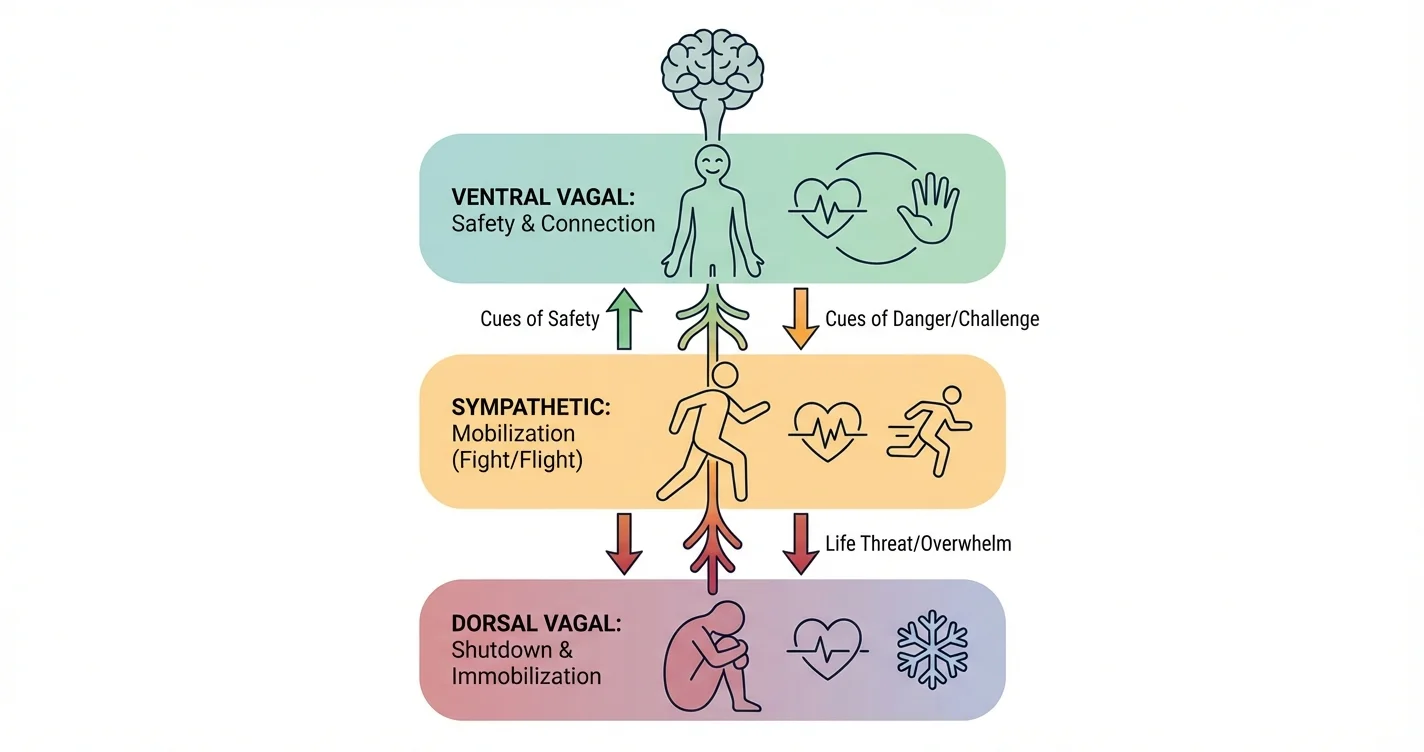
According to this framework, these three pathways form a hierarchy of stress responses:
- Ventral vagal system: Associated with feelings of safety, social engagement, and calm. When this system is active, facial expressions are animated, voice has natural prosody, and the body feels relaxed yet alert.
- Sympathetic system: Mobilizes the body for action through increased heart rate, redirected blood flow, and heightened alertness. This supports both positive high-energy states and fight-or-flight responses.
- Dorsal vagal system: The most primitive response, associated with shutdown, immobilization, and conservation of energy. In extreme threat situations where fight or flight seems impossible, this system may activate.
Research suggests these systems don't operate in isolation but constantly shift in response to cues of safety or danger—a process Porges termed "neuroception," the subconscious detection of risk or safety in the environment.
Polyvagal Theory Applications in Understanding Stress Response
The framework offers a more nuanced view of stress response than simply "stressed or relaxed." Understanding which system is activated can help explain why stress manifests so differently across situations and individuals.
When you perceive safety—whether through supportive relationships, familiar environments, or successfully managing a challenge—the ventral vagal system supports what Porges calls the "social engagement system." Your body allocates resources to connection, communication, and rest-and-digest functions. Heart rate variability, the natural variation in time between heartbeats, tends to be higher in this state, which research associates with physiological flexibility and resilience.
When neuroception detects threat or challenge, the sympathetic system activates. This mobilization response increases heart rate, sharpens attention, and prepares muscles for action. In moderate amounts, this activation supports productivity, athletic performance, and successfully navigating demanding situations. However, prolonged or intense sympathetic activation—common in chronic stress—can lead to exhaustion, irritability, and physical symptoms like muscle tension and digestive issues.
The dorsal vagal response represents the body's final defensive strategy. Some research suggests this immobilization response may activate when threat feels inescapable, leading to feelings of numbness, disconnection, or collapse. People sometimes describe feeling "frozen" or "checking out" during overwhelming situations—experiences that may reflect dorsal vagal activation.
What makes Polyvagal Theory applications particularly relevant for understanding stress is the recognition that these responses happen largely outside conscious awareness. You don't decide to have your heart race during conflict or to feel shut down after sustained stress—your nervous system makes these adjustments based on its ongoing assessment of safety and threat. Tools like Lovon.app can help you process these responses by providing a space to talk through stressful experiences and identify patterns in how your body reacts, offering reflection that supports greater awareness of your nervous system states.
Mind-Body Connection Through the Lens of Polyvagal Theory
The mind-body connection, often discussed abstractly, becomes more concrete through the Polyvagal framework. Your psychological state and physical state aren't separate phenomena influencing each other—they're different aspects of the same neurobiological processes.
Consider how this bidirectional connection operates. When you feel emotionally safe—perhaps during a warm conversation with someone you trust—your ventral vagal system activates. This produces physical changes: your facial muscles relax into genuine expression, your voice takes on natural warmth and variability, your breathing deepens, and your heart rate settles into a flexible rhythm. These physical states, in turn, support the psychological experience of connection and calm.
Conversely, physical states shape emotional experience. Shallow breathing, common during sympathetic activation, may contribute to feelings of anxiety. Slumped posture and low energy, potentially reflecting dorsal vagal activation, may accompany feelings of helplessness or depression. The relationship flows both ways continuously.
This has practical implications. Approaches that work directly with the body—breathwork, movement, vocalization, or shifting posture—may influence nervous system state and, consequently, emotional experience. Similarly, practices that provide psychological safety, like supportive conversations or therapeutic relationships, may shift physiological state.
Some practitioners use Polyvagal-informed approaches that target specific pathways:
- Ventral vagal activation: Practices emphasizing safety cues, such as gentle eye contact, soothing vocal tones, slow breathing, and connecting with supportive others
- Regulated sympathetic engagement: Rhythmic movement, playful activities, or moderate exercise that activates mobilization in safe contexts
- Addressing dorsal vagal states: Gentle reorientation to the present environment, small movements that reestablish a sense of agency, and gradual reconnection with surroundings
The framework suggests that building resilience involves strengthening your capacity to access ventral vagal states and to move flexibly between states rather than getting stuck in chronic sympathetic activation or dorsal shutdown.
Applying Stephen Porges' Framework in Daily Life
Understanding Polyvagal Theory applications doesn't require technical expertise—it offers practical ways to work with your nervous system rather than against it.
Recognizing your nervous system state forms the foundation. Throughout your day, you might notice:
- Moments when you feel genuinely engaged, present, and connected (ventral vagal)
- Times when you're energized, perhaps anxious or frustrated, with a sense of urgency (sympathetic)
- Periods when you feel numb, disconnected, or unusually tired despite adequate sleep (dorsal vagal)
Simply noticing these shifts without judgment can increase awareness of what situations, interactions, or thoughts influence your state.
Creating cues of safety can support ventral vagal activation. This might include:
- Spending time with people or animals whose presence feels genuinely safe
- Engaging in activities that combine gentle focus and pleasure—listening to music, being in nature, creative expression
- Establishing predictable routines that provide a sense of structure
- Using self-compassionate self-talk rather than harsh internal criticism
Working with mobilization recognizes that sympathetic activation isn't inherently problematic—it becomes challenging when chronic or without resolution. Strategies include:
- Physical movement that matches your energy level—walking when agitated, stretching when tense
- Setting boundaries in relationships and situations that create sustained activation
- Breaking overwhelming tasks into smaller, manageable steps
- Completing the "stress cycle" through activities that signal resolution (physical exertion, creative expression, laughter, affection)
Addressing shutdown states requires gentleness. When you notice dorsal vagal patterns, consider:
- Small physical movements—wiggling toes, gentle stretching, orienting to your surroundings
- Sensory grounding—noticing five things you can see, textures you can feel, sounds you can hear
- Reaching out for connection, even in small ways, rather than isolating
- Being patient with yourself as energy and engagement gradually return
Lovon.app offers on-demand access to process these experiences as they arise—talking through a situation that activated your stress response, exploring patterns you notice in your reactions, or working through moments when you feel shut down or overwhelmed. Having a resource available when your nervous system is dysregulated, rather than waiting days for a scheduled appointment, aligns with how stress actually unfolds in daily life.
Polyvagal-Informed Approaches to Stress Response and Trauma
The framework has influenced therapeutic approaches, particularly for working with trauma and chronic stress. While specific interventions should be guided by trained professionals, understanding the principles can inform how you think about your own stress patterns.
Research suggests that traumatic experiences may alter how the nervous system assesses safety and threat, potentially leading to persistent sympathetic activation (hypervigilance, anxiety, reactivity) or dorsal vagal patterns (numbness, dissociation, withdrawal). Polyvagal-informed approaches emphasize gradually building the nervous system's capacity for safety and regulated engagement rather than focusing solely on processing traumatic memories.
This might involve:
- Establishing present safety: Creating therapeutic relationships and environments that provide consistent, genuine cues of safety
- Titrated engagement: Working with difficult material in small doses, staying within a "window of tolerance" where processing is possible without overwhelming the system
- Bottom-up regulation: Including body-based practices alongside talk therapy—movement, breathwork, sensory grounding
- Co-regulation: Leveraging the calming effect of another person's regulated nervous system (therapist, trusted friend, support group) to help stabilize your own state
The theory emphasizes that healing involves not just changing thoughts or processing memories, but literally building new neural pathways that support more flexible nervous system responses.
It's important to note that Polyvagal Theory represents one framework among several for understanding stress and trauma. Other valid approaches emphasize different mechanisms—cognitive patterns, emotional processing, or behavioral conditioning. The most effective approach varies between individuals and situations.
When to Seek Professional Help
While understanding your nervous system responses can support self-awareness and everyday stress management, some situations call for professional guidance:
- When stress responses significantly interfere with daily functioning—work, relationships, or self-care
- If you experience persistent sympathetic activation (chronic anxiety, panic attacks, constant hypervigilance) or dorsal shutdown (prolonged numbness, severe fatigue, persistent disconnection)
- When stress responses seem disproportionate to current circumstances, potentially reflecting unresolved past experiences
- If you have thoughts of self-harm or feel unsafe
Professionals who may help include therapists trained in Polyvagal-informed approaches, somatic therapists who work directly with nervous system regulation, or trauma specialists if your stress patterns relate to difficult past experiences. A comprehensive approach often combines multiple elements—talk therapy, body-based practices, and sometimes medication to support nervous system stability.
Conclusion
Polyvagal Theory applications offer a practical framework for understanding the intricate connections between your nervous system, stress response, and emotional experience. Stephen Porges' model explains why stress manifests so differently across situations—why you might feel energized and focused in one challenge but overwhelmed and shut down in another. The mind-body connection isn't metaphorical; it's the continuous interplay between your psychological state and the nervous system pathways regulating your physical experience.
Applying this framework in daily life means developing awareness of your nervous system states, recognizing what shifts you between them, and intentionally creating conditions that support ventral vagal regulation—the physiological foundation of feeling safe, connected, and present. Whether through relationships that provide genuine safety, body-based practices that shift your physiological state, or resources like therapy and support tools that help you process stress as it occurs, working with your nervous system rather than against it may support greater resilience and wellbeing.
The framework reminds us that stress responses evolved to protect us. Understanding them isn't about eliminating activation or judging your reactions—it's about expanding your capacity to move flexibly between states and spending more time in the physiological conditions that support connection, growth, and recovery.
Disclaimer: This is general information, not medical advice or diagnosis. If symptoms are severe, affecting your daily life, or you're having thoughts of self-harm—seek professional help. In the US: call or text 988 (Suicide & Crisis Lifeline). For immediate danger: 911 or local emergency services.
How AI Support Helps You Heal
AI emotional support isn't about replacing human connection — it's about filling the gaps. The moments when you need to talk at 2 AM, when you don't want to burden your friends again, or when you simply need someone to listen without judgment.
Here's what happens in a typical Lovon session:
You share what's on your mind
There's no script, no intake form, no waiting room. You speak or type whatever you're feeling — in your own words, at your own pace.
Lovon validates and explores
Using frameworks from CBT (Cognitive Behavioral Therapy) and motivational interviewing, Lovon acknowledges your feelings first, then gently helps you explore them. No dismissive "just move on" advice.
You build coping skills together
Lovon doesn't just listen — it actively works with you on evidence-based techniques: thought reframing, urge surfing, behavioral experiments, and more.
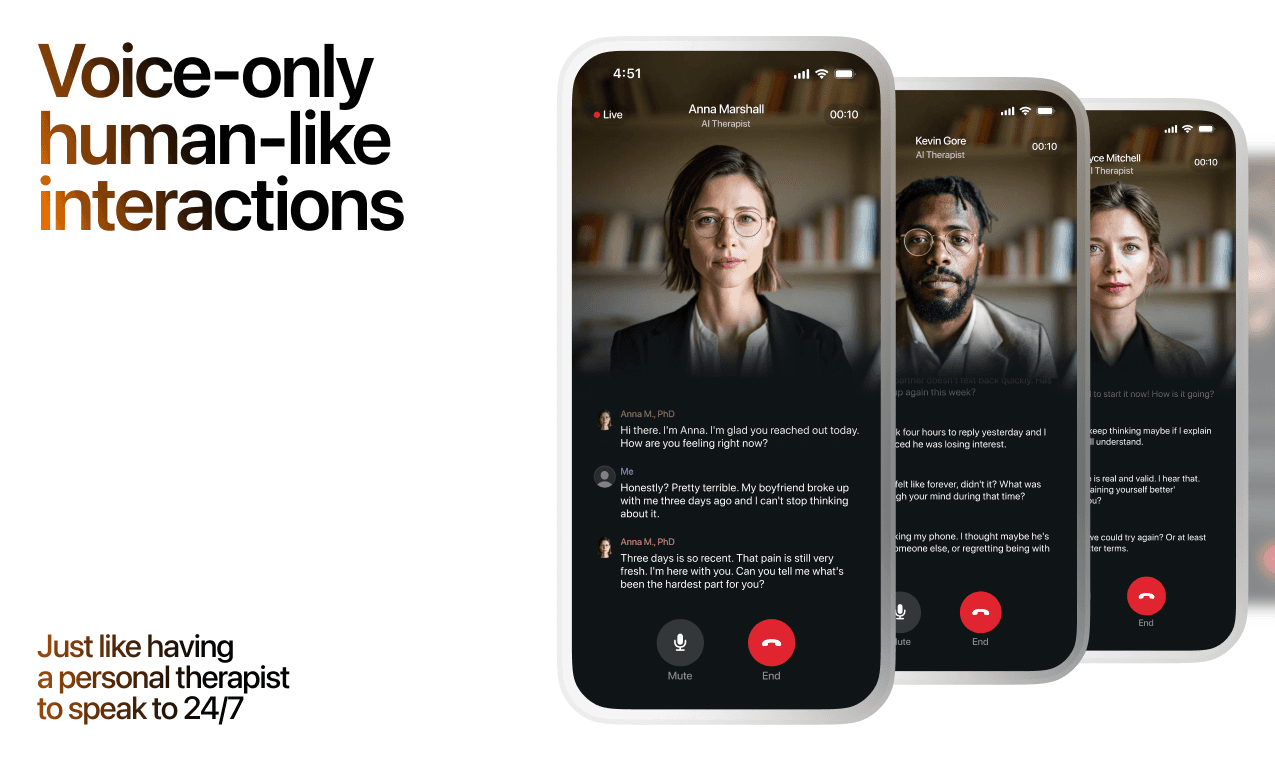
What a Session with Lovon Looks Like
When to Seek Professional Help
AI support is a valuable tool, but it's not a replacement for professional care. Please consider reaching out to a licensed therapist if you experience any of the following:
- Persistent thoughts of self-harm or suicide
- Inability to perform daily activities (work, eating, sleeping) for more than 2 weeks
- Turning to alcohol or substances to cope
- Intense anger or desire to harm your ex-partner
- Complete emotional numbness that doesn't improve over time
Crisis Resources (US): If you're in immediate danger, call 988 (Suicide & Crisis Lifeline) or text HOME to 741741 (Crisis Text Line). Available 24/7, free, and confidential.
Outside the US? Find a crisis line in your country
Ready to Start?
Your healing journey can begin right now
A 7-day trial. No judgment. Just a safe space to process what you're going through.
Frequently Asked Questions
Is Lovon a replacement for a real therapist?
Is my conversation with Lovon AI private?
How is Lovon different from ChatGPT for emotional support?
Can I use Lovon if I'm already seeing a therapist?
Can I try Lovon before subscribing?
About the Author

The Lovon Editorial Team
Mental Health & Wellness Content Team
The Lovon Editorial Team develops mental health and wellness content designed to make psychological concepts accessible and actionable. Our goal is to bridge the gap between clinical research and everyday life - helping you understand why your mind works the way it does and what you can do about it....
Related articles
- Freeze Response and Fawn Response as Trauma Survival Patterns
When faced with overwhelming threat, the human nervous system activates a series of automatic responses designed to…
- Nervous System Reset: Daily Practices That Work (2026)
A nervous system reset in 90 seconds: box breathing, cold exposure, and orientation cues that calm fight-or-flight…
- Polyvagal Theory Explained: Stress & Safety (2026)
Polyvagal theory explained in plain language: learn the three nervous system states, what neuroception is, and how to…
- Inner Child Healing for Nervous System Regulation and Stored Trauma
When your body reacts to stress with overwhelming intensity—heart racing, chest tightening, mind spiraling—it's often…
See also
Quizzes
- What's My Attachment Style? Free 12-Question Quiz
Find your attachment pattern in 3 minutes.
- Emotional Intelligence Test: Your EQ in a Relationship
Find where your EQ slips when things get tense.
Free tools
- Am I Overreacting, or Is This a Big Deal?
A chat for the small thing you cannot stop turning over. Say what happened and what you have already told yourself about…
- 5-4-3-2-1 Grounding Exercise
A guided run through the 5-4-3-2-1 technique, with paced breathing first if you need it. No sign-up, nothing stored…
From the wiki
- Why do I feel sad when I'm alone?
Being alone does not create the sadness. It removes the noise that was keeping it out of earshot, so whatever queued up…
Disclaimer: This article is for informational purposes only and does not constitute medical advice, diagnosis, or treatment. Always seek the advice of your physician or other qualified health provider with any questions you may have regarding a medical condition. If you are in crisis or think you may have an emergency, call 988 (Suicide & Crisis Lifeline) or go to the nearest emergency room. Outside the US? Find a crisis line in your country.