
Understanding the Setback Cycle in Therapy Process and Premature Termination
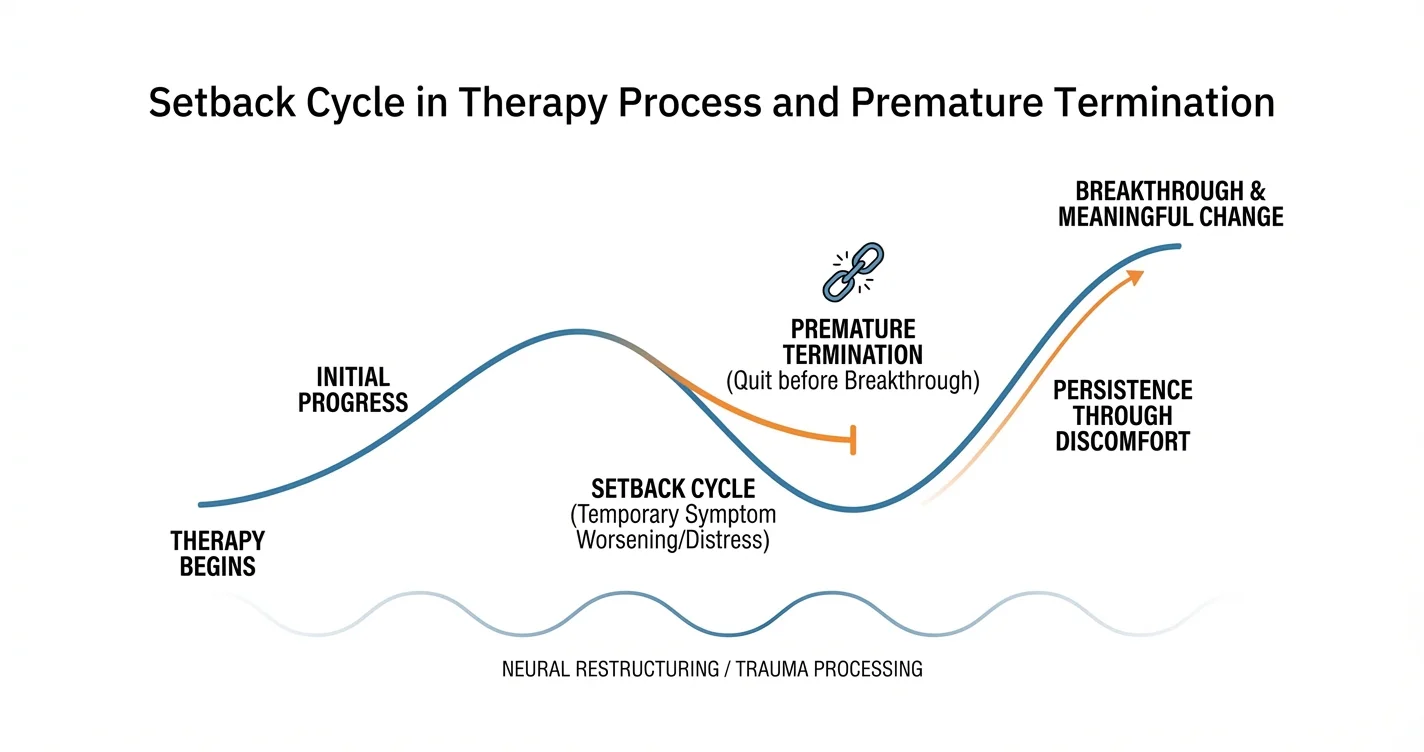
One of the most frustrating patterns in mental health treatment occurs when clients abandon therapy precisely when they're on the verge of meaningful change.

Key Takeaways
- Symptom substitution: As one symptom improves, another emerges or intensifies, creating the impression that therapy
- Emotional flooding: Deeper therapeutic work activates intense feelings clients haven't experienced since the
- Relationship strain: As clients change behavioral patterns, their existing relationships may experience temporary
- Financial or practical concerns: The setback phase often requires more frequent sessions or intensive work, creating
- Increased emotional awareness rather than numbness
Introduction
One of the most frustrating patterns in mental health treatment occurs when clients abandon therapy precisely when they're on the verge of meaningful change. This phenomenon, known as the setback cycle in therapy process, describes a critical phase where symptoms temporarily worsen before genuine improvement begins. Mental health professionals consistently observe clients discontinuing treatment during this challenging period, unaware they're mere weeks away from a breakthrough. Research from clinical psychology suggests that understanding this pattern can significantly reduce premature therapy termination rates. This article examines why the setback cycle occurs, how to recognize it, and what strategies help patients navigate this difficult but essential phase of healing.
The Setback Cycle: What Happens When Therapy Gets Harder
The setback cycle in therapy process refers to a predictable pattern where clients experience increased distress, symptom intensification, or emotional discomfort as they approach deeper therapeutic work. This temporary regression isn't a sign of treatment failure—it's often evidence that therapy is beginning to address core issues rather than surface symptoms.
When clients start confronting painful memories, challenging long-held beliefs, or changing ingrained behavioral patterns, the psychological system responds with what appears to be resistance. Studies in psychotherapy outcomes indicate this phase typically emerges after initial rapport-building but before substantial progress becomes visible. The timing varies considerably based on individual circumstances, therapeutic approach, and the complexity of presenting concerns.
Mental health practitioners recognize several mechanisms behind this pattern. As therapy progresses beyond symptom management into restructuring thought patterns or processing trauma, clients may temporarily lose their usual coping mechanisms before developing healthier alternatives. This transition period—where old strategies no longer work but new skills aren't yet solidified—creates a vulnerability window that feels like regression.
Why Patients Quit Therapy During Setbacks Before Breakthrough
The decision to terminate treatment during the setback phase stems from multiple interconnected factors. Most fundamentally, clients lack awareness that temporary worsening can signal therapeutic progress rather than failure. Without this framework, increased anxiety, resurfacing memories, or emotional intensity naturally reads as evidence the treatment isn't working.
Practitioners identify several specific scenarios where premature termination becomes most likely:
- Symptom substitution: As one symptom improves, another emerges or intensifies, creating the impression that therapy merely shifts problems rather than resolving them
- Emotional flooding: Deeper therapeutic work activates intense feelings clients haven't experienced since the original trauma or difficulty, making continuation feel unbearable
- Relationship strain: As clients change behavioral patterns, their existing relationships may experience temporary disruption, leading to pressure to discontinue treatment
- Financial or practical concerns: The setback phase often requires more frequent sessions or intensive work, creating barriers precisely when support is most crucial
The timing of these dropouts is particularly unfortunate because research suggests that clients who persist through the setback cycle often experience their most substantial gains in the weeks immediately following. The neural pathways being restructured, trauma being processed, or behavioral patterns being modified require completion of the difficult phase before the benefits become apparent.
Tools like Lovon.app can provide supplemental support during these vulnerable periods, offering on-demand processing when distress intensifies between scheduled therapy sessions. Having accessible resources to work through emerging emotions can help bridge the gap during setback phases.
Recognizing the Setback Cycle Versus Actual Treatment Mismatch
A critical distinction exists between the temporary regression of a setback cycle and genuine indicators that a therapeutic approach or therapist isn't appropriate for a client's needs. Both scenarios involve discomfort, but the quality of that discomfort differs significantly.
Characteristics of a setback cycle in therapy process include:
- Increased emotional awareness rather than numbness
- Specific triggers or themes emerging more clearly
- Continued sense of therapeutic alliance even when sessions feel difficult
- Moments of insight interspersed with distress
- Feeling "worse but clearer" rather than "worse and more confused"
In contrast, signs suggesting a treatment mismatch include persistent feelings that the therapist doesn't understand the core issues, consistent invalidation of experiences, or a growing sense that sessions create confusion without clarity. Clinical consensus indicates that feeling challenged in therapy is expected and often productive, while feeling misunderstood or unsafe suggests the need for a different therapeutic fit.
The setback cycle typically involves discomfort related to the work itself—confronting avoided emotions, challenging familiar thought patterns, or changing behavior—rather than discomfort with the therapeutic relationship. When clients report feeling supported even while distressed, this suggests they're experiencing the normal challenges of growth rather than a problematic therapeutic match.
Strategies to Navigate Therapy Setbacks Without Premature Termination
Mental health professionals recommend several approaches for clients experiencing the difficult phase before breakthrough:
Psychoeducation about the process: Therapists increasingly discuss the possibility of setbacks during initial sessions, normalizing temporary regression as part of healing. Knowing in advance that symptoms may intensify before resolving helps clients interpret these experiences differently when they occur.
Tracking subtle progress markers: During setback phases, gross symptom measures may worsen while more nuanced indicators improve. Clients who track their ability to identify emotions, duration of recovery from triggers, or quality of relationships may notice positive changes invisible in overall distress levels.
Establishing crisis supports: The setback cycle requires enhanced support systems. This includes identifying specific people to contact during difficult moments, creating comfort strategies for managing activated emotions, and potentially increasing session frequency temporarily. Resources that offer between-session support, such as Lovon.app for processing unexpected emotional intensity, can provide additional safety during this vulnerable phase.
Commit to defined timelines: Rather than making termination decisions during acute distress, clients benefit from committing to continue for a specific duration—typically 4-8 more sessions—before reassessing. This prevents impulsive decisions during temporary setbacks while preserving autonomy.
Open communication with providers: Expressing the desire to quit, frustrations with progress, or doubts about treatment effectiveness should happen within therapy rather than leading to abrupt termination. These conversations often reveal whether the client is experiencing a normal setback cycle or identifying genuine concerns requiring adjustment.
Emerging research suggests that clients who understand the neurobiological aspects of therapeutic change—that rewiring established neural pathways requires persistence through discomfort—demonstrate greater treatment retention during difficult phases.
The Breakthrough Phase: What Lies Beyond the Setback
Clients who persist through the setback cycle in therapy process typically report that the breakthrough phase feels qualitatively different from earlier improvements. Initial therapy gains often involve better coping with existing patterns, while post-setback progress involves fundamental shifts in how clients relate to themselves, others, and their experiences.
The weeks following successful navigation of a setback period frequently include several markers:
- Insights that reframe entire life narratives rather than isolated incidents
- Spontaneous application of skills without conscious effort
- Reduced reactivity to previously triggering situations
- Ability to recognize patterns in real-time and choose different responses
- Sense of "before and after" regarding self-understanding
Clinical observation indicates these breakthroughs often occur not during sessions but in daily life, as the restructuring work completed during the setback phase begins manifesting behaviorally. Clients report suddenly realizing they responded differently to a familiar situation, or noticing a persistent anxiety has diminished without conscious intervention.
This pattern underscores why premature termination during setbacks proves particularly unfortunate—clients discontinue treatment after completing the most difficult work but before experiencing the results of that work. It's comparable to leaving a fitness program during the muscle soreness phase, just before visible changes would appear.
When Professional Support Is Essential
While understanding the setback cycle helps normalize difficult phases, certain situations require immediate professional attention rather than persistence through discomfort. Severe functional impairment, thoughts of self-harm, inability to maintain employment or relationships, or symptoms that create safety concerns warrant immediate consultation with mental health professionals.
Signs that temporary worsening has crossed into concerning territory include:
- Inability to complete basic daily activities for extended periods
- Persistent thoughts of harming oneself or others
- Significant changes in sleep or eating patterns causing health impacts
- Complete withdrawal from support systems
- Substance use as the primary coping mechanism
In these situations, treatment adjustment—potentially including medication evaluation, increased session frequency, or higher levels of care—becomes necessary rather than simply persisting through the setback. The distinction lies in whether the client retains fundamental functioning and safety while experiencing increased distress, or whether the distress has compromised these core capacities.
Therapists trained in trauma-informed care are particularly skilled at differentiating between activation that serves the healing process and activation that overwhelms the nervous system's capacity to process. When setbacks cross from productive discomfort into retraumatization, the treatment approach requires modification rather than continuation.
Conclusion
The setback cycle in therapy process represents one of mental health treatment's most challenging paradoxes: progress often requires temporary regression, and healing frequently feels worse before it feels better. Understanding this pattern proves essential for both clients and practitioners, as premature termination during setback phases prevents the very breakthroughs clients seek. The weeks spent navigating increased symptoms, emotional intensity, or behavioral disruption create the foundation for fundamental change, but only if clients persist through the discomfort.
Recognizing the difference between productive setbacks and genuine treatment concerns requires honest communication with providers, attention to subtle progress indicators, and enhanced support systems during vulnerable phases. For those experiencing doubt during difficult periods in therapy, remember that questioning the process is normal—but making termination decisions during peak distress often means abandoning treatment precisely when it's beginning to work. Consider establishing support resources that complement your therapy, maintaining open dialogue with your provider, and committing to defined timelines before reassessing. The breakthrough you're seeking may lie just beyond the current difficulty.
Disclaimer: This is general information, not medical advice or diagnosis. If symptoms are severe, affecting your daily life, or you're having thoughts of self-harm—seek professional help. In the US: call or text 988 (Suicide & Crisis Lifeline). For immediate danger: 911 or local emergency services.
How AI Support Helps You Heal
AI emotional support isn't about replacing human connection — it's about filling the gaps. The moments when you need to talk at 2 AM, when you don't want to burden your friends again, or when you simply need someone to listen without judgment.
Here's what happens in a typical Lovon session:
You share what's on your mind
There's no script, no intake form, no waiting room. You speak or type whatever you're feeling — in your own words, at your own pace.
Lovon validates and explores
Using frameworks from CBT (Cognitive Behavioral Therapy) and motivational interviewing, Lovon acknowledges your feelings first, then gently helps you explore them. No dismissive "just move on" advice.
You build coping skills together
Lovon doesn't just listen — it actively works with you on evidence-based techniques: thought reframing, urge surfing, behavioral experiments, and more.
What a Session with Lovon Looks Like

When to Seek Professional Help
AI support is a valuable tool, but it's not a replacement for professional care. Please consider reaching out to a licensed therapist if you experience any of the following:
- Persistent thoughts of self-harm or suicide
- Inability to perform daily activities (work, eating, sleeping) for more than 2 weeks
- Turning to alcohol or substances to cope
- Intense anger or desire to harm your ex-partner
- Complete emotional numbness that doesn't improve over time
Crisis Resources (US): If you're in immediate danger, call 988 (Suicide & Crisis Lifeline) or text HOME to 741741 (Crisis Text Line). Available 24/7, free, and confidential.
Outside the US? Find a crisis line in your country
Ready to Start?
Your healing journey can begin right now
A 7-day trial. No judgment. Just a safe space to process what you're going through.
Frequently Asked Questions
Is Lovon a replacement for a real therapist?
Is my conversation with Lovon AI private?
How is Lovon different from ChatGPT for emotional support?
Can I use Lovon if I'm already seeing a therapist?
Can I try Lovon before subscribing?
About the Author

The Lovon Editorial Team
Mental Health & Wellness Content Team
The Lovon Editorial Team develops mental health and wellness content designed to make psychological concepts accessible and actionable. Our goal is to bridge the gap between clinical research and everyday life - helping you understand why your mind works the way it does and what you can do about it....
Related articles
- Acceptance and Commitment Therapy for Trauma Responses
Trauma responses don't always look like flashbacks or nightmares. Sometimes they appear as persistent avoidance…
- Understanding Amygdala Emotional Hijacking and How to Regain Control
Amygdala emotional hijacking occurs when your brain's emotional response system overrides rational thinking in fractions…
- Complex PTSD: Understanding Symptoms, Causes, and Treatment
Complex PTSD (C-PTSD) represents a distinct form of trauma response that emerges from prolonged, repeated exposure to…
- 14-Day Reset Program for Emotionally Exhausted High Achievers Review
The 14-day reset program for emotionally exhausted high achievers represents a departure from conventional burnout…
See also
Quizzes
- Coping Style Test: How Do You Actually Handle Stress?
See how you really cope under stress, in 3 minutes.
- Distress Tolerance Test: How Long Can You Sit With It?
See which kind of discomfort makes you need out first.
Free tools
- Attachment Trigger Plan for Anxious and Avoidant Patterns
Pick your pattern, tick the moments that set it off, and finish one card for each: your body signal, the thing you will…
- Self-Esteem Check-In
Eight statements, one read on three sides of self-esteem: your self-talk, how you act with people, and what you do with…
From the wiki
- How to stop maladaptive daydreaming?
Maladaptive daydreaming is immersive waking fantasy that eats hours, usually with music and pacing attached. You rarely…
Disclaimer: This article is for informational purposes only and does not constitute medical advice, diagnosis, or treatment. Always seek the advice of your physician or other qualified health provider with any questions you may have regarding a medical condition. If you are in crisis or think you may have an emergency, call 988 (Suicide & Crisis Lifeline) or go to the nearest emergency room. Outside the US? Find a crisis line in your country.