
ADHD Sleep Cycle Disruption: Melatonin Release Delayed and Bedtime Procrastination
If you have ADHD and find yourself wide awake at midnight despite feeling exhausted hours earlier, you're not imagining things. ADHD sleep cycle disruption

Key Takeaways
- "Just one more" syndrome: Starting another episode, scrolling for "just five more minutes," or beginning a task that
- Revenge bedtime procrastination: Staying up late to claim personal time after feeling controlled by schedules all day
- Hyperfocus on evening activities: Getting absorbed in projects or entertainment right when you should be winding down
- Task initiation difficulties: Struggling to start the bedtime routine itself, even when tired
- Chronic sleep deprivation affecting work, relationships, or safety (such as drowsy driving)
Introduction
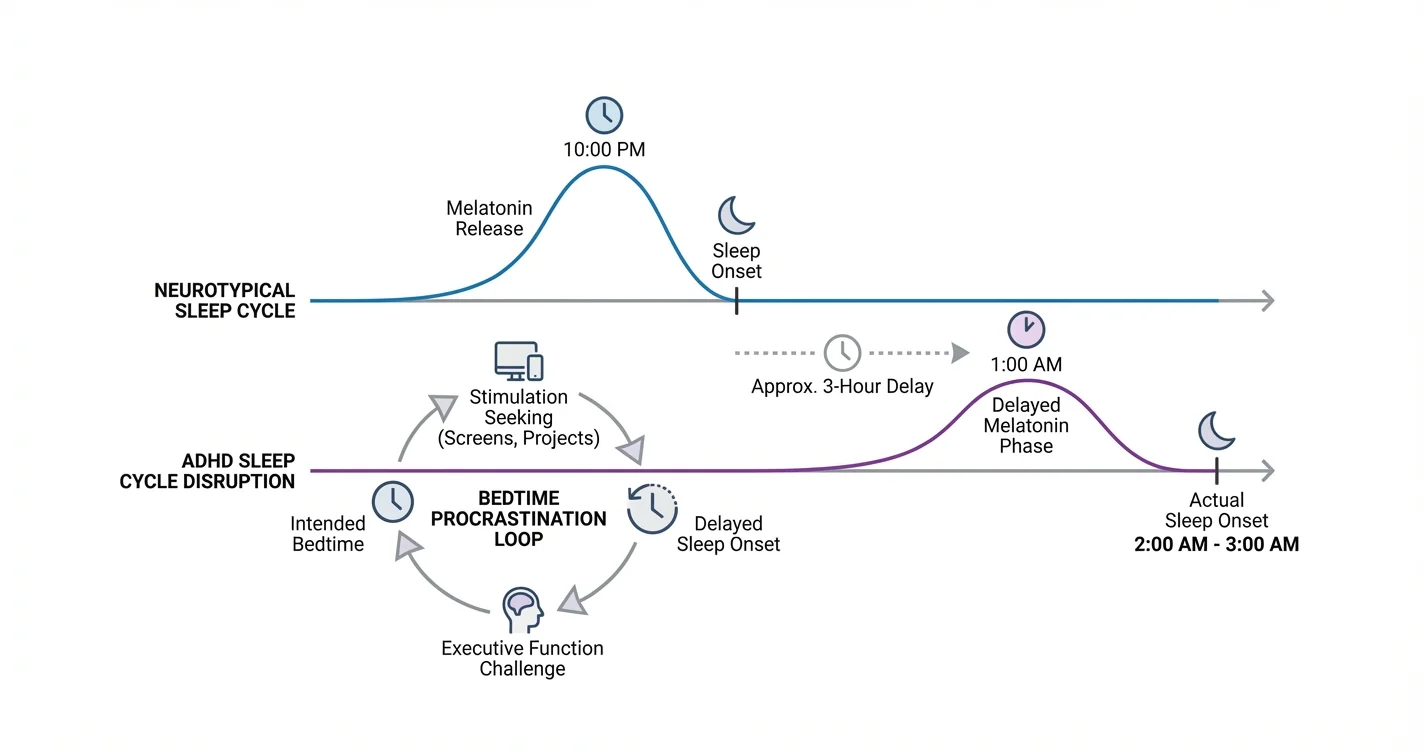
If you have ADHD and find yourself wide awake at midnight despite feeling exhausted hours earlier, you're not imagining things. ADHD sleep cycle disruption involves a complex interplay of biological and behavioral factors that make falling asleep at a reasonable hour extraordinarily difficult. Research suggests that individuals with ADHD often experience melatonin release delayed by approximately three hours compared to neurotypical individuals, combined with patterns of bedtime procrastination that compound sleep difficulties. This article examines the mechanisms behind these sleep disruptions and provides evidence-based strategies for managing them, drawing on clinical research and practical therapeutic approaches.
Understanding these patterns isn't just about getting better sleep—it's about recognizing that your struggle to maintain a consistent sleep schedule may have neurobiological roots beyond simple "discipline" or "willpower."
The Biology of ADHD Sleep Cycle Disruption
The relationship between ADHD and sleep problems extends far deeper than difficulty winding down after a busy day. Neuroimaging studies suggest that ADHD involves differences in circadian rhythm regulation, particularly in the timing of melatonin production—the hormone that signals to your body that it's time to sleep.
In neurotypical individuals, melatonin typically begins rising in the early evening, creating natural sleepiness that aligns with conventional sleep schedules. However, research indicates that many people with ADHD experience a significant phase delay in their melatonin production. This delay can shift the natural sleep window substantially later into the night, creating what's sometimes called a delayed sleep phase syndrome.
This isn't a matter of poor sleep hygiene or lack of trying. The delay appears to be intrinsic to how ADHD affects neurological regulation of circadian rhythms. When your melatonin doesn't rise until 1 AM instead of 10 PM, trying to fall asleep at a "normal" bedtime means attempting sleep when your body is biologically programmed to be alert.
The Dopamine Connection
ADHD involves differences in dopamine regulation, which also plays a role in sleep-wake cycles. The stimulation-seeking behavior characteristic of ADHD may intensify in the evening hours when external structure decreases and boredom increases. This creates a perfect storm: your biology keeps you alert while your brain seeks the stimulation it's been craving all day.
Bedtime Procrastination Patterns in ADHD
Beyond the biological delay in melatonin release, people with ADHD frequently struggle with what researchers call bedtime procrastination—the tendency to delay sleep despite having no external reasons to stay awake and knowing that staying up will have negative consequences.
This pattern manifests in several recognizable ways:
- "Just one more" syndrome: Starting another episode, scrolling for "just five more minutes," or beginning a task that will obviously take hours
- Revenge bedtime procrastination: Staying up late to claim personal time after feeling controlled by schedules all day
- Hyperfocus on evening activities: Getting absorbed in projects or entertainment right when you should be winding down
- Task initiation difficulties: Struggling to start the bedtime routine itself, even when tired
Clinical observations suggest that bedtime procrastination in ADHD isn't simply poor planning. It reflects difficulties with executive function—specifically, task switching, time perception, and future-oriented decision-making. When you're engaged in something stimulating at 11 PM, the immediate reward of continuing feels far more compelling than the abstract future benefit of being well-rested tomorrow.
The Time Blindness Factor
Many people with ADHD experience time blindness—difficulty accurately perceiving how much time has passed or how long tasks will take. This means that "I'll just finish this quickly" can easily turn into two hours without conscious awareness. The delayed melatonin production compounds this issue by removing the biological sleepiness cues that typically prompt people to wrap up activities.
The Combined Impact on Sleep Disruption
When delayed melatonin release combines with bedtime procrastination patterns, the result is a self-reinforcing cycle that significantly disrupts sleep:
Phase 1: Evening Alertness - While others begin feeling naturally sleepy around 9-10 PM, you remain alert and energized. Without biological sleep pressure, there's no internal signal pushing you toward bed.
Phase 2: Stimulation Seeking - Your ADHD brain, relatively understimulated all day, finds the evening hours perfect for engaging activities. You start projects, dive into research, connect with friends online, or consume media.
Phase 3: Delayed Sleep Onset - By the time your melatonin finally rises (potentially around 1-2 AM), you've been awake and stimulated for hours. Even when sleepiness arrives, the behavioral patterns are already established for the night.
Phase 4: Morning Consequences - Insufficient sleep worsens ADHD symptoms the next day—executive function difficulties, emotional regulation challenges, and concentration problems all intensify, making it even harder to maintain structure and wind down at a reasonable hour the following evening.
Research indicates that chronic sleep disruption in ADHD creates a cascading effect on daily functioning. Working memory, impulse control, and emotional regulation—already challenging with ADHD—deteriorate further with inadequate sleep, creating what some clinicians describe as "ADHD symptoms on top of ADHD symptoms."
Practical Strategies for Managing ADHD Sleep Disruption
Managing ADHD sleep cycle disruption requires addressing both the biological delay in melatonin production and the behavioral patterns of bedtime procrastination. Some strategies that mental health professionals frequently recommend include:
Working With Your Delayed Rhythm
Rather than fighting your natural sleep phase, some practitioners suggest initially accepting it and building structure around your actual sleep window. If you naturally fall asleep at 1 AM and wake at 9 AM, and your schedule permits it, working with this rhythm may be more sustainable than constantly battling your biology. Once stabilized, you can gradually shift earlier in small increments.
Light Exposure Timing
Circadian rhythms respond to light exposure patterns. Some research suggests that bright light exposure in the morning and reducing blue light in the evening may help gradually shift melatonin timing earlier. This doesn't produce immediate results but may support gradual phase advancement over weeks.
Structured Wind-Down Routines
For bedtime procrastination, external structure can compensate for executive function difficulties. Setting multiple alarms—not just for morning, but for evening transition points—can help initiate the wind-down process before you become absorbed in late-night activities.
Breaking the bedtime routine into very small, specific steps rather than one large "go to bed" task may reduce the executive function demand that makes starting feel overwhelming.
Stimulus Control for Sleep Environment
Clinicians working with ADHD sleep issues often emphasize keeping the bedroom exclusively for sleep. This means no screens, work, or stimulating activities in bed, which helps your brain associate that environment with sleep rather than alertness.
Processing Evening Thoughts
Many people with ADHD report that their mind becomes most active right when trying to sleep, filled with ideas, worries, or replays of the day. Having a specific outlet for these thoughts before attempting sleep—journaling, a voice memo, or even talking through concerns with a support tool like Lovon.app—can help externalize the mental activity that keeps you alert.
When Professional Support Becomes Necessary
While self-management strategies can help, ADHD sleep cycle disruption sometimes requires professional intervention. Consider seeking support from a healthcare provider specializing in ADHD or sleep medicine if you experience:
- Chronic sleep deprivation affecting work, relationships, or safety (such as drowsy driving)
- Inability to maintain employment or academic performance due to sleep schedule conflicts
- Significant emotional distress or anxiety about sleep
- Sleep schedule completely incompatible with necessary life obligations
- Suspected additional sleep disorders beyond circadian rhythm issues
Healthcare providers can assess whether additional interventions might help. For some people, this might include cognitive-behavioral therapy for insomnia adapted for ADHD, chronotherapy (systematic sleep schedule shifting), or discussions about whether medication adjustments might support better sleep timing. For circadian rhythm issues, providers may discuss options like carefully timed low-dose melatonin supplementation several hours before desired bedtime—though appropriate timing and dosing should always be determined with professional guidance.
Psychologists and therapists with ADHD expertise can also help address the behavioral components of bedtime procrastination, working on executive function strategies and addressing any underlying patterns (like using late-night hours as the only time that feels truly autonomous, which some practitioners working with boundary-setting describe as particularly common in those who've felt controlled by external demands all day).
Addressing the Psychological Dimension
The psychological impact of chronic sleep disruption in ADHD often receives less attention than the practical consequences, but it significantly affects quality of life. Many people with ADHD describe intense frustration and shame around their inability to maintain "normal" sleep schedules, particularly when others frame it as laziness or lack of discipline.
Understanding that ADHD sleep cycle disruption has neurobiological components—that your melatonin production timing differs from neurotypical patterns—can reduce self-blame. This isn't about lacking willpower; it's about working with a nervous system that operates on a different timeline.
The bedtime procrastination patterns also deserve compassion rather than criticism. When your day is structured around meeting external demands and compensating for executive function challenges, the evening hours may represent the only time that feels truly yours. The resistance to ending the day makes psychological sense, even when intellectually you know sleep is important.
Working through these patterns often benefits from support that helps you process the emotions around autonomy, control, and the daily experience of ADHD. Tools like Lovon.app can provide accessible support for exploring these feelings when they arise, particularly during those late-night hours when awareness of the pattern doesn't translate into ability to change it in the moment.
Lifestyle Adjustments That May Help
Beyond specific sleep strategies, some broader lifestyle approaches appear to support better sleep patterns for people with ADHD sleep cycle disruption:
Physical activity - Some studies indicate that regular physical activity, particularly earlier in the day, may help with both ADHD symptom management and sleep quality. This may work partly through effects on dopamine regulation and partly through supporting circadian rhythm stability.
Consistent wake times - Even if bedtime varies, maintaining a consistent wake time (including weekends) provides an anchor for your circadian rhythm. This is often easier to control than bedtime and may gradually help shift your sleep phase earlier.
Evening caffeine awareness - Given that ADHD already involves delayed alertness, caffeine in afternoon or evening hours can extend wakefulness even further. People with ADHD sometimes use caffeine differently (some even find it calming), but monitoring how timing affects your sleep may reveal patterns worth adjusting.
Meal timing - Emerging research suggests that meal timing influences circadian rhythms. Very late eating may signal to your body that it's still daytime, potentially reinforcing delayed sleep phase.
Transitional activities - Building in genuinely relaxing transition activities between "day mode" and sleep preparation may help. However, this needs to account for ADHD tendencies—choosing activities that are calming but not so boring that you abandon them for more stimulating options, yet not so engaging that they become another source of hyperfocus.
The Social Dimension of ADHD Sleep Disruption
Living with ADHD sleep cycle disruption often creates social friction. Partners may feel rejected when you stay up hours after they've gone to bed. Employers and educators may view morning struggles as irresponsibility. Friends and family may interpret your sleep patterns as poor self-care or lack of commitment to health.
These social consequences can compound the sleep disruption itself. Relationship tension creates stress that interferes with sleep. Shame about morning lateness may lead to anxiety that makes falling asleep even harder. The sense that you're failing at something "everyone else" manages easily erodes self-esteem.
Communication about the neurobiological reality of ADHD sleep cycle disruption can sometimes help. When partners, employers, or family members understand that delayed melatonin production is a documented phenomenon rather than willful choice, they may respond with more flexibility. This doesn't eliminate all conflict—practical scheduling needs still exist—but it can shift the conversation from moral judgment to problem-solving.
For some people, reframing their relationship with their natural rhythm also helps. Rather than viewing yourself as "broken" for not matching conventional schedules, recognizing that human sleep timing exists on a spectrum—and that ADHD places you toward the later end—can reduce internalized shame. Society's structure favors early chronotypes, but that doesn't make other patterns inherently wrong.
Long-Term Management and Adaptation
Managing ADHD sleep cycle disruption is typically an ongoing process rather than a one-time fix. Your optimal strategies may shift with life circumstances, seasons (day length affects circadian rhythms), stress levels, and changes in ADHD treatment approaches.
Some people find that they cycle between periods of successfully maintaining earlier sleep schedules and periods when their rhythm drifts later again. Rather than viewing this as failure, understanding it as a pattern to work with reduces frustration. When you notice your sleep phase delaying again, you can reinstate the strategies that previously helped rather than spiraling into self-criticism.
Building flexibility into your life where possible—choosing career paths with schedule flexibility, prioritizing relationships with people who respect your sleep patterns, creating living situations that don't require rigid morning schedules—can significantly reduce the daily struggle. This isn't always possible, particularly early in careers or with caregiving responsibilities, but even small adjustments in this direction may help.
For moments when the pattern feels overwhelming or you need support processing the emotional impact of chronic sleep disruption, accessible resources like therapy, ADHD coaching, or on-demand support options provide outlets for working through these challenges without waiting for business hours.
Conclusion
ADHD sleep cycle disruption, characterized by melatonin release delayed by several hours and bedtime procrastination patterns, represents a genuine neurobiological challenge rather than a simple behavioral choice. When your natural sleep window occurs significantly later than conventional schedules and your executive function makes transitioning to sleep particularly difficult, maintaining "normal" sleep patterns requires substantial effort and often specialized strategies.
Understanding the mechanisms behind these patterns—both the biological delay in circadian rhythm and the psychological factors driving bedtime procrastination—provides a foundation for developing personalized management approaches. Successful strategies typically address both components: working with your natural rhythm where possible while building external structure to support earlier sleep when necessary.
If you're struggling with ADHD sleep disruption, remember that this is a recognized clinical pattern with established management approaches. Combining self-management strategies with professional support when needed offers the best path toward sustainable improvement. The goal isn't necessarily perfect adherence to conventional sleep schedules but rather finding approaches that support your functioning, wellbeing, and quality of life within the reality of how your ADHD affects your sleep-wake cycles.
Disclaimer: This is general information, not medical advice or diagnosis. If symptoms are severe, affecting your daily life, or you're having thoughts of self-harm — seek professional help. In the US: call or text 988 (Suicide & Crisis Lifeline). For immediate danger: 911 or local emergency services.
How AI Support Helps You Heal
AI emotional support isn't about replacing human connection — it's about filling the gaps. The moments when you need to talk at 2 AM, when you don't want to burden your friends again, or when you simply need someone to listen without judgment.
Here's what happens in a typical Lovon session:
You share what's on your mind
There's no script, no intake form, no waiting room. You speak or type whatever you're feeling — in your own words, at your own pace.
Lovon validates and explores
Using frameworks from CBT (Cognitive Behavioral Therapy) and motivational interviewing, Lovon acknowledges your feelings first, then gently helps you explore them. No dismissive "just move on" advice.
You build coping skills together
Lovon doesn't just listen — it actively works with you on evidence-based techniques: thought reframing, urge surfing, behavioral experiments, and more.
What a Session with Lovon Looks Like

When to Seek Professional Help
AI support is a valuable tool, but it's not a replacement for professional care. Please consider reaching out to a licensed therapist if you experience any of the following:
- Persistent thoughts of self-harm or suicide
- Inability to perform daily activities (work, eating, sleeping) for more than 2 weeks
- Turning to alcohol or substances to cope
- Intense anger or desire to harm your ex-partner
- Complete emotional numbness that doesn't improve over time
Crisis Resources (US): If you're in immediate danger, call 988 (Suicide & Crisis Lifeline) or text HOME to 741741 (Crisis Text Line). Available 24/7, free, and confidential.
Outside the US? Find a crisis line in your country
Ready to Start?
Your healing journey can begin right now
A 7-day trial. No judgment. Just a safe space to process what you're going through.
Frequently Asked Questions
Is Lovon a replacement for a real therapist?
Is my conversation with Lovon AI private?
How is Lovon different from ChatGPT for emotional support?
Can I use Lovon if I'm already seeing a therapist?
Can I try Lovon before subscribing?
About the Author

The Lovon Editorial Team
Mental Health & Wellness Content Team
The Lovon Editorial Team develops mental health and wellness content designed to make psychological concepts accessible and actionable. Our goal is to bridge the gap between clinical research and everyday life - helping you understand why your mind works the way it does and what you can do about it....
Related articles
- ADHD Masking — Long-Term Consequences and Reversal Strategies
ADHD masking—the deliberate suppression or concealment of symptoms to appear neurotypical—often develops as a survival…
- ADHD and Procrastination: Why It Happens (2026 Guide)
ADHD and procrastination linked to dopamine and task-initiation gaps, not laziness. Get the 2026 step-by-step fix: body…
- How much sleep do you need to lower anxiety?
How much sleep do you need to lower anxiety? Most adults should aim for 7–9 hours in 2026. Learn why sleep quality…
- Complex PTSD: Understanding Symptoms, Causes, and Treatment
Complex PTSD (C-PTSD) represents a distinct form of trauma response that emerges from prolonged, repeated exposure to…
See also
Quizzes
- Do I Miss My Ex or Am I Just Lonely? 12-Question Quiz
Find out what the missing is actually about.
- Am I Sabotaging My Relationship? 12-Question Quiz
Find the move you reach for, in 2 minutes.
Free tools
- How to End a Friendship Without a Scene
A chat for working out how to end a friendship clearly, without a grievance list or a slow ghost. Tell it how long you…
- What Did They Actually Mean By That?
A chat for one sentence you cannot stop re-reading. Paste their exact words and what was happening around them, and get…
From the wiki
- Why do I keep dreaming about my ex?
Recurring dreams about an ex usually mean your brain is still consolidating a relationship that took up years of memory…
Disclaimer: This article is for informational purposes only and does not constitute medical advice, diagnosis, or treatment. Always seek the advice of your physician or other qualified health provider with any questions you may have regarding a medical condition. If you are in crisis or think you may have an emergency, call 988 (Suicide & Crisis Lifeline) or go to the nearest emergency room. Outside the US? Find a crisis line in your country.