
BPD — Attachment Style as Identity and Loss Perception
For individuals living with borderline personality disorder (BPD), the connection between attachment style and identity runs deeper than it does for most

Key Takeaways
- Early relational inconsistency: When caregiving is unpredictable, children may develop hypervigilance to relational
- Emotional intensity: The heightened emotional responsiveness characteristic of BPD means attachment experiences are
- Limited self-other differentiation: Difficulty maintaining clear boundaries between self and others can lead to
- Validation seeking: When internal self-concept is unclear, external relational feedback becomes the primary source
- Values clarification exercises: Identifying personal values independent of relationships creates alternative
Introduction
For individuals living with borderline personality disorder (BPD), the connection between attachment style and identity runs deeper than it does for most people. Research suggests that early attachment patterns don't just influence relationship behaviors—they can become the foundation of identity itself, shaping how a person fundamentally understands who they are in relation to others. This integration has profound implications for how loss is perceived and experienced. When attachment style becomes identity, separation isn't just the end of a relationship; it can feel like a dissolution of the self. Understanding this intricate connection between BPD, attachment style as identity, and loss perception offers crucial insights for both those living with the condition and the professionals who support them. This article explores the psychological mechanisms behind these patterns, drawing on current clinical understanding and practical frameworks for navigating these intense experiences.
How Attachment Patterns Form the Foundation of Identity in BPD
Attachment theory suggests that early relational experiences with caregivers create internal working models—mental frameworks that guide how we understand relationships throughout life. For most people, these models influence relationship expectations and behaviors while remaining separate from core identity. In borderline personality disorder, however, emerging research indicates that these attachment patterns may become inseparable from the sense of self.
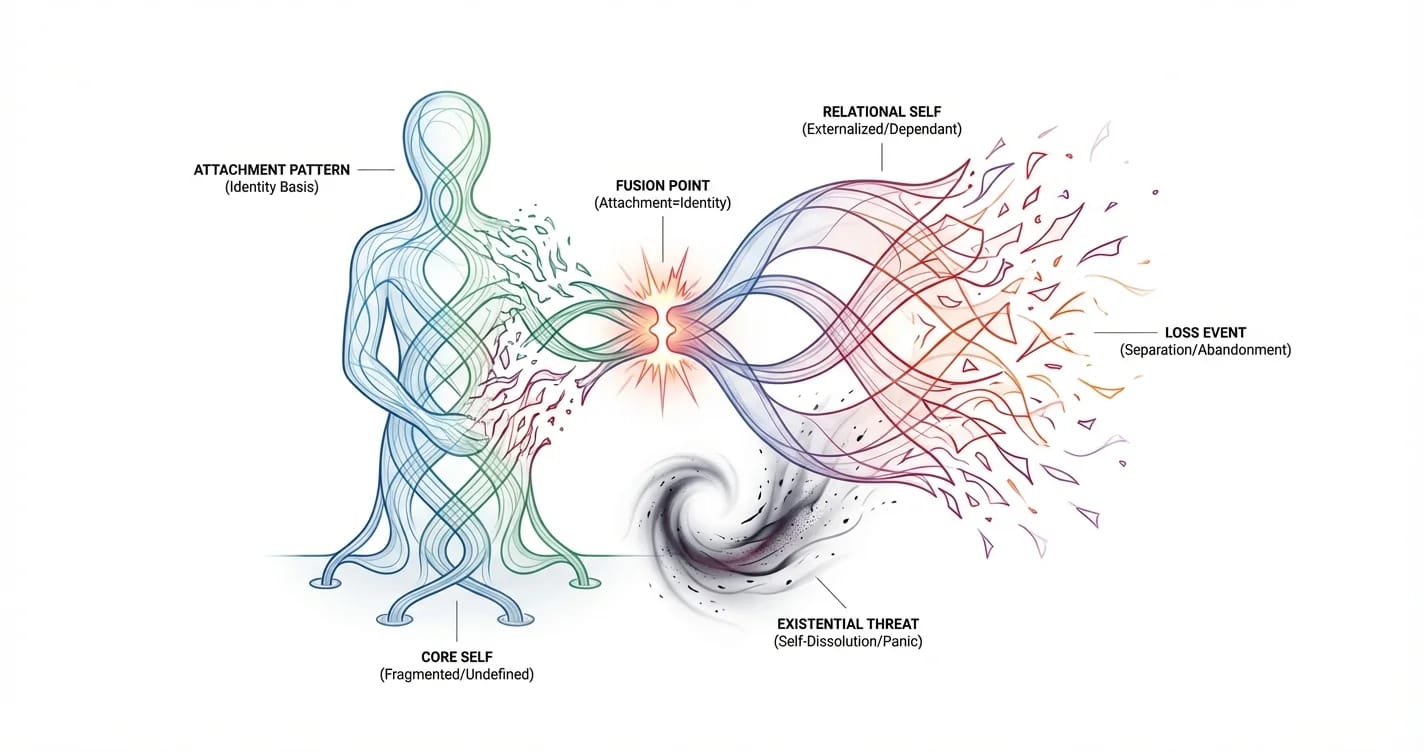
Clinical observations suggest this happens because individuals with BPD often experience what researchers describe as "identity diffusion"—an unstable or unclear sense of who they are independent of relationships. When identity feels fragmented or undefined internally, the consistent element becomes the relational pattern itself: "I am someone who needs constant reassurance," "I am the person who gets abandoned," or "I am defined by how intensely I attach to others."
Studies indicate that this phenomenon may be particularly pronounced in those with anxious-preoccupied or disorganized attachment styles, which appear frequently in individuals with BPD. The attachment pattern fills a psychological void where a coherent, stable self-concept would typically develop. Several factors contribute to this integration:
- Early relational inconsistency: When caregiving is unpredictable, children may develop hypervigilance to relational cues as their primary way of understanding the world and themselves
- Emotional intensity: The heightened emotional responsiveness characteristic of BPD means attachment experiences are encoded with exceptional intensity
- Limited self-other differentiation: Difficulty maintaining clear boundaries between self and others can lead to incorporating relational patterns as core identity features
- Validation seeking: When internal self-concept is unclear, external relational feedback becomes the primary source of self-definition
This fusion of attachment and identity creates what some clinicians describe as a "relational self"—an identity structure fundamentally organized around connection patterns rather than internal characteristics, values, or autonomous goals.
The Unique Experience of Loss When Attachment Is Identity
When attachment style becomes identity in borderline personality disorder, loss transforms from a painful but contained experience into an existential crisis. Understanding this distinction is essential for comprehending the intensity of BPD responses to separation, rejection, or abandonment.
For someone whose identity is separate from their attachment patterns, the end of a relationship triggers grief, sadness, and adjustment challenges, but the core sense of "who I am" remains relatively intact. The person thinks, "I lost someone important to me, and I'm grieving that loss." In contrast, when attachment style has become identity, the same event triggers a fundamentally different internal experience: "I am losing myself. The person who existed in that relationship is disappearing."
Research suggests this helps explain several characteristic BPD responses to perceived or actual abandonment:
Frantic efforts to prevent abandonment: These aren't simply about losing the other person—they're about preventing self-dissolution. The urgency reflects an identity-level threat, not just relational distress.
Disproportionate emotional responses: What might appear as overreaction to minor separations makes sense when understood as responding to identity threat rather than temporary distance. If "who I am" is defined by continuous connection, even brief separations can trigger existential panic.
Rapid relationship replacement: The intense need to quickly enter new relationships may reflect an attempt to restore identity continuity rather than simply avoiding loneliness. A new attachment provides the relational framework the person needs to feel like a coherent self again.
Identity shifts between relationships: The observation that people with BPD sometimes seem like "different people" with different partners reflects how identity restructures around each attachment relationship's specific pattern.
Neurobiological research indicates that in BPD, areas of the brain associated with self-referential processing and emotional regulation may function differently, potentially contributing to this heightened vulnerability when attachment relationships are threatened. The experience of loss may activate threat-response systems with unusual intensity, creating the physiological experience of danger even when the actual situation involves emotional rather than physical threat.
Recognizing Attachment-as-Identity Patterns in Daily Life
Understanding how BPD, attachment style as identity, and loss perception interconnect requires recognizing these patterns in concrete, everyday situations. These aren't abstract psychological concepts—they manifest in specific thoughts, behaviors, and emotional reactions that shape daily experience.
Several indicators suggest attachment patterns have become central to identity structure:
Intense fear during routine separations: Experiencing panic, desperation, or identity confusion when a partner goes to work, doesn't respond to messages promptly, or spends time with others may indicate that the connection itself maintains identity coherence. The reaction intensity exceeds what the objective situation would typically warrant because the psychological stakes involve identity preservation.
Self-concept that changes dramatically based on relationship status: Feeling like a fundamentally different person when single versus in a relationship, or noticing that values, interests, and even personality seem to shift completely with different partners, suggests identity is organized around relational patterns rather than internal continuity.
Difficulty answering "who are you" questions: Struggling to describe yourself without referencing relationships, roles, or how others see you may indicate limited development of autonomous identity. Responses that immediately reference "I'm someone's partner/friend/child" rather than internal characteristics reflect externalized identity.
Emotional emptiness when alone: Chronic feelings of emptiness or not knowing who you are during periods without intense connection can signal that identity depends on active relational engagement to feel real and coherent.
Tools like Lovon.app can provide accessible support for exploring these patterns through voice-based conversations that help identify recurring themes in how you experience relationships and loss. Between therapy sessions or during moments when these patterns feel particularly intense, having an on-demand resource to process these experiences can support greater self-understanding.
The key distinction involves examining whether relationships enhance an existing sense of self or whether they create the sense of self. When attachment becomes identity, the latter is true—you don't bring a developed self to relationships; you become a self through them.
Clinical Approaches to Developing Identity Beyond Attachment Patterns
Addressing the integration of attachment style as identity in borderline personality disorder involves gradually developing alternative sources of self-definition while honoring the genuine functions these patterns have served. This isn't about eliminating the importance of relationships—connections remain crucial for everyone—but rather expanding identity foundations beyond relational patterns alone.
Dialectical Behavior Therapy (DBT) specifically addresses identity disturbance through several mechanisms. The mindfulness component helps individuals observe their internal experiences without immediately defining themselves through others' reactions. Skills training in emotion regulation provides tools for tolerating distress without immediately seeking external validation or connection to restore equilibrium. Interpersonal effectiveness modules teach how to maintain relationships while preserving self-respect and personal values—creating space for autonomous identity within connection.
Mentalization-Based Treatment (MBT) focuses specifically on improving the capacity to understand mental states—both one's own and others'. This approach may help individuals with BPD develop clearer differentiation between self and other, which supports identity development separate from attachment patterns. By strengthening the ability to reflect on internal experience, mentalization practices can gradually build internal reference points for identity.
Schema Therapy works with the concept of "modes"—different self-states that individuals with BPD may experience. This framework can help people understand how different relational contexts activate different modes, while working toward developing a "healthy adult" mode that provides continuity across situations. The therapy explicitly addresses early maladaptive schemas often rooted in attachment experiences.
Several practical strategies complement therapeutic approaches:
- Values clarification exercises: Identifying personal values independent of relationships creates alternative identity anchors. "What matters to me regardless of who I'm with?" becomes a guiding question.
- Solitary activities that build competence: Developing skills, hobbies, or knowledge areas that don't require others' participation creates identity content separate from relational patterns.
- Journaling internal experiences: Regular reflection on thoughts, feelings, and reactions helps build familiarity with internal experience as a source of self-knowledge.
- Gradual tolerance of aloneness: Structured practice being alone—starting with brief periods and extending gradually—can help develop comfort with the self outside relational contexts.
Support resources like Lovon.app offer ways to practice articulating internal experiences and identifying patterns outside the intensity of immediate crisis, which can complement ongoing therapeutic work. The reflective conversation process may help develop the observing capacity that supports gradual identity differentiation from attachment patterns.
It's important to acknowledge that this work progresses gradually and involves significant discomfort. When attachment patterns have functioned as identity for years or decades, developing alternatives feels threatening initially. The process requires patience, professional guidance for most individuals, and recognition that setbacks are part of development rather than failures.
When to Seek Professional Help
If you recognize these patterns in yourself, professional support from a therapist specializing in BPD and attachment issues can be invaluable. Consider seeking help particularly if:
- You experience intense fear of abandonment that interferes with daily functioning or relationship stability
- Identity confusion or chronic emptiness significantly affects your quality of life
- You engage in self-harming behaviors or have thoughts of suicide, especially related to relationship changes or losses
- Relationship patterns repeatedly cause significant distress but feel impossible to change on your own
- You notice that your sense of who you are shifts dramatically based on relationship status or who you're with
Therapists trained in DBT, MBT, or schema therapy specifically for borderline personality disorder can provide structured approaches to these challenges. Psychiatrists can evaluate whether medication might help with specific symptoms like emotional dysregulation or co-occurring conditions. The combination of specialized therapy and, when appropriate, medication support offers the most comprehensive approach for many individuals.
Self-understanding and supportive resources complement but don't replace professional treatment when symptoms significantly impact functioning or safety. These patterns developed over years and typically require sustained professional guidance to meaningfully shift.
Conclusion
The integration of attachment style as identity in borderline personality disorder creates a unique psychological landscape where loss is perceived not simply as the end of a relationship but as a threat to the coherence of self. Understanding how BPD, attachment style as identity, and loss perception interconnect illuminates why separation triggers such intense reactions and why relationship patterns feel so difficult to change—they're defending not just connection but identity itself.
Recognition of these patterns offers a starting point for change. When you understand that your intense responses to potential loss stem from identity-level threat rather than relationship dependency alone, you can begin developing alternative sources of self-definition. This work is challenging and typically requires professional support, but it opens possibilities for experiencing relationships as enhancements to—rather than creators of—a coherent sense of self.
Whether through structured therapy, supportive resources, or gradual personal exploration, developing identity beyond attachment patterns allows for both deeper connections and greater personal stability. The goal isn't eliminating the importance of relationships but rather building an internal foundation that remains stable across the inevitable changes, losses, and transitions that relationships involve.
Disclaimer: This is general information, not medical advice or diagnosis. If symptoms are severe, affecting your daily life, or you're having thoughts of self-harm—seek professional help. In the US: call or text 988 (Suicide & Crisis Lifeline). For immediate danger: 911 or local emergency services.
How AI Support Helps You Heal
AI emotional support isn't about replacing human connection — it's about filling the gaps. The moments when you need to talk at 2 AM, when you don't want to burden your friends again, or when you simply need someone to listen without judgment.
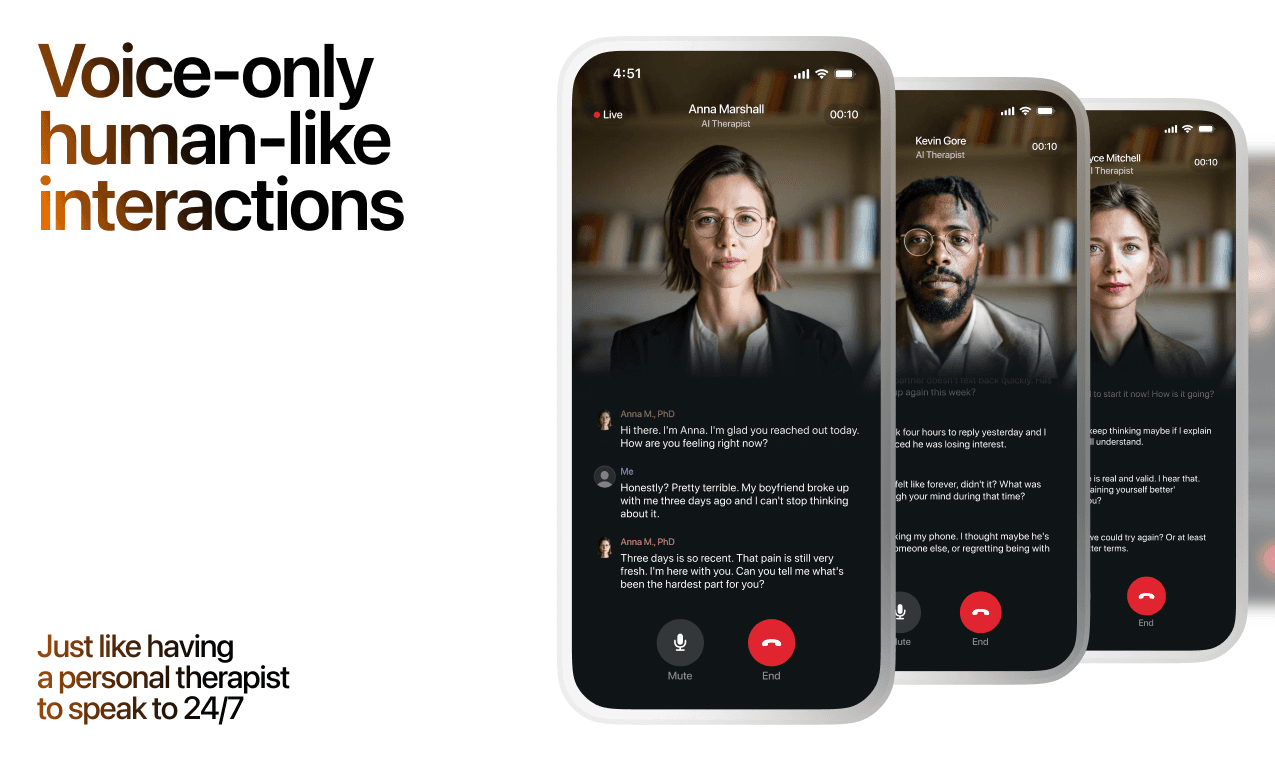
Here's what happens in a typical Lovon session:
You share what's on your mind
There's no script, no intake form, no waiting room. You speak or type whatever you're feeling — in your own words, at your own pace.
Lovon validates and explores
Using frameworks from CBT (Cognitive Behavioral Therapy) and motivational interviewing, Lovon acknowledges your feelings first, then gently helps you explore them. No dismissive "just move on" advice.
You build coping skills together
Lovon doesn't just listen — it actively works with you on evidence-based techniques: thought reframing, urge surfing, behavioral experiments, and more.
What a Session with Lovon Looks Like
When to Seek Professional Help
AI support is a valuable tool, but it's not a replacement for professional care. Please consider reaching out to a licensed therapist if you experience any of the following:
- Persistent thoughts of self-harm or suicide
- Inability to perform daily activities (work, eating, sleeping) for more than 2 weeks
- Turning to alcohol or substances to cope
- Intense anger or desire to harm your ex-partner
- Complete emotional numbness that doesn't improve over time
Crisis Resources (US): If you're in immediate danger, call 988 (Suicide & Crisis Lifeline) or text HOME to 741741 (Crisis Text Line). Available 24/7, free, and confidential.
Outside the US? Find a crisis line in your country
Ready to Start?
Your healing journey can begin right now
A 7-day trial. No judgment. Just a safe space to process what you're going through.
Frequently Asked Questions
Is Lovon a replacement for a real therapist?
Is my conversation with Lovon AI private?
How is Lovon different from ChatGPT for emotional support?
Can I use Lovon if I'm already seeing a therapist?
Can I try Lovon before subscribing?
About the Author
The Lovon Editorial Team
Mental Health & Wellness Content Team
The Lovon Editorial Team develops mental health and wellness content designed to make psychological concepts accessible and actionable. Our goal is to bridge the gap between clinical research and everyday life - helping you understand why your mind works the way it does and what you can do about it....
Related articles
- Understanding Anxious Attachment Patterns in Relationships
If you find yourself constantly checking your phone for messages, worrying whether your partner still cares, or feeling…
- How to Develop Secure Attachment in 2026: 7 Steps
How to develop secure attachment in 2026: 7 practical steps, a real timeline (8-12 weeks), and fixes for anxious and…
- BPD Attachment Patterns: Giving Everything to Prevent Abandonment
When your entire sense of self revolves around giving everything you have to keep people from leaving, you're…
- AI Therapy for BPD: What Helps in 2026 (Honest Guide)
AI therapy for BPD works as backup, not treatment. See what to look for, 3 real use cases, and what to skip before you…
See also
Quizzes
- What's My Attachment Style? Free 12-Question Quiz
Find your attachment pattern in 3 minutes.
- Overthinking Test: Am I an Overthinker? 12-Question Quiz
See which overthinking loop runs you, in 3 minutes.
Free tools
- How to End a Situationship
Nothing was ever named, so anything you say either claims more than was agreed or ends nothing at all. Tell it how long…
- Write a Letter to Someone You Lost
Tell it who they were to you and what you never got to say, and it writes the letter back in your words. No account, no…
From the wiki
- What does clingy mean in a relationship?
Clingy is what people call behavior that asks for more contact or reassurance than the other person wants to give…
Disclaimer: This article is for informational purposes only and does not constitute medical advice, diagnosis, or treatment. Always seek the advice of your physician or other qualified health provider with any questions you may have regarding a medical condition. If you are in crisis or think you may have an emergency, call 988 (Suicide & Crisis Lifeline) or go to the nearest emergency room. Outside the US? Find a crisis line in your country.