
ADHD Masking — Long-Term Consequences and Reversal Strategies
ADHD masking—the deliberate suppression or concealment of symptoms to appear neurotypical—often develops as a survival mechanism in environments that don't

Key Takeaways
- ADHD masking—the deliberate suppression or concealment of symptoms to appear neurotypical—often develops as a
- While masking may temporarily reduce social friction or professional stigma, clinical observations and expert
- For many adults who masked throughout childhood and adolescence, the psychological toll becomes apparent only years
Introduction
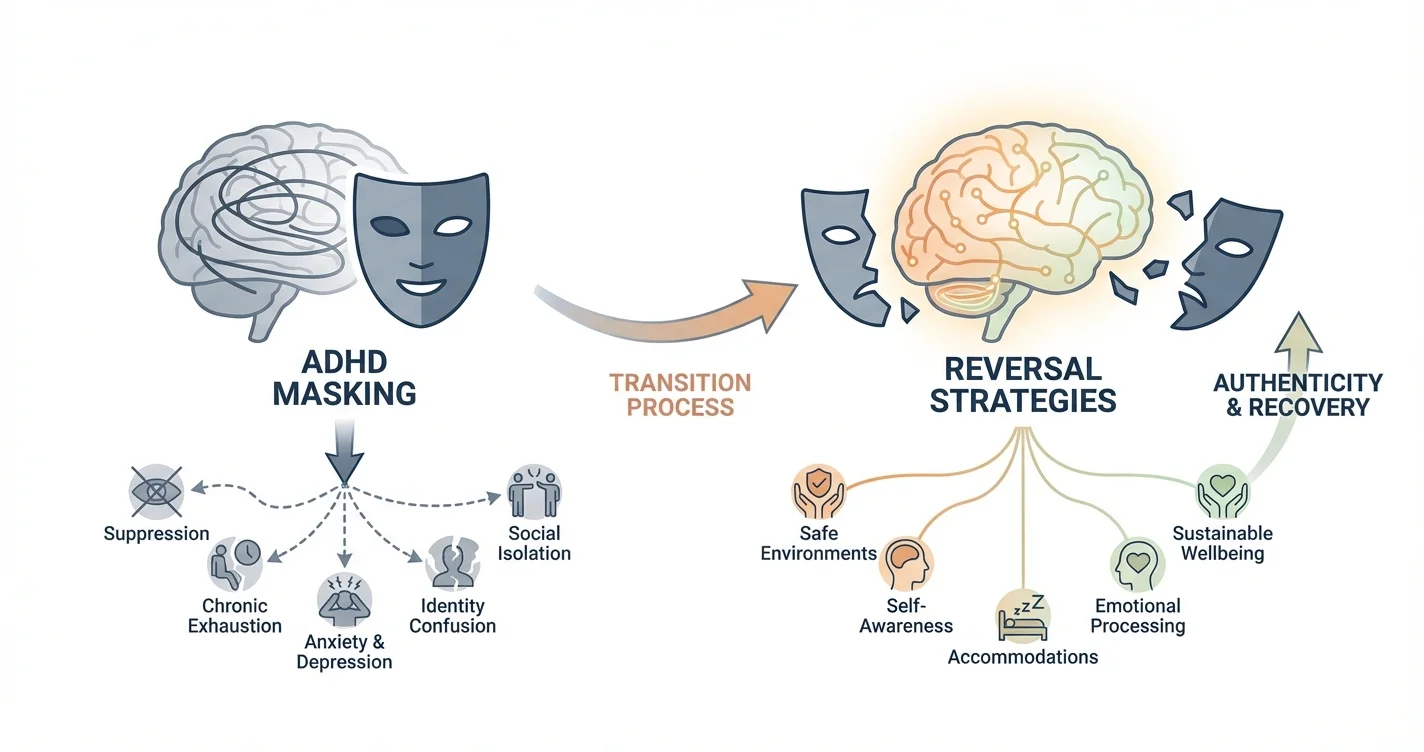
ADHD masking—the deliberate suppression or concealment of symptoms to appear neurotypical—often develops as a survival mechanism in environments that don't accommodate neurodivergent behaviors. While masking may temporarily reduce social friction or professional stigma, clinical observations and expert analysis increasingly demonstrate that prolonged masking carries significant emotional, cognitive, and relational costs. For many adults who masked throughout childhood and adolescence, the psychological toll becomes apparent only years later, manifesting as chronic exhaustion, identity confusion, or heightened anxiety. Understanding the long-term consequences of masking ADHD symptoms and implementing thoughtful reversal strategies represents a critical step toward sustainable well-being. This article examines the documented impacts of prolonged ADHD masking and outlines practical approaches for safely reducing this compensatory behavior.
Understanding ADHD Masking and Its Mechanisms
ADHD masking encompasses a range of behaviors designed to suppress visible symptoms and meet neurotypical expectations. Common masking strategies include forcing sustained attention through exhausting mental effort, suppressing fidgeting or physical restlessness, over-preparing for conversations to avoid seeming inattentive, and meticulously organizing external systems to compensate for internal executive dysfunction.
Research suggests that masking often develops during childhood and adolescence, particularly in environments with high conformity pressures or limited understanding of neurodiversity. Individuals may receive explicit messages that their natural behaviors are inappropriate, or they may implicitly observe that neurotypical peers receive more positive responses. Over time, these compensatory behaviors become automatic, creating a disconnect between internal experience and external presentation.
Psychologists specializing in ADHD emphasize that masking differs fundamentally from developing genuine coping skills. While adaptive strategies work with ADHD neurology to create sustainable systems, masking fights against neurological differences through constant self-monitoring and suppression. This distinction matters because adaptive approaches conserve energy and reduce stress, while masking depletes cognitive resources and increases psychological burden.
The experience of masking varies considerably based on individual factors including symptom severity, environmental demands, available support, and intersecting identities. Those with primarily inattentive presentations may mask differently than those with hyperactive-impulsive symptoms, and social expectations around gender, culture, and professional contexts significantly influence which behaviors require suppression.
Long-Term Consequences of Masking ADHD Symptoms
Prolonged masking creates cumulative effects across multiple domains of functioning. Experts working with adults who masked throughout early development consistently observe several interconnected consequences that emerge over time.
Chronic Exhaustion and Burnout
Maintaining a masked presentation requires continuous cognitive effort and self-monitoring. Studies indicate that this sustained suppression depletes mental resources, leading to chronic fatigue that extends beyond normal tiredness. Many individuals describe feeling perpetually drained even after rest, as their baseline energy expenditure remains elevated through constant vigilance. This exhaustion frequently culminates in periods of burnout where masking becomes temporarily impossible and functioning deteriorates rapidly.
Identity Confusion and Authenticity Loss
When masking begins early and continues for years, individuals often lose touch with their authentic preferences, natural communication style, and genuine personality traits. Clinical observations reveal that many adults who masked extensively struggle to distinguish between their true selves and the persona they constructed for external acceptance. This identity confusion can complicate relationships, career decisions, and life satisfaction, as individuals lack clear internal reference points for what genuinely aligns with their needs and values.
Heightened Anxiety and Depression
The psychological toll of masking appears strongly associated with increased rates of anxiety and depression. Research suggests that the constant self-monitoring required for masking activates threat-detection systems, keeping the nervous system in a state of heightened vigilance. Additionally, the disconnection between internal experience and external presentation creates a form of chronic inauthenticity that many find emotionally distressing. The cumulative effect often manifests as generalized anxiety, social anxiety, or depressive symptoms that persist even when external circumstances improve.
Rejection Sensitivity Intensification
Rejection Sensitivity Dysphoria—characterized by intense emotional responses to perceived criticism or rejection—represents a significant challenge for many individuals with ADHD. Experts note that prolonged masking may intensify rejection sensitivity, as the masked individual internalizes the belief that their authentic self is fundamentally unacceptable. Each instance of masking reinforces the notion that acceptance depends on suppressing genuine characteristics, creating a heightened vulnerability to any sign of social disapproval.
Social Isolation and Relationship Difficulties
Many individuals who mask extensively report feeling profoundly lonely even within relationships, describing a sense that others know only the masked version rather than their authentic self. This ADHD loneliness—the disconnection from people who don't understand your internal experience—can persist across multiple relationships and social contexts. The barrier created by masking prevents genuine intimacy and often leaves individuals feeling fundamentally misunderstood, even by those closest to them.
Strategies for Reversing ADHD Masking
Reducing masking behaviors represents a gradual process requiring both internal work and environmental adjustments. Psychologists specializing in neurodiversity recommend approaching this process with patience and strategic planning rather than attempting immediate, complete unmasking.
Creating Safe Environments for Authenticity
The reversal process typically begins by identifying contexts where authentic ADHD behaviors can emerge without significant negative consequences. This might include trusted friendships, supportive family relationships, online communities of neurodivergent individuals, or therapeutic spaces designed for this work. Practicing authenticity in lower-stakes environments builds confidence and provides feedback about which aspects of unmasking feel most important or liberating.
Gradually expanding these safe spaces over time allows for sustainable change without overwhelming vulnerability. Tools like Lovon.app can provide an accessible starting point for processing the emotions that arise when beginning to unmask, offering on-demand support for working through fears about authenticity and relationship concerns that emerge during this transition.
Developing Self-Awareness and Internal Connection
Many individuals who masked extensively need to rebuild connection with their internal experience. This process involves learning to recognize authentic preferences, physical sensations, emotional responses, and natural behavioral impulses that were suppressed during masking. Practices that support this reconnection include mindfulness approaches adapted for ADHD neurology, body-based awareness practices, journaling about genuine reactions before self-editing, and intentional experimentation with previously suppressed behaviors in safe contexts.
Professionals emphasize that this internal work often reveals layers of conditioning that require patience to unpack. Many discover that distinguishing between genuine preferences and internalized expectations takes considerable time and repeated practice.
Communicating About ADHD and Setting Boundaries
Effective unmasking often requires educating others about ADHD neurology and explicitly communicating about needs that were previously hidden. This might include explaining why certain accommodations support optimal functioning, setting boundaries around unsustainable expectations, requesting modifications to communication styles or meeting structures, and clarifying that behaviors previously perceived as optional represent genuine neurological differences.
These conversations work best when framed around specific needs rather than demanding wholesale acceptance. Providing concrete examples helps others understand practical implications: "I process information better when I can move during meetings" proves more actionable than "I need you to accept my ADHD."
Building Sustainable Accommodation Systems
Replacing masking with sustainable accommodations requires identifying which environmental modifications genuinely support ADHD functioning. This differs from masking because accommodations work with neurological differences rather than fighting against them. Effective accommodations might include movement breaks integrated into work schedules, fidget tools available during focus tasks, written agendas provided before conversations, and external organizational systems that reduce working memory demands.
The goal involves creating environments where ADHD neurology can function effectively without requiring constant compensatory effort. This approach conserves energy for meaningful activities rather than depleting resources through suppression.
Processing Grief and Identity Reconstruction
Many individuals experience genuine grief when recognizing the costs of prolonged masking. This might include mourning years spent suppressing authentic expression, grieving relationships built on masked presentations, processing anger about environments that necessitated masking, or working through sadness about developmental experiences shaped by hiding fundamental aspects of self.
Professional support often proves valuable during this phase, as these emotions can feel overwhelming when confronted directly. On-demand resources like Lovon.app can supplement ongoing therapy by providing accessible processing support when difficult emotions arise unexpectedly, particularly late at night or between scheduled therapy sessions.
When Professional Support Becomes Essential
While self-directed unmasking work provides value for many individuals, certain situations warrant professional intervention. Consider seeking specialized support when unmasking triggers significant mental health deterioration, when you're unable to identify authentic preferences beneath masking layers, when relationship conflicts intensify beyond your capacity to navigate them, when workplace consequences threaten financial stability, or when past trauma complicates the unmasking process.
Therapists specializing in adult ADHD and neurodiversity bring expertise in navigating these complex transitions. They can provide structured approaches for gradual unmasking, help process trauma associated with past experiences of rejection or invalidation, offer strategies for managing relationships during transitions, and address co-occurring mental health conditions that intersect with masking behaviors.
If you're experiencing thoughts of self-harm, severe depression, or crisis states during this process, immediate professional intervention becomes critical. The unmasking process can temporarily destabilize functioning as old coping mechanisms dissolve before new patterns establish themselves.
Conclusion
The long-term consequences of masking ADHD extend far beyond temporary discomfort, creating cumulative effects that impact identity, relationships, mental health, and overall quality of life. Research and clinical experience increasingly demonstrate that ADHD masking—while often developed as a necessary survival mechanism—carries costs that become unsustainable over time. However, these consequences need not be permanent. Through intentional reversal strategies that prioritize safe environments, internal reconnection, clear communication, sustainable accommodations, and emotional processing, individuals can gradually reduce masking behaviors and develop more authentic ways of moving through the world. This transition requires patience, as years of conditioning don't dissolve overnight, and the path varies considerably based on individual circumstances. For those beginning this journey, remember that unmasking represents a process rather than a destination, and seeking support—whether through specialized therapy, peer communities, or accessible tools like Lovon.app—can provide valuable guidance during this significant transition. The goal isn't perfect authenticity in all contexts, but rather expanding spaces where you can exist without exhausting suppression of fundamental neurological differences.
Disclaimer: This is general information, not medical advice or diagnosis. If symptoms are severe, affecting your daily life, or you're having thoughts of self-harm — seek professional help. In the US: call or text 988 (Suicide & Crisis Lifeline). For immediate danger: 911 or local emergency services.
How AI Support Helps You Heal
AI emotional support isn't about replacing human connection — it's about filling the gaps. The moments when you need to talk at 2 AM, when you don't want to burden your friends again, or when you simply need someone to listen without judgment.
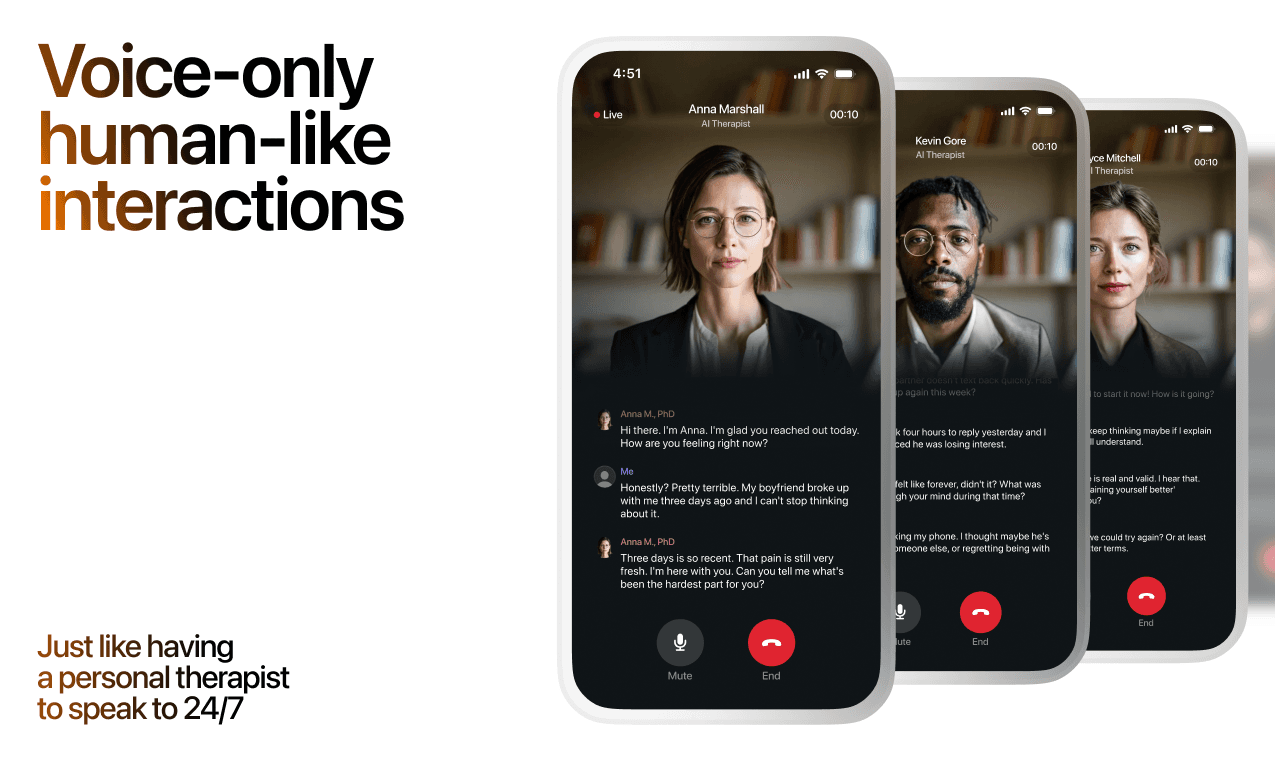
Here's what happens in a typical Lovon session:
You share what's on your mind
There's no script, no intake form, no waiting room. You speak or type whatever you're feeling — in your own words, at your own pace.
Lovon validates and explores
Using frameworks from CBT (Cognitive Behavioral Therapy) and motivational interviewing, Lovon acknowledges your feelings first, then gently helps you explore them. No dismissive "just move on" advice.
You build coping skills together
Lovon doesn't just listen — it actively works with you on evidence-based techniques: thought reframing, urge surfing, behavioral experiments, and more.
What a Session with Lovon Looks Like
When to Seek Professional Help
AI support is a valuable tool, but it's not a replacement for professional care. Please consider reaching out to a licensed therapist if you experience any of the following:
- Persistent thoughts of self-harm or suicide
- Inability to perform daily activities (work, eating, sleeping) for more than 2 weeks
- Turning to alcohol or substances to cope
- Intense anger or desire to harm your ex-partner
- Complete emotional numbness that doesn't improve over time
Crisis Resources (US): If you're in immediate danger, call 988 (Suicide & Crisis Lifeline) or text HOME to 741741 (Crisis Text Line). Available 24/7, free, and confidential.
Outside the US? Find a crisis line in your country
Ready to Start?
Your healing journey can begin right now
A 7-day trial. No judgment. Just a safe space to process what you're going through.
Frequently Asked Questions
Is Lovon a replacement for a real therapist?
Is my conversation with Lovon AI private?
How is Lovon different from ChatGPT for emotional support?
Can I use Lovon if I'm already seeing a therapist?
Can I try Lovon before subscribing?
About the Author
The Lovon Editorial Team
Mental Health & Wellness Content Team
The Lovon Editorial Team develops mental health and wellness content designed to make psychological concepts accessible and actionable. Our goal is to bridge the gap between clinical research and everyday life - helping you understand why your mind works the way it does and what you can do about it....
Related articles
- ADHD Sleep Cycle Disruption: Melatonin Release Delayed and Bedtime Procrastination
If you have ADHD and find yourself wide awake at midnight despite feeling exhausted hours earlier, you're not imagining…
- Is adult ADHD real or just an excuse?
Is adult ADHD real? Yes. Learn how clinicians assess lasting symptoms, what else can affect attention, and how to take…
- ADHD and Relationships: Common Challenges & Fixes 2026
ADHD and relationships clash over time blindness, RSD, and emotional dysregulation. Get step-by-step fixes that actually…
- Best Apps for ADHD Adults in 2026 — Ranked
The best apps for ADHD adults in 2026, ranked by emotional support, task management, and ADHD-informed design. Lovon…
See also
Quizzes
- Toxic Masculinity Test: Which Rules Are You Running?
See which learned rules cost you most, in 3 minutes.
- Fear of Intimacy Test: Free 12-Question Self-Check
See which part of closeness feels risky, in 3 min.
Free tools
- How to Come Out to Your Parents
A chat about how to come out to your parents that starts with whether now is safe, not with the speech. Tell it your…
- 5-4-3-2-1 Grounding Exercise
A guided run through the 5-4-3-2-1 technique, with paced breathing first if you need it. No sign-up, nothing stored…
From the wiki
- Why do I keep dreaming about my ex?
Recurring dreams about an ex usually mean your brain is still consolidating a relationship that took up years of memory…
Disclaimer: This article is for informational purposes only and does not constitute medical advice, diagnosis, or treatment. Always seek the advice of your physician or other qualified health provider with any questions you may have regarding a medical condition. If you are in crisis or think you may have an emergency, call 988 (Suicide & Crisis Lifeline) or go to the nearest emergency room. Outside the US? Find a crisis line in your country.