
Feedback vs Criticism in Relationships: Healthy Intimacy or Harsh Judgment
Every intimate relationship encounters moments where partners need to address concerns, express disappointment, or request change. The way these conversations

Key Takeaways
- Specificity: Feedback references particular instances; criticism generalizes across time and situations
- Focus: Feedback addresses actions; criticism targets personality or character
- Tone: Feedback maintains respect even when expressing dissatisfaction; criticism often carries contempt
- Intent: Feedback aims toward resolution; criticism primarily expresses displeasure
- Future orientation: Feedback suggests alternatives; criticism dwells on what's wrong
Introduction
Every intimate relationship encounters moments where partners need to address concerns, express disappointment, or request change. The way these conversations unfold can either deepen connection or create distance. Understanding the distinction between feedback vs criticism in relationships—whether it's a healthy intimacy requirement or constant harsh judgment—shapes the emotional safety and longevity of partnerships. Research in relationship psychology suggests that how couples communicate about problems predicts relationship satisfaction more strongly than the frequency of disagreements themselves. This article examines the characteristics that separate constructive feedback from damaging criticism, explores why some patterns harm intimacy while others strengthen it, and provides practical guidance for recognizing and shifting communication dynamics in your relationship.
The Fundamental Difference Between Feedback and Criticism
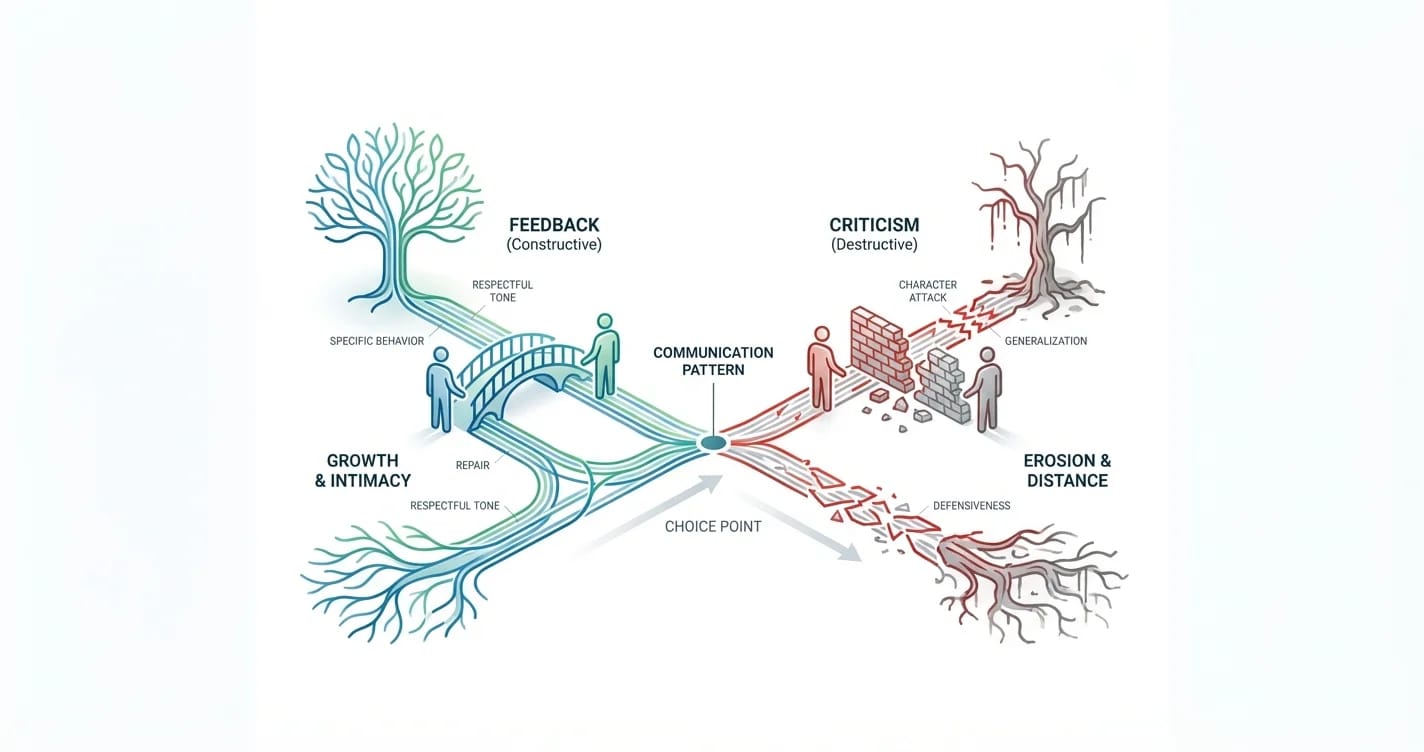
Feedback and criticism may appear similar on the surface—both involve pointing out something your partner did or didn't do—but their underlying structure and impact differ significantly.
Constructive feedback focuses on specific behaviors and their effects. It typically includes what happened, how it affected you, and what you'd prefer instead. For example: "When you made plans without checking with me first, I felt overlooked. I'd appreciate if we could coordinate our schedules together." This approach maintains respect for your partner as a person while addressing a particular action.
Criticism, by contrast, attacks character or makes sweeping generalizations. It often includes absolute language like "always" or "never" and questions your partner's worth or intentions: "You never consider anyone but yourself. You're so selfish." Research on relationship communication suggests that criticism often reflects the speaker's emotional state more than the specific situation at hand, making it less about problem-solving and more about expressing frustration.
The distinction matters because feedback opens pathways for change while criticism typically triggers defensiveness. When someone feels attacked as a person rather than having a behavior addressed, their nervous system may respond as though facing a threat, making collaborative problem-solving nearly impossible.
Key characteristics that distinguish feedback from criticism:
- Specificity: Feedback references particular instances; criticism generalizes across time and situations
- Focus: Feedback addresses actions; criticism targets personality or character
- Tone: Feedback maintains respect even when expressing dissatisfaction; criticism often carries contempt
- Intent: Feedback aims toward resolution; criticism primarily expresses displeasure
- Future orientation: Feedback suggests alternatives; criticism dwells on what's wrong
When Feedback Becomes a Healthy Intimacy Requirement
Healthy relationships require the ability to address concerns, express needs, and navigate differences. The absence of any feedback doesn't indicate relationship health—it may instead signal disengagement or fear of conflict.
Constructive feedback serves several essential functions in intimate relationships. It allows partners to understand each other's experiences, particularly when perspectives differ significantly. What seems like a minor issue to one person may genuinely affect the other's well-being, and feedback creates the opportunity for that understanding to develop.
Studies on relationship satisfaction indicate that couples who can successfully repair after conflicts report higher intimacy than those who avoid disagreements entirely. The repair process depends on the ability to express concerns in ways that invite engagement rather than shutdown. Feedback facilitates this repair by creating a framework where both partners can feel heard without either feeling attacked.
Feedback also supports individual growth within the relationship. A partner who cares about your experience may genuinely not realize how certain behaviors affect you. Thoughtful feedback provides information they can use to become a better partner—not because they're fundamentally flawed, but because relationships require ongoing adjustment as both people evolve.
The timing and frequency of feedback matters significantly. Constructive feedback works best when:
- Both partners are relatively calm and not already stressed
- You've chosen a private setting without distractions
- The feedback addresses patterns worth changing rather than isolated minor incidents
- It's balanced with expressions of appreciation and affection
- Both people feel secure in the relationship overall
Tools like Lovon.app can help you process your concerns before bringing them to your partner, allowing you to distinguish between temporary emotional reactions and genuine patterns that need addressing. This preparation increases the likelihood that your feedback will be constructive rather than reactive.
Recognizing When Criticism Crosses Into Harmful Territory
While occasional critical comments occur in most relationships, patterns of harsh judgment erode emotional safety and predict relationship deterioration. Research on relationship dissolution suggests that certain communication patterns—including persistent criticism—correlate strongly with eventual separation.
Harmful criticism typically includes several recognizable elements. It generalizes from specific incidents to character flaws: moving from "you forgot to call" to "you're irresponsible and don't care about anyone." This shift from behavior to identity makes change feel impossible and suggests the criticized partner is fundamentally defective.
Contempt represents an intensified form of criticism where one partner positions themselves as superior while viewing the other with disgust or disdain. This might manifest as mockery, sarcasm about your partner's capabilities, or eye-rolling during serious conversations. Studies of marital interaction suggest contempt serves as one of the strongest predictors of relationship failure, as it signals fundamental disrespect rather than temporary frustration.
Constant harsh judgment creates what psychologists describe as negative sentiment override—a state where neutral or even positive partner behaviors get interpreted negatively because the overall relationship climate has become critical. In this state, "I picked up groceries" gets heard as "I have to do everything around here" even when that wasn't implied.
Warning signs that criticism has become unhealthy include:
- You or your partner regularly feel defensive during conversations
- Discussions about minor issues escalate rapidly into attacks on character
- One partner walks on eggshells to avoid triggering criticism
- Apologizing feels pointless because it doesn't reduce critical comments
- You find yourself mentally listing your partner's flaws as evidence they're the problem
- Physical or emotional withdrawal has become a primary coping strategy
- The ratio of critical to appreciative comments has become heavily imbalanced
The physiological impact of persistent criticism shouldn't be underestimated. Being frequently judged harshly by someone you're vulnerable with can activate stress responses that affect sleep, concentration, and overall well-being. Some people find that processing these experiences with support resources like Lovon.app helps them understand whether they're dealing with typical relationship friction or a more serious pattern that requires direct action.
Shifting From Critical Patterns to Constructive Communication
If you recognize that your relationship has drifted toward criticism rather than feedback, change is possible—though it requires commitment from at least one partner and ideally both.
Start by examining your own communication patterns before focusing on your partner's responses. Notice when you're about to make a critical comment and pause to identify the underlying need or concern. The criticism "You're always late and don't respect my time" might actually reflect "I feel anxious when plans change unexpectedly and I need more reliable coordination."
Practice translating criticism into specific requests. Instead of "You never help with housework," try "I'm feeling overwhelmed with the cleaning. Could we divide up the kitchen duties differently?" This shift from complaint to request gives your partner something concrete to work with rather than a vague sense they're inadequate.
When receiving feedback from your partner, resist the immediate urge to defend or counterattack. This doesn't mean accepting unfair characterizations, but rather taking a breath to understand their underlying concern before responding. You might say, "I hear that my schedule changes frustrate you. Help me understand what would work better."
Several practical techniques support this transition:
The XYZ format: "When you do X in situation Y, I feel Z." This structure keeps feedback specific and connected to your emotional experience rather than assumptions about your partner's character or intentions.
Repair attempts: If a conversation becomes critical, acknowledge it and reset. "I'm getting critical and that's not helpful. Let me try again." Research on successful couples indicates they make frequent repair attempts during conflicts rather than letting negativity escalate.
Regular check-ins: Schedule brief, structured conversations to address small concerns before they accumulate. This prevents the buildup that often leads to critical explosions over minor triggers.
Appreciation ratio: Relationship research suggests that positive interactions need to significantly outweigh negative ones for relationships to thrive—some studies indicate a ratio around five positive interactions to one negative. Deliberately increasing genuine appreciation helps rebalance relationships that have become criticism-heavy.
For many couples, the transition from critical to constructive communication benefits from external support. Working with a relationship therapist provides structured guidance and accountability. Between sessions, on-demand resources can help you process difficult emotions and prepare for challenging conversations, allowing you to show up with more clarity and less reactivity.
When Professional Support Becomes Necessary
While many couples successfully improve their communication patterns through deliberate effort, certain situations warrant professional guidance. If criticism has escalated to contempt, if one partner feels unsafe (emotionally or physically), or if communication patterns haven't improved despite genuine attempts at change, seeking professional help becomes important rather than optional.
Relationship therapists specializing in evidence-based approaches can help identify the underlying dynamics maintaining critical patterns. Sometimes criticism masks deeper issues like unhealed attachment wounds, anxiety about the relationship's stability, or unaddressed resentments. A skilled therapist helps both partners understand these underlying factors while building concrete communication skills.
Individual therapy also plays a valuable role, particularly if you're on the receiving end of persistent harsh judgment and questioning whether the relationship is viable. A therapist can help you distinguish between normal relationship difficulties and patterns that compromise your well-being, supporting you in making informed decisions about whether to continue working on the relationship or consider separation.
For those who need support between therapy sessions or want help processing relationship dynamics before committing to formal therapy, accessible options like Lovon.app provide space to explore your thoughts and feelings, identify patterns, and prepare for difficult conversations. This kind of processing can clarify whether you're dealing with solvable communication issues or more fundamental incompatibilities.
Signs that professional help would be beneficial include:
- Communication attempts consistently result in increased conflict rather than resolution
- One or both partners have mental health concerns (depression, anxiety, trauma) affecting the relationship
- There's a history of infidelity or broken trust that hasn't been processed
- You're considering separation but want to ensure you've genuinely tried to improve the relationship
- Critical patterns remind you of dynamics from your family of origin that you'd like to understand better
- You recognize problematic patterns but don't know how to change them despite trying
Conclusion
The difference between feedback vs criticism in relationships—distinguishing healthy intimacy requirements from constant harsh judgment—fundamentally shapes relationship quality and longevity. Constructive feedback, delivered with respect and focused on specific behaviors, strengthens partnerships by creating opportunities for understanding and growth. Persistent criticism, particularly when it attacks character and expresses contempt, erodes the emotional safety necessary for genuine intimacy.
Most relationships include both feedback and criticism at various points, and occasional critical moments don't indicate a doomed partnership. What matters is the overall pattern: whether communication predominantly builds connection or creates distance, whether both partners feel fundamentally accepted even when specific behaviors need addressing, and whether the relationship includes more appreciation than judgment.
If you recognize that your relationship has become more critical than constructive, change begins with awareness and commitment—from at least one partner and ideally both. By focusing on specific behaviors rather than character attacks, making clear requests rather than vague complaints, and maintaining a positive interaction ratio, couples can shift from destructive criticism toward the kind of honest, respectful feedback that healthy intimacy requires.
Disclaimer: This is general information, not medical advice or diagnosis. If symptoms are severe, affecting your daily life, or you're having thoughts of self-harm — seek professional help. In the US: call or text 988 (Suicide & Crisis Lifeline). For immediate danger: 911 or local emergency services.
How AI Support Helps You Heal
AI emotional support isn't about replacing human connection — it's about filling the gaps. The moments when you need to talk at 2 AM, when you don't want to burden your friends again, or when you simply need someone to listen without judgment.
Here's what happens in a typical Lovon session:
You share what's on your mind
There's no script, no intake form, no waiting room. You speak or type whatever you're feeling — in your own words, at your own pace.
Lovon validates and explores
Using frameworks from CBT (Cognitive Behavioral Therapy) and motivational interviewing, Lovon acknowledges your feelings first, then gently helps you explore them. No dismissive "just move on" advice.
You build coping skills together
Lovon doesn't just listen — it actively works with you on evidence-based techniques: thought reframing, urge surfing, behavioral experiments, and more.
What a Session with Lovon Looks Like

When to Seek Professional Help
AI support is a valuable tool, but it's not a replacement for professional care. Please consider reaching out to a licensed therapist if you experience any of the following:
- Persistent thoughts of self-harm or suicide
- Inability to perform daily activities (work, eating, sleeping) for more than 2 weeks
- Turning to alcohol or substances to cope
- Intense anger or desire to harm your ex-partner
- Complete emotional numbness that doesn't improve over time
Crisis Resources (US): If you're in immediate danger, call 988 (Suicide & Crisis Lifeline) or text HOME to 741741 (Crisis Text Line). Available 24/7, free, and confidential.
Outside the US? Find a crisis line in your country
Ready to Start?
Your healing journey can begin right now
A 7-day trial. No judgment. Just a safe space to process what you're going through.
Frequently Asked Questions
Is Lovon a replacement for a real therapist?
Is my conversation with Lovon AI private?
How is Lovon different from ChatGPT for emotional support?
Can I use Lovon if I'm already seeing a therapist?
Can I try Lovon before subscribing?
About the Author
The Lovon Editorial Team
Mental Health & Wellness Content Team
The Lovon Editorial Team develops mental health and wellness content designed to make psychological concepts accessible and actionable. Our goal is to bridge the gap between clinical research and everyday life - helping you understand why your mind works the way it does and what you can do about it....
Related articles
- AI Relationship Coach Apps 2026: 5 Ranked, Free vs Paid
Voice or text, free or $30 a month — see how five AI relationship coaching apps compare, and which free tier to try…
- Emotional Intimacy in Relationships: How to Build It (2026)
Emotional intimacy in relationships builds through daily habits, not one talk. Get the 6-step 2026 method plus fixes for…
- Green Flags in Relationships: Safety and Repair Over Drama
Many mistake intensity for intimacy and drama for passion. Green flags in relationships point elsewhere: safety, repair…
- Is long-distance love realistic in the long run?
Is long distance love realistic? Yes, with mutual effort, honest communication, and a workable future. Learn how to…
See also
Quizzes
- Am I Sabotaging My Relationship? 12-Question Quiz
Find the move you reach for, in 2 minutes.
- Relationship Quality Test: How Good Is Your Relationship?
Score connection, repair and teamwork in 3 minutes.
Free tools
- AI Relationship Coach
Get free relationship advice and family counselling guidance with our AI Relationship Coach.
- How to Ask for Space Without Ending It
A chat for when you need distance but not a breakup. Say the sentence you keep rehearsing and what you are afraid they…
From the wiki
- Is he in love with me?
There is no reliable tell in how fast he texts or how intense things feel. What tracks with love is consistency…
Disclaimer: This article is for informational purposes only and does not constitute medical advice, diagnosis, or treatment. Always seek the advice of your physician or other qualified health provider with any questions you may have regarding a medical condition. If you are in crisis or think you may have an emergency, call 988 (Suicide & Crisis Lifeline) or go to the nearest emergency room. Outside the US? Find a crisis line in your country.