
Self-Sabotage as Defense Mechanism and Conditional Love
You set a goal, work toward it diligently, and then—just as success comes within reach—you find yourself making decisions that undermine everything you've

Key Takeaways
- The vulnerability of being evaluated or potentially rejected at a higher level
- The anxiety of maintaining standards once success is achieved
- The emotional exposure that comes with visibility and recognition
- The fear of discovering that even achievement doesn't secure unconditional acceptance
- Perfectionism that makes starting or completing projects overwhelming
Introduction
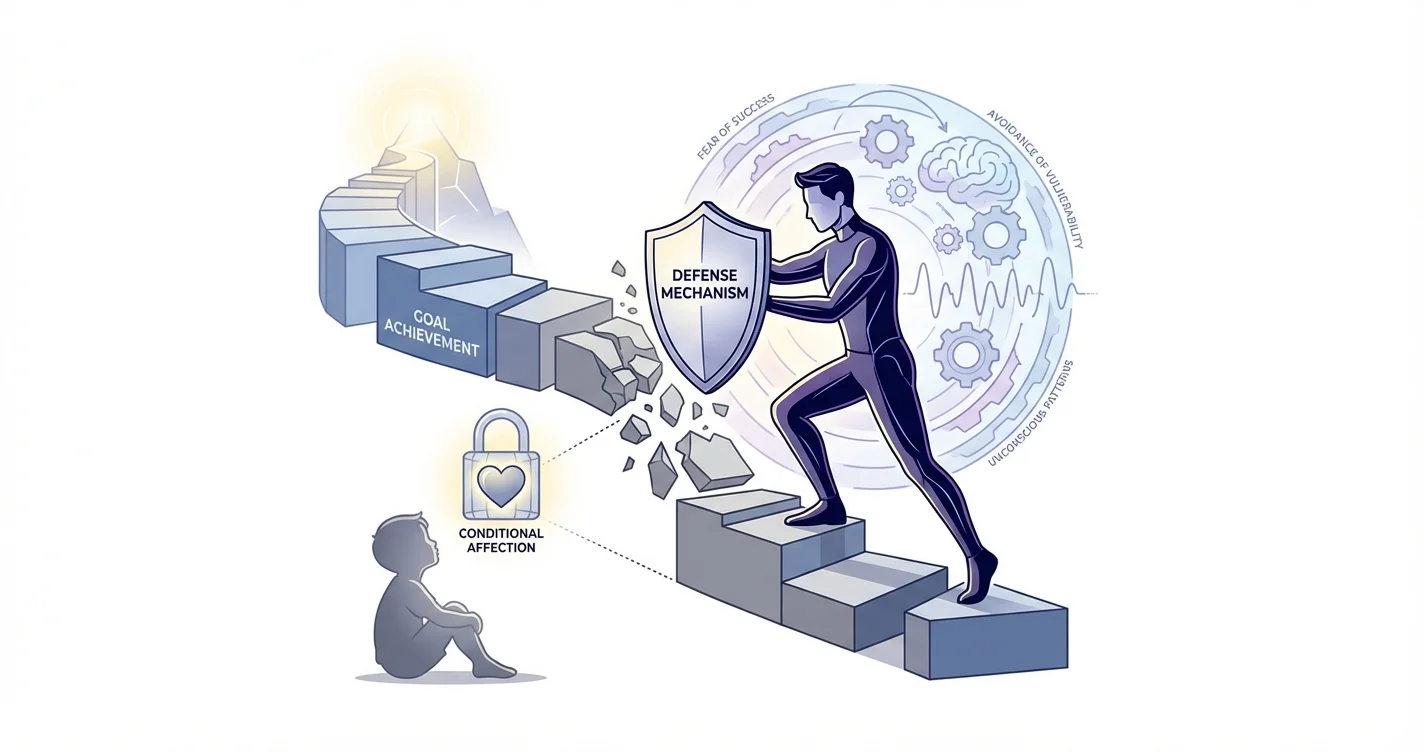
You set a goal, work toward it diligently, and then—just as success comes within reach—you find yourself making decisions that undermine everything you've built. This pattern of self-sabotage as a defense mechanism often traces back to early experiences with conditional love, where affection and approval were granted only when certain conditions were met. When achievement becomes unconsciously associated with emotional risk, the psyche may deploy protective strategies that prevent goal attainment altogether. Research in developmental psychology suggests that patterns established in childhood can create lasting templates for how we approach success, relationships, and our own worthiness. Understanding these unconscious mechanisms is the first step toward recognizing when they're active and developing healthier responses.
The Psychological Roots of Self-Sabotage as Defense Mechanism
Self-sabotage functions as a defense mechanism when the unconscious mind perceives achievement or success as psychologically dangerous. This protective response typically develops in environments where love, attention, or approval were conditional—granted based on performance, behavior, or meeting specific expectations rather than being freely given.
Clinical research indicates that when children experience conditional regard, they learn to associate their worthiness with external achievements. However, this creates a psychological bind: success becomes both deeply desired and profoundly threatening. If your value depends on achievement, then failure threatens your sense of being lovable. Paradoxically, succeeding can feel equally dangerous because it raises the stakes—there's now something to lose, and the potential for disappointing those whose approval you've earned.
The defense mechanism emerges as a way to manage this unbearable tension. By unconsciously preventing yourself from achieving goals, you avoid:
- The vulnerability of being evaluated or potentially rejected at a higher level
- The anxiety of maintaining standards once success is achieved
- The emotional exposure that comes with visibility and recognition
- The fear of discovering that even achievement doesn't secure unconditional acceptance
This pattern operates largely outside conscious awareness. You may genuinely believe you want to succeed while unconscious processes work to prevent that outcome, creating internal conflict that manifests as procrastination, self-doubt, or seemingly inexplicable poor decisions at critical moments.
How Conditional Love Creates Unconscious Barriers to Achievement
When love and acceptance are conditional, children develop what researchers describe as contingent self-worth—a sense that their value depends on meeting external standards. Studies in developmental psychology suggest this conditional framework becomes internalized, creating lasting patterns in how individuals relate to their own goals and accomplishments.
The progression typically unfolds through several stages. Initially, the child learns that certain behaviors, achievements, or characteristics earn positive attention while others result in withdrawal of affection or approval. This isn't always dramatic—it can be as subtle as parents becoming warmer when discussing academic success or showing visible disappointment when expectations aren't met.
Over time, the child's developing sense of self becomes organized around this conditional acceptance. They learn to monitor their performance constantly, evaluating whether they're "good enough" to deserve love. This hypervigilance continues into adulthood, where it manifests as:
- Perfectionism that makes starting or completing projects overwhelming
- Difficulty accepting praise or acknowledging accomplishments
- Tendency to minimize achievements once they're attained
- Anxiety that intensifies as goals approach completion
- Sudden loss of motivation when success becomes likely
The unconscious prevention of goal achievement serves multiple protective functions. It keeps you from the vulnerable position of having succeeded and potentially losing everything. It prevents the discovery that achievement doesn't actually secure the unconditional acceptance you've always sought. It maintains familiar patterns, even painful ones, because the unknown territory of success feels more dangerous than the known territory of falling short.
Research suggests that this dynamic is particularly strong when the original conditional love came from primary caregivers. The earlier these patterns form and the more central they are to the primary attachment relationships, the more deeply they become woven into your psychological structure and the more automatically they operate in adulthood.
Recognizing Self-Sabotaging Patterns Rooted in Conditional Affection
Self-sabotage stemming from conditional love experiences often follows recognizable patterns, though they may look different across individuals depending on personality, circumstances, and the specific nature of the conditional regard experienced.
Common manifestations include:
- Procrastination at critical junctures: Delaying important tasks, especially those directly linked to significant goals, even when you're capable and have the necessary resources
- Relationship withdrawal: Pulling away from supportive relationships or creating conflict when things are going well, particularly if closeness was conditional in your early experiences
- Self-destructive decisions: Making choices that seem inexplicable to others (and sometimes to yourself) that undermine progress just as success approaches
- Moving goalposts: Continually redefining what constitutes success, making achievement perpetually out of reach regardless of what you accomplish
- Imposter phenomenon: Persistent belief that you're fraudulent or undeserving, leading to anxiety that prevents full engagement with opportunities
When working with these patterns, mental health professionals often look for what happens emotionally as someone approaches success. If anxiety, emptiness, or a sense of fraudulence intensifies specifically when goals are within reach, this suggests defensive processes may be active. Some people describe feeling like they're "waiting for the other shoe to drop" or experiencing an inexplicable sense of dread precisely when circumstances are most positive.
The timing is revealing. Self-sabotage as a defense mechanism typically activates not at the beginning of pursuing a goal, but as achievement becomes imminent. This distinguishes it from other factors like lack of capability or resources. You can do the work and make progress—until success becomes too real, at which point unconscious processes intervene.
Tools like Lovon.app can help you process these patterns as they emerge, offering a space to explore the emotions and thoughts that arise when you notice self-sabotaging behaviors activating, particularly during late-night moments when anxiety about success or worthiness feels overwhelming.
Breaking the Cycle: From Unconscious Defense to Conscious Choice
Transforming self-sabotage patterns requires bringing unconscious processes into conscious awareness where they can be examined and gradually changed. This work typically unfolds in layers, as defenses exist for protective reasons and letting them go requires developing alternative ways to manage the underlying fears.
The process generally involves several components:
Developing awareness of the pattern: Begin by tracking when and how self-sabotaging behaviors emerge. Notice what happens emotionally and physically as you approach goals. What thoughts arise? What bodily sensations? What impulses toward behaviors you know will undermine your progress? This observation without immediate judgment creates space between impulse and action.
Exploring the underlying belief system: Investigate the specific conditions under which you learned love and acceptance were granted. What had to be true about you to be valued? What behaviors or characteristics led to withdrawal of affection? Understanding the specific terms of the conditional regard helps you recognize when adult situations trigger these old templates.
Questioning the current validity: Examine whether the childhood conclusions about conditional love accurately reflect your current reality. This isn't about dismissing early experiences but recognizing that conclusions formed with a child's understanding and limited perspective may not serve your adult self. Do the people in your current life actually condition their regard on your achievements? What evidence supports or contradicts this?
Building tolerance for vulnerability: Self-sabotage often protects against the vulnerability of being fully seen and potentially rejected. Gradually increasing your capacity to be visible, to succeed, and to accept recognition requires practice in small doses. This might mean sharing work before it's "perfect," accepting compliments without deflecting, or allowing yourself to be proud of accomplishments.
Separating worth from achievement: Perhaps the most fundamental shift involves internalizing that your inherent worth doesn't depend on what you accomplish. This cognitive understanding often needs to be accompanied by emotional experiences that provide corrective evidence—relationships where you're valued regardless of productivity, experiences of self-compassion during failure, or simply practicing self-care that isn't contingent on earning it through achievement.
Working with a therapist who understands developmental trauma and defense mechanisms can provide valuable support for this process. Between sessions, on-demand resources like Lovon.app can help you process emotions as they arise, reflect on patterns you're noticing, and work through the anxiety that often surfaces when you consciously choose not to enact familiar self-sabotaging behaviors.
When to Seek Professional Help
While understanding self-sabotage patterns and working to change them can begin with self-reflection and support resources, professional help becomes important when these patterns significantly impair your functioning or well-being.
Consider seeking support from a therapist, particularly one specializing in attachment, trauma, or psychodynamic approaches, if you notice:
- Self-sabotaging behaviors that repeatedly prevent you from meeting basic needs (maintaining employment, stable housing, essential relationships)
- Intense emotional distress when approaching goals or experiencing success
- Inability to recognize or change patterns despite awareness and genuine effort
- Concurrent symptoms of depression, anxiety, or other mental health concerns that interfere with daily life
- Thoughts of self-harm or persistent feelings that life isn't worth living
- Relationship patterns that consistently recreate early conditional love dynamics with harmful results
Professional treatment can help you work through the deeper layers of these patterns, provide structure and support for the uncomfortable feelings that arise when changing defensive strategies, and offer tools specifically tailored to your situation. Therapeutic approaches like psychodynamic therapy, schema therapy, or attachment-focused therapy are particularly relevant for addressing self-sabotage rooted in early relational experiences.
Conclusion
Self-sabotage as a defense mechanism represents the psyche's attempt to protect you from the vulnerabilities associated with success when love and acceptance were conditional in formative relationships. By unconsciously preventing goal achievement, you avoid the risks of visibility, evaluation, and potential rejection that success entails. Understanding how conditional love creates these unconscious barriers is essential for recognizing when these patterns are active in your life.
Breaking these cycles requires patience and compassion for yourself. The defenses developed for valid reasons—they helped you navigate situations where your emotional survival felt contingent on meeting external expectations. Changing them involves not just cognitive understanding but building new emotional experiences that provide evidence of your inherent worth regardless of achievement. Whether through professional therapy, reflective practices, or support tools that help you process patterns as they emerge, the path forward involves gradually increasing your capacity to pursue goals without the unconscious sabotage that once felt necessary for protection.
Disclaimer: This is general information, not medical advice or diagnosis. If symptoms are severe, affecting your daily life, or you're having thoughts of self-harm — seek professional help. In the US: call or text 988 (Suicide & Crisis Lifeline). For immediate danger: 911 or local emergency services.
How AI Support Helps You Heal
AI emotional support isn't about replacing human connection — it's about filling the gaps. The moments when you need to talk at 2 AM, when you don't want to burden your friends again, or when you simply need someone to listen without judgment.
Here's what happens in a typical Lovon session:
You share what's on your mind
There's no script, no intake form, no waiting room. You speak or type whatever you're feeling — in your own words, at your own pace.
Lovon validates and explores
Using frameworks from CBT (Cognitive Behavioral Therapy) and motivational interviewing, Lovon acknowledges your feelings first, then gently helps you explore them. No dismissive "just move on" advice.
You build coping skills together
Lovon doesn't just listen — it actively works with you on evidence-based techniques: thought reframing, urge surfing, behavioral experiments, and more.
What a Session with Lovon Looks Like

When to Seek Professional Help
AI support is a valuable tool, but it's not a replacement for professional care. Please consider reaching out to a licensed therapist if you experience any of the following:
- Persistent thoughts of self-harm or suicide
- Inability to perform daily activities (work, eating, sleeping) for more than 2 weeks
- Turning to alcohol or substances to cope
- Intense anger or desire to harm your ex-partner
- Complete emotional numbness that doesn't improve over time
Crisis Resources (US): If you're in immediate danger, call 988 (Suicide & Crisis Lifeline) or text HOME to 741741 (Crisis Text Line). Available 24/7, free, and confidential.
Outside the US? Find a crisis line in your country
Ready to Start?
Your healing journey can begin right now
A 7-day trial. No judgment. Just a safe space to process what you're going through.
Frequently Asked Questions
Is Lovon a replacement for a real therapist?
Is my conversation with Lovon AI private?
How is Lovon different from ChatGPT for emotional support?
Can I use Lovon if I'm already seeing a therapist?
Can I try Lovon before subscribing?
About the Author

The Lovon Editorial Team
Mental Health & Wellness Content Team
The Lovon Editorial Team develops mental health and wellness content designed to make psychological concepts accessible and actionable. Our goal is to bridge the gap between clinical research and everyday life - helping you understand why your mind works the way it does and what you can do about it....
Related articles
- How to Stop Being Codependent: Steps That Work (2026)
How to stop being codependent in 2026: 6 practical steps, common mistakes, and troubleshooting for boundary-setting…
- What is Fawn Response: People Pleasing as Trauma Reaction
When faced with threat, most people are familiar with the classic fight, flight, or freeze responses.
- Self-Compassion When You Hate Yourself: 2026 Steps
Practicing self-compassion when you hate yourself starts with naming the voice, not silencing it. Get the 2026…
- Not Good Enough? Therapy for Feeling Good Enough
You just finished a very hard task and helped the company succeed. You felt happy for a moment, but then a quick thought…
See also
Quizzes
- Overfunctioning in Relationship Test: 12 Questions
See how far the load has tilted, in 3 minutes.
- Self Esteem Test: What Is Your Worth Resting On?
See what your sense of worth is resting on.
Free tools
- How to Respond to a Narcissist
Paste what they said. You get the part that actually needs answering separated from the part designed to pull you in, a…
- How to Respond to Gaslighting
Say what happened and what they say happened. You get what is actually established separated from what is being…
From the wiki
- Will I ever find love?
No one can honestly promise you will. What is true is that the odds are not fixed at birth and not decided by your last…
Disclaimer: This article is for informational purposes only and does not constitute medical advice, diagnosis, or treatment. Always seek the advice of your physician or other qualified health provider with any questions you may have regarding a medical condition. If you are in crisis or think you may have an emergency, call 988 (Suicide & Crisis Lifeline) or go to the nearest emergency room. Outside the US? Find a crisis line in your country.