
Polyvagal Theory by Stephen Porges for Understanding Stress
When you feel your heart race during a tense conversation, or notice yourself shutting down emotionally after an overwhelming day, you're experiencing your

Key Takeaways
- Social engagement system: The newest evolutionary development, allowing connection and communication when you feel safe
- Mobilization system: The middle evolutionary layer, activating fight-or-flight responses to active threats
- Immobilization system: The oldest evolutionary response, triggering shutdown or freeze states when threat feels
- When stress responses significantly interfere with daily functioning, relationships, or work
- If you experience frequent dissociation, emotional numbing, or feeling disconnected from yourself
Introduction
When you feel your heart race during a tense conversation, or notice yourself shutting down emotionally after an overwhelming day, you're experiencing your nervous system in action. Polyvagal theory by Stephen Porges for understanding stress and mind-body connection offers a framework for why these responses happen—and why they're often outside your conscious control. Developed through decades of neuroscience research, this theory explains how an ancient nerve system quietly governs your emotional life, determining whether you feel safe, threatened, or completely overwhelmed. Understanding these patterns can help you make sense of your reactions and develop strategies that work with your nervous system rather than against it.
This article explores the core principles of polyvagal theory, how it explains your body's stress responses, and practical ways to apply this knowledge in daily life.
What Polyvagal Theory Reveals About Your Nervous System
Polyvagal theory fundamentally changed how scientists understand the autonomic nervous system—the part of your body that operates automatically, without conscious thought. Traditional models divided this system into two branches: sympathetic (fight-or-flight) and parasympathetic (rest-and-digest). Porges introduced a more nuanced view by identifying that the vagus nerve, which connects your brain to many organs, has two distinct pathways with very different functions.
The vagus nerve is the longest cranial nerve in your body, wandering from your brainstem through your face, throat, heart, lungs, and digestive system. Research suggests this nerve acts as a communication highway between your body and brain, constantly sending signals about safety and threat. What makes polyvagal theory distinctive is its emphasis on how your nervous system responds to cues of safety and danger in your environment—often before you're consciously aware of them.
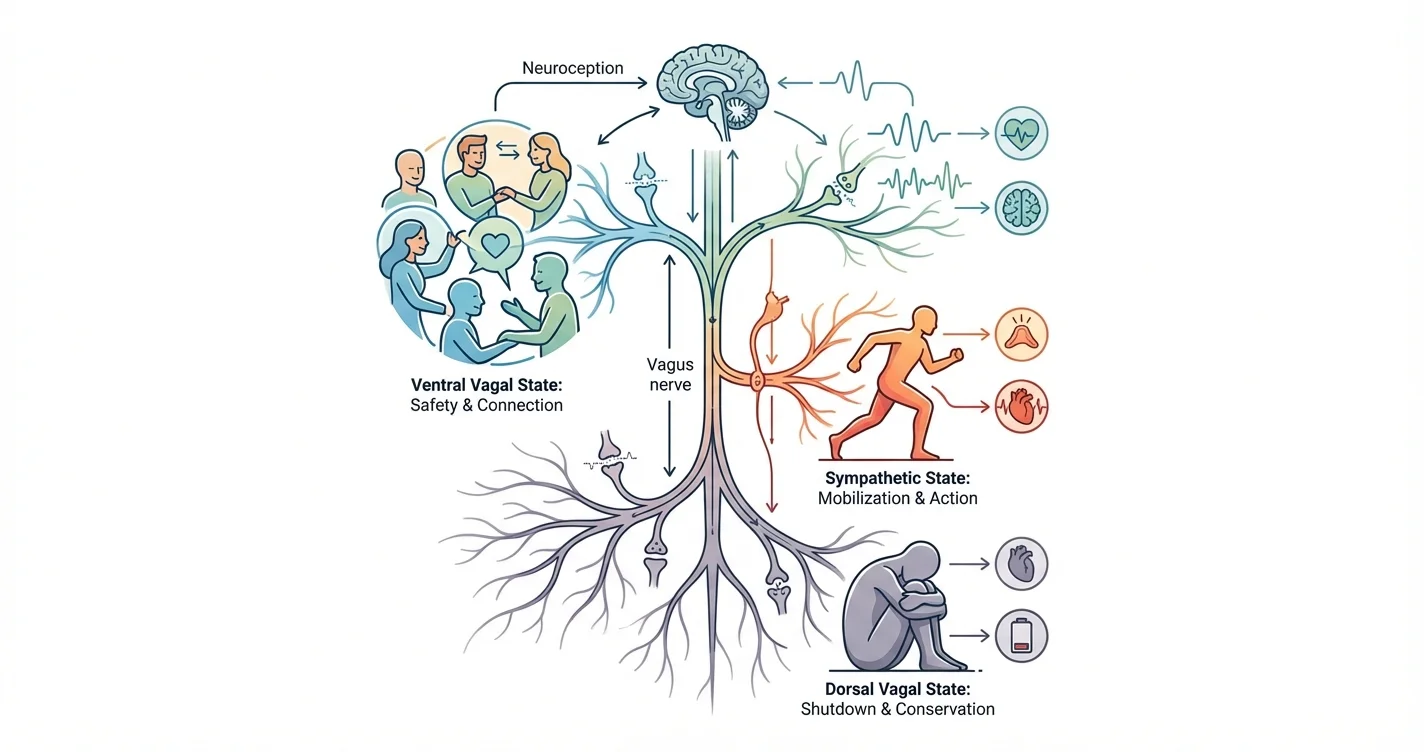
This theory proposes three neural circuits that evolved at different times in mammalian history, each with its own response strategy:
- Social engagement system: The newest evolutionary development, allowing connection and communication when you feel safe
- Mobilization system: The middle evolutionary layer, activating fight-or-flight responses to active threats
- Immobilization system: The oldest evolutionary response, triggering shutdown or freeze states when threat feels overwhelming
Your nervous system moves between these states throughout each day based on subtle cues it detects in your environment and relationships. Understanding which state you're in can explain why certain situations feel manageable while others trigger intense reactions that seem disproportionate to the actual circumstances.
How Stephen Porges' Polyvagal Theory Explains Your Stress Responses
The autonomic nervous system operates through a process called neuroception—your nervous system's ability to scan for cues of safety, danger, or life-threat without conscious awareness. This scanning happens continuously, influencing your emotional state, physical sensations, and behavioral responses. When working with stress and the mind-body connection through Stephen Porges' polyvagal theory, practitioners focus on these three distinct physiological states.
The Ventral Vagal State: Safety and Social Connection
When your nervous system detects cues of safety—a warm tone of voice, relaxed facial expressions, predictable environments—the ventral vagal pathway activates. This is the most recently evolved branch of the vagus nerve, and it supports social engagement and connection. In this state, your heart rate is regulated, your breathing is easy, and your digestive system functions well. You can think clearly, feel emotions without being overwhelmed by them, and connect meaningfully with others.
This state represents optimal functioning for learning, creativity, and relationship-building. However, it requires genuine cues of safety, not just the absence of threat. Your nervous system needs positive signals—facial expressions showing warmth, prosodic voices (those with melodic, soothing qualities), and gestures indicating openness.
The Sympathetic State: Mobilization and Action
When your nervous system detects danger, it activates the sympathetic branch, preparing you for action. Your heart rate increases, stress hormones are released into your bloodstream, and blood flow redirects to your muscles. This mobilization system evolved to help you respond to immediate threats through fighting or fleeing. In modern life, this same system activates during work deadlines, conflicts, or situations where you feel judged or evaluated.
The sympathetic response isn't inherently problematic—it provides the energy and focus needed to meet challenges. Issues arise when this state becomes chronic or when the nervous system perceives threats where none exist. Some people find their sympathetic system activates easily, leaving them feeling anxious, irritable, or constantly on edge.
The Dorsal Vagal State: Shutdown and Conservation
When threat feels inescapable or overwhelming, the oldest vagal pathway—the dorsal vagal system—activates a shutdown response. This immobilization state slows your heart rate, drops your blood pressure, and creates a sense of disconnection or numbness. Energy is conserved, and you may feel foggy, exhausted, or emotionally flat. This response evolved as a last-resort survival strategy when fighting or fleeing isn't possible.
In contemporary life, dorsal vagal activation appears in various forms: dissociation during overwhelming situations, feeling depressed or hopeless, struggling to feel emotions, or experiencing unexplained fatigue. This state can be protective in the short term but becomes problematic when it persists, interfering with daily functioning and connection with others.
Understanding Stress and Mind-Body Connection Through Practical Application
Applying polyvagal theory to understand your stress responses means learning to identify which nervous system state you're in and developing strategies to shift between states intentionally. This process involves both awareness and specific techniques that signal safety to your nervous system.
Recognizing Your Current State
Your body provides constant feedback about your nervous system state through physical sensations, emotional tone, and behavioral impulses. In the ventral vagal state, you might notice relaxed shoulders, easy breathing, interest in connecting with others, and capacity for humor. When sympathetic activation occurs, you may experience tension in your jaw or chest, rapid thoughts, restlessness, or an urge to act quickly. Dorsal vagal activation often shows up as heavy limbs, difficulty thinking clearly, a sense of disconnection, or wanting to withdraw and isolate.
Developing awareness of these patterns helps you understand your reactions. What feels like a personality flaw ("I'm too sensitive") or moral failing ("I should just get over it") may actually reflect your nervous system's learned response to cues of threat. This understanding itself can reduce self-judgment and open space for different approaches.
Techniques That Support Nervous System Regulation
Research on nervous system regulation suggests several approaches that may help shift from states of stress or shutdown back toward ventral vagal activation. These techniques work by sending safety signals to your body through various sensory channels.
Breathing practices that emphasize longer exhales than inhales appear to activate the vagal brake—a mechanism that helps slow your heart rate and promote calm. Some people find that breathing in for a count of four and out for a count of six creates a noticeable shift in their nervous system state.
Social engagement cues are particularly powerful for nervous system regulation. This includes hearing warm, melodic voices, seeing relaxed facial expressions, and experiencing gentle touch. Even listening to certain types of music or speaking in soothing tones to yourself may help activate ventral vagal pathways. Tools like Lovon.app provide on-demand access to reflective conversation that can help process stress responses when they occur, offering that sense of being heard that many people find regulating.
Movement and mobilization strategies can help discharge sympathetic activation that's stuck in your system. This might include shaking, dancing, walking, or other physical activities that allow your body to complete the mobilization response it prepared for. The key is movement that feels good rather than forced exercise as another obligation.
Environmental modifications that increase actual safety can help recalibrate your nervous system over time. This includes creating predictable routines, reducing exposure to chaotic or unpredictable situations when possible, and surrounding yourself with cues of safety like comfortable spaces, nature exposure, or connections with people who feel genuinely safe.
The Role of Co-Regulation
One of the most significant insights from polyvagal theory involves co-regulation—the process by which one person's regulated nervous system helps regulate another's. This explains why a calm presence can help you feel calmer, or why certain relationships leave you feeling drained or activated. Your nervous system constantly responds to the nervous system states of people around you.
This principle has important implications for healing from stress and trauma. Recovery often involves relationships where you experience consistent safety signals over time, allowing your nervous system to gradually recalibrate its threat detection system. This might happen in therapeutic relationships, close friendships, or supportive communities. Some people use accessible support tools like Lovon.app between other forms of support, finding that having a reflective space to process experiences helps prevent nervous system overwhelm from building up.
Advanced Considerations for Working With Stress and the Mind-Body Connection
While understanding polyvagal theory by Stephen Porges provides valuable insights for working with stress, several important nuances deserve attention.
Individual Variation in Nervous System Patterns
Your nervous system's baseline and reactivity reflect your unique history, including early attachment experiences, past stress or trauma, genetic factors, and current life circumstances. What one person experiences as stimulating and engaging might trigger another person's sympathetic activation. Similarly, some nervous systems move quickly between states, while others tend to get stuck in particular patterns. This means strategies that help one person may not work the same way for you—finding your own regulatory approaches requires experimentation and patience.
The Limitations of Self-Regulation
Polyvagal theory emphasizes that many stress responses occur outside conscious awareness and control. This means you cannot simply think or will yourself into a regulated state. Telling someone who's in dorsal vagal shutdown to "just relax" or someone in sympathetic activation to "calm down" misunderstands how the nervous system works. Effective regulation often requires specific interventions that send safety signals through multiple channels—physical, relational, and environmental—over time.
Additionally, while self-regulation strategies can be helpful for everyday stress, they are not a substitute for professional treatment when dealing with significant trauma, chronic stress conditions, or mental health concerns. Some nervous system patterns developed as protective responses to genuinely unsafe situations and require specialized support to address.
Neuroception Can Be Inaccurate
Your nervous system evolved to prioritize survival over accuracy, which means it sometimes detects threats that aren't present or misses cues of genuine safety. This faulty neuroception—when your nervous system's threat detection is miscalibrated—underlies many stress-related difficulties. A nervous system shaped by unpredictable or frightening early experiences may remain biased toward threat detection even in genuinely safe environments.
Recalibrating neuroception is possible but typically requires repeated experiences of safety over time, often in the context of relationships where co-regulation can occur. This is one reason why trauma recovery and nervous system healing are usually gradual processes rather than quick fixes.
When to Seek Professional Help
While understanding polyvagal theory and practicing nervous system regulation strategies can support your wellbeing, certain situations indicate the need for professional support:
- When stress responses significantly interfere with daily functioning, relationships, or work
- If you experience frequent dissociation, emotional numbing, or feeling disconnected from yourself
- When past trauma continues to trigger intense reactions despite self-help efforts
- If you notice persistent difficulty regulating emotions or shifting out of stress states
- When thoughts of self-harm are present
Mental health professionals trained in trauma-informed approaches, somatic therapies, or polyvagal-informed treatment can provide specialized support for nervous system regulation. This includes therapists specializing in somatic experiencing, EMDR, sensorimotor psychotherapy, or other body-based approaches. For some people, consultation with a psychiatrist regarding medication options may also be helpful as part of a comprehensive treatment approach.
Conclusion
Polyvagal theory by Stephen Porges for understanding stress and mind-body connection offers a scientifically grounded framework for making sense of your nervous system's responses. By recognizing that your reactions to stress reflect ancient survival mechanisms rather than personal failings, you can approach regulation with more compassion and effectiveness. The three states—ventral vagal safety and connection, sympathetic mobilization, and dorsal vagal shutdown—provide a map for understanding your internal experience and identifying what your nervous system needs in any given moment.
Applying this understanding practically means developing awareness of your current state, experimenting with regulation strategies that signal safety to your body, and recognizing when you need support from others or professional help. Whether through intentional breathing practices, movement, co-regulation with trusted people, or accessible tools that offer reflection and support, working with your nervous system rather than against it can gradually expand your capacity to meet life's stresses with more resilience and flexibility.
The journey toward nervous system regulation is not about achieving perfect calm but rather developing greater range and flexibility in how you respond to life's inevitable challenges.
Disclaimer: This is general information, not medical advice or diagnosis. If symptoms are severe, affecting your daily life, or you're having thoughts of self-harm—seek professional help. In the US: call or text 988 (Suicide & Crisis Lifeline). For immediate danger: 911 or local emergency services.
How AI Support Helps You Heal
AI emotional support isn't about replacing human connection — it's about filling the gaps. The moments when you need to talk at 2 AM, when you don't want to burden your friends again, or when you simply need someone to listen without judgment.
Here's what happens in a typical Lovon session:
You share what's on your mind
There's no script, no intake form, no waiting room. You speak or type whatever you're feeling — in your own words, at your own pace.
Lovon validates and explores
Using frameworks from CBT (Cognitive Behavioral Therapy) and motivational interviewing, Lovon acknowledges your feelings first, then gently helps you explore them. No dismissive "just move on" advice.
You build coping skills together
Lovon doesn't just listen — it actively works with you on evidence-based techniques: thought reframing, urge surfing, behavioral experiments, and more.
What a Session with Lovon Looks Like

When to Seek Professional Help
AI support is a valuable tool, but it's not a replacement for professional care. Please consider reaching out to a licensed therapist if you experience any of the following:
- Persistent thoughts of self-harm or suicide
- Inability to perform daily activities (work, eating, sleeping) for more than 2 weeks
- Turning to alcohol or substances to cope
- Intense anger or desire to harm your ex-partner
- Complete emotional numbness that doesn't improve over time
Crisis Resources (US): If you're in immediate danger, call 988 (Suicide & Crisis Lifeline) or text HOME to 741741 (Crisis Text Line). Available 24/7, free, and confidential.
Outside the US? Find a crisis line in your country
Ready to Start?
Your healing journey can begin right now
A 7-day trial. No judgment. Just a safe space to process what you're going through.
Frequently Asked Questions
Is Lovon a replacement for a real therapist?
Is my conversation with Lovon AI private?
How is Lovon different from ChatGPT for emotional support?
Can I use Lovon if I'm already seeing a therapist?
Can I try Lovon before subscribing?
About the Author

The Lovon Editorial Team
Mental Health & Wellness Content Team
The Lovon Editorial Team develops mental health and wellness content designed to make psychological concepts accessible and actionable. Our goal is to bridge the gap between clinical research and everyday life - helping you understand why your mind works the way it does and what you can do about it....
Related articles
- Polyvagal Theory Applications for Stress Response
Your heart races before a difficult conversation. Your stomach tightens during conflict. You feel exhausted after a…
- Inner Child Healing for Nervous System Regulation and Stored Trauma
When your body reacts to stress with overwhelming intensity—heart racing, chest tightening, mind spiraling—it's often…
- Freeze Response and Fawn Response as Trauma Survival Patterns
When faced with overwhelming threat, the human nervous system activates a series of automatic responses designed to…
- Acceptance and Commitment Therapy for Trauma Responses
Trauma responses don't always look like flashbacks or nightmares. Sometimes they appear as persistent avoidance…
See also
Quizzes
- Emotional Intelligence Test: Your EQ in a Relationship
Find where your EQ slips when things get tense.
- Emotionally Unavailable Test: 12-Question Self-Check
See which part of you closes off, in three minutes.
Free tools
- 5-4-3-2-1 Grounding Exercise
A guided run through the 5-4-3-2-1 technique, with paced breathing first if you need it. No sign-up, nothing stored…
- How to Come Out to Your Parents
A chat about how to come out to your parents that starts with whether now is safe, not with the speech. Tell it your…
From the wiki
- What does it mean when you dream about your ex?
Dreaming about your ex usually reflects emotional processing, not prophecy and not a message from them. Your sleeping…
Disclaimer: This article is for informational purposes only and does not constitute medical advice, diagnosis, or treatment. Always seek the advice of your physician or other qualified health provider with any questions you may have regarding a medical condition. If you are in crisis or think you may have an emergency, call 988 (Suicide & Crisis Lifeline) or go to the nearest emergency room. Outside the US? Find a crisis line in your country.