
Low Self-Awareness Indicators: Defensiveness, Blame Patterns, and Inability to Apologize
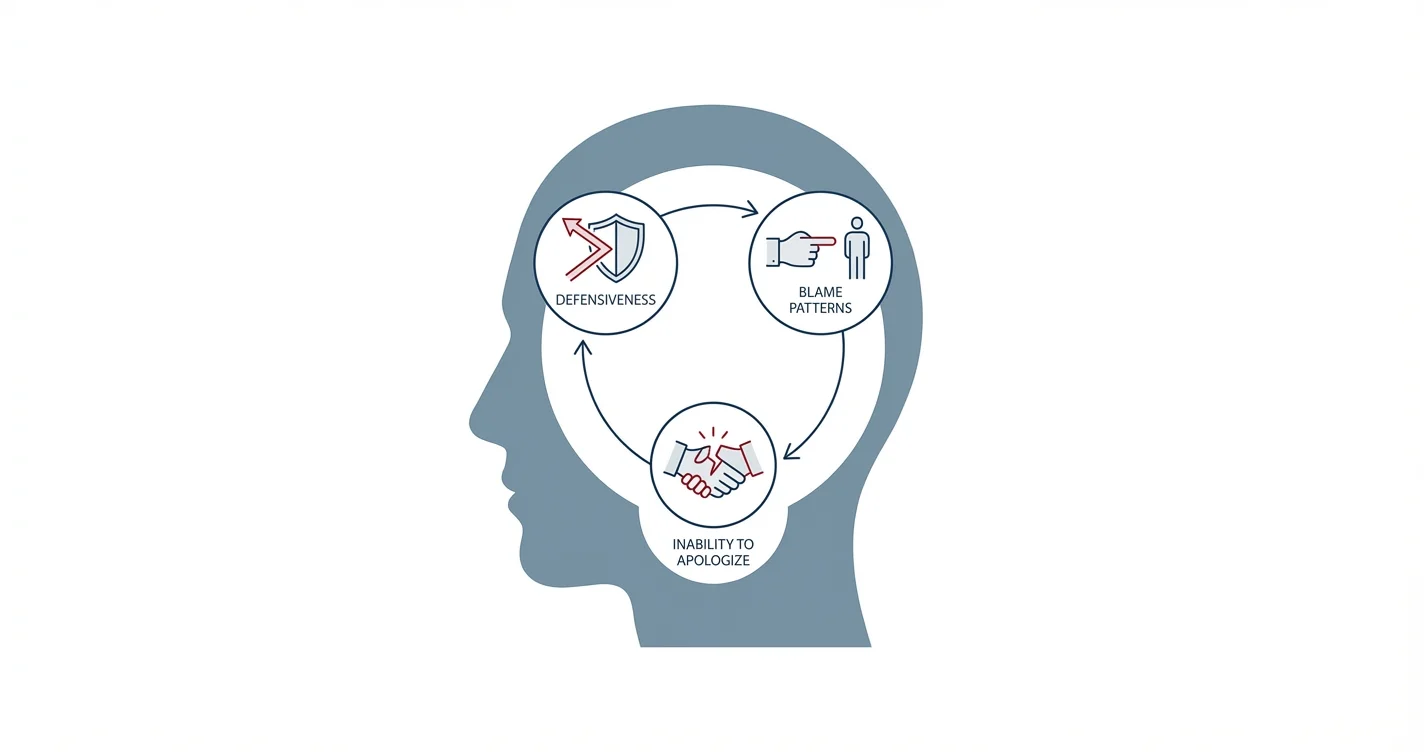
Low self-awareness indicators manifest most clearly through three interconnected behavioral patterns: chronic defensiveness, automatic blame-shifting, and...

Key Takeaways
- Immediate counterclaims: Rather than pausing to consider feedback, they instantly respond with examples of the other
- Tone policing: Shifting focus from the content of feedback to how it was delivered ("You're being too sensitive" or
- Context flooding: Overwhelming the conversation with explanations, justifications, and circumstances that explain
- Reframing as victimization: Repositioning themselves as the injured party regardless of the original concern
- Selective memory: Recounting situations in ways that emphasize others' problematic actions while minimizing their own
Introduction
Low self-awareness indicators manifest most clearly through three interconnected behavioral patterns: chronic defensiveness, automatic blame-shifting, and an inability to offer genuine apologies. These traits create a recognizable signature in how someone responds to feedback, handles mistakes, and navigates conflict. While everyone experiences defensive moments or struggles with admitting fault occasionally, people with consistently low self-awareness demonstrate these patterns across situations and relationships with remarkable predictability.
Research in social psychology suggests that self-awareness—the capacity to observe one's own thoughts, emotions, and behaviors objectively—exists on a spectrum. At the lower end, individuals struggle to recognize how their actions affect others, misattribute the causes of interpersonal problems, and reflexively protect their self-image rather than examining their contributions to difficulties. This article examines the specific behavioral markers that signal low self-awareness, the psychological mechanisms behind these patterns, and practical approaches for recognizing these traits in yourself and others.
Understanding the Psychology Behind Low Self-Awareness
Self-awareness operates through two primary dimensions: internal self-awareness (how clearly we see our own values, emotions, and impact) and external self-awareness (understanding how others perceive us). People with low self-awareness typically struggle with both dimensions, creating a gap between their self-perception and how others experience them.
The psychological mechanisms underlying low self-awareness involve several interconnected factors. Cognitive biases play a substantial role—particularly the fundamental attribution error, where individuals attribute their own negative behaviors to external circumstances while attributing others' negative behaviors to character flaws. This creates a self-protective loop that prevents genuine self-examination.
Emotional regulation capacity also contributes significantly. When someone lacks the ability to tolerate uncomfortable emotions like shame, guilt, or inadequacy, their psychological system prioritizes immediate relief over accurate self-assessment. Defensiveness becomes an automatic response that shields them from feelings they cannot process effectively.
Studies in developmental psychology indicate that early relational experiences shape self-awareness capacity, though genetic factors, temperament, and later experiences also contribute to how these patterns develop.
For those working to improve their own self-awareness or process interactions with low-awareness individuals, tools like Lovon.app provide on-demand support for identifying patterns and talking through emotional reactions as they emerge.
Core Indicators: Defensiveness as an Automatic Response
Chronic defensiveness represents perhaps the most immediately recognizable low self-awareness indicator. Unlike situational defensiveness—which everyone experiences when genuinely misunderstood or unfairly criticized—the defensiveness associated with low self-awareness appears reflexively, even in response to gentle feedback or neutral observations.
Key characteristics of defensiveness in low self-awareness individuals include:
- Immediate counterclaims: Rather than pausing to consider feedback, they instantly respond with examples of the other person's flaws or mistakes
- Tone policing: Shifting focus from the content of feedback to how it was delivered ("You're being too sensitive" or "Why are you attacking me?")
- Context flooding: Overwhelming the conversation with explanations, justifications, and circumstances that explain away their behavior
- Reframing as victimization: Repositioning themselves as the injured party regardless of the original concern
This automatic defensive response serves a protective function—maintaining a positive self-image without the discomfort of genuine self-examination. The person experiences feedback as an attack on their identity rather than information about a specific behavior.
In practice, this creates exhausting communication patterns. Others learn that raising concerns leads to deflection rather than dialogue, gradually reducing honest feedback and creating an information vacuum around the low-awareness individual. They become increasingly isolated from accurate information about their impact.
The physiological component matters here as well. When someone perceives feedback as threat, their nervous system responds accordingly—heart rate increases, stress hormones elevate, and cognitive resources shift toward defense rather than reflection.
Blame Patterns: Externalizing Responsibility Consistently
Blame-shifting represents the cognitive complement to defensive emotional reactions. While defensiveness protects against uncomfortable feelings, blame patterns protect against acknowledging one's role in negative outcomes. People with low self-awareness demonstrate remarkably consistent externalization—attributing problems, conflicts, and failures to circumstances, other people, or bad luck rather than examining their own contributions.
These blame patterns follow predictable trajectories. In workplace conflicts, the low-awareness individual identifies colleagues' inadequacies, unclear instructions, or insufficient resources as causes for missed deadlines—rarely examining whether their planning, communication, or effort played a role. In relationships, partners' behaviors fully explain conflicts while their own actions represent reasonable responses to provocation.
Common blame pattern manifestations include:
- Selective memory: Recounting situations in ways that emphasize others' problematic actions while minimizing their own
- Circular explanations: "I only did X because they did Y"—without recognizing their role in escalation patterns
- Exceptionalism: Believing they face uniquely difficult circumstances that excuse behaviors others manage differently
- Weaponized context: Using legitimate contextual factors (stress, difficult childhood, work pressure) to fully excuse rather than partially explain behavior
The Inability to Apologize Genuinely
A third core indicator involves the quality and rarity of apologies. People with low self-awareness often struggle with genuine accountability, producing apologies that deflect rather than acknowledge harm.
Patterns in low-awareness apologies include:
- Conditional apologies: "I'm sorry if you felt hurt" rather than "I'm sorry I hurt you"
- Apologies with justification: "I'm sorry, but you have to understand that..."
- Performative apologies: Words of apology delivered without behavioral change
- Apology as closing tactic: Using "I already apologized" to shut down continued discussion
The inability to apologize genuinely connects to both defensiveness and blame patterns. A real apology requires acknowledging that you caused harm—which defensiveness blocks—and accepting responsibility rather than attributing the problem to external factors—which blame patterns prevent.
This system protects against self-examination remarkably efficiently, but creates escalating interpersonal costs. Others experience a frustrating pattern: attempting to address concerns leads to defensiveness, which leads to circular conversations, which end without acknowledgment or change. Over time, people stop raising concerns altogether.
Secondary indicators that often accompany these primary patterns include:
- Surprise at relationship consequences: Genuine confusion when others withdraw, not recognizing the accumulated pattern
- Consistency across contexts: Demonstrating these responses at work, in friendships, and in romantic relationships
- Resistance to therapy or growth work: Avoiding or prematurely terminating counseling; dismissing self-help resources as unnecessary
- Binary thinking about conflict: Believing someone must be "right" and someone "wrong" rather than recognizing multiple valid perspectives
Differentiating Low Self-Awareness from Other Factors
Not every defensive response or blame statement indicates low self-awareness. Several other factors can produce similar behaviors, and distinguishing between them matters for responding appropriately.
Contextual defensiveness occurs when someone is actually being unfairly criticized, when feedback is delivered harshly or at poor timing, or when past experiences create reasonable sensitivity. Someone who becomes defensive when criticized in front of colleagues may be responding appropriately to a legitimately problematic situation.
Trauma responses can create defensive patterns that resemble low self-awareness but stem from different mechanisms. Someone with a history of criticism or emotional abuse may have developed protective responses that activate even with gentle feedback.
Cultural factors influence how people express accountability, deliver feedback, and handle conflict. Communication styles that appear defensive or blame-shifting in one cultural context may represent standard indirect communication patterns in another.
Neurodevelopmental differences affect self-awareness and social perception. Some individuals struggle to accurately read social cues or understand how their behavior affects others due to conditions affecting social cognition, not due to motivated defensiveness.
The distinguishing feature of low self-awareness specifically involves the motivated, self-protective nature of the responses. The person could access different perspectives with effort, but consistently chooses interpretations that preserve their self-image.
When to Seek Professional Help
If you recognize these patterns in yourself and find them difficult to change despite awareness and effort, professional support can help. Therapy provides structured opportunities to develop self-awareness capacity in a relationship where feedback is delivered skillfully and your defensive responses can be examined safely.
Indicators that professional help would be beneficial include:
- Relationship pattern repetition: Experiencing similar conflicts across multiple relationships or contexts, with others consistently citing defensiveness or lack of accountability
- Functional impairment: These patterns are affecting job performance, causing relationship endings, or creating significant distress
- Inability to identify your contributions: Genuinely struggling to see how you might have contributed to problems, even when others clearly explain their perspective
- Emotional dysregulation with feedback: Experiencing intense anger, anxiety, or other overwhelming emotions when receiving constructive criticism
Therapists specializing in insight-oriented approaches, cognitive-behavioral therapy, or dialectical behavior therapy can help build the underlying capacities—emotional regulation, perspective-taking, shame tolerance—that support self-awareness development. The work typically progresses gradually, as these patterns often developed over years.
If you're navigating relationships with someone showing low self-awareness indicators, therapy or counseling can help you establish appropriate boundaries, manage your emotional responses, and determine whether the relationship merits continued investment.
Conclusion
Low self-awareness indicators—defensiveness, blame patterns, and inability to apologize—create recognizable behavioral signatures that affect every relational domain. These patterns serve protective functions for the individual, shielding them from uncomfortable self-examination, but generate substantial interpersonal costs that often surprise them when relationships deteriorate or opportunities close.
Recognizing these indicators matters whether you're identifying them in yourself or in others. For self-recognition, awareness represents the essential first step toward change, though developing genuine self-awareness requires sustained effort, discomfort tolerance, and often professional support. For recognizing these patterns in others, clear understanding helps you make informed decisions about relationship investment, communication strategies, and boundary-setting.
The encouraging reality: self-awareness can develop at any point in life. While early experiences and temperament influence starting points, people can build self-reflective capacity through deliberate practice, quality relationships that provide honest feedback, and therapeutic work that addresses underlying vulnerabilities. The process requires willingness to experience discomfort, curiosity about your impact on others, and commitment to growth over self-protection—but remains possible for those who genuinely choose it.
Disclaimer:
This is general information, not medical advice or diagnosis. If symptoms are severe, affecting your daily life, or you're having thoughts of self-harm — seek professional help. In the US: call or text 988 (Suicide & Crisis Lifeline). For immediate danger: 911 or local emergency services.
How AI Support Helps You Heal
AI emotional support isn't about replacing human connection — it's about filling the gaps. The moments when you need to talk at 2 AM, when you don't want to burden your friends again, or when you simply need someone to listen without judgment.
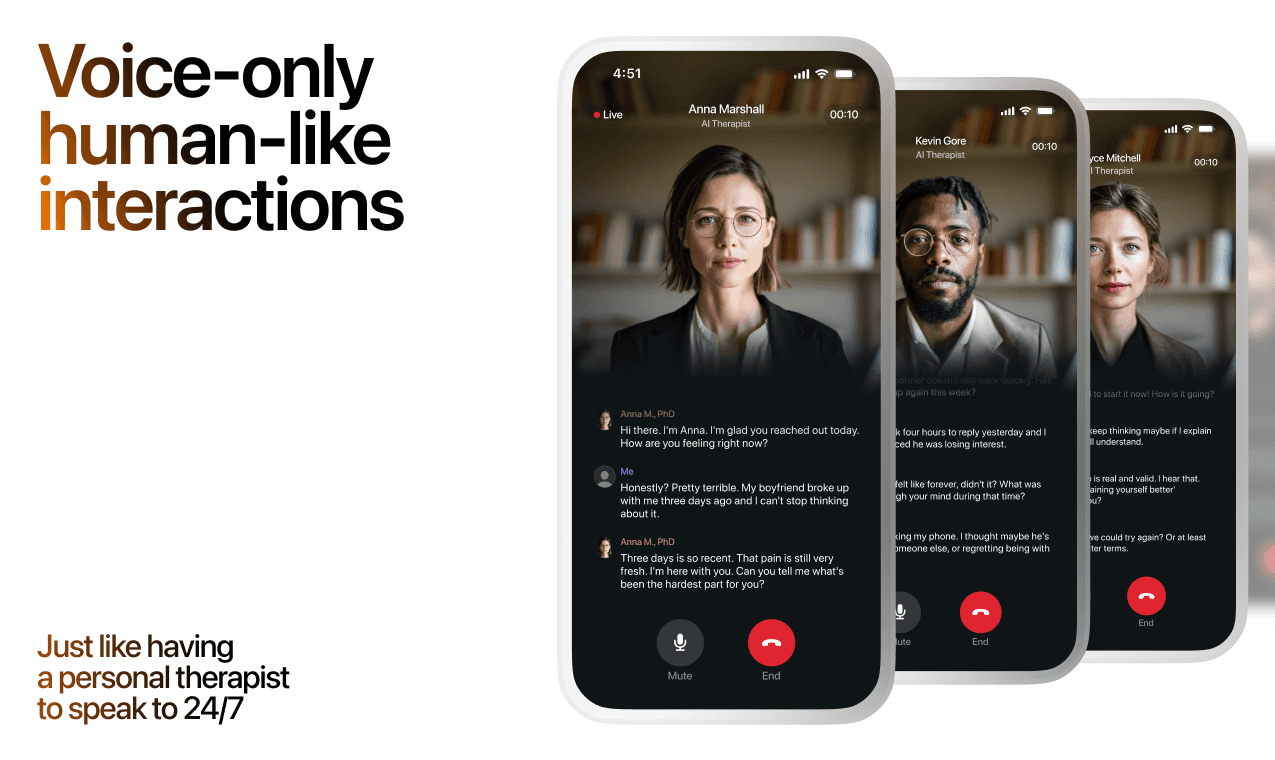
Here's what happens in a typical Lovon session:
You share what's on your mind
There's no script, no intake form, no waiting room. You speak or type whatever you're feeling — in your own words, at your own pace.
Lovon validates and explores
Using frameworks from CBT (Cognitive Behavioral Therapy) and motivational interviewing, Lovon acknowledges your feelings first, then gently helps you explore them. No dismissive "just move on" advice.
You build coping skills together
Lovon doesn't just listen — it actively works with you on evidence-based techniques: thought reframing, urge surfing, behavioral experiments, and more.
What a Session with Lovon Looks Like
When to Seek Professional Help
AI support is a valuable tool, but it's not a replacement for professional care. Please consider reaching out to a licensed therapist if you experience any of the following:
- Persistent thoughts of self-harm or suicide
- Inability to perform daily activities (work, eating, sleeping) for more than 2 weeks
- Turning to alcohol or substances to cope
- Intense anger or desire to harm your ex-partner
- Complete emotional numbness that doesn't improve over time
Crisis Resources (US): If you're in immediate danger, call 988 (Suicide & Crisis Lifeline) or text HOME to 741741 (Crisis Text Line). Available 24/7, free, and confidential.
Outside the US? Find a crisis line in your country
Ready to Start?
Your healing journey can begin right now
A 7-day trial. No judgment. Just a safe space to process what you're going through.
Frequently Asked Questions
Is Lovon a replacement for a real therapist?
Is my conversation with Lovon AI private?
How is Lovon different from ChatGPT for emotional support?
Can I use Lovon if I'm already seeing a therapist?
Can I try Lovon before subscribing?
About the Author

The Lovon Editorial Team
Mental Health & Wellness Content Team
The Lovon Editorial Team develops mental health and wellness content designed to make psychological concepts accessible and actionable. Our goal is to bridge the gap between clinical research and everyday life - helping you understand why your mind works the way it does and what you can do about it....
Related articles
- Why You Get Defensive: Your Body's Threat Response
Defensiveness is a survival reflex, not a character flaw. Spot your fight, flight, freeze, or fawn pattern and learn to…
- How to Support a Partner with Depression (2026 Guide)
Learn how to support a partner with depression in 2026: 7 concrete steps, what to say, where to set limits, and when to…
- Toxic Family Apology Dynamics: How to Navigate False Peace
Toxic family apology dynamics create a confusing emotional landscape where apologies serve to maintain control rather…
- One Chases, One Retreats: End the Pursuer-Withdrawer Loop
Why one partner keeps pressing while the other goes quiet, and the exact words each side can use to interrupt the cycle…
See also
Quizzes
- Light Triad Test: Are People Ends or Means?
See how you treat people when there is nothing to gain.
- Emotional Intelligence Test: Your EQ in a Relationship
Find where your EQ slips when things get tense.
Free tools
- Conflict Script Builder
Pick the situation and what you want out of it, and get three lines you can say out loud: an opener, a response for when…
- How to Tell Your Spouse You Want a Divorce
A chat for working out how to tell your spouse you want a divorce, after the decision rather than before it. Tell it…
From the wiki
- What is a break in a relationship?
A break is a temporary, agreed pause in a relationship where both people expect to come back. In practice it usually…
Disclaimer: This article is for informational purposes only and does not constitute medical advice, diagnosis, or treatment. Always seek the advice of your physician or other qualified health provider with any questions you may have regarding a medical condition. If you are in crisis or think you may have an emergency, call 988 (Suicide & Crisis Lifeline) or go to the nearest emergency room. Outside the US? Find a crisis line in your country.