
Understanding Anxious Attachment Patterns in Relationships
If you find yourself constantly checking your phone for messages, worrying whether your partner still cares, or feeling an overwhelming need for reassurance,

Key Takeaways
- Overanalyze conversations, searching for hidden meanings
- Notice subtle shifts in your partner's behavior that others might miss
- Feel anxious when communication patterns change slightly
- Require frequent contact to feel secure
- Excessive calling or texting when your partner is busy
Introduction
If you find yourself constantly checking your phone for messages, worrying whether your partner still cares, or feeling an overwhelming need for reassurance, you may be experiencing anxious attachment patterns in relationships. These deeply ingrained behavioral and emotional responses shape how we connect with romantic partners, often creating cycles of distress that feel difficult to break. Anxious attachment develops from early relational experiences and affects approximately 20% of adults, according to attachment research. This article examines how anxious attachment manifests in romantic partnerships, the underlying mechanisms that drive these patterns, and evidence-based approaches for developing more secure relational dynamics. Drawing on insights from relationship therapists and attachment specialists, we'll explore practical strategies you can apply today.
What Are Anxious Attachment Patterns in Relationships?
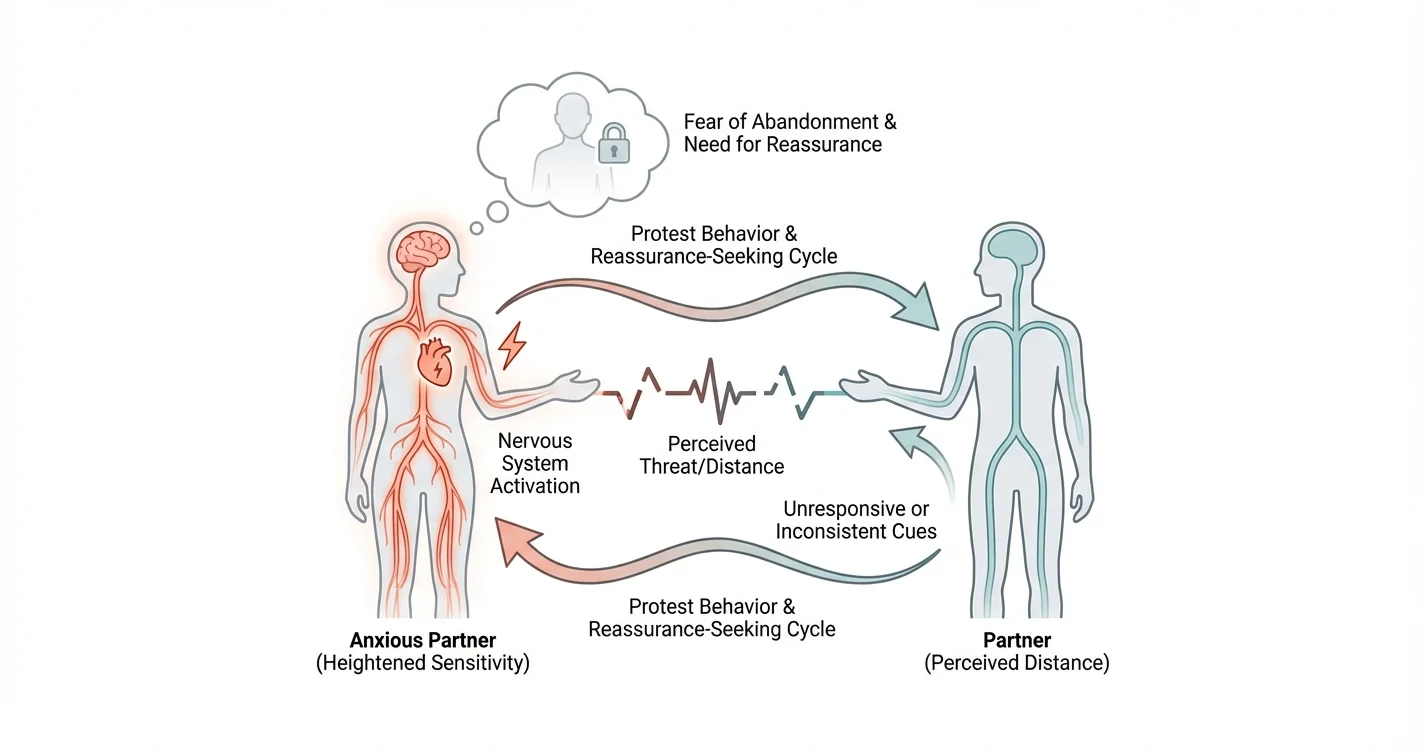
Anxious attachment, sometimes called anxious-preoccupied attachment, describes a relational style characterized by heightened sensitivity to connection and separation. People with anxious attachment patterns in relationships often experience intense fears of abandonment, require frequent reassurance, and may struggle with emotional regulation when they perceive distance from their partner.
Research in attachment theory, initially developed by psychologist John Bowlby and expanded by Mary Ainsworth, suggests that these patterns originate from inconsistent caregiving in early life. While early experiences play a significant role, genetic factors and individual temperament also contribute to how these patterns develop. When caregivers were sometimes available and sometimes not, children learned that connection requires constant vigilance and effort—a pattern that continues into adult relationships.
The nervous system plays a central role in anxious attachment behavior. Your body doesn't respond to logic alone; it responds to perceived safety and threat. When someone with anxious attachment senses emotional distance, their nervous system may activate old survival responses, triggering disproportionate reactions that don't match the current situation. This isn't a character flaw—it's your nervous system reacting to what feels like an early loss or abandonment pattern.
How Anxious Attachment Affects Romantic Relationships
Anxious attachment style relationship dynamics create predictable patterns that can strain even the strongest partnerships. Understanding these patterns represents the first step toward change.
Hypervigilance to Relational Cues
People with anxious attachment often become exceptionally attuned to their partner's moods, tone of voice, and behavior. A delayed text response might trigger cascading thoughts: "They're losing interest," "I did something wrong," or "They're pulling away." This hypervigilance stems from the nervous system's attempt to prevent abandonment by detecting threats early.
In practice, this means you might:
- Overanalyze conversations, searching for hidden meanings
- Notice subtle shifts in your partner's behavior that others might miss
- Feel anxious when communication patterns change slightly
- Require frequent contact to feel secure
Protest Behaviors and Reassurance-Seeking
When anxious attachment is activated, protest behaviors emerge—attempts to restore closeness and receive confirmation of your partner's commitment. Relationship therapists observe that these behaviors, while intended to create connection, often push partners away instead.
Common protest behaviors include:
- Excessive calling or texting when your partner is busy
- Creating tests or situations to see if your partner "really" cares
- Becoming upset about small issues to elicit attention
- Difficulty giving your partner space or alone time
These behaviors reflect attempts to make someone stay or prove your worth—patterns that typically developed in relationships that weren't truly safe or consistent.
Emotional Dysregulation in Conflict
Anxious attachment patterns in relationships become particularly visible during disagreements. When conflict arises, individuals with anxious attachment may experience intense emotional flooding. Their nervous system enters survival mode, seeking control and certainty.
Research suggests this response involves both immediate stress hormones and longer-term activation patterns. What appears as "overreacting" is actually your body responding to current triggers that open access to old, unprocessed wounds. The present situation activates past experiences of helplessness, abandonment, or loss.
Difficulty with Partner Independence
Healthy relationships require both connection and autonomy, but anxious attachment can make a partner's independence feel threatening. When your partner pursues separate interests, spends time with friends, or needs personal space, it may activate fears that they're creating distance permanently.
This pattern affects relationship dynamics significantly. Your partner may feel suffocated or controlled, while you feel increasingly insecure and desperate for closeness—creating a cycle that reinforces anxious attachment patterns.
Recognizing Signs of Anxious Attachment in Dating
Understanding what anxious attachment looks like in relationships helps you identify patterns early, both in yourself and in relational dynamics.
Early Relationship Intensity
Anxious attachment often manifests as rapid emotional intensity in new relationships. You might feel an immediate, overwhelming connection and want to spend all your time together. This intensity can feel romantic initially but may reflect attachment anxiety rather than genuine compatibility.
Signs of anxious attachment in dating include:
- Moving very quickly from dating to committed partnership
- Idealizing your partner and overlooking incompatibilities
- Feeling panic at the thought of losing someone you've just met
- Difficulty maintaining boundaries in early relationship stages
Response to Uncertainty
Dating inherently involves uncertainty, which can be particularly challenging for anxious attachment types. The period between dates, unclear relationship definitions, or mixed signals may trigger significant distress.
Some people find that anxious preoccupied attachment in romantic relationships becomes most apparent during:
- Waiting for responses to messages or calls
- Navigating the "what are we?" conversation
- Experiencing inconsistent communication from a dating partner
- Dealing with any perceived withdrawal or cooling off
Partner Selection Patterns
Relationship patterns for anxious attachment types often include gravitating toward emotionally unavailable partners or those with avoidant attachment styles. This creates a pursue-withdraw dynamic where your anxiety increases as your partner creates distance, which in turn makes them withdraw further.
While this pattern feels frustrating, it may unconsciously feel familiar—recreating the inconsistent availability you experienced early in life. Recognizing this tendency represents an important step toward choosing partners who can offer more consistent emotional availability.
Working with Anxious Attachment Behavior in Partnerships
Anxious attachment patterns can shift with awareness and intentional practice. These strategies, recommended by attachment-focused therapists, address both the underlying nervous system responses and the behavioral patterns that maintain relationship anxiety.
Nervous System Regulation Techniques
Since your body reacts to perceived threat rather than logical assessment, regulation strategies must address the physiological response directly. Emotional reactions appear disproportionate because they activate old traumas and unprocessed experiences.
Healing begins when you listen to your reactions instead of judging them. Rather than commanding yourself to "calm down" or "stop being anxious," recognize that your nervous system is activating past patterns in the present moment.
Practical regulation approaches include:
- Grounding exercises: When anxiety spikes, notice five things you can see, four you can touch, three you can hear, two you can smell, and one you can taste
- Breathing practices: Extended exhales activate the parasympathetic nervous system, signaling safety to your body
- Movement: Physical activity helps discharge stress hormones and can interrupt anxious thought patterns
- Self-soothing techniques: Develop ways to provide yourself the comfort you're seeking from your partner
Tools like Lovon.app can support this work by providing on-demand access to process anxiety as it arises. When you feel triggered by your partner's behavior, talking through your reaction with an AI therapist between sessions can help you understand whether you're responding to the present situation or to activated attachment wounds.
Developing Self-Awareness Around Triggers
Understanding your specific anxious attachment triggers allows you to recognize when your nervous system is responding to old patterns rather than current reality. Keep track of situations that consistently activate your attachment anxiety.
Common triggers include:
- Your partner being less communicative than usual
- Seeing your partner interact warmly with others
- Your partner prioritizing work, hobbies, or friends
- Any conversation about needing space or independence
- Perceived criticism or conflict
When triggered, pause before responding. Ask yourself: "Am I reacting to what's actually happening, or to what this reminds me of?" This space between trigger and response creates opportunity for different choices.
Communicating Needs Effectively
People with anxious attachment patterns in relationships often struggle to express needs directly, instead hoping partners will intuitively understand or using indirect strategies to get reassurance. Learning to communicate clearly and vulnerably represents a crucial skill.
Instead of protest behaviors, practice direct communication:
-
Replace: Testing whether your partner cares by creating drama
-
With: "I'm feeling insecure about our connection and could use some reassurance"
-
Replace: Excessive texting when you don't hear back quickly
-
With: "I notice I get anxious when we go a while without contact. Can we talk about communication expectations?"
Therapy approaches, including those used in couples counseling, often focus on helping partners understand each other's attachment needs. Therapists typically start by observing couple dynamics rather than immediately trying to fix conflicts, recognizing that understanding the underlying patterns matters more than resolving surface-level disagreements.
Building Secure Attachment Gradually
Anxious attachment style relationship dynamics can shift toward security through consistent experiences of reliable connection. This happens both within yourself (developing internal security) and within relationships (experiencing consistently responsive partnership).
Strategies that support this shift:
- Develop relationships with securely attached people: Their consistency helps your nervous system learn new patterns
- Practice self-reliance: Build confidence that you can manage difficult emotions independently
- Challenge catastrophic thinking: When you assume the worst, examine evidence for and against your fears
- Create security rituals: Establish predictable connection points with your partner (morning check-ins, weekly date nights)
However, it's important to note that shifting attachment patterns takes time and often benefits from professional support. Self-help strategies complement but don't replace therapy for deeply ingrained attachment wounds.
When Anxious Attachment Requires Professional Support
While understanding anxious attachment patterns in relationships and applying self-help strategies can create meaningful change, some situations call for professional guidance.
Consider seeking support from a therapist specializing in attachment when:
- Anxious attachment significantly impairs your ability to maintain relationships
- You experience panic attacks or severe anxiety related to relationship issues
- Patterns persist despite your efforts to change them
- You have a history of trauma that underlies your attachment anxiety
- Your behaviors are harming your relationships or wellbeing
Therapists use various approaches for anxious attachment, including attachment-based therapy, emotionally focused therapy (EFT), and trauma-informed modalities. Many therapists conduct individual sessions alongside couples work, recognizing that individual attachment patterns affect relationship dynamics.
Between professional therapy sessions, accessible resources can provide additional support. Platforms like Lovon.app offer on-demand conversations when you need to process relationship anxiety—late at night after a difficult conversation, between therapy appointments, or when something triggering just happened. This immediate access helps you work through anxious thoughts before they escalate into destructive behaviors.
For situations where you're preparing for difficult conversations with your partner about attachment needs, talking through your approach beforehand can help you communicate more effectively and stay regulated during the actual discussion.
Conclusion
Anxious attachment patterns in relationships create real challenges, but understanding these patterns represents the foundation for meaningful change. Your heightened sensitivity to connection, intense fears of abandonment, and difficulties with emotional regulation reflect your nervous system's learned responses—not personal failings. When you recognize that your body is reacting to mirrors of early losses or inconsistent care, you can approach yourself with compassion rather than judgment.
The most effective approaches combine nervous system regulation, self-awareness about triggers, clear communication of needs, and gradual development of internal and relational security. While anxious attachment style relationship dynamics can feel overwhelming, research suggests these patterns can shift toward security through consistent effort and often with professional support.
Start by noticing your patterns without self-criticism. When you feel the familiar surge of relationship anxiety, pause and acknowledge what's happening in your body. Practice one regulation technique, communicate one need directly, or reach out for support. Small, consistent steps create lasting change in how you experience relationships and connection.
Disclaimer: This is general information, not medical advice or diagnosis. If symptoms are severe, affecting your daily life, or you're having thoughts of self-harm—seek professional help. In the US: call or text 988 (Suicide & Crisis Lifeline). For immediate danger: 911 or local emergency services.
How AI Support Helps You Heal
AI emotional support isn't about replacing human connection — it's about filling the gaps. The moments when you need to talk at 2 AM, when you don't want to burden your friends again, or when you simply need someone to listen without judgment.
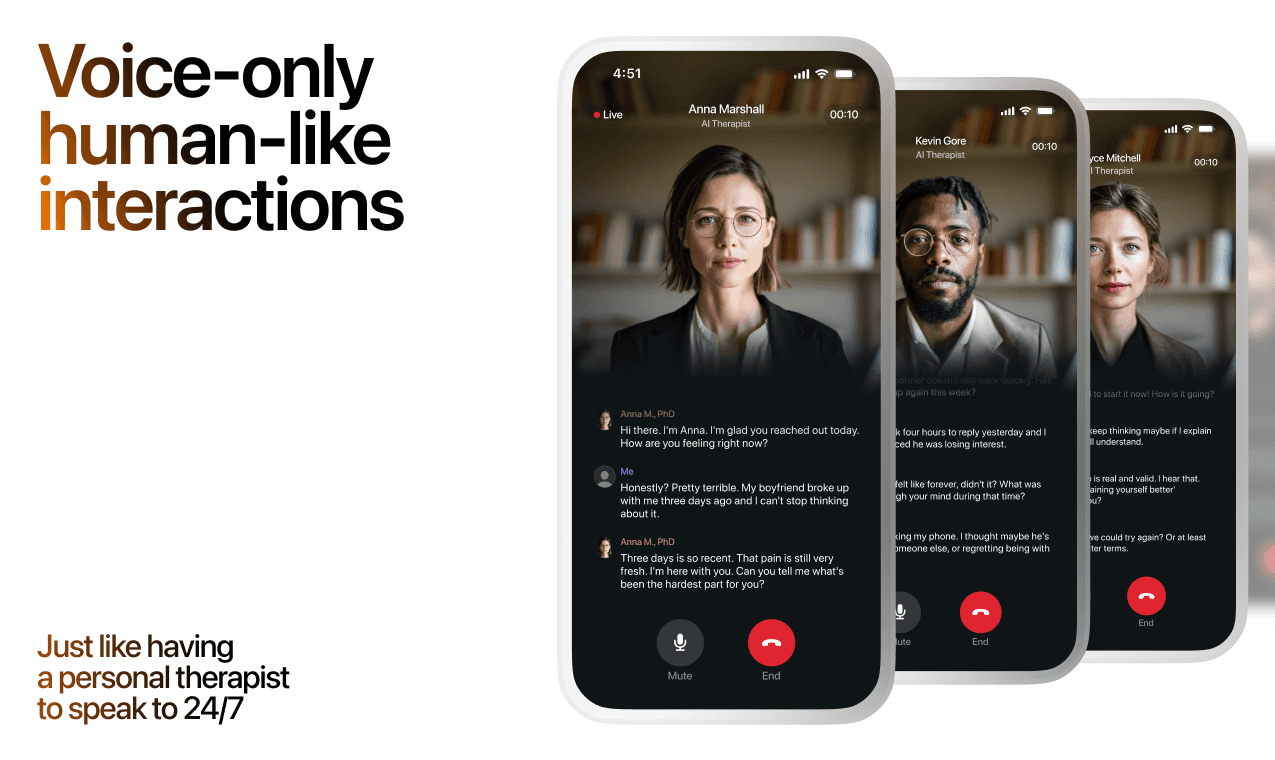
Here's what happens in a typical Lovon session:
You share what's on your mind
There's no script, no intake form, no waiting room. You speak or type whatever you're feeling — in your own words, at your own pace.
Lovon validates and explores
Using frameworks from CBT (Cognitive Behavioral Therapy) and motivational interviewing, Lovon acknowledges your feelings first, then gently helps you explore them. No dismissive "just move on" advice.
You build coping skills together
Lovon doesn't just listen — it actively works with you on evidence-based techniques: thought reframing, urge surfing, behavioral experiments, and more.
What a Session with Lovon Looks Like
When to Seek Professional Help
AI support is a valuable tool, but it's not a replacement for professional care. Please consider reaching out to a licensed therapist if you experience any of the following:
- Persistent thoughts of self-harm or suicide
- Inability to perform daily activities (work, eating, sleeping) for more than 2 weeks
- Turning to alcohol or substances to cope
- Intense anger or desire to harm your ex-partner
- Complete emotional numbness that doesn't improve over time
Crisis Resources (US): If you're in immediate danger, call 988 (Suicide & Crisis Lifeline) or text HOME to 741741 (Crisis Text Line). Available 24/7, free, and confidential.
Outside the US? Find a crisis line in your country
Ready to Start?
Your healing journey can begin right now
A 7-day trial. No judgment. Just a safe space to process what you're going through.
Frequently Asked Questions
Is Lovon a replacement for a real therapist?
Is my conversation with Lovon AI private?
How is Lovon different from ChatGPT for emotional support?
Can I use Lovon if I'm already seeing a therapist?
Can I try Lovon before subscribing?
About the Author
The Lovon Editorial Team
Mental Health & Wellness Content Team
The Lovon Editorial Team develops mental health and wellness content designed to make psychological concepts accessible and actionable. Our goal is to bridge the gap between clinical research and everyday life - helping you understand why your mind works the way it does and what you can do about it....
Related articles
- Pulling Away When They Get Close: 7 Steps to Stay Present
Closeness can trigger the urge to withdraw. Learn what sets off avoidant attachment, what to do in the moment, and how…
- Secure Attachment Style: How to Build It in 2026
Learn the traits of a secure attachment style and the exact steps to build one in 2026 — regulation, repair, and direct…
- Break the Anxious Attachment Cycle: 2026 Step-by-Step Guide
Break the anxious attachment cycle in 2026 with 7 concrete steps, troubleshooting fixes, and tools for the moments…
- Anxious Attachment and Love Avoidant: Break the Cycle 2026
Anxious attachment and love avoidant partners create a push-pull cycle. Learn the pattern, 7 steps to break it, and…
See also
Quizzes
- What's My Attachment Style? Free 12-Question Quiz
Find your attachment pattern in 3 minutes.
- Relationship Schema Test: Are Your Feelings Welcome?
See which belief edits what you share, in 3 minutes.
Free tools
- What Did They Actually Mean By That?
A chat for one sentence you cannot stop re-reading. Paste their exact words and what was happening around them, and get…
- Attachment Trigger Plan for Anxious and Avoidant Patterns
Pick your pattern, tick the moments that set it off, and finish one card for each: your body signal, the thing you will…
From the wiki
- What does clingy mean in a relationship?
Clingy is what people call behavior that asks for more contact or reassurance than the other person wants to give…
Disclaimer: This article is for informational purposes only and does not constitute medical advice, diagnosis, or treatment. Always seek the advice of your physician or other qualified health provider with any questions you may have regarding a medical condition. If you are in crisis or think you may have an emergency, call 988 (Suicide & Crisis Lifeline) or go to the nearest emergency room. Outside the US? Find a crisis line in your country.