
Big Promises, No Plans? 7 Signs of Future Faking
Tell empty promises from real plans: the patterns that give future faking away, how to bring it up with your partner, and how to decide what's next.

Key Takeaways
- Disproportionate timeline: Promises about moving in together, marriage, or children appear within weeks of meeting,
- High detail, low action: The person describes elaborate future scenarios with vivid specificity but takes no
- Deflection when pressed: When you ask about actual planning or next steps, they change the subject, get defensive,
- Pattern of broken promises: Smaller commitments consistently go unfulfilled, yet larger future promises continue
- Promises intensify during conflict: Future faking often escalates when you're considering leaving or expressing
Introduction
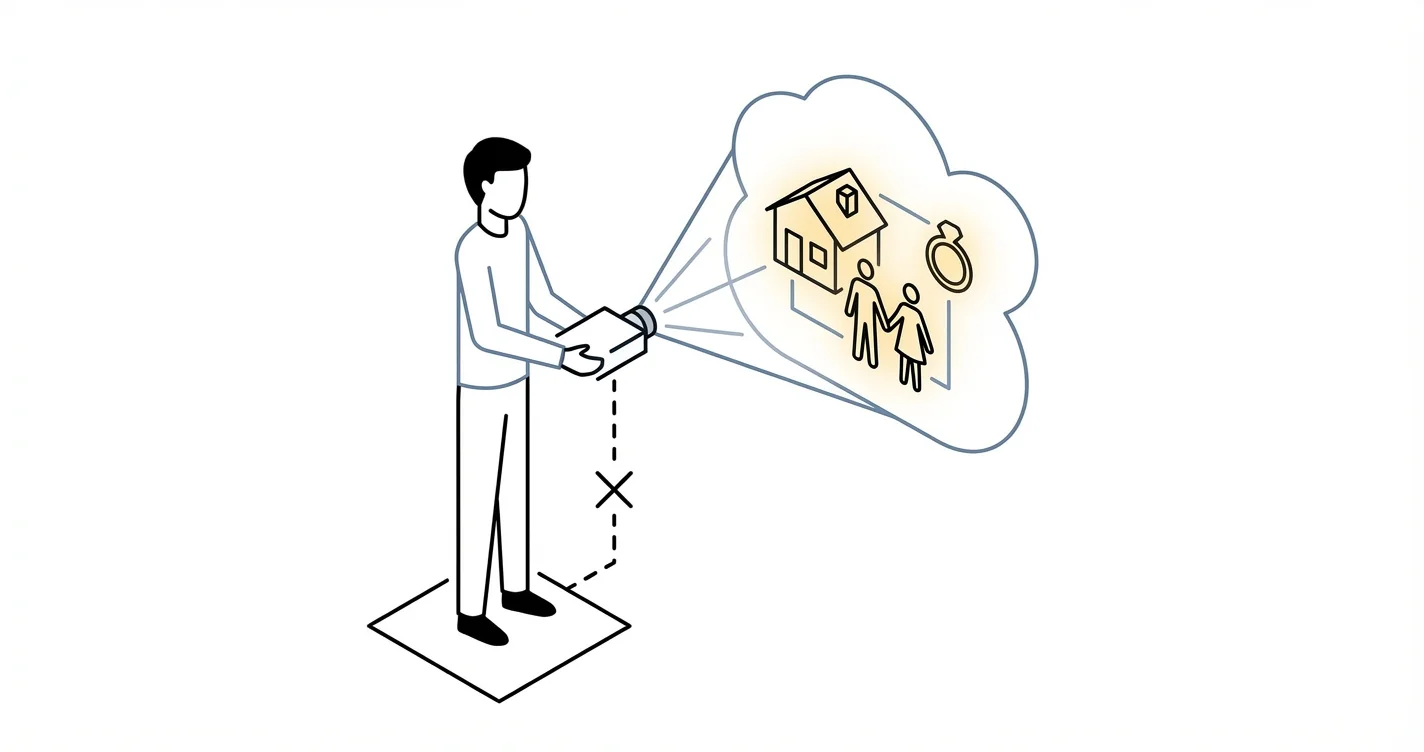
Future faking is a manipulation tactic where someone makes elaborate promises about a shared future with no genuine intention of following through. This behavior appears frequently in romantic relationships, particularly in the early stages when emotional intensity runs high. The person engaging in future faking might paint vivid pictures of moving in together, marriage, children, or dream vacations—creating a false sense of security and commitment that keeps their partner emotionally invested while they avoid real accountability or action.
Understanding what future faking looks like helps protect against emotional manipulation and allows you to distinguish between partners who are genuinely building toward shared goals and those using future promises as tools for control. Research in relationship psychology indicates that future faking commonly appears alongside other manipulation patterns, making it an important red flag to recognize early, together with other warning signs in a partner.
What Is Future Faking and Why It Happens
Future faking involves making specific, often elaborate promises about a future together that the person has no intention of honoring. Unlike genuine relationship planning where both partners work toward shared goals, future faking serves the immediate emotional needs of the person making the promises—typically to maintain control, avoid difficult conversations, or keep their partner from leaving.
The promises themselves often feel extraordinarily compelling. They might include detailed plans about where you'll live, how many children you'll have, the trips you'll take together, or even specific career moves that would bring you closer. What distinguishes these from genuine plans is the consistent pattern of avoidance when it comes time to take concrete steps toward these goals.
Studies suggest that future faking serves several psychological functions for the person employing it. It creates emotional dependency, making the partner feel uniquely understood and valued. It deflects from present-day problems by redirecting focus to an idealized future. And it provides an exit strategy—when confronted about lack of follow-through, the future faker can claim circumstances changed or their partner misunderstood their timeline.
This tactic appears particularly common in relationships involving narcissistic personality patterns, where maintaining emotional supply and control takes precedence over genuine intimacy. However, future faking isn't exclusive to clinical narcissism—it can appear in anyone who has learned to use promises as a way to avoid uncomfortable relationship realities.
How to Recognize Future Faking Behavior in Your Relationship
Identifying future faking requires looking at patterns rather than isolated incidents. Genuine plans sometimes fall through due to legitimate circumstances, but future faking shows consistent characteristics that reveal its manipulative nature.
Key signs of future faking include:
- Disproportionate timeline: Promises about moving in together, marriage, or children appear within weeks of meeting, before the relationship has developed sufficient foundation for such commitments
- High detail, low action: The person describes elaborate future scenarios with vivid specificity but takes no concrete steps toward making them happen
- Deflection when pressed: When you ask about actual planning or next steps, they change the subject, get defensive, or accuse you of rushing things
- Pattern of broken promises: Smaller commitments consistently go unfulfilled, yet larger future promises continue
- Promises intensify during conflict: Future faking often escalates when you're considering leaving or expressing dissatisfaction
- No involvement in planning: You're excluded from actual decision-making about the future being promised
- Contradictory actions: Their daily choices and behaviors contradict the future they're describing
For example, someone might talk extensively about your future wedding while refusing to meet your family, discuss money together, or make your relationship known on social media. They might promise you'll move to your dream city together while taking career steps that make such a move impossible. The words paint one picture while actions tell a completely different story.
When processing patterns like these, tools like Lovon.app can help you work through what you're observing and identify whether specific behaviors constitute manipulation or reflect normal relationship uncertainty.
Future Faking vs Genuine Promises: Understanding the Difference
Not every promise about the future constitutes manipulation. Healthy relationships involve discussing hopes, dreams, and potential shared futures. The distinction lies in how these conversations unfold and what follows them.
Genuine promises in relationships typically share certain characteristics. Both partners participate in planning, with conversations moving naturally from "wouldn't it be nice if" to "here's how we could make that happen." The person making promises follows through on smaller commitments, building trust incrementally. When circumstances change and plans need adjustment, they communicate openly rather than making excuses or deflecting blame.
Someone making genuine promises will welcome conversations about logistics and planning. If they suggest moving in together, they're willing to discuss finances, lease timelines, and what that would look like practically. If they talk about marriage, they're open to conversations about values, expectations, and what commitment means to each of you.
In contrast, future faking keeps promises abstract and planning conversations superficial. The future faker wants you to feel the emotional comfort of these promises without the accountability that comes from actually working toward them. They may even seem annoyed or hurt when you try to discuss practical steps, framing your questions as lack of trust or romance.
Consider also the emotional function these promises serve in your relationship. Genuine future planning happens during calm, connected moments and reflects authentic relationship progression. Future faking tends to appear strategically—after fights, when you've expressed doubts, or when the person senses you pulling away emotionally.
Narcissistic Future Faking and Manipulation Tactics in Toxic Relationships
Future faking frequently appears as part of a broader pattern of narcissistic manipulation, though it's important to note that not everyone who engages in this behavior has a personality disorder. When future faking occurs within narcissistic relationship dynamics, it typically serves specific functions in the cycle of idealization, devaluation, and control.
During the idealization phase early in a relationship, narcissistic individuals may engage in intense future faking to create rapid emotional bonding. This "love bombing" phase overwhelms the partner with promises, grand gestures, and declarations of having found "the one." The elaborate future being promised feels like destiny, making it difficult to maintain healthy skepticism or pacing.
As the relationship progresses and the narcissistic partner begins devaluing behaviors, future faking becomes a control mechanism. Promises about the future function as breadcrumbs—just enough to keep the partner hoping and investing while enduring increasingly poor treatment in the present. When confronted about contradictions between promises and actions, the narcissistic partner may gaslight, suggesting their partner is remembering incorrectly or being unreasonable.
Research on coercive control in relationships indicates that future faking contributes to trauma bonding, where intermittent reinforcement creates powerful psychological attachment. The partner stays invested partly because of the emotional energy they've already committed based on the promised future, a phenomenon related to the sunk cost fallacy.
Other manipulation tactics often appear alongside future faking in toxic relationships:
- Intermittent reinforcement: Occasional follow-through on minor promises maintains hope
- Moving goalposts: When timeline approaches, new conditions suddenly appear
- Blame shifting: Unfulfilled promises become your fault for not being patient, supportive, or understanding enough
- Triangulation: Comparing you to others who would "appreciate" their promises more
If you're recognizing these patterns and need support processing the emotional impact, talking through what you're experiencing with resources like Lovon.app can help you clarify what's happening and consider next steps.
What to Do If You Recognize Future Faking in Your Relationship
Discovering that someone you care about has been engaging in future faking can be emotionally devastating. The promised future you'd been imagining evaporates, and you're left questioning both the relationship and your own judgment. How you respond depends on the severity of the pattern and whether the person shows genuine willingness to change.
Start by documenting what you've observed. Write down specific promises made, when they were made, and what has or hasn't happened since. This helps counter potential gaslighting and provides clarity when your emotions are clouded. Note the contexts in which these promises appeared—were they consistently linked to conflicts or your expressions of doubt?
Have a direct conversation about the pattern you've identified. Use specific examples rather than general accusations. Describe what was promised, what hasn't materialized, and how this pattern affects your trust. Pay close attention to how they respond. Someone genuinely unaware of this pattern will likely feel concerned and want to understand your perspective. A manipulative partner will deflect, minimize, make excuses, or turn the conversation around to make you feel guilty for bringing it up.
Evaluate whether you're seeing genuine behavior change or simply new promises. If someone responds to your concerns about future faking with more elaborate promises about the future, that's a significant red flag. Actual change involves acknowledging the pattern, taking responsibility, and demonstrating trustworthiness through consistent follow-through on smaller, immediate commitments.
Consider what you need going forward. Some people choose to continue the relationship with adjusted expectations, focusing on present-day behaviors rather than future promises. Others recognize that the pattern of manipulation is too established and choose to leave. There's no universal right answer—what matters is making decisions aligned with your wellbeing rather than the imaginary future you'd been promised.
Working through the emotional aftermath often benefits from professional support. Therapists specializing in relationship trauma can help you process what happened, rebuild trust in your judgment, and develop stronger boundaries for future relationships.
When to Seek Professional Help
If you're experiencing relationship patterns that include future faking alongside other forms of manipulation or control, professional support can be valuable. Consider reaching out to a therapist if:
- You're having difficulty trusting your perception of what's happening in your relationship
- The relationship is affecting your mental health, self-esteem, or daily functioning
- You recognize patterns of emotional abuse but feel unable to leave
- You're experiencing anxiety, depression, or trauma symptoms related to the relationship
- You've ended the relationship but are struggling with the emotional aftermath
- You notice yourself repeatedly entering relationships with similar dynamics
Therapists specializing in relationship issues, trauma, or personality disorders can provide frameworks for understanding what you've experienced and developing healthier relationship patterns going forward. Support groups for people who have experienced narcissistic abuse can also offer validation and community.
Conclusion
Understanding what future faking is and how to recognize it provides essential protection against relationship manipulation. This tactic—making elaborate promises about a shared future with no intention of following through—serves to maintain control and emotional investment while avoiding genuine commitment or accountability. By distinguishing between future faking and genuine relationship planning, you can make more informed decisions about who deserves your trust and emotional investment.
The key differences lie in patterns of action versus words, how the person responds to practical planning conversations, and whether promises appear strategically during conflicts or doubts. In toxic or narcissistic relationships, future faking often appears alongside other manipulation tactics as part of broader patterns of control.
If you recognize these patterns in your current relationship, trust your observations. Document what you're seeing, have direct conversations about the discrepancies you've noticed, and evaluate responses honestly. Whether you choose to work on the relationship or leave, prioritize decisions based on present-day behaviors rather than promised futures that may never materialize.
Disclaimer
This is general information, not medical advice or diagnosis. If symptoms are severe, affecting your daily life, or you're having thoughts of self-harm — seek professional help. In the US: call or text 988 (Suicide & Crisis Lifeline). For immediate danger: 911 or local emergency services.
How AI Support Helps You Heal
AI emotional support isn't about replacing human connection — it's about filling the gaps. The moments when you need to talk at 2 AM, when you don't want to burden your friends again, or when you simply need someone to listen without judgment.
Here's what happens in a typical Lovon session:
You share what's on your mind
There's no script, no intake form, no waiting room. You speak or type whatever you're feeling — in your own words, at your own pace.
Lovon validates and explores
Using frameworks from CBT (Cognitive Behavioral Therapy) and motivational interviewing, Lovon acknowledges your feelings first, then gently helps you explore them. No dismissive "just move on" advice.
You build coping skills together
Lovon doesn't just listen — it actively works with you on evidence-based techniques: thought reframing, urge surfing, behavioral experiments, and more.
What a Session with Lovon Looks Like

Lovon is AI support, not a replacement for professional care. If things have been hard to get through for weeks, or you are thinking about harming yourself, talk to a doctor or a licensed therapist.
Ready to Start?
Your healing journey can begin right now
A 7-day trial. No judgment. Just a safe space to process what you're going through.
Frequently Asked Questions
Is Lovon a replacement for a real therapist?
Is my conversation with Lovon AI private?
How is Lovon different from ChatGPT for emotional support?
Can I use Lovon if I'm already seeing a therapist?
Can I try Lovon before subscribing?
About the Author
The Lovon Editorial Team
Mental Health & Wellness Content Team
The Lovon Editorial Team develops mental health and wellness content designed to make psychological concepts accessible and actionable. Our goal is to bridge the gap between clinical research and everyday life - helping you understand why your mind works the way it does and what you can do about it....
Related articles
- Love Bombing Signs: What They Mean in 2026
Learn the clearest love bombing signs — premature declarations, relentless contact, rushed commitment — and exactly what…
- Are They a Red Flag Quiz: Spot Warning Signs (2026)
Take the are they a red flag quiz: 10 questions across 8 behavioral dimensions. Score 5+ and you have a pattern. Know…
- Narcissistic Abuse: Signs You're in One (2026)
Narcissistic abuse leaves victims doubting themselves, not their partner. Recognize love-bombing, gaslighting, and…
- Covert Narcissism vs Overt Narcissism: Manipulation Tactics and Attention-Seeking Behaviors
Recognizing the difference between covert narcissism vs overt narcissism — particularly in manipulation tactics and…
See also
Quizzes
- Red Flag Test: Am I a Red Flag? Free 5-Minute Quiz
Honest self-check in 5 minutes.
- Partner Respect Test: Does Your Partner Respect You?
See how respect shows up in your partner's behavior, in 3 minutes.
Free tools
- How to Respond to a Narcissist
Paste what they said. You get the part that actually needs answering separated from the part designed to pull you in, a…
- How to Respond to Gaslighting
Say what happened and what they say happened. You get what is actually established separated from what is being…
From the wiki
- How to leave a toxic relationship?
Leaving a toxic relationship is rarely a decision problem — you usually know. What stops you is that the pull toward…
Disclaimer: This article is for informational purposes only and does not constitute medical advice, diagnosis, or treatment. Always seek the advice of your physician or other qualified health provider with any questions you may have regarding a medical condition. If you are in crisis or think you may have an emergency, call 988 (Suicide & Crisis Lifeline) or go to the nearest emergency room. Outside the US? Find a crisis line in your country.