
ADHD Sleep Problems: Why Your Brain Fights Bedtime 2026
ADHD sleep problems affect 75% of adults with ADHD. Learn why your brain resists sleep and get a 7-step wind-down system backed by sleep science to fix it in 2026.

Key Takeaways
- A consistent wake alarm (same time, 7 days a week — yes, weekends)
- Blue-light blocking glasses or a screen filter app (f.lux, built-in Night Shift, or equivalent)
- A dim, warm-toned lamp for your bedroom (2700K or lower)
- A physical or voice-based thought-dump method — notebook, voice memo, or a tool like Lovon
- Optional: white noise machine or a fan
ADHD sleep problems affect an estimated 75% of adults with ADHD, making bedtime one of the most consistent daily struggles the condition creates. This guide explains exactly why the ADHD brain resists sleep and gives you a step-by-step wind-down system you can start tonight.
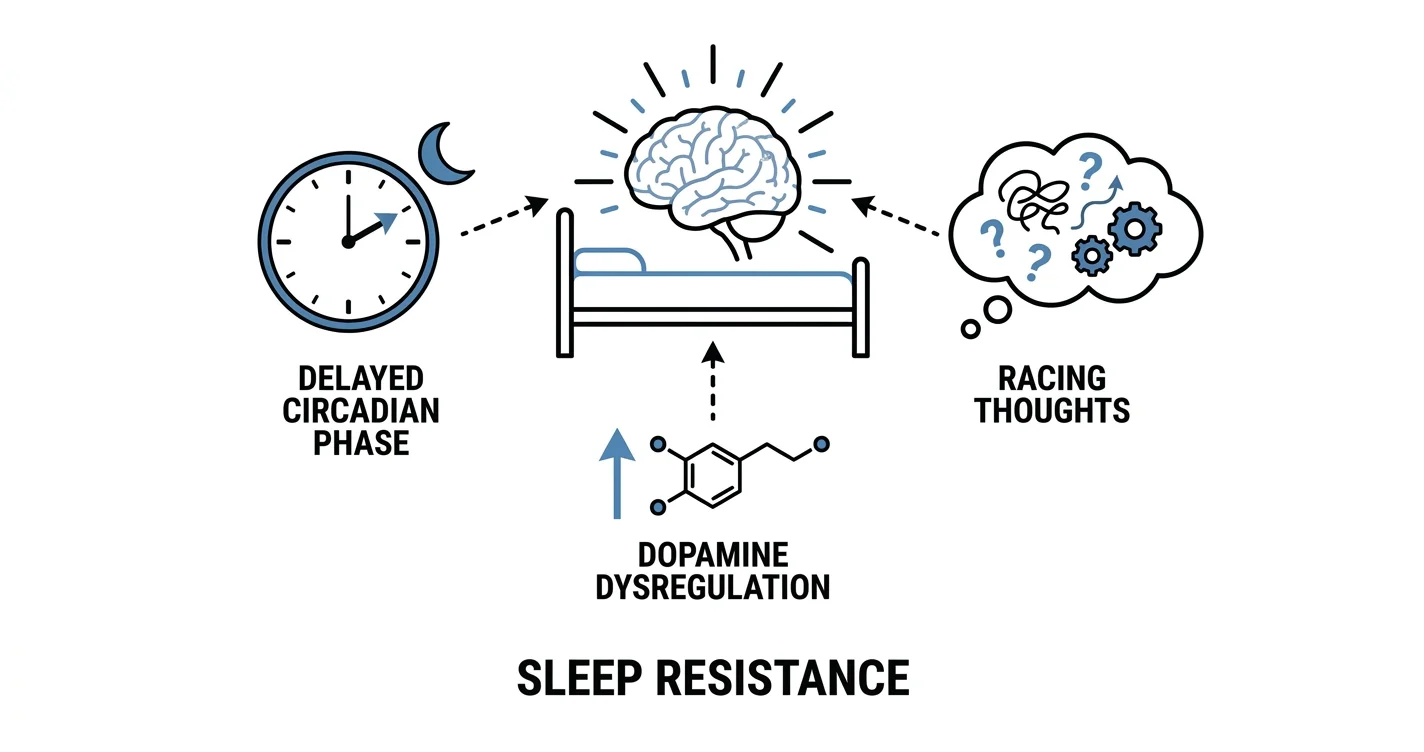
TL;DR: ADHD sleep problems stem from delayed circadian rhythm, dopamine dysregulation, and a brain that won't stop generating thoughts at lights-out. In 2026, sleep researchers classify this as "delayed sleep phase" in roughly 73–78% of ADHD adults. The fix isn't willpower — it's structure: a fixed anchor alarm, a sensory wind-down sequence, and a way to offload racing thoughts before your head hits the pillow. Lovon's AI voice support can help you process the mental noise that keeps you awake.
Why this matters
Poor sleep doesn't just make you tired. For ADHD brains, one bad night amplifies every symptom — worse focus, shorter fuse, stronger impulsivity — the next day. It becomes a self-reinforcing loop: ADHD makes sleep hard, bad sleep makes ADHD worse. Breaking that loop is one of the highest-leverage moves you can make in 2026 for your overall mental health.
What you'll need
Before you start, gather or set up:
- A consistent wake alarm (same time, 7 days a week — yes, weekends)
- Blue-light blocking glasses or a screen filter app (f.lux, built-in Night Shift, or equivalent)
- A dim, warm-toned lamp for your bedroom (2700K or lower)
- A physical or voice-based thought-dump method — notebook, voice memo, or a tool like Lovon
- Optional: white noise machine or a fan
- Time commitment: 30–45 minutes of wind-down, starting the same time each night
The steps
Step 1: Set one fixed wake time and never move it
The ADHD circadian rhythm runs 1–2 hours later than neurotypical peers, confirmed across multiple sleep studies published between 2019 and 2024. The most reliable way to pull it earlier is "chronotherapy" — anchoring your wake time first, not your bedtime. Pick a wake time you can hold every single day, including Saturday. Do not adjust it based on when you fell asleep.
What it accomplishes: A fixed wake time builds sleep pressure by the evening, making it easier to fall asleep at a consistent hour within 2–3 weeks.
Common mistake: Setting an aggressive wake time (5:30 AM) when your body clock runs at 1:00 AM. Move your wake time 15 minutes earlier every 3–4 days until you reach your target.
Step 2: Cut screens 60 minutes before your target bedtime
ADHD brains are already low on melatonin timing signals. Blue light from phones and laptops suppresses melatonin production by up to 50% according to Harvard Medical School research. For an ADHD brain that is already producing melatonin late, this can push sleep onset past 2:00 AM even when you're exhausted.
What it accomplishes: Restoring the melatonin curve gives your brain its natural "get drowsy" signal.
Common mistake: Switching from your phone to a tablet or TV. All screens count. If you need screen time, enable Night Shift or f.lux AND dim brightness below 30%.
Step 3: Do a full sensory downshift in your bedroom
ADHD nervous systems are highly reactive to sensory input — noise, light, temperature, and texture all feed the wakefulness system. Sixty minutes before bed, dim every light source to below 50 lux (a single bedside lamp is typically 30–50 lux), drop room temperature to 65–68°F, and start a consistent ambient sound (white noise, brown noise, or a fan).
What it accomplishes: Sensory consistency acts as a "cue" your brain learns to associate with sleep onset. Over time — typically 10–14 nights — the cue triggers drowsiness automatically.
Common mistake: Relying on silence. For ADHD brains that amplify ambient sounds, total silence is often MORE disruptive than a steady background hum.
Step 4: Do a timed thought dump — 10 minutes, no editing
The classic ADHD bedtime experience: your body is still, your brain accelerates. Racing thoughts at bedtime are driven partly by dopamine-seeking activity that your brain didn't finish during the day. A thought dump externalizes those loops so your brain stops recycling them.
Set a 10-minute timer. Write or speak every thought without filtering — tasks, worries, random ideas, resentments, plans. The goal is not to solve anything. The goal is transfer: get it out of working memory and onto a page or recording.
What it accomplishes: Research on "cognitive offloading" shows that writing down open loops before sleep reduces pre-sleep cognitive arousal measurably. Your brain stops looping because it trusts the thought is stored.
Common mistake: Trying to solve the items on your dump list before sleeping. Write the item, note one next action if it takes under 5 seconds, then move on. Solving is for tomorrow.
If speaking feels easier than writing, Lovon's voice AI is designed exactly for this — you just talk through what's on your mind, and the app helps you process the emotional weight attached to those thoughts, not just log them.
Step 5: Run a 4-minute body scan
Once you're in bed, do a simple progressive muscle relaxation: tense each muscle group for 5 seconds, release for 10 seconds, move from feet to face. The full sequence takes 3–5 minutes. ADHD adults often carry physical tension they aren't aware of, and the tense-release cycle activates the parasympathetic nervous system.
What it accomplishes: Drops heart rate and cortisol faster than passive lying-still. This is a documented technique from cognitive behavioral therapy for insomnia (CBT-I), the gold-standard behavioral treatment for sleep disorders.
Common mistake: Skipping this because it "feels silly." The physical release is what works, not the mental intention behind it.
Step 6: If you're still awake after 20 minutes, get up
Lying in bed awake for more than 20 minutes trains your brain to associate the bed with wakefulness — the opposite of what you want. If sleep hasn't come, get up, go to a dim room, and do something low-stimulation (reading a physical book, light stretching, a quiet conversation with Lovon about what's keeping you up). Return to bed only when you feel genuinely drowsy.
What it accomplishes: Protects the bed as a sleep-only cue. This is the core of stimulus control therapy, one of CBT-I's most effective components.
Common mistake: Reaching for your phone when you get up. Phone use in the middle of the night — even in "night mode" — resets wakefulness and delays sleep by 30–60 minutes.
Step 7: Log the pattern for 7 days, then adjust one variable
ADHD sleep problems are individual. Your delayed phase may be 90 minutes; someone else's is 3 hours. Your biggest disruptor may be the thought dump you skipped, not the blue light. Keep a simple sleep log — time in bed, estimated sleep onset, wake time, how rested you feel on a 1–5 scale — for one week. Then change exactly one variable and run another week.
What it accomplishes: Turns guesswork into data. Adjusting multiple variables at once tells you nothing useful.
Common mistake: Abandoning the whole system after one bad night. ADHD sleep systems take 2–4 weeks to stabilize. One outlier night is noise, not signal.
Troubleshooting
You fall asleep fine but wake at 3 AM and can't return to sleep. This is often anxiety or stress surfacing once the busyness of the day is gone. It is distinct from sleep-onset ADHD problems. A thought dump earlier in the evening (not just at bedtime) and addressing daytime stress with tools like free AI therapy for anxiety can reduce middle-of-the-night arousal.
Your mind genuinely won't slow down no matter what you try. Consider whether your ADHD medication timing is a factor. Stimulants taken after 2:00 PM are a common and under-recognized cause of sleep-onset difficulty in adults with ADHD. Discuss timing with your prescribing clinician — this is not a behavioral fix, it's a medication logistics question.
You feel fine skipping sleep and crash on weekends. This pattern is a hallmark of ADHD hyperfocus on low-priority nighttime activity (gaming, scrolling, bingeing). The weekend crash makes Monday even harder. The fixed wake time in Step 1 is specifically designed to interrupt this cycle — hold it even if it feels brutal for the first two weeks.
You've tried everything and still can't sleep consistently. Undiagnosed or undertreated comorbidities are common. Restless legs syndrome, sleep apnea, and anxiety disorders each co-occur with ADHD at rates between 25–50%. A sleep study and a conversation with a licensed clinician are appropriate next steps. Lovon is a support tool, not a clinical diagnostic — it is not a substitute for a sleep specialist when structural issues are present.
The routine works for a week, then falls apart. This is ADHD working exactly as advertised. Novelty fades. The antidote is a "minimum viable routine" — identify the 2 steps that made the biggest difference and protect only those when motivation dips. Add the others back when capacity returns.
You feel sleepy in the evening but get a "second wind" around 10 or 11 PM. This second wind is your delayed circadian rhythm asserting itself. If you push through the early sleepiness, you'll be wired until 1 or 2 AM. The fix: move immediately on the first drowsy signal. Brush teeth, dim lights, start the wind-down sequence the moment you feel it — even if it feels too early.
Tools and resources
- Sleep log: A simple paper notebook or the Notes app. Track: time in bed, sleep onset estimate, wake time, 1–5 rest score.
- Blue light filter: f.lux (desktop), Night Shift (iOS/macOS), or Night Light (Android/Windows). Free on all platforms.
- White noise: A box fan, a dedicated white noise machine, or free apps (myNoise, Spotify sleep sounds).
- Thought processing: Lovon's voice AI is available 24/7 for the late-night mental loops that writing alone doesn't resolve. It's built with input from PhD psychologists and is honest that it is not a licensed clinician — it's a support layer, not a replacement for care.
- CBT-I: If behavioral methods alone don't move the needle after 4–6 weeks, ask your GP for a referral to a CBT-I-trained therapist. It is the first-line recommended treatment for chronic insomnia, including in ADHD adults.
- For adults also dealing with ADHD's emotional fallout during the day, AI therapy for ADHD emotional regulation covers how Lovon supports the daytime side of the same dysregulation.
What to do next
Start tonight with just Step 1 and Step 4: set your fixed wake alarm and do a 10-minute thought dump before bed. Those two changes require no equipment and no willpower — just consistency. Once those feel automatic (typically 7–10 days), add the sensory wind-down in Step 3. Build the full system in layers rather than all at once; ADHD brains do better with small, compounding changes than with a complete overhaul.
If nighttime anxiety or a racing mind is the biggest obstacle, high-functioning anxiety is worth reading — many ADHD adults carry a layer of anxiety they haven't named yet, and naming it changes how you address bedtime.
FAQ
Why do people with ADHD have trouble sleeping? ADHD is associated with a delayed circadian rhythm, lower melatonin onset timing, and a dopamine system that stays active when it should be winding down. The result is a brain that treats bedtime as a cue to start generating thoughts, not stop.
What time should someone with ADHD go to sleep? There's no universal answer. The key is anchoring a fixed wake time first and letting your body settle into a consistent sleep-onset window over 2–3 weeks. Most ADHD adults find their natural sleep window runs 12:00–1:00 AM, though the goal is to pull this earlier with the methods above.
Does melatonin help ADHD sleep problems? Low-dose melatonin (0.5–1 mg taken 2 hours before target sleep) has evidence for advancing the delayed sleep phase in ADHD, based on multiple controlled trials. It is not a sedative — it shifts timing rather than forcing sleep. Always discuss with a clinician before starting, especially if you take stimulant medication.
Is insomnia a symptom of ADHD in adults? Sleep-onset insomnia is highly prevalent in adults with ADHD — estimated at 66–73% in clinical samples as of 2026. It is considered a core feature of the condition for many adults, not simply a side effect of stimulant medication.
Can ADHD medication cause sleep problems? Yes. Stimulant medications (amphetamines and methylphenidate) taken in the afternoon or evening are a documented cause of delayed sleep onset. The behavioral strategies in this guide still apply, but medication timing should be reviewed with a prescribing clinician.
What helps ADHD racing thoughts at night? A timed thought dump (pen and paper or voice) before bed is the most practical tool. The goal is cognitive offloading — getting open loops out of working memory. Voice tools like Lovon work well for people who think better by talking than by writing.
Is poor sleep making my ADHD worse? Yes, directly. Sleep deprivation reduces prefrontal cortex activity — the same region that ADHD already underactivates. Even one night of poor sleep measurably worsens attention, impulse control, and emotional regulation in adults with ADHD.
How long does it take to fix ADHD sleep patterns? With consistent behavioral changes, most adults see meaningful improvement in sleep-onset time within 2–4 weeks. Full circadian phase correction can take 6–8 weeks. Expecting overnight results is one of the most common reasons people abandon a system that would have worked.
One last thing
The ADHD brain's delayed sleep phase isn't a character flaw or laziness — it's a measurable biological difference in circadian timing. A 2023 study in the Journal of Sleep Research found that ADHD adults' dim-light melatonin onset (DLMO) runs an average of 1.5 hours later than non-ADHD controls. That means you're not "bad at sleeping." You're sleeping at the wrong time for your biology. Fix the timing, and the rest of the system works better than you'd expect.
Related guides
How AI Support Helps You Heal
AI emotional support isn't about replacing human connection — it's about filling the gaps. The moments when you need to talk at 2 AM, when you don't want to burden your friends again, or when you simply need someone to listen without judgment.
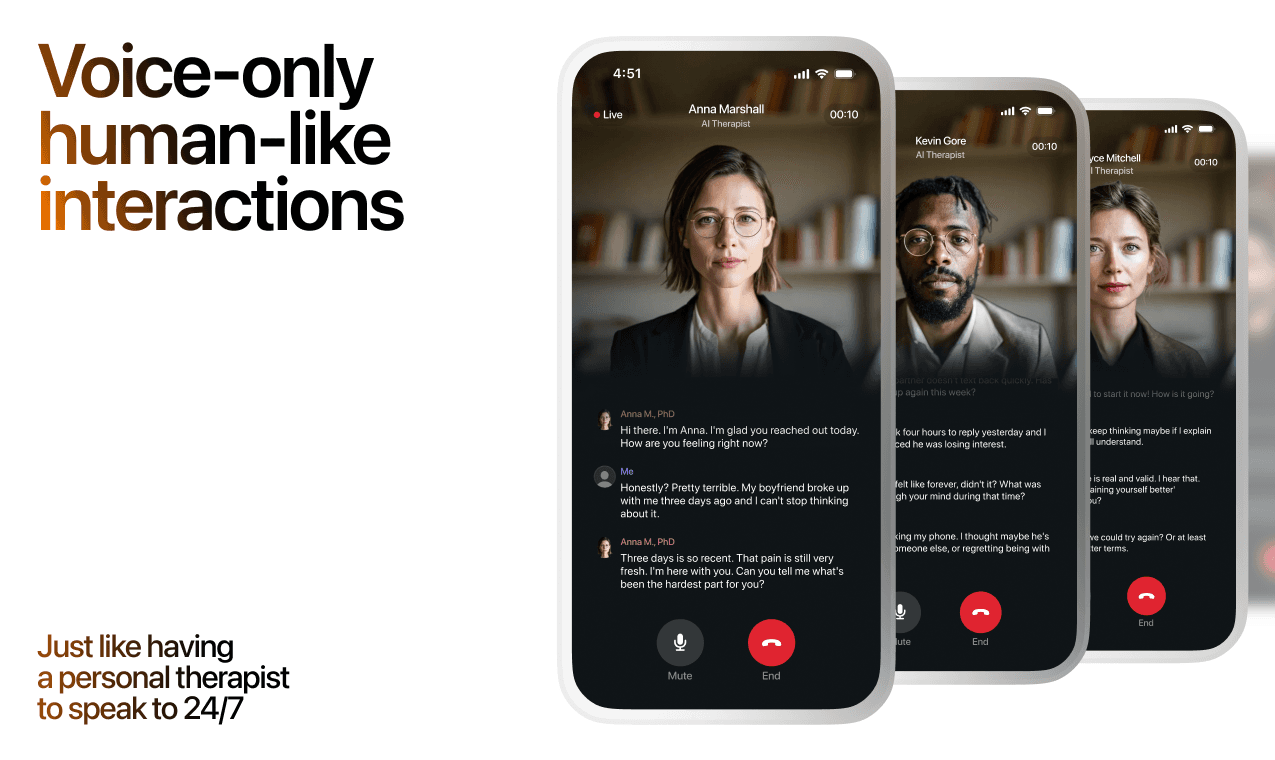
Here's what happens in a typical Lovon session:
You share what's on your mind
There's no script, no intake form, no waiting room. You speak or type whatever you're feeling — in your own words, at your own pace.
Lovon validates and explores
Using frameworks from CBT (Cognitive Behavioral Therapy) and motivational interviewing, Lovon acknowledges your feelings first, then gently helps you explore them. No dismissive "just move on" advice.
You build coping skills together
Lovon doesn't just listen — it actively works with you on evidence-based techniques: thought reframing, urge surfing, behavioral experiments, and more.
What a Session with Lovon Looks Like
When to Seek Professional Help
AI support is a valuable tool, but it's not a replacement for professional care. Please consider reaching out to a licensed therapist if you experience any of the following:
- Persistent thoughts of self-harm or suicide
- Inability to perform daily activities (work, eating, sleeping) for more than 2 weeks
- Turning to alcohol or substances to cope
- Intense anger or desire to harm your ex-partner
- Complete emotional numbness that doesn't improve over time
Crisis Resources (US): If you're in immediate danger, call 988 (Suicide & Crisis Lifeline) or text HOME to 741741 (Crisis Text Line). Available 24/7, free, and confidential.
Outside the US? Find a crisis line in your country
Ready to Start?
Your healing journey can begin right now
A 7-day trial. No judgment. Just a safe space to process what you're going through.
Frequently Asked Questions
Is Lovon a replacement for a real therapist?
Is my conversation with Lovon AI private?
How is Lovon different from ChatGPT for emotional support?
Can I use Lovon if I'm already seeing a therapist?
Can I try Lovon before subscribing?
About the Author

The Lovon Editorial Team
Mental Health & Wellness Content Team
The Lovon Editorial Team develops mental health and wellness content designed to make psychological concepts accessible and actionable. Our goal is to bridge the gap between clinical research and everyday life - helping you understand why your mind works the way it does and what you can do about it....
Related articles
- Best AI for ADHD: Tools That Help You Focus (2026)
The best AI for ADHD in 2026 — from task-breakdown tools to emotional support apps. Find out which tools match how an…
- ADHD Time Blindness: Why It Happens & How to Cope (2026)
ADHD time blindness is a neurological wiring difference, not laziness. Learn what causes it and 7 practical coping steps…
- ADHD and Relationships: Common Challenges & Fixes 2026
ADHD and relationships clash over time blindness, RSD, and emotional dysregulation. Get step-by-step fixes that actually…
- ADHD Motivation: Why You Freeze and How to Start (2026)
ADHD motivation stalls because of how the brain regulates dopamine, not willpower. Learn 7 steps to break the freeze and…
See also
Quizzes
- Am I a People Pleaser? 12-Question Quiz
Where kindness stops and self-erasure starts.
- Fear of Intimacy Test: Free 12-Question Self-Check
See which part of closeness feels risky, in 3 min.
Free tools
- What to Say When a Pet Dies
Get a message you can actually send to someone whose dog or cat just died: one that uses the animal's name, treats the…
- What Did They Actually Mean By That?
A chat for one sentence you cannot stop re-reading. Paste their exact words and what was happening around them, and get…
From the wiki
- Why do I keep dreaming about my ex?
Recurring dreams about an ex usually mean your brain is still consolidating a relationship that took up years of memory…
Disclaimer: This article is for informational purposes only and does not constitute medical advice, diagnosis, or treatment. Always seek the advice of your physician or other qualified health provider with any questions you may have regarding a medical condition. If you are in crisis or think you may have an emergency, call 988 (Suicide & Crisis Lifeline) or go to the nearest emergency room. Outside the US? Find a crisis line in your country.