
What Is High-Functioning Anxiety Signs Automatic Yes-Saying Guilt
High-functioning anxiety can be deceptively difficult to recognize, particularly when automatic yes-saying and guilt become such ingrained patterns that...

Key Takeaways
- Disproportionate preparation for routine tasks or interactions
- Difficulty declining requests even when genuinely overextended
- Internal restlessness despite appearing calm externally
- Persistent self-criticism despite objective accomplishments
- Physical manifestations like muscle tension, digestive issues, or sleep disturbance that seem disconnected from life
Introduction
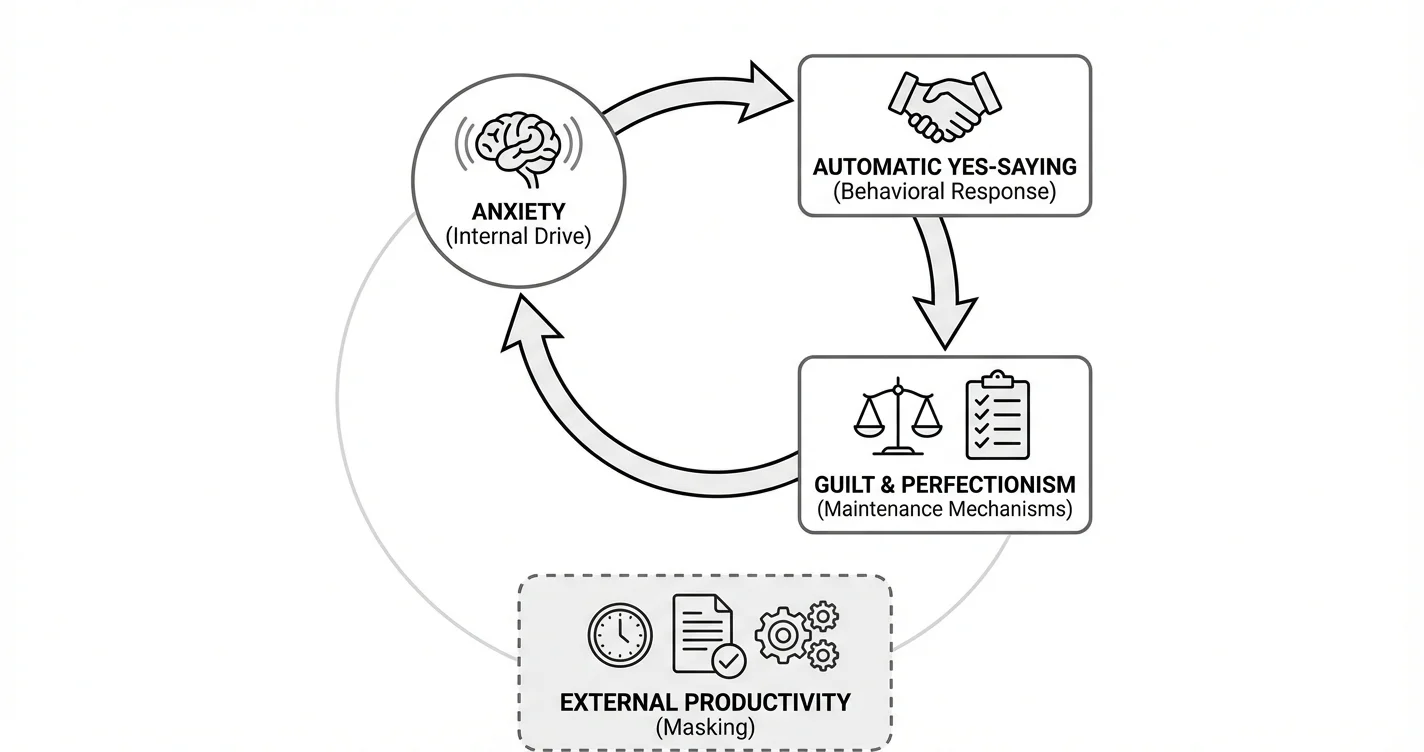
High-functioning anxiety can be deceptively difficult to recognize, particularly when automatic yes-saying and guilt become such ingrained patterns that they feel like personality traits rather than symptoms. Unlike the overt panic that characterizes some anxiety presentations, high-functioning anxiety often manifests through behaviors that appear productive or conscientious on the surface—chronic over-preparation, relentless availability to others, and a persistent internal narrative of not doing enough. Understanding what is high-functioning anxiety signs automatic yes-saying guilt involves recognizing how these patterns interconnect: the underlying anxiety drives the compulsive agreement to requests, which then generates guilt when boundaries are considered, creating a self-reinforcing cycle. This article examines the specific manifestations of high-functioning anxiety, drawing on clinical perspectives and research on anxiety presentations to help you identify these patterns in yourself or others and understand the psychological mechanisms that sustain them.
Understanding High-Functioning Anxiety and Its Hidden Presentations
High-functioning anxiety describes individuals who experience significant internal anxiety while maintaining external productivity and competence. Research suggests that this presentation often goes unrecognized precisely because the person appears successful and capable. The anxiety functions as both fuel and burden—driving achievement while creating substantial internal distress.
The hallmark of this presentation is the discrepancy between outer performance and inner experience. Someone with high-functioning anxiety might consistently meet deadlines, maintain an active social calendar, and appear remarkably put-together while simultaneously experiencing racing thoughts, disrupted sleep, physical tension, and persistent worry about performance or social evaluation.
What distinguishes this from generalized anxiety disorder is often the functional compensation. While generalized anxiety disorder involves persistent, excessive worry across multiple domains that significantly impairs functioning, high-functioning anxiety involves similar internal experiences but with behavioral patterns that mask or compensate for the distress. The person develops elaborate coping mechanisms—over-preparation, constant busyness, perfectionism, and people-pleasing—that maintain external functionality while the underlying anxiety remains unaddressed.
Key indicators that differentiate high-functioning anxiety include:
- Disproportionate preparation for routine tasks or interactions
- Difficulty declining requests even when genuinely overextended
- Internal restlessness despite appearing calm externally
- Persistent self-criticism despite objective accomplishments
- Physical manifestations like muscle tension, digestive issues, or sleep disturbance that seem disconnected from life circumstances
Clinical observations indicate that many people with this presentation don't seek help because they compare their functioning to diagnostic criteria that emphasize impairment—since they're "still functioning," they conclude their distress isn't significant enough to warrant attention.
The Automatic Yes-Saying Pattern in High-Functioning Anxiety
Automatic yes-saying represents one of the most recognizable behavioral patterns in high-functioning anxiety. This refers to the reflexive agreement to requests, invitations, or demands before consciously considering capacity, desire, or appropriateness. The "yes" emerges almost involuntarily, followed shortly by internal regret or overwhelm.
This pattern serves several anxiety-management functions. Research on people-pleasing behaviors suggests that agreeing to requests provides immediate relief from anticipated negative evaluation or conflict. For someone with high-functioning anxiety, saying no triggers acute discomfort—imagined disappointment in others, fear of being perceived as unhelpful or difficult, or worry about social consequences. Saying yes immediately alleviates these uncomfortable projections, even though it creates longer-term burden.
The physiological component reinforces this pattern. When faced with a request, the anxious brain may perceive potential disapproval as a threat. Agreeing provides rapid anxiety reduction, which the brain then associates with safety. Over time, this creates an automatic response pattern where "yes" becomes the default option before conscious deliberation occurs.
Specific manifestations of automatic yes-saying include:
- Volunteering for additional responsibilities despite existing overload
- Accepting social invitations out of obligation rather than genuine interest
- Agreeing to timeframes or commitments that require personal sacrifice
- Taking on emotional labor for others at personal expense
- Difficulty expressing preferences when they differ from others' expectations
What makes this particularly challenging is that the behavior often receives external positive reinforcement. Being agreeable, helpful, and available are generally valued socially and professionally. The person with high-functioning anxiety becomes known as reliable and accommodating, which further cements the pattern—changing the behavior risks losing this positive identity and the approval it generates.
Tools like Lovon.app can help you explore these patterns through guided conversation, allowing you to examine specific situations where automatic yes-saying occurred and identify the underlying fears or beliefs driving the behavior. Between therapy sessions or when processing a recent interaction, talking through the decision-making process can illuminate the gap between automatic response and genuine preference.
The Guilt Response and Its Function in Maintaining Anxiety Patterns
Guilt functions as a powerful maintenance mechanism in high-functioning anxiety, particularly regarding boundaries and self-prioritization. This isn't the appropriate guilt that follows genuine wrongdoing, but rather an excessive, disproportionate guilt response to normal self-advocacy or limitation-setting.
Clinical understanding of guilt in anxiety contexts suggests it serves as a preemptive emotional response—by feeling guilty about potential selfishness or inadequacy, the person attempts to prevent actual wrongdoing or negative judgment. The guilt becomes a form of moral self-monitoring, constantly scanning for ways the person might be failing others or falling short of perceived obligations.
In high-functioning anxiety, guilt typically appears in several contexts:
Boundary-setting guilt: Experiencing strong discomfort or self-reproach when declining requests, even when capacity genuinely doesn't exist. This might manifest as rumination about disappointing others, imagining their negative reactions, or retroactively justifying why saying no was actually selfish.
Achievement guilt: Feeling guilty about accomplishments, rest, or success—as though achievement means taking something from others or that rest is undeserved. Some people describe feeling guilty for not working during downtime, or experiencing discomfort when receiving recognition.
Comparative guilt: Feeling guilty about personal struggles when others face objectively more difficult circumstances. This manifests as internal dismissal of one's own distress—"I shouldn't complain when others have it worse"—which prevents acknowledgment of genuine difficulty.
Anticipatory guilt: Experiencing guilt about potential future decisions or limitations. This appears as worry about hypothetical disappointments or imagined failures before they occur.
The function of this guilt pattern becomes clear when examined systematically. Guilt drives compensatory behavior—working harder, agreeing to more, prioritizing others' needs—which temporarily reduces the guilty feelings. This creates a cycle where guilt prevents boundary-setting, which leads to overextension, which generates more situations requiring boundaries, which triggers more guilt.
Research on perfectionism and anxiety indicates that guilt often intertwines with impossibly high internal standards. The person measures themselves against an idealized version of who they "should" be—always available, never disappointing, consistently excellent. Falling short of these unrealistic standards generates guilt, which then motivates continued striving toward the unattainable ideal.
Perfectionism as a Core Component of High-Functioning Anxiety
Perfectionism represents a foundational element in many high-functioning anxiety presentations, though it often appears disguised as conscientiousness or high standards. Clinical conceptualizations distinguish between adaptive pursuit of excellence and maladaptive perfectionism characterized by rigid standards, harsh self-criticism, and disproportionate distress over mistakes.
In high-functioning anxiety, perfectionism serves multiple functions. It provides a sense of control—if everything is executed flawlessly, perhaps anxiety can be avoided. It offers protection from criticism—if the work is perfect, there's nothing to criticize. And it creates a buffer against deeper fears of inadequacy or worthlessness—perfectionism becomes evidence of value and worth.
The manifestations of perfectionism in this context include:
- Disproportionate time spent on tasks relative to their actual importance
- Difficulty delegating because others won't execute to the same standard
- Procrastination driven by fear that performance won't meet internal standards
- Inability to celebrate accomplishments due to focus on minor flaws
- Physical and mental exhaustion from sustained hyper-performance
- All-or-nothing thinking where outcomes are either perfect or failures
What makes perfectionism particularly insidious in high-functioning anxiety is that it often produces good outcomes—at significant personal cost. The perfectly executed project, the flawlessly organized event, the meticulously prepared presentation all reinforce that the perfectionism "works." The internal cost—anxiety, exhaustion, diminished enjoyment—remains hidden or is rationalized as necessary for excellence.
Studies on perfectionism suggest that it correlates with increased anxiety, depression, and burnout over time. The constant self-monitoring and criticism create a hostile internal environment where satisfaction becomes impossible—there's always something that could have been better, some standard not quite met.
For working professionals, perfectionism often appears as difficulty leaving work unfinished, excessive preparation for routine meetings, or reluctance to submit work until it's been reviewed multiple times. The professional context reinforces this pattern through reward structures that value exceptional performance, making it difficult to distinguish between appropriate professional standards and anxiety-driven over-functioning.
Recognizing the Physical and Cognitive Manifestations
High-functioning anxiety produces substantial physical and cognitive symptoms that often go unrecognized as anxiety-related because the person continues functioning despite them. These symptoms represent the body's sustained stress response operating chronically rather than in acute, time-limited situations.
Physical manifestations commonly include:
- Muscle tension, particularly in shoulders, neck, and jaw, often most noticeable at day's end
- Digestive disturbances including nausea, appetite changes, or irritable bowel symptoms
- Sleep difficulties despite exhaustion—trouble falling asleep due to racing thoughts, or disrupted sleep with early morning waking
- Fatigue that persists despite adequate sleep duration
- Headaches or migraines triggered or worsened by stress
- Rapid heartbeat or chest tightness during anticipation of tasks or interactions
These physical symptoms are frequently attributed to other causes—poor sleep hygiene, dietary factors, aging, or medical conditions—rather than recognized as manifestations of chronic anxiety. The person may seek medical evaluation for these symptoms without the underlying anxiety being identified.
Cognitive manifestations include:
- Racing thoughts, particularly about upcoming tasks, potential problems, or past interactions
- Difficulty concentrating due to worry or mental task-switching
- Rumination over past conversations or decisions, replaying them with regret or analysis
- Catastrophic thinking about potential outcomes or consequences
- Mental rehearsal of future interactions or scenarios
- Difficulty being present because attention is consistently pulled to planning or worry
Working with a resource like Lovon.app allows for real-time processing of these patterns—you can call when experiencing the physical tension or racing thoughts and explore what specific worry or perceived threat is activating the response. This immediate processing can help connect the physical sensations to their psychological source, making the anxiety more recognizable.
The cognitive load of high-functioning anxiety is substantial. Mental energy is constantly allocated to anticipation, preparation, analysis, and worry, leaving limited capacity for presence or enjoyment. Many people describe feeling mentally exhausted by evening despite the day's tasks not being objectively overwhelming—the exhaustion comes from the constant background processing of anxiety.
Breaking the Cycle: Recognition and Initial Steps
Recognizing these patterns represents the essential first step toward changing them. For many people with high-functioning anxiety, the patterns have operated for so long that they feel like intrinsic personality characteristics rather than learned responses to anxiety. Distinguishing between "this is who I am" and "this is how my anxiety manifests" creates space for change.
Developing pattern awareness involves:
- Noticing the physical sensations that accompany automatic yes-saying or guilt
- Identifying the specific thoughts that precede these responses ("They'll be disappointed," "I should be able to handle this," "I can't let them down")
- Observing situations or relationships where these patterns appear most strongly
- Recognizing the difference between genuine preference and anxiety-driven choice
Creating space between stimulus and response represents a practical intervention. When faced with a request, building in a pause before responding—"Let me check my calendar and get back to you"—interrupts the automatic yes pattern. This brief delay allows for actual assessment of capacity and desire rather than reflexive agreement.
Experimenting with small boundaries provides evidence that feared consequences may not materialize. This might involve declining a minor request, expressing a preference that differs from others', or leaving work at a reasonable hour despite unfinished tasks. Starting with lower-stakes situations builds capacity for boundary-setting in more significant contexts.
Examining the evidence for guilt-producing thoughts involves questioning automatic assumptions. When guilt arises about setting a boundary, asking "What evidence supports that this is actually selfish or harmful?" often reveals the guilt is based on projected fears rather than actual impact. Similarly, examining whether your standards are applied to others ("Would I judge someone else harshly for this?") highlights the double standard often present in perfectionism.
Separating identity from productivity challenges the core belief that worth depends on constant achievement or availability. This involves consciously practicing self-worth statements that aren't contingent on performance, and noticing when value is being measured solely by output or others' approval.
Support tools can facilitate this recognition process. Lovon.app offers on-demand conversation when you notice these patterns emerging—after automatically agreeing to something you don't have capacity for, or when experiencing disproportionate guilt about a boundary. Talking through the specific situation helps identify the underlying belief or fear driving the pattern, and clarifies the gap between the anxious prediction and likely reality.
When Professional Support Becomes Essential
While self-awareness and personal strategies can help manage high-functioning anxiety signs automatic yes-saying guilt, certain indicators suggest that professional therapeutic support would be beneficial or necessary.
Consider seeking professional help when:
- The patterns cause significant distress or impact quality of life despite attempts at self-management
- Physical symptoms are substantial or worsening
- Relationship difficulties arise from these patterns—resentment about over-functioning, conflict about boundaries, or intimacy challenges
- Work performance begins declining due to perfectionism-driven procrastination or burnout
- Sleep disturbance becomes persistent
- You experience thoughts of hopelessness or that life feels unmanageable
- Substance use increases as a coping mechanism
- The patterns expand or intensify rather than improve with self-directed efforts
Therapists specializing in anxiety, particularly those trained in cognitive-behavioral approaches, can provide structured interventions for these patterns. Therapeutic work typically involves identifying core beliefs underlying the anxiety, developing concrete skills for boundary-setting and guilt tolerance, and systematically challenging perfectionistic standards.
For some individuals, medication may be helpful as part of a comprehensive treatment approach. Discussing this possibility with a psychiatrist or prescriber can clarify whether medication might support the therapeutic work, particularly if anxiety symptoms are severe or haven't responded adequately to therapy alone.
The decision to seek professional support doesn't require waiting until functioning deteriorates significantly. High-functioning anxiety, by definition, involves continued external functioning—but internal distress and diminished life quality are legitimate reasons to seek help regardless of how well you're "managing" from an outside perspective.
Conclusion
Understanding what is high-functioning anxiety signs automatic yes-saying guilt requires recognizing how these elements interconnect: anxiety drives the compulsive agreement to others' needs, which prevents boundary-setting, which generates guilt when limits are considered, all reinforced by perfectionistic standards that make rest or self-prioritization feel like failure. These patterns often remain invisible precisely because they appear as positive traits—helpfulness, reliability, high standards—while the internal cost accumulates silently.
Recognition represents the foundation for change. Noticing when automatic yes-saying occurs, identifying the guilt that prevents boundaries, and recognizing perfectionistic standards as anxiety-driven rather than objectively necessary creates space for different choices. Small experiments with boundary-setting, deliberate pauses before agreeing to requests, and conscious examination of guilt-producing thoughts begin shifting these entrenched patterns.
For ongoing support in recognizing and processing these patterns, resources like Lovon.app provide accessible conversation when you need to talk through a specific situation—processing why you agreed to something despite limited capacity, or exploring the guilt arising from a boundary you're considering. This real-time support complements longer-term therapeutic work or provides initial exploration of these patterns.
The goal isn't eliminating anxiety entirely or never experiencing guilt, but rather developing a different relationship with these experiences—recognizing them as signals rather than commands, and choosing responses based on values and genuine capacity rather than automatic anxiety-reduction. With consistent attention and appropriate support, the patterns of high-functioning anxiety, automatic yes-saying, and excessive guilt can shift toward more sustainable ways of engaging with yourself and others.
Disclaimer: This is general information, not medical advice or diagnosis. If symptoms are severe, affecting your daily life, or you're having thoughts of self-harm—seek professional help. In the US: call or text 988 (Suicide & Crisis Lifeline). For immediate danger: 911 or local emergency services.
How AI Support Helps You Heal
AI emotional support isn't about replacing human connection — it's about filling the gaps. The moments when you need to talk at 2 AM, when you don't want to burden your friends again, or when you simply need someone to listen without judgment.
Here's what happens in a typical Lovon session:
You share what's on your mind
There's no script, no intake form, no waiting room. You speak or type whatever you're feeling — in your own words, at your own pace.
Lovon validates and explores
Using frameworks from CBT (Cognitive Behavioral Therapy) and motivational interviewing, Lovon acknowledges your feelings first, then gently helps you explore them. No dismissive "just move on" advice.
You build coping skills together
Lovon doesn't just listen — it actively works with you on evidence-based techniques: thought reframing, urge surfing, behavioral experiments, and more.
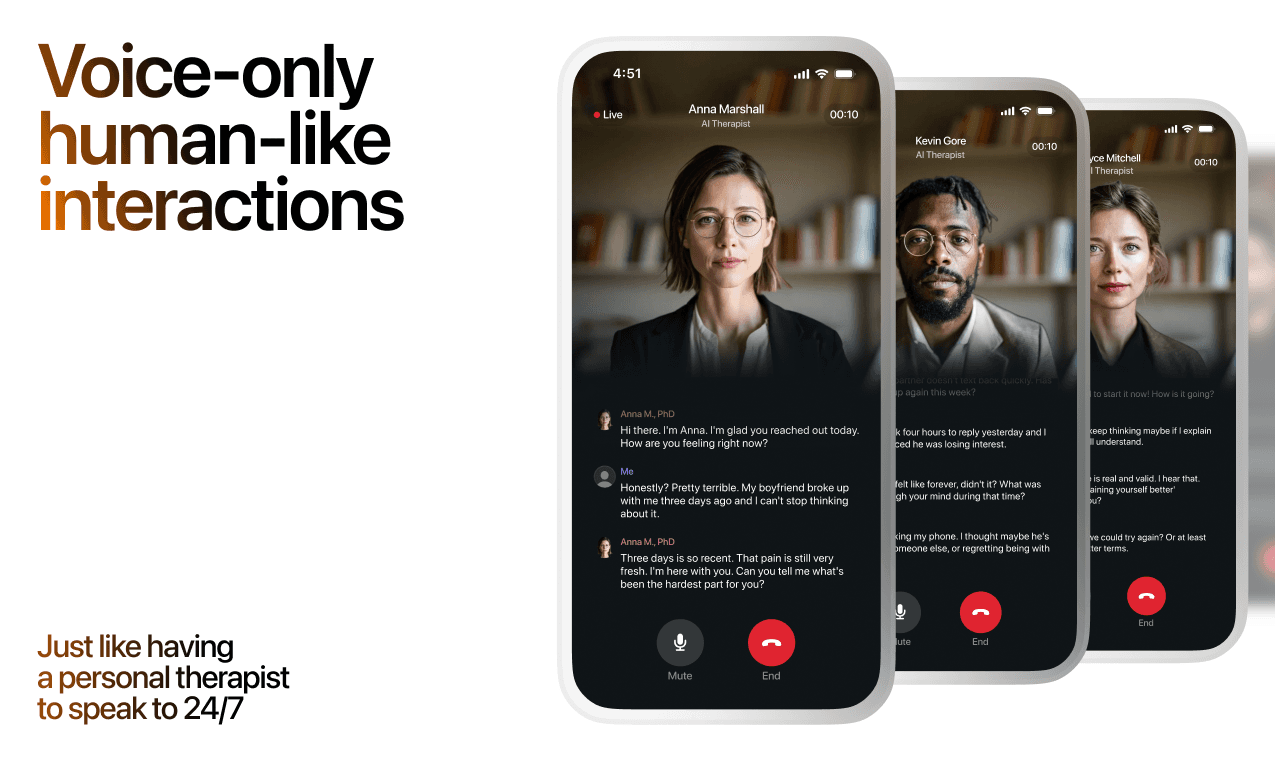
What a Session with Lovon Looks Like
When to Seek Professional Help
AI support is a valuable tool, but it's not a replacement for professional care. Please consider reaching out to a licensed therapist if you experience any of the following:
- Persistent thoughts of self-harm or suicide
- Inability to perform daily activities (work, eating, sleeping) for more than 2 weeks
- Turning to alcohol or substances to cope
- Intense anger or desire to harm your ex-partner
- Complete emotional numbness that doesn't improve over time
Crisis Resources (US): If you're in immediate danger, call 988 (Suicide & Crisis Lifeline) or text HOME to 741741 (Crisis Text Line). Available 24/7, free, and confidential.
Outside the US? Find a crisis line in your country
Ready to Start?
Your healing journey can begin right now
A 7-day trial. No judgment. Just a safe space to process what you're going through.
Frequently Asked Questions
Is Lovon a replacement for a real therapist?
Is my conversation with Lovon AI private?
How is Lovon different from ChatGPT for emotional support?
Can I use Lovon if I'm already seeing a therapist?
Can I try Lovon before subscribing?
About the Author

The Lovon Editorial Team
Mental Health & Wellness Content Team
The Lovon Editorial Team develops mental health and wellness content designed to make psychological concepts accessible and actionable. Our goal is to bridge the gap between clinical research and everyday life - helping you understand why your mind works the way it does and what you can do about it....
Related articles
- What is Fawn Response: People Pleasing as Trauma Reaction
When faced with threat, most people are familiar with the classic fight, flight, or freeze responses.
- OCPD — "Do It Right to Feel Safe" Perfectionism Pattern
For people living with Obsessive-Compulsive Personality Disorder (OCPD), perfectionism isn't about vanity or high…
- Fawn Response: How People-Pleasing Hides Trauma (2026)
The fawn response is a trauma survival pattern, not a personality trait. Learn to recognize it, interrupt it, and…
- People Pleasing Trauma Response: How to Stop It in 2026
People pleasing trauma response explained: it's the fawn response, not weakness. Six steps to stop it in 2026, plus what…
See also
Quizzes
- Empath Test: Do Other People's Moods Become Yours?
See how much of other people's moods you take on.
- Boundaries Test: Free 12-Question Self-Check
See where your boundaries slip, in 3 minutes.
Free tools
- How to Say No Politely (Without Over-Explaining)
A chat for how to say no politely when you have already decided and cannot get the word out. Tell it what you were…
- How to Come Out to Your Parents
A chat about how to come out to your parents that starts with whether now is safe, not with the speech. Tell it your…
From the wiki
- Why do I feel lonely all of a sudden?
Sudden loneliness usually traces back to something that quietly ended in the last few months: a routine, a shared class…
Disclaimer: This article is for informational purposes only and does not constitute medical advice, diagnosis, or treatment. Always seek the advice of your physician or other qualified health provider with any questions you may have regarding a medical condition. If you are in crisis or think you may have an emergency, call 988 (Suicide & Crisis Lifeline) or go to the nearest emergency room. Outside the US? Find a crisis line in your country.