
Am I a Narcissist Quiz: Honest Self-Check (2026)
Take the honest am I a narcissist quiz based on the NPI-40. Understand your score, what it means for your relationships, and your clearest next step in 2026.
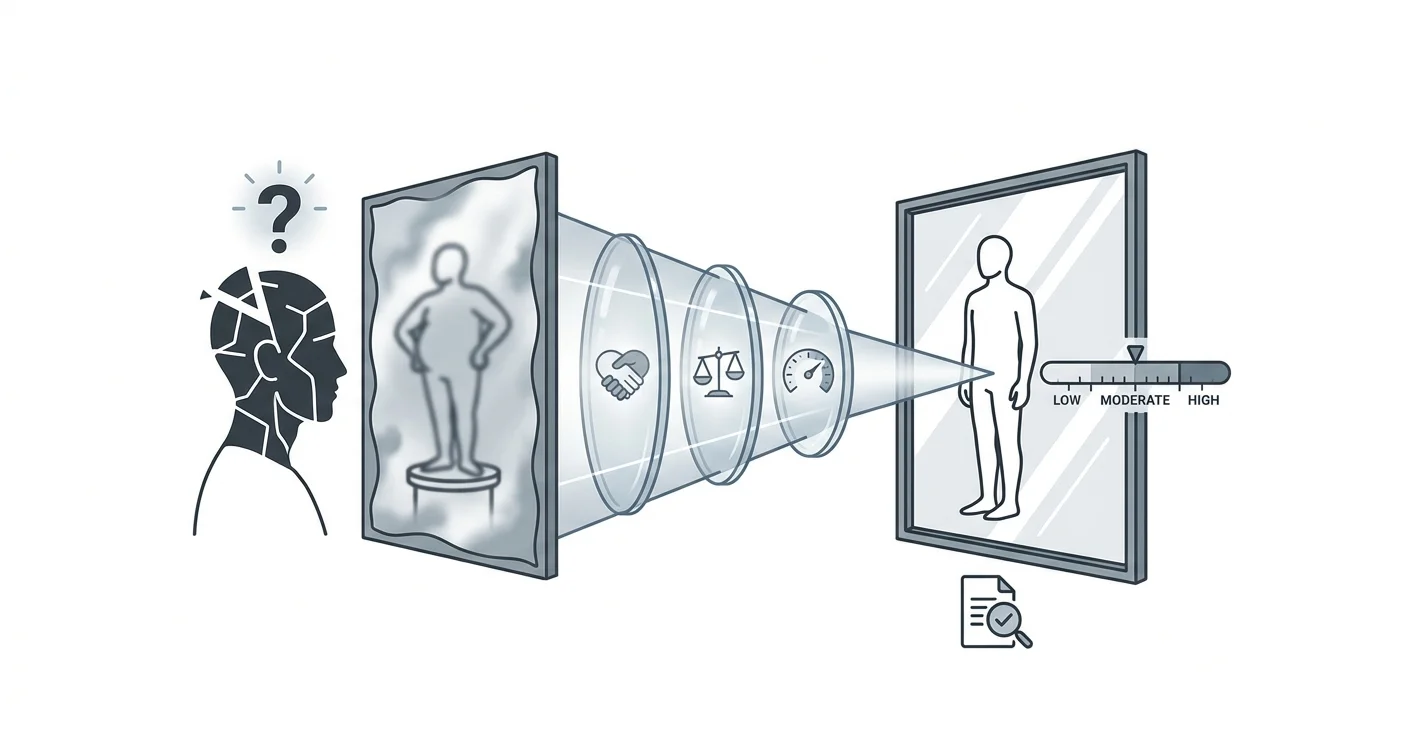

Key Takeaways
- 0–12: Low trait expression. The pattern isn't clinically significant.
- 13–24: Moderate. Some traits present — worth examining specific areas.
- 25–40: High. These patterns likely affect your relationships. A licensed therapist can give you a grounded assessment.
- 41–60: Very high. Clinical evaluation is the right next step, not another quiz.
This page walks you through an honest self-check on narcissistic traits — what the research actually says, how to read your own patterns, and what to do if the results unsettle you.
TL;DR: Most people asking "am I a narcissist" are not narcissists — genuine narcissists rarely self-question this way. That said, narcissistic traits exist on a spectrum, and a structured self-check can surface blind spots worth addressing. This guide gives you the honest framework, the questions clinicians actually use, and a clear path to support if you need it.
Why You're Asking This in 2026
Searching "am I a narcissist quiz" is itself a form of self-awareness most people with Narcissistic Personality Disorder (NPD) skip entirely. A 2022 meta-analysis published in Psychological Bulletin found NPD prevalence at roughly 1% of the general population, yet the term "narcissist" now gets applied to a far broader range of self-centered behavior. Social media in 2026 has made the label cheap — which means you might be conflating normal self-protection with a clinical pattern.
The self-check below is calibrated to the 40-item Narcissistic Personality Inventory (NPI-40), the most widely validated self-report tool in research settings. It won't replace a licensed clinician's assessment, but it will tell you whether your patterns warrant a closer look.
Who This Self-Check Is For
This guide is for anyone who has been called selfish, controlling, or dismissive — and genuinely wonders whether the label fits. It is also for people in relationships where they've noticed a pattern of one-sidedness and want to understand which side they're on. It is not a substitute for clinical diagnosis, and a high score here does not mean you have NPD.
If you came here because someone else told you that you're a narcissist, that's actually the most useful reason to be here. That kind of external feedback is a data point worth taking seriously.
What to Look For: 5 Criteria That Matter
1. Empathy — or the absence of it
Clinical narcissism centers on an impaired ability to recognize or care about other people's emotional states. The key distinction: do you struggle to imagine how your actions land on others, or do you simply not prioritize it in the moment? The first is a trait; the second is a habit. Both show up on the NPI, but they have very different treatment paths.
Ask yourself: When a friend describes a problem, does your mind immediately reframe it around your own experience? Occasional self-referencing is normal. Consistent inability to stay with someone else's experience is not.
2. Entitlement patterns
Entitlement — the belief that rules, wait times, or social norms apply to others but not to you — is one of the 9 DSM-5 criteria for NPD. It shows up in small places: skipping lines mentally, expecting exceptions, feeling genuine irritation when you're treated like everyone else. Rate honestly how often that irritation appears, not just how often you act on it.
3. Grandiosity vs. confidence
Healthy confidence is calibrated — you believe you're competent at specific things and accurate about your limits. Grandiosity is fixed — you believe you are fundamentally superior regardless of evidence. The diagnostic signal is what happens when someone outperforms you. Confidence adjusts; grandiosity defends. If your first reaction to being outperformed is contempt for the other person rather than curiosity, that's worth noting.
4. Need for admiration
The NPI-40 measures this directly. The clinical version is not "I like compliments" — it's a persistent, uncomfortable feeling when admiration isn't flowing: restlessness, irritability, or devaluing the people who don't provide it. In 2026, this pattern gets amplified by social media metrics. If your mood tracks directly with likes, follower counts, or external validation scores, that's a measurable behavioral signal.
5. Relationship reciprocity
Narcissistic patterns erode relationships in a specific sequence: idealization (intense early connection), devaluation (criticism, dismissal), and discard (abrupt exit or withdrawal of care). If you recognize that cycle in your own relationship history — especially if multiple people have described the same pattern — that's stronger evidence than any single trait in isolation.
The Self-Check: 20 Honest Questions
Answer each with: Rarely / Sometimes / Often / Almost always.
- I find it hard to genuinely celebrate someone else's success without comparing it to mine.
- When I'm criticized, my first instinct is to find a flaw in the person criticizing me.
- I expect people to recognize my efforts without being asked.
- I feel entitled to cut corners that others have to follow.
- I lose interest in people once they stop being useful or interesting to me.
- I replay conversations to identify where I was right, not where I could have done better.
- I talk about myself more than I listen in most conversations.
- When a relationship ends, I tend to feel contempt rather than sadness.
- I find it difficult to admit mistakes to people whose opinion matters to me.
- I feel a genuine sense of superiority over most people I meet.
- I need external validation to feel confident about a decision.
- I become irritable when I'm not the center of attention in a group.
- I've been told by more than one person that I'm dismissive of their feelings.
- I believe the rules and expectations I hold others to don't apply to me in the same way.
- I'm more interested in how I'm perceived than in whether I'm actually doing the right thing.
- I find it hard to stay curious about someone else's inner life for more than a few minutes.
- I feel that most people don't fully understand how capable or special I am.
- I've ended friendships or relationships abruptly when they stopped meeting my needs.
- I manipulate situations to ensure outcomes favor me, even if it costs others.
- I feel significant discomfort when someone I care about is doing better than me.
Scoring: Rarely = 0, Sometimes = 1, Often = 2, Almost always = 3. Maximum score: 60.
- 0–12: Low trait expression. The pattern isn't clinically significant.
- 13–24: Moderate. Some traits present — worth examining specific areas.
- 25–40: High. These patterns likely affect your relationships. A licensed therapist can give you a grounded assessment.
- 41–60: Very high. Clinical evaluation is the right next step, not another quiz.
What to Avoid Reading Into Your Score
Don't conflate situational behavior with a trait. Everyone scores higher under stress, sleep deprivation, or major life disruption. The NPI-40 asks about stable patterns, not your worst month.
Don't use a high score to label yourself permanently. NPD is a diagnosis made by a licensed clinician using multiple data sources over time. A self-report score in 2026 is a starting point, not a verdict.
Don't let a low score end the inquiry. People with high narcissistic traits also underreport on self-assessments — the NPI-40 has known floor effects in clinical NPD populations. If people in your life consistently describe a pattern you don't see in yourself, weight their observations.
Score Comparison Table
| Score Range | Trait Level | Relationship Impact | Recommended Next Step |
|---|---|---|---|
| 0–12 | Low | Minimal | No action needed |
| 13–24 | Moderate | Occasional friction | Reflect on 2–3 flagged areas |
| 25–40 | High | Recurring patterns | Talk to a therapist |
| 41–60 | Very high | Significant disruption | Clinical assessment |
If Your Score Is High: What Comes Next
Narcissistic traits — even high ones — are not fixed. Research published in the Journal of Personality in 2023 found measurable reductions in narcissistic traits over a 10-year period in adults who engaged in structured therapeutic work. The traits most responsive to intervention are entitlement and exploitativeness; grandiosity is more stable but not immovable.
Voice-based AI support tools like Lovon can support the between-session work — processing specific interactions, building empathy scripts, and practicing perspective-taking in real time. Lovon is not a replacement for a licensed therapist when clinical NPD is a possibility, but it's a low-barrier first step for examining your patterns without the wait time or cost of traditional therapy.
If your results point to anxiety or relationship distress as an underlying driver, the free AI therapist for anxiety path on Lovon addresses the emotional regulation piece specifically.
FAQ
What's the most accurate "am I a narcissist quiz" available? The NPI-40 (Narcissistic Personality Inventory, 40-item version) is the most widely validated self-report tool for narcissistic traits in non-clinical populations. It's free, publicly available, and takes about 10 minutes. No quiz — including this one — substitutes for clinical diagnosis.
Can a narcissist pass a narcissism quiz without triggering a high score? Yes. People with clinical NPD frequently underreport on self-assessments because impaired self-awareness is part of the disorder. If your score is low but people in your life consistently describe narcissistic patterns, weight their observations alongside your score.
Is it possible to be a narcissist and not know it? By definition, clinical NPD involves limited self-awareness about one's impact on others. The fact that you're taking this quiz in 2026 and asking the question honestly puts you in a population less likely — not more likely — to have clinical NPD.
How is narcissism different from high self-esteem? High self-esteem is stable and doesn't require external validation. Narcissism is fragile — it needs constant feeding through admiration and superiority. The operational test: how do you respond when someone outperforms you? High self-esteem adjusts; narcissism defends or attacks.
Can narcissistic traits be reduced through therapy? Yes. A 2023 study in the Journal of Personality found significant reductions in entitlement and exploitativeness after sustained therapeutic work. Grandiosity is harder to shift but not static. Schema therapy and mentalization-based treatment show the most consistent results in peer-reviewed literature.
Is scoring high on narcissism the same as having Narcissistic Personality Disorder? No. NPD is diagnosed when at least 5 of 9 DSM-5 criteria are present, causing clinically significant impairment, as assessed by a licensed clinician. High trait scores indicate a pattern worth examining — not a diagnosis.
What's the difference between covert and overt narcissism? Overt narcissism is outward — bragging, dominance-seeking, obvious entitlement. Covert narcissism is internal — chronic victimhood, hypersensitivity to criticism, quiet belief in superiority. Both score high on the NPI but look very different in relationships. In 2026, covert narcissism is significantly underdiagnosed because it doesn't match the social media archetype.
When should I see an actual therapist instead of using a quiz? If your score is above 25, if more than one person in your life has raised the same concern, or if your relationship history shows a repeated pattern of abrupt endings or discard cycles — those are the three clearest signals that a licensed clinician is the right next step, not another self-assessment.
One Last Thing
The single strongest predictor that someone doesn't have clinical NPD is the discomfort they feel when they score high on a narcissism self-check. Genuine narcissistic injury doesn't feel like shame — it feels like anger at the test, contempt for the questions, or certainty that the instrument is flawed. If reading your score made you uncomfortable rather than defensive, that discomfort is a signal worth following somewhere constructive.
Related Guides
How AI Support Helps You Heal
AI emotional support isn't about replacing human connection — it's about filling the gaps. The moments when you need to talk at 2 AM, when you don't want to burden your friends again, or when you simply need someone to listen without judgment.
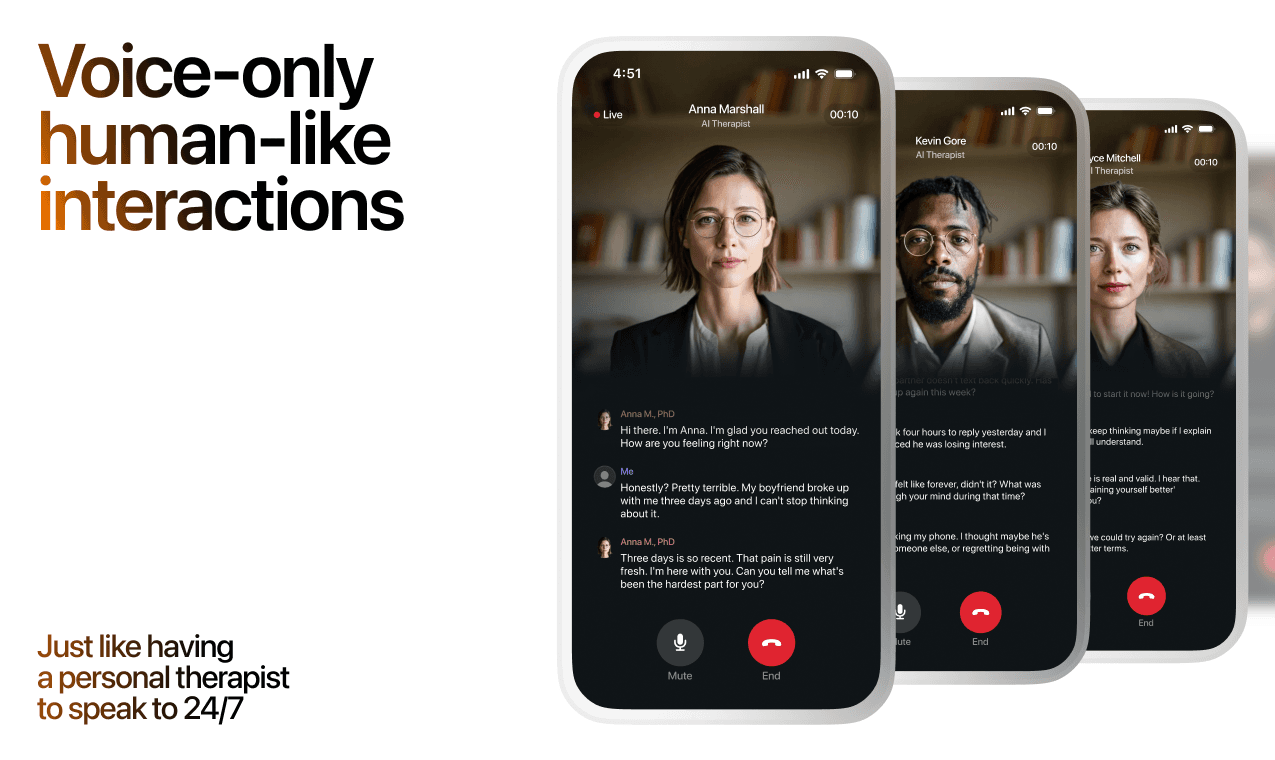
Here's what happens in a typical Lovon session:
You share what's on your mind
There's no script, no intake form, no waiting room. You speak or type whatever you're feeling — in your own words, at your own pace.
Lovon validates and explores
Using frameworks from CBT (Cognitive Behavioral Therapy) and motivational interviewing, Lovon acknowledges your feelings first, then gently helps you explore them. No dismissive "just move on" advice.
You build coping skills together
Lovon doesn't just listen — it actively works with you on evidence-based techniques: thought reframing, urge surfing, behavioral experiments, and more.
What a Session with Lovon Looks Like
When to Seek Professional Help
AI support is a valuable tool, but it's not a replacement for professional care. Please consider reaching out to a licensed therapist if you experience any of the following:
- Persistent thoughts of self-harm or suicide
- Inability to perform daily activities (work, eating, sleeping) for more than 2 weeks
- Turning to alcohol or substances to cope
- Intense anger or desire to harm your ex-partner
- Complete emotional numbness that doesn't improve over time
Crisis Resources (US): If you're in immediate danger, call 988 (Suicide & Crisis Lifeline) or text HOME to 741741 (Crisis Text Line). Available 24/7, free, and confidential.
Outside the US? Find a crisis line in your country
Ready to Start?
Your healing journey can begin right now
A 7-day trial. No judgment. Just a safe space to process what you're going through.
Frequently Asked Questions
Is Lovon a replacement for a real therapist?
Is my conversation with Lovon AI private?
How is Lovon different from ChatGPT for emotional support?
Can I use Lovon if I'm already seeing a therapist?
Can I try Lovon before subscribing?
About the Author
The Lovon Editorial Team
Mental Health & Wellness Content Team
The Lovon Editorial Team develops mental health and wellness content designed to make psychological concepts accessible and actionable. Our goal is to bridge the gap between clinical research and everyday life - helping you understand why your mind works the way it does and what you can do about it....
Related articles
- How to Heal from Emotionally Immature Narcissistic Parents Trauma
Healing from emotionally immature narcissistic parents trauma is a profound journey that requires more than willpower or…
- Narcissistic Gaslighting: Examples & Responses (2026)
Narcissistic gaslighting erodes your reality over time. See 6 real-word-for-word examples, a 6-step response plan, and…
- 10 Signs of a Toxic Relationship to Check in 2026
Signs of a toxic relationship include control, gaslighting, and apology cycles with no change. Run these 10 checks now…
- Role Reversal With Narcissistic Parents: When Children Become Emotional Caretakers
When narcissistic parents create role reversal where the child becomes the emotional caretaker, the fundamental…
See also
Quizzes
- Is My Relationship Healthy? 15-Question Check-In
Check your relationship health in 3 minutes.
- Narcissism Test: Check Your Own Grandiose Traits
Score admiration, entitlement and give-and-take.
Free tools
- How to Respond to Gaslighting
Say what happened and what they say happened. You get what is actually established separated from what is being…
- What to Say Back to a Hostile Co-Parent
A chat, not a form. Paste the message your ex sent about the kids, say what actually has to be decided, and you get a…
From the wiki
- How to leave a toxic relationship?
Leaving a toxic relationship is rarely a decision problem — you usually know. What stops you is that the pull toward…
Disclaimer: This article is for informational purposes only and does not constitute medical advice, diagnosis, or treatment. Always seek the advice of your physician or other qualified health provider with any questions you may have regarding a medical condition. If you are in crisis or think you may have an emergency, call 988 (Suicide & Crisis Lifeline) or go to the nearest emergency room. Outside the US? Find a crisis line in your country.