
Covert Narcissist Signs & How to Protect Yourself 2026
Spot the 8 covert narcissist signs — victimhood, passive aggression, quiet envy — and follow 6 concrete steps to protect yourself in 2026.

Key Takeaways
- A journal or notes app to track specific incidents (dates matter)
- 20–30 minutes of uninterrupted time for honest reflection
- Access to a trusted friend, therapist, or on-demand support tool for reality-checking
- Willingness to accept that confusing behavior can be a pattern, not a series of accidents
- You apologized but you're not sure why
Covert narcissist signs are easy to miss because they don't look like the loud, self-promoting behavior most people expect. This guide walks you through exactly how to spot them, what they mean for your wellbeing, and the concrete steps you can take to protect yourself in 2026.
TL;DR: Covert narcissist signs include chronic victimhood, passive-aggressive criticism, quiet envy, and emotional withdrawal used as punishment. Unlike the classic grandiose type, covert narcissists operate through subtlety — which makes the damage slower and harder to name. If you've been feeling consistently confused, guilty, or drained in a relationship but can't point to a single obvious incident, that pattern is itself a warning sign. Processing that experience with a support tool like Lovon can help you clarify what you're dealing with.
Why This Matters in 2026
People are actively looking for language to describe what's happening to them. Clinical literature on narcissistic personality disorder (NPD) distinguishes the covert subtype as particularly difficult to identify because it maps closely onto depression and social anxiety. The harm is real: people in these relationships often report sustained anxiety, self-doubt, and identity erosion before they can name the dynamic. You need a clear checklist, not vague reassurances.
What You'll Need
Before going through the steps, gather these:
- A journal or notes app to track specific incidents (dates matter)
- 20–30 minutes of uninterrupted time for honest reflection
- Access to a trusted friend, therapist, or on-demand support tool for reality-checking
- Willingness to accept that confusing behavior can be a pattern, not a series of accidents
Step 1: Learn the 8 Core Covert Narcissist Signs
Identification is the foundation. You can't respond to what you can't see.
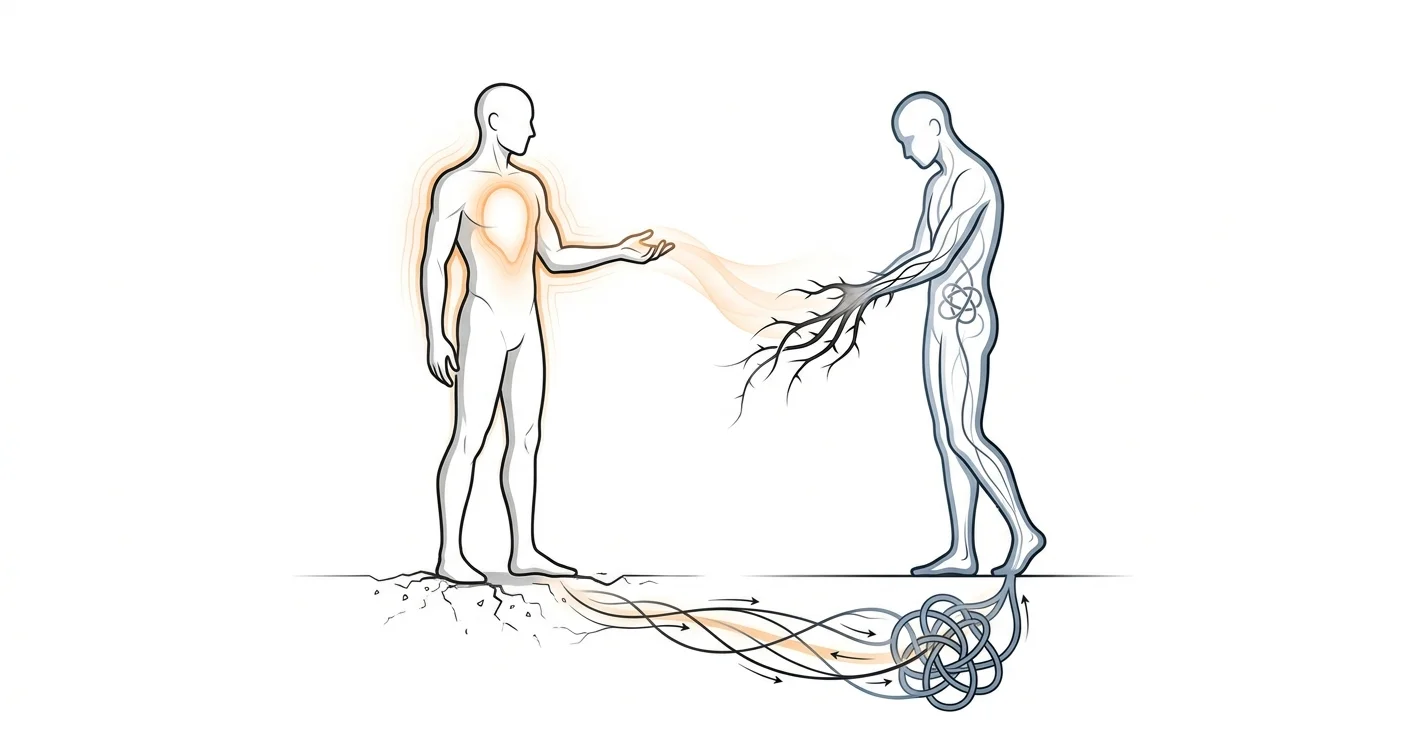
Covert narcissists differ from the grandiose type in one critical way: they express superiority through suffering, not bragging. Here are the eight signs that consistently appear in clinical descriptions of the covert subtype:
1. Chronic victimhood. Every setback becomes proof the world is against them. They collect grievances and replay them. When you try to problem-solve, the conversation pivots back to how badly they've been treated.
2. Passive-aggressive criticism. Feedback arrives as a sigh, a joke, or a loaded silence rather than a direct statement. When you react, you're accused of being oversensitive.
3. Quiet envy. They rarely celebrate your wins openly. Instead, they minimize it, redirect to their own harder situation, or go noticeably cold after your good news.
4. Sulking and emotional withdrawal. Silent treatment is their primary discipline tool. They exit conversations, become monosyllabic for days, or forget things that matter to you — then deny anything is wrong.
5. Fragile self-image masked as humility. They appear self-deprecating but react to any genuine criticism with disproportionate hurt or anger. The humility is performance; the ego underneath is brittle.
6. Covert entitlement. They believe they deserve special treatment but rarely say so directly. It shows up as sulking when they don't get it, or manufacturing guilt in you until you provide it.
7. Gaslighting through confusion. They don't always lie outright. They omit, reframe, and exhaust you with circular conversations until you question your own memory of events.
8. Intermittent warmth. Periods of genuine connection alternate with coldness, keeping you invested and off-balance. This cycle is what makes the relationship feel addictive rather than abusive.
Common mistake: Confusing covert narcissism with introversion or depression. Introversion and depression don't include entitlement, envy-driven minimizing, or punishment cycles. The pattern — not any single behavior — is the diagnostic signal.
Step 2: Document the Pattern, Not the Incidents
One passive-aggressive comment is noise. Fifteen comments over four months, always after your wins and always deniable, is a pattern.
For two weeks, write down specific exchanges: what was said, the context, your emotional reaction, and how the conversation ended. Look for these outcomes:
- You apologized but you're not sure why
- You feel responsible for their mood regularly
- Your accomplishments produce guilt rather than pride
- You find yourself editing what you share to avoid their reaction
If 70% or more of recorded incidents follow a similar arc, the pattern is real. Date-stamped notes also protect you if the relationship escalates to manipulation of shared narratives.
Expected outcome: Within two weeks, a clear picture replaces the fog. Most people report that simply writing incidents down makes the pattern undeniable — because it forces specificity that memory naturally softens.
Step 3: Reality-Check with an Outside Perspective
Covert narcissists are skilled at making their targets doubt their own perception. This is why external input is not optional — it's structural to recovery.
Options, in order of accessibility:
- A licensed therapist who has experience with narcissistic abuse. This is the highest-quality input, especially if the relationship is a primary partnership or family member.
- An AI-powered mental health support tool for between-session processing or for people who aren't yet ready for traditional therapy. Lovon's free AI therapist for relationship problems provides on-demand sessions specifically for situations like this.
- A trusted friend who knew you before the relationship and can reflect on changes they've observed in you.
Common mistake: Using the covert narcissist themselves as your reality-check. They will deny, reframe, and make you feel guilty for questioning the dynamic. The point of this step is to get input from outside the relationship system.
Step 4: Set and Hold Specific Boundaries
Vague boundaries fail with covert narcissists because they exploit ambiguity. Telling someone to be kinder gives them room to argue about what kinder means.
Effective boundaries are behavioral and specific:
- When you go silent for more than 24 hours without telling me why, I'm going to disengage from the conversation.
- I won't accept backhanded feedback. If you have a concern, say it directly or I'll end the discussion.
- I'm not available for calls after 9 p.m. unless there's an emergency.
Expect two predictable responses: escalation (more withdrawal, more victimhood, accusations that you're attacking them) or a brief warmth reset. Neither means the boundary failed. Escalation is the boundary working — you've removed a tool they relied on. The warmth reset is the intermittent reinforcement cycle restarting. Hold the boundary regardless.
Common mistake: Explaining or justifying the boundary at length. A long explanation is an invitation to negotiate. State it once, clearly, and act on it.
Step 5: Rebuild Your Self-Reference Point
Long exposure to covert narcissist behavior erodes your confidence in your own judgment. Recovery requires actively rebuilding the internal standard you use to evaluate yourself — separate from their input.
Practical methods:
- Values inventory: Write your five core values. Rate how well your current life reflects each one. Covert narcissists systematically undermine the values that give you independence (career achievement, friendships, self-expression).
- Confidence work: If the relationship has damaged your self-esteem, structured tools help. Lovon's AI life coach for confidence and self-esteem is built specifically for this kind of rebuilding.
- Social reconnection: Re-engage with people you may have pulled back from. Isolation is a covert narcissist's most effective long-term tool.
Expected outcome: Within 4–6 weeks of consistent practice, most people report a detectable shift in how much they second-guess their own perceptions.
Step 6: Plan the Exit or Ongoing Protection
Not every relationship with a covert narcissist ends — some are family members or co-parents you can't fully remove. Your plan depends on the relationship type.
For romantic partnerships: A clean exit is the most effective protection. The grey rock method (minimal emotional response, no personal information shared) works as a transition strategy while you prepare to leave.
For family or co-parenting: Strict information boundaries and parallel parenting structures reduce contact points. Document all communications in writing.
For workplace relationships: Limit interactions to email (creates a paper trail), involve HR or a manager early, and never engage in private one-on-one conversations without a record.
Common mistake: Believing that the relationship will change if you improve your own behavior. Covert narcissism is a stable personality pattern. You are not the variable that will fix it.
Troubleshooting
I'm not sure if it's covert narcissism or just a difficult personality. The clinical distinction matters less than your experience. If you consistently feel confused, guilty, and drained — and the other person rarely takes accountability — the protective steps in this guide apply regardless of diagnosis.
They seem genuinely hurt when I set limits. Am I being cruel? Covert narcissists display disproportionate hurt as a control mechanism. Guilt is the intended response. A boundary that stops you from being harmed is not cruelty.
I've tried boundaries before and they always collapse. Boundaries collapse when they aren't tied to consequences. Saying you'll end the call only works if you end the call. The first three to five times you enforce a consequence, the discomfort is intense. It decreases. The pattern does not change on its own.
My anxiety has gotten so bad I can't think clearly about the relationship. This is common. Address the anxiety directly and in parallel — the relationship clarity often follows. On-demand tools built for anxiety let you process at 2 a.m. when the thoughts are loudest, without waiting for a scheduled appointment.
I think I might have narcissistic traits myself. Self-reflection is itself a counter-indicator of narcissistic personality disorder — people with NPD rarely wonder if they have it. But if the question is live for you, an honest self-check is worth taking.
They're threatening to self-harm if I leave. This is a recognized covert manipulation tactic. Contact a crisis line for guidance specific to your situation. In an immediate emergency, call 911 or 988 (Suicide and Crisis Lifeline, US). Do not stay in a harmful relationship to prevent a threat — this escalates over time, it doesn't resolve.
Tools and Resources
- Journaling template: Date, incident description, your emotional response, how it ended, who apologized
- DSM-5 clinical criteria for NPD — available via the American Psychiatric Association for grounded reference
- Am I dating a narcissist quiz — a structured self-check if you're still in the identification stage
- 988 Suicide and Crisis Lifeline (US, 2026) — call or text 988 for immediate crisis support
- Psychology Today therapist finder — filter by narcissistic abuse specialty
FAQ
What are the most obvious covert narcissist signs? The clearest signs are chronic victimhood, passive-aggressive criticism that gets denied when confronted, cold withdrawal used as punishment, and quiet envy of your achievements. None of these look dramatic in isolation — the pattern across weeks and months is what makes them identifiable.
Is a covert narcissist worse than an overt narcissist? Neither type is worse in absolute terms, but covert narcissism causes longer delays in recognition. Because the behavior looks like sensitivity or hurt feelings rather than aggression, targets typically stay in the dynamic longer before identifying what's happening.
Can a covert narcissist change? Clinical evidence on NPD treatment shows modest outcomes even with sustained therapy, and covert narcissists rarely enter treatment voluntarily because they don't frame themselves as the problem. Change is possible in theory; banking on it as your protection strategy is not.
How do I know if I'm overreacting? Track specific incidents for two weeks. If the same pattern (you end up apologizing, they maintain victimhood, your wins cause tension) repeats across unrelated situations, you're not overreacting — you're recognizing a system.
What does grey rock mean in the context of covert narcissism? Grey rock means making yourself as uninteresting as possible to cut off the narcissistic supply. Give short, factual answers. Share no emotional reactions. Provide no personal updates. The goal is to become a dull source of interaction so they disengage or redirect their behavior elsewhere.
How long does recovery from covert narcissistic abuse take? There's no single timeline. Research on recovery from emotionally abusive relationships suggests 12–24 months for significant symptom reduction when active support is involved. Without support, the timeline extends. The earlier you start structured recovery work, the shorter the path.
Can covert narcissism affect friendships, not just romantic relationships? Yes. The same pattern — victimhood, quiet envy, withdrawal, entitlement — appears in friendships, family dynamics, and workplace relationships. The power differential differs by context, but the core behavior is consistent.
Should I tell them they're a covert narcissist? Rarely useful. The most common response is denial, counter-accusation, or a performance of hurt that resets the guilt cycle. The label benefits you — it helps you name and respond to the pattern. It doesn't typically produce insight in the person being described.
One Last Thing
The term covert narcissism entered mainstream clinical discussion in the 1990s through research by Jonathan Cheek and Paul Wink, who distinguished the hypersensitive narcissist from the oblivious type. What's striking about its 2026 relevance: the hypersensitive type was originally described as the harder one to study because subjects resisted participation — they didn't see themselves as having a problem. That same resistance is exactly what makes these relationships so difficult to leave. Naming the pattern is the first act of protection. Everything after that is execution.
Related Guides
How AI Support Helps You Heal
AI emotional support isn't about replacing human connection — it's about filling the gaps. The moments when you need to talk at 2 AM, when you don't want to burden your friends again, or when you simply need someone to listen without judgment.
Here's what happens in a typical Lovon session:
You share what's on your mind
There's no script, no intake form, no waiting room. You speak or type whatever you're feeling — in your own words, at your own pace.
Lovon validates and explores
Using frameworks from CBT (Cognitive Behavioral Therapy) and motivational interviewing, Lovon acknowledges your feelings first, then gently helps you explore them. No dismissive "just move on" advice.
You build coping skills together
Lovon doesn't just listen — it actively works with you on evidence-based techniques: thought reframing, urge surfing, behavioral experiments, and more.
What a Session with Lovon Looks Like

When to Seek Professional Help
AI support is a valuable tool, but it's not a replacement for professional care. Please consider reaching out to a licensed therapist if you experience any of the following:
- Persistent thoughts of self-harm or suicide
- Inability to perform daily activities (work, eating, sleeping) for more than 2 weeks
- Turning to alcohol or substances to cope
- Intense anger or desire to harm your ex-partner
- Complete emotional numbness that doesn't improve over time
Crisis Resources (US): If you're in immediate danger, call 988 (Suicide & Crisis Lifeline) or text HOME to 741741 (Crisis Text Line). Available 24/7, free, and confidential.
Outside the US? Find a crisis line in your country
Ready to Start?
Your healing journey can begin right now
A 7-day trial. No judgment. Just a safe space to process what you're going through.
Frequently Asked Questions
Is Lovon a replacement for a real therapist?
Is my conversation with Lovon AI private?
How is Lovon different from ChatGPT for emotional support?
Can I use Lovon if I'm already seeing a therapist?
Can I try Lovon before subscribing?
About the Author
The Lovon Editorial Team
Mental Health & Wellness Content Team
The Lovon Editorial Team develops mental health and wellness content designed to make psychological concepts accessible and actionable. Our goal is to bridge the gap between clinical research and everyday life - helping you understand why your mind works the way it does and what you can do about it....
Related articles
- Narcissistic Relationships — Deflection and Reality Reframing Tactics
Narcissistic relationships often begin subtly, without the obvious red flags many expect to see. What starts as…
- 10 Signs of a Toxic Relationship to Check in 2026
Signs of a toxic relationship include control, gaslighting, and apology cycles with no change. Run these 10 checks now…
- Love Bombing Signs: What They Mean in 2026
Learn the clearest love bombing signs — premature declarations, relentless contact, rushed commitment — and exactly what…
- Narcissistic Abuse: Examples, Signs, and What a Narcissist Does
Relationships with a narcissist can start in a positive way because at first you may ignore some warning signs.
See also
Quizzes
- Am I Dating a Narcissist? 15-Trait Quiz
Understand the pattern in 3 minutes.
- Is My Relationship Healthy? 15-Question Check-In
Check your relationship health in 3 minutes.
Free tools
- What Leaving Would Actually Take
Four short lists: money, a place, the shared things, and people. Mark each item sorted or not. You get the itemized…
- How to Respond to a Narcissist
Paste what they said. You get the part that actually needs answering separated from the part designed to pull you in, a…
From the wiki
- How to leave a toxic relationship?
Leaving a toxic relationship is rarely a decision problem — you usually know. What stops you is that the pull toward…
Disclaimer: This article is for informational purposes only and does not constitute medical advice, diagnosis, or treatment. Always seek the advice of your physician or other qualified health provider with any questions you may have regarding a medical condition. If you are in crisis or think you may have an emergency, call 988 (Suicide & Crisis Lifeline) or go to the nearest emergency room. Outside the US? Find a crisis line in your country.