
Freeze Response: Why You Shut Down Under Stress (2026)
The freeze response shuts down your body and mind under stress. Learn the exact nervous system mechanism and 7 steps to recover fast in 2026.

Key Takeaways
- A basic understanding that your autonomic nervous system has three states: sympathetic activation (fight/flight),
- A private space where you can practice physical exercises without interruption — 5 to 10 minutes is enough
- A journal or notes app for tracking your personal triggers
- Willingness to use an on-demand support tool during acute episodes — Lovon's AI voice therapy app gives you a
- No prior therapy experience required; these steps work at any starting point in 2026
The freeze response is your nervous system's third survival mode — the one nobody talks about until they're living inside it, unable to speak, move, or think clearly during a moment that matters.
TL;DR: The freeze response is an involuntary nervous system reaction where the body goes still, the mind blanks, and normal function shuts down under perceived threat. It's driven by the dorsal vagal branch of the autonomic nervous system and is not a character flaw or weakness. In 2026, researchers and clinicians widely recognize it as equal in legitimacy to fight and flight. Understanding what triggers it — and having specific tools ready — is the difference between being stuck in shutdown for hours and recovering in minutes.
Why this matters
Most people know fight-or-flight. Fewer recognize the freeze response in themselves because it mimics laziness, avoidance, or emotional unavailability. That misread is costly: you blame yourself for "spacing out" in an argument, "going blank" during a presentation, or "doing nothing" in a crisis. None of those are choices. The freeze response is a hard-wired physiological event. Knowing the mechanism gives you the first real handle on it.
What you'll need
Before working through the steps below, have these in place:
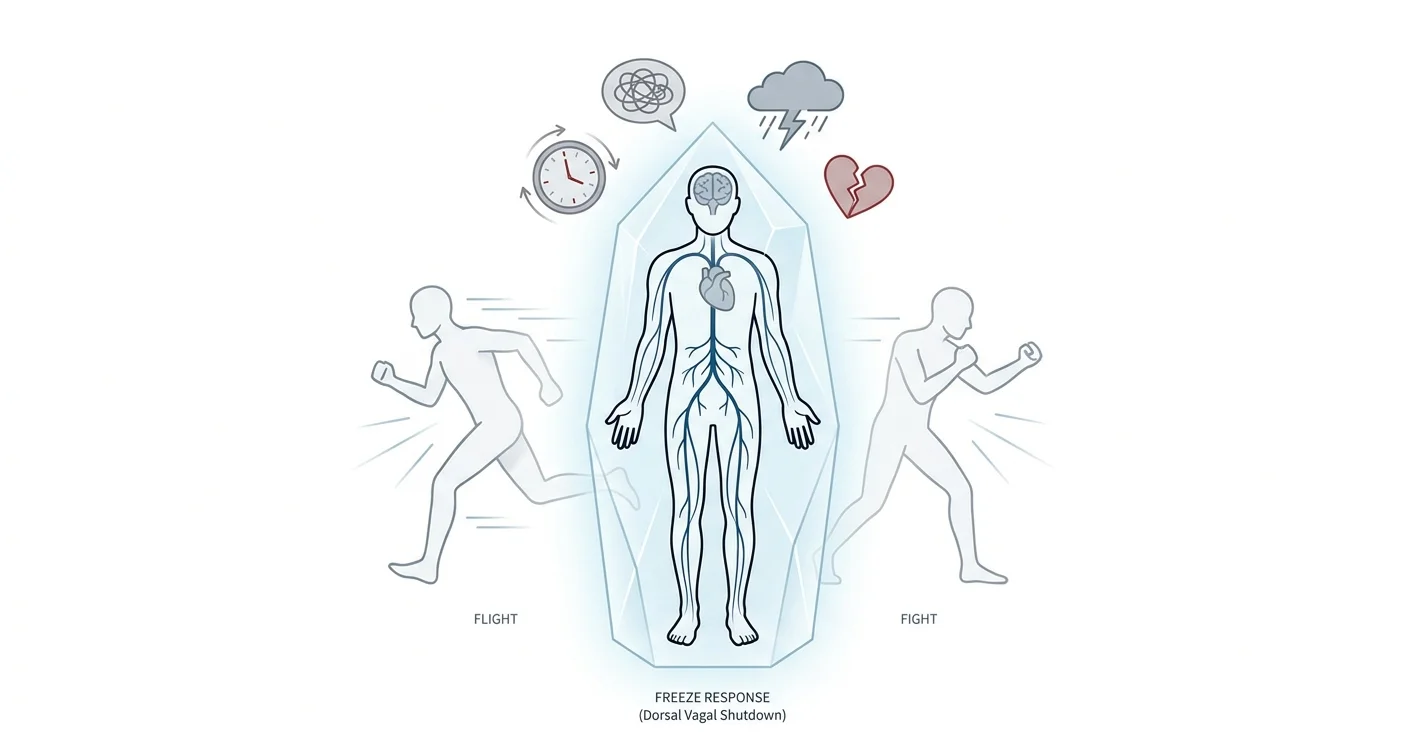
- A basic understanding that your autonomic nervous system has three states: sympathetic activation (fight/flight), dorsal vagal shutdown (freeze), and ventral vagal regulation (calm/connected)
- A private space where you can practice physical exercises without interruption — 5 to 10 minutes is enough
- A journal or notes app for tracking your personal triggers
- Willingness to use an on-demand support tool during acute episodes — Lovon's AI voice support app gives you a responsive session whenever a freeze catches you off-guard
- No prior therapy experience required; these steps work at any starting point in 2026
The Steps
Step 1: Recognize the signature, not just the feeling
The freeze response announces itself through specific physical signals: sudden mental blankness, heavy or numb limbs, slowed speech, shallow or held breath, a sense of watching yourself from a distance. Heart rate can paradoxically drop after an initial spike. Your body has essentially decided that stillness is safer than action.
Why it matters: you can't interrupt a process you haven't identified. Most people interpret the blank, heavy sensation as depression or exhaustion and wait it out passively, which extends the episode.
Concrete action: When you notice any three of the signals above co-occurring, say aloud or write: "This is a freeze response." Naming it activates your prefrontal cortex and begins loosening the dorsal vagal lock.
Common mistake: Trying to "push through" with willpower. The freeze state reduces prefrontal access — you cannot think your way out before addressing the body first.
Step 2: Orient to your physical environment
One of the fastest exits from freeze is the orienting response — the same slow, deliberate scanning a cat does when it enters a new room. Slowly turn your head left, then right. Let your eyes settle on 5 objects and name them. Notice what you hear. This is not mindfulness for its own sake; it signals to your brainstem that the environment is safe and movement is available.
This technique is rooted in Peter Levine's Somatic Experiencing framework, which has been applied clinically for over 40 years. The orienting response directly interrupts the immobility reflex by re-engaging the ventral vagal circuit.
Expected outcome: Within 60–90 seconds, most people feel a slight shift — a breath, a small involuntary movement, or a return of ambient sound that was previously blocked out.
Common mistake: Moving too fast. Slow, deliberate scanning is the mechanism. Rushing it keeps the nervous system in threat mode.
Step 3: Release the held charge through movement
Freeze stores incomplete motor responses — the run that didn't happen, the push that didn't land. That energy stays in the body as tension and numbness until it discharges. You don't need much: shake your hands vigorously for 20 seconds, stomp your feet on the floor 10 times, or press your palms hard against a wall for 30 seconds and release.
Trembling and shaking are discharge signals, not signs of worsening. Animals do this naturally after a predator encounter. Humans suppress it and pay the price in prolonged freeze states.
Expected outcome: A noticeable softening in the chest or jaw, an involuntary breath, or a return of temperature sensation in the hands.
Common mistake: Stopping the shake or tremor because it feels strange. Let it run its course — it typically resolves in under 2 minutes.
Step 4: Activate the ventral vagal system with breath
A 5-5-7 breathing pattern (inhale 5 counts, hold 5, exhale 7) stimulates the vagus nerve through the extended exhale. This is one of the few voluntary actions that directly shifts autonomic state. Do 4 full cycles.
The extended exhale activates the parasympathetic brake on the heart. Research published in the journal Frontiers in Psychology (2023 meta-analysis, 58 controlled studies) found that slow-paced breathing with extended exhale reliably reduces physiological arousal markers within 3 to 5 minutes.
Expected outcome: Heart rate settles, peripheral vision widens slightly, and verbal access returns — meaning you can now form sentences more fluidly.
Common mistake: Hyperventilating on the inhale. Keep the inhale gentle and nasal. The exhale does the work.
Step 5: Reconnect to agency with a micro-decision
The freeze response strips your sense of choice. Restoring it does not require a big decision — it requires any decision. Stand up, sit down, get a glass of water, open a window. Something small, voluntary, and physical. This is not symbolic; the act of choosing and executing a simple action re-engages the motor system and signals to the nervous system that threat has passed.
Common mistake: Waiting until you "feel ready" to act. The action creates the readiness, not the other way around.
Step 6: Process the trigger verbally
Once your window of tolerance is back open — you're breathing, oriented, moving — talk or write about what happened. What triggered the freeze? What story did your nervous system tell? Voice processing is especially effective here because speaking activates the ventral vagal social engagement system, which is the circuit most suppressed during freeze.
Lovon's AI voice support app is built for exactly this moment: on-demand, available at 2 a.m., and designed to guide you through emotional processing with coping tools calibrated to anxiety and stress responses. You don't have to wait for a scheduled appointment when the episode happens at midnight.
For people whose freeze response connects to trauma patterns, the AI therapy for PTSD and trauma recovery resource goes deeper into the somatic and psychological overlap.
Common mistake: Intellectualizing instead of processing. "I know why it happened" is not the same as working through the emotional charge. Describe the body sensations, not just the logic.
Step 7: Build a trigger map
Freeze does not arrive randomly. Common triggers include social threat (public speaking, conflict, rejection), sensory overwhelm, helplessness cues (being told what to do, sudden authority), and trauma reminders. After 3–5 freeze episodes, patterns become visible.
Write down: the situation, the first physical signal, the duration, and what broke it. Over 4 weeks, most people identify 2–3 primary trigger categories. That map is your prevention architecture — you can prepare your nervous system before entering known trigger environments rather than managing the aftermath.
Troubleshooting
You're still blank after the orienting exercise. The environment itself may feel unsafe. Move to a different physical space — even another room — before repeating Steps 2 and 3. Physical location change is a legitimate and fast nervous system reset.
The trembling doesn't stop. This is rare but indicates a larger stored charge. Stay with it without amplifying it. If it continues past 5 minutes, shift to slow breathing (Step 4) and contact a licensed somatic therapist. This is not a crisis — it is the body working — but professional support helps.
You freeze in the same situation every time despite practice. You're dealing with a conditioned response anchored to a specific trigger, likely with a trauma origin. The steps here manage acute episodes. Sustained pattern change requires trauma-focused work. The AI therapy for anxiety and panic attacks guide covers the overlap between freeze, anxiety, and panic cycles with specific next steps.
You freeze mid-conversation and can't speak. This is social freeze — dorsal vagal shutdown triggered by relational threat. The fastest in-the-moment fix: slow your eye contact, nod slowly, and whisper rather than speaking at full volume. Whisper bypasses some of the laryngeal freeze. After the conversation, use Step 6 to process.
You feel shame or embarrassment after a freeze episode. Expected. The freeze response often reads as rudeness, coldness, or incompetence to others, and you likely felt all three. Shame extends shutdown. The reframe: your nervous system did exactly what it was designed to do. In 2026, this is clinically understood. The shame is the second wound, not a fact.
You can't tell if you're frozen or just tired. Freeze has a specific signature: it arrives quickly in response to a trigger, produces numbness or dissociation, and often follows a brief surge of anxiety. Fatigue builds gradually and improves with rest. If lying down and resting does not improve the blank, heavy sensation within 20 minutes, it is likely freeze, not tiredness.
Tools and resources
- Lovon app — AI-powered voice support with on-demand sessions for stress, anxiety, and emotional regulation. Available any hour, no scheduling required. Particularly useful for the verbal processing stage (Step 6) and for building coping habits between freeze episodes.
- Free AI therapist for anxiety — if the freeze response is entangled with generalized anxiety, this covers the intersection with specific tools.
- A heart rate variability (HRV) tracker — wearable data makes the nervous system state visible and shortens the time between trigger and recognition
- A somatic therapist or body-based trauma therapist for cases where Steps 1–7 produce limited change over 6+ weeks
FAQ
What is the freeze response? The freeze response is an involuntary survival reaction where the autonomic nervous system shifts into dorsal vagal shutdown, causing physical stillness, mental blankness, and reduced emotional and verbal access. It is one of three primary threat responses alongside fight and flight.
Is freezing a trauma response? It can be, but not always. The freeze response activates during any perceived threat — social, physical, or psychological. Chronic or easily triggered freeze is more commonly associated with trauma histories, where the nervous system learned immobility as the safest option early in life.
Why do I freeze up during arguments? Arguments activate social threat signals — raised voices, disapproval, perceived rejection. Your nervous system registers these as danger cues comparable to physical threat. The dorsal vagal branch suppresses the social engagement system, leaving you unable to speak or respond coherently. It is physiology, not a lack of caring.
How long does the freeze response last? Without intervention, episodes typically last between 5 and 30 minutes. With deliberate regulation techniques (orienting, movement, breath), most people can shorten that to under 5 minutes once they have practiced the steps. Chronic freeze linked to trauma can last hours if the underlying pattern is unaddressed.
What's the difference between freeze and dissociation? Freeze is a physiological shutdown state with a clear trigger and return. Dissociation is a broader disconnection from self, memory, or reality that can persist independently of a triggering event. They share mechanisms — both involve dorsal vagal activation — but dissociation tends to be deeper and longer-lasting. Severe or frequent dissociation warrants evaluation by a licensed clinician.
Can therapy help with the freeze response? Yes. Somatic Experiencing, EMDR, and polyvagal-informed therapy all directly target freeze patterns. In 2026, AI-assisted therapy tools like Lovon provide accessible between-session support for recognizing triggers, building regulation habits, and processing freeze episodes when a therapist isn't immediately available.
Is the freeze response the same as anxiety? Not exactly. Anxiety typically involves sympathetic activation — elevated heart rate, racing thoughts, tension. Freeze involves parasympathetic shutdown — slowed heart rate, numbness, mental blank. They can co-occur: anxiety spikes, peaks, and then tips into freeze when the nervous system decides fight-or-flight is no longer viable. Many people with anxiety also experience freeze and don't recognize the second state.
What triggers the freeze response most often? The most common triggers are social threat (conflict, public speaking, rejection), perceived helplessness, sensory overwhelm, and trauma reminders. In 2026, workplace stress and digital overstimulation are increasingly documented as contributors to freeze-like shutdown states in otherwise healthy adults.
One last thing
The freeze response evolved in prey animals as a final survival option — playing dead reduces predator interest and buys time for escape. In humans, the same reflex fires in traffic arguments, difficult meetings, and relationship conflicts. Your nervous system is running code from millions of years ago in a context it was never built for. That gap — between ancient wiring and modern threat — is where the work happens. Understanding it in 2026 is not a luxury. It is the foundation of every other coping skill you will ever build.
Related guides
How AI Support Helps You Heal
AI emotional support isn't about replacing human connection — it's about filling the gaps. The moments when you need to talk at 2 AM, when you don't want to burden your friends again, or when you simply need someone to listen without judgment.
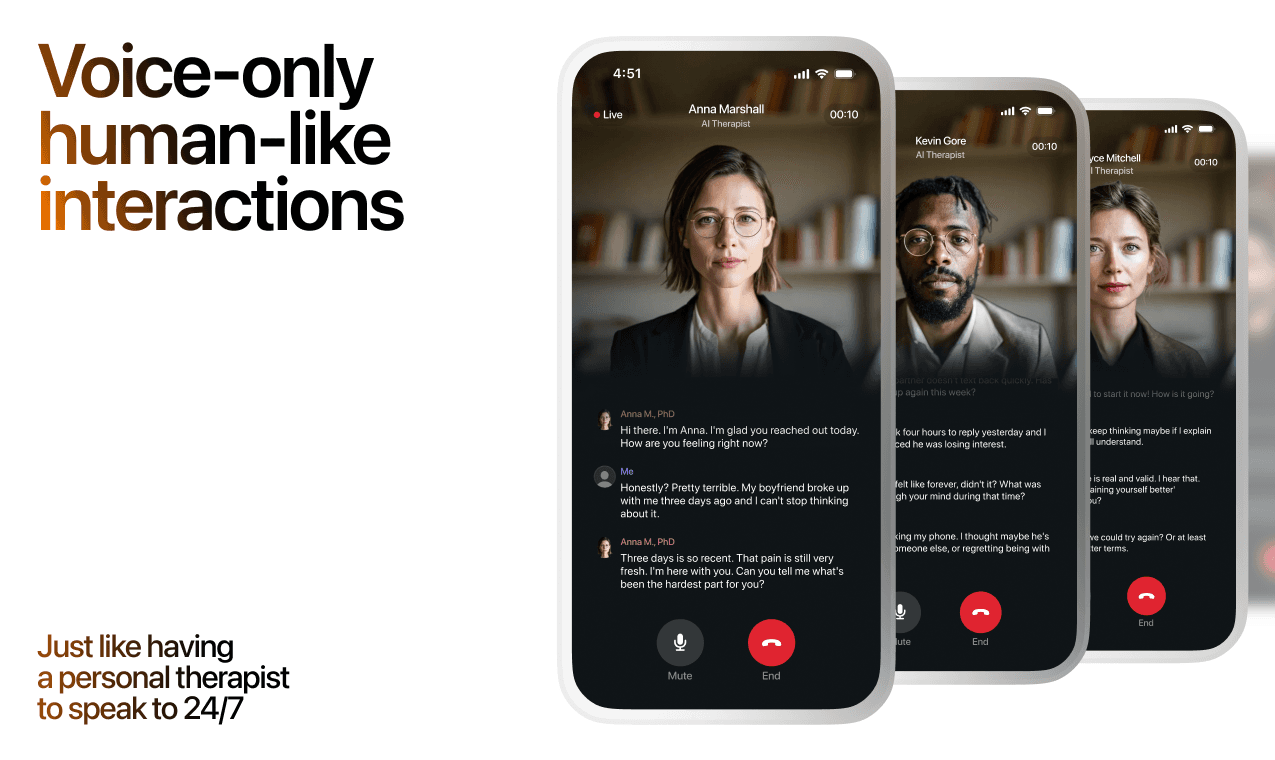
Here's what happens in a typical Lovon session:
You share what's on your mind
There's no script, no intake form, no waiting room. You speak or type whatever you're feeling — in your own words, at your own pace.
Lovon validates and explores
Using frameworks from CBT (Cognitive Behavioral Therapy) and motivational interviewing, Lovon acknowledges your feelings first, then gently helps you explore them. No dismissive "just move on" advice.
You build coping skills together
Lovon doesn't just listen — it actively works with you on evidence-based techniques: thought reframing, urge surfing, behavioral experiments, and more.
What a Session with Lovon Looks Like
When to Seek Professional Help
AI support is a valuable tool, but it's not a replacement for professional care. Please consider reaching out to a licensed therapist if you experience any of the following:
- Persistent thoughts of self-harm or suicide
- Inability to perform daily activities (work, eating, sleeping) for more than 2 weeks
- Turning to alcohol or substances to cope
- Intense anger or desire to harm your ex-partner
- Complete emotional numbness that doesn't improve over time
Crisis Resources (US): If you're in immediate danger, call 988 (Suicide & Crisis Lifeline) or text HOME to 741741 (Crisis Text Line). Available 24/7, free, and confidential.
Outside the US? Find a crisis line in your country
Ready to Start?
Your healing journey can begin right now
A 7-day trial. No judgment. Just a safe space to process what you're going through.
Frequently Asked Questions
Is Lovon a replacement for a real therapist?
Is my conversation with Lovon AI private?
How is Lovon different from ChatGPT for emotional support?
Can I use Lovon if I'm already seeing a therapist?
Can I try Lovon before subscribing?
About the Author
The Lovon Editorial Team
Mental Health & Wellness Content Team
The Lovon Editorial Team develops mental health and wellness content designed to make psychological concepts accessible and actionable. Our goal is to bridge the gap between clinical research and everyday life - helping you understand why your mind works the way it does and what you can do about it....
Related articles
- Freeze, Flight, and Fawn Trauma Responses as Safety-Seeking Behavioral Patterns
When confronted with perceived danger or overwhelming stress, our nervous system activates automatic protective…
- Amygdala Reactivity Reduction Through Evidence-Based Techniques
The amygdala, a small almond-shaped structure deep within the brain, acts as your neurological alarm system—constantly…
- Polyvagal Theory Applications for Stress Response
Your heart races before a difficult conversation. Your stomach tightens during conflict. You feel exhausted after a…
- Inner Child Healing for Nervous System Regulation and Stored Trauma
When your body reacts to stress with overwhelming intensity—heart racing, chest tightening, mind spiraling—it's often…
See also
Quizzes
- Emotionally Unavailable Test: 12-Question Self-Check
See which part of you closes off, in three minutes.
- Am I a People Pleaser? 12-Question Quiz
Where kindness stops and self-erasure starts.
Free tools
- Write a Letter to Your Best Friend
A chat for a letter to your best friend that only they could have received. Tell it how long you have been friends, one…
- What to Say When They Are Struggling
A chat, not a list. Tell the coach who this person is to you, what they are going through, and what you already said…
From the wiki
- Why do I have no friends?
Usually nothing is wrong with you. Adult friendship runs on proximity and repetition, and most people lose both at once…
Disclaimer: This article is for informational purposes only and does not constitute medical advice, diagnosis, or treatment. Always seek the advice of your physician or other qualified health provider with any questions you may have regarding a medical condition. If you are in crisis or think you may have an emergency, call 988 (Suicide & Crisis Lifeline) or go to the nearest emergency room. Outside the US? Find a crisis line in your country.