
High-Functioning Loneliness in Women: Causes & Coping 2026
High-functioning loneliness means feeling deeply alone while life looks full. Learn the 7-step coping plan built for women carrying this hidden emotional weight in 2026.

Key Takeaways
- About 10 minutes of honest self-reflection per day — not journaling if that doesn't suit you, just quiet thinking
- A willingness to tolerate some discomfort; this process involves feeling the thing you've been outrunning
- A private space, even briefly — a car, a bathroom, a five-minute walk
- Optionally, a voice-based tool for processing out loud (Lovon is built for exactly this)
- No prior therapy experience required
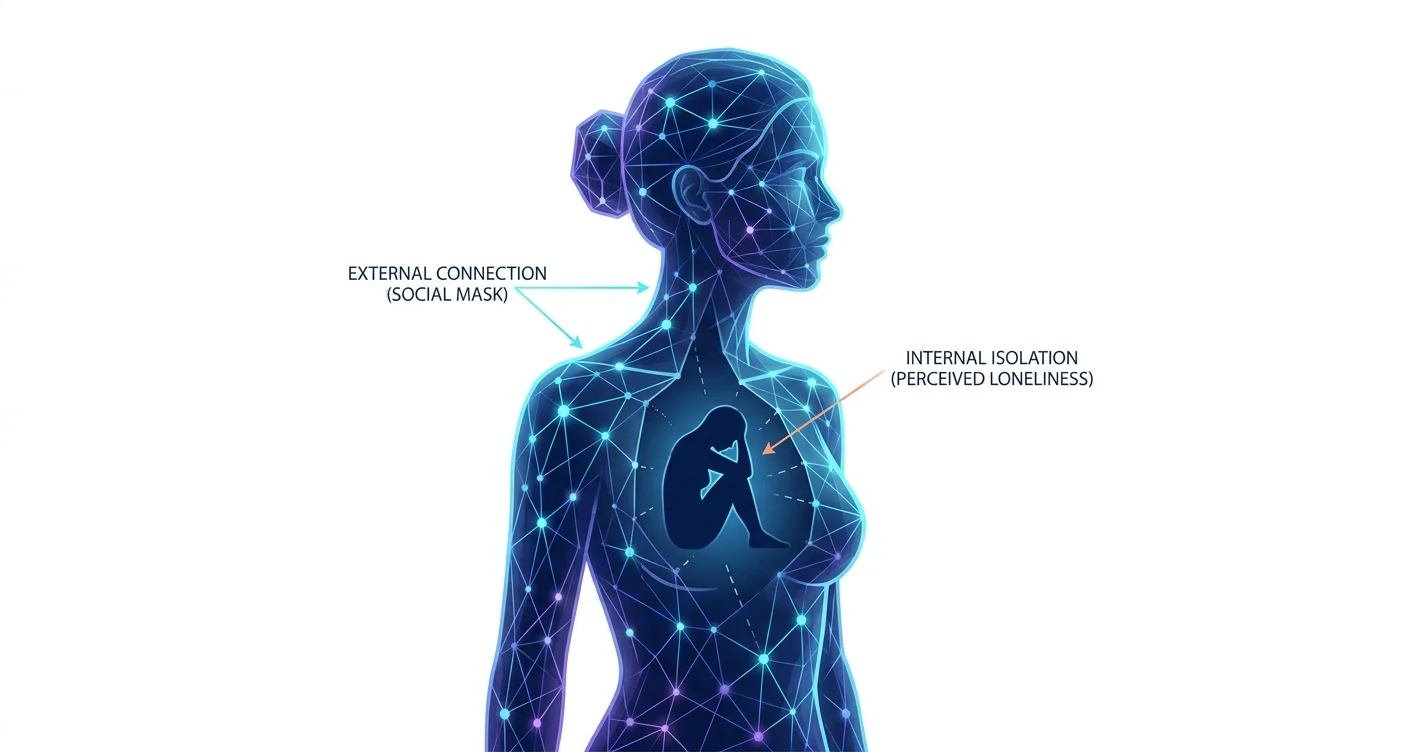
High-functioning loneliness is the specific experience of feeling deeply alone while your calendar stays full, your relationships look fine from the outside, and no one around you suspects a thing. It is common in women who have learned — through years of caregiving, people-pleasing, or professional overachievement — to keep moving regardless of what they feel inside.
TL;DR: High-functioning loneliness describes chronic emotional disconnection that coexists with an active social life. In 2026, research continues to link it to burnout, anxiety, and low mood, particularly in women who prioritize others' needs over their own. The coping steps below focus on identifying the pattern, lowering the emotional mask gradually, and building one genuinely reciprocal relationship at a time. Lovon's AI voice support app can support that process between sessions or when a licensed therapist isn't available.
Why this matters
The U.S. Surgeon General's 2023 advisory on loneliness described it as a public health crisis, estimating that roughly half of American adults report measurable levels of loneliness. For women specifically, the gap between appearing connected and actually feeling connected is often wider, because social performance is rewarded early and often. You smile at the school gate, send the check-in texts, show up to the work drinks — and still go home feeling unseen. That gap is what makes high-functioning loneliness hard to name and harder to address.
What you'll need before you start
- About 10 minutes of honest self-reflection per day — not journaling if that doesn't suit you, just quiet thinking
- A willingness to tolerate some discomfort; this process involves feeling the thing you've been outrunning
- A private space, even briefly — a car, a bathroom, a five-minute walk
- Optionally, a voice-based tool for processing out loud (Lovon is built for exactly this)
- No prior therapy experience required
The steps
Step 1: Name what you're actually experiencing
What it accomplishes: You cannot address a pattern you haven't acknowledged. High-functioning loneliness stays invisible precisely because it gets mistaken for busyness, introversion, or mild tiredness.
Why it matters: Labeling an emotion reduces its intensity — this is not self-help platitude, it is a well-documented finding from affective neuroscience research. Calling it "I feel lonely" rather than "I'm just tired" gives your brain something accurate to work with.
How to do it: Spend three days noticing the moment after social interactions. Ask yourself: did that exchange leave me feeling seen, or just performed? Write a single word — not a paragraph. "Empty." "Fine-but-not-okay." "Invisible." That's enough.
Expected outcome: A clear, honest picture of how often you feel disconnected versus how often you feel genuinely met.
Common mistake: Deciding the feeling isn't valid because you have friends, a partner, or a busy life. High-functioning loneliness does not require isolation. Its defining feature is connection that stays at the surface.
Step 2: Identify the mask you're wearing
What it accomplishes: The mask — the version of you who is capable, cheerful, and low-maintenance — is what keeps the loneliness locked in. You can't take it off until you know its shape.
Why it matters: For many women, the mask formed as a survival strategy: being emotionally self-sufficient was safer, or more rewarded, than being needy. In 2026, therapists increasingly recognize this pattern in high-achieving women as a variant of emotional suppression, not a personality trait.
How to do it: List 3 things you almost never say to the people in your life. "I'm struggling." "I need help with this." "That actually hurt me." These are the mask's edges. Notice the physical sensation when you imagine saying them — that tightening is useful information.
Expected outcome: Awareness of the specific emotional needs you routinely hide, which is the first step to expressing them.
Common mistake: Confusing privacy with suppression. You don't have to share everything with everyone. The question is whether there is anyone you can be honest with — and if the answer is no, that is the problem.
Step 3: Audit your relationships for reciprocity
What it accomplishes: High-functioning loneliness often lives inside relationships that are functional but unbalanced — you give emotional labor, the other person receives it.
Why it matters: Reciprocity is the single strongest predictor of relationship satisfaction in adult friendship research. One-sided emotional labor drains you without refilling anything.
How to do it: Think of your 5 closest relationships. For each one, ask: when did this person last ask me how I was doing and wait for a real answer? If you are struggling to remember, that relationship is likely costing more than it gives. You don't need to end it — but you need to see it clearly.
Expected outcome: A shorter, clearer list of the 1 to 2 relationships worth investing in more deeply, and an honest view of the ones that need restructuring.
Common mistake: Expecting reciprocity to arrive automatically. People mirror what you model. If you've been presenting as "fine" for years, the people around you have no reason to ask deeper questions.
Step 4: Practice one small act of emotional honesty per week
What it accomplishes: Sustained vulnerability in small doses is how trust gets built. You are not trying to have one transformative conversation — you are trying to lower the baseline performance level, week by week.
Why it matters: Research on social connection consistently shows that self-disclosure — even minor self-disclosure — increases liking and perceived closeness. You are not burdening people. You are giving them a reason to trust you more.
How to do it: Pick one interaction per week where you say something true and slightly uncomfortable. "Honestly, work has been grinding me down." "I've been feeling a bit isolated lately, which is strange given how busy I am." Keep it brief. Notice the response.
Expected outcome: Over 4 to 6 weeks, at least one relationship will shift in texture — it will feel less managed and more mutual.
Common mistake: Choosing the highest-stakes relationship first. Start with someone lower-pressure: a colleague you like, a newer friend. Build the muscle before you use it where it matters most.
Step 5: Create a daily emotional check-in practice
What it accomplishes: Most women experiencing high-functioning loneliness have lost contact with their internal emotional state — not because they don't feel things, but because they process feelings so fast that nothing gets examined.
Why it matters: Chronic disconnection from your own emotions is both a symptom and a cause of loneliness. You cannot express what you haven't first noticed.
How to do it: Once a day, ask yourself three questions: What did I feel most strongly today? Did I express it or swallow it? What do I actually need right now? A voice-based tool like Lovon lets you answer these out loud, which activates different processing than writing — talking engages the social parts of your brain even when you are alone.
Expected outcome: Faster, more accurate identification of your emotional state, which makes Step 4 far easier.
Common mistake: Turning the check-in into a task to complete efficiently. The point is to slow down, not to produce a clean answer.
Step 6: Reduce the activities that substitute for connection
What it accomplishes: Scrolling, overworking, and over-committing to tasks are the three most common behavioral substitutes for genuine connection in high-functioning lonely women. They keep the schedule full without filling the actual need.
Why it matters: Substitute behaviors are self-reinforcing — they reduce short-term discomfort well enough that the underlying need stays unaddressed. In 2026, screen time data from the American Psychological Association's annual Stress in America survey continues to show that passive social media use increases feelings of social comparison and loneliness, even as it simulates connection.
How to do it: Identify one substitute behavior you use most often. For two weeks, every time you reach for it, pause for 60 seconds and ask what you are actually trying to get. You don't have to stop the behavior — just add the pause.
Expected outcome: Clarity about what real need you are trying to meet, which makes it possible to meet it more directly.
Common mistake: Trying to eliminate all substitute behaviors at once. One at a time works. All at once creates a vacuum and usually fails by day three.
Step 7: Decide when to involve a professional
What it accomplishes: Self-directed coping is effective for mild to moderate high-functioning loneliness. When it coexists with persistent low mood, anxiety that won't settle, or a sense that nothing will ever change, professional support matters.
Why it matters: Lovon is built for on-demand emotional support and coping tools — it is not a replacement for licensed clinical care. If your loneliness has a longer history rooted in relational trauma or attachment wounds, a licensed therapist is the appropriate next step. High-functioning anxiety often presents alongside high-functioning loneliness — if that pattern sounds familiar, that article covers the signs worth recognizing.
How to do it: Use the scale below as a rough guide:
- Feeling disconnected a few times a week, relationships mostly functional → self-directed coping, possibly Lovon
- Feeling disconnected most days, affecting sleep or work → AI-supported tools plus a licensed therapist
- Persistent emptiness, inability to feel pleasure, or isolation that has lasted more than 3 months → licensed clinical care as the primary route
Expected outcome: A clear, honest decision about the level of support that fits your situation.
Common mistake: Waiting until things feel unmanageable. Earlier support produces faster recovery.
Troubleshooting
"I've tried being more open and people didn't respond well." One bad response does not invalidate the approach — it reveals that particular relationship isn't a safe container. Redirect the effort toward someone else. Not everyone will meet you there, and that is data, not failure.
"I don't have time for daily check-ins." Three questions out loud in the car counts. This does not require 20 minutes of journaling. Keep it to 90 seconds if needed. Consistency matters more than duration.
"I feel fine around people but awful when I'm alone." This is the clearest sign that social busyness is functioning as a substitute. The aloneness is revealing what the activity was covering. Step 5 and Step 6 together are the right starting point.
"My loneliness feels more like grief than emptiness." It may be. Women who have spent years in high-performance mode often carry accumulated grief about connections they didn't allow themselves to have. This variant responds well to grief-focused or attachment-focused therapy — it is worth naming explicitly with a clinician.
"I feel lonely in my relationship specifically." Loneliness inside a partnership is one of the most common and least-discussed forms of high-functioning loneliness in 2026. The pursuer-withdrawer pattern is often the underlying dynamic — read that piece for the cycle and how to interrupt it.
"This has been going on for years. Is it fixable?" Yes, but the timeline is longer. Chronic high-functioning loneliness built over a decade does not resolve in a month. Expect 3 to 6 months of consistent effort before the pattern shifts noticeably.
Tools and resources
- Lovon (lovon.app) — AI voice therapy for daily emotional processing, available any time, built with input from PhD psychologists
- A licensed therapist — the appropriate escalation for loneliness linked to relational trauma, persistent low mood, or anxiety lasting more than 3 months
- A voice memo app — low-barrier tool for the daily emotional check-in in Step 5 if you're not ready for a dedicated app
- The U.S. Surgeon General's 2023 advisory on loneliness — publicly available, useful for understanding the broader context
- Free AI therapist for anxiety — if anxiety is layered on top of the loneliness, Lovon's anxiety support tools apply directly
FAQ
What is high-functioning loneliness? High-functioning loneliness is chronic emotional disconnection that exists alongside an active social life. You appear well-connected to others but consistently feel unseen or emotionally isolated inside your relationships.
Why is high-functioning loneliness more common in women? Women are socialized more consistently than men to manage others' emotional needs and present as capable and low-maintenance. That socialization creates a pattern where genuine emotional needs get suppressed in favor of performing connection — which produces loneliness even inside full social calendars.
What does high-functioning loneliness feel like day to day? It typically feels like going through the motions of connection without the actual warmth. Common descriptions include feeling invisible in groups, feeling like a supporting character in your own life, or experiencing a hollow sensation after social events that should have felt good.
Is high-functioning loneliness the same as depression? No, though they can coexist. High-functioning loneliness is primarily relational — it is about the quality of connection. Depression involves a broader disruption of mood, energy, and functioning. Persistent high-functioning loneliness can contribute to low mood, but it has its own distinct pattern and responds to different interventions.
Can you be lonely in a relationship? Yes. Loneliness inside a partnership is among the most reported forms of adult loneliness in 2026. It typically reflects a breakdown in emotional intimacy rather than physical absence — conversations stay practical, vulnerability gets avoided, and both partners feel more like housemates than confidants.
How long does it take to recover from high-functioning loneliness? For mild to moderate patterns, consistent effort across 3 to 6 months produces measurable change. Longer-standing patterns tied to attachment wounds or early relational trauma take more time and typically benefit from professional support.
What's the difference between being an introvert and being high-functionally lonely? Introversion is a preference for less social stimulation. High-functioning loneliness is a deficit — you want genuine connection and aren't getting it, regardless of how much social contact you have. The two can overlap, but an introvert who feels met in their smaller circle is not lonely. A woman who attends every event but feels unseen at all of them is.
Can an AI app actually help with loneliness? For daily emotional processing — naming feelings, building self-awareness, practicing articulating needs — a voice-based tool like Lovon provides a low-barrier starting point. It is not a substitute for human connection, but it supports the internal work that makes human connection more possible. It is explicit about that limitation.
One last thing
High-functioning loneliness often goes unaddressed for years because the women experiencing it are the ones everyone else relies on for support. The irony is precise: your capacity to hold other people's emotions becomes the reason no one thinks to hold yours. The first move is the smallest one — letting one person, just once this week, see past the capable version of you. That is where it starts.
Related guides
How AI Support Helps You Heal
AI emotional support isn't about replacing human connection — it's about filling the gaps. The moments when you need to talk at 2 AM, when you don't want to burden your friends again, or when you simply need someone to listen without judgment.
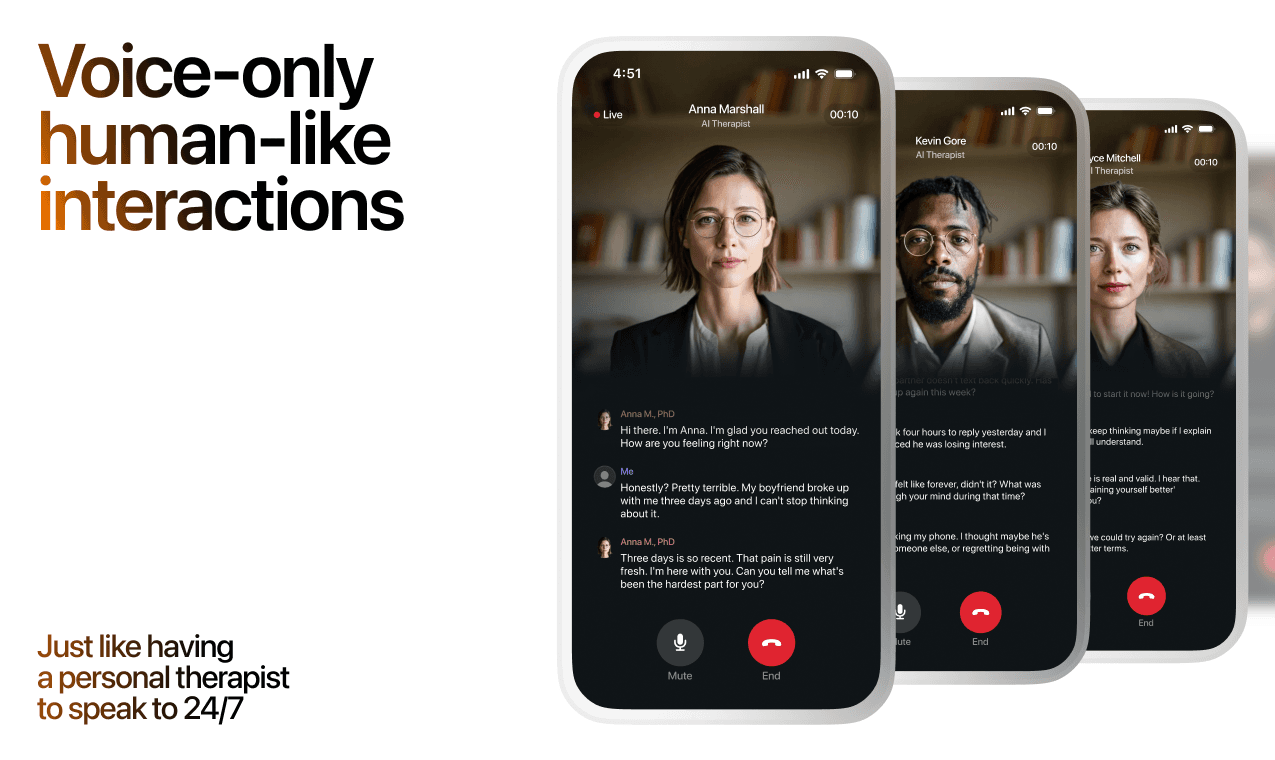
Here's what happens in a typical Lovon session:
You share what's on your mind
There's no script, no intake form, no waiting room. You speak or type whatever you're feeling — in your own words, at your own pace.
Lovon validates and explores
Using frameworks from CBT (Cognitive Behavioral Therapy) and motivational interviewing, Lovon acknowledges your feelings first, then gently helps you explore them. No dismissive "just move on" advice.
You build coping skills together
Lovon doesn't just listen — it actively works with you on evidence-based techniques: thought reframing, urge surfing, behavioral experiments, and more.
What a Session with Lovon Looks Like
When to Seek Professional Help
AI support is a valuable tool, but it's not a replacement for professional care. Please consider reaching out to a licensed therapist if you experience any of the following:
- Persistent thoughts of self-harm or suicide
- Inability to perform daily activities (work, eating, sleeping) for more than 2 weeks
- Turning to alcohol or substances to cope
- Intense anger or desire to harm your ex-partner
- Complete emotional numbness that doesn't improve over time
Crisis Resources (US): If you're in immediate danger, call 988 (Suicide & Crisis Lifeline) or text HOME to 741741 (Crisis Text Line). Available 24/7, free, and confidential.
Outside the US? Find a crisis line in your country
Ready to Start?
Your healing journey can begin right now
A 7-day trial. No judgment. Just a safe space to process what you're going through.
Frequently Asked Questions
Is Lovon a replacement for a real therapist?
Is my conversation with Lovon AI private?
How is Lovon different from ChatGPT for emotional support?
Can I use Lovon if I'm already seeing a therapist?
Can I try Lovon before subscribing?
About the Author

The Lovon Editorial Team
Mental Health & Wellness Content Team
The Lovon Editorial Team develops mental health and wellness content designed to make psychological concepts accessible and actionable. Our goal is to bridge the gap between clinical research and everyday life - helping you understand why your mind works the way it does and what you can do about it....
Related articles
- How to Reduce Cortisol Levels Naturally in 2026
Learn how to reduce cortisol levels with 7 evidence-based steps: fix sleep, dial back intense exercise, practice daily…
- ADHD — Emotional Costs of Undiagnosed Cases Including Rejection Sensitivity Dysphoria and Chronic Loneliness
Living with undiagnosed ADHD creates an invisible emotional burden that extends far beyond difficulty focusing or…
- ADHD in Women Symptoms: Overlooked Signs (2026)
ADHD in women often looks like anxiety, not hyperactivity. See the overlooked symptoms, screening criteria, and support…
- How to Cope With Loneliness: Steps That Work in 2026
How to cope with loneliness in 2026: 7 concrete steps, troubleshooting fixes, and tools for the moments between human…
See also
Quizzes
- Empath Test: Do Other People's Moods Become Yours?
See how much of other people's moods you take on.
- Perfectionism Test: What Are Your Standards Costing?
See what your standards actually cost, in 3 minutes.
Free tools
- Self-Esteem Check-In
Eight statements, one read on three sides of self-esteem: your self-talk, how you act with people, and what you do with…
- What Did They Actually Mean By That?
A chat for one sentence you cannot stop re-reading. Paste their exact words and what was happening around them, and get…
From the wiki
- Why do I feel sad when I'm alone?
Being alone does not create the sadness. It removes the noise that was keeping it out of earshot, so whatever queued up…
Disclaimer: This article is for informational purposes only and does not constitute medical advice, diagnosis, or treatment. Always seek the advice of your physician or other qualified health provider with any questions you may have regarding a medical condition. If you are in crisis or think you may have an emergency, call 988 (Suicide & Crisis Lifeline) or go to the nearest emergency room. Outside the US? Find a crisis line in your country.