
Couples Therapy Intake Process: Observation Session Followed by Individual Breakout Sessions
The couples therapy intake process often feels mysterious to those scheduling their first appointment. Many couples wonder what actually happens during those

Key Takeaways
- Personal mental health concerns
- Past relationship trauma or family-of-origin issues
- Individual therapy goals that may differ from couple goals
- Concerns about safety, control, or emotional manipulation
- Aspects of their own behavior they recognize but struggle to acknowledge openly
Introduction
The couples therapy intake process often feels mysterious to those scheduling their first appointment. Many couples wonder what actually happens during those initial sessions and how therapists assess relationship dynamics. Understanding the structure—particularly the observation session followed by individual breakout sessions—can help reduce anxiety and prepare both partners for what to expect. This structured approach allows therapists to gain a comprehensive view of the relationship while creating space for each person to share their individual perspective. This guide draws on insights from licensed therapists who specialize in relationship counseling to explain how this intake format works and why it's designed this way.
Why the Couples Therapy Intake Process Uses This Specific Structure
The observation session followed by individual breakout sessions has become a widely-used format among relationship therapists because it addresses a fundamental challenge: understanding both the relational dynamics and each partner's individual experience simultaneously.
During the initial observation session, therapists watch how couples interact rather than immediately trying to "fix" specific problems. This joint session reveals communication patterns, conflict styles, and the emotional dynamics between partners in real-time. Therapists observe not just what couples say, but how they say it—the tone, body language, interruption patterns, and emotional regulation strategies each person employs.
Research in couple and family therapy suggests that observing interaction patterns provides more valuable clinical information than hearing about conflicts secondhand. When partners describe problems separately, therapists get two different narratives. When they interact together, therapists see the actual dynamics that create and maintain relationship distress.
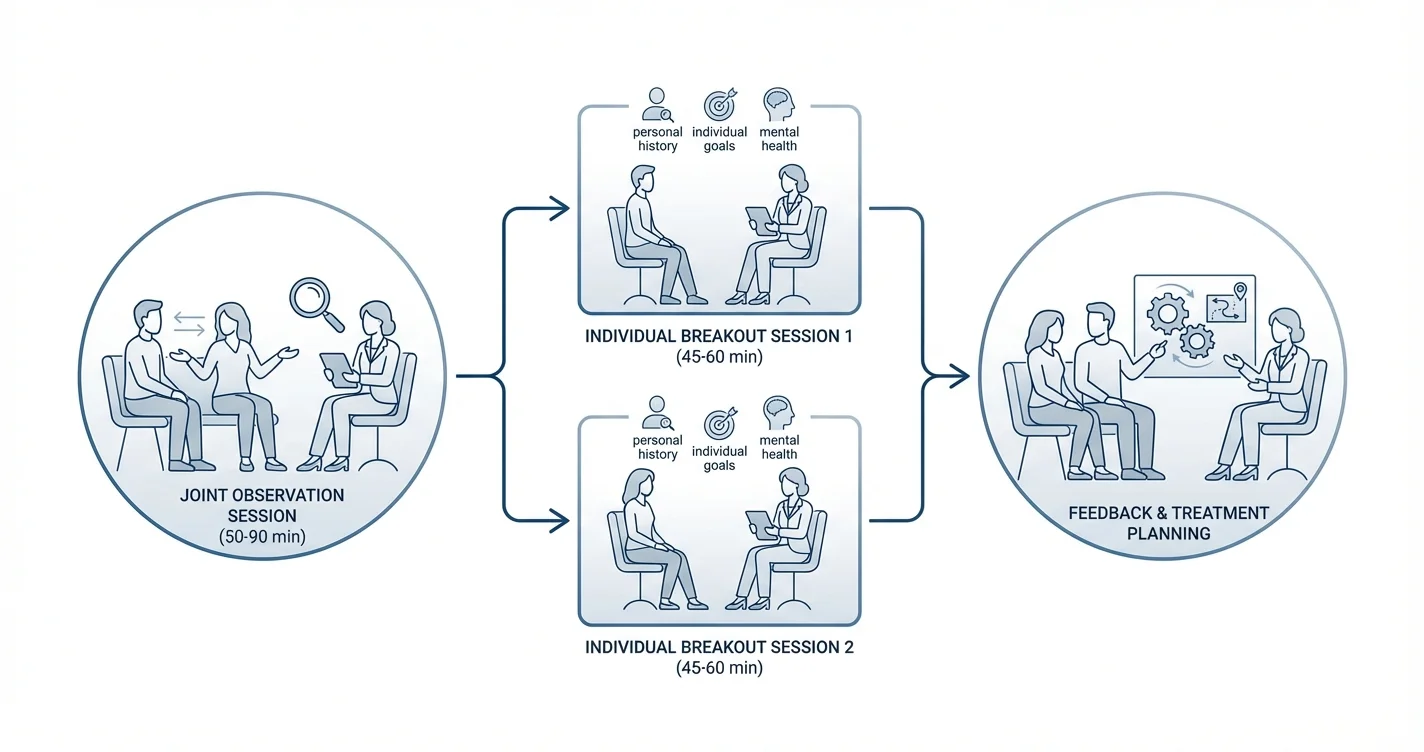
The individual breakout sessions that follow serve a different but equally important purpose. Some partners hesitate to share certain information in front of their significant other during the joint observation. Individual sessions create a confidential space where each person can discuss:
- Personal mental health concerns
- Past relationship trauma or family-of-origin issues
- Individual therapy goals that may differ from couple goals
- Concerns about safety, control, or emotional manipulation
- Aspects of their own behavior they recognize but struggle to acknowledge openly
This three-session structure—one observation followed by two individual sessions—allows therapists to develop a nuanced understanding before recommending a treatment approach.
What Happens During the Observation Session
The first joint observation session typically lasts 50-90 minutes and focuses on understanding the couple's current dynamics rather than problem-solving specific issues. Therapists structure this session to gather several types of information.
Assessment of Communication Patterns
Therapists observe how couples communicate during moments of disagreement or stress. Do they interrupt each other? Does one partner dominate the conversation while the other withdraws? Can they repair ruptures when tension increases, or do conflicts escalate quickly? These patterns often reveal more than either partner could articulate individually.
Attachment styles influence how couples navigate conflict and connection. Partners with anxious attachment patterns may pursue connection intensely during conflict, while those with avoidant patterns may withdraw or shut down. Therapists trained in attachment theory watch for these dynamics during the observation session.
Understanding the Presenting Problem
While therapists observe interaction patterns, they also gather information about what brought the couple to therapy. However, the focus remains on understanding dynamics rather than immediately solving problems. Questions during this session might include:
- What prompted you to seek therapy now?
- How do you each understand the main challenges in your relationship?
- What does each of you hope to gain from therapy?
- Have you tried couples therapy before, and if so, what was that experience like?
Creating Initial Safety and Structure
The observation session establishes the therapeutic relationship and sets expectations for how therapy will proceed. Therapists explain confidentiality, discuss how decisions about the relationship itself remain with the couple, and clarify that therapy aims to help partners understand their dynamics rather than taking sides.
For couples where emotional intensity runs high, therapists may introduce basic ground rules during this first session—such as speaking one at a time or taking breaks when emotions become overwhelming—to ensure both partners feel safe enough to engage.
The Individual Breakout Sessions: Purpose and Structure
After the initial observation, most therapists schedule individual sessions with each partner separately. These typically occur within one to two weeks of the joint session and last 45-60 minutes each.
Creating Space for Individual Perspectives
Individual sessions allow each partner to share information they may not feel comfortable discussing in front of their significant other. This isn't about secrecy or taking sides—it's about gathering complete information to provide effective treatment.
Therapists use these sessions to explore:
- Each person's individual mental health history and current symptoms
- Family-of-origin patterns that influence current relationship dynamics
- Previous relationship history and patterns
- Individual strengths and resources each person brings to the relationship
- Personal goals for therapy, which may include individual growth alongside relationship improvement
Assessing Individual Mental Health
Many relationship issues intertwine with individual mental health concerns. Depression, anxiety, trauma responses, substance use, or untreated ADHD can all significantly impact relationship functioning. Individual sessions allow therapists to assess whether individual therapy or psychiatric support would complement couples work.
For instance, if one partner experiences severe anxiety that manifests as controlling behavior in the relationship, individual treatment for anxiety may need to occur alongside couples therapy. Similarly, if one partner is working through trauma that affects intimacy and trust, specialized trauma therapy may be necessary.
Screening for Safety Concerns
Individual sessions provide an opportunity for therapists to assess relationship safety more thoroughly. While most couples seeking therapy have conflict or disconnection rather than abuse, therapists remain alert to patterns of coercion, control, intimidation, or violence.
If safety concerns emerge during individual sessions, therapists must evaluate whether couples therapy is appropriate or whether individual safety planning and support should take priority. Couples therapy is generally not recommended when there's ongoing abuse, as it can inadvertently escalate danger or hold the victimized partner responsible for the abusive partner's behavior.
Clarifying Commitment to the Relationship
Individual sessions also allow therapists to gauge each partner's commitment to the relationship. Sometimes partners have already decided to leave but haven't communicated this yet. Other times, one partner feels ambivalent while the other remains fully committed. Understanding each person's intentions privately helps therapists recommend an appropriate treatment approach.
Tools like Lovon.app can provide on-demand support between therapy sessions when individuals need to process emotions or prepare for difficult conversations. While these resources don't replace the assessment work that happens during intake, they can help partners work through immediate concerns as they wait for their next appointment.
After the Intake: Moving Forward with Couples Therapy
Following the observation session and individual breakout sessions, therapists typically schedule another joint session to discuss their assessment and recommendations. This feedback session represents the transition from intake to treatment.
The Therapist's Formulation
During this session, therapists share their understanding of the couple's dynamics, drawing on observations from both the joint and individual sessions. This formulation typically includes:
- Key interaction patterns that maintain relationship distress
- Underlying attachment needs and fears for each partner
- Individual factors that impact the relationship
- Strengths and resources the couple brings to therapy
Therapists present this formulation collaboratively, inviting the couple to confirm, correct, or expand on the therapist's understanding. This collaborative approach helps ensure both partners feel seen and understood.
Treatment Planning and Goal Setting
The therapist and couple work together to establish therapy goals. These might include:
- Improving communication during conflict
- Rebuilding trust after a betrayal
- Increasing emotional connection and intimacy
- Navigating a major life transition together
- Understanding how past experiences affect current dynamics
Therapists also discuss the proposed treatment approach, session frequency, and expected duration. Some couples benefit from weekly sessions initially, while others may meet every other week. Treatment length varies widely depending on the severity of relationship distress and the couple's goals.
Addressing Practical Concerns
The feedback session also covers practical matters like scheduling, cancellation policies, and how to handle crises between sessions. Therapists may recommend additional resources—such as readings, exercises, or apps that support relationship work between sessions.
For couples facing significant stress or frequent conflicts, having access to support between sessions can be valuable. Resources like Lovon.app allow individuals to process emotions and gain perspective during difficult moments, complementing the work done in therapy sessions.
When Individual Therapy May Be Recommended Alongside Couples Work
The intake process sometimes reveals that one or both partners would benefit from individual therapy in addition to couples work. This isn't a negative finding—it simply means that individual issues significantly impact the relationship, and addressing them directly will strengthen both individual wellbeing and relationship functioning.
Common Scenarios for Concurrent Individual Therapy
Therapists may recommend individual therapy when:
- One partner experiences significant depression, anxiety, or trauma symptoms
- Substance use or addictive behaviors impact the relationship
- One partner has difficulty regulating emotions or managing anger
- Personal identity exploration (including sexual orientation or gender identity) intersects with relationship dynamics
- Individual attachment wounds require focused healing work
In these situations, couples therapy continues to address relationship dynamics while individual therapy provides space for personal growth and healing. The two forms of treatment complement each other, with progress in one often supporting progress in the other.
Coordinating Multiple Therapists
When couples work with both a couples therapist and individual therapists, coordination becomes important. With appropriate consent, therapists may occasionally consult to ensure treatment approaches align. However, each therapeutic relationship maintains its own confidentiality boundaries.
Partners sometimes worry that individual therapy will threaten couples therapy or vice versa. In practice, most people find that having space for both individual and relational work accelerates growth in both areas.
What the Couples Therapy Intake Process Reveals About Relationship Patterns
The structured intake process—observation followed by individual sessions—provides therapists with a uniquely comprehensive view of relationship dynamics. This assessment reveals patterns that couples themselves may not fully recognize.
Pursuer-Withdrawer Dynamics
One of the most common patterns therapists observe involves one partner pursuing connection while the other withdraws. During observation sessions, this often looks like one person asking questions, seeking eye contact, and intensifying emotional expression while the other becomes quieter, looks away, or provides minimal responses.
Neither role represents the "problem"—this dynamic typically reflects different attachment strategies for managing relationship anxiety. The pursuing partner fears abandonment and seeks reassurance through connection, while the withdrawing partner fears engulfment and seeks safety through distance. Understanding this pattern helps couples recognize they're stuck in a cycle rather than inherently incompatible.
Communication During Conflict
The observation session reveals how couples navigate disagreement. Do they approach conflict as a problem to solve together or a battle to win? Can they listen to each other's perspectives even when they disagree? Do they use "soft startups" to raise concerns, or do complaints come out as criticism?
Research by relationship researchers has identified specific communication patterns—criticism, contempt, defensiveness, and stonewalling—that predict relationship distress when they become habitual. Therapists watch for these patterns during the intake observation, noting both problematic interactions and moments of effective communication that can be strengthened.
Emotional Availability and Attunement
Beyond specific communication skills, therapists assess each partner's capacity for emotional presence. Can they tune into their partner's emotional state? Do they respond with empathy when their partner expresses vulnerability? Or do they minimize, redirect, or become defensive when emotions arise?
Emotional availability varies based on individual history, current stress levels, and the safety each person feels in the relationship. The intake process helps therapists understand what factors support or inhibit emotional connection for each couple.
Preparing for Your Couples Therapy Intake
Understanding the structure of the intake process can help couples approach those initial sessions with less anxiety and more readiness to engage. Here are some ways to prepare:
Reflect on Your Goals Individually
Before the first session, spend time thinking about what you personally hope to gain from couples therapy. Your goals may overlap with your partner's, but they don't need to be identical. Consider questions like:
- What aspects of the relationship feel most challenging right now?
- What do I contribute to problematic patterns?
- What do I hope feels different after therapy?
- What strengths do we have that I want to preserve or build on?
Manage Expectations About the Pace
The intake process involves assessment and understanding rather than immediate problem-solving. Some couples feel frustrated that the therapist doesn't immediately offer solutions during the first session. Remember that therapists need to understand your unique dynamics before recommending specific approaches.
Effective therapy requires building a foundation of understanding first. The observation and individual sessions provide that foundation, even though tangible change typically comes later in treatment.
Be Honest About Ambivalence
If you feel uncertain about the relationship or ambivalent about therapy itself, being honest about that during the individual session helps your therapist understand your situation more accurately. Therapists don't expect both partners to feel equally committed at all times—acknowledging ambivalence is valuable information, not a problem.
Consider Between-Session Support
The period between intake sessions and the start of regular therapy can feel long, especially when relationship distress is high. Having resources for processing emotions during this time can help. Some people find it valuable to talk through immediate concerns with an AI-based support tool like Lovon.app, which provides a space to organize thoughts and gain perspective between appointments.
When to Seek Professional Help
If you're experiencing significant relationship distress—frequent conflicts, emotional disconnection, betrayal, or persistent unhappiness—couples therapy can provide valuable support. The structured intake process described here helps therapists understand your unique situation and recommend an appropriate treatment approach.
Couples therapy is most effective when both partners engage willingly, even if one person initiated the process. If you're unsure whether couples therapy is right for your situation, many therapists offer brief consultations to discuss your concerns and whether this approach might help.
For situations involving ongoing abuse, threats, or safety concerns, individual support and safety planning should take priority over couples therapy. In these cases, reach out to domestic violence resources or individual therapists who specialize in trauma and safety.
Conclusion
The couples therapy intake process—featuring an observation session followed by individual breakout sessions—provides therapists with essential information about both relationship dynamics and individual factors that impact the partnership. This structured approach allows for comprehensive assessment while creating space for each partner to share their perspective privately. Understanding this process can help couples approach their initial sessions with realistic expectations and greater readiness to engage. The intake sets the foundation for meaningful therapeutic work, establishing the safety, understanding, and collaborative goals necessary for relationship growth. While the assessment phase requires patience, it ultimately leads to more effective, personalized treatment that addresses each couple's unique patterns and needs.
Disclaimer: This is general information, not medical advice or diagnosis. If symptoms are severe, affecting your daily life, or you're having thoughts of self-harm—seek professional help. In the US: call or text 988 (Suicide & Crisis Lifeline). For immediate danger: 911 or local emergency services.
How AI Support Helps You Heal
AI emotional support isn't about replacing human connection — it's about filling the gaps. The moments when you need to talk at 2 AM, when you don't want to burden your friends again, or when you simply need someone to listen without judgment.
Here's what happens in a typical Lovon session:
You share what's on your mind
There's no script, no intake form, no waiting room. You speak or type whatever you're feeling — in your own words, at your own pace.
Lovon validates and explores
Using frameworks from CBT (Cognitive Behavioral Therapy) and motivational interviewing, Lovon acknowledges your feelings first, then gently helps you explore them. No dismissive "just move on" advice.
You build coping skills together
Lovon doesn't just listen — it actively works with you on evidence-based techniques: thought reframing, urge surfing, behavioral experiments, and more.
What a Session with Lovon Looks Like

When to Seek Professional Help
AI support is a valuable tool, but it's not a replacement for professional care. Please consider reaching out to a licensed therapist if you experience any of the following:
- Persistent thoughts of self-harm or suicide
- Inability to perform daily activities (work, eating, sleeping) for more than 2 weeks
- Turning to alcohol or substances to cope
- Intense anger or desire to harm your ex-partner
- Complete emotional numbness that doesn't improve over time
Crisis Resources (US): If you're in immediate danger, call 988 (Suicide & Crisis Lifeline) or text HOME to 741741 (Crisis Text Line). Available 24/7, free, and confidential.
Outside the US? Find a crisis line in your country
Ready to Start?
Your healing journey can begin right now
A 7-day trial. No judgment. Just a safe space to process what you're going through.
Frequently Asked Questions
Is Lovon a replacement for a real therapist?
Is my conversation with Lovon AI private?
How is Lovon different from ChatGPT for emotional support?
Can I use Lovon if I'm already seeing a therapist?
Can I try Lovon before subscribing?
About the Author

The Lovon Editorial Team
Mental Health & Wellness Content Team
The Lovon Editorial Team develops mental health and wellness content designed to make psychological concepts accessible and actionable. Our goal is to bridge the gap between clinical research and everyday life - helping you understand why your mind works the way it does and what you can do about it....
Related articles
- Is couples therapy worth it if one partner refuses?
Is couples therapy worth it if one partner refuses? Individual support can help you decide what to do, but it cannot…
- Best Couples Compatibility Quiz for New Couples 2026
Take the best couples compatibility quiz in 2026. Covers attachment, values, and communication style — with AI-guided…
- Pursuer-Withdrawer Pattern: Break the Cycle in 2026
The pursuer withdrawer relationship cycle traps both partners. Learn the 7 steps to interrupt it, backed by EFT research…
- AI Relationship Coach for Couples: 2026 Guide
Looking for an AI relationship coach for couples? See how Lovon's voice-based coaching compares to therapy in 2026…
See also
Quizzes
- Is My Relationship Healthy? 15-Question Check-In
Check your relationship health in 3 minutes.
- Relationship Schema Test: Are Your Feelings Welcome?
See which belief edits what you share, in 3 minutes.
Free tools
- Relationship Check-In Questions, and How to Run One
Check-ins fail on structure, not on questions. Tell it whether this would be your first one, what is on your mind, and…
- How to Communicate Better in a Relationship
Skip the tips. Give it the one sentence you keep trying to say that turns into a fight, in the words you actually used…
From the wiki
- How to break up with someone you still love?
Loving someone does not mean the relationship works. If you have circled the same decision for months and the reasons…
Disclaimer: This article is for informational purposes only and does not constitute medical advice, diagnosis, or treatment. Always seek the advice of your physician or other qualified health provider with any questions you may have regarding a medical condition. If you are in crisis or think you may have an emergency, call 988 (Suicide & Crisis Lifeline) or go to the nearest emergency room. Outside the US? Find a crisis line in your country.