
Emotionally Immature Parents Recovery: A Practical Guide
Growing up with emotionally immature parents leaves lasting imprints on the nervous system that extend far beyond childhood memories.
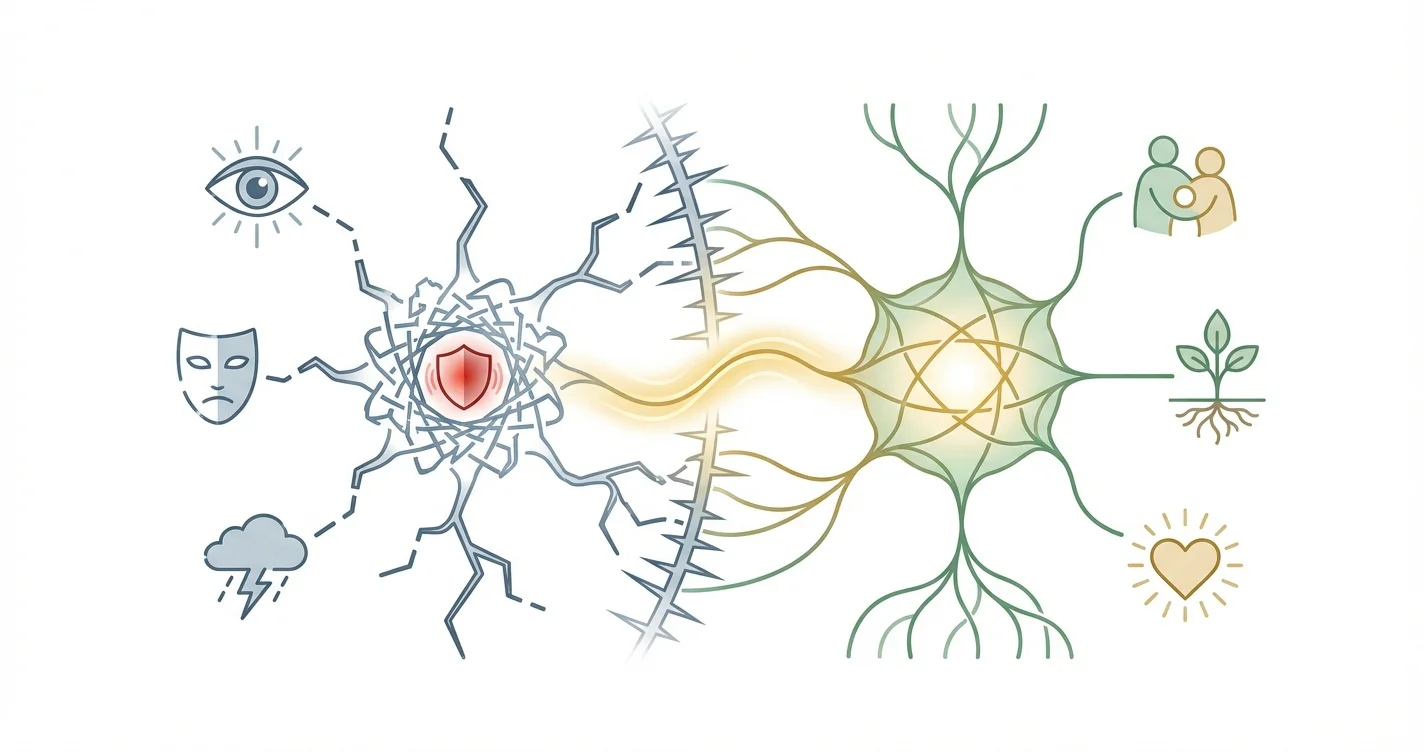

Key Takeaways
- Emotional confusion: Difficulty identifying what you're actually feeling in the moment
- Hypervigilance: Constant scanning of others' emotions and potential threats
- People-pleasing: Automatic prioritization of others' needs to maintain relational peace
- Self-doubt: Chronic mistrust of your own perceptions and intuition
- Emotional shutdown: Automatic suppression of feelings to avoid being overwhelmed
Introduction
Growing up with emotionally immature parents leaves lasting imprints on the nervous system that extend far beyond childhood memories. Many adults find themselves caught in cycles of anxiety, hypervigilance, or emotional shutdown without fully understanding why. Emotionally immature parents recovery isn't about analyzing what happened—it's about addressing how those early experiences shaped your emotional wiring and learning to build new patterns of safety and connection.
The healing process requires more than talking about the past. According to practitioners who specialize in developmental trauma, recovery involves shifting from cognitive understanding to emotional attunement. This article draws on expert insights from therapists and trauma specialists to provide actionable strategies for healing the nervous system effects of growing up with parents who couldn't meet emotional needs. You'll learn specific techniques to move beyond replaying childhood stories and toward genuine emotional integration.
Understanding the Impact of Emotionally Immature Parents
When parents cannot regulate their own emotions or attune to their children's feelings, they create an environment where emotional unpredictability becomes the norm. Research in attachment theory and developmental psychology indicates that children's nervous systems are wired to seek safety through connection with caregivers. When that connection is inconsistent or emotionally volatile, the nervous system registers this unpredictability as threat.
Children raised in these environments often learn to disconnect from their own thoughts, feelings, and needs. Instead, they become hyperaware of the parent's emotional state, constantly scanning for signs of mood shifts or disapproval. Therapists working with adult children of emotionally immature parents note that these individuals frequently describe a childhood where the parent's emotions dictated the entire household atmosphere, while their own feelings were treated as inconvenient or irrelevant.
This survival adaptation creates specific patterns that persist into adulthood:
- Emotional confusion: Difficulty identifying what you're actually feeling in the moment
- Hypervigilance: Constant scanning of others' emotions and potential threats
- People-pleasing: Automatic prioritization of others' needs to maintain relational peace
- Self-doubt: Chronic mistrust of your own perceptions and intuition
- Emotional shutdown: Automatic suppression of feelings to avoid being overwhelmed
These aren't character flaws—they're adaptive responses that once served a protective function but now interfere with authentic relationships and emotional wellbeing.
The Nervous System Foundation of Emotionally Immature Parents Recovery
Traditional talk therapy approaches often fall short in emotionally immature parents recovery because they focus primarily on cognitive processing. However, experts in trauma recovery emphasize that healing requires addressing the nervous system patterns established during childhood. The inner child doesn't heal through explanation—it heals through emotional attunement and new experiences of safety.
When emotional unpredictability characterized your early environment, your nervous system learned to stay in protective states. This manifests as chronic activation (anxiety, hypervigilance, racing thoughts) or shutdown (numbness, dissociation, emotional flatness). Recovery involves teaching the nervous system new patterns of regulation.
Naming Feelings as a Regulation Tool
One foundational practice in emotionally immature parents recovery involves developing the capacity to name emotions accurately. Practitioners working with developmental trauma note that naming feelings helps the nervous system recognize safety and enables regulation. This isn't about intellectually categorizing emotions—it's about creating a moment of connection between your conscious awareness and your bodily experience.
When you can say "I feel anxious" or "I notice sadness," you create distance between yourself and the overwhelming sensation. This simple act of naming engages the prefrontal cortex and can help downregulate amygdala activation. For those raised by emotionally immature parents, this skill often needs to be learned from scratch, as childhood didn't provide opportunities to develop emotional vocabulary.
Moving From Story to Sensation
Adults who grew up with emotionally immature parents often spend years replaying childhood events, trying to make logical sense of confusing experiences. Therapists specializing in this area observe that clients frequently get stuck in narrative loops—retelling stories without resolution. This cognitive processing serves a purpose, but it can't complete the healing process on its own.
Recovery requires shifting attention from what happened to how it made you feel and how it lives in your body now. This means noticing the tightness in your chest when you feel dismissed, the tension in your shoulders when someone's mood shifts, or the hollow feeling in your stomach when you can't identify your own needs. Bringing gentle awareness to these sensations, without trying to fix or change them, allows the nervous system to begin processing what was never fully metabolized in childhood.
Practical Strategies for Emotionally Immature Parents Recovery
Recovery from emotionally immature parenting isn't a linear process, but specific practices can support nervous system healing and the development of secure emotional foundations. These strategies combine insights from trauma-informed therapy, attachment research, and somatic psychology.
Developing Emotional Awareness
Since many adult children of emotionally immature parents learned to disconnect from their inner experience, rebuilding this connection is foundational. Cycle breakers—those intentionally healing intergenerational patterns—can relearn how to recognize and trust their feelings.
Daily emotional check-ins: Set aside brief moments throughout the day to pause and ask yourself, "What am I feeling right now?" Don't judge the answer or try to change it. Simply notice and name what's present. This practice rebuilds the neural pathways between bodily sensation and conscious awareness.
Body scanning: Emotional experiences register in the body before conscious awareness. Spend a few minutes noticing physical sensations—tension, warmth, tightness, emptiness—without attaching stories. This helps you recognize emotional signals that may have been suppressed since childhood.
Emotion tracking: Keep a simple log noting emotions you experience and the contexts that trigger them. Over time, patterns emerge that reveal how childhood adaptations still operate. You might notice you feel anxious every time someone raises their voice slightly, or that you automatically shut down when someone expresses disappointment.
Creating New Experiences of Attunement
Since emotional attunement was missing in childhood, recovery involves creating experiences where feelings are acknowledged and validated. This can happen through relationships, therapeutic support, or self-directed practices.
Reflective journaling: Write about emotional experiences from a compassionate, curious stance. Rather than analyzing why you feel something, practice describing the feeling itself and acknowledging its validity. "I notice I feel angry about this situation, and that makes sense given what happened."
Supportive relationships: Seek connections with people who can stay emotionally present when you share feelings. This might include trusted friends, support groups, or therapeutic relationships. Tools like Lovon.app provide on-demand opportunities to process emotions with reflective listening when you need to talk through something that just happened.
Self-compassion practices: When difficult emotions arise, practice speaking to yourself the way an attuned parent would speak to a child. "This is hard. It makes sense you feel this way. You're not alone with this feeling." This provides the validating response that was absent in childhood.
Rebuilding Trust in Your Inner Experience
Emotionally immature parents often invalidated children's perceptions, leading to chronic self-doubt. Recovery involves gradually rebuilding trust in your own experience, feelings, and intuition.
Honor your reactions: When something doesn't feel right, practice taking that feeling seriously rather than dismissing it. You might not always act on the feeling immediately, but acknowledging its presence validates your internal guidance system.
Test perceptions: In safe relationships, practice sharing your perceptions and checking if they match the other person's experience. "I'm noticing I feel tension between us—are you experiencing that too?" This helps you distinguish between accurate intuition and anxious projection.
Make small decisions based on preferences: Adult children of emotionally immature parents often struggle to know what they want because their preferences were routinely overridden or ignored. Practice making low-stakes decisions based purely on what you prefer—which restaurant, what movie, which route to take—and notice how it feels to honor your wants.
Advanced Considerations in Emotionally Immature Parents Recovery
While the strategies above provide a foundation, several nuanced aspects of recovery deserve attention for those deeper into the healing process.
When Cognitive Understanding Isn't Enough
Many people seeking emotionally immature parents recovery have already done extensive reading, therapy, or self-analysis. You may understand intellectually exactly how your childhood affected you. However, this cognitive knowledge doesn't automatically translate to nervous system healing or emotional integration.
If you find yourself stuck in analysis—repeatedly understanding your patterns but not feeling meaningfully different—this signals a need to shift toward body-based and experiential approaches. Somatic therapies, EMDR, internal family systems work, or other modalities that engage the nervous system directly may prove more effective than continued cognitive processing. Lovon.app can help process emotions through reflective dialogue when you need to move from thinking about feelings to actually experiencing and expressing them.
Navigating Ongoing Contact With Emotionally Immature Parents
Recovery becomes more complex when you maintain relationships with emotionally immature parents. Some find that distance or limited contact supports healing, while others manage ongoing relationships while protecting their emotional wellbeing. There's no universally correct approach.
If you continue contact, emotionally immature parents recovery includes developing strong boundaries and realistic expectations. Your parents may never provide the attunement or validation you needed. Expecting them to change can keep you stuck in disappointment. Instead, recovery involves grieving what wasn't available while finding attunement elsewhere and learning to protect your emotional space when interactions become dysregulating.
The Role of Professional Support
Self-directed healing practices have value, but working with a therapist who understands developmental trauma and attachment significantly accelerates recovery for many people. Complex trauma, particularly when it involves the primary attachment relationships, affects the nervous system in ways that benefit from expert guidance.
Therapists specializing in this area can provide the consistent attunement that helps rewire attachment patterns. They can also help you navigate the grief that often surfaces as you recognize what you missed in childhood. If symptoms significantly interfere with daily functioning, relationships, or work, professional support becomes especially important.
When to Seek Professional Help
While the strategies outlined here support healing, certain signs indicate the need for professional intervention:
- Persistent emotional dysregulation: If you regularly experience emotional intensity that interferes with work, relationships, or daily functioning despite self-help efforts
- Self-harm thoughts or behaviors: Any thoughts of suicide, self-harm, or self-destructive patterns require immediate professional support
- Relationship patterns that repeatedly cause harm: If you find yourself in consistently unhealthy relationships or unable to form close connections despite wanting them
- Substance use for emotional regulation: Using alcohol, drugs, or other substances to manage feelings from childhood experiences
- Trauma symptoms: Flashbacks, intrusive memories, severe anxiety, or panic attacks related to childhood experiences
Professionals who can help include:
- Therapists specializing in attachment, developmental trauma, or Complex PTSD
- Psychologists trained in evidence-based trauma treatments like EMDR or somatic experiencing
- Psychiatrists who can evaluate whether medication might support recovery alongside therapy
- Support groups specifically for adult children of emotionally immature parents
Remember that self-help strategies complement but don't replace professional treatment for serious mental health conditions.
Conclusion
Emotionally immature parents recovery represents a journey from survival patterns to authentic emotional living. The hypervigilance, people-pleasing, emotional confusion, and self-doubt that developed as protective adaptations can transform into secure emotional foundations through intentional healing work.
This recovery process differs fundamentally from simply understanding your childhood. It requires engaging the nervous system through practices that create new experiences of safety, attunement, and emotional validation. By naming feelings, shifting from story to sensation, rebuilding trust in your inner experience, and seeking appropriate support, you can heal the impacts of growing up without consistent emotional attunement.
The path of emotionally immature parents recovery isn't quick or linear, but it's profoundly possible. You can learn to recognize and trust your feelings, form secure relationships, and break the intergenerational cycles that affected your childhood. Whether through professional therapy, supportive relationships, self-directed practices, or tools like Lovon.app that provide on-demand emotional processing, healing involves creating the attunement that was missing and teaching your nervous system new patterns of safety.
Take the first step today by simply noticing what you're feeling right now—without judgment, analysis, or the need to change it. That moment of awareness is where emotionally immature parents recovery begins.
Disclaimer: This is general information, not medical advice or diagnosis. If symptoms are severe, affecting your daily life, or you're having thoughts of self-harm — seek professional help. In the US: call or text 988 (Suicide & Crisis Lifeline). For immediate danger: 911 or local emergency services.
How AI Support Helps You Heal
AI emotional support isn't about replacing human connection — it's about filling the gaps. The moments when you need to talk at 2 AM, when you don't want to burden your friends again, or when you simply need someone to listen without judgment.
Here's what happens in a typical Lovon session:
You share what's on your mind
There's no script, no intake form, no waiting room. You speak or type whatever you're feeling — in your own words, at your own pace.
Lovon validates and explores
Using frameworks from CBT (Cognitive Behavioral Therapy) and motivational interviewing, Lovon acknowledges your feelings first, then gently helps you explore them. No dismissive "just move on" advice.
You build coping skills together
Lovon doesn't just listen — it actively works with you on evidence-based techniques: thought reframing, urge surfing, behavioral experiments, and more.
What a Session with Lovon Looks Like

When to Seek Professional Help
AI support is a valuable tool, but it's not a replacement for professional care. Please consider reaching out to a licensed therapist if you experience any of the following:
- Persistent thoughts of self-harm or suicide
- Inability to perform daily activities (work, eating, sleeping) for more than 2 weeks
- Turning to alcohol or substances to cope
- Intense anger or desire to harm your ex-partner
- Complete emotional numbness that doesn't improve over time
Crisis Resources (US): If you're in immediate danger, call 988 (Suicide & Crisis Lifeline) or text HOME to 741741 (Crisis Text Line). Available 24/7, free, and confidential.
Outside the US? Find a crisis line in your country
Ready to Start?
Your healing journey can begin right now
A 7-day trial. No judgment. Just a safe space to process what you're going through.
Frequently Asked Questions
Is Lovon a replacement for a real therapist?
Is my conversation with Lovon AI private?
How is Lovon different from ChatGPT for emotional support?
Can I use Lovon if I'm already seeing a therapist?
Can I try Lovon before subscribing?
About the Author

The Lovon Editorial Team
Mental Health & Wellness Content Team
The Lovon Editorial Team develops mental health and wellness content designed to make psychological concepts accessible and actionable. Our goal is to bridge the gap between clinical research and everyday life - helping you understand why your mind works the way it does and what you can do about it....
Related articles
- AI Relationship Coach for Parents of Teenagers (2026)
Lovon's ai relationship coach for parents of teenagers helps you de-escalate conflict and set boundaries anytime in 2026…
- Emotionally Immature Parents: Minimizing Harm and Requiring Justification
When emotionally immature parents minimize harm and require excessive justification for hurt feelings, they create a…
- AI Therapy for Adult Children of Alcoholics (2026)
AI therapy for adult children of alcoholics in 2026: what to look for, what to avoid, and where Lovon's voice check-ins…
- AI Therapy App for Foster Parents: 2026 Verdict
Foster parents managing compassion fatigue and secondary trauma get on-demand voice support with Lovon's AI therapy app…
See also
Quizzes
- Boundaries Test: Free 12-Question Self-Check
See where your boundaries slip, in 3 minutes.
- Toxic Masculinity Test: Which Rules Are You Running?
See which learned rules cost you most, in 3 minutes.
Free tools
- How to Come Out to Your Parents
A chat about how to come out to your parents that starts with whether now is safe, not with the speech. Tell it your…
- AI Relationship Coach
Get free relationship advice and family counselling guidance with our AI Relationship Coach.
From the wiki
- Why do I have no friends?
Usually nothing is wrong with you. Adult friendship runs on proximity and repetition, and most people lose both at once…
Disclaimer: This article is for informational purposes only and does not constitute medical advice, diagnosis, or treatment. Always seek the advice of your physician or other qualified health provider with any questions you may have regarding a medical condition. If you are in crisis or think you may have an emergency, call 988 (Suicide & Crisis Lifeline) or go to the nearest emergency room. Outside the US? Find a crisis line in your country.