
How to Heal from Emotionally Immature Narcissistic Parents Trauma
Healing from emotionally immature narcissistic parents trauma is a profound journey that requires more than willpower or generic self-help advice.

Key Takeaways
- Difficulty trusting one's own perceptions and feelings
- Chronic anxiety or hypervigilance in relationships
- Tendency toward people-pleasing and boundary violations
- Shame-based self-concept and persistent self-criticism
- Challenges with emotional regulation and self-soothing
Introduction
Healing from emotionally immature narcissistic parents trauma is a profound journey that requires more than willpower or generic self-help advice. Adults who grew up with emotionally unavailable or narcissistic caregivers often carry invisible wounds—patterns of hypervigilance, chronic self-doubt, difficulty setting boundaries, and a persistent sense of never being "enough." These effects don't simply fade with time; they require intentional, informed therapeutic work to process and transform.
As of January 2026, mental health professionals increasingly recognize that recovery from this specific form of childhood trauma demands specialized approaches rather than one-size-fits-all therapy. The complexity of narcissistic family dynamics means that well-intentioned but uninformed guidance can sometimes worsen symptoms or lead survivors into unsafe situations. This guide synthesizes expert insights on evidence-based therapeutic techniques, safety considerations, and practical steps for adult children working to overcome the lasting effects of growing up with emotionally immature parents.
Understanding Emotionally Immature and Narcissistic Parenting
Emotionally immature parents struggle to provide consistent emotional attunement, validation, and age-appropriate responsiveness. They may be self-focused, unpredictable, dismissive of their children's emotional needs, or unable to regulate their own emotions effectively. Narcissistic parents take these patterns further—they may treat children as extensions of themselves, demand excessive admiration, react with rage or withdrawal when challenged, and create household dynamics centered entirely on their needs.
Research suggests these early relational experiences shape brain development and attachment patterns during critical developmental windows. Children in these environments often learn to suppress their own needs, become hyperaware of others' emotional states, and develop survival strategies that later interfere with healthy adult relationships.
The long-term effects commonly include:
- Difficulty trusting one's own perceptions and feelings
- Chronic anxiety or hypervigilance in relationships
- Tendency toward people-pleasing and boundary violations
- Shame-based self-concept and persistent self-criticism
- Challenges with emotional regulation and self-soothing
- Patterns of seeking validation from emotionally unavailable partners
While early experiences play a significant role in these outcomes, genetic factors and individual temperament also contribute to how these patterns develop. Understanding this complexity helps survivors avoid self-blame while recognizing the real work needed for healing.
Why Specialized Therapeutic Support Matters
Practitioners who work with survivors of narcissistic parental abuse emphasize a critical point: the therapeutic techniques for processing childhood emotional neglect from immature parents differ substantially from general counseling approaches. According to experts in trauma recovery, situations involving toxic or narcissistic parents require understanding the nuances of complex relational trauma, not just personal experience or general therapeutic training.
Licensed therapists with specific education in family systems, attachment trauma, and personality disorders bring essential expertise to this work. They understand the safety considerations involved—how certain boundary-setting strategies that work in healthy family systems can escalate danger with truly narcissistic parents, or how premature confrontation can retraumatize survivors who haven't yet developed adequate internal resources.
Well-meaning advice from unlicensed coaches or content creators who share only personal experience may miss these critical nuances. What worked for one person's moderately difficult parent may prove ineffective or even harmful when applied to severe narcissistic dynamics. Professionals trained in complex trauma recognize when no-contact or minimal contact is appropriate, how to assess ongoing safety risks, and which therapeutic interventions should come before others in the healing sequence.
Tools like Lovon.app can provide accessible support for processing day-to-day emotional responses and preparing for difficult conversations, but they work best as complements to—not replacements for—specialized professional guidance when dealing with severe family trauma.
Evidence-Based Therapeutic Approaches for Recovery
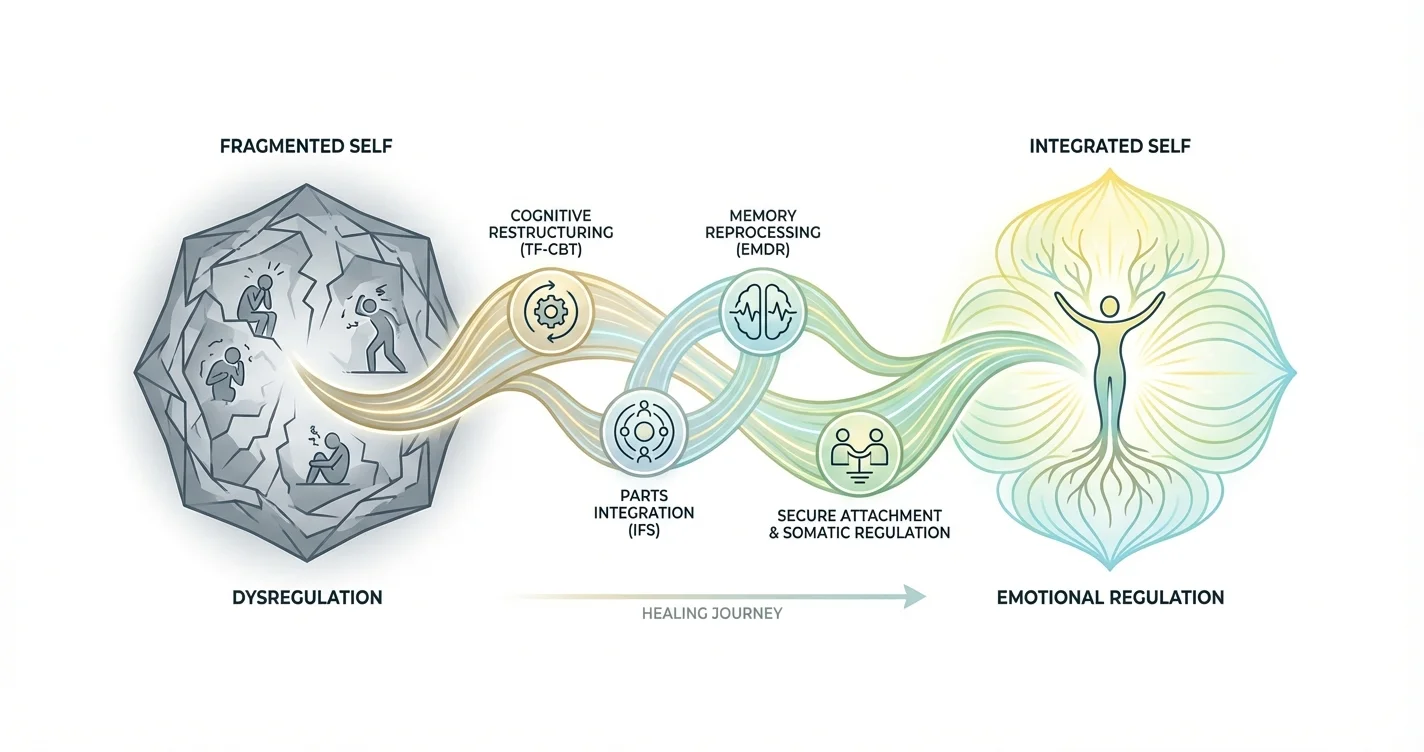
Several therapeutic modalities demonstrate particular effectiveness for healing from emotionally immature narcissistic parents trauma. Mental health research indicates these approaches address both the cognitive and somatic dimensions of complex developmental trauma.
Trauma-Focused Cognitive Behavioral Therapy (TF-CBT) helps survivors identify and challenge the distorted core beliefs formed in childhood—beliefs like "my needs don't matter," "I'm only valuable when I'm useful," or "showing vulnerability leads to punishment." This approach combines cognitive restructuring with gradual exposure to difficult emotions in a safe therapeutic container.
Internal Family Systems (IFS) therapy recognizes that survivors often develop protective "parts" in response to childhood trauma—the perfectionist, the people-pleaser, the inner critic. IFS helps individuals develop compassionate relationships with these parts while accessing their core "Self" that can lead healing. This approach proves particularly valuable for addressing the fragmentation many survivors experience.
Eye Movement Desensitization and Reprocessing (EMDR) addresses how traumatic memories remain unprocessed in the nervous system. Through bilateral stimulation, EMDR helps the brain reprocess these memories, reducing their emotional charge and associated body sensations. Studies indicate EMDR can be effective for childhood trauma when applied by properly trained clinicians.
Attachment-based therapy specifically focuses on the relational wounds created by emotionally immature parenting. This approach helps survivors understand their attachment style, recognize how early patterns show up in current relationships, and develop "earned secure attachment" through corrective therapeutic relationships.
Somatic approaches including Somatic Experiencing and Sensorimotor Psychotherapy recognize that trauma lives in the body, not just the mind. These modalities help survivors recognize and release chronic tension patterns, restore the capacity for emotional regulation, and rebuild the mind-body connection often disrupted by childhood emotional neglect.
Practical Steps for Beginning Your Healing Journey
Recovery from toxic parents trauma for adult children follows a general progression, though individual timelines vary significantly. These steps build on each other, creating increasingly stable foundations for deeper work.
Establish safety and stabilization first. Before processing traumatic memories, survivors need basic emotional regulation skills and safe current circumstances. This might involve creating physical distance from toxic family members, building a support network, establishing stable housing or finances, or learning grounding techniques for managing overwhelming emotions. Therapists typically prioritize this stabilization phase before memory processing work.
Educate yourself about narcissistic family dynamics. Understanding the patterns helps survivors recognize "it wasn't just me" and reduces shame. Reading research-based resources on narcissistic parenting, emotional immaturity, and complex trauma provides context for confusing childhood experiences. However, experts caution that education alone isn't sufficient—reading about trauma differs from processing it therapeutically.
Find a qualified trauma therapist. Look for licensed clinicians (psychologists, clinical social workers, licensed professional counselors) with specific training in complex trauma and narcissistic family systems. Ask potential therapists directly about their experience with adult children of narcissistic parents, their theoretical orientation, and their approach to safety in family-of-origin work.
Develop emotional regulation capacity. Survivors often learned to suppress or ignore their emotions as children. Building skills for recognizing, naming, tolerating, and expressing emotions safely forms essential groundwork. Techniques might include mindfulness practices, body-based awareness exercises, journaling, or using accessible support tools like Lovon.app to process emotional responses as they arise.
Process grief and anger safely. Acknowledging what you didn't receive as a child—the attunement, validation, safety, or unconditional positive regard—brings profound grief. Similarly, recognizing how you were harmed often surfaces anger. Both emotions deserve space in therapy where they can be expressed and metabolized without judgment.
Reparent your inner child. Therapeutic techniques for connecting with younger parts of yourself and providing the care they needed allows internal healing. This might involve visualization exercises, letter-writing, or dialogues between your adult self and child self, always under therapeutic guidance to avoid retraumatization.
Rebuild identity separate from family narratives. Narcissistic parents often assign children roles (the scapegoat, the golden child, the caretaker) that become identity prisons. Discovering who you are apart from these imposed roles represents essential recovery work—exploring your authentic preferences, values, boundaries, and relational needs.
Practice boundary-setting in safe relationships first. Before attempting boundaries with narcissistic family members, survivors benefit from practicing in lower-stakes relationships. Building this skill incrementally with supportive friends or in therapeutic relationships creates templates for more challenging situations.
Navigating Contact Decisions and Safety Considerations
One of the most complex aspects of healing from generational trauma caused by emotionally unavailable or narcissistic parents involves deciding on appropriate ongoing contact levels. This decision is deeply personal and may shift over time as survivors develop stronger boundaries and clearer self-awareness.
Experts emphasize that blanket advice—either "you must forgive and maintain contact" or "you should always go no-contact"—fails to account for individual circumstances. Some survivors maintain limited contact with clear boundaries; others find that any contact consistently retraumatizes them and choose no contact; still others fluctuate between these approaches as they navigate their healing.
Important safety considerations include:
-
Assessing current risk: Does contact with family members trigger severe symptoms, suicidal ideation, substance use relapses, or return of self-harm behaviors? These signal that current contact may not be safe.
-
Recognizing ongoing manipulation: If parents continue gaslighting, triangulating family members, or violating stated boundaries, maintaining contact often impedes recovery.
-
Evaluating your internal resources: Do you have sufficient emotional regulation skills, therapeutic support, and self-awareness to maintain contact without losing yourself? If not, distance may be necessary while building these capacities.
-
Considering practical dependencies: Financial support, housing, or health insurance through family can complicate contact decisions. Working with a therapist to strategize safe separation timelines helps prevent premature actions that create new crises.
Professionals trained in narcissistic family dynamics can help assess these factors individually rather than prescribing one-size-fits-all solutions. They recognize that what constitutes healing for one survivor may differ substantially for another.
Healing From Emotionally Immature Parents vs Traditional Therapy Approaches
Standard therapeutic approaches often assume a baseline of relational health that doesn't exist for survivors of narcissistic parenting. Traditional therapy might encourage "communicating your feelings" to parents—advice that can prove disastrous with narcissistic individuals who weaponize vulnerability. Or it might suggest "seeing your parents' perspective"—which survivors have already done excessively at the expense of validating their own experiences.
Specialized trauma therapy recognizes these differences and adjusts accordingly:
Validation before exploration. While traditional therapy might quickly move to exploring family-of-origin patterns, trauma-informed work first establishes that the survivor's perceptions and feelings are valid. Many survivors have spent lifetimes questioning their reality due to chronic gaslighting.
Body-based interventions. Traditional talk therapy may prove insufficient for addressing trauma stored in the nervous system. Trauma specialists incorporate somatic techniques recognizing that cognitive insight alone rarely creates lasting change.
Slower pacing. Complex trauma work cannot be rushed. Specialists allow survivors to proceed at their own pace rather than following arbitrary session schedules for specific topics.
Attention to therapist-client dynamics. Survivors of narcissistic parenting often unconsciously recreate familiar dynamics with authority figures. Trauma therapists actively work to create different relational experiences—responding to ruptures, sharing appropriate power, and modeling healthy boundaries.
These specialized approaches address the particular ways that emotionally immature narcissistic parents trauma differs from single-incident trauma or other forms of childhood adversity.
When to Seek Professional Help
While self-help resources provide valuable education and perspective, certain signs indicate professional support is essential:
- Persistent thoughts of self-harm or suicide
- Severe depression or anxiety interfering with daily functioning
- Flashbacks, nightmares, or intrusive memories causing significant distress
- Substance use as a primary coping mechanism
- Difficulty maintaining employment or relationships due to trauma responses
- Dissociation or feeling disconnected from yourself
- Eating disorders or self-harm behaviors
- Inability to function in daily life without constant distress
Mental health professionals who can help include trauma-specialized psychologists, licensed clinical social workers, licensed professional counselors, and psychiatrists (particularly if medication might support recovery). For severe or complex cases, intensive outpatient programs or partial hospitalization programs specializing in trauma provide structured support.
Breaking the cycle of generational trauma requires more than books, podcasts, or online videos—though these can complement professional work. The depth of transformation needed to truly heal from emotionally immature narcissistic parents trauma happens most effectively with trained, licensed specialists who understand both the complexity of these family systems and the evidence-based interventions that facilitate recovery.
Conclusion
Learning how to heal from emotionally immature narcissistic parents trauma represents a significant undertaking that unfolds over time rather than through quick fixes. The journey involves establishing safety, processing grief and anger, rebuilding identity, developing emotional regulation skills, and often making difficult decisions about family contact. This work proves most effective with specialized therapeutic support from licensed professionals trained in complex trauma and narcissistic family dynamics.
Recovery is possible. Thousands of adult children have successfully overcome narcissistic parental abuse effects, developed earned secure attachment, broken generational patterns, and created fulfilling lives characterized by healthy relationships and authentic self-expression. The path requires commitment, appropriate support, and patience with yourself as you unlearn survival patterns that once protected you but now limit your life.
If you're ready to begin this healing journey, start by reaching out to a trauma-specialized therapist in your area. Between sessions or while searching for the right clinician, accessible tools like Lovon.app can help you process difficult emotions and prepare for therapeutic conversations. Remember that seeking support represents strength, not weakness—you're finally giving yourself the care you deserved all along.
Disclaimer: This is general information, not medical advice or diagnosis. If symptoms are severe, affecting your daily life, or you're having thoughts of self-harm — seek professional help. In the US: call or text 988 (Suicide & Crisis Lifeline). For immediate danger: 911 or local emergency services.
How AI Support Helps You Heal
AI emotional support isn't about replacing human connection — it's about filling the gaps. The moments when you need to talk at 2 AM, when you don't want to burden your friends again, or when you simply need someone to listen without judgment.
Here's what happens in a typical Lovon session:
You share what's on your mind
There's no script, no intake form, no waiting room. You speak or type whatever you're feeling — in your own words, at your own pace.
Lovon validates and explores
Using frameworks from CBT (Cognitive Behavioral Therapy) and motivational interviewing, Lovon acknowledges your feelings first, then gently helps you explore them. No dismissive "just move on" advice.
You build coping skills together
Lovon doesn't just listen — it actively works with you on evidence-based techniques: thought reframing, urge surfing, behavioral experiments, and more.
What a Session with Lovon Looks Like

When to Seek Professional Help
AI support is a valuable tool, but it's not a replacement for professional care. Please consider reaching out to a licensed therapist if you experience any of the following:
- Persistent thoughts of self-harm or suicide
- Inability to perform daily activities (work, eating, sleeping) for more than 2 weeks
- Turning to alcohol or substances to cope
- Intense anger or desire to harm your ex-partner
- Complete emotional numbness that doesn't improve over time
Crisis Resources (US): If you're in immediate danger, call 988 (Suicide & Crisis Lifeline) or text HOME to 741741 (Crisis Text Line). Available 24/7, free, and confidential.
Outside the US? Find a crisis line in your country
Ready to Start?
Your healing journey can begin right now
1 free conversation. No credit card. No judgment. Just a safe space to process what you're going through.
Frequently Asked Questions
Is AI therapy a replacement for a real therapist?
Is my conversation with Lovon AI private?
How is Lovon different from ChatGPT for emotional support?
Can I use Lovon if I'm already seeing a therapist?
Can I try Lovon for free?
About the Author

The Lovon Editorial Team
Mental Health & Wellness Content Team
The Lovon Editorial Team develops mental health and wellness content designed to make psychological concepts accessible and actionable. Our goal is to bridge the gap between clinical research and everyday life - helping you understand why your mind works the way it does and what you can do about it....
Related articles
- AI Therapy App for Foster Parents: 2026 Verdict
Foster parents managing compassion fatigue and secondary trauma get on-demand voice support with Lovon's AI therapy app…
- How to Heal From Trauma Bonding in 2026: The Real Steps
How to heal from trauma bonding after a toxic relationship: no-contact rules, nervous system fixes, and support options…
- Understanding Father Wound Manifestations in Adult Life
The relationship with a father figure shapes fundamental aspects of psychological development, often in ways that remain…
- Narcissistic and Emotionally Immature Parents — Communication Manipulation Patterns
Growing up with narcissistic and emotionally immature parents often means navigating a minefield of confusing…
See also
Quizzes
- Are They a Red Flag? 10 Questions to Check Your Partner
Check your partner in 3 minutes.
- Am I Dating a Narcissist? 15-Trait Quiz
Understand the pattern in 3 minutes.
Free tools
- AI Relationship Coach
Get free relationship advice and family counselling guidance with our AI Relationship Coach.
- How to Respond to a Narcissist
Paste what they said. You get the part that actually needs answering separated from the part designed to pull you in, a…
Disclaimer: This article is for informational purposes only and does not constitute medical advice, diagnosis, or treatment. Always seek the advice of your physician or other qualified health provider with any questions you may have regarding a medical condition. If you are in crisis or think you may have an emergency, call 988 (Suicide & Crisis Lifeline) or go to the nearest emergency room. Outside the US? Find a crisis line in your country.