
How to Heal from Emotionally Immature Parents and Conditional Love
Growing up with emotionally immature parents who offer conditional love creates lasting patterns that many adults continue to struggle with long after...
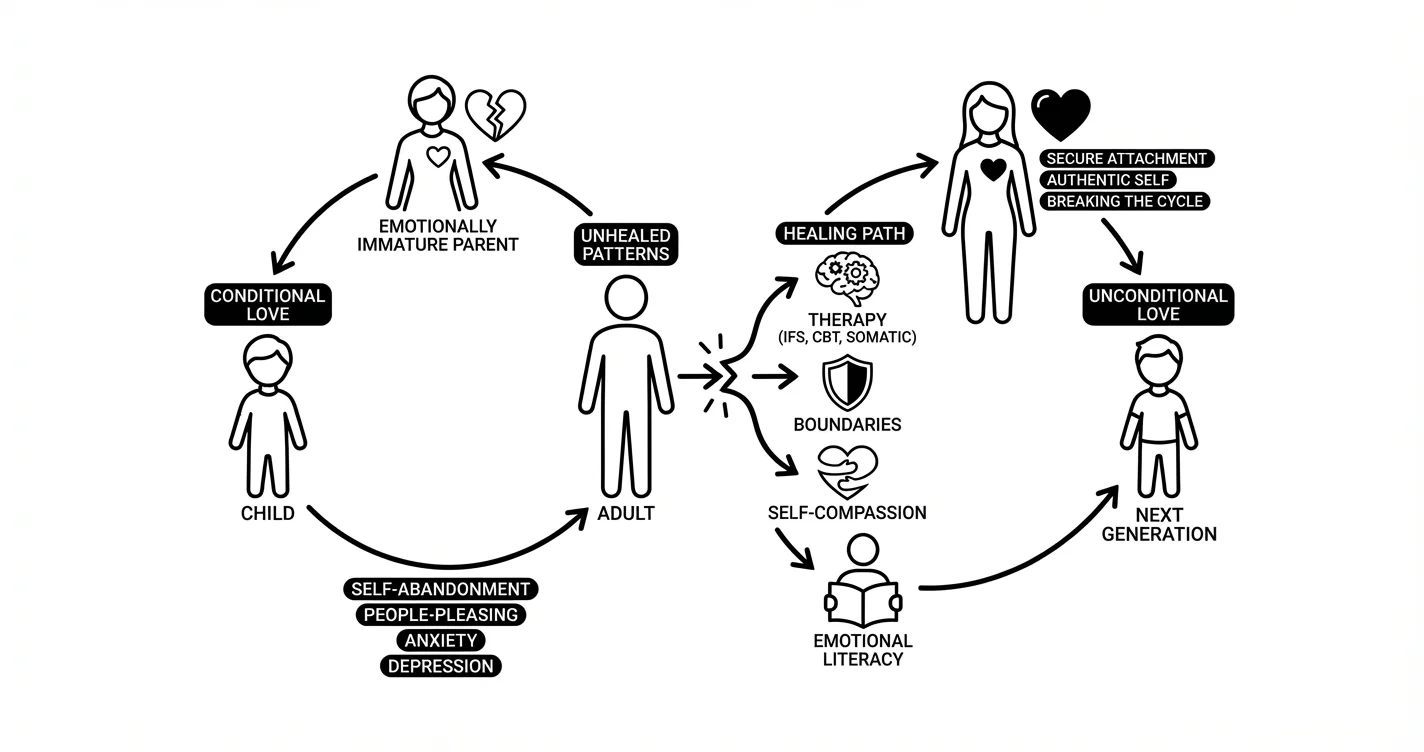

Key Takeaways
- Role reversal: Children become emotional caretakers for parents
- Conditional acceptance: Love feels contingent on performance, compliance, or meeting parental needs
- Emotional unpredictability: Inconsistent responses that leave children hypervigilant
- Boundary violations: Lack of respect for the child's autonomy, privacy, or separate identity
- Invalidation: Dismissing, minimizing, or mocking the child's emotional experiences
Introduction
Growing up with emotionally immature parents who offer conditional love creates lasting patterns that many adults continue to struggle with long after leaving home. Learning how to heal from emotionally immature parents, conditional love, and self-abandonment represents one of the most challenging yet transformative journeys in personal development. Research suggests that conditional parental acceptance—where love feels contingent on meeting specific expectations—can fundamentally alter how individuals relate to themselves and others throughout their lives.
This guide draws on therapeutic insights and evidence-based approaches to help you understand the mechanisms behind these wounds and develop practical strategies for recovery. Whether you're just beginning to recognize these patterns or you've been working on healing for years, understanding both the psychological dynamics and actionable steps can create meaningful change. As of January 2026, mental health professionals increasingly recognize that healing from emotionally immature parenting requires addressing not just symptoms but the underlying relational patterns that developed as survival adaptations.
Understanding Emotionally Immature Parenting and Its Impact
Emotionally immature parents typically struggle to regulate their own emotions, set appropriate boundaries, or respond to their children's emotional needs with consistency and attunement. These parents may exhibit narcissistic traits, emotional unavailability, or unpredictable behavioral patterns that leave children feeling responsible for managing the parent's emotional state.
Clinical observations indicate that children of emotionally immature parents often develop what therapists call "self-abandonment"—a pattern where individuals disconnect from their own needs, feelings, and authentic preferences to maintain connection with others. This adaptation makes sense in childhood when survival depends on maintaining parental approval, but it creates significant challenges in adult relationships and self-concept.
One critical insight from therapeutic practice emphasizes that parental intentions matter far less than behavioral impact when evaluating emotionally immature parenting. A parent may genuinely believe they're acting in their child's best interest while simultaneously engaging in patterns that cause harm. What distinguishes toxic patterns from occasional parenting mistakes is the parent's response when informed of the impact—whether they demonstrate willingness to acknowledge the harm and make changes, or whether they dismiss, minimize, or blame the child for their reactions.
Key characteristics of emotionally immature parenting include:
- Role reversal: Children become emotional caretakers for parents
- Conditional acceptance: Love feels contingent on performance, compliance, or meeting parental needs
- Emotional unpredictability: Inconsistent responses that leave children hypervigilant
- Boundary violations: Lack of respect for the child's autonomy, privacy, or separate identity
- Invalidation: Dismissing, minimizing, or mocking the child's emotional experiences
Studies suggest that these patterns don't require deliberate malice—many emotionally immature parents experienced similar dynamics in their own childhoods and never developed the capacity for emotional regulation or attunement that healthy parenting requires.
Recognizing Self-Abandonment Patterns in Your Adult Life
Self-abandonment manifests in numerous ways that may initially seem unrelated but share a common thread: prioritizing others' needs, feelings, and preferences while ignoring or minimizing your own. Recognizing these patterns represents the essential first step in healing from conditional love and emotionally immature parenting.
Common self-abandonment patterns include:
- People-pleasing: Automatically agreeing to requests regardless of your capacity or desire
- Chronic apologizing: Saying "I'm sorry" for existing, having needs, or taking up space
- Difficulty identifying preferences: Genuinely not knowing what you want when asked
- Conflict avoidance: Staying silent when hurt or disagreeing to maintain relational harmony
- Overextension: Consistently giving beyond your capacity while feeling resentful
- Self-minimization: Downplaying your achievements, needs, or pain
- Hypervigilance to others' moods: Constantly monitoring and adjusting to others' emotional states
These behaviors develop as protective adaptations. When your childhood survival depended on anticipating a parent's needs and managing their emotions, these skills became essential. The neural pathways that support this hypervigilance and self-suppression become deeply ingrained, which explains why changing these patterns requires more than simply deciding to "put yourself first."
Therapeutic work reveals that many adults don't initially recognize these patterns as problematic because they've become so normalized. You may have received praise for being "easy," "agreeable," or "mature" as a child—reinforcement that these adaptive behaviors were valuable. Recognizing that what felt like virtue was actually a survival response can bring both grief and relief.
Research indicates that self-abandonment correlates with increased anxiety, depression, and relationship difficulties in adulthood. The internal conflict between authentic needs and learned suppression creates chronic stress that affects both psychological and physical wellbeing.
Effective Therapeutic Approaches for Healing from Conditional Love
Professional therapeutic intervention offers structured approaches for addressing the complex wounds left by emotionally immature parenting. While self-help strategies can support healing, working with a qualified therapist who specializes in childhood emotional neglect or developmental trauma provides expertise that significantly accelerates recovery for many people.
Evidence-Based Therapy Modalities
Internal Family Systems (IFS) helps individuals understand different "parts" of themselves—including the parts that learned to self-abandon for safety and the parts that carry childhood pain. This approach allows you to develop compassion for adaptive patterns while gradually shifting toward more authentic self-expression.
Attachment-Based Therapy addresses how early relational patterns with emotionally immature parents shaped your attachment style and current relationship dynamics. Therapists help you identify insecure attachment patterns and develop "earned secure attachment" through therapeutic relationship and intentional practice.
Cognitive Behavioral Therapy (CBT) and Schema Therapy can identify and restructure core beliefs formed in childhood, such as "I'm only valuable when I'm useful" or "My needs are burdensome." These approaches provide practical tools for recognizing automatic thoughts and developing alternative perspectives.
Somatic Therapy recognizes that trauma and relational patterns live in the body, not just the mind. Approaches like Somatic Experiencing help you reconnect with bodily sensations, emotions, and needs that may have been suppressed since childhood.
What to Expect from Professional Treatment
Working through wounds from emotionally immature parents typically requires time—research suggests that meaningful change in deeply ingrained patterns often unfolds over months to years rather than weeks. Effective therapy creates a corrective relational experience where you can practice expressing needs, setting boundaries, and being authentic without fear of abandonment or punishment.
Therapists specializing in this area understand that clients may initially struggle with basic therapeutic tasks like identifying feelings or expressing preferences. This isn't failure—it's evidence of the adaptive suppression you learned. Quality therapeutic work meets you where you are and gradually builds capacity for self-awareness and self-expression.
For those seeking accessible support between traditional therapy sessions or as an entry point to healing, tools like Lovon.app offer on-demand opportunities to process emotions, identify patterns, and practice articulating your inner experience. Such resources can complement professional treatment by providing additional space to work through relational dynamics and emotional overwhelm as they arise.
Practical Steps to Overcome Self-Abandonment and Rebuild Self-Worth
Healing from emotionally immature parents and conditional love requires not just understanding but consistent practice of new relational patterns—both with yourself and others. The following strategies represent approaches that practitioners find effective when working with adults recovering from childhood emotional neglect.
Developing Self-Awareness and Emotional Literacy
Many adults who experienced conditional love struggle to identify what they're feeling beyond broad categories like "good" or "bad." Developing emotional literacy—the ability to recognize and name specific emotions—provides essential information about your needs and boundaries.
Practice regular check-ins: Set aside brief moments throughout the day to pause and ask yourself, "What am I feeling right now?" Initially, you may draw a blank or default to "fine." With practice, you'll develop greater capacity to identify specific emotions like disappointment, anxiety, excitement, or loneliness.
Use emotion wheels or lists: These tools provide vocabulary for internal experiences you may not have words for. Research from affective neuroscience suggests that the act of labeling emotions—called "affect labeling"—can reduce emotional intensity and increase sense of control.
Track patterns without judgment: Notice connections between situations, emotions, and self-abandonment behaviors. "When my friend cancels plans, I notice I feel relieved and then guilty for feeling relieved" reveals important information about where you may be overextending.
Setting and Maintaining Boundaries
Boundaries represent where you end and others begin—they're essential for recovering from patterns where your needs consistently took a back seat to others'. For those raised by emotionally immature parents, boundary-setting may feel dangerous because it risked punishment or withdrawal in childhood.
Start with low-stakes boundaries: Practice saying no to minor requests before addressing significant relationship issues. Each small boundary successfully maintained builds evidence that you can survive others' disappointment.
Recognize that boundaries are information, not attacks: A boundary simply communicates what works for you. "I'm not available to talk after 9 PM" provides information; it's not a judgment about the other person's worth or needs.
Prepare for discomfort: People accustomed to your self-abandonment may resist your boundaries. Therapeutic guidance emphasizes that one clear communication ("Please stop, this doesn't work for me") should be sufficient for emotionally mature individuals to adjust their behavior. Resistance or dismissal of stated boundaries reveals important information about the relationship.
Notice the difference between boundaries and walls: Boundaries are flexible and context-dependent; walls shut everyone out. If you find yourself completely withdrawing from relationships, this may indicate you need support in developing nuanced boundary skills.
Reparenting Yourself
The concept of "reparenting" involves providing yourself the consistent attunement, validation, and support that emotionally immature parents couldn't offer. This isn't about blaming your parents but about recognizing unmet developmental needs and addressing them now.
Practice self-compassion: When you notice self-abandonment patterns, respond with curiosity rather than criticism. "Of course I learned to do this—it kept me safe" creates space for change that harsh self-judgment doesn't.
Validate your own experiences: Many people raised with conditional love automatically dismiss their feelings as overreactions or seek external validation before trusting their perceptions. Practice statements like "That makes sense that I feel hurt by that" or "My reaction is valid given what happened."
Meet your own needs proactively: Rather than waiting until you're depleted, burned out, or resentful, practice identifying and meeting needs before they become urgent. This might include rest, creative expression, solitude, or connection.
Develop routines that signal self-worth: Regular practices that honor your needs—like preparing meals you enjoy, maintaining sleep routines, or engaging in activities purely for pleasure—send repeated messages that you matter regardless of productivity or others' approval.
When Self-Help Isn't Enough: Recognizing the Need for Professional Support
While many strategies for healing from emotionally immature parents can be practiced independently, certain situations indicate that professional therapeutic support is necessary rather than optional. Understanding when to seek help represents wisdom, not weakness.
Persistent functional impairment: If self-abandonment patterns significantly interfere with work performance, relationships, or daily functioning despite self-help efforts, professional intervention can provide structured support and accountability.
Complex trauma symptoms: When childhood experiences included not just emotional immaturity but abuse, severe neglect, or witnessing violence, the resulting wounds typically require specialized trauma treatment. Symptoms like flashbacks, severe dissociation, or overwhelming emotional reactivity suggest complex trauma that benefits from professional expertise.
Thoughts of self-harm or suicide: Any persistent thoughts about ending your life or harming yourself require immediate professional intervention. These thoughts sometimes emerge during healing work as suppressed pain surfaces—they signal the need for skilled support, not failure in your healing process.
Substance use as coping: If you find yourself increasingly relying on alcohol, drugs, or other substances to manage emotions related to family-of-origin wounds, this pattern indicates the need for professional treatment that addresses both substance use and underlying trauma.
Relationship crisis: When patterns from emotionally immature parenting threaten important current relationships—such as repeating self-abandonment patterns with a partner or struggling with parenting your own children—couples therapy or family therapy can prevent generational transmission of these dynamics.
Resources like Lovon.app can provide valuable support for processing emotions and identifying patterns between professional sessions, offering accessible opportunities to talk through challenges as they arise. However, such tools complement rather than replace professional treatment for serious mental health concerns.
Breaking the Cycle: Creating Different Patterns for Future Generations
One powerful motivation for healing from emotionally immature parents and conditional love is preventing transmission of these patterns to the next generation. Research on intergenerational trauma suggests that unprocessed relational wounds tend to repeat across generations—but that conscious intervention can interrupt this cycle.
Becoming what therapists call a "cycle breaker" requires commitment to your own healing work. You can't simply decide to parent differently; you must develop the emotional regulation, self-awareness, and capacity for attunement that your own parents lacked. This internal work represents the foundation for different relational patterns.
Key principles for breaking intergenerational patterns include:
Repair over perfection: You will make mistakes with your children, partners, or others in your life. What matters is your willingness to acknowledge impact, take responsibility, and make changes when patterns cause harm. This response—so different from emotionally immature parenting—models healthy accountability.
Develop emotional regulation: Children learn emotion regulation through co-regulation with caregivers. If you didn't experience this consistently, you're building these skills as an adult. Therapeutic work, mindfulness practices, and somatic approaches can all develop greater capacity to manage difficult emotions without overwhelming or withdrawing.
Seek support proactively: Asking for help isn't weakness—it's wisdom. Whether through therapy, peer support, parenting resources, or accessible tools for emotional processing, getting support prevents the isolation that often perpetuates unhealthy patterns.
Practice curiosity about your triggers: Situations that provoke disproportionate reactions often connect to unhealed wounds from emotionally immature parents. Rather than acting on these reactions, exploring them with curiosity creates opportunities for healing and conscious choice.
Studies indicate that adults who engage in their own healing work can develop "earned secure attachment"—the capacity for healthy, attuned relationships despite insecure attachment in childhood. This isn't a theoretical possibility; it's a documented outcome that many people achieve through sustained effort and appropriate support.
Conclusion
Learning how to heal from emotionally immature parents, conditional love, and self-abandonment represents a profound journey of reclaiming your authentic self and rebuilding your relationship with yourself and others. The patterns formed in childhood—people-pleasing, hypervigilance, chronic self-suppression—made sense as adaptations to emotionally immature parenting, but they no longer serve you in adult life.
Recovery involves both understanding the origins of these patterns and consistently practicing new responses: developing emotional literacy, setting boundaries, validating your own experiences, and seeking appropriate support when needed. Whether through professional therapy, self-directed healing work, or accessible resources like Lovon.app for processing emotions between formal sessions, the path forward requires patience, self-compassion, and commitment.
The wounds from conditional love and emotionally immature parenting are real and significant, but they don't define your capacity for healing. Research and clinical experience consistently demonstrate that adults can develop secure attachment patterns, healthy self-worth, and authentic relationships regardless of childhood experiences. Your willingness to recognize these patterns and engage in healing work is itself evidence of the resilience and strength that will carry you through this transformation.
When to Seek Professional Help
Consider reaching out to a mental health professional if you experience:
- Persistent symptoms of anxiety or depression that interfere with daily functioning
- Difficulty maintaining relationships due to people-pleasing or self-abandonment patterns
- Intrusive memories, flashbacks, or severe emotional reactions related to childhood experiences
- Thoughts of self-harm or suicide
- Substance use to cope with emotional pain
- Concerns about repeating unhealthy patterns with your own children
Therapists specializing in attachment disorders, childhood emotional neglect, complex trauma, or family systems can provide targeted support for healing from emotionally immature parenting. Many professionals now offer both in-person and telehealth options, increasing accessibility to specialized care.
Disclaimer: This is general information, not medical advice or diagnosis. If symptoms are severe, affecting your daily life, or you're having thoughts of self-harm — seek professional help. In the US: call or text 988 (Suicide & Crisis Lifeline). For immediate danger: 911 or local emergency services.
How AI Support Helps You Heal
AI emotional support isn't about replacing human connection — it's about filling the gaps. The moments when you need to talk at 2 AM, when you don't want to burden your friends again, or when you simply need someone to listen without judgment.
Here's what happens in a typical Lovon session:
You share what's on your mind
There's no script, no intake form, no waiting room. You speak or type whatever you're feeling — in your own words, at your own pace.
Lovon validates and explores
Using frameworks from CBT (Cognitive Behavioral Therapy) and motivational interviewing, Lovon acknowledges your feelings first, then gently helps you explore them. No dismissive "just move on" advice.
You build coping skills together
Lovon doesn't just listen — it actively works with you on evidence-based techniques: thought reframing, urge surfing, behavioral experiments, and more.
What a Session with Lovon Looks Like

Lovon is AI support, not a replacement for professional care. If things have been hard to get through for weeks, or you are thinking about harming yourself, talk to a doctor or a licensed therapist.
Ready to Start?
Your healing journey can begin right now
A 7-day trial. No judgment. Just a safe space to process what you're going through.
Frequently Asked Questions
Is Lovon a replacement for a real therapist?
Is my conversation with Lovon AI private?
How is Lovon different from ChatGPT for emotional support?
Can I use Lovon if I'm already seeing a therapist?
Can I try Lovon before subscribing?
About the Author

The Lovon Editorial Team
Mental Health & Wellness Content Team
The Lovon Editorial Team develops mental health and wellness content designed to make psychological concepts accessible and actionable. Our goal is to bridge the gap between clinical research and everyday life - helping you understand why your mind works the way it does and what you can do about it....
Related articles
- How to Co-Parent After Divorce in 2026: Step-by-Step Guide
How to co-parent after divorce in 2026: write the plan, script the conversations, manage your own stress. Practical…
- Best AI Life Coach App for Single Parents in 2026
Lovon ranks best AI life coach app for single parents in 2026 for voice-based support anytime. Compare 6 apps, pros…
- Toxic Parent Patterns: Signs & How to Set Limits (2026)
Recognize toxic parent patterns — manipulation, enmeshment, conditional love — and follow 7 concrete steps to set limits…
- Understanding Father Wound Manifestations in Adult Life
The relationship with a father figure shapes fundamental aspects of psychological development, often in ways that remain…
See also
Quizzes
- Boundaries Test: Do I Have Healthy Boundaries? Free Quiz
See where your boundaries slip, in 3 minutes.
- Respect in Love Test: Do You Respect Them, and Yourself?
See the respect you give and keep in love, in 3 minutes.
Free tools
- Write a Letter to Your Mom or Dad
A chat, not a template, for a letter to your mom or dad. Tell it the occasion, one or two things you remember, and what…
- How to Come Out to Your Parents
A chat about how to come out to your parents that starts with whether now is safe, not with the speech. Tell it your…
From the wiki
- How to leave a toxic relationship?
Leaving a toxic relationship is rarely a decision problem — you usually know. What stops you is that the pull toward…
Disclaimer: This article is for informational purposes only and does not constitute medical advice, diagnosis, or treatment. Always seek the advice of your physician or other qualified health provider with any questions you may have regarding a medical condition. If you are in crisis or think you may have an emergency, call 988 (Suicide & Crisis Lifeline) or go to the nearest emergency room. Outside the US? Find a crisis line in your country.