
Pulling Away When They Get Close: 7 Steps to Stay Present
Closeness can trigger the urge to withdraw. Learn what sets off avoidant attachment, what to do in the moment, and how to repair after you shut down.

Key Takeaways
- Feeling "suffocated" when partners want to spend more time together
- Becoming critical or focusing on a partner's flaws when they express affection
- Suddenly questioning the relationship when things are going well
- Creating emotional or physical distance through work, hobbies, or other priorities
- Minimizing the importance of the relationship to yourself and others
Introduction
When someone moves closer emotionally, do you feel the urge to step back? This paradoxical reaction—withdrawing precisely when a partner shows love or commitment—is one of the hallmark patterns of avoidant attachment. If you find yourself distancing when partners get closer, you're experiencing a deeply rooted protective mechanism that can undermine the very connections you desire. Research suggests that avoidant attachment patterns develop from a complex interplay of early relational experiences, temperament, and learned emotional regulation strategies. While early experiences play a significant role, genetic factors and individual temperament also contribute to how these patterns develop. This guide draws on therapeutic approaches and expert insights to help you recognize these patterns and develop practical strategies for staying present as intimacy deepens.
Understanding Why Avoidant Attachment Causes Distancing
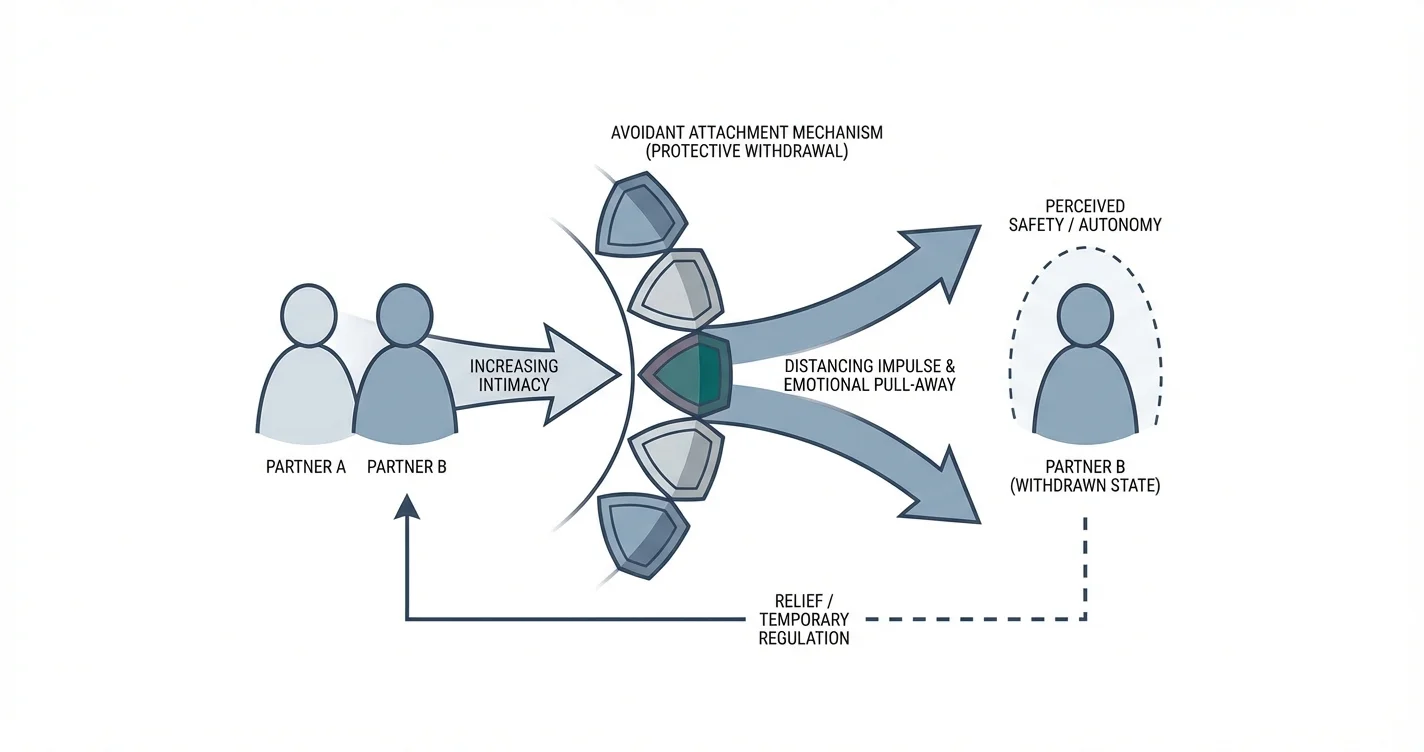
Avoidant attachment develops as an adaptive strategy when emotional closeness historically felt unpredictable, dismissive, or overwhelming. The brain may learn to associate intimacy with discomfort rather than safety, creating an automatic withdrawal response when relationships intensify.
According to clinical research, individuals with avoidant attachment patterns often experienced caregiving environments where emotional expression was discouraged or met with inconsistent responses. However, it's important to note that multiple factors contribute to attachment style development—including innate temperament, genetic predispositions, and various environmental influences beyond parenting alone.
The distancing mechanism serves a protective function: by maintaining emotional distance, you avoid the vulnerability that comes with depending on someone who might disappoint or leave. When a partner expresses deeper feelings or desires more commitment, the nervous system may interpret this as a threat rather than an opportunity for connection. The closer someone gets, the more intensely this protective impulse activates.
This pattern manifests in recognizable ways:
- Feeling "suffocated" when partners want to spend more time together
- Becoming critical or focusing on a partner's flaws when they express affection
- Suddenly questioning the relationship when things are going well
- Creating emotional or physical distance through work, hobbies, or other priorities
- Minimizing the importance of the relationship to yourself and others
Understanding that this response stems from learned patterns rather than something fundamentally wrong with you or your partner represents the first step toward change—and identifying your attachment style makes those patterns easier to name as they happen.
Professional Therapy Techniques for Avoidant Attachment
Mental health professionals use several evidence-based approaches to address avoidant attachment patterns and relationship sabotage behaviors. These therapeutic modalities focus on building awareness, developing new relational skills, and creating corrective emotional experiences.
Attachment-Based Therapy helps individuals explore how early relational templates influence current relationship patterns. Therapists create a safe environment where clients can examine their automatic responses to intimacy without judgment. Through this relationship, individuals with avoidant attachment can experience what psychologists call a "secure base"—a consistent, attuned connection that gradually rewires expectations about closeness.
Emotionally Focused Therapy (EFT) specifically targets the cycle of pursuing and distancing that characterizes many relationships where one or both partners have insecure attachment styles. In EFT, therapists help identify the underlying emotions driving withdrawal behaviors—often fear, shame, or inadequacy—and support partners in expressing these vulnerable feelings rather than acting them out through distancing.
Schema Therapy addresses deeply held beliefs about relationships, such as "I can't rely on anyone" or "Getting close always leads to disappointment." This approach helps identify when these schemas developed and challenges their current validity through behavioral experiments and cognitive restructuring.
Tools like Lovon.app can complement professional therapy by providing on-demand support when distancing impulses arise. Having access to immediate reflection and pattern recognition between therapy sessions helps maintain awareness when the urge to withdraw surfaces unexpectedly.
Therapists specializing in attachment work emphasize that change happens gradually. The goal isn't to eliminate all discomfort with intimacy overnight, but to develop the capacity to notice withdrawal impulses, understand what triggers them, and choose responses that align with your relationship values rather than automatic protective patterns.
Self-Help Methods to Overcome Emotional Distancing
While professional support offers significant benefits for addressing avoidant attachment, several self-directed strategies can help you work with these patterns between therapy sessions or as a starting point for change.
Somatic Awareness Practice involves learning to notice the physical sensations that accompany the urge to distance. When your partner expresses affection or desire for closeness, what happens in your body? Many people report tightness in the chest, restlessness, or an urge to physically leave the space. Developing awareness of these bodily signals creates a pause between the trigger and your response, offering a choice point where you might stay present rather than automatically withdrawing.
The "Lean In" Experiment challenges the automatic distancing response through small, deliberate acts of connection when you notice withdrawal impulses. If your instinct is to cancel plans when a partner says they miss you, the experiment involves keeping the commitment despite discomfort. If you feel compelled to pick an argument after an intimate moment, you might instead acknowledge (even briefly) that closeness sometimes feels uncomfortable for you. These micro-practices gradually increase your tolerance for intimacy.
Journaling for Pattern Recognition helps externalize and examine the thoughts that accompany distancing behaviors. When you notice yourself pulling away, writing down what happened immediately before can reveal consistent triggers:
- Partner expressed vulnerability or need
- Relationship reached a new milestone (meeting family, discussing future)
- Partner was particularly attentive or affectionate
- You experienced success or happiness in the relationship
Identifying these patterns reduces their power—you begin recognizing "this is my avoidant response" rather than believing "this relationship isn't right."
Structured Communication Windows involve setting specific, bounded times to discuss relationship topics that might typically trigger withdrawal. Knowing the conversation has a defined endpoint (20 minutes, for example) can make it easier to stay present rather than deflecting or shutting down. This approach works particularly well when combined with agreements about what happens after—perhaps an activity you enjoy together that doesn't require emotional processing.
Resources like Lovon.app can provide immediate reflection when you're experiencing the urge to distance but aren't sure why. Talking through what triggered the impulse and what you're feeling can clarify whether the withdrawal serves a legitimate boundary or represents an automatic protective pattern that doesn't fit your current relationship reality.
These self-help approaches work best when approached with self-compassion rather than self-criticism. The goal isn't to judge yourself for experiencing distancing impulses, but to gradually expand your capacity to remain present when closeness feels uncomfortable.
Step-by-Step Guide to Stop Pushing Your Partner Away
Transforming avoidant attachment patterns requires moving from awareness to action. This practical framework provides specific steps for staying present when your impulse is to create distance.
Step 1: Identify Your Personal Distancing Behaviors
Create a specific inventory of how you create distance. Common patterns include becoming suddenly busy, picking fights about minor issues, emphasizing independence, minimizing the relationship's importance, or focusing on partner flaws. Understanding your particular strategies makes them easier to recognize in real-time.
Step 2: Map Your Triggers
What specifically precedes distancing? For some people, it's expressions of love or commitment. For others, it's conflict or a partner's emotional need. Some find that positive relationship milestones trigger withdrawal more than difficulties do. Knowing your specific triggers allows you to anticipate and prepare rather than being caught off-guard by sudden discomfort.
Step 3: Develop a "Stay Present" Protocol
When you notice a trigger or distancing impulse, having a predetermined response prevents falling into automatic patterns. Your protocol might include:
- Naming what's happening internally: "I'm noticing the urge to withdraw"
- Taking several deep breaths before responding or leaving the situation
- Sharing with your partner (if possible): "I'm feeling overwhelmed and want space, but I don't want to just disappear"
- Setting a specific time to reconnect rather than indefinitely distancing
- Calling a supportive friend or therapist to process the impulse
Step 4: Practice Micro-Connections
Rather than attempting dramatic relationship transformation, focus on small moments of sustained connection. This might mean maintaining eye contact for a few extra seconds when your partner expresses affection, responding to "I love you" rather than deflecting, or sitting with discomfort for two minutes before creating space. These brief practices build tolerance without overwhelming your nervous system.
Step 5: Communicate Your Process
Helping your partner understand that withdrawal isn't about them but about your relationship with vulnerability itself can transform the dynamic. This doesn't mean making your attachment style their problem to manage, but rather providing context: "When you express deep feelings, I sometimes feel overwhelmed and want to pull back. I'm working on staying present instead. It helps if you can be patient while I sit with the discomfort."
Step 6: Track Progress, Not Perfection
Notice when you successfully chose presence over automatic withdrawal, even briefly. Did you stay in a conversation for five minutes longer than you might have previously? Did you acknowledge your partner's feelings before changing the subject? These incremental shifts represent genuine progress, even when they feel small.
Step 7: Repair After Distancing
When you do withdraw (which will happen), practice coming back. Repair might sound like: "I shut down during our conversation yesterday. I was feeling overwhelmed but I want to try again." This breaks the pattern where distancing episodes create increasing disconnection and instead demonstrates that temporary withdrawal doesn't mean permanent abandonment.
Throughout this process, having accessible support resources can make the difference between falling into familiar patterns and trying new approaches. When you're in the moment of wanting to distance, talking through the impulse with a tool like Lovon.app can help you understand what you're actually feeling and choose a response that aligns with your relationship goals.
When Self-Help Methods Aren't Enough
While self-directed strategies can create meaningful change, some situations benefit from professional therapeutic support. Understanding when to seek specialized help demonstrates wisdom rather than failure.
Persistent Relationship Sabotage: If you repeatedly end relationships that are objectively healthy precisely when they deepen, or if you notice a consistent pattern of provoking breakups when you begin to care, working with an attachment-focused therapist can help address the underlying mechanisms driving these behaviors.
Significant Functional Impairment: When avoidant patterns prevent you from forming any lasting connections, lead to profound loneliness despite desire for relationship, or create such anxiety that you avoid dating entirely, professional support can provide structured intervention beyond self-help approaches.
Co-occurring Mental Health Concerns: Avoidant attachment frequently appears alongside anxiety, depression, or trauma responses. When multiple issues interact, integrated treatment addressing the full picture may be necessary. Therapists specializing in complex presentations can develop comprehensive approaches rather than treating symptoms in isolation.
Partner Relationship at Crisis Point: If your distancing behaviors have brought a valued relationship to the breaking point, couples therapy with someone trained in attachment work can help both partners understand the dynamics and develop new interaction patterns together.
Studies indicate that attachment patterns can shift through consistent corrective experiences—both in therapy and in relationships where partners respond differently than original attachment figures did. However, this process varies considerably between individuals, with some people experiencing noticeable shifts within months while others require years of sustained work.
Mental health professionals who can help with avoidant attachment and relationship patterns include:
- Licensed therapists (LMFT, LCSW, LPC) with training in attachment theory
- Psychologists specializing in relationship dynamics or attachment
- Certified Emotionally Focused Therapists (EFT)
- Counselors with specific expertise in adult attachment issues
The relationship between self-help and professional support isn't either/or but rather complementary. Many people find that therapy provides the framework and deeper processing while daily practices maintain awareness and support incremental behavior change.
Conclusion
Learning how to stop distancing when partners get closer requires understanding that avoidant attachment represents an adaptive strategy, not a permanent identity. The protective mechanisms that once served you—withdrawing to avoid disappointment, maintaining independence to feel safe—may no longer align with your current relationship goals or partner's actual behavior.
Overcoming emotional distancing in relationships due to avoidant attachment patterns happens through consistent practice rather than sudden insight. By developing awareness of your specific triggers, implementing practical strategies when distancing impulses arise, and cultivating self-compassion throughout the process, you can gradually expand your capacity for intimacy without overwhelming your nervous system.
Whether you pursue professional therapy, engage with self-help methods, or combine both approaches, the essential element is sustained attention to these patterns. Each time you choose to stay present when your instinct urges withdrawal, you create new neural pathways and relational experiences that can eventually supersede old protective patterns.
Remember that progress isn't linear—you'll have moments of successful connection and times when you fall into familiar distancing behaviors. What matters is the overall trajectory and your commitment to understanding rather than judging these patterns. With time, patience, and appropriate support, people with avoidant attachment can develop more secure relational patterns while honoring their genuine needs for autonomy and space.
Disclaimer: This is general information, not medical advice or diagnosis. If symptoms are severe, affecting your daily life, or you're having thoughts of self-harm—seek professional help. In the US: call or text 988 (Suicide & Crisis Lifeline). For immediate danger: 911 or local emergency services.
How AI Support Helps You Heal
AI emotional support isn't about replacing human connection — it's about filling the gaps. The moments when you need to talk at 2 AM, when you don't want to burden your friends again, or when you simply need someone to listen without judgment.
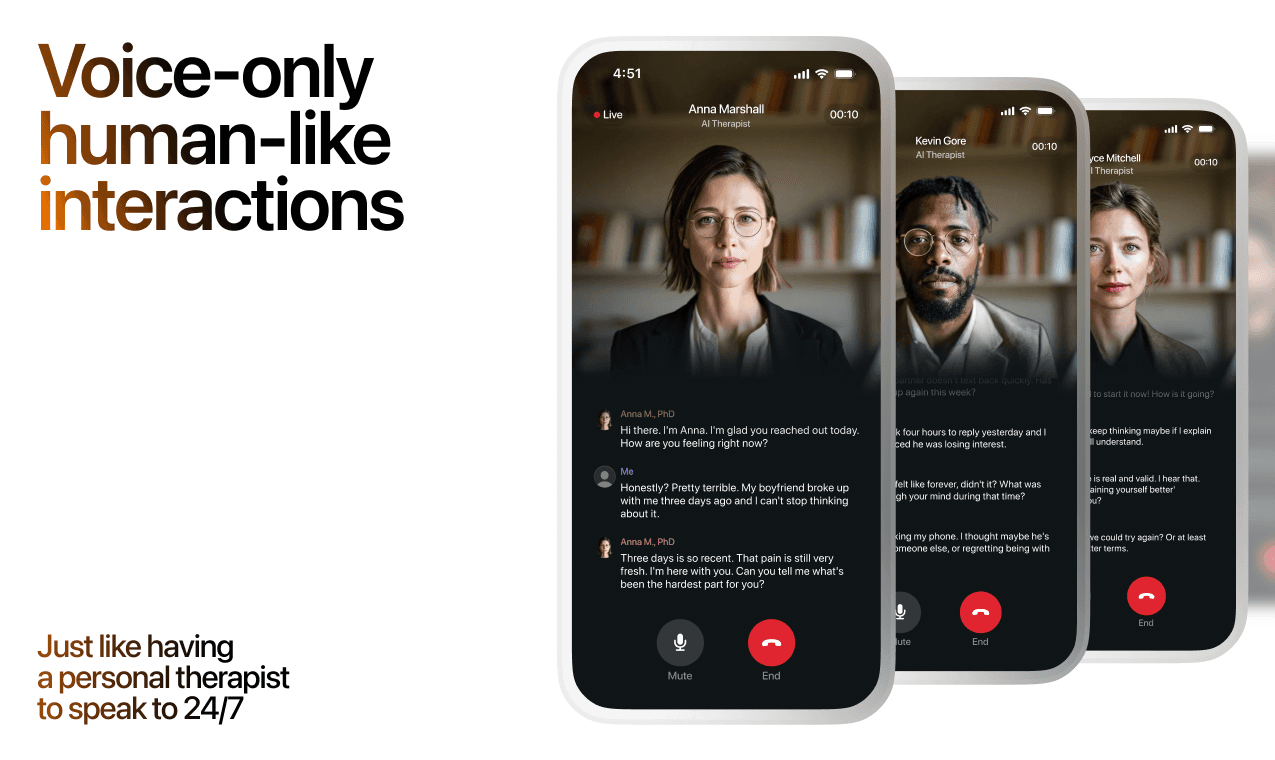
Here's what happens in a typical Lovon session:
You share what's on your mind
There's no script, no intake form, no waiting room. You speak or type whatever you're feeling — in your own words, at your own pace.
Lovon validates and explores
Using frameworks from CBT (Cognitive Behavioral Therapy) and motivational interviewing, Lovon acknowledges your feelings first, then gently helps you explore them. No dismissive "just move on" advice.
You build coping skills together
Lovon doesn't just listen — it actively works with you on evidence-based techniques: thought reframing, urge surfing, behavioral experiments, and more.
What a Session with Lovon Looks Like
When to Seek Professional Help
AI support is a valuable tool, but it's not a replacement for professional care. Please consider reaching out to a licensed therapist if you experience any of the following:
- Persistent thoughts of self-harm or suicide
- Inability to perform daily activities (work, eating, sleeping) for more than 2 weeks
- Turning to alcohol or substances to cope
- Intense anger or desire to harm your ex-partner
- Complete emotional numbness that doesn't improve over time
Crisis Resources (US): If you're in immediate danger, call 988 (Suicide & Crisis Lifeline) or text HOME to 741741 (Crisis Text Line). Available 24/7, free, and confidential.
Outside the US? Find a crisis line in your country
Ready to Start?
Your healing journey can begin right now
A 7-day trial. No judgment. Just a safe space to process what you're going through.
Frequently Asked Questions
Is Lovon a replacement for a real therapist?
Is my conversation with Lovon AI private?
How is Lovon different from ChatGPT for emotional support?
Can I use Lovon if I'm already seeing a therapist?
Can I try Lovon before subscribing?
About the Author
The Lovon Editorial Team
Mental Health & Wellness Content Team
The Lovon Editorial Team develops mental health and wellness content designed to make psychological concepts accessible and actionable. Our goal is to bridge the gap between clinical research and everyday life - helping you understand why your mind works the way it does and what you can do about it....
Related articles
- How to Develop Secure Attachment in 2026: 7 Steps
How to develop secure attachment in 2026: 7 practical steps, a real timeline (8-12 weeks), and fixes for anxious and…
- BPD Treatment Specialization: Four Parent Types Affecting Emotional Regulation
For individuals with borderline personality disorder (BPD), emotional regulation difficulties rarely emerge in…
- Why Do I Push People Away? 2026 Fix Guide
Why do I push people away, answered with steps that work in 2026: name the urge, pause 90 seconds, repair fast. Fearful…
- Feedback in Relationship Therapy When Avoidant Partners Fear Failure
When avoidant partners enter relationship therapy, feedback often becomes a minefield. What therapists intend as…
See also
Quizzes
- Emotionally Unavailable Test: 12-Question Self-Check
See which part of you closes off, in three minutes.
- Do I Have Abandonment Issues? 12-Question Self-Check
See how loudly the fear of being left runs things.
Free tools
- What Did They Actually Mean By That?
A chat for one sentence you cannot stop re-reading. Paste their exact words and what was happening around them, and get…
- Attachment Trigger Plan for Anxious and Avoidant Patterns
Pick your pattern, tick the moments that set it off, and finish one card for each: your body signal, the thing you will…
From the wiki
- What is an attachment style?
An attachment style is the habit your nervous system formed for handling closeness: what you actually do when someone…
Disclaimer: This article is for informational purposes only and does not constitute medical advice, diagnosis, or treatment. Always seek the advice of your physician or other qualified health provider with any questions you may have regarding a medical condition. If you are in crisis or think you may have an emergency, call 988 (Suicide & Crisis Lifeline) or go to the nearest emergency room. Outside the US? Find a crisis line in your country.