
How to Use Plushie Dreadfuls for Depression, Overthinking, and Trauma
Therapeutic plushies have emerged as tangible tools for individuals navigating depression, anxiety, trauma, and overthinking.
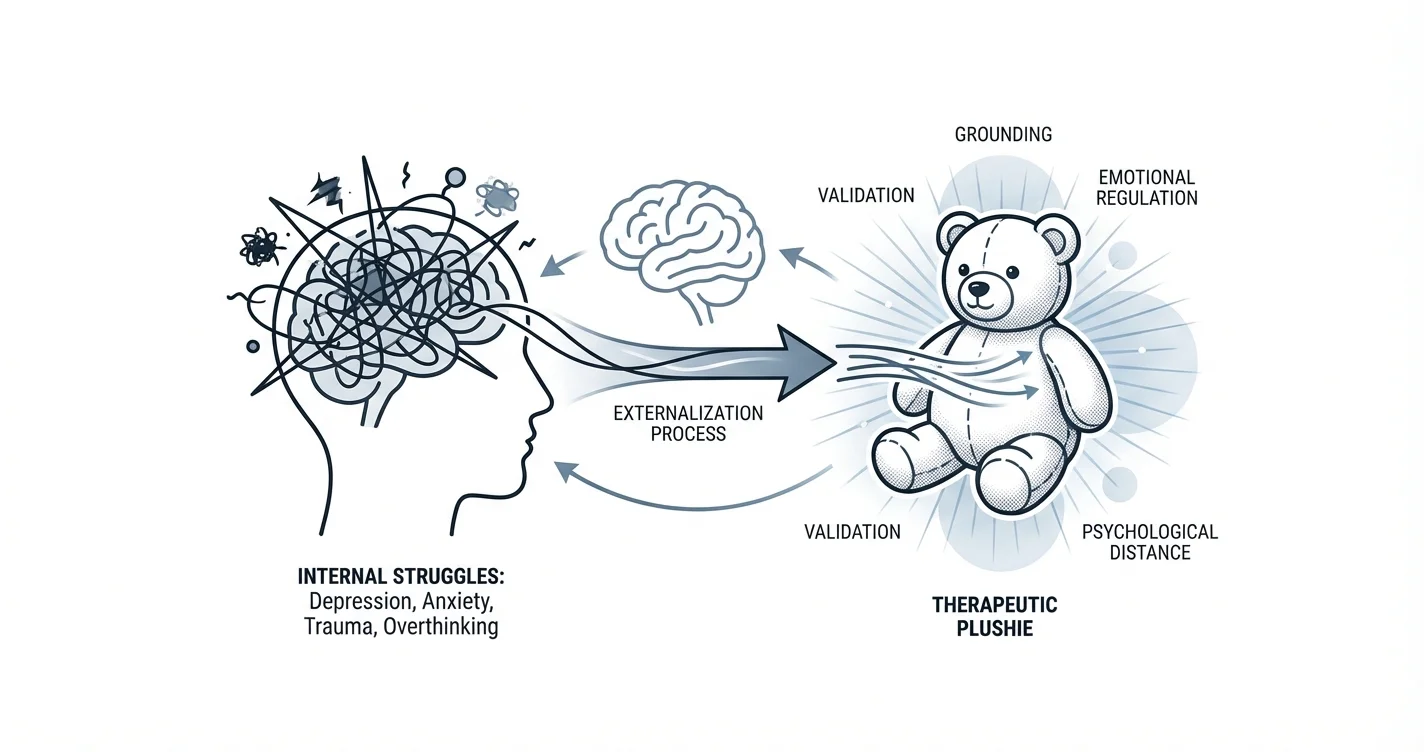

Key Takeaways
- Externalization: Placing difficult emotions onto a physical object allows you to interact with them from outside
- Validation: A plushie representing your specific struggle acknowledges that experience as real and recognized
- Grounding: The tactile, weighted presence provides sensory input during distress
- Communication: The object can help explain your experience to others when words feel inadequate
- Using the plushie during therapy sessions to represent what they're working through
Introduction
Therapeutic plushies have emerged as tangible tools for individuals navigating depression, anxiety, trauma, and overthinking. Plushie Dreadfuls for mental health—a category of weighted, symbolic stuffed animals designed to represent specific mental health conditions—offer a unique approach to externalizing internal struggles. Unlike traditional therapy tools, these plushies serve as physical representations of invisible experiences, creating opportunities for recognition, validation, and emotional processing.
This guide explores how to use Plushie Dreadfuls for depression, overthinking, and trauma recovery, drawing on therapeutic principles and practical application strategies. Whether you're considering these tools as a supplement to professional treatment or seeking accessible emotional support resources, understanding their function and limitations can help you use them effectively.
Understanding Therapeutic Plushies and Their Mental Health Applications
Therapeutic stuffed animals differ from conventional comfort objects through their intentional design and symbolic function. Plushie Dreadfuls and similar therapeutic plushies often feature visual representations of specific conditions—such as depression, anxiety, PTSD, or overthinking—through colors, symbols, or accompanying descriptions that validate these experiences.
Research in therapeutic object use suggests that tangible representations of abstract concepts can facilitate emotional processing. When working with overwhelming internal experiences, having an external object that "holds" these feelings creates psychological distance that makes them easier to examine and manage.
These tools function through several mechanisms:
- Externalization: Placing difficult emotions onto a physical object allows you to interact with them from outside yourself
- Validation: A plushie representing your specific struggle acknowledges that experience as real and recognized
- Grounding: The tactile, weighted presence provides sensory input during distress
- Communication: The object can help explain your experience to others when words feel inadequate
The therapeutic value lies not in the plushie itself, but in how you engage with it as part of your broader mental health toolkit. Studies on transitional objects in psychology indicate that physical items can serve as anchors during emotional turbulence, particularly when they carry specific meaning for the individual.
How to Use Plushie Dreadfuls for Depression and Anxiety Management
Depression and anxiety often involve feelings of isolation and the burden of explaining experiences that others may not understand. Using a therapeutic plushie for these conditions requires intentional integration into your emotional regulation practices.
Practical Application Strategies
Externalizing overwhelming thoughts: When depression creates heaviness or anxiety triggers spiraling thoughts, place the plushie across from you. Speak to it as if you're explaining your experience to someone who understands. This externalization technique—borrowed from narrative therapy approaches—helps create separation between you and the symptoms.
Physical grounding during anxiety: Many therapeutic plushies have weight or texture designed for sensory engagement. During anxiety episodes, hold the plushie against your chest or abdomen, focusing on its weight and texture. This provides proprioceptive input that can activate the parasympathetic nervous system, potentially reducing physiological arousal.
Routine integration for depression: Depression often disrupts daily structure. Incorporate the plushie into morning or evening routines—placing it in a specific location when you complete tasks, or holding it during medication times. This creates visual anchors that may help maintain structure when motivation is low.
Permission for difficult emotions: For those who struggle with self-compassion, treating the plushie with care can model self-kindness. When you feel harsh toward yourself, extend that gentleness to the plushie first, then notice whether you can redirect some of that compassion inward.
Integration with Other Therapeutic Tools
Therapeutic plushies work most effectively alongside evidence-based treatments rather than as replacements. Some people find helpful:
- Using the plushie during therapy sessions to represent what they're working through
- Incorporating it into mindfulness practices as a focus object
- Photographing it in different locations as a visual journal of emotional states
- Combining it with journaling—writing to or about the plushie's "perspective"
For on-demand emotional processing between therapy sessions, accessible support tools like Lovon.app can complement physical grounding objects. Speaking through emerging feelings while holding a grounding object creates multi-sensory emotional processing.
Step-by-Step Guide to Using Therapeutic Plushies for Trauma Recovery
Trauma recovery involves processing experiences that may feel overwhelming when approached directly. Therapeutic plushies can serve as intermediary objects that make gradual exposure more manageable.
Establishing Safety and Control
Step 1: Choose your specific representation. Select a plushie that resonates with your experience—whether it explicitly represents trauma, a specific symptom like hypervigilance, or a related condition like PTSD. The symbolic connection matters more than the specific design.
Step 2: Create a designated space. Trauma work requires safety. Establish where the plushie "lives" when you're not actively working with it. This might be a shelf you can see but don't have to engage with, or a box you can close. Control over when and how you interact with it mirrors the autonomy trauma often removes.
Step 3: Set boundaries around engagement. Decide when you'll work with the plushie—perhaps during specific processing times or only when you feel grounded enough. Trauma recovery requires pacing; you control when to approach difficult material.
Active Processing Techniques
Titrated exposure: Rather than confronting trauma memories directly, some people find it helpful to tell the plushie small pieces of their story. This creates distance while still processing. "This represents the hypervigilance I carry" allows acknowledgment without retraumatization.
Somatic tracking: Trauma often lodges in the body. Hold the plushie against areas where you carry tension or numbness. Notice physical sensations without judgment. This body-based approach aligns with research suggesting somatic experiencing can support trauma processing.
Parts work integration: Internal Family Systems and similar therapeutic approaches involve recognizing different "parts" of yourself. A plushie might represent a wounded part, allowing you to dialogue with it, offer it reassurance, or understand its protective function.
Grounding after activation: When trauma memories surface, the plushie's weight and texture provide sensory input to help return to the present. Focus on its specific characteristics—the fabric texture, weight distribution, visual details—to anchor yourself in current reality.
Important Limitations
Therapeutic plushies support trauma work but cannot replace trauma-focused therapy. Conditions like PTSD, complex trauma, and dissociative disorders require professional treatment. If you're experiencing flashbacks, severe dissociation, or intrusive memories that disrupt daily functioning, work with a trauma-specialized therapist who can provide appropriate interventions.
Plushie Dreadfuls vs Traditional Therapy Toys: Understanding the Differences
Different therapeutic tools serve different functions. Understanding how symbolic plushies compare to traditional therapy tools helps you choose appropriate resources.
Symbolic vs Functional Design
Traditional therapy toys like fidget tools, stress balls, or weighted blankets focus primarily on sensory input and physiological regulation. They reduce anxiety through tactile engagement and proprioceptive feedback but don't typically carry symbolic meaning.
Plushie Dreadfuls and similar therapeutic plushies combine sensory elements with symbolic representation. They serve both grounding functions and meaning-making purposes, allowing you to interact with representations of your specific experiences.
Application Contexts
Traditional sensory tools excel at immediate regulation—reducing anxiety during specific moments through physical engagement. They're typically used during acute distress without requiring emotional processing.
Therapeutic plushies work best when you're ready for some emotional engagement, not just regulation. They bridge the gap between pure sensory grounding and verbal processing, making them useful for:
- People who process emotions better with concrete objects than abstract conversation
- Those who struggle to articulate experiences and benefit from physical representations
- Individuals working on externalizing self-criticism or overwhelming internal states
- Anyone seeking validation through objects that acknowledge their specific struggles
Complementary Use
These tools aren't mutually exclusive. Many people maintain both:
- Weighted blankets for physical calming without emotional engagement
- Fidget tools for anxiety management during work or social situations
- Therapeutic plushies for intentional processing and validation work
- Digital support tools like Lovon.app for verbal processing and pattern recognition
The most effective approach typically combines multiple modalities tailored to different needs and contexts.
Mental Health Benefits for Beginners: Getting Started with Therapeutic Plushies
If you're new to using objects as mental health tools, starting with therapeutic plushies involves both practical steps and mindset shifts.
Overcoming Initial Resistance
Many adults feel self-conscious about using stuffed animals for mental health. This resistance often stems from cultural messages about maturity and appropriate coping mechanisms. Research on therapeutic object use indicates effectiveness isn't age-dependent—the benefits come from meaningful engagement, not the object type.
Reframing helps: This isn't childish; it's a tool. Healthcare providers use various concrete objects in therapy—sand trays, art supplies, even small figures. The medium matters less than the therapeutic function.
Starting Small: First Steps
Select based on resonance, not perfection: Choose a plushie representing something relevant to your experience. It doesn't need to match your diagnosis exactly—symbolic connection matters most.
Begin with observation: Before active use, simply place the plushie somewhere visible. Notice when you're drawn to it, when you avoid it, what feelings arise. This builds awareness of your relationship to your mental health symbols.
Experiment with basic grounding: Hold it during a predictably mild stressor—perhaps while reviewing your schedule or before a routine appointment. Notice whether the tactile input provides any centering effect.
Try limited externalization: Speak one difficult truth to the plushie. Not your entire trauma history or deepest fear—just one current struggle. "I'm overwhelmed today" counts. This establishes the plushie as a container for difficult emotions.
Building Sustainable Practice
Integrate into existing routines: Rather than creating entirely new practices, add the plushie to current ones. If you journal, place it nearby. If you practice breathing exercises, hold it during the practice.
Use it inconsistently: You don't need daily interaction for benefit. Some people engage intensely during difficult periods and barely touch it during stable times. This flexibility prevents the tool from becoming an obligation.
Adjust as needs change: What helps during acute depression may differ from what supports ongoing management. Your engagement with therapeutic objects should evolve with your needs.
Recognize when professional support is needed: Therapeutic plushies complement treatment but don't replace it. If you're experiencing persistent symptoms affecting work, relationships, or daily functioning, or if you're having thoughts of self-harm, professional intervention is essential.
When to Seek Professional Help
While therapeutic plushies and other self-support tools offer valuable assistance, certain situations require professional intervention:
- Persistent symptoms of depression lasting more than two weeks that affect your ability to work, maintain relationships, or complete daily tasks
- Anxiety or panic attacks that limit your activities or create avoidance patterns
- Intrusive trauma memories, flashbacks, or dissociation that disrupt daily functioning
- Thoughts of self-harm or suicide
- Inability to care for basic needs due to mental health symptoms
- Substance use to cope with emotional distress
Mental health professionals—including therapists specializing in depression, trauma-focused counselors, and psychiatrists—can provide evidence-based treatments like cognitive-behavioral therapy, EMDR for trauma, or medication when appropriate. Therapeutic objects work best as supplements to, not substitutes for, professional care when symptoms are severe or persistent.
Conclusion
Using Plushie Dreadfuls for depression, overthinking, and trauma involves intentional engagement with physical representations of invisible struggles. These therapeutic plushies offer externalization, validation, sensory grounding, and communication support—functions that complement evidence-based mental health treatment when applied thoughtfully.
The most effective approach combines multiple tools: therapeutic objects for tangible grounding, professional therapy for structured treatment, and accessible support resources for between-session processing. Whether you're holding a weighted plushie during an anxiety spike, speaking to it to externalize overwhelming thoughts, or using it as a communication bridge with others, the value comes from meaningful engagement rather than the object itself.
Start where you are. Select a representation that resonates, experiment with basic applications like grounding and externalization, and adjust your approach as your needs evolve. Remember that these tools support your broader mental health work—they don't replace professional treatment when symptoms significantly affect your daily life.
Disclaimer: This is general information, not medical advice or diagnosis. If symptoms are severe, affecting your daily life, or you're having thoughts of self-harm—seek professional help. In the US: call or text 988 (Suicide & Crisis Lifeline). For immediate danger: 911 or local emergency services.
How AI Support Helps You Heal
AI emotional support isn't about replacing human connection — it's about filling the gaps. The moments when you need to talk at 2 AM, when you don't want to burden your friends again, or when you simply need someone to listen without judgment.
Here's what happens in a typical Lovon session:
You share what's on your mind
There's no script, no intake form, no waiting room. You speak or type whatever you're feeling — in your own words, at your own pace.
Lovon validates and explores
Using frameworks from CBT (Cognitive Behavioral Therapy) and motivational interviewing, Lovon acknowledges your feelings first, then gently helps you explore them. No dismissive "just move on" advice.
You build coping skills together
Lovon doesn't just listen — it actively works with you on evidence-based techniques: thought reframing, urge surfing, behavioral experiments, and more.
What a Session with Lovon Looks Like
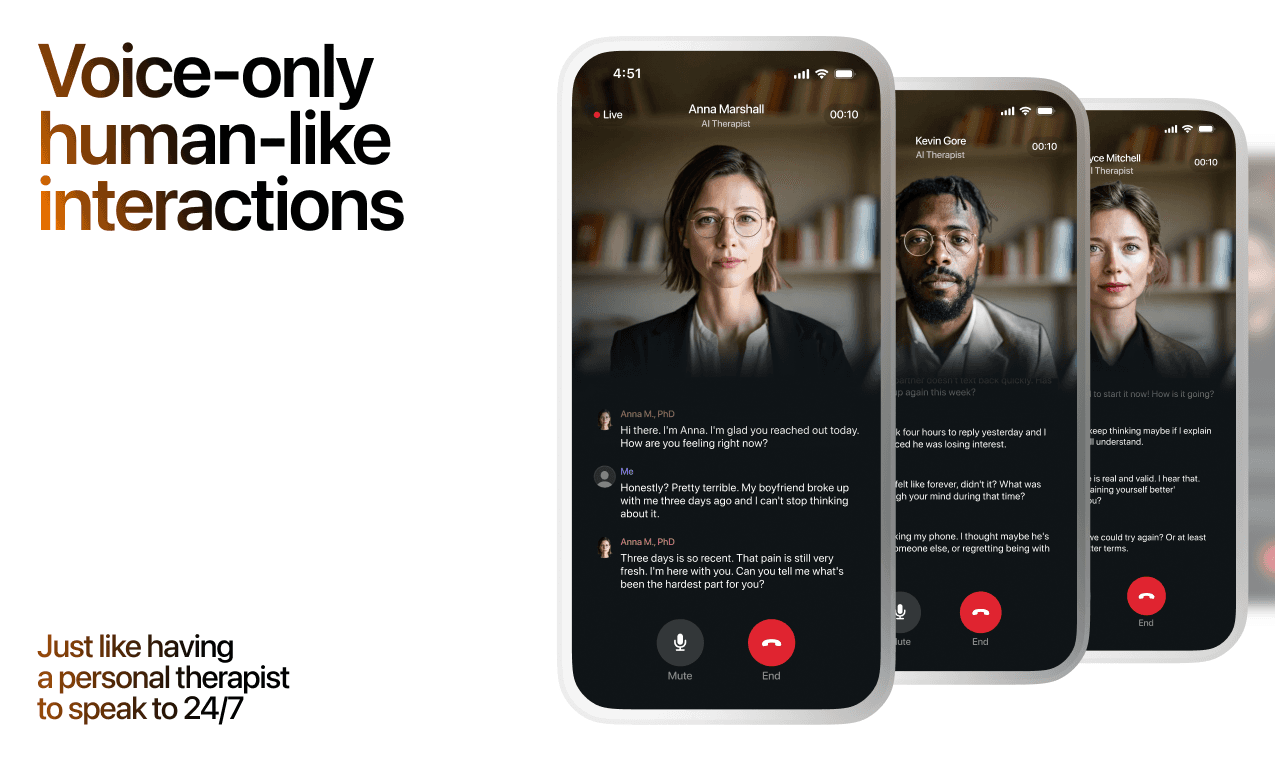
Lovon is AI support, not a replacement for professional care. If things have been hard to get through for weeks, or you are thinking about harming yourself, talk to a doctor or a licensed therapist.
Ready to Start?
Your healing journey can begin right now
A 7-day trial. No judgment. Just a safe space to process what you're going through.
Frequently Asked Questions
Is Lovon a replacement for a real therapist?
Is my conversation with Lovon AI private?
How is Lovon different from ChatGPT for emotional support?
Can I use Lovon if I'm already seeing a therapist?
Can I try Lovon before subscribing?
About the Author

The Lovon Editorial Team
Mental Health & Wellness Content Team
The Lovon Editorial Team develops mental health and wellness content designed to make psychological concepts accessible and actionable. Our goal is to bridge the gap between clinical research and everyday life - helping you understand why your mind works the way it does and what you can do about it....
Related articles
- Major Depressive Disorder vs Persistent Depressive Disorder
When struggling with prolonged sadness or emotional difficulty, understanding what you're experiencing can feel…
- Acceptance and Commitment Therapy as Therapeutic Framework
Acceptance and Commitment Therapy as a therapeutic framework has transformed how mental health professionals approach…
- EMDR in Trauma Therapy — Francine Shapiro Method Integration in Clinical Practice
Eye Movement Desensitization and Reprocessing (EMDR) represents one of the most significant developments in trauma…
- Bipolar 1 vs Bipolar 2 vs Cyclothymia: Key Differences Explained
Navigating the landscape of mood disorders can feel overwhelming, especially when trying to understand the differences…
See also
Quizzes
- Overthinking Test: Am I an Overthinker? 12-Question Quiz
See which overthinking loop runs you, in 3 minutes.
- Emotional Granularity Test: How Precisely Do You Feel?
See how finely you tell your feelings apart, in 3 minutes.
Free tools
- 5-4-3-2-1 Grounding Exercise
A guided run through the 5-4-3-2-1 technique, with paced breathing first if you need it. No sign-up, nothing stored…
- Breathing Exercises for Anxiety
Pick a technique, pick a length, follow the circle. Start with the physiological sigh if you are in the middle of a…
From the wiki
- What does it mean when you dream about your ex?
Dreaming about your ex usually reflects emotional processing, not prophecy and not a message from them. Your sleeping…
Disclaimer: This article is for informational purposes only and does not constitute medical advice, diagnosis, or treatment. Always seek the advice of your physician or other qualified health provider with any questions you may have regarding a medical condition. If you are in crisis or think you may have an emergency, call 988 (Suicide & Crisis Lifeline) or go to the nearest emergency room. Outside the US? Find a crisis line in your country.