
Is My Boyfriend Cheating on Me? Signs of Cheating and Infidelity
When your partner is cheating, it can be a shock that not everyone knows how to handle. We will review the key facts about cheating and explain what to do...

Key Takeaways
- Physical, emotional, and digital or micro cheating are the main types you should know
- More than half of women consider emotional betrayal more serious than sexual cheating
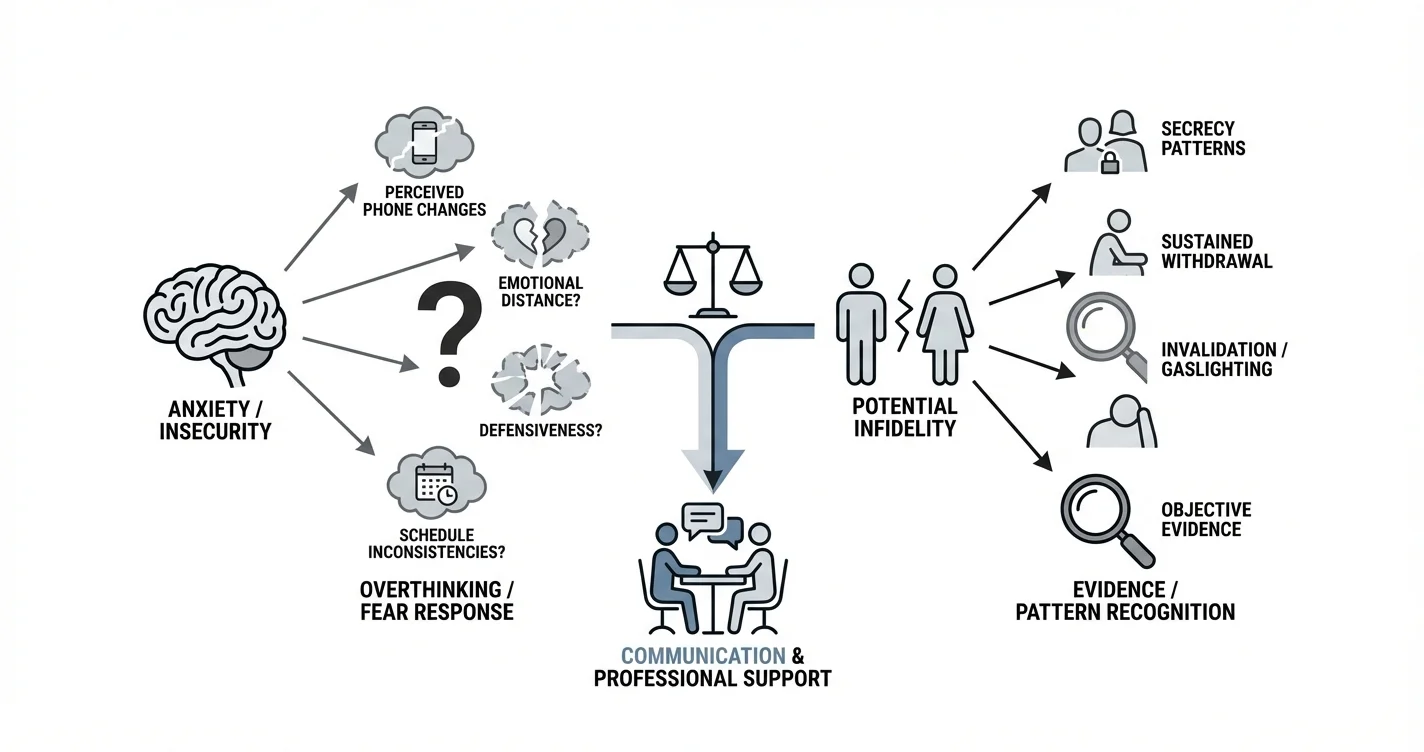
- One sign alone is not proof. You need to look calmly at the full situation before making a decision.
When your partner is cheating, it can be a shock that not everyone knows how to handle. We will review the key facts about cheating and explain what to do if you have become a victim of infidelity. If you are still at the suspicion stage, the am I being cheated on quiz organizes scattered worry into patterns you can actually look at.
What You Need to Know About This Type of Betrayal?
Cheating, or infidelity, means breaking trust in a serious relationship. Here are the main types of cheating:
1. Physical
It happens when a partner crosses physical boundaries with another person. It can be full sexual intercourse or something less serious, like kissing.
2. Emotional
This happens when a partner has a deep emotional connection with someone else. They may share secrets with that person and become emotionally closed in the main relationship. In a study shared by Psychology Today, about 65% of women said emotional cheating would upset them more than sexual cheating.
3. Digital
Today there are many online temptations. If your partner talks to someone only online but flirts or behaves in a romantic way that should be only for a committed partner, this can also be cheating.
What Cheating Is NOT
It is not:
- Having opposite sex friends
- Being busy
- Having private thoughts
- Watching porn unless agreed boundaries say otherwise
Cheating is about breaking agreed relationship boundaries in a monogamous relationship. A gut feeling alone is not proof, but it should not be ignored either. If you never discussed boundaries clearly, misunderstandings are possible.
Why Do People Cheat?
Cheating is rarely about sex alone. The most common reasons are:
- Emotional disconnection. If you have ignored your partner’s emotional needs for a long time, they may believe those needs will never be met with you and start a relationship with someone else to compensate.
- Personality factors. Individuals with highly impulsive or high stimulation personality traits often have strong libido and weaker impulse control. They may act under the influence of the moment and lose judgment, then later regret what they did.
- Narcissistic traits. People with high narcissistic traits may seek constant admiration. Cheating becomes a way to boost ego.
- Avoidant attachment style. When relationships become emotionally close, people with such a style may sabotage them, often not intentionally but as a defense mechanism.
- Revenge or resentment. Sometimes cheating can be an act of revenge for past unresolved hurt. Emotional affairs arise situationally and may not necessarily repeat, especially if the underlying conflict is addressed directly.
- Chronic validation seeking. Some people are addicted to attention. The thrill of being desired becomes the reward.
Signs That Your Partner Might Be Cheating
Research published in the Journal of Social and Personal Relationships shows that perceived secrecy and emotional withdrawal are among the strongest predictors of suspected infidelity, even before confirmation.
Common signs your boyfriend might be unfaithful include several patterns we will explain below. Do not make decisions in the heat of the moment based on the first sign. There can be many different reasons for strange behavior, and not all of them mean cheating. Take time to understand the situation before deciding whether to leave the relationship.
Changes in Phone Behavior
Do not rush to conclusions. Pay attention to context and look at the details of behavior before making a judgment. Increased screen locking, taking calls in private, deleting messages, or sudden defensiveness around the device may indicate secrecy. The real issue is not the phone itself but a shift in transparency. At the same time, be careful not to confuse normal privacy with deception. Work stress or personal boundaries can also explain this behavior.
Emotional Distance
You may not notice it for a long time. But if your partner becomes less involved in your life and you feel that he is physically near but emotionally far, there is a possibility that he is giving his emotions to someone else. However, emotional distance can also be linked to depression, burnout, stress, or unresolved conflict. The difference lies in whether your partner remains open to reconnecting or continues to disengage without explanation.
Increased Defensiveness
Heightened irritation in response to simple questions can signal guilt or concealment. A partner who reacts with anger instead of reassurance may be protecting something. That said, defensiveness can also result from feeling constantly accused. If suspicion has been ongoing, even an innocent partner may become reactive. Pay attention to patterns rather than isolated reactions.
Schedule Inconsistencies
Frequent unexplained changes in routine, vague answers about whereabouts, or small inconsistencies in stories can be warning signs. Repeated inconsistencies matter more than one unclear detail. However, modern work demands, shifting schedules, and poor communication skills can also create confusion without infidelity. Look for consistency over time.
Reduced Intimacy
Reduced sexual contact or avoidance of closeness may signal emotional disconnection or redirected attention. When intimacy decreases alongside secrecy or defensiveness, concern is understandable.
At the same time, reduced intimacy does not automatically mean cheating. Stress, hormonal changes, depression, anxiety, health issues, medication, or unresolved conflict can all affect desire and closeness. Long periods of exhaustion or life transitions often reduce sexual frequency without infidelity being involved. Pay attention to whether your partner is open to discussing the change.
Overcompensation
Sudden gifts, excessive affection, or unusual attentiveness may reflect guilt management. Sometimes people attempt to ease internal tension by being overly kind. At the same time, genuine attempts to repair distance can look similar. Consider whether the behavior feels authentic and sustained or temporary and reactive.
Gaslighting
Statements that make you question your perception, such as “You’re imagining things” or “You’re crazy,” are serious warning signs. Gaslighting shifts attention away from behavior and onto your mental state. Even if cheating is not present, repeated psychological invalidation damages trust and emotional safety. Be cautious not to confuse healthy reassurance with manipulation. A supportive partner explains calmly and addresses concerns directly.
The most important principle is this: one sign alone rarely confirms infidelity. A consistent pattern of secrecy, emotional withdrawal, defensiveness, and invalidation over time carries more weight than any single behavior.
Addressing Your Suspicions
If you suspect cheating, the worst thing you can do is panic or investigate impulsively. Acting from fear usually makes the situation worse and damages your credibility. It can destroy a relationship that was actually normal, if you confuse other solvable issues with cheating. Some problems can be addressed and resolved, and the relationship can grow into a healthy relationship, but mislabeling them as infidelity can cause unnecessary damage.
We have worked with individuals and couples facing anxiety, attachment issues, trauma, and long term relationship conflict. Based on clinical practice and evidence based methods, we want to share these practical sequence of steps that help people make healthy decisions in their relationships.
Step 1: Regulate Before You React
When you suspect your boyfriend is cheating, your brain activates a threat response. Because of this, you may distort facts and react in an unhealthy way, for example by yelling at your partner. At that moment, you may not even have clear proof that he is cheating. If it later turns out that he was not unfaithful, the damage to your relationship can be serious and difficult to repair. Calm down first, gather facts, and make decisions only based on clear evidence.
Step 2: Do Not Spy First
Many people want to check phones or messages secretly. Here is the truth: if you violate boundaries to find proof, even if you confirm someone is a cheater, the relationship is already damaged. If you feel you must secretly investigate, trust is already broken. The healthier path is direct communication.
Step 3: Choose the Right Way to Confront
Do not accuse or threaten. Instead, use calm observation-based language.
Example: “I’ve noticed you’ve been more distant lately and protective of your phone. I feel uneasy. Can we talk about what’s going on?”
Avoid saying: *“Are you cheating on me?!” *That question almost always leads to denial.
If the conversation becomes hostile or emotionally unsafe, consider speaking with a licensed therapist to gain clarity before making any major decisions.
Step 4: Watch His Response Carefully
If your partner is suddenly pulling away emotionally, becoming distant, or acting more secretive with his phone or computer, this is not something to ignore. When a person has nothing to hide, they usually remain calm and open. Their tone is steady and they do not avoid eye contact or simple questions.
When someone is hiding something, their behavior often shifts. They may become defensive, aggressive, overly argumentative, or try to convince you that you are wrong instead of addressing the concern. Pay attention to body language as well. Tension in the shoulders, closed posture, crossed arms, avoiding eye contact, turning the body away, or physically distancing during the conversation can signal discomfort and avoidance. While body language alone is not proof, consistent defensive reactions combined with closed physical signals are warning signs that should not be ignored.
Step 5: Ask Direct but Neutral Questions
Again, do not apply pressure. Stay calm and ask neutral, fact based questions instead of accusations. Do not say, “You like her, don’t you?!” Instead say, “I’ve noticed you talk to her often, and it usually happens late at night. Can you help me understand what that is about?”
If a person avoids answering directly or clearly lies, that may already be your answer. You do not need to argue or create drama, but you should reflect carefully. You must always be your own priority. If someone cannot speak to you honestly, the healthiest decision may be to walk away from that partner.
Step 6: Prepare for Any Outcome
A common mistake many people make is the lack of emotional preparedness. Before starting an honest conversation with your partner, think through what you will do if he confirms his infidelity or if he denies it but it is clear he is not being honest. In some cases, it is best to take time before that conversation and seek support from a qualified expert who can help you stay grounded and approach the situation in a stable way.
Step 7: Understand the Deeper Issue
You may feel happy if you find out that your partner was not cheating. But this is not only good news. It can also mean that your relationship still has problems that need attention. If your partner became distant, there may be other issues.
It is important to talk openly and ask what is bothering your partner. Honest communication and effort from both sides help build a caring and healthy relationship where you do not constantly doubt each other.
When It Might Be Anxiety?
There are many situations where cheating may not be happening at all. You may notice changes in your partner’s behavior or phone habits, but these changes can have other reasons. If you think he’s cheating, it may come from your own anxiety or insecurity. Sometimes your gut instinct feels strong, but it is not always a real sign of infidelity.
On your partner’s side, the problem may be related to attachment style, such as attachment anxiety or avoidance. Not every change means cheating.
It is important to tell your partner how you feel instead of accusing them. Open communication can clear up misunderstandings. Couples therapy can help you understand the issue. Professional support can help you see the difference between true signs of infidelity and fear based reactions.
Deciding on the Future of Your Relationship
If your boyfriend has been unfaithful, doing nothing is not an option. This does not automatically mean you must end the relationship, but you need to clearly evaluate your partner’s behavior and any warning signs that may have been present for long periods of time. Trust your gut, but also look at facts. Think about what you want and what you are willing to tolerate. Trust is the foundation of any healthy relationship.
If your partner is emotionally immature, does not recognize the pain they caused, avoids responsibility, or is not willing to change their behavior, the risk of repetition is high. In that case, staying will likely lead to more emotional damage. You deserve a partner who respects you and protects your emotional well being.
If your partner is emotionally mature, openly acknowledges the harm, takes full responsibility, and shows a clear commitment to change, the relationship may be repairable. Real repair requires honest conversations and consistent corrective behavior over time. It is important to understand what factors contributed to the betrayal, whether personal insecurity, poor boundaries, unmet needs, or avoidance patterns. Working with a relationship therapist or using online therapy can help you figure out problems and significantly increase the chances of long term recovery and rebuilding trust.
How AI Support Helps You Heal
AI emotional support isn't about replacing human connection — it's about filling the gaps. The moments when you need to talk at 2 AM, when you don't want to burden your friends again, or when you simply need someone to listen without judgment.
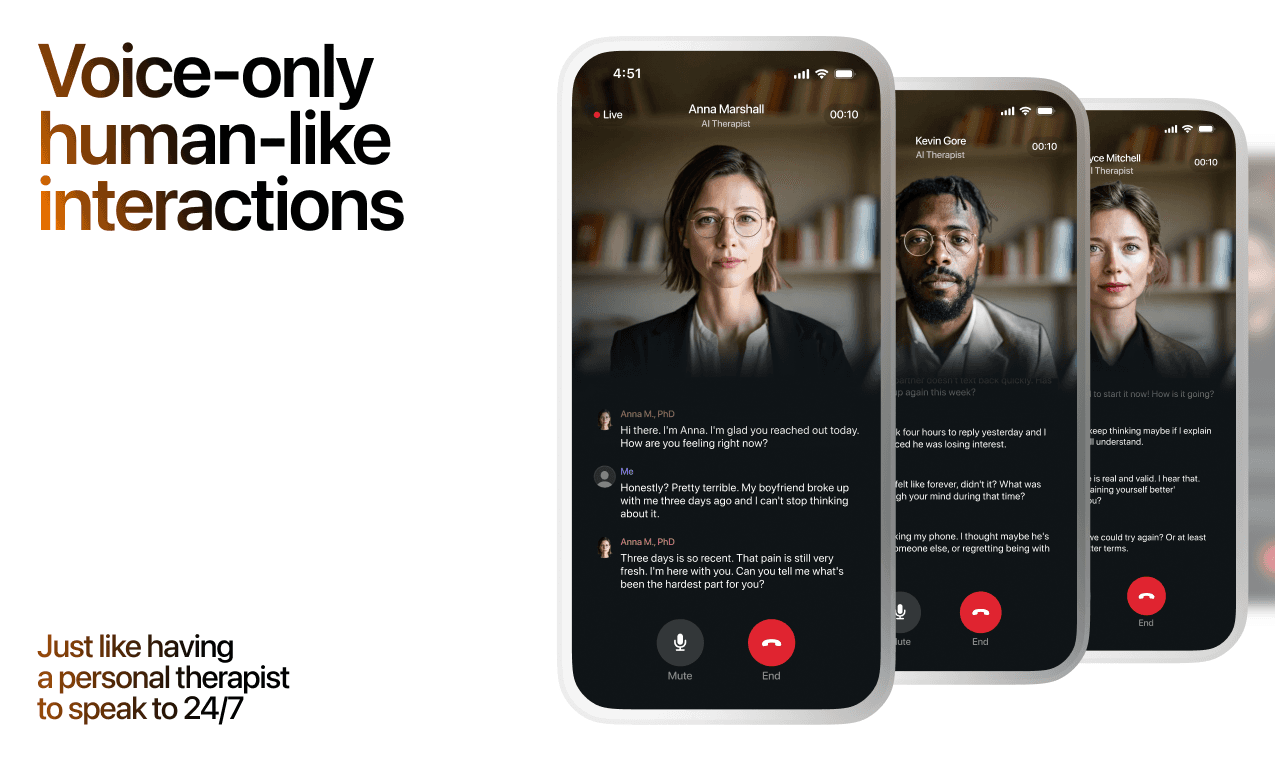
Here's what happens in a typical Lovon session:
You share what's on your mind
There's no script, no intake form, no waiting room. You speak or type whatever you're feeling — in your own words, at your own pace.
Lovon validates and explores
Using frameworks from CBT (Cognitive Behavioral Therapy) and motivational interviewing, Lovon acknowledges your feelings first, then gently helps you explore them. No dismissive "just move on" advice.
You build coping skills together
Lovon doesn't just listen — it actively works with you on evidence-based techniques: thought reframing, urge surfing, behavioral experiments, and more.
What a Session with Lovon Looks Like
When to Seek Professional Help
AI support is a valuable tool, but it's not a replacement for professional care. Please consider reaching out to a licensed therapist if you experience any of the following:
- Persistent thoughts of self-harm or suicide
- Inability to perform daily activities (work, eating, sleeping) for more than 2 weeks
- Turning to alcohol or substances to cope
- Intense anger or desire to harm your ex-partner
- Complete emotional numbness that doesn't improve over time
Crisis Resources (US): If you're in immediate danger, call 988 (Suicide & Crisis Lifeline) or text HOME to 741741 (Crisis Text Line). Available 24/7, free, and confidential.
Outside the US? Find a crisis line in your country
Ready to Start?
Your healing journey can begin right now
A 7-day trial. No judgment. Just a safe space to process what you're going through.
Frequently Asked Questions
How do I know if my boyfriend is cheating or if I’m just overthinking?
What is usually the first sign of cheating?
Can phone habits really be a sign of infidelity?
Should I check his phone if I suspect cheating?
When should I consider leaving the relationship?
About the Author
The Lovon Editorial Team
Mental Health & Wellness Content Team
The Lovon Editorial Team develops mental health and wellness content designed to make psychological concepts accessible and actionable. Our goal is to bridge the gap between clinical research and everyday life - helping you understand why your mind works the way it does and what you can do about it....
Related articles
- How to Stop Obsessing Over Someone: Effective Strategies for Letting Go
It is a deeply painful experience when you cannot stop thinking about someone. It takes over all your thoughts.
- Anxious Avoidant Attachment: Styles, Patterns, & What They Mean
Although some people truly invest in relationships, they may find themselves thinking that they are the reason those…
- How to Rebuild Trust After Cheating: 2026 Step Guide
How to rebuild trust after cheating in 2026: 7 concrete steps, common mistakes, and a realistic timeline for couples…
- Emotionally Unavailable Man: Signs You Keep Attracting Him
Sometimes it may feel like you’re unlucky, like things just never work out with your partner and every relationship goes…
See also
Quizzes
- Forgiveness Test: How Forgiving Are You, Even of Yourself?
See where forgiveness gets stuck for you, in 3 minutes.
- Trustworthy Person Test: Can People Count on You?
Follow-through, honesty and discretion, in 3 minutes.
Free tools
- How to Stop Being Jealous in a Relationship
Two very different people search this, and advice that assumes either one is wrong half the time. This sorts what you…
- How to Respond to an Apology You're Not Sure About
A chat for how to respond to an apology that is sitting unanswered on your phone. Paste what they said, tell it what it…
From the wiki
- What is cheating in a relationship?
Cheating is a breach of the agreement you and your partner made about who else gets your body, your attention and your…
Disclaimer: This article is for informational purposes only and does not constitute medical advice, diagnosis, or treatment. Always seek the advice of your physician or other qualified health provider with any questions you may have regarding a medical condition. If you are in crisis or think you may have an emergency, call 988 (Suicide & Crisis Lifeline) or go to the nearest emergency room. Outside the US? Find a crisis line in your country.