
Understanding Father Wound Manifestations in Adult Life
The relationship with a father figure shapes fundamental aspects of psychological development, often in ways that remain unrecognized until adulthood.
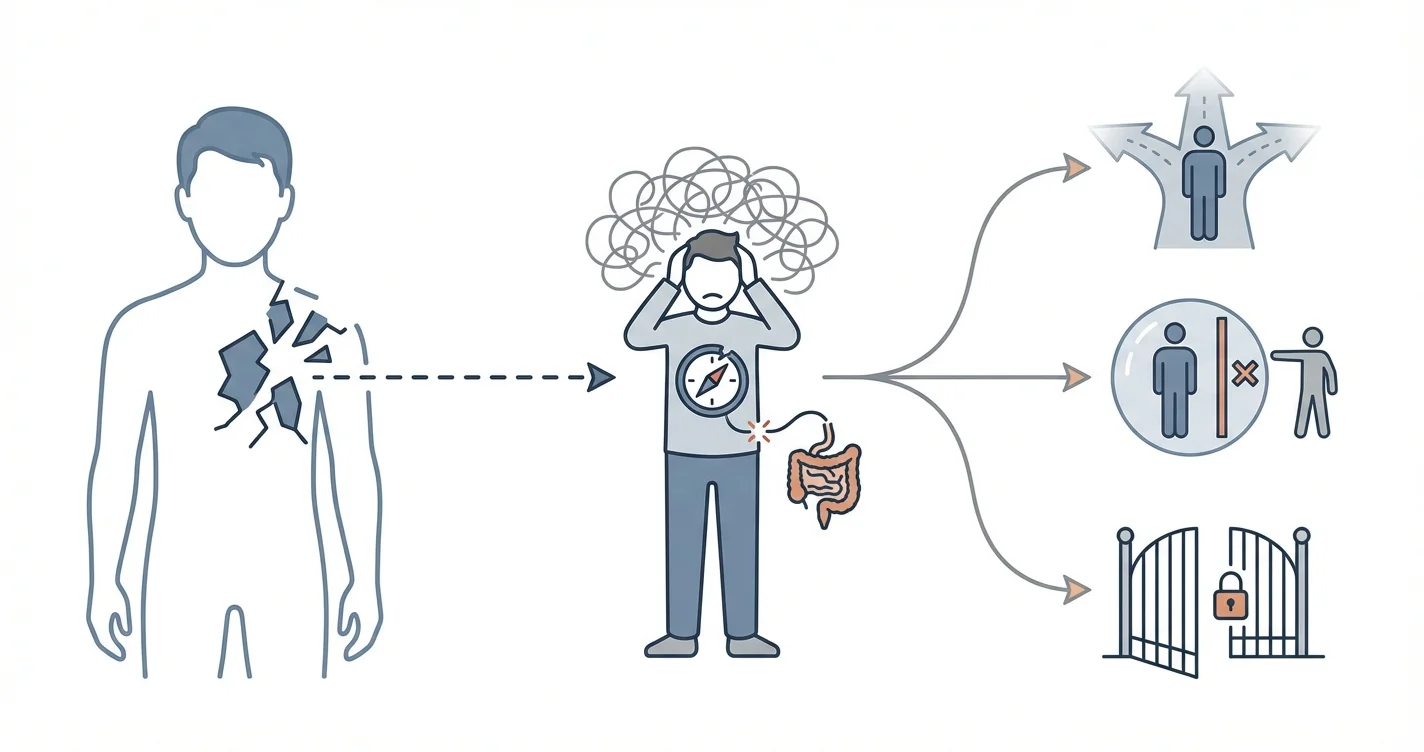

Key Takeaways
- Extended deliberation periods even for minor decisions, accompanied by physical tension or anxiety
- Compulsive information-gathering that delays action indefinitely
- Seeking external validation from multiple sources before committing to choices
- Second-guessing decisions immediately after making them
- Avoidance of situations requiring autonomous choice-making
Introduction
The relationship with a father figure shapes fundamental aspects of psychological development, often in ways that remain unrecognized until adulthood. Father wound manifestations emerge as specific behavioral and emotional patterns that affect how individuals navigate decisions, trust themselves, and move through the world. Unlike wounds related to maternal relationships—which typically impact self-perception and feelings of safety—father wounds primarily influence self-trust, intuitive connection, and the capacity to act decisively. Research in attachment theory and trauma-informed therapy has increasingly recognized these patterns as distinct psychological phenomena that require targeted understanding and intervention. This article examines the specific ways father wounds manifest in adult life, drawing from contemporary therapeutic approaches and clinical observations to provide actionable insight for those seeking to understand these patterns in themselves or others.
The Psychological Foundation of Father Wound Manifestations
Father wounds develop when a paternal figure is absent, emotionally unavailable, or inconsistent during critical developmental periods. According to attachment research, the father's role in healthy psychological development extends beyond provision and protection—it encompasses modeling confidence in decision-making, supporting autonomous exploration, and validating the child's developing sense of agency.
When this relational foundation is compromised, specific neural and emotional patterns take root. Studies in developmental psychology suggest that paternal engagement during childhood correlates with later capacities for risk assessment, goal pursuit, and self-directed action. The absence or inconsistency of this engagement doesn't simply create a void—it actively shapes how the developing brain learns to process opportunities, evaluate choices, and respond to internal guidance signals.
These patterns become embedded in what trauma specialists describe as implicit memory—procedural knowledge that operates below conscious awareness. An adult who freezes when faced with career opportunities may have no explicit memory of a father dismissing their childhood aspirations, yet the pattern persists because it was encoded during formative years when the brain was developing its decision-making architecture.
The distinction between father and mother wounds reflects different developmental needs. While maternal relationships primarily establish baseline security and self-worth, paternal relationships typically influence the capacity to venture beyond that secure base—to take risks, make autonomous choices, and trust internal knowing. This differentiation appears across multiple therapeutic frameworks and attachment research paradigms.
Primary Father Wound Manifestations in Decision-Making
One of the most common father wound manifestations appears as a freezing response when faced with decisions, particularly those involving personal advancement or new opportunities. This paralysis isn't laziness or lack of ambition—it's a nervous system response rooted in early relational patterns.
Individuals experiencing this manifestation often report:
- Extended deliberation periods even for minor decisions, accompanied by physical tension or anxiety
- Compulsive information-gathering that delays action indefinitely
- Seeking external validation from multiple sources before committing to choices
- Second-guessing decisions immediately after making them
- Avoidance of situations requiring autonomous choice-making
This pattern frequently develops when a father figure was critical, unpredictable, or dismissive of the child's developing autonomy. The child learns—often nonverbally—that their judgment is unreliable and that acting on personal desire leads to disappointment or criticism. In adulthood, this manifests as a fundamental distrust of one's own decision-making capacity.
Neurologically, this involves dysregulation in the systems that process risk and reward. When the brain associates autonomous action with potential relational rupture or judgment, it activates protective mechanisms that manifest as hesitation, overthinking, or complete avoidance. The individual isn't consciously choosing paralysis—their nervous system is executing a protective strategy learned decades earlier.
Professionals working with these patterns emphasize that the decision-making freeze isn't about lacking information or intelligence. It reflects a deeper disconnection from the internal signals that typically guide confident choice-making—what many therapeutic approaches describe as intuitive knowing or body wisdom.
Disconnection from Intuition and Internal Guidance
Another distinctive father wound manifestation involves a profound disconnection from intuitive knowing. This presents differently from decision paralysis, though the two often coexist. Where decision paralysis involves overthinking, intuitive disconnection involves not hearing internal signals at all.
This manifests as:
- Difficulty identifying what you genuinely want in situations with multiple options
- Chronic reliance on external frameworks, rules, or others' opinions to determine action
- Physical disconnection—inability to sense bodily cues that signal alignment or misalignment
- Confusion between "should" and "want" to the point where the distinction becomes meaningless
- Persistent sense of being untethered or directionless despite external markers of success
The development of intuitive capacity requires a relational environment where internal experiences are recognized, reflected, and validated. When a father figure is emotionally unavailable or dismissive of the child's internal world, the child learns to disregard those signals. Over time, the neural pathways that connect bodily sensations to conscious awareness and decision-making become less developed.
Emerging research in somatic psychology suggests that intuition operates through interoception—the brain's capacity to sense and interpret internal bodily states. When early relationships don't support this capacity's development, adults may experience a kind of internal silence where guidance signals should be. They can articulate what others expect or what conventional wisdom suggests, but they cannot access what they themselves sense or want.
Tools like Lovon.app can provide a space to begin naming and exploring these internal experiences through reflective conversation, helping individuals practice articulating what they're sensing beneath conscious thought. However, rebuilding intuitive connection typically requires sustained work with body-based therapeutic approaches that specifically target interoceptive awareness.
Avoidance of Opportunities and Self-Sabotage Patterns
Father wound manifestations frequently include a pattern of avoiding, dismissing, or unconsciously sabotaging opportunities for advancement, recognition, or fulfillment. This isn't conscious self-destruction—it's a protective mechanism that maintains familiar relational and emotional territory.
This pattern appears as:
- Failing to apply for positions, opportunities, or experiences despite being qualified and interested
- Diminishing personal accomplishments or deflecting recognition
- Creating obstacles (procrastination, perfectionism, conflict) that prevent success just as it becomes achievable
- Feeling uncomfortable or anxious when receiving positive attention or achievement
- Unconsciously selecting situations or relationships that recreate disappointment
The psychological foundation involves learned associations between visibility, success, or autonomy and relational danger. If a father figure was threatened by the child's accomplishments, dismissive of their capabilities, or absent during moments of achievement, the child's developing brain may encode success itself as relationally risky.
In attachment terms, this represents a conflict between the drive for mastery (a fundamental human motivation) and the need for connection. When these two drives cannot coexist—when achievement threatens relational security—many individuals unconsciously prioritize connection by limiting their own advancement.
Clinical approaches to these patterns emphasize that awareness alone rarely resolves them. The patterns operate through implicit memory and nervous system responses that require somatic and relational interventions, not just cognitive insight. Therapeutic modalities that address these manifestations typically work with the embodied experience of opportunity, gradually building tolerance for the sensations that accompany growth and visibility.
Relationship Patterns Stemming from Father Wounds
Father wound manifestations extend significantly into adult relationship dynamics, creating specific patterns in how individuals connect, trust, and maintain intimate partnerships. These patterns differ from those typically associated with maternal attachment wounds, though the two can certainly overlap.
Common relational manifestations include:
- Difficulty trusting partners' reliability or consistency, leading to hypervigilance or testing behaviors
- Selecting partners who are emotionally unavailable or inconsistent, recreating the original dynamic
- Discomfort with depending on others, resulting in compulsive self-sufficiency
- Unclear boundaries—either excessive rigidity or inappropriate permeability
- Patterns of pursuing unavailable partners while feeling trapped by available ones
These patterns reflect working models of relationships developed during early paternal interactions. If a father was inconsistent, a child learns that connection is unpredictable and must be constantly monitored. If a father was absent, the child may develop models of relationships that don't include reliable male presence. If a father was overwhelming or controlling, the child may learn that closeness means losing autonomy.
In adult partnerships, these early models activate automatically, particularly during stress or conflict. An individual might intellectually understand their partner is trustworthy while simultaneously experiencing intense anxiety about abandonment or betrayal—because the anxiety originates from implicit relational templates, not present-day assessment.
For those recognizing these patterns, platforms like Lovon.app offer accessible support for processing relationship dynamics and preparing for difficult conversations, though deeper pattern work typically requires ongoing therapeutic engagement that specifically addresses attachment and relational trauma.
Working Through Father Wound Manifestations
Addressing father wound manifestations requires approaches that target both explicit understanding and implicit, body-based patterns. Cognitive awareness of these dynamics provides important context but rarely changes the manifestations themselves, which operate through procedural memory and nervous system conditioning.
Effective therapeutic approaches typically include:
Somatic and body-based work: Techniques that build interoceptive awareness, helping individuals recognize and tolerate the bodily sensations associated with autonomous action, intuitive knowing, and receiving opportunities. This might include somatic experiencing, sensorimotor psychotherapy, or body-oriented trauma approaches.
Attachment-focused therapy: Modalities that work directly with relational templates and attachment patterns, creating corrective experiences that gradually shift implicit models of relationships and self. This includes approaches like AEDP (Accelerated Experiential Dynamic Psychotherapy) or attachment-based EMDR.
Parts work and internal family systems: Frameworks that recognize different aspects of self—including protective parts that create decision paralysis or opportunity avoidance—and work toward integration rather than elimination of these patterns.
Nervous system regulation: Building capacity to recognize and shift physiological states, particularly the freeze response that underlies decision paralysis. This includes polyvagal-informed approaches that target autonomic nervous system flexibility.
Importantly, healing these patterns doesn't require reconciliation with or direct engagement with the father figure who contributed to the wound. While relational repair can be valuable when possible, the therapeutic work primarily involves the individual's internal relationship with themselves—rebuilding self-trust, intuitive connection, and the capacity for autonomous action.
When to Seek Professional Support
While increased awareness and self-directed learning provide value, certain manifestations indicate the need for professional therapeutic support:
- Decision paralysis that significantly impairs functioning—inability to make necessary life decisions about employment, relationships, or living situations
- Self-sabotage patterns that repeatedly prevent achievement despite conscious desire and effort
- Complete disconnection from internal experience, including emotional numbness or inability to identify feelings or desires
- Relationship patterns that create persistent distress or repeatedly result in harmful dynamics
- Physical symptoms (chronic tension, digestive issues, sleep disturbance) connected to decision-making or opportunities
Therapists specializing in attachment trauma, complex trauma, or somatic approaches bring specific expertise to these manifestations. Many individuals find that father wound patterns respond particularly well to therapeutic relationships that provide the consistency, attunement, and support for autonomy that was absent in the original paternal relationship.
Conclusion
Father wound manifestations create specific, recognizable patterns in adult life—primarily affecting decision-making capacity, intuitive connection, and the ability to pursue opportunities. These patterns emerge from early relational dynamics with paternal figures who were absent, emotionally unavailable, or inconsistent, and they operate through both psychological and neurobiological mechanisms that require targeted approaches to address effectively. Unlike more general anxiety or self-esteem issues, father wound manifestations reflect disruptions in specific developmental capacities related to autonomy, agency, and self-trust. Recognition of these patterns provides the first step toward healing, though sustainable change typically requires therapeutic approaches that address both explicit understanding and implicit, body-based conditioning. For those beginning to identify these manifestations in their own experience, resources that support reflective exploration—including accessible tools and professional therapeutic relationships—offer pathways toward rebuilding the capacities for confident decision-making, intuitive connection, and wholehearted engagement with life's opportunities.
Disclaimer: This is general information, not medical advice or diagnosis. If symptoms are severe, affecting your daily life, or you're having thoughts of self-harm—seek professional help. In the US: call or text 988 (Suicide & Crisis Lifeline). For immediate danger: 911 or local emergency services.
How AI Support Helps You Heal
AI emotional support isn't about replacing human connection — it's about filling the gaps. The moments when you need to talk at 2 AM, when you don't want to burden your friends again, or when you simply need someone to listen without judgment.
Here's what happens in a typical Lovon session:
You share what's on your mind
There's no script, no intake form, no waiting room. You speak or type whatever you're feeling — in your own words, at your own pace.
Lovon validates and explores
Using frameworks from CBT (Cognitive Behavioral Therapy) and motivational interviewing, Lovon acknowledges your feelings first, then gently helps you explore them. No dismissive "just move on" advice.
You build coping skills together
Lovon doesn't just listen — it actively works with you on evidence-based techniques: thought reframing, urge surfing, behavioral experiments, and more.
What a Session with Lovon Looks Like

When to Seek Professional Help
AI support is a valuable tool, but it's not a replacement for professional care. Please consider reaching out to a licensed therapist if you experience any of the following:
- Persistent thoughts of self-harm or suicide
- Inability to perform daily activities (work, eating, sleeping) for more than 2 weeks
- Turning to alcohol or substances to cope
- Intense anger or desire to harm your ex-partner
- Complete emotional numbness that doesn't improve over time
Crisis Resources (US): If you're in immediate danger, call 988 (Suicide & Crisis Lifeline) or text HOME to 741741 (Crisis Text Line). Available 24/7, free, and confidential.
Outside the US? Find a crisis line in your country
Ready to Start?
Your healing journey can begin right now
A 7-day trial. No judgment. Just a safe space to process what you're going through.
Frequently Asked Questions
Is Lovon a replacement for a real therapist?
Is my conversation with Lovon AI private?
How is Lovon different from ChatGPT for emotional support?
Can I use Lovon if I'm already seeing a therapist?
Can I try Lovon before subscribing?
About the Author

The Lovon Editorial Team
Mental Health & Wellness Content Team
The Lovon Editorial Team develops mental health and wellness content designed to make psychological concepts accessible and actionable. Our goal is to bridge the gap between clinical research and everyday life - helping you understand why your mind works the way it does and what you can do about it....
Related articles
- Narcissistic Parent Dynamics and Power Imbalance in Relationships
The relationship between a parent and child is inherently unequal by design — but when narcissistic parent dynamics and…
- BPD Treatment Specialization: Four Parent Types Affecting Emotional Regulation
For individuals with borderline personality disorder (BPD), emotional regulation difficulties rarely emerge in…
- How to Heal from Emotionally Immature Parents and Conditional Love
Growing up with emotionally immature parents who offer conditional love creates lasting patterns that many adults…
- Understanding Toxic Parent Accountability Patterns
When adult children attempt to address harm caused by their parents, they often encounter a predictable set of responses…
See also
Quizzes
- Boundaries Test: Free 12-Question Self-Check
See where your boundaries slip, in 3 minutes.
- Relationship Quality Test: How Good Is Your Relationship?
Score connection, repair and teamwork in 3 minutes.
Free tools
- How to Confront a Narcissistic Parent
Most of these conversations fail because you went in wanting three things at once. Tell it what you want to raise, and…
- How to Come Out to Your Parents
A chat about how to come out to your parents that starts with whether now is safe, not with the speech. Tell it your…
From the wiki
- Why do I have no friends?
Usually nothing is wrong with you. Adult friendship runs on proximity and repetition, and most people lose both at once…
Disclaimer: This article is for informational purposes only and does not constitute medical advice, diagnosis, or treatment. Always seek the advice of your physician or other qualified health provider with any questions you may have regarding a medical condition. If you are in crisis or think you may have an emergency, call 988 (Suicide & Crisis Lifeline) or go to the nearest emergency room. Outside the US? Find a crisis line in your country.