
Anxious Avoidant Attachment: Styles, Patterns, & What They Mean
Although some people truly invest in relationships, they may find themselves thinking that they are the reason those relationships do not work.

Key Takeaways
- 15-20% of adults have anxious attachment
- 20–25% of adults have avoidant attachment
- Attachment styles can change, but it requires self-awareness and personal effort
Introduction
Although some people truly invest in relationships, they may find themselves thinking that they are the reason those relationships do not work. This happens to many people, and it is not something to be afraid of. What matters is understanding why it happens and what you can do about it.
What Attachment Theory Says About Relationships?
Attachment theory looks at our childhood and suggests that early experiences strongly influence our future relationships. The people who care for us in childhood strongly shape how we relate to others and how we build our view of the world. There are many different ways these early experiences can unfold, and because of that, a child may develop different attachment styles.
Types of Attachment as Adults
Understanding the type of attachment style helps explain why we react to closeness and emotional distance in certain ways. While everyone is unique, psychologists generally describe four main attachment styles that often continue into adulthood.
Secure Attachment Style
Secure attachment develops when a parent or caregiver responds consistently and emotionally attuned to a child’s needs. When distress is met with comfort and emotions are acknowledged, the child learns that closeness is safe.
Research shows that approximately 55 percent of adults in the United States demonstrate a secure attachment style. Longitudinal data from the Minnesota Study of Risk and Adaptation found that children who experienced consistent caregiving at 12-18 months were significantly more likely to form stable, healthy relationships in adulthood.
In relationships as an adult, someone with this attachment style may feel comfortable with intimacy but does not depend on constant reassurance. They can express vulnerability without fear and set boundaries without withdrawing emotionally.
Let's look at a real example: Emma grew up in a home where her mother worked full-time but consistently responded when Emma was upset. If Emma cried after a difficult day at school, her mother listened and helped her problem solve. Her father encouraged independence but remained emotionally available. As an adult, Emma is married with one child. When her husband travels for work, she misses him but does not panic or assume rejection. Her understanding of attachment allows her to recognize that temporary stress does not threaten the relationship.
Anxious Attachment Style
Anxious attachment, often described as anxious preoccupied attachment, is one of the adult attachment styles characterized by high attachment anxiety and fear of abandonment. It often develops when children with anxious attachment experience inconsistent caregiving. When a parent or caregiver is sometimes emotionally available and sometimes withdrawn, the child learns that love can disappear unpredictably.
Research suggests that around 15 to 20 percent of adults show anxious attachment patterns. Someone with an anxious attachment is more likely to feel anxious in romantic relationships, seek reassurance, and interpret small changes in behavior as signs of rejection. In adult relationships, an anxious partner may become preoccupied with communication frequency or emotional distance. Their relationship patterns often include reassurance seeking and difficulty tolerating ambiguity.
Let's look at a real example: Princess Diana openly spoke in interviews about feeling emotionally insecure in her marriage and fearing abandonment. In her 1995 BBC Panorama interview, she described intense emotional distress and fear of losing connection. Many psychologists later discussed her behavior through the lens of attachment anxiety. While no formal diagnosis can be made posthumously, her own words reflected common traits seen in people with anxious attachment.
Dismissive-Avoidant Attachment Style
Dismissive attachment, often described as avoidant dismissive, is one of the major adult attachment styles identified in attachment theory. It typically develops when a parent or caregiver consistently discourages emotional dependence. Children raised in emotionally distant or highly self-sufficient environments may learn that vulnerability is unsafe. Over time, they suppress emotional needs and prioritize independence.
Research suggests that approximately 20 to 25 percent of adults display patterns associated with dismissive attachment. People with avoidant attachment often appear confident and emotionally stable. However, avoidant attachment may limit emotional depth and closeness in relationships later in life. Individuals with this pattern tend to minimize the importance of romantic bonds and may withdraw when intimacy increases.
Let's look at a real example: For many years, George Clooney publicly described himself as someone who did not believe in marriage and did not see long-term commitment as necessary. In multiple interviews during the 1990s and 2000s, he emphasized independence and openly stated that marriage was not for him. Media psychologists often referenced his earlier relationship patterns as examples of dismissive attachment, where emotional autonomy is prioritized over partnership. Clooney maintained long-term relationships but avoided formal commitment, reinforcing a public narrative of emotional distance. Later in life, Clooney entered a stable marriage with Amal Clooney, demonstrating that attachment patterns are not fixed. Adult attachment styles can shift through experience and secure relational environments.
Fearful Avoidant and Disorganized Attachment
Fearful-avoidant attachment, also known as the disorganized attachment style, combines high anxiety and high avoidance. A person with this fearful-avoidant attachment style feels a strong desire for closeness but simultaneously fears betrayal or loss. Such attachment styles form when a parent or caregiver is both a source of comfort and a source of fear. In such environments, the child cannot form a consistent strategy for safety. As adults, individuals may struggle with intense emotional swings in relationships. Research estimates that around 10 to 15 percent of adults show patterns consistent with disorganized attachment.
Let's look at a real example: In biographies and historical psychological reviews, Marilyn Monroe’s early childhood is widely documented as unstable. She experienced foster care placements and lack of consistent caregiving. Many psychologists have retrospectively discussed her relational behavior through the lens of fearful avoidant attachment. In her adult relationships, Monroe displayed intense emotional dependence combined with fear of abandonment. Her marriages were passionate but unstable. Again, this is not a formal diagnosis, but a behavioral pattern frequently analyzed by mental health professionals reviewing her life history.
Fearful avoidant attachment differs from dismissive attachment because attachment requires safety, and in this style safety feels unpredictable.
What Is Anxious-Avoidant Attachment?
Understanding anxious-avoidant attachment starts with recognizing how anxious and avoidant attachment styles interact. Anxious attachment is driven by fear of abandonment and a strong need for reassurance. Avoidant attachment is driven by discomfort with intimacy and a need for independence. When these two patterns come together, they often create what is called an anxious-avoidant relationship.
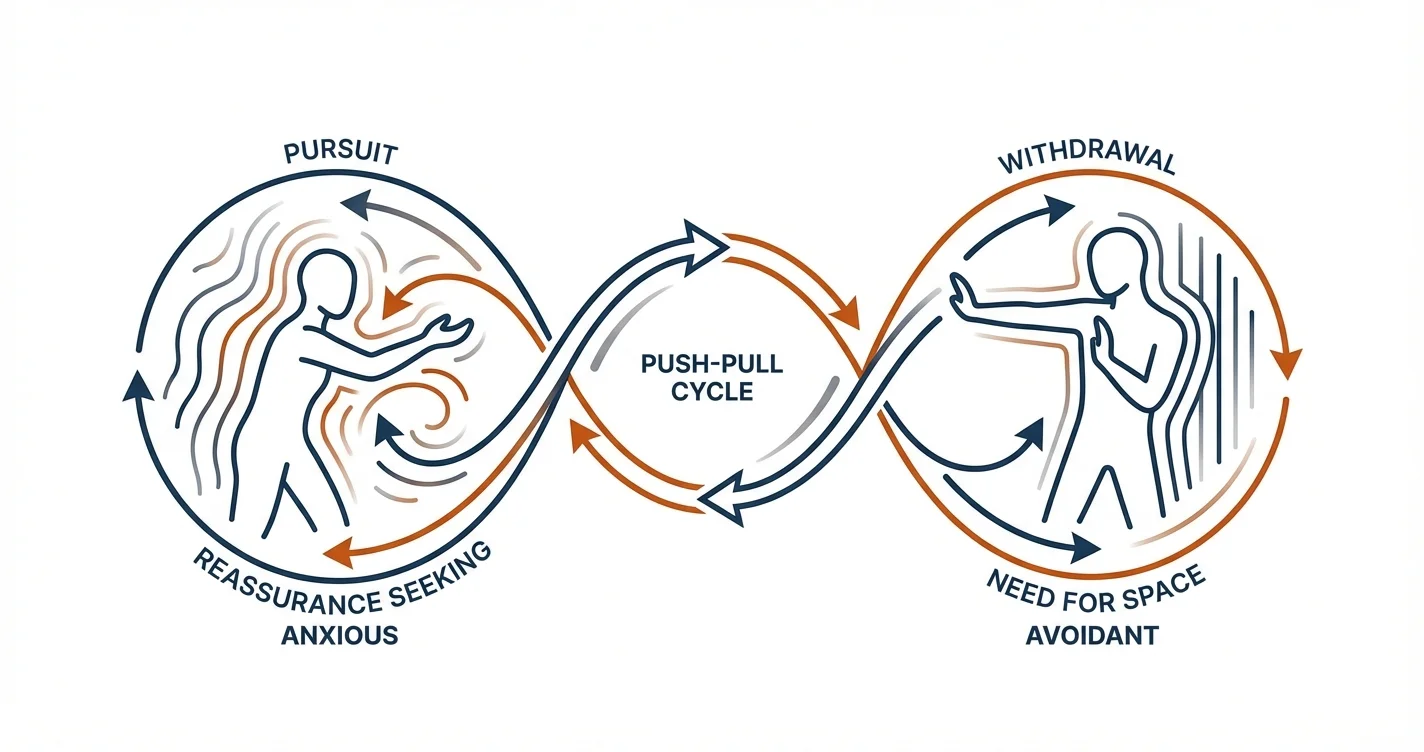
In this dynamic, one partner seeks closeness while the other creates distance. The anxious partner may push for more connection or emotional reassurance. The avoidant partner may respond by withdrawing or needing space. This push-pull cycle can repeat over and over, increasing frustration on both sides.
Compared with secure attachment, where both partners feel safe expressing needs and respecting boundaries, anxious-avoidant attachment tends to feel unstable. Small conflicts can escalate quickly. The more the anxious partner pursues, the more the avoidant partner distances. The more the avoidant partner withdraws, the more anxious the other feels.
It is important to understand that anxious-avoidant attachment is not a separate category from avoidant and anxious attachment styles. It usually refers to the relationship dynamic created when someone with anxious attachment partners with someone who has avoidant attachment. However, some individuals may also show mixed traits of both anxious and avoidant patterns internally, which can resemble fearful-avoidant tendencies.
Understanding your attachment style is essential if you find yourself in an anxious-avoidant relationship. Recognizing the pattern helps shift the focus from blaming each other to identifying the cycle itself.
Signs You May Have an Anxious-Avoidant Attachment Style
An anxious-avoidant pattern is a form of insecure attachment that combines fear of abandonment with fear of intimacy. This insecure attachment style often feels internally conflicted and emotionally unstable. You may recognize these signs:
- You crave closeness but feel uncomfortable when someone gets too close
- You feel anxious about losing the relationship, then suddenly distance yourself
- You overthink messages or tone, then withdraw to protect yourself
- You start relationships intensely but struggle to maintain emotional stability
- You push your partner away after moments of vulnerability
- You repeat the same unstable relationship cycles
How Anxious-Avoidant Attachment Impacts Relationships?
Studies estimate that approximately 15-20% of adults show primarily anxious attachment patterns, while about 20-25% display avoidant patterns. A large meta-analysis published in Journal of Personality and Social Psychology found that individuals with insecure attachment report lower relationship satisfaction and higher conflict frequency. People often feel less happy in relationships when these patterns are present. They may not feel supported and often feel they have to deal with confusing problems and constantly reassure their partner that everything is okay.
Children with avoidant attachment often learned early to suppress emotional needs. As adults, their attachment style may lead them to minimize conflict or disengage during stress. Meanwhile, anxious partners may escalate emotional expression to regain connection. This mismatch increases emotional reactivity on both sides. However, anxious-avoidant attachment may shift over time. Studies show that attachment is not fixed. Through therapy, self-awareness, and consistent relational safety, individuals can move toward more secure functioning and increase the likelihood of fulfilling relationships.
Ways to Overcome Anxious Avoidant Attachment
Anxious-avoidant patterns are a difficult attachment dynamic, but attachment styles can change. With awareness and consistent effort, individuals with this attachment style can gradually develop a secure attachment style and build healthier intimate relationships. Practical steps you should take:
- Identify your triggers. Notice when you feel the urge to cling or withdraw. Awareness is the first step toward change.
- Pause before reacting. Instead of pursuing or distancing immediately, take time to regulate your emotions.
- Communicate directly. Say what you feel without blaming. Clear communication reduces the push-pull cycle.
- Build emotional tolerance. Practice staying present during discomfort instead of escaping it.
- Challenge negative assumptions. Do not assume distance means rejection or closeness means loss of independence.
- Choose emotionally consistent partners. Stability supports nervous system regulation.
- Seek therapy if needed. Attachment focused therapy can help reprocess early patterns and develop a secure attachment.
How AI Support Helps You Heal
AI emotional support isn't about replacing human connection — it's about filling the gaps. The moments when you need to talk at 2 AM, when you don't want to burden your friends again, or when you simply need someone to listen without judgment.
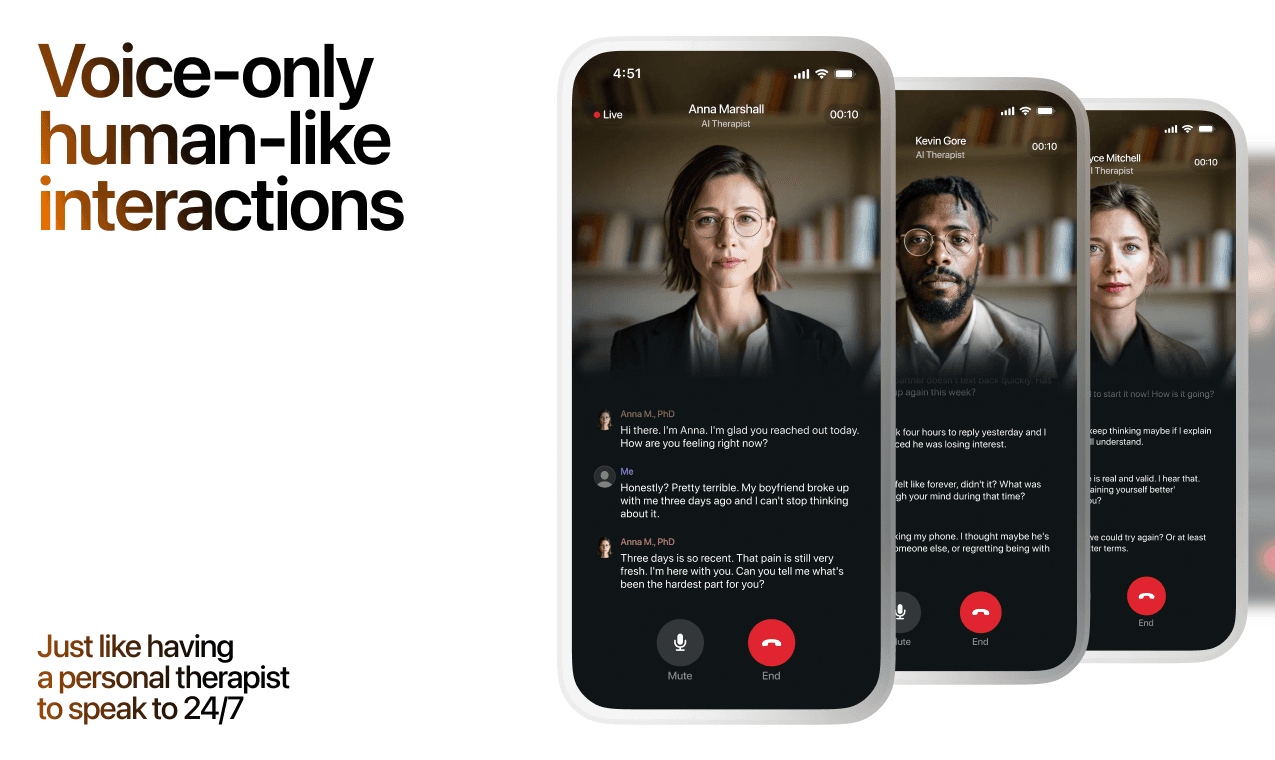
Here's what happens in a typical Lovon session:
You share what's on your mind
There's no script, no intake form, no waiting room. You speak or type whatever you're feeling — in your own words, at your own pace.
Lovon validates and explores
Using frameworks from CBT (Cognitive Behavioral Therapy) and motivational interviewing, Lovon acknowledges your feelings first, then gently helps you explore them. No dismissive "just move on" advice.
You build coping skills together
Lovon doesn't just listen — it actively works with you on evidence-based techniques: thought reframing, urge surfing, behavioral experiments, and more.
What a Session with Lovon Looks Like
When to Seek Professional Help
AI support is a valuable tool, but it's not a replacement for professional care. Please consider reaching out to a licensed therapist if you experience any of the following:
- Persistent thoughts of self-harm or suicide
- Inability to perform daily activities (work, eating, sleeping) for more than 2 weeks
- Turning to alcohol or substances to cope
- Intense anger or desire to harm your ex-partner
- Complete emotional numbness that doesn't improve over time
Crisis Resources (US): If you're in immediate danger, call 988 (Suicide & Crisis Lifeline) or text HOME to 741741 (Crisis Text Line). Available 24/7, free, and confidential.
Outside the US? Find a crisis line in your country
Ready to Start?
Your healing journey can begin right now
A 7-day trial. No judgment. Just a safe space to process what you're going through.
Frequently Asked Questions
Q: Is anxious-avoidant attachment the same as disorganized attachment?
Q: Can someone with anxious-avoidant attachment have a stable relationship?
Q: How does anxious-avoidant attachment affect communication?
Q: Do people with anxious-avoidant attachment struggle with trust?
Q: Can childhood experiences always explain anxious-avoidant attachment?
About the Author

Mireya Tabasa
Mental Health Support Specialist & AI Advisor
Mireya Tabasa is a Mental Health Support Specialist working at the intersection of clinical care and technology. With over 4 years of hands-on experience supporting diverse populations facing mental health challenges in educational and healthcare settings, she brings frontline clinical insight to ev...
Related articles
- Why Your Partner Shuts Down When You Ask for Reassurance
The shutdown is not rejection. See what avoidant attachment does to a request for closeness, how to ask so it lands, and…
- Understanding Anxious Attachment Patterns in Relationships
If you find yourself constantly checking your phone for messages, worrying whether your partner still cares, or feeling…
- Anxious Attachment Style: Signs & Coping Steps (2026)
Anxious attachment style affects ~20% of adults. Learn the exact signs, 6 coping steps, and daily tools that create…
- Anxious Attachment Healing Through Grief Work
Anxious attachment doesn't develop in a vacuum. Beneath the hypervigilance, the need for constant reassurance, and the…
See also
Quizzes
- Do I Have Abandonment Issues? 12-Question Self-Check
See how loudly the fear of being left runs things.
- Do I Have Trust Issues? 12-Question Quiz
Check where your guard actually sits, in 2 minutes.
Free tools
- Attachment Trigger Plan for Anxious and Avoidant Patterns
Pick your pattern, tick the moments that set it off, and finish one card for each: your body signal, the thing you will…
- How to Reassure Your Partner (and When It Stops Helping)
A chat for working out how to reassure your partner when the same worry keeps coming back. Say what sets it off and how…
From the wiki
- What is an attachment style?
An attachment style is the habit your nervous system formed for handling closeness: what you actually do when someone…
Disclaimer: This article is for informational purposes only and does not constitute medical advice, diagnosis, or treatment. Always seek the advice of your physician or other qualified health provider with any questions you may have regarding a medical condition. If you are in crisis or think you may have an emergency, call 988 (Suicide & Crisis Lifeline) or go to the nearest emergency room. Outside the US? Find a crisis line in your country.