
Am I Dating a Narcissist Quiz (2026): 12-Point Test
Take the 12-question am I dating a narcissist quiz. Score your relationship against 6 core NPD patterns and get clear next steps—no fluff, no waitlist.
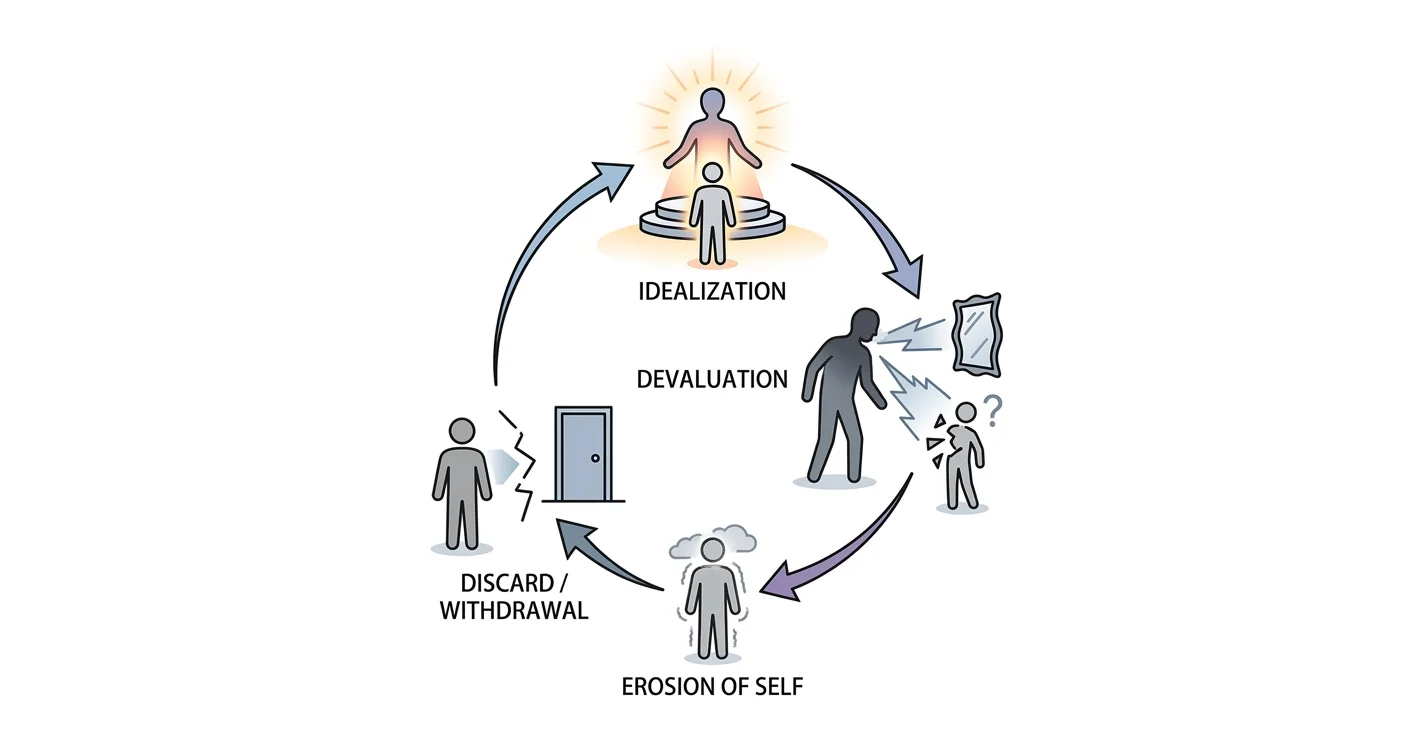

If you keep asking yourself whether your partner's behavior is normal—or whether you're the problem—this page gives you a structured self-assessment and a clear explanation of what the patterns actually mean.
TL;DR: The "am I dating a narcissist quiz" below covers 12 behavioral patterns tied to Narcissistic Personality Disorder (NPD) criteria: love-bombing, gaslighting, empathy deficits, and control tactics. Score 8 or higher and the relationship warrants serious attention. This is not a clinical diagnosis—it is a decision-making tool. Lovon's AI voice support app can help you process what the score surfaces, on demand, without a waitlist.
Why This Question Matters in 2026
NPD affects an estimated 1–5% of the general population, with rates notably higher among people who seek treatment for relationship-related distress. The harder problem is that narcissistic behavior exists on a spectrum—some partners show 3 traits occasionally; others show 10 traits daily. A quiz forces you to convert vague dread into countable, nameable patterns. That shift from "something feels off" to "here are six specific things" is the first condition for making a decision.
Recognizing the pattern early also matters because trauma bonding—the cycle of tension, rupture, and repair that keeps people locked in high-conflict relationships—typically deepens after 12–18 months. The sooner you have language for what's happening, the more options you have.
Who This Quiz Is For
This assessment is built for adults who are currently in a romantic relationship and are experiencing persistent confusion about their partner's intentions, recurring cycles of idealization and criticism, or a steady erosion of their self-worth. It is also relevant if you are recently out of a relationship and trying to make sense of what happened before entering a new one.
This is not designed for people who had one bad argument, partners going through a documented mental health crisis unrelated to personality structure, or couples in acute conflict who have not yet tried communication repair. If you are in immediate danger, contact the National Domestic Violence Hotline at 1-800-799-7233.
What to Look for: 6 Core Patterns
Grandiosity and Entitlement
Your partner consistently presents themselves as exceptional—smarter, more important, or more deserving than others—and expects special treatment without reciprocating it. This is not confidence. It is a fixed belief that rules applying to other people do not apply to them. Watch for rage when they are treated as ordinary.
Empathy Deficit
They do not register your emotional state unless it serves them. When you are upset, the conversation pivots to their feelings within two or three exchanges. Consistent inability to hold your perspective—even when you spell it out directly—is a structural deficit, not a communication style.
Love-Bombing Followed by Devaluation
The early relationship felt almost unreal: intense attention, declarations of uniqueness, fast-tracking of commitment. Then, gradually or suddenly, that warmth became conditional, withdrawn as punishment, or replaced by criticism. This is not the normal arc of relationships settling into comfort—it is a documented cycle.
Gaslighting
You frequently leave arguments unsure whether your memory of events is accurate. Your partner denies things you witnessed, reframes your emotional reactions as overreactions, or implies your perception is distorted. Over time this produces chronic self-doubt—which is the functional point of the behavior.
Control and Boundary Violations
This shows up as monitoring your contacts, dictating your appearance, dismissing your friendships, or requiring constant availability. It may be framed as love, protectiveness, or jealousy rather than control. The test is whether you feel free to say no to small things without consequence.
Lack of Accountability
Apologies, when they happen, are conditional: "I'm sorry you felt that way" or "I wouldn't have done that if you hadn't." Genuine accountability—owning an action, describing its impact, changing the behavior—is rare or absent. Every rupture becomes your fault by the end of the conversation.
The Quiz: 12 Questions
Answer each question honestly. Score 0 for Never, 1 for Sometimes, 2 for Often, 3 for Almost Always.
1. Does your partner react with disproportionate anger when criticized, even mildly?
2. Do they take credit for successes and assign blame for failures to you or external factors?
3. Did the relationship begin with overwhelming affection that has since become inconsistent or conditional?
4. Do you regularly second-guess your own memory of conversations or events after talking with them?
5. Does your partner show little interest in your feelings unless those feelings involve them directly?
6. Do they frequently interrupt, talk over, or redirect conversations back to themselves?
7. Have your friendships or family relationships deteriorated since the relationship began?
8. Does your partner expect you to drop plans, obligations, or needs for theirs without reciprocating?
9. Do apologies from your partner typically come with conditions or shift responsibility back to you?
10. Do you feel watched, tracked, or required to justify your whereabouts or communications?
11. Do you feel like a different, smaller version of yourself compared to who you were before this relationship?
12. Does your partner's mood set the emotional tone for your entire household or relationship space?
Scoring
| Score | What It Means |
|---|---|
| 0–8 | Low indicator. Isolated traits present; context matters. |
| 9–16 | Moderate indicator. Multiple patterns present; worth examining with support. |
| 17–24 | High indicator. Consistent pattern across most categories; professional support strongly recommended. |
| 25–36 | Very high indicator. Seek support before making relationship decisions alone. |
A score of 17 or above across 2026's clinical guidance on relationship distress consistently correlates with significant emotional harm over time. A low score does not mean the relationship is healthy—it means narcissistic personality traits are not the primary driver of your distress.
What to Avoid Misreading
A single high-stress period is not a pattern. Job loss, grief, or a medical crisis can produce temporary self-absorption and irritability. The diagnostic signal is consistency across contexts and time, not intensity during one bad month.
Introversion or emotional unavailability is not the same as narcissism. An avoidant partner who struggles to express feelings differs structurally from a partner who withholds feelings as leverage. If you're unsure which dynamic is at play, the attachment style quiz gives you a clearer frame before you apply the narcissism label.
High scores do not automatically mean you should leave. They mean the relationship carries documented risk factors for psychological harm. What you do with that information depends on context, safety, and support—not on a number alone.
Verdict Comparison: Pattern Severity vs. Action
| Pattern | Occasional | Consistent | Escalating |
|---|---|---|---|
| Grandiosity | Monitor | Address directly | Seek support |
| Gaslighting | Clarify | Document | Exit planning |
| Love-bombing cycle | Context check | High concern | High concern |
| Empathy deficit | Note | Pattern confirmed | Pattern confirmed |
| Control tactics | Boundary-set | Seek support | Safety planning |
| No accountability | Communicate | Therapy warranted | Therapy warranted |
What to Do After Scoring
If you scored in the moderate-to-high range, the most useful next move is talking through specific incidents with someone who can reflect them back to you without judgment. That is harder than it sounds—friends have bias, and booking a therapist in 2026 still involves a 3–6 week average wait in most U.S. cities.
Lovon's AI voice support app provides on-demand emotional support sessions specifically designed for relationship distress, anxiety, and the kind of chronic self-doubt that narcissistic relationship patterns produce. You can open a session at 11pm after a bad fight or at 6am before a hard conversation—no appointment, no waitlist. For people working through the aftermath of a high-conflict relationship, Lovon also offers tools aligned with the free AI therapist for relationship problems framework, including coping exercises for anxiety and confidence rebuilding.
If your score was high and you also notice the relationship has affected your sense of identity or self-worth, the AI life coach for confidence and self-esteem track inside Lovon addresses exactly that rebuild.
FAQ
What is the most reliable sign I'm dating a narcissist? The most reliable single sign is a consistent empathy deficit—not occasional self-focus, but a structural inability to hold your emotional experience for more than a few seconds before the conversation returns to them. Gaslighting that produces chronic self-doubt is the second clearest marker.
Can a narcissist change? People with narcissistic traits can moderate behavior with long-term therapy, but clinically diagnosable NPD has low treatment responsiveness. Change requires the person to recognize the problem and sustain motivation across years of work. It is not the norm.
Is narcissism the same as being selfish? No. Selfishness is a behavior pattern; NPD is a personality structure involving grandiosity, entitlement, empathy impairment, and specific interpersonal exploitation patterns. Most selfish people are not narcissists. Most narcissists do present as selfish, but the mechanisms are different.
How accurate is an online narcissist quiz? Online quizzes—including this one—are screening tools, not diagnostic instruments. A score identifies patterns worth examining, not a clinical diagnosis. Use the score to decide whether to pursue professional support, not to label your partner definitively.
What's the difference between a narcissist and someone with anxious attachment? An anxiously attached partner seeks reassurance compulsively but is capable of empathy, accountability, and genuine concern for your wellbeing. A narcissistic partner uses your emotional needs as leverage rather than responding to them. Both patterns create painful relationship dynamics; the interventions are different.
Can I fix a relationship with a narcissist on my own? You cannot change a partner's personality structure through effort, patience, or better communication. You can manage your own responses, set limits, and decide what you are willing to accept. Relationship outcomes in high-narcissism dynamics depend almost entirely on whether the narcissistic partner engages in sustained professional work.
How do I stop doubting myself after being gaslighted? Start by documenting incidents in writing immediately after they happen, before the conversation reframe sets in. Talking through specific events with a therapist or AI support tool helps externalize the narrative so you can evaluate it more accurately. Rebuilding trust in your own perception takes time and consistent external validation.
Is it normal to still love someone who scores high on this quiz? Yes. Trauma bonding produces genuine attachment even in high-harm relationships. Recognizing harmful patterns does not erase emotional connection—it adds information. Deciding what to do with both the love and the information is the actual work, and it typically requires support.
One Last Thing
Research on narcissistic abuse recovery published through 2026 consistently finds that the average person stays in a high-NPD relationship for 4–7 years before leaving—primarily because they spent years doubting their own perception rather than trusting the pattern they were living. The quiz score is not a verdict on your partner. It is permission to stop second-guessing yourself.
Related Guides
How AI Support Helps You Heal
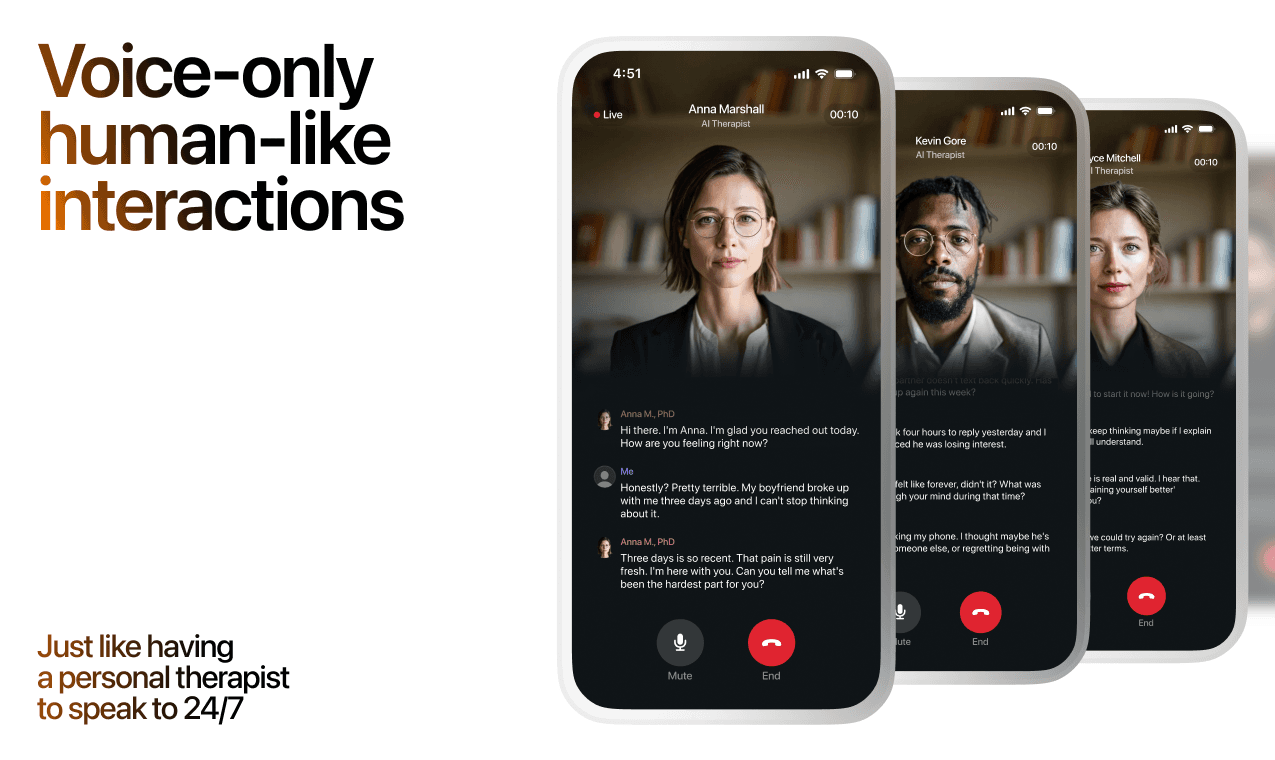
AI emotional support isn't about replacing human connection — it's about filling the gaps. The moments when you need to talk at 2 AM, when you don't want to burden your friends again, or when you simply need someone to listen without judgment.
Here's what happens in a typical Lovon session:
You share what's on your mind
There's no script, no intake form, no waiting room. You speak or type whatever you're feeling — in your own words, at your own pace.
Lovon validates and explores
Using frameworks from CBT (Cognitive Behavioral Therapy) and motivational interviewing, Lovon acknowledges your feelings first, then gently helps you explore them. No dismissive "just move on" advice.
You build coping skills together
Lovon doesn't just listen — it actively works with you on evidence-based techniques: thought reframing, urge surfing, behavioral experiments, and more.
What a Session with Lovon Looks Like
When to Seek Professional Help
AI support is a valuable tool, but it's not a replacement for professional care. Please consider reaching out to a licensed therapist if you experience any of the following:
- Persistent thoughts of self-harm or suicide
- Inability to perform daily activities (work, eating, sleeping) for more than 2 weeks
- Turning to alcohol or substances to cope
- Intense anger or desire to harm your ex-partner
- Complete emotional numbness that doesn't improve over time
Crisis Resources (US): If you're in immediate danger, call 988 (Suicide & Crisis Lifeline) or text HOME to 741741 (Crisis Text Line). Available 24/7, free, and confidential.
Outside the US? Find a crisis line in your country
Ready to Start?
Your healing journey can begin right now
A 7-day trial. No judgment. Just a safe space to process what you're going through.
Frequently Asked Questions
Is Lovon a replacement for a real therapist?
Is my conversation with Lovon AI private?
How is Lovon different from ChatGPT for emotional support?
Can I use Lovon if I'm already seeing a therapist?
Can I try Lovon before subscribing?
About the Author
The Lovon Editorial Team
Mental Health & Wellness Content Team
The Lovon Editorial Team develops mental health and wellness content designed to make psychological concepts accessible and actionable. Our goal is to bridge the gap between clinical research and everyday life - helping you understand why your mind works the way it does and what you can do about it....
Related articles
- How to Set Boundaries With a Narcissist (2026 Guide)
Learn how to set boundaries with a narcissist without conflict: scripted language, the gray rock method, and…
- Narcissistic Relationship: 9 Signs You're Dating a Narcissist
Most people do not know they are in a narcissistic relationship until they are already very involved.
- Relationship Red Flags Checklist 2026: Spot Them Early
This relationship red flags checklist for early dating in 2026 flags love bombing, gaslighting, and future faking before…
- Does She Like Me Quiz: Read the Signs in 2026
Take our does she like me quiz in 2026. Score 6 behavioral signals — initiation, proximity, recall — and get a clear…
See also
Quizzes
- Are They a Red Flag? 10 Questions to Check Your Partner
Check your partner in 3 minutes.
- Am I in Love? 13-Question Gut Check
Know what you feel in 2 minutes.
Free tools
- How to Respond to Gaslighting
Say what happened and what they say happened. You get what is actually established separated from what is being…
- What Did They Actually Mean By That?
A chat for one sentence you cannot stop re-reading. Paste their exact words and what was happening around them, and get…
From the wiki
- What does dating mean?
Dating means spending intentional romantic time with someone to find out whether you fit. It sits in the middle of a…
Disclaimer: This article is for informational purposes only and does not constitute medical advice, diagnosis, or treatment. Always seek the advice of your physician or other qualified health provider with any questions you may have regarding a medical condition. If you are in crisis or think you may have an emergency, call 988 (Suicide & Crisis Lifeline) or go to the nearest emergency room. Outside the US? Find a crisis line in your country.