
Attachment Style Compatibility Quiz for Partners 2026
The best attachment style compatibility quiz for partners in 2026 — dual scoring, pairing analysis, and AI coaching built in. Lovon's quiz takes under 15 minutes.

Key Takeaways
- Social media quizzes with no validated methodology. A 5-question BuzzFeed-style quiz built around attachment
- Single-person quizzes marketed as compatibility tests. Several popular apps ask one person to describe their
- Quizzes that stop at the label. Knowing you are anxious-avoidant and knowing what to do about it are different
- [Are we compatible](https://lovon.app/quiz/are-we-compatible)
- [AI relationship coach](https://lovon.app/free-tools/app/ai-relationship-coach)
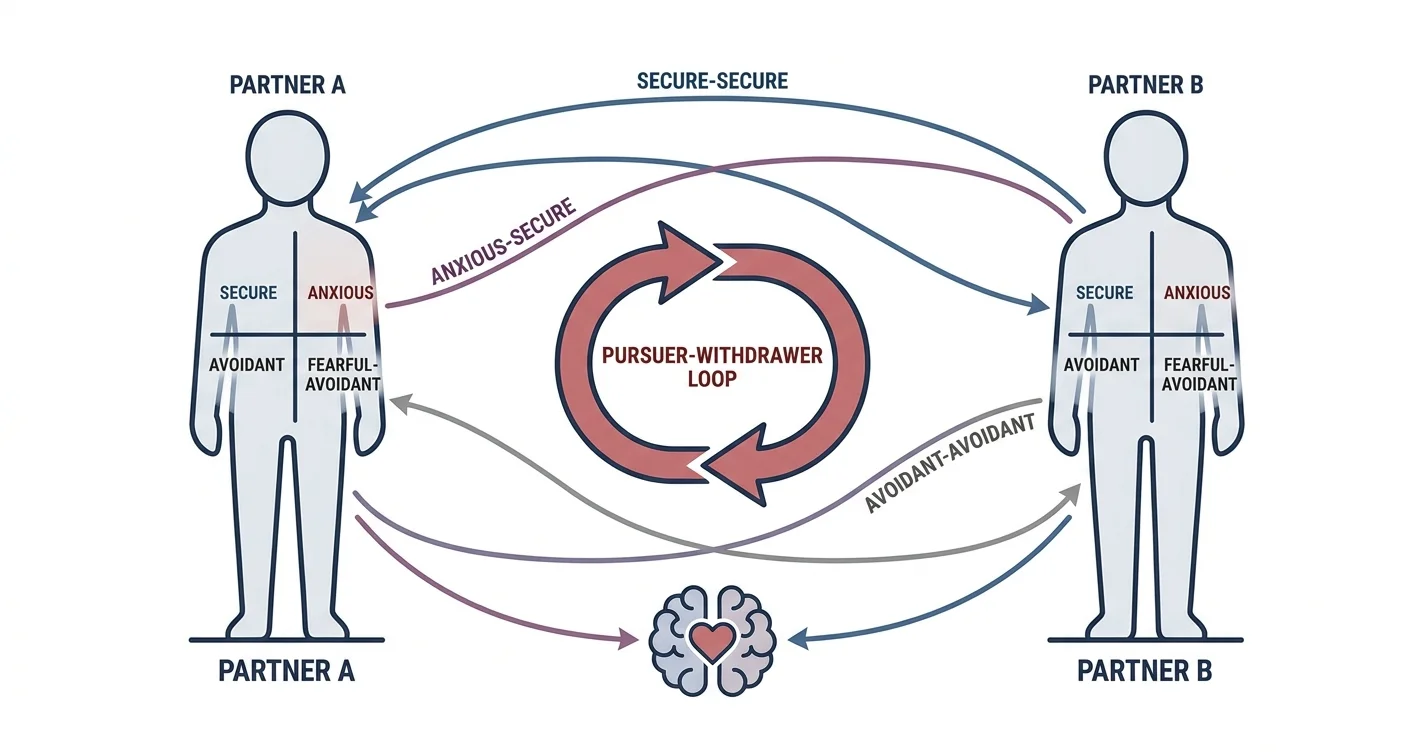
Taking an attachment style compatibility quiz with your partner is one of the fastest ways to name the dynamic that keeps repeating itself — the pursuer/withdrawer loop, the mutual avoidance, the anxious-secure mismatch that feels like love but exhausts both people.
TL;DR: The best attachment style compatibility quiz for partners gives each person a scored result across the four styles (secure, anxious, avoidant, fearful-avoidant), then shows how those two profiles interact under stress. Lovon's are we compatible quiz does exactly that, with follow-up AI coaching built in. If you want a single next step in 2026, that is it. The most compatible pairing research identifies is secure + secure, but any combination can work with the right tools.
Why this matters in 2026
Attachment theory — originally developed by John Bowlby and expanded by researchers Mary Ainsworth and Phillip Shaver — has moved from academic journals into couples therapy as one of the most consistently validated frameworks for predicting relationship satisfaction. A 2023 meta-analysis across 75 studies found that attachment anxiety and avoidance together account for roughly 18% of variance in relationship quality. That is not the whole picture, but it is the part a quiz can actually surface in 10 minutes.
The practical payoff: once both partners know their styles, they stop interpreting "you never want to talk about it" as a personal attack and start seeing it as an avoidant coping pattern — one that has a name, a cause, and a workaround.
Who this is for
This guide is written for couples who have already noticed a friction pattern — not for people in crisis. You might be 6 months into a relationship and sensing something is off, or 6 years in and tired of having the same argument. You want a language for it. You are open to using a tool rather than waiting for a therapist appointment three weeks out. And you want the quiz result to connect to something actionable, not just a label.
If one partner is skeptical of "personality stuff," that is actually common among avoidant types — worth naming before you sit down together.
What to look for in an attachment style compatibility quiz for partners
Dual scoring — both partners get individual results
A quiz that scores only one person misses the interaction. The compatibility piece requires two profiles. Look for a format where each person completes their own assessment and the tool maps the pairing — anxious + avoidant, secure + fearful-avoidant, and so on. Without dual input, you are reading a horoscope, not a compatibility map.
Four-category output, not two
Early attachment research used three styles. Current consensus (anchored in Bartholomew and Horowitz's 1991 four-category model, still the standard in 2026) uses secure, anxious-preoccupied, dismissive-avoidant, and fearful-avoidant. A quiz that collapses into "secure vs. insecure" loses the distinction between dismissive avoidance (low anxiety, high avoidance) and fearful avoidance (high on both), which behave very differently in conflict.
Stress-state versus baseline differentiation
Your attachment style under calm conditions and under perceived threat are not identical. A well-built quiz asks situational questions — "when your partner doesn't respond to a text for three hours, you..." — rather than purely dispositional ones. Situational prompts catch the activation patterns that actually cause conflict.
Pairing interpretation, not just individual explanation
The output should tell you what the anxious + avoidant dynamic looks like specifically — the pursue-withdraw cycle, the re-engagement pattern after conflict, how intimacy requests land. Generic "here is what anxious attachment means" copy is not compatibility analysis.
Connection to actionable tools
A score is a starting point. The quiz should connect to something: a conversation guide, a coaching session, or a therapy resource. In 2026, the most useful tools pair quiz output with on-demand support so you do not lose momentum between the insight and the behavior change. Lovon's quiz links directly into AI-guided relationship coaching — the result page is not a dead end.
Validated question pool
The best quizzes draw from established instruments: the Experiences in Close Relationships scale (ECR), the Relationship Structures Questionnaire, or similar peer-reviewed tools. If a quiz does not cite its methodology or uses vague pop-psych phrasing, treat the output as directional at best.
Top picks
The safe pick — Lovon's Are We Compatible quiz
Hook: Built specifically for partner pairs, not individuals.
Spec that matters: Dual-input format with AI follow-up coaching built into the result page.
Number: Attachment quiz + AI coaching session in under 15 minutes.
Lovon's are we compatible quiz walks both partners through individual assessments, then generates a pairing analysis — not just two separate style descriptions side by side. The result identifies the specific dynamic (e.g., anxious-avoidant polarity) and connects directly to Lovon's AI therapy and coaching layer for next steps. For couples who want the quiz to lead somewhere useful rather than ending at a shareable graphic, this is the 2026 choice.
Verdict: Buy. The combination of dual scoring, pairing interpretation, and immediate coaching access makes this the most complete option available without a therapist referral.
The deep-dive pick — ECR-R self-report
Hook: The academic standard, free, no account needed.
Spec that matters: 36-item Experiences in Close Relationships–Revised scale, scores on two continuous dimensions (anxiety and avoidance) rather than discrete buckets.
Number: 36 items, approximately 8 minutes per person.
The ECR-R gives you a continuous score on two axes rather than a category label. That matters because most people sit somewhere in a quadrant, not neatly in one corner. The limitation: no pairing interpretation, no follow-up, and a clinician usually needs to contextualize the axes. Use this if you want raw data to bring into therapy.
Verdict: Consider — best as a supplement to a paired tool, not a standalone.
The quick-screen pick — brief attachment screeners
Hook: 4-item versions exist for low-commitment entry.
Spec that matters: Research-validated short forms take under 3 minutes.
Number: 4 items, validated against full ECR in multiple studies.
For a partner who resists longer assessments, a validated 4-item screener gets a directional read without friction. The trade-off is precision — you will get a dominant quadrant but miss nuance. Use it to open the conversation, then move to a fuller tool.
Verdict: Consider — good opener, not a final answer.
What to avoid
-
Social media quizzes with no validated methodology. A 5-question BuzzFeed-style quiz built around attachment vocabulary is not an attachment assessment. The question pool, weighting, and cutoff scores all matter. If you cannot find a methodology page, assume it is not validated.
-
Single-person quizzes marketed as compatibility tests. Several popular apps ask one person to describe their partner's behavior and then generate a "compatibility score." This is projection, not measurement. Both partners need to self-report for the output to be meaningful.
-
Quizzes that stop at the label. Knowing you are anxious-avoidant and knowing what to do about it are different things. Avoid tools that produce a type with no pathway to change — especially in 2026, when on-demand support is readily available through tools like Lovon's AI relationship coach.
Verdict comparison table
| Quiz | Dual scoring | 4-category output | Pairing interpretation | Follow-up support | Verdict |
|---|---|---|---|---|---|
| Lovon Are We Compatible | Yes | Yes | Yes | AI coaching built in | Buy |
| ECR-R self-report | No (individual) | No (continuous) | No | None | Consider |
| 4-item screener | No (individual) | Directional | No | None | Consider |
| Unvalidated social quizzes | Varies | No | No | None | Skip |
FAQ
What is an attachment style compatibility quiz? It is an assessment that identifies each partner's attachment style — secure, anxious, avoidant, or fearful-avoidant — and then maps how those two profiles interact. The goal is not a compatibility score but a named dynamic you can work with.
Is anxious-avoidant the worst pairing? It is the most studied high-conflict pairing. The pursue-withdraw cycle it produces is well-documented and genuinely difficult — but not unfixable. Couples with anxious-avoidant dynamics who work with a therapist or structured coaching tool show measurable improvement in relationship satisfaction. It is a challenge, not a sentence.
Can two avoidant people be compatible? Yes, and often more comfortably than outsiders expect. Two dismissive-avoidant partners tend to give each other space without triggering abandonment anxiety. The risk is emotional distance that neither flags as a problem until a crisis forces it into the open.
How long does an attachment style compatibility quiz take? A validated dual-input quiz takes 10–20 minutes for both partners combined. Shorter than that and the question pool is likely too thin to produce reliable results.
Do attachment styles change? Research in 2026 confirms that attachment patterns are stable but not fixed. Therapy, consistent relational experience with a secure partner, and structured self-work all show measurable movement — particularly from anxious or avoidant toward more secure functioning. This is why follow-up tools matter.
Should we take the quiz together or separately? Separately first, then compare. Taking it together introduces social desirability bias — you answer based on how you want to be seen rather than how you actually behave. Complete it independently, then sit down with the paired results.
What if my partner refuses to take the quiz? Refusal is data. Dismissive-avoidant partners frequently resist self-assessment tools. The more useful move is to take the quiz yourself, work with the result, and use a resource like Lovon's free therapist access to process what comes up individually.
Is a free attachment quiz accurate enough to act on? A free quiz built on a validated instrument (ECR, RSQ) is accurate enough to identify dominant patterns and open a useful conversation. It is not a clinical diagnosis. Treat the output as a working hypothesis, not a verdict.
One last thing
Secure attachment is not a fixed trait some people are lucky to have — it is a relational behavior that anyone can move toward. The research term is "earned security": adults who had insecure early attachment but developed secure functioning through later relationships or therapy. The attachment style compatibility quiz is not a verdict on your relationship. It is a map of where you are starting from in 2026, not where you are ending up.
Related guides
How AI Support Helps You Heal
AI emotional support isn't about replacing human connection — it's about filling the gaps. The moments when you need to talk at 2 AM, when you don't want to burden your friends again, or when you simply need someone to listen without judgment.
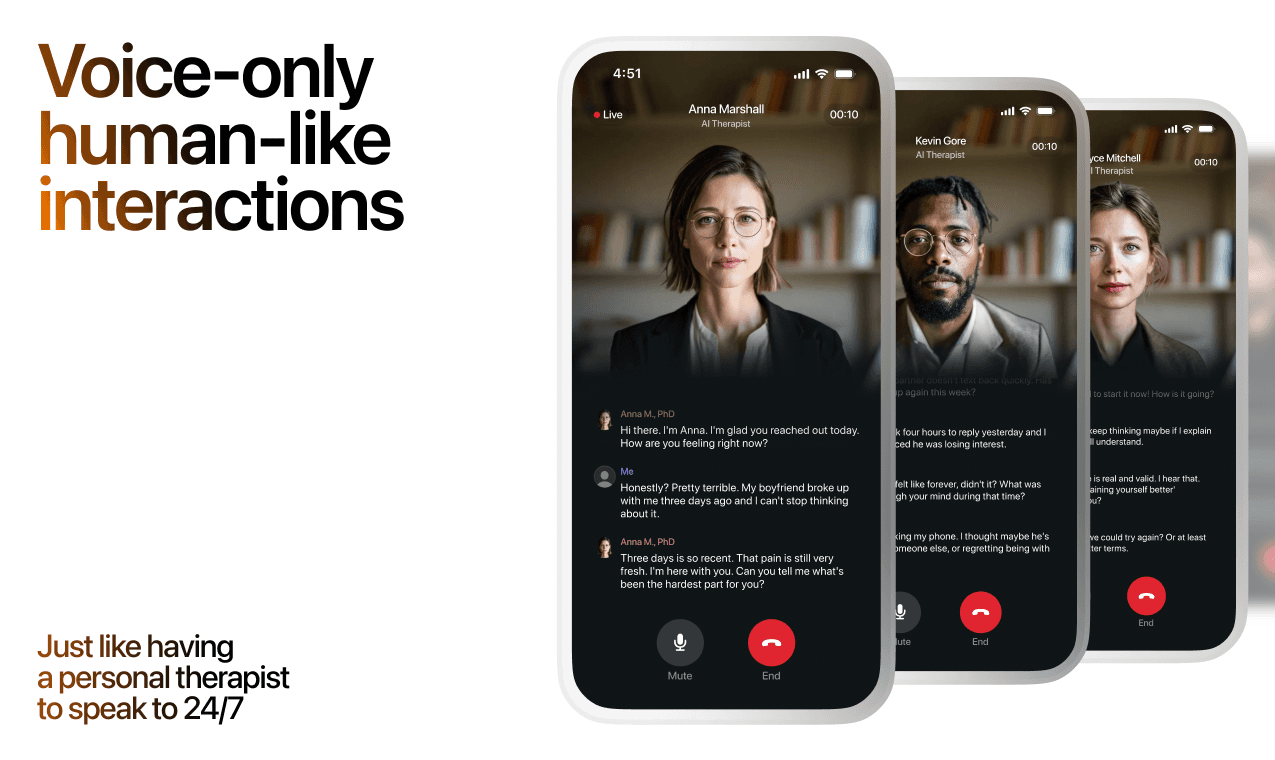
Here's what happens in a typical Lovon session:
You share what's on your mind
There's no script, no intake form, no waiting room. You speak or type whatever you're feeling — in your own words, at your own pace.
Lovon validates and explores
Using frameworks from CBT (Cognitive Behavioral Therapy) and motivational interviewing, Lovon acknowledges your feelings first, then gently helps you explore them. No dismissive "just move on" advice.
You build coping skills together
Lovon doesn't just listen — it actively works with you on evidence-based techniques: thought reframing, urge surfing, behavioral experiments, and more.
What a Session with Lovon Looks Like
When to Seek Professional Help
AI support is a valuable tool, but it's not a replacement for professional care. Please consider reaching out to a licensed therapist if you experience any of the following:
- Persistent thoughts of self-harm or suicide
- Inability to perform daily activities (work, eating, sleeping) for more than 2 weeks
- Turning to alcohol or substances to cope
- Intense anger or desire to harm your ex-partner
- Complete emotional numbness that doesn't improve over time
Crisis Resources (US): If you're in immediate danger, call 988 (Suicide & Crisis Lifeline) or text HOME to 741741 (Crisis Text Line). Available 24/7, free, and confidential.
Outside the US? Find a crisis line in your country
Ready to Start?
Your healing journey can begin right now
1 free conversation. No credit card. No judgment. Just a safe space to process what you're going through.
Frequently Asked Questions
Is AI therapy a replacement for a real therapist?
Is my conversation with Lovon AI private?
How is Lovon different from ChatGPT for emotional support?
Can I use Lovon if I'm already seeing a therapist?
Can I try Lovon for free?
About the Author
The Lovon Editorial Team
Mental Health & Wellness Content Team
The Lovon Editorial Team develops mental health and wellness content designed to make psychological concepts accessible and actionable. Our goal is to bridge the gap between clinical research and everyday life - helping you understand why your mind works the way it does and what you can do about it....
Similar Articles
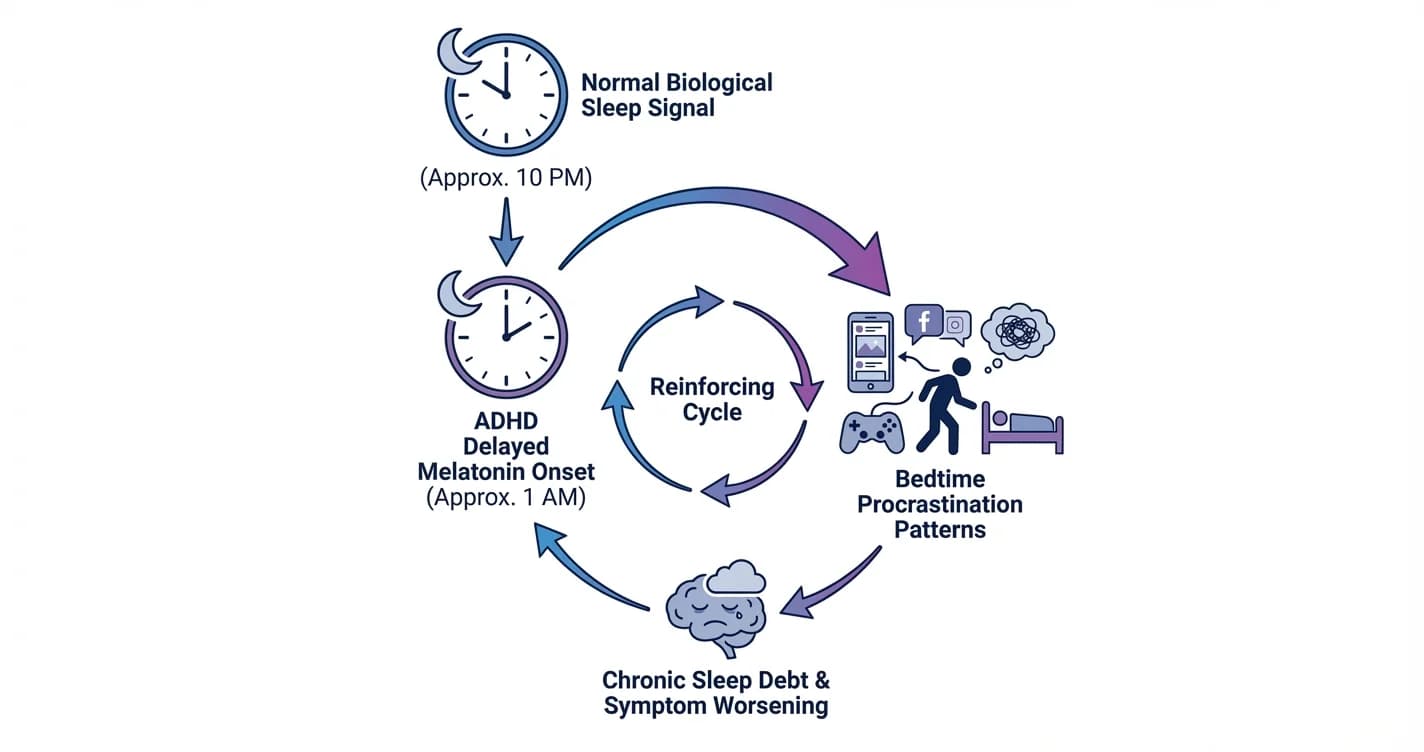
ADHD Sleep Cycle Disruption: Melatonin Delay and Bedtime Procrastination Patterns
Understanding how attention regulation difficulties interfere with natural sleep timing and the nightly wind-down process

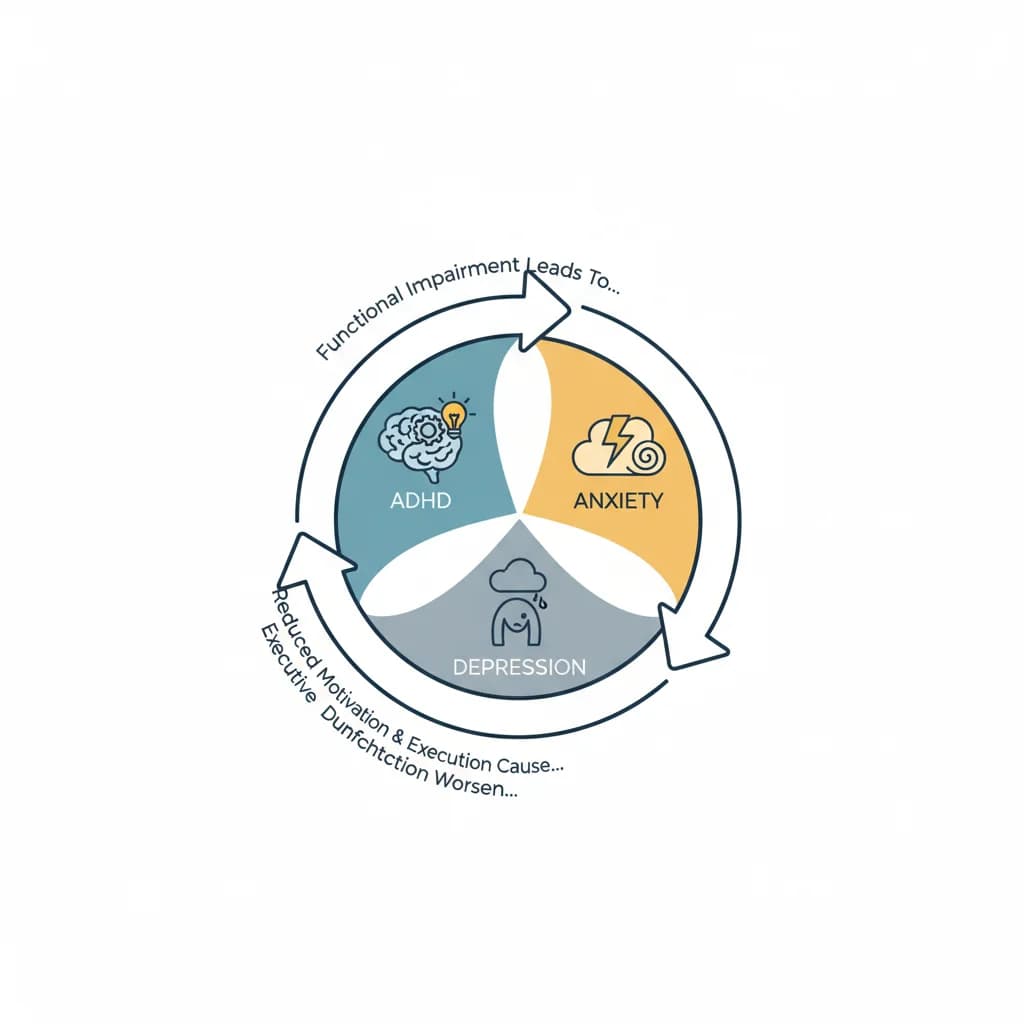
ADHD Comorbidity with Anxiety and Depression Cycles
Understanding the Complex Interplay Between ADHD and Recurring Mental Health Patterns
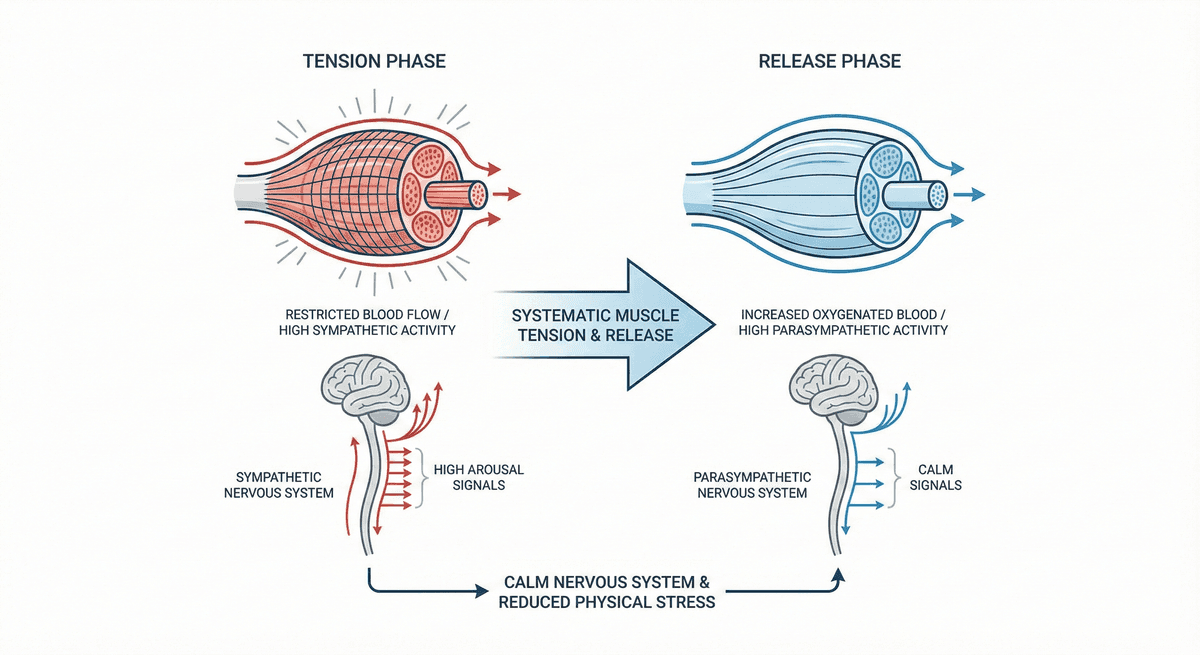
Progressive Muscle Relaxation for Stress Reduction
A systematic muscle group tension and release technique that calms the nervous system and reduces physical stress.
Disclaimer: This article is for informational purposes only and does not constitute medical advice, diagnosis, or treatment. Always seek the advice of your physician or other qualified health provider with any questions you may have regarding a medical condition. If you are in crisis or think you may have an emergency, call 988 (Suicide & Crisis Lifeline) or go to the nearest emergency room. Outside the US? Find a crisis line in your country.