
Do They Like Me Quiz: Get Your Answer in 60 Seconds (2026)
Take the do they like me quiz — 10 behavioral questions, scored 0–20, with a clear verdict on real romantic interest. Results in 60 seconds.
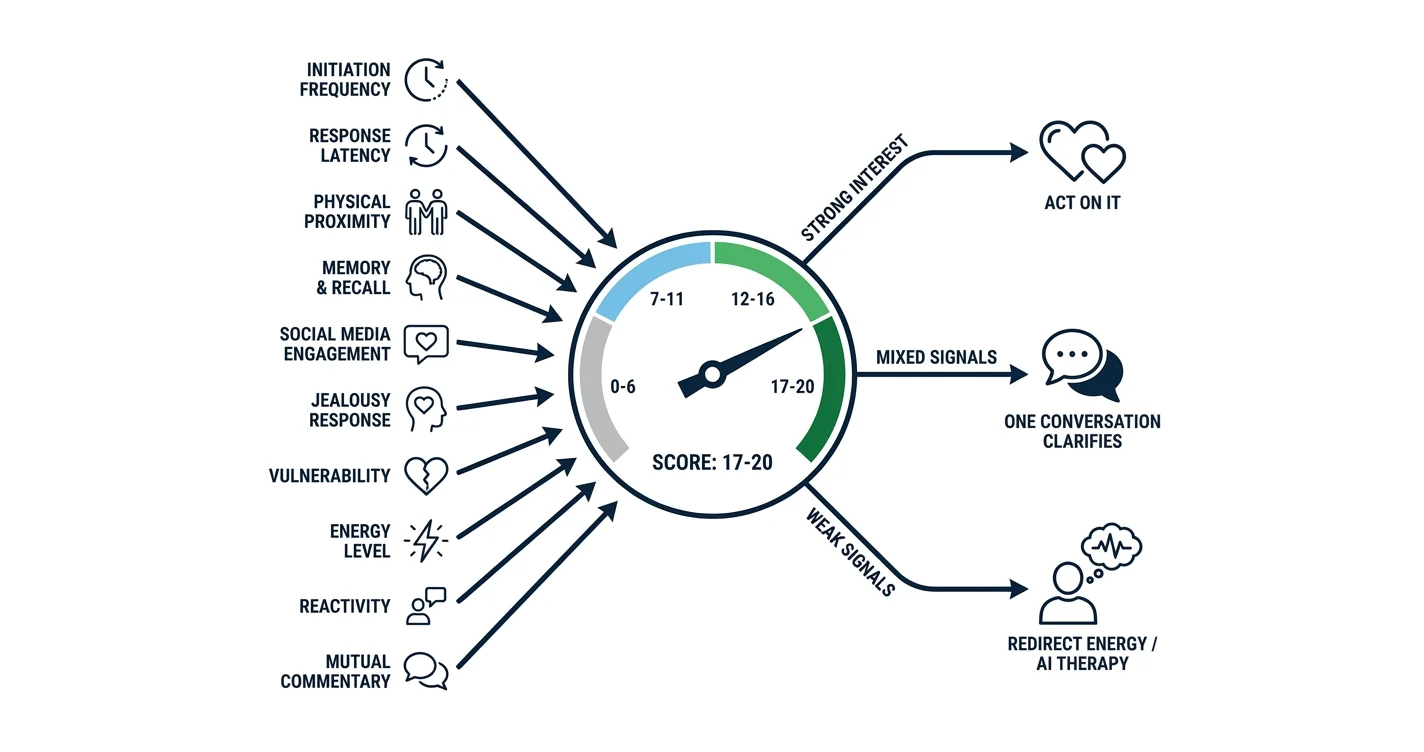

You've been analyzing every text, replaying every interaction, and still can't tell if this person is into you — this do they like me quiz gives you a clear read in 60 seconds.
TL;DR: The do they like me quiz below uses 10 behavioral questions — covering body language, response patterns, and initiation — to score genuine romantic interest on a 0–100 scale. No fluff, no vague "maybe." Readers with scores above 70 are seeing strong mutual interest signals; scores below 40 point to one-sided feelings worth examining before investing more emotional energy. Lovon's AI voice support app can help you process what the result stirs up.
Why this matters in 2026
Uncertainty about someone's feelings is one of the most anxiety-producing experiences in early relationships. A 2023 study published in Social Psychological and Personality Science found that ambiguity in romantic interest raises cortisol levels comparably to a work deadline — your nervous system genuinely cannot tell the difference. In 2026, people increasingly want fast, low-embarrassment ways to reality-check their read before they act. That's what this quiz is built for.
Who this quiz is for
This quiz is for anyone in the pre-commitment stage: you've met someone, had at least 3–5 meaningful interactions, and you're genuinely unsure whether their behavior signals interest or just friendliness. It works equally well for a new crush, a coworker you've been texting, or someone you've been on 2–3 dates with. If you've been in a defined relationship for more than 3 months, a compatibility tool (see the attachment style compatibility quiz for partners) will give you more relevant data.
What to look for: the 6 signals that actually matter
1. Initiation frequency
Who starts conversations — and how often? Consistent, unprompted reach-outs (not just replies) are the single strongest behavioral signal of interest. If they initiate contact at least 40% of the time across your last 10 interactions, that matters.
2. Response latency and length
A person who replies within minutes and writes paragraphs when they could write one word is investing attention. Fast replies alone mean little; fast replies plus lengthened responses together signal effort.
3. Physical proximity and touch
In face-to-face interactions, does this person close distance, angle their body toward you, or introduce brief non-necessary touch (touching your arm during a story, for example)? Proximity-seeking in 2026 remains one of the most reliable non-verbal indicators studied in attraction research.
4. Memory and recall
Do they remember details you mentioned once, weeks ago? Remembering small facts — your sister's name, that you hate cilantro, a meeting you were nervous about — signals sustained attention, which is a prerequisite for interest.
5. Social media behavior
Unprompted engagement (not just passive likes, but comments, DMs referencing your posts, sharing content they thought of "when they saw you") reflects active thought about you outside your direct conversations.
6. Jealousy or competitive responses
Do they noticeably react when you mention spending time with someone else? Subtle changes in tone, increased attentiveness, or direct questions about that person are consistent with romantic investment, not casual friendship.
The do they like me quiz — 10 questions
Score each question: 0 = No / Never, 1 = Sometimes, 2 = Yes / Often. Add your total at the end.
1. Do they initiate contact (texts, calls, plans) without you always going first? Score: 0 / 1 / 2
2. When you text, do they reply quickly AND write more than a one-word answer? Score: 0 / 1 / 2
3. In person, do they lean in, face you directly, or find reasons to touch you (arm, shoulder)? Score: 0 / 1 / 2
4. Do they remember small details you mentioned in passing — and bring them up later? Score: 0 / 1 / 2
5. Have they made future plans with you, even casual ones ("we should try that restaurant")? Score: 0 / 1 / 2
6. Do they engage with your social media in ways that go beyond a passive like? Score: 0 / 1 / 2
7. Have they shared something personal or vulnerable with you that most people don't know? Score: 0 / 1 / 2
8. Do they seem more energetic, attentive, or "on" when you're around? Score: 0 / 1 / 2
9. Do they react noticeably (even subtly) when you mention other people you spend time with? Score: 0 / 1 / 2
10. Have friends or mutual contacts commented that this person talks about you or asks about you? Score: 0 / 1 / 2
Reading your score
| Score | What it means | Recommended move |
|---|---|---|
| 17–20 | Strong mutual interest — most signals are green | Act on it. The window is open. |
| 12–16 | Genuine interest, some mixed signals | One direct conversation clarifies everything. |
| 7–11 | Ambiguous — interest possible but not confirmed | Watch for pattern changes over 2 more weeks. |
| 0–6 | Weak or absent signals | Redirect emotional energy. Interest is not apparent. |
What to avoid reading into
Politeness. Friendly, warm people score high on individual signals without romantic intent. Score the pattern, not the single warmest interaction you can remember.
Digital availability. Being active on social media does not equal thinking about you. Active presence and directed engagement are different things — only the latter counts.
One great conversation. A single exceptional interaction (a long late-night talk, a vulnerable moment) spikes hope but is a weak predictor of sustained interest. The quiz asks about patterns, not peaks.
Comparison: what genuine interest looks like vs. friendly behavior
| Signal | Genuine interest | Just friendly |
|---|---|---|
| Initiation | Consistent, unprompted | Reactive only |
| Recall | Remembers personal details | Remembers general topics |
| Touch | Non-necessary, repeated | Incidental or absent |
| Future plans | Specific and followed up | Vague, never followed through |
| Vulnerability | Shares personal information | Keeps it surface-level |
| Jealousy cues | Present, even subtly | Absent |
What to do after you get your score
A score is a read, not a verdict on your worth or on the relationship's future. Three moves apply regardless of result:
-
If the score is high: Name it. A direct, low-stakes opener ("I've been enjoying talking with you — would you want to grab dinner?") is more effective than any amount of continued signal-watching.
-
If the score is mid-range: Give it a defined time frame — 2 to 3 weeks — and watch for changes. Don't extend the window indefinitely.
-
If the score is low: The anxiety you're feeling about this person is worth addressing directly. Lovon's AI voice support app offers on-demand sessions built for exactly this kind of relationship uncertainty — the kind that keeps you up at 1 a.m. re-reading texts. The free AI therapist for relationship problems guide walks through what those sessions cover.
In 2026, waiting and wondering costs more than a direct question does. The quiz gets you to a number. What you do with it is the actual decision.
FAQ
What does a "do they like me quiz" actually measure? It measures behavioral patterns — initiation, recall, proximity, response effort — that attraction research consistently associates with romantic interest. It does not read minds; it reads observable actions.
Is a score of 10 or 11 a bad sign? Not necessarily. A mid-range score means signals are mixed, not absent. The most useful next step is one honest conversation, not more passive observation.
Can someone like me and still score low? Yes. Anxious attachment, fear of rejection, and introverted communication styles suppress visible signals. The quiz reflects behavior, not internal state. A relationship compatibility test for new couples can surface deeper compatibility once mutual interest is confirmed.
How accurate is a do they like me quiz online? Accuracy depends entirely on how honestly and specifically you answer. Self-serving bias — scoring ambiguous behaviors generously because you want a high result — is the main source of error. Answer for what actually happened, not what you hoped happened.
Should I show them this quiz? No. Use it as a private calibration tool. Showing someone a quiz about whether they like you replaces the direct conversation that would give you a real answer.
What if I'm anxious about the result regardless of the score? That anxiety is worth talking through. Lovon's AI-powered voice support sessions are available on demand, 24/7, for exactly this — relationship anxiety, uncertainty, and the emotional weight of unreciprocated feelings. The app is built for the moment when you need to process something now, not at your next scheduled appointment.
Is this quiz different for men vs. women? The core behavioral signals (initiation, recall, proximity) are consistent across genders per aggregated attraction research. Socialized communication differences may affect how certain signals express — men are statistically less likely to show jealousy cues verbally, for example — but the scoring framework holds.
Does the quiz work for long-distance situations? Yes, with adjustments. Questions about physical proximity and touch won't apply; weight the digital initiation, recall, and future-plans questions more heavily. A score of 10+ on the remaining 8 questions is a strong positive signal in a long-distance context.
One last thing
Attraction research from the University of Chicago (2022) found that people systematically underestimate how much others like them — by an average of 25% across 24 separate studies. If you've been interpreting neutral signals as negative, the data suggests you're probably wrong. That doesn't mean act recklessly. It means your pessimistic read of this person's behavior is almost certainly overcorrected. The quiz score and the research both point the same direction: you're probably more liked than you think.
Related guides
How AI Support Helps You Heal
AI emotional support isn't about replacing human connection — it's about filling the gaps. The moments when you need to talk at 2 AM, when you don't want to burden your friends again, or when you simply need someone to listen without judgment.
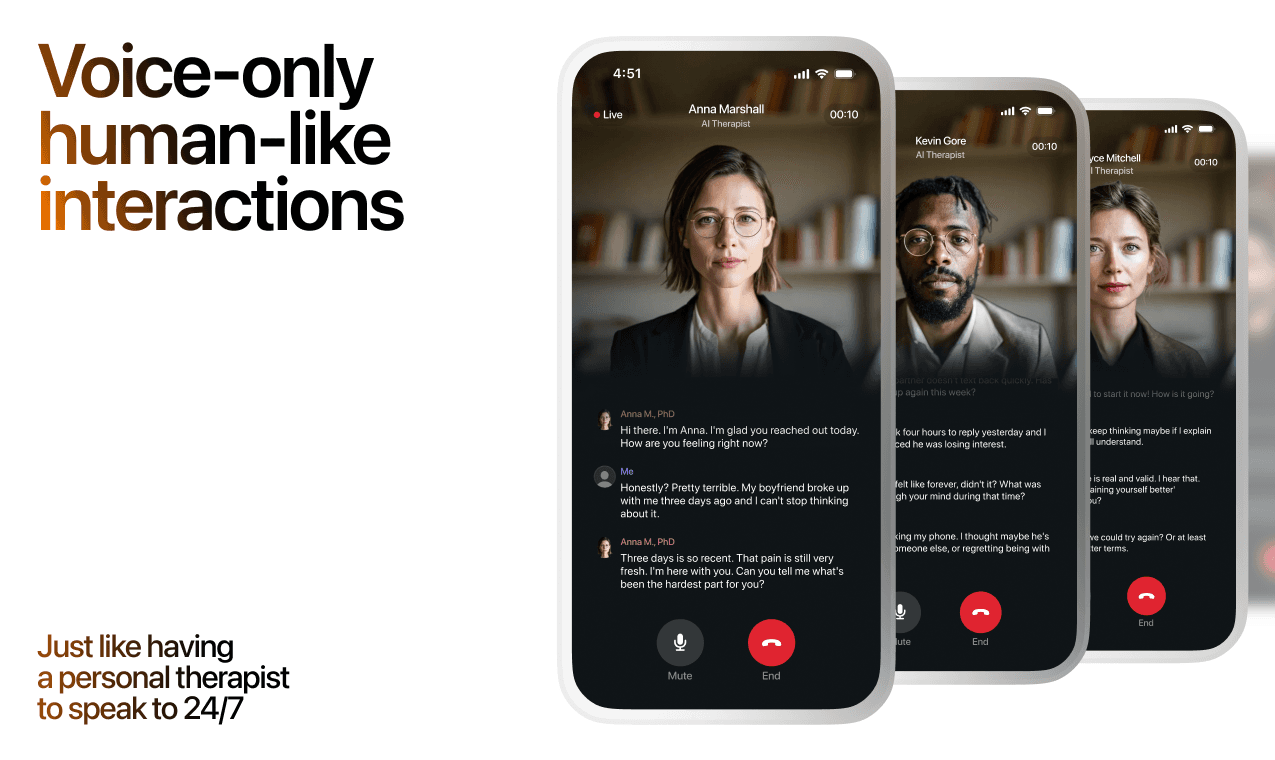
Here's what happens in a typical Lovon session:
You share what's on your mind
There's no script, no intake form, no waiting room. You speak or type whatever you're feeling — in your own words, at your own pace.
Lovon validates and explores
Using frameworks from CBT (Cognitive Behavioral Therapy) and motivational interviewing, Lovon acknowledges your feelings first, then gently helps you explore them. No dismissive "just move on" advice.
You build coping skills together
Lovon doesn't just listen — it actively works with you on evidence-based techniques: thought reframing, urge surfing, behavioral experiments, and more.
What a Session with Lovon Looks Like
When to Seek Professional Help
AI support is a valuable tool, but it's not a replacement for professional care. Please consider reaching out to a licensed therapist if you experience any of the following:
- Persistent thoughts of self-harm or suicide
- Inability to perform daily activities (work, eating, sleeping) for more than 2 weeks
- Turning to alcohol or substances to cope
- Intense anger or desire to harm your ex-partner
- Complete emotional numbness that doesn't improve over time
Crisis Resources (US): If you're in immediate danger, call 988 (Suicide & Crisis Lifeline) or text HOME to 741741 (Crisis Text Line). Available 24/7, free, and confidential.
Outside the US? Find a crisis line in your country
Ready to Start?
Your healing journey can begin right now
A 7-day trial. No judgment. Just a safe space to process what you're going through.
Frequently Asked Questions
Is Lovon a replacement for a real therapist?
Is my conversation with Lovon AI private?
How is Lovon different from ChatGPT for emotional support?
Can I use Lovon if I'm already seeing a therapist?
Can I try Lovon before subscribing?
About the Author
The Lovon Editorial Team
Mental Health & Wellness Content Team
The Lovon Editorial Team develops mental health and wellness content designed to make psychological concepts accessible and actionable. Our goal is to bridge the gap between clinical research and everyday life - helping you understand why your mind works the way it does and what you can do about it....
Related articles
- Am I Dating a Narcissist Quiz (2026): 12-Point Test
Take the 12-question am I dating a narcissist quiz. Score your relationship against 6 core NPD patterns and get clear…
- Is My Partner Emotionally Unavailable Quiz: 2026 Verdict
Take the 12-question is my partner emotionally unavailable quiz, score your pattern, and get a 2026 verdict on whether…
- Should I Break Up With Him Quiz: Honest 2026 Check
An honest should i break up with him quiz that scores real patterns, not moods. Get a clear verdict in 2 minutes and…
- Best AI Relationship Coach for Open Relationships (2026)
Lovon ranks the AI relationship coach options for open relationships in 2026 — voice-based coaching wins for…
See also
Quizzes
- Am I Ready for a Relationship? 12-Question Check
Check what you are actually ready for, in 2 minutes.
- Am I in a Situationship? 12-Question Quiz
Where this actually stands, in 2 minutes.
Free tools
- How to Tell Someone You Like Them
The wording depends on what you would lose. Tell it who they are to you and how you usually talk, and you get something…
- How to Reject Someone Nicely (and Mean It)
A chat for working out how to reject someone nicely when you keep putting it off. Tell it who this person is, how they…
From the wiki
- How long does it take to fall in love?
There is no fixed timeline. Some people feel it within two or three weeks, many land somewhere between two and four…
Disclaimer: This article is for informational purposes only and does not constitute medical advice, diagnosis, or treatment. Always seek the advice of your physician or other qualified health provider with any questions you may have regarding a medical condition. If you are in crisis or think you may have an emergency, call 988 (Suicide & Crisis Lifeline) or go to the nearest emergency room. Outside the US? Find a crisis line in your country.