
Ego Defense Mechanisms Protecting from Unprocessed Emotions
When something painful happens—a rejection, a loss, a humiliating moment—your mind has a split-second decision to make: confront the full weight of that...

Key Takeaways
- When something painful happens—a rejection, a loss, a humiliating moment—your mind has a split-second decision to
- More often than not, especially when the emotion feels too overwhelming to process in real time, your ego activates
- These ego defense mechanisms protecting from unprocessed emotions serve a crucial function, allowing you to continue
Introduction
When something painful happens—a rejection, a loss, a humiliating moment—your mind has a split-second decision to make: confront the full weight of that feeling, or find a way to soften the blow. More often than not, especially when the emotion feels too overwhelming to process in real time, your ego activates protective mechanisms that help you cope. These ego defense mechanisms protecting from unprocessed emotions serve a crucial function, allowing you to continue functioning when immediate emotional processing isn't possible. However, when these defenses become habitual patterns rather than temporary shields, they can prevent genuine healing and create long-term psychological challenges. Understanding how these mechanisms operate—and recognizing when they've outlived their usefulness—is essential for emotional well-being and psychological growth.
What Are Ego Defense Mechanisms and Why They Exist
Ego defense mechanisms are unconscious psychological strategies that your mind employs to manage anxiety, protect self-esteem, and maintain psychological equilibrium when confronted with threatening or uncomfortable emotions. These defenses operate below conscious awareness, activating automatically when your emotional system detects a threat to your psychological well-being. The "threat" isn't always external—it can be an internal feeling that seems too dangerous, shameful, or overwhelming to acknowledge directly. Studies indicate that defense mechanisms exist on a spectrum from mature (adaptive and reality-oriented) to immature (distorting reality and creating long-term problems).
The protective function is real and often necessary. When you're in the middle of a crisis, full emotional processing may be genuinely impossible or counterproductive. A healthcare worker who dissociates slightly during a traumatic emergency can focus on saving lives; they can process their emotional response later when safety allows. The problem emerges when "later" never comes—when the temporary shield becomes a permanent wall between you and your unprocessed feelings.
Common Defense Mechanisms That Block Emotional Processing
Several defense mechanisms are particularly effective at keeping unprocessed emotions at bay, each operating through a different psychological strategy:
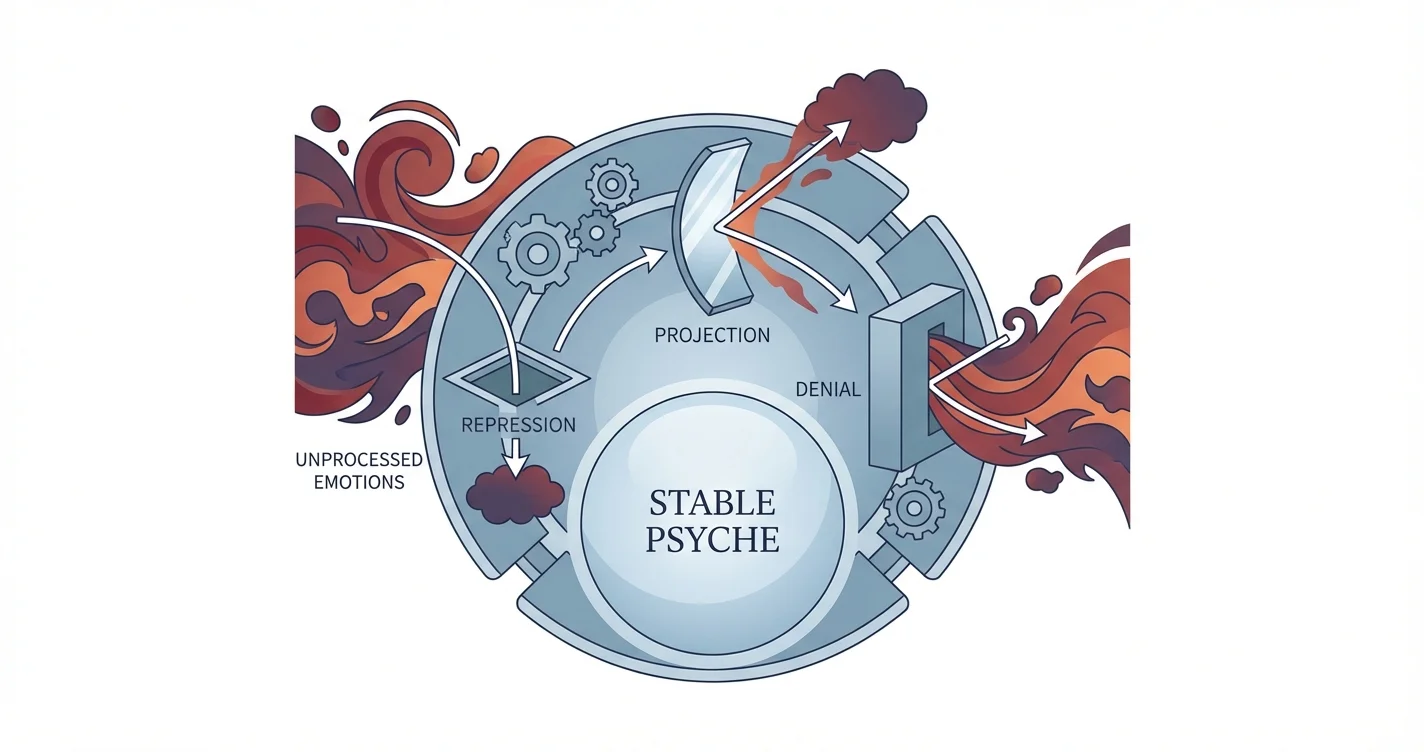
Repression pushes threatening thoughts, feelings, and memories out of conscious awareness entirely. Unlike suppression (deliberately choosing not to think about something), repression happens unconsciously. The emotion doesn't disappear—it remains active in your unconscious mind, potentially influencing your behavior, relationships, and physical health without your awareness.
Denial refuses to acknowledge a painful reality altogether. This can range from minor ("I'm not really upset about that") to significant ("I don't have a drinking problem despite consequences"). Denial protects the ego from information that would require uncomfortable changes in self-perception or behavior.
Rationalization replaces the true emotional reason for behavior with logical-sounding but ultimately false explanations. Someone who feels rejected after not receiving a job offer might rationalize that they "didn't really want it anyway" rather than processing feelings of disappointment or inadequacy.
Projection attributes your own unacceptable feelings to others. If you're angry but can't acknowledge it, you might perceive others as hostile toward you. This mechanism protects you from owning difficult emotions by relocating them outside yourself.
Displacement redirects emotions from their actual source to a safer target. Anger at your supervisor that feels too dangerous to express might get displaced onto your partner or children at home. The feeling gets expressed, but not toward its actual origin, leaving the original emotion unprocessed.
Intellectualization separates emotions from events by focusing exclusively on abstract, analytical thinking. You might discuss a traumatic experience with clinical detachment, analyzing it like a case study rather than acknowledging how it made you feel.
The Psychological Cost of Chronic Defensive Patterns
When ego defense mechanisms become your primary coping strategy, several problematic patterns emerge over time. Unprocessed emotions don't simply fade with time—they accumulate. Neurobiological research suggests that emotional experiences create lasting imprints in memory systems, and when these aren't integrated through processing, they remain in a suspended state. You might find yourself experiencing disproportionate reactions to present events because they're triggering old, unprocessed feelings.
Relationships often suffer when defenses become rigid. If projection is your habitual pattern, you'll consistently misread others' intentions. If denial prevents you from acknowledging relationship problems, issues compound without resolution. Tools like Lovon.app can provide a space to identify these patterns by reflecting back what you're expressing, helping you notice when your explanations don't align with your emotional reality.
Physical health consequences appear with surprising frequency. Research indicates associations between unexpressed emotions and various physiological symptoms—chronic pain, digestive issues, tension headaches, and cardiovascular problems. The energy required to maintain defensive barriers takes a toll, and emotions that can't be processed psychologically sometimes manifest somatically.
Your capacity for genuine intimacy becomes limited. Intimacy requires vulnerability—the ability to acknowledge and share your authentic emotional experience. When defenses are constantly activated, preventing you from even knowing what you truly feel, deep connection becomes nearly impossible.
Recognizing When Defenses Are Blocking Emotional Growth
Identifying your own defense mechanisms is challenging precisely because they operate unconsciously. However, certain patterns can signal that defenses are preventing necessary emotional processing:
Persistent numbness or disconnection from your emotional life suggests that defenses may be overactive. If you frequently feel "nothing" in situations that would typically evoke emotion, or if you observe yourself responding intellectually when others respond emotionally, your defenses might be creating too much distance from your feelings.
Repeated relationship patterns often indicate unprocessed emotions. If you consistently experience similar conflicts or find yourself attracted to similar problematic dynamics, unprocessed feelings from earlier experiences may be unconsciously influencing your choices.
Physical symptoms without clear medical causes can indicate that emotions blocked from psychological expression are finding physical outlets. When medical professionals rule out physiological causes for persistent symptoms, it's worth considering whether unexpressed emotions might be contributing.
Sudden, disproportionate reactions suggest that present situations are activating unprocessed feelings from the past. If a minor criticism sends you into despair, or a small conflict triggers rage, your reaction may be drawing from an accumulated reservoir of similar, unprocessed feelings.
Moving Toward Conscious Processing
Dismantling long-standing defenses requires patience and often professional support, but the process begins with developing awareness. Some people find that speaking their experiences aloud—whether with a therapist, trusted friend, or through resources like Lovon.app—helps bypass defenses that easily block written journaling or internal reflection.
Creating safety is essential before defense mechanisms will relax. Your ego developed these protections because, at some point, the emotions felt genuinely overwhelming or dangerous. Forcing yourself to "just feel everything" without adequate support often backfires, causing defenses to strengthen. Gradual exposure to uncomfortable emotions in manageable doses allows processing without retraumatization.
Developing emotional literacy—the ability to name and differentiate feelings with nuance—helps considerably. Many people operate with a limited emotional vocabulary (mad, sad, glad), which makes processing difficult. Learning to distinguish between shame and guilt, between disappointment and grief, gives you tools to work with emotions more precisely.
Professional therapy, particularly approaches focused on emotional processing like emotion-focused therapy or AEDP (Accelerated Experiential Dynamic Psychotherapy), specifically addresses how defenses block access to feelings and provides structured methods for safe emotional engagement.
When to Seek Professional Help
While developing awareness of your defense mechanisms can begin on your own, certain situations indicate that professional support is essential. If you're experiencing persistent symptoms of depression or anxiety, if your relationships are consistently unsatisfying, or if you notice patterns of self-sabotage that you can't change despite awareness and effort, a therapist specializing in emotional processing can provide frameworks and safety that self-help cannot replicate.
If you're aware of significant trauma in your background, working with a trauma-informed therapist is particularly important. Attempting to dismantle defenses around traumatic material without proper support can be destabilizing. Similarly, if trying to access emotions triggers dissociation, panic symptoms, or other overwhelming responses, professional guidance will help you pace the process appropriately.
Therapists trained in psychodynamic approaches, emotion-focused therapy, or somatic experiencing have specific expertise in working with defense mechanisms and facilitating emotional processing.
Conclusion
Ego defense mechanisms protecting from unprocessed emotions represent your psyche's attempt to shield you from overwhelm—a protective function that serves you well in moments of crisis but becomes problematic when it prevents all emotional processing. These unconscious strategies, from denial to rationalization to projection, create distance between you and your authentic feelings, offering short-term relief while potentially creating long-term consequences for your emotional health, relationships, and physical well-being. Understanding how your particular defensive patterns operate is the first step toward change. The goal isn't to eliminate defenses entirely—some situations genuinely require temporary emotional distance—but to develop flexibility, allowing you to choose when to maintain boundaries and when to open to the processing that healing requires. Whether through therapy, trusted relationships, or supportive tools that help you reflect on your emotional patterns, moving from unconscious defense toward conscious processing allows you to integrate your experiences rather than fragmenting them, building genuine resilience rather than rigid protection.
Disclaimer: This is general information, not medical advice or diagnosis. If symptoms are severe, affecting your daily life, or you're having thoughts of self-harm — seek professional help. In the US: call or text 988 (Suicide & Crisis Lifeline). For immediate danger: 911 or local emergency services.
How AI Support Helps You Heal
AI emotional support isn't about replacing human connection — it's about filling the gaps. The moments when you need to talk at 2 AM, when you don't want to burden your friends again, or when you simply need someone to listen without judgment.
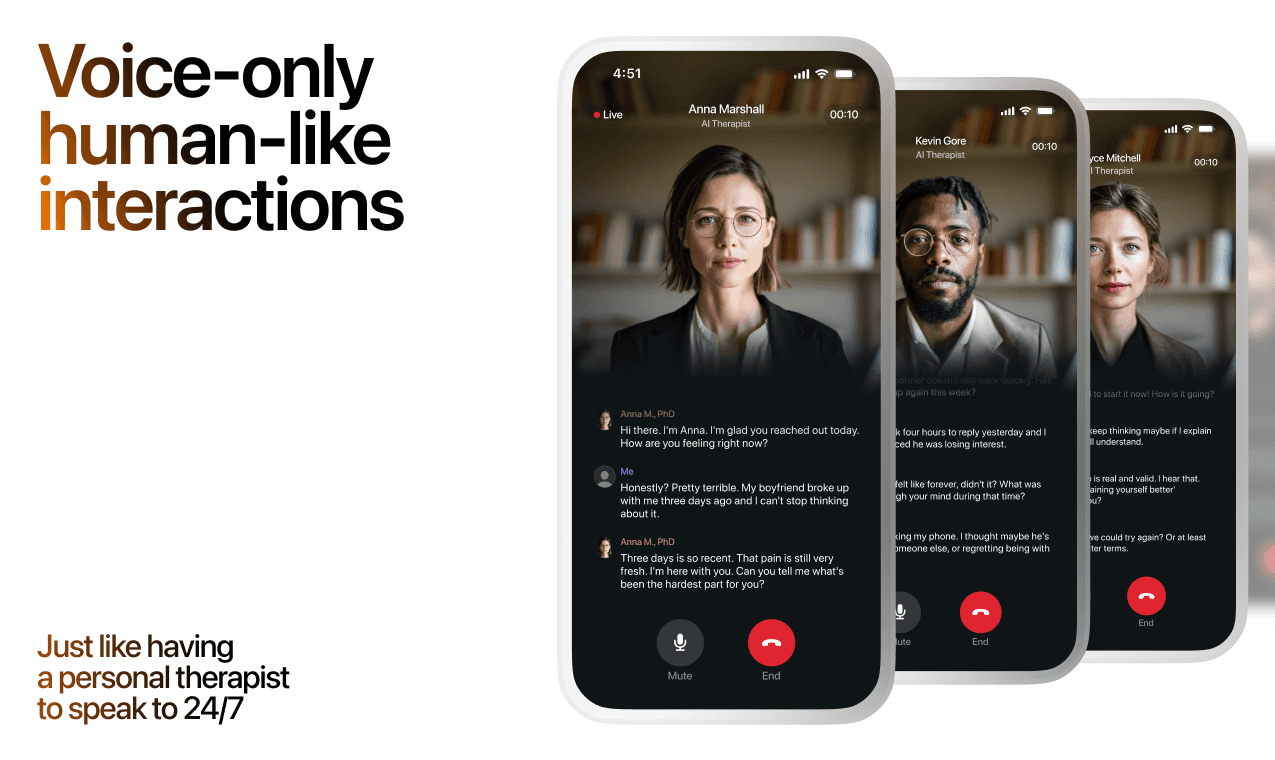
Here's what happens in a typical Lovon session:
You share what's on your mind
There's no script, no intake form, no waiting room. You speak or type whatever you're feeling — in your own words, at your own pace.
Lovon validates and explores
Using frameworks from CBT (Cognitive Behavioral Therapy) and motivational interviewing, Lovon acknowledges your feelings first, then gently helps you explore them. No dismissive "just move on" advice.
You build coping skills together
Lovon doesn't just listen — it actively works with you on evidence-based techniques: thought reframing, urge surfing, behavioral experiments, and more.
What a Session with Lovon Looks Like
When to Seek Professional Help
AI support is a valuable tool, but it's not a replacement for professional care. Please consider reaching out to a licensed therapist if you experience any of the following:
- Persistent thoughts of self-harm or suicide
- Inability to perform daily activities (work, eating, sleeping) for more than 2 weeks
- Turning to alcohol or substances to cope
- Intense anger or desire to harm your ex-partner
- Complete emotional numbness that doesn't improve over time
Crisis Resources (US): If you're in immediate danger, call 988 (Suicide & Crisis Lifeline) or text HOME to 741741 (Crisis Text Line). Available 24/7, free, and confidential.
Outside the US? Find a crisis line in your country
Ready to Start?
Your healing journey can begin right now
A 7-day trial. No judgment. Just a safe space to process what you're going through.
Frequently Asked Questions
Is Lovon a replacement for a real therapist?
Is my conversation with Lovon AI private?
How is Lovon different from ChatGPT for emotional support?
Can I use Lovon if I'm already seeing a therapist?
Can I try Lovon before subscribing?
About the Author

The Lovon Editorial Team
Mental Health & Wellness Content Team
The Lovon Editorial Team develops mental health and wellness content designed to make psychological concepts accessible and actionable. Our goal is to bridge the gap between clinical research and everyday life - helping you understand why your mind works the way it does and what you can do about it....
Related articles
- AI Life Coach for a Mid-Career Pivot in Your 30s (2026)
An AI life coach for a mid-career pivot in your 30s helps you process doubt and rebuild confidence 24/7 in 2026 — see…
- What is Fawn Response: People Pleasing as Trauma Reaction
When faced with threat, most people are familiar with the classic fight, flight, or freeze responses.
- Freeze, Flight, and Fawn Trauma Responses as Safety-Seeking Behavioral Patterns
When confronted with perceived danger or overwhelming stress, our nervous system activates automatic protective…
- Rebuild Self-Esteem After a Toxic Relationship (2026)
Rebuild self-esteem after a toxic relationship with 6 concrete steps, common setbacks, and fixes. A 2026 guide with real…
See also
Quizzes
- Empath Test: Do Other People's Moods Become Yours?
See how much of other people's moods you take on.
- Rejection Sensitivity Test: Free 12-Question Check
See how strongly you expect and read rejection.
Free tools
- How to Come Out to Your Parents
A chat about how to come out to your parents that starts with whether now is safe, not with the speech. Tell it your…
- How to Confront a Narcissistic Parent
Most of these conversations fail because you went in wanting three things at once. Tell it what you want to raise, and…
From the wiki
- Why do I keep dreaming about the same person?
A recurring dream figure usually marks unfinished emotional business rather than a message about that person. Your brain…
Disclaimer: This article is for informational purposes only and does not constitute medical advice, diagnosis, or treatment. Always seek the advice of your physician or other qualified health provider with any questions you may have regarding a medical condition. If you are in crisis or think you may have an emergency, call 988 (Suicide & Crisis Lifeline) or go to the nearest emergency room. Outside the US? Find a crisis line in your country.