
Freeze Response and Fawn Response as Trauma Survival Patterns
When faced with overwhelming threat, the human nervous system activates a series of automatic responses designed to maximize survival. While fight and flight

Key Takeaways
- Physical immobility or significantly slowed movement
- Feeling "stuck" or unable to act despite wanting to
- Numbing of emotions or disconnection from the body
- Time distortion during threatening situations
- Difficulty speaking or forming thoughts clearly
Introduction
When faced with overwhelming threat, the human nervous system activates a series of automatic responses designed to maximize survival. While fight and flight reactions receive considerable attention, two other trauma survival patterns—the freeze response and fawn response—play equally critical roles in how people cope with danger, particularly when escape or resistance isn't possible. These responses represent sophisticated neurobiological adaptations that helped our ancestors survive life-threatening situations. Understanding freeze and fawn responses as trauma survival patterns is essential for recognizing how past experiences continue to influence present-day reactions, relationships, and emotional well-being. Research in trauma psychology suggests these responses can become deeply ingrained patterns that activate long after the original threat has passed, affecting everything from decision-making to interpersonal connections.
What Are Freeze and Fawn Responses in Trauma Survival
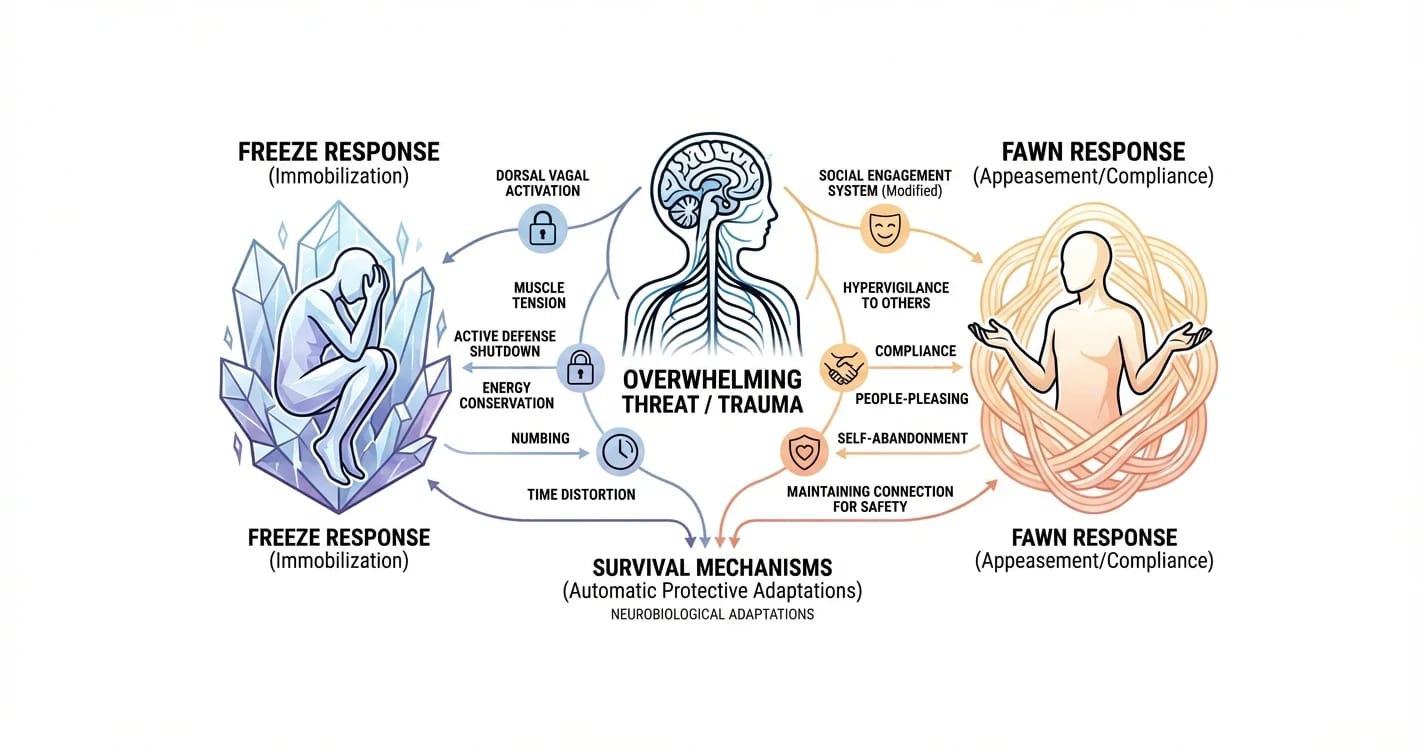
The freeze response represents a state of immobilization where the nervous system essentially "shuts down" active defense mechanisms. During freeze, muscle tension increases dramatically while voluntary movement becomes difficult or impossible. This response involves a complex interplay between the sympathetic nervous system's high arousal and the dorsal vagal system's immobilization response. Neurobiological research indicates this state occurs when the brain detects that neither fighting nor fleeing will successfully eliminate the threat.
The fawn response, by contrast, involves appeasing or placating the source of danger through compliance, people-pleasing, or anticipating others' needs. This survival pattern emerged as an adaptive strategy in situations where maintaining connection to a threatening person was necessary for survival—particularly relevant in childhood when caregivers represent both the source of threat and the only available protection.
Key characteristics of the freeze response include:
- Physical immobility or significantly slowed movement
- Feeling "stuck" or unable to act despite wanting to
- Numbing of emotions or disconnection from the body
- Time distortion during threatening situations
- Difficulty speaking or forming thoughts clearly
Key characteristics of the fawn response include:
- Automatic agreement or compliance with others' demands
- Difficulty identifying or expressing one's own needs
- Hypervigilance to others' emotional states
- Self-abandonment in favor of maintaining relational harmony
- Confusion about personal boundaries and preferences
Studies in trauma neuroscience suggest both responses involve distinct patterns of nervous system activation that happen faster than conscious thought, often within fractions of a second of perceiving threat.
How Freeze and Fawn Responses Work as Trauma Coping Mechanisms
Both freeze and fawn responses represent intelligent adaptations to specific survival contexts. The freeze response offers several protective functions: it may cause a predator to lose interest (many predators respond primarily to movement), it conserves energy when action would be futile, and it can reduce physical injury by decreasing resistance. In human contexts, freezing during assault or abuse is an involuntary neurobiological response—not a choice or failure of the person experiencing it.
The fawn response serves survival by maintaining attachment to threatening figures, reducing the likelihood of further harm through compliance, and creating opportunities to predict and manage danger by staying hyperaware of the threatening person's state. For children in abusive or unpredictable households, fawning often represents the only available strategy to increase safety and maintain necessary caregiving relationships.
These trauma survival patterns become problematic when they generalize beyond the original threatening context. A nervous system trained to freeze may activate this response during conflicts with partners, job interviews, or moments requiring decisive action—situations that aren't actually life-threatening but share certain characteristics with past trauma. Similarly, someone whose survival once depended on fawning may find themselves automatically agreeing to requests they want to refuse, struggling to identify their own preferences, or feeling responsible for managing others' emotions.
Clinical research indicates that repeated activation of these responses can create lasting changes in how the nervous system assesses and responds to perceived threat. The threshold for activating freeze or fawn patterns may lower over time, meaning increasingly mild stressors can trigger full survival responses. This helps explain why trauma survivors sometimes react to relatively minor situations with responses that seem disproportionate to outside observers—their nervous systems are responding to historical patterns of danger, not just present circumstances.
Working with trauma specialists who understand these patterns can help individuals recognize when survival responses are activating and develop greater capacity to assess actual present danger versus past-based reactions. Tools like Lovon.app provide accessible support for processing these patterns between therapy sessions, offering on-demand conversations when someone notices freeze or fawn responses activating and wants to talk through what's happening in real-time.
Recognizing Freeze and Fawn Patterns in Daily Life
Freeze response and fawn response as trauma survival patterns often manifest in subtle ways during everyday situations. Recognizing these patterns requires developing awareness of both physical sensations and behavioral tendencies that signal nervous system activation.
Common freeze manifestations include procrastination or avoidance when facing important decisions, feeling mentally "blank" during conflicts or confrontations, difficulty leaving unsatisfying jobs or relationships despite wanting to, numbing through excessive sleep or dissociation, and physical tension combined with inability to take action. People experiencing freeze might describe feeling "paralyzed" when they need to have difficult conversations, set boundaries, or make changes they know would benefit them.
Fawn response patterns often appear as automatic apologies even when not at fault, difficulty saying no to requests regardless of personal capacity, taking responsibility for others' emotions or reactions, minimizing one's own needs in favor of keeping peace, and anxiety when someone seems upset even if unrelated to you. In relationships, fawning might manifest as constantly checking whether a partner is happy, difficulty expressing disagreement, or losing touch with personal preferences and opinions.
These patterns frequently overlap. Someone might freeze when directly confronted but fawn when anticipating possible conflict. The specific combination depends on individual history, the nature of past threats, and what strategies proved most effective in childhood survival contexts.
Physical awareness provides important information about which response is activating. Freeze typically involves increased muscle tension, shallow breathing or breath-holding, feeling cold or numb, and a sense of being "outside" one's body. Fawn responses often include chest or stomach tension, scanning others' faces and body language, rapid mental calculations about how to respond, and immediate impulse to fix, help, or accommodate.
Developing the capacity to notice these patterns without judgment represents an important step in healing. Many trauma survivors experience shame about freeze responses ("Why didn't I fight back?") or fawn responses ("Why can't I just stand up for myself?"). Understanding these as automatic neurobiological survival mechanisms rather than character flaws helps reduce self-blame and creates space for gradual change.
Working With Freeze and Fawn Trauma Responses
Addressing trauma survival patterns requires patience and often benefits from professional guidance. These responses developed as protection, and the nervous system won't easily relinquish them without evidence that alternative responses can keep you safe.
For freeze responses, effective approaches focus on gradually restoring a sense of agency and physical capacity for action. This might include grounding techniques that bring awareness to present safety, gentle movement or exercise that rebuilds the connection between intention and action, practicing small decisions to strengthen the capacity for choice, and working with the body's signals rather than overriding them. Some people find that literally practicing physical movements associated with boundary-setting—like pushing away, saying "no" aloud, or standing in powerful postures—helps the nervous system learn it has options beyond immobilization.
Working with fawn responses involves developing clearer awareness of personal needs, preferences, and boundaries. Useful strategies include noticing when automatic agreement happens before consulting internal experience, practicing small acts of disagreement in low-stakes situations, developing tolerance for others' disappointment or mild displeasure, and reconnecting with suppressed anger or resentment as information about violated boundaries. Therapy modalities specializing in trauma and attachment can help identify the relational contexts where fawning developed and process the underlying fear that drives this response.
Both patterns benefit from nervous system regulation practices that increase capacity to remain present during discomfort rather than automatically shifting into survival mode. These might include breathwork that influences autonomic nervous system state, mindfulness practices that build awareness of internal experience, co-regulation through safe relationships where different response patterns become possible, and body-based therapies that address trauma stored in physical patterns and postures.
When working with these patterns, many people find value in on-demand support that bridges the gap between therapy sessions. Lovon.app offers voice-based conversations that can help process situations when freeze or fawn responses activate, providing reflection and perspective when you notice these patterns affecting decisions or relationships. This type of accessible resource can support ongoing awareness and gradual shifts in automatic responses.
The Relationship Between Freeze, Fawn Responses and Complex Trauma
Freeze response and fawn response as trauma survival patterns are particularly common among survivors of complex trauma—repeated or prolonged traumatic experiences, especially during developmental years. When threats occur within caregiving relationships, children face an impossible situation: the person who represents both danger and their only source of survival. This context typically doesn't allow for fight or flight responses, leaving freeze and fawn as the primary available strategies.
Research in developmental trauma suggests that early relational experiences shape the nervous system's baseline settings for threat detection and response. Children who needed to constantly monitor caregivers' emotional states to maximize safety often develop highly sensitive threat detection systems that remain hyperactive in adulthood. This manifests as quick activation of freeze or fawn responses even in situations objectively safe.
The impact extends beyond individual responses to shape relational patterns. Someone whose survival depended on fawning may unconsciously select relationships where this pattern continues—partners who expect emotional caretaking, friendships characterized by one-sided giving, or work environments with demanding authority figures. Similarly, freeze patterns can make establishing intimate relationships difficult, as closeness itself may trigger immobilization or numbing.
Understanding these patterns as survival-based rather than personality-based can shift how people approach healing. The goal isn't eliminating these responses entirely—they remain useful in genuinely dangerous situations—but developing greater flexibility in how and when they activate. This involves helping the nervous system distinguish between past danger and present safety, expanding the range of available responses, and building capacity to tolerate discomfort without immediately defaulting to survival patterns.
When to Seek Professional Help
While developing awareness of freeze and fawn patterns can happen independently, working with these trauma survival patterns often benefits from professional support. Consider seeking help from a therapist specializing in trauma if these responses significantly interfere with daily functioning, relationships consistently follow painful patterns you can't seem to change, you experience frequent dissociation or feeling disconnected from your body, or memories or flashbacks accompany these responses.
Therapeutic approaches particularly effective for trauma survival patterns include Sensorimotor Psychotherapy and Somatic Experiencing, which work directly with nervous system responses and body-based patterns; Internal Family Systems therapy, which addresses different protective parts developed in response to trauma; EMDR (Eye Movement Desensitization and Reprocessing), which can help reprocess traumatic memories underlying these patterns; and attachment-focused therapy, which works with relational patterns and helps build secure connections. A qualified trauma therapist can help identify which patterns are most active for you and develop an individualized approach that respects your nervous system's protective mechanisms while gradually expanding your response options.
Conclusion
Understanding freeze response and fawn response as trauma survival patterns represents an essential step in trauma recovery and personal development. These responses reflect the nervous system's sophisticated attempts to maximize survival in threatening situations, not personal weakness or character flaws. Both freeze and fawn developed in contexts where they represented the best available option for staying safe, and they often continue activating long after the original danger has passed. Recognition of these patterns allows for greater self-compassion and creates possibilities for gradual change. Working with these trauma survival patterns involves patience, often professional support, and practices that help the nervous system learn it has more options than automatic freeze or fawn. Whether through specialized therapy, supportive relationships, or accessible resources that help process these patterns when they arise, healing involves expanding response flexibility while honoring the protective function these patterns originally served. The goal isn't eliminating these survival responses entirely but developing the capacity to assess present circumstances accurately and choose responses appropriate to actual current conditions rather than historical threats.
Disclaimer: This is general information, not medical advice or diagnosis. If symptoms are severe, affecting your daily life, or you're having thoughts of self-harm — seek professional help. In the US: call or text 988 (Suicide & Crisis Lifeline). For immediate danger: 911 or local emergency services.
How AI Support Helps You Heal
AI emotional support isn't about replacing human connection — it's about filling the gaps. The moments when you need to talk at 2 AM, when you don't want to burden your friends again, or when you simply need someone to listen without judgment.
Here's what happens in a typical Lovon session:
You share what's on your mind
There's no script, no intake form, no waiting room. You speak or type whatever you're feeling — in your own words, at your own pace.
Lovon validates and explores
Using frameworks from CBT (Cognitive Behavioral Therapy) and motivational interviewing, Lovon acknowledges your feelings first, then gently helps you explore them. No dismissive "just move on" advice.
You build coping skills together
Lovon doesn't just listen — it actively works with you on evidence-based techniques: thought reframing, urge surfing, behavioral experiments, and more.
What a Session with Lovon Looks Like

When to Seek Professional Help
AI support is a valuable tool, but it's not a replacement for professional care. Please consider reaching out to a licensed therapist if you experience any of the following:
- Persistent thoughts of self-harm or suicide
- Inability to perform daily activities (work, eating, sleeping) for more than 2 weeks
- Turning to alcohol or substances to cope
- Intense anger or desire to harm your ex-partner
- Complete emotional numbness that doesn't improve over time
Crisis Resources (US): If you're in immediate danger, call 988 (Suicide & Crisis Lifeline) or text HOME to 741741 (Crisis Text Line). Available 24/7, free, and confidential.
Outside the US? Find a crisis line in your country
Ready to Start?
Your healing journey can begin right now
A 7-day trial. No judgment. Just a safe space to process what you're going through.
Frequently Asked Questions
Is Lovon a replacement for a real therapist?
Is my conversation with Lovon AI private?
How is Lovon different from ChatGPT for emotional support?
Can I use Lovon if I'm already seeing a therapist?
Can I try Lovon before subscribing?
About the Author
The Lovon Editorial Team
Mental Health & Wellness Content Team
The Lovon Editorial Team develops mental health and wellness content designed to make psychological concepts accessible and actionable. Our goal is to bridge the gap between clinical research and everyday life - helping you understand why your mind works the way it does and what you can do about it....
Related articles
- Amygdala Reactivity Reduction Through Evidence-Based Techniques
The amygdala, a small almond-shaped structure deep within the brain, acts as your neurological alarm system—constantly…
- Nervous System Regulation and Disproportionate Emotional Reactions
Have you ever found yourself reacting with overwhelming intensity to something that, logically, shouldn't warrant such a…
- Self-Sabotage as Defense Mechanism and Conditional Love
You set a goal, work toward it diligently, and then—just as success comes within reach—you find yourself making…
- Decision Paralysis and the Pull of Default Choices
Decision paralysis occurs when the fear of making the wrong choice becomes so overwhelming that we freeze entirely. In…
See also
Quizzes
- Am I a People Pleaser? 12-Question Quiz
Where kindness stops and self-erasure starts.
- Empath Test: Do Other People's Moods Become Yours?
See how much of other people's moods you take on.
Free tools
- How to Respond to Gaslighting
Say what happened and what they say happened. You get what is actually established separated from what is being…
- What Leaving Would Actually Take
Four short lists: money, a place, the shared things, and people. Mark each item sorted or not. You get the itemized…
From the wiki
- Why do I feel lonely all of a sudden?
Sudden loneliness usually traces back to something that quietly ended in the last few months: a routine, a shared class…
Disclaimer: This article is for informational purposes only and does not constitute medical advice, diagnosis, or treatment. Always seek the advice of your physician or other qualified health provider with any questions you may have regarding a medical condition. If you are in crisis or think you may have an emergency, call 988 (Suicide & Crisis Lifeline) or go to the nearest emergency room. Outside the US? Find a crisis line in your country.