
Toxic Parent Signs: Overcoming Their Hurtful Legacy And Reclaiming Your Life
There is a big difference between parents who made mistakes and parents whose behavior often made their children feel unsafe or not good enough.
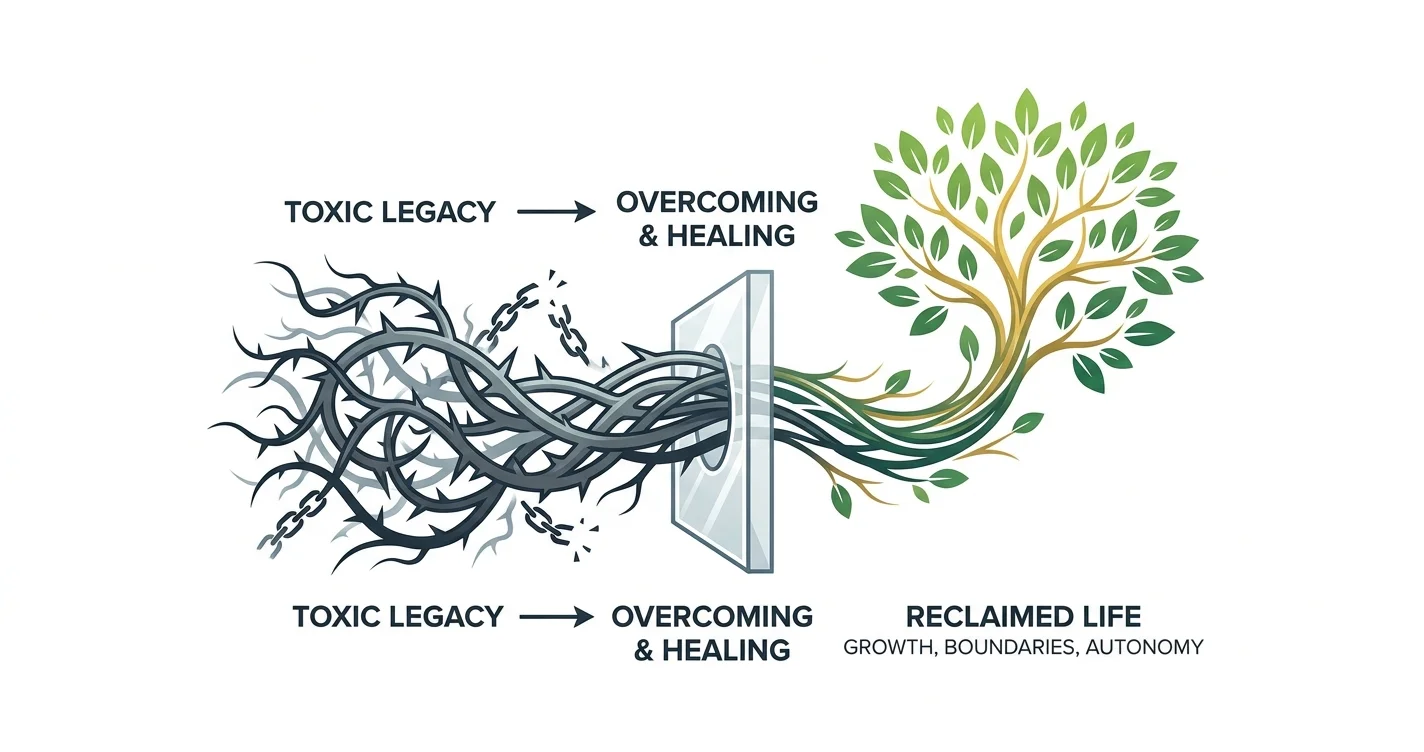

Key Takeaways
- Your relationship with your parents can shape how you see yourself and others
- There are different toxic types of parents, like controlling, manipulative, or emotionally distant
- Healing takes time, but there are clear steps that can help you heal
- Even if the past was difficult, you can build healthier relationships with support
Introduction
There is a big difference between parents who made mistakes and parents whose behavior often made their children feel unsafe or not good enough. If you spent your childhood being very careful all the time, or if you felt that love had conditions, this article is for you.
Understanding what toxic parenting is, and how it affects you, helps you see what really happened. It can help you stop carrying it like it is just part of who you are.
What Is a Toxic Pattern in Parenting?
A toxic pattern in parenting is a repeated dynamic in which a parent's behavior systematically undermines a child's self-worth and sense of safety. In her 1989 book Toxic Parents, psychotherapist Susan Forward described these dynamics as patterns of behavior that permeate a child's life so thoroughly they shape the child's entire sense of self.
Toxic patterns are not always loud or obvious. Some involve verbal abuse and rage. Others involve silence, withdrawal, and emotional manipulation so subtle it takes years to name.
Types of Toxic Parents
Toxic parenting does not look the same in every family. These are the most recognized patterns, and many parents exhibit more than one. Only a licensed clinician can assess a personality disorder. If you recognize these patterns in a parent, that is worth exploring with a professional.
The Narcissistic Parent
A narcissistic mother or father often sees the child as part of themselves. The child is expected to make the parent look good, meet the parent’s emotional needs, or listen to their problems. The parent usually does not pay much attention to the child’s real feelings.
As adults, children of narcissistic parents may find it hard to understand their own needs, because those needs were not treated as important when they were growing up.
The Emotionally Immature Parent
These parents cannot manage their own emotions well. Because of that, the child starts to manage the parent’s feelings instead. The child learns to watch the parent’s mood first, and only then decide what to say or how to act.
The Controlling Parent
These parents try to control many parts of the child’s life, like friends, appearance, achievements, and future choices. The message is that the child cannot be trusted to make their own decisions.
As adults, this can lead to two common patterns: always trying to please others, or doing the opposite and resisting rules automatically.
The Passive-Aggressive Parent
A passive-aggressive parent may use silence, cold behavior, indirect criticism, or take away affection to control the child. Because of this, the child often does not know what to expect. This can lead to constant anxiety and a habit of always being alert.
The Manipulative Parent
Emotional manipulation in toxic parenting often looks like making you feel guilty or using love to control you. You may feel guilty for having your own life and setting boundaries. The parent keeps the child loyal through fear, obligation, or shame.
The Verbally Abusive Parent
Verbal abuse can include direct criticism, humiliation, name-calling, and disrespect. It can also be more subtle, like always putting the child down or comparing them negatively to others. Children who grow up in this environment often learn that it is not safe to express themselves and that they cannot trust their own feelings.
The Inadequate Parent
Inadequate parents are often overwhelmed or not there in the ways that matter. This is a form of neglect, and it can be as harmful as active abuse, even if nothing clearly bad seems to happen. The child may grow up feeling invisible and unimportant.
Effects on Mental and Physical Health
Parental toxicity does not stay in childhood. Its effects follow adult children of toxic parents into their relationships and their sense of self.
Mental Health Effects
These are the most common effects on your mental health:
- Difficulty trusting others or maintaining close relationships
- Chronic anxiety, often rooted in the hypervigilance learned in an unpredictable home
- Depression and persistent low self-worth
- People-pleasing behaviors and difficulty saying no
- A deep internal critic inside
- Vulnerability to entering relationships with toxic people, including a toxic ex, because the dynamic feels familiar
Physical Health Effects
Research associates childhood adversity with elevated risk of autoimmune conditions, chronic pain, digestive disorders, and cardiovascular disease in adulthood, though individual outcomes vary significantly. If you have health concerns, consult a clinician rather than drawing direct conclusions from your childhood history. The body keeps a record of chronic stress, and the chronic stress of toxic parenting, particularly when it involves unpredictability and emotional threat, activates the same physiological pathways as other forms of trauma.
Effects on the Inner Child
Many adults who grew up with inadequate parents carry what therapists call "inner child" wounds: parts of the self that are still waiting for the safety, validation, or love that never reliably came. These wounds show up in adult life as outsized emotional reactions, difficulty self-soothing, and a persistent sense of not belonging or not being enough.
How It Affects Relationships?
Adult children of toxic parents often find themselves in one or more of the following patterns:
| Pattern | What does it looks like? | Root dynamic |
|---|---|---|
| People-pleasing | Prioritizing others' needs to avoid conflict or withdrawal | Love felt conditional on compliance |
| Difficulty with boundaries | Saying yes when you mean no, chronic resentment | Limits were not respected or modeled |
| Choosing unavailable partners | Drawn to emotionally withholding or controlling people | Familiarity feels like safety |
| Fear of conflict | Shutting down or appeasing during disagreement | Conflict was unsafe in the family home |
| Overexplaining and apologizing | Feeling the need to justify your existence and choices | Being wrong had serious consequences |
Signs You Grew Up with a Toxic Parent
To help yourself in adult life, it is important to understand if you grew up with toxic parents. Here are the signs you should pay attention to.
You Were Responsible for Their Emotional State
When a parent is struggling with their emotions, a child can become the closest person to carry that weight. You may have learned to notice everything right away. To change your behavior without anyone asking, for example. This habit can follow you into adult friendships, work, and relationships. If you still feel anxious when someone seems upset, even if you did nothing wrong, this is something important to notice.
Criticism Came More Easily Than Encouragement
Every parent corrects their child. But there is a difference between helpful guidance and constant criticism. If your childhood felt like nothing was ever good enough, where your wins were ignored or quickly criticized, and praise was rare or had conditions, it can affect you deeply. Many adults from this kind of environment struggle with perfectionism, self-doubt, or an inner voice that sounds like someone from their past.
Your Boundaries Were Treated as a Problem
Healthy parents teach children that boundaries are important and should be respected. In toxic families, it is often the opposite. Maybe saying no led to guilt, anger, or punishment. If setting limits still feels scary, if you explain too much, apologize in advance, or feel guilty for having needs, this pattern may come from that experience.
Love Felt Conditional
Conditional love often shows in how care and attention come and go based on your behavior, how obedient you are, or how well you meet your parent’s expectations. You may have felt that you had to earn love. That you needed to perform, achieve, or change yourself to be accepted. This experience can make closeness feel unsafe or make you work very hard to keep people from leaving.
Your Feelings Were Dismissed or Turned Around
“You’re too sensitive.” “I was just joking.” “You’re making this about yourself.” “After everything I’ve done for you.” If these phrases feel familiar, you may have grown up in a place where your feelings were often dismissed. Over time, children in this situation learn not to trust their own feelings. They start to doubt what they feel and think. This can continue into adult life and make it hard to trust yourself or speak up in relationships.
There Was No Room for Your Autonomy
Growing up means becoming your own person. For this to happen, a parent needs to accept that a child will have their own opinions, preferences, and identity. In toxic families, this can feel like a threat to the parent. They may respond with guilt, control, less affection, or even anger when the child tries to be independent. If you had to hide parts of yourself or feel guilty for wanting something different, this is a response to an environment that did not give you space to be yourself.
The Home Environment Felt Unpredictable
One of the strongest effects of a chaotic or unstable home is how your body and mind adapt. When you do not know what will happen, you stay alert. You learn to read moods, expect conflict, and keep yourself small to stay safe. This kind of constant stress in childhood is known to affect people later in life. It can lead to anxiety, problems with emotions, and difficulty trusting others.
You Still Feel the Weight of It Now
Not everyone understands right away that their parent was difficult. Sometimes it takes distance, a new relationship, or therapy to clearly see the pattern. A therapist can help you understand how your childhood affected you and what you can do now. This process is different for everyone, and there is no single right result. But for many people, healing starts when they clearly see and name what happened.
Dealing with Toxic Parents As an Adult
Many toxic parent dynamics don't disappear when you turn eighteen. And the confusion deepens, because you're an adult now, which means you're supposed to have figured out how to handle this by now. But you just don't know how. Here's what dealing with a toxic parent as an adult can actually look like, and what you can do about it.
Recognize That the Pattern Is Still Active
Many toxic patterns continue into adult life because people do not recognize them. What may seem like a generation gap can be a repeated harmful pattern. If you still feel very careful before talking to your parent or if you leave conversations feeling worse about yourself, the pattern may still be there.
Stop Trying to Get What They Can't Give
Many adults spend years trying to get the love and care they needed as children. But parents do not always have the ability to give what their children need. This is about their limits. When you keep trying to get something from someone who cannot give it, the cycle of hurt continues. Grief is often the more honest response. Feeling sad about the parent you needed but did not have is often necessary before real change can begin.
Set Boundaries Without Waiting for Permission
Parents do not have to agree or be in a good mood for you to say what is okay for you. When you set boundaries, they may push back. Some toxic parents see limits as a personal attack or think you are ungrateful. This can feel uncomfortable, but it does not mean you are wrong.
Stop Organizing Your Life Around Their Reactions
If you have spent your adult life making choices based on how your parent might react, you know how much it affects you. It can shape your career, relationships, where you live, and even how you act. Dealing with a toxic parent as an adult means asking an important question: whose life am I living? You are allowed to make choices your parent does not agree with.
Manage Contact in a Way That Protects You
There is no one right answer about how much contact to have with a toxic parent. Some people limit contact significantly. Others find ways to maintain a modified relationship with clear boundaries. Some, after careful thought and professional support, choose to step back further. None of these paths is inherently more correct than another. None of these choices are easy, and they should not be made in anger or without thinking about the long-term impact. What matters most is that your decision is based on what is healthy and sustainable for you.
Address the Never Good Enough Voice
Many adults who grew up with toxic parents have an inner voice that sounds like their parent. It tells them their work is not good enough and that they are not good enough. This voice developed for a reason. When you were a child, paying attention to a critical parent helped you stay safe. But now you are not in that situation anymore, and this voice is based on old patterns that are no longer helpful.
Build the Support System You Didn't Have Growing Up
Families with toxic patterns often limit your access to support outside the family. This can happen through isolation or by taking up so much emotional space that there is no room for others. As an adult, you can build something different. Friends, chosen family, communities, and professional help are all real sources of support.
Work with Someone Who Understands This Dynamic
Patterns from childhood can be deep, and they can be hard to see on your own. A therapist with experience in family dynamics and childhood trauma can help you understand what happened and what healing can look like for you.
Treatment and Recovery
Healing from this is possible, but it takes time, and different things work for different people. Here are some options that can help you find your own path to healing:
- Individual therapy
- Inner child work
- Family therapy
- EMDR (Eye Movement Desensitization and Reprocessing). Some people find this helpful when specific memories are driving current emotional reactivity, particularly when delivered by a trained clinician. It is one option among several, not a universal fit
- Self-help resources
A Note on Moving Forward
Taking your life back after growing up with a toxic family means not letting your past control your future. Your parents do not decide who you are now. With the right support, people really can change their life story.
Sources And Further Reading
We used these sources to create this article and help you feel better. You can explore them to get a deeper understanding of the topic:
- Child abuse and neglect. American Psychological Association.
- Relationship of childhood abuse and household dysfunction to leading causes of death. American Journal of Preventive Medicine. PubMed.
How AI Support Helps You Heal
AI emotional support isn't about replacing human connection — it's about filling the gaps. The moments when you need to talk at 2 AM, when you don't want to burden your friends again, or when you simply need someone to listen without judgment.
Here's what happens in a typical Lovon session:
You share what's on your mind
There's no script, no intake form, no waiting room. You speak or type whatever you're feeling — in your own words, at your own pace.
Lovon validates and explores
Using frameworks from CBT (Cognitive Behavioral Therapy) and motivational interviewing, Lovon acknowledges your feelings first, then gently helps you explore them. No dismissive "just move on" advice.
You build coping skills together
Lovon doesn't just listen — it actively works with you on evidence-based techniques: thought reframing, urge surfing, behavioral experiments, and more.
What a Session with Lovon Looks Like

When to Seek Professional Help
AI support is a valuable tool, but it's not a replacement for professional care. Please consider reaching out to a licensed therapist if you experience any of the following:
- Persistent thoughts of self-harm or suicide
- Inability to perform daily activities (work, eating, sleeping) for more than 2 weeks
- Turning to alcohol or substances to cope
- Intense anger or desire to harm your ex-partner
- Complete emotional numbness that doesn't improve over time
Crisis Resources (US): If you're in immediate danger, call 988 (Suicide & Crisis Lifeline) or text HOME to 741741 (Crisis Text Line). Available 24/7, free, and confidential.
Outside the US? Find a crisis line in your country
Ready to Start?
Your healing journey can begin right now
1 free conversation. No credit card. No judgment. Just a safe space to process what you're going through.
Frequently Asked Questions
Q: What are the 4 types of parents?
Q: Can the relationship with a toxic parent ever improve?
Q: How do I know if my parent is toxic or just flawed?
Q: What if my siblings do not see the parent the same way I do?
Q: Is it normal to still love a toxic parent?
About the Author

Mireya Tabasa
Mental Health Support Specialist & AI Advisor
Mireya Tabasa is a Mental Health Support Specialist working at the intersection of clinical care and technology. With over 4 years of hands-on experience supporting diverse populations facing mental health challenges in educational and healthcare settings, she brings frontline clinical insight to ev...
Related articles
- How to Heal from Emotionally Immature Narcissistic Parents Trauma
Healing from emotionally immature narcissistic parents trauma is a profound journey that requires more than willpower or…
- Best AI Life Coach App for Single Parents in 2026
Lovon ranks best AI life coach app for single parents in 2026 for voice-based support anytime. Compare 6 apps, pros…
- Rebuild Self-Esteem After a Toxic Relationship (2026)
Rebuild self-esteem after a toxic relationship with 6 concrete steps, common setbacks, and fixes. A 2026 guide with real…
- How to Heal as an Adult Child of an Alcoholic (2026)
How to heal as an adult child of an alcoholic in 2026: name your childhood role, rebuild trust in yourself, set…
See also
Quizzes
- Are They a Red Flag? 10 Questions to Check Your Partner
Check your partner in 3 minutes.
- Boundaries Test: Free 12-Question Self-Check
See where your boundaries slip, in 3 minutes.
Free tools
- How to Confront a Narcissistic Parent
Most of these conversations fail because you went in wanting three things at once. Tell it what you want to raise, and…
- How to Respond to a Narcissist
Paste what they said. You get the part that actually needs answering separated from the part designed to pull you in, a…
Disclaimer: This article is for informational purposes only and does not constitute medical advice, diagnosis, or treatment. Always seek the advice of your physician or other qualified health provider with any questions you may have regarding a medical condition. If you are in crisis or think you may have an emergency, call 988 (Suicide & Crisis Lifeline) or go to the nearest emergency room. Outside the US? Find a crisis line in your country.