
What Is Trauma Dumping and Why People Do It (2026)
Trauma dumping means unloading pain without consent. Learn exactly why it happens, how to recognize it in yourself, and how to stop the pattern in 2026.

Key Takeaways
- Honest self-reflection about your communication patterns
- A basic understanding of nervous system responses under stress
- Willingness to sit with discomfort without immediately releasing it
- A safe outlet — a journal, a therapist, or a voice-based emotional support tool like Lovon
- About 15–20 minutes to read and think
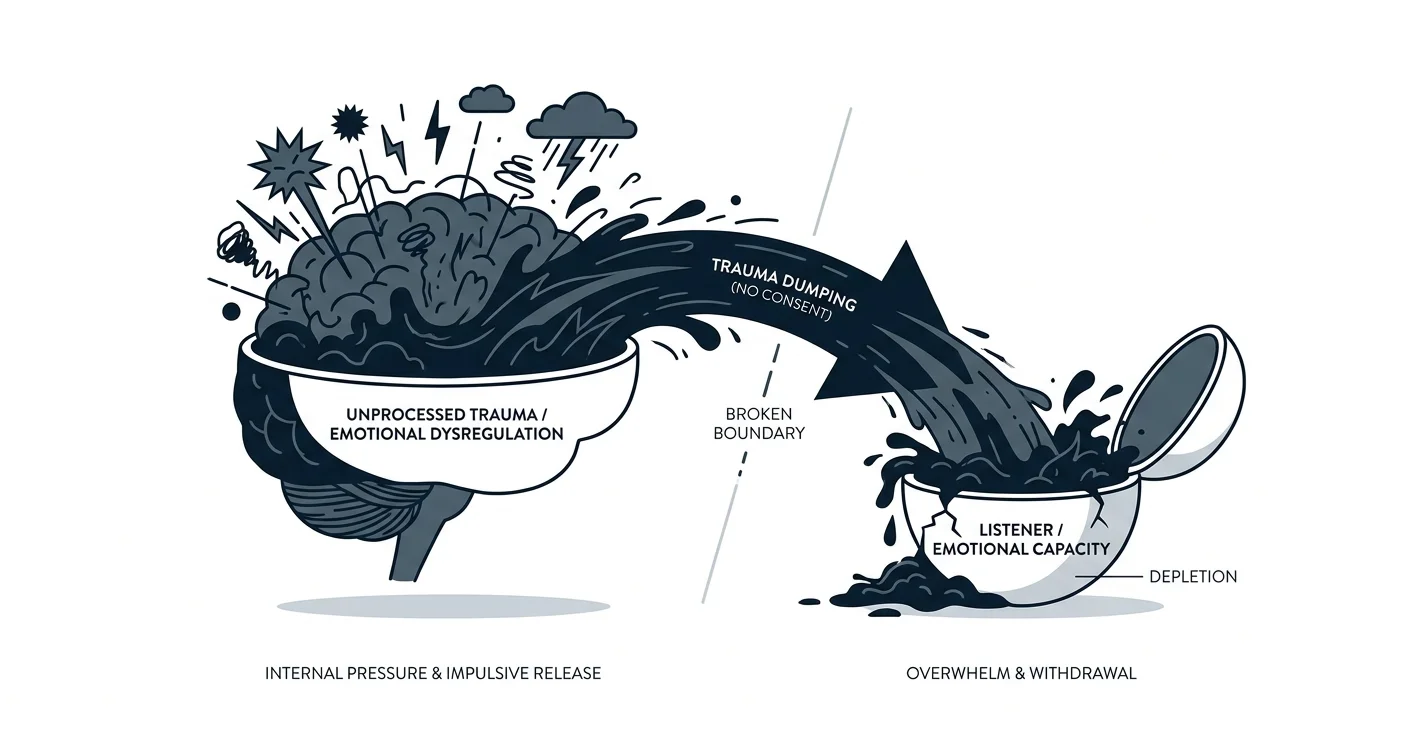
Trauma dumping is when someone unloads raw, unfiltered emotional pain onto another person without warning, consent, or regard for whether that person has the capacity to hold it. It happens in friendships, relationships, and even with strangers online — and in 2026, it is one of the most searched mental health concepts because so many people are on both ends of it.
TL;DR: Trauma dumping means sharing traumatic or highly distressing experiences in a one-sided, overwhelming way that crosses the boundary between venting and emotional flooding. It is not the same as asking for support. People do it because unprocessed pain creates internal pressure that demands release — not because they are bad people. Understanding why it happens is the first step to changing the pattern, whether you are the one doing it or absorbing it. This guide covers the definition, the psychology behind it, and concrete steps for both sides.
Why This Matters
The line between healthy venting and trauma dumping is thinner than most people realize. One 2022 survey by the American Psychological Association found that 47% of adults report feeling emotionally drained by conversations with people they care about — and unregulated emotional offloading is a leading cause. In 2026, with social media making it normal to broadcast personal pain to hundreds of people at once, the pattern is accelerating. Knowing what trauma dumping actually is protects your relationships and your own mental health.
What You'll Need to Work Through This
- Honest self-reflection about your communication patterns
- A basic understanding of nervous system responses under stress
- Willingness to sit with discomfort without immediately releasing it
- A safe outlet — a journal, a therapist, or a voice-based emotional support tool like Lovon
- About 15–20 minutes to read and think
The Steps: Understanding and Addressing Trauma Dumping
Step 1 — Define It Precisely
Trauma dumping is not the same as venting. Venting is time-limited, mutual, and usually ends with some acknowledgment of the listener. Trauma dumping floods the listener with graphic details, cycles back repeatedly to the same pain, and rarely checks whether the other person is okay to receive it. The key marker is consent: the listener did not agree to an emotional processing session. It often happens with no buildup — a friend asks "how are you?" and receives a 40-minute account of childhood abuse or a recent crisis. The dumper usually feels relief. The listener usually feels responsible, guilty, or depleted.
It is worth naming clearly: trauma dumping is not a character flaw. It is a coping strategy that developed when someone had no other way to process pain. In 2026, therapists increasingly use the term "emotional flooding" to describe the same pattern in clinical contexts.
Step 2 — Understand Why People Do It
The psychology behind trauma dumping is rooted in how the nervous system handles unprocessed distress. When someone has not had consistent, safe relationships where their pain was met with care, the body learns to store emotional material until the pressure becomes unbearable. At that point, release happens impulsively — toward whoever is nearby and perceived as safe.
Several specific patterns drive it:
- Emotional dysregulation: The person genuinely cannot hold the feeling any longer. Their window of tolerance is narrow. This is common in people with CPTSD, BPD, or histories of neglect.
- Reenactment of attachment wounds: If expressing pain as a child led to connection (or was the only way to get attention), the adult brain learned to repeat the pattern. You can read more about this in Lovon's guide to CPTSD from childhood symptoms and healing steps.
- Shame about needing help: Asking directly for support feels vulnerable or unsafe, so the pain comes out sideways — in the form of a story rather than a request.
- Lack of internal containment skills: Nobody taught them how to sit with discomfort, name it, or pace its release. They never developed the tools to do it differently.
This is not an excuse for the impact on others. It is an explanation that makes change possible.
Step 3 — Recognize the Signs in Yourself
Most people who trauma dump do not realize they are doing it. These are the clearest signals:
- You feel immediate relief after unloading but notice the other person looks drained or pulls away
- You return to the same painful topic across multiple conversations without resolution
- You start sharing before you have checked whether the other person has capacity ("Is now a good time?" never comes up)
- You share graphic or escalating details that go beyond what the situation needs
- You feel a compulsive urgency — the story has to come out now
- After the conversation, you feel vaguely ashamed or regret how much you said
If three or more of these are familiar, this is a pattern worth addressing — not because you are broken, but because it is not actually getting you the connection you need.
Step 4 — Recognize the Signs When You Are on the Receiving End
If you are the listener, your body usually tells you before your brain does. Watch for:
- A sudden drop in energy mid-conversation
- Feeling responsible for fixing the other person's pain
- Anxiety about bringing up your own needs afterward
- Replaying their trauma in your head hours later
- Dreading their messages or calls
Receiving trauma dumping repeatedly is a form of emotional labor that depletes you even when you love the person. You are allowed to set a limit. Doing so is not abandonment — it is a necessary condition for the relationship to survive. Lovon's article on fawn response and how people-pleasing hides trauma covers why so many people struggle to do this.
Step 5 — Break the Pattern (If You Are the One Doing It)
Changing this pattern takes practice, not willpower. Four concrete moves:
Ask before you unload. Literally say: "I'm going through something hard — do you have the bandwidth to hear it right now?" That one sentence transforms the dynamic. It gives the other person agency. It signals that you see them as a person, not a container.
Use a private outlet first. Before calling a friend at 11 PM, try writing it out or talking to a voice-based support tool. Getting the first wave of emotion out in a low-stakes environment reduces the pressure to flood someone else.
Practice titration. Share a piece, then pause. Notice how the other person responds. If they are engaged, continue. If they look overwhelmed, stop. This is a learnable skill, not a natural talent.
Work on the root. Trauma dumping is a symptom of unprocessed material. Addressing the underlying pain — through therapy, structured journaling, or consistent emotional support sessions — reduces the internal pressure that drives the behavior in the first place.
Step 6 — Set a Boundary (If You Are on the Receiving End)
A direct, kind limit sounds like: "I care about you and I want to be there for you. I'm not in a place to hold this right now — can we talk tomorrow?" You do not owe a detailed explanation. You do not have to apologize. If the person responds with guilt or escalation, that is important information about the relationship dynamic.
Consistent limits also model something valuable to the person who dumps: that relationships have two sides, and that asking for consent is how connection actually works.
Step 7 — Know When It Needs Professional Support
If you recognize the pattern in yourself and cannot stop it despite trying, that is not a failure of motivation. It usually means the underlying material needs more than a conversation strategy. A therapist trained in trauma can help you build the internal regulation skills that make pacing possible. In 2026, AI-supported tools like Lovon can also fill the gap between sessions — giving you a place to process in real time, at 2 AM, without burning out the people you love.
Troubleshooting
"I told my friend I needed to vent and they still seemed overwhelmed." Asking permission is necessary but not sufficient. Check how long you talked and whether you asked how they were. A 10-minute vent is different from a 90-minute flood even with consent.
"I try to hold back but the feelings just pour out." This points to a narrow window of tolerance — your nervous system is hitting a threshold before your conscious intentions can intervene. Somatic grounding techniques (slow breath, cold water on wrists, feet flat on the floor) can create a few seconds of pause. That pause is where the choice lives.
"The person I care about keeps trauma dumping on me and gets angry when I try to limit it." Anger at a limit is a sign they are using you as their primary regulation source. That is not sustainable and it is not a healthy dynamic. Lovon's article on narcissistic abuse signs and how to protect yourself covers what to do when emotional manipulation is part of the picture.
"I only do this with one specific person — why?" Some relationships activate old attachment patterns more than others. If one person consistently triggers the flood, that relationship likely mirrors an early dynamic (parent, early caregiver, first partner). That is worth exploring in therapy.
"I feel fine after I do it but terrible the next day." The immediate relief is real — but it is the relief of discharge, not resolution. The underlying material is still there. That post-hoc shame is a signal the pattern is not serving you.
"How do I support someone who trauma dumps without letting it consume me?" Name what you can offer before the conversation starts: "I have about 20 minutes and then I need to go." Time limits are not cold — they are honest. You can be warm and bounded at the same time.
Tools and Resources
- Journaling before calling: Write for 10 minutes before reaching out to a friend. It reduces the pressure and clarifies what you actually need.
- Named request practice: Before any difficult conversation, write down: "What I need from you in this moment is ___."
- Nervous system regulation tools: Box breathing (4 counts in, 4 hold, 4 out, 4 hold) interrupts the urgency response.
- Lovon: The Lovon app gives you a voice-based emotional support space available any time — designed specifically for moments when the pressure builds and you need somewhere to put it that is not a friend at the wrong hour.
- CPTSD from childhood symptoms and healing steps — if the root is early trauma
- Fawn response and how people-pleasing hides trauma — if you are the one absorbing others' pain
What to Do Next
If this pattern shows up repeatedly in your relationships, the next move is to look at what is underneath it. Trauma dumping is rarely about the specific story being told — it is about a nervous system that never learned it was safe to ask for help directly. Understanding that distinction changes everything.
For a deeper look at how early relationships shape adult patterns, read Lovon's guide on father wound vs. mother wound core differences explained.
FAQ
What is trauma dumping? Trauma dumping is when someone shares distressing or traumatic content in an uncontrolled, one-sided way without checking whether the listener has the capacity or consent to receive it. It differs from healthy venting in that it overwhelms the listener rather than creating mutual connection.
Is trauma dumping the same as venting? No. Venting is time-limited and usually mutual — you share, the other person responds, and the conversation has give and take. Trauma dumping bypasses consent, floods the listener with detail, and often repeats without resolution.
Why do people trauma dump on those they love? People trauma dump on those they trust most because safety lowers inhibition. When the nervous system is overwhelmed, it releases toward the nearest perceived safe person — which is usually the one you love. It is not a targeted choice; it is a dysregulation response.
Is trauma dumping a mental health disorder? No, trauma dumping is not a diagnosis. It is a behavior pattern associated with unprocessed trauma, poor emotional regulation, and anxious attachment. It appears frequently in people with CPTSD, BPD, or histories of emotional neglect, but it is not exclusive to any diagnosis.
How do I stop someone from trauma dumping on me? Set a clear, kind limit before or during the conversation. Say what you can offer — "I have 15 minutes" or "I'm not in a place to hold this today" — and hold it without apologizing. Consistent limits communicate respect for both parties.
Can trauma dumping damage a relationship? Yes. When one person repeatedly offloads without consent, the other person begins to associate the relationship with depletion rather than connection. Left unaddressed, it erodes trust and intimacy over time — even in relationships with strong underlying care.
What is the difference between trauma dumping and asking for support? Asking for support is explicit: "I'm struggling and I need to talk — is now okay?" Trauma dumping skips that step. The difference is consent and awareness of the other person's state. One builds connection; the other extracts it.
How do I know if I am a trauma dumper? The clearest signs are: you feel compelled to share immediately without checking in, you return to the same painful material across multiple conversations, and you regularly notice the other person seems drained or withdraws after talking to you. If you recognize the pattern, that awareness is already the first move toward changing it.
One Last Thing
Trauma dumping often gets treated as a character problem — as selfishness or immaturity. It is almost never that. In 2026, with more people than ever carrying unprocessed stress and fewer having access to consistent therapeutic support, the behavior is increasing precisely because the need for connection is real and the tools to meet it safely are scarce. If you see yourself in this pattern, the goal is not to feel ashamed. The goal is to build a bigger container — so the pain has somewhere to go that does not cost the people you love.
Related Guides
How AI Support Helps You Heal
AI emotional support isn't about replacing human connection — it's about filling the gaps. The moments when you need to talk at 2 AM, when you don't want to burden your friends again, or when you simply need someone to listen without judgment.
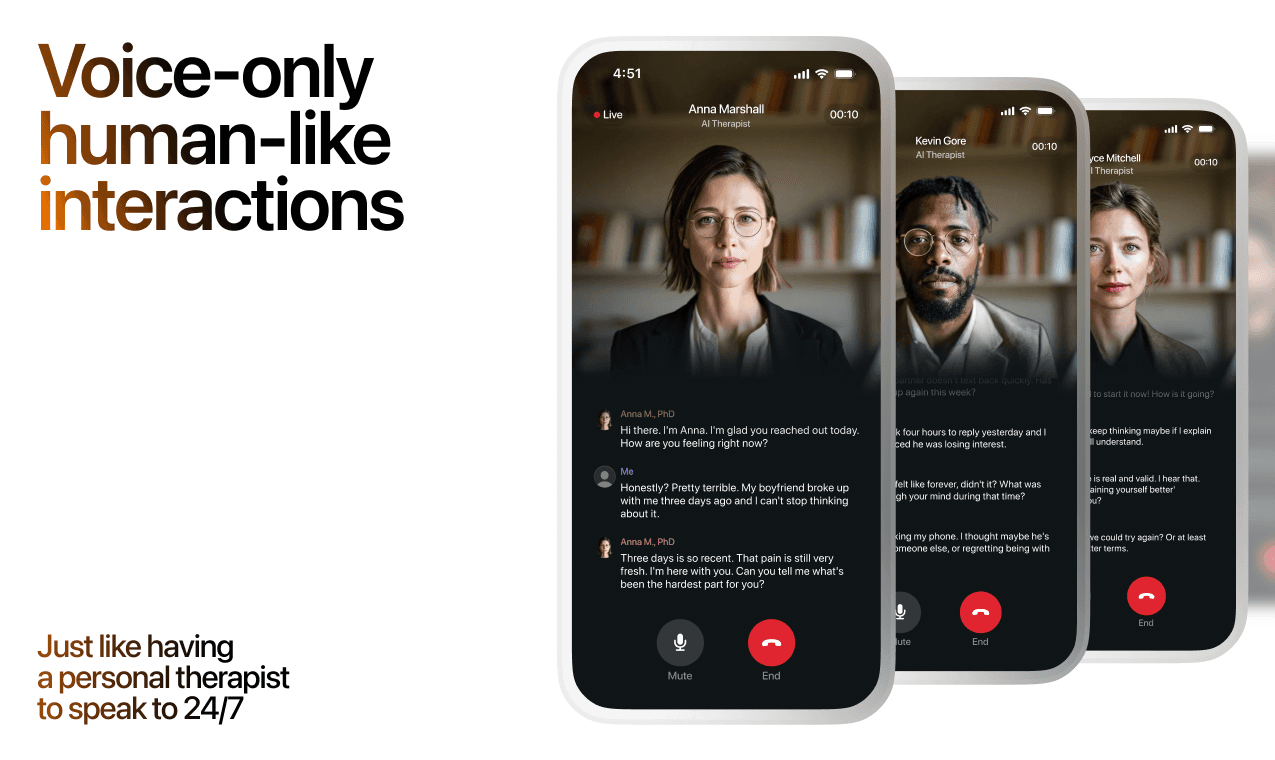
Here's what happens in a typical Lovon session:
You share what's on your mind
There's no script, no intake form, no waiting room. You speak or type whatever you're feeling — in your own words, at your own pace.
Lovon validates and explores
Using frameworks from CBT (Cognitive Behavioral Therapy) and motivational interviewing, Lovon acknowledges your feelings first, then gently helps you explore them. No dismissive "just move on" advice.
You build coping skills together
Lovon doesn't just listen — it actively works with you on evidence-based techniques: thought reframing, urge surfing, behavioral experiments, and more.
What a Session with Lovon Looks Like
When to Seek Professional Help
AI support is a valuable tool, but it's not a replacement for professional care. Please consider reaching out to a licensed therapist if you experience any of the following:
- Persistent thoughts of self-harm or suicide
- Inability to perform daily activities (work, eating, sleeping) for more than 2 weeks
- Turning to alcohol or substances to cope
- Intense anger or desire to harm your ex-partner
- Complete emotional numbness that doesn't improve over time
Crisis Resources (US): If you're in immediate danger, call 988 (Suicide & Crisis Lifeline) or text HOME to 741741 (Crisis Text Line). Available 24/7, free, and confidential.
Outside the US? Find a crisis line in your country
Ready to Start?
Your healing journey can begin right now
A 7-day trial. No judgment. Just a safe space to process what you're going through.
Frequently Asked Questions
Is Lovon a replacement for a real therapist?
Is my conversation with Lovon AI private?
How is Lovon different from ChatGPT for emotional support?
Can I use Lovon if I'm already seeing a therapist?
Can I try Lovon before subscribing?
About the Author

The Lovon Editorial Team
Mental Health & Wellness Content Team
The Lovon Editorial Team develops mental health and wellness content designed to make psychological concepts accessible and actionable. Our goal is to bridge the gap between clinical research and everyday life - helping you understand why your mind works the way it does and what you can do about it....
Related articles
- PTSD vs CPTSD — Symptom Categories and Trauma Exposure Patterns
When someone experiences trauma, the psychological impact can manifest in different ways depending on the nature and…
- How to Heal Trauma When Time Doesn't Help
"Time heals all wounds" is one of the most commonly offered reassurances after trauma, yet for many people, years can…
- Is it safe to share your feelings with an AI therapist?
Is it safe to share feelings with an AI therapist in 2026? Yes for daily stress and anxiety, not for crisis. See the…
- Inner Child Healing: Step-by-Step Guide (2026)
Follow this practical 7-step inner child healing guide — grounded in schema therapy and IFS — to break emotional…
See also
Quizzes
- Highly Sensitive Person Test: How Much Do You Take In?
See how deeply you process, notice and get overloaded.
- Guilt Test: Is Your Guilt Doing Its Job?
See whether your guilt repairs or just hurts.
Free tools
- How to Reconnect With an Old Friend
A chat for how to reconnect with an old friend, starting with the text you have been meaning to send for a year. Tell it…
- How to Stop Overthinking in a Relationship
Not a list of habits. Tell it the specific thing you are going round on, and it separates what actually happened from…
From the wiki
- What to do if you have no friends?
Pick one activity that repeats weekly with the same people, and go for six to eight weeks straight. Repetition, not…
Disclaimer: This article is for informational purposes only and does not constitute medical advice, diagnosis, or treatment. Always seek the advice of your physician or other qualified health provider with any questions you may have regarding a medical condition. If you are in crisis or think you may have an emergency, call 988 (Suicide & Crisis Lifeline) or go to the nearest emergency room. Outside the US? Find a crisis line in your country.