
High-Functioning Anxiety Signs You're Missing (2026)
Recognize the high functioning anxiety signs hiding behind productivity and composure — 8 specific patterns, what they cost you, and clear steps to start feeling better.

Key Takeaways
- Time: Set aside about 10 minutes to read and reflect honestly — not skim.
- Honesty: High-functioning anxiety is maintained by minimizing. Notice where you want to say "that's not a big deal"
- A way to talk it through: Recognizing patterns is step one. Processing them out loud — with a therapist, a trusted
- Lovon — AI voice therapy app built with input from PhD psychologists. You can talk through anxiety patterns, get
- The amygdala hijack explained — Understanding why your brain escalates before you can think clearly is foundational.
High-functioning anxiety looks nothing like the anxiety most people picture — and that's exactly why it goes unnoticed for years, sometimes decades.
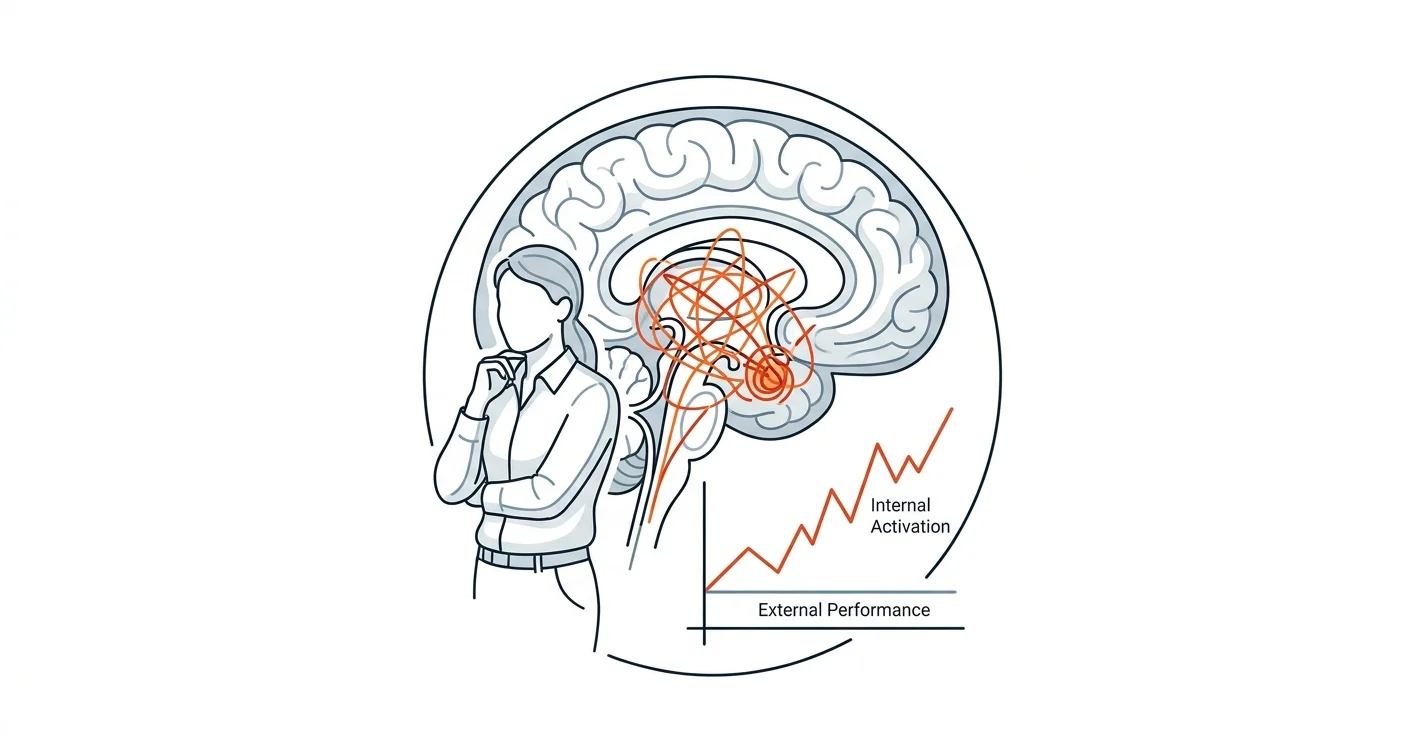
TL;DR: High-functioning anxiety signs include relentless overachievement, chronic people-pleasing, an inability to sit still, racing thoughts that won't quit at night, and a persistent sense that everything is about to fall apart — even when life looks fine from the outside. In 2026, this pattern is one of the most underidentified mental health struggles, because the people experiencing it often appear composed, capable, and even impressive. This guide walks through the specific signs, what they cost you physically and emotionally, and what you can do about them today.
Why this matters
High-functioning anxiety isn't a clinical diagnosis in the DSM-5 — it's a descriptive term for people who meet many criteria for anxiety disorders but whose coping mechanisms are so effective at masking distress that they (and everyone around them) miss the warning signs. A 2023 survey by the American Psychological Association found that 76% of adults reported at least one symptom of significant anxiety, yet most people with high-functioning anxiety never seek support because they don't believe they qualify. The cost is real: chronic anxiety without intervention is linked to burnout, cardiovascular strain, and deteriorating relationships.
If you're the person everyone calls "so put-together," this is for you.
What you'll need
Before working through these signs, keep two things in mind:
- Time: Set aside about 10 minutes to read and reflect honestly — not skim.
- Honesty: High-functioning anxiety is maintained by minimizing. Notice where you want to say "that's not a big deal" and pause there.
- A way to talk it through: Recognizing patterns is step one. Processing them out loud — with a therapist, a trusted person, or an AI voice companion like Lovon — is step two.
The signs — and what each one actually means
1. You achieve constantly, but never feel like enough
High-functioning anxiety often runs on fear of failure disguised as ambition. You finish the project, get the promotion, hit the goal — and feel relief for approximately 48 hours before the next threat presents itself. This isn't drive; it's a treadmill. The accomplishment doesn't register as safety, only as a temporary delay of some imagined consequence.
The mistake people make: calling this "being a perfectionist" and treating it as a personality trait rather than a stress response. In 2026, the research is clear that achievement-driven anxiety and genuine goal orientation produce different neurological patterns. One feels good; the other just feels necessary.
What to watch for: You struggle to name what you're working toward. You can list what you're afraid of losing.
2. Saying no feels physically dangerous
Chronically agreeing to things — at work, in relationships, in social contexts — is one of the most overlooked high-functioning anxiety signs. It reads as generous or collaborative. Inside, it's closer to self-protection. Saying no triggers a spike of anticipated rejection, conflict, or judgment that feels disproportionate to the actual stakes.
This connects directly to the fawn response — a stress pattern where appeasing others becomes automatic. If you want to understand the mechanics of how people-pleasing can hide deeper distress, fawn response: how people-pleasing hides trauma breaks it down clearly.
What to watch for: You say yes and then resent it. You rehearse how to decline something for days and still don't.
3. Your mind won't stop at night
You're exhausted. You lie down. Your brain opens seventeen tabs. You replay a conversation from 2019, draft an email you haven't been asked to write, run through everything that could go wrong tomorrow. Sleep takes 45 minutes to arrive, if it arrives at all.
This is one of the most physically measurable high-functioning anxiety signs — chronic sleep latency (the time it takes to fall asleep) increases significantly when baseline anxiety is elevated. The body is in a low-grade threat state, and threat states are not designed to allow rest. By morning, you're running on less than you need, which makes every stressor hit harder.
What to watch for: You're tired all day and alert the moment you lie down. You reach for your phone not because you want to, but to quiet the noise.
4. You prepare obsessively — but feel no calmer for it
Over-preparation is anxiety's best disguise. You research every option before making a decision others find minor. You rehearse conversations before having them. You make contingency plans for contingency plans. From the outside, this looks organized and thorough. From the inside, it never actually reduces the dread — it just gives the anxiety somewhere to go.
The distinction between useful preparation and anxiety-driven preparation: useful preparation stops when you have enough information. Anxiety-driven preparation keeps going because "enough" doesn't register as safe.
What to watch for: You've done all the research and still feel unprepared. The preparation is the anxiety, not the solution to it.
5. Physical symptoms you've explained away
High-functioning anxiety shows up in the body — jaw tension, tight shoulders, headaches that arrive Sunday evening, an upset stomach before anything important, a feeling of your heart beating too hard. Because these symptoms are intermittent and manageable, people attribute them to caffeine, posture, or bad luck.
In 2026, the mind-body connection in anxiety research is well-established. Chronic activation of the stress response raises cortisol, creates muscle tension, and disrupts digestion. These aren't unrelated physical problems — they're the body scoring the same anxiety the mind is experiencing.
What to watch for: Your physical symptoms follow an emotional pattern. They flare before events that feel high-stakes, ease when you're genuinely relaxed.
6. Stillness is uncomfortable
You always have a podcast on. You check your phone when there's nothing to check. You make a list when the weekend opens up, because an unstructured Saturday feels vaguely threatening. This is a real high-functioning anxiety sign, not a personality quirk. Stillness removes the distraction from the underlying feeling, and the underlying feeling is one the anxious mind actively avoids.
What to watch for: You feel restless or irritable on rest days. You've described yourself as "not good at doing nothing" without questioning why.
7. You worry about worrying
Meta-anxiety — anxiety about having anxiety — is common in high-functioning presentations. You recognize you're overthinking something. You then spend significant energy trying to stop the overthinking, get frustrated that you can't, and worry about what it means that you can't. This loop is exhausting and tends to tighten over time without intervention.
What to watch for: You often tell yourself to "just relax" and feel worse for having to say it.
8. Relationships feel like performances
When anxiety runs the show, connection can start to feel like a test. You monitor how you're coming across. You replay what you said afterward. You sometimes leave social situations that went perfectly fine and feel certain you did something wrong. Intimacy requires the kind of vulnerability that anxiety flags as a threat, so relationships stay slightly at arm's length — even with people you genuinely love.
What to watch for: You're better at being liked than being known. You find deep conversations draining in a way that feels different from introversion.
Troubleshooting — what keeps people stuck
"My life is objectively fine, so I can't have anxiety." High-functioning anxiety doesn't require a difficult life. It's a nervous system pattern, not a proportional response to circumstances. External success often makes it harder to justify getting help.
"I've always been like this — it's just how I am." Long-standing patterns feel like identity. But "how you are" and "what anxiety has trained you to do" are not the same thing. The pattern being familiar doesn't make it fixed.
"If I slow down, everything will fall apart." This is the anxiety speaking, not reality. High-functioning anxiety produces an inflated sense of personal responsibility — the belief that your vigilance is the only thing holding things together. It isn't. Testing this belief carefully, with support, is part of recovery.
"Therapy is for people who are really struggling." You are really struggling. The fact that you're still performing well externally doesn't reduce what it costs you internally. In 2026, on-demand support tools — including AI voice apps like Lovon — make it easier to start working on this without committing to a full clinical intake.
"I tried talking about it and felt worse." Timing and format matter. Many people with high-functioning anxiety do better with structured reflection than open-ended "how does that make you feel" conversations. Coping tools, breathing techniques, and cognitive reframing exercises tend to land better as a starting point.
Tools and resources
- Lovon — AI voice support app built with input from PhD psychologists. You can talk through anxiety patterns, get coping tools, and do guided self-reflection sessions at any hour. Not a replacement for licensed care, but a real way to start processing what you're carrying. Try it at lovon.app.
- The amygdala hijack explained — Understanding why your brain escalates before you can think clearly is foundational. Amygdala hijack: what it is and how to regain control covers the mechanism and practical reset strategies.
- Journaling — Unstructured. Five minutes. The goal isn't clarity; it's getting the loop out of your head and onto paper so you can see it as something you're having, not something you are.
- Licensed therapist — Specifically one trained in cognitive behavioral therapy (CBT) or acceptance and commitment therapy (ACT), both of which have strong evidence for anxiety treatment. Psychology Today's directory filters by specialty and insurance.
- Your physician — Physical symptoms that have been running for months warrant a check-in to rule out contributing medical factors.
What to do next
If 4 or more of these high-functioning anxiety signs felt familiar, the next step isn't reading more about anxiety — it's talking to someone about yours. Start small: one voice session with Lovon tonight, or one honest conversation with a person you trust. In 2026, the barrier to starting that conversation is lower than it's ever been.
If your anxiety shows up most heavily in your relationships, the piece on anxious attachment style signs and coping strategies is a useful next read.
FAQ
What are the most common high-functioning anxiety signs? The most consistent signs are chronic overachievement driven by fear rather than genuine motivation, difficulty saying no, racing thoughts at night, physical tension the person has rationalized away, and an inability to stay still or rest comfortably. These signs are easy to miss because they mimic productivity and social competence.
Is high-functioning anxiety a real diagnosis? No — it is not a DSM-5 diagnosis. It's a descriptive term used to capture people who experience significant anxiety symptoms but whose external functioning remains intact or even elevated. A licensed clinician would typically assess for generalized anxiety disorder (GAD) or other recognized anxiety presentations.
Can you have high-functioning anxiety and not know it? Yes, and it's common. Many people live with high-functioning anxiety for years without recognizing it because their coping strategies are effective enough to prevent obvious dysfunction. The cost shows up gradually in sleep quality, relationship depth, and physical health.
How is high-functioning anxiety different from regular anxiety? The core experience is similar — intrusive worry, heightened threat sensitivity, physical stress symptoms. The difference is behavioral output. People with high-functioning anxiety often channel distress into overperformance, over-preparation, and compulsive productivity rather than avoidance or shutdown.
Can an AI app actually help with anxiety? AI voice apps like Lovon can provide coping tools, guided reflection, and a structured space to process anxious thoughts — particularly valuable between therapy sessions or when access to a therapist is limited. They are not a substitute for clinical diagnosis or treatment of severe anxiety disorders.
What triggers high-functioning anxiety? Common triggers include performance situations, social uncertainty, major decisions, and any context where outcomes feel unpredictable or where others' judgment is involved. Many people notice their anxiety spikes on Sundays before the work week, before important conversations, or during transitions.
How do I stop high-functioning anxiety? There is no single switch. What works is a combination of recognizing the pattern, reducing the avoidance behaviors that maintain it (like constant preparation or people-pleasing), developing a real rest practice, and working with a therapist or structured support tool to gradually tolerate uncertainty without the anxiety response escalating.
Does high-functioning anxiety get worse over time? Without intervention, yes — for most people. The coping strategies that mask anxiety tend to become more rigid and exhausting over time, while the underlying nervous system pattern intensifies. Burnout is a common endpoint. Catching the pattern in 2026, before it reaches that point, is significantly easier than recovering from full burnout.
One last thing
High-functioning anxiety is sometimes called "the anxiety that gets rewarded." Your boss praises your thoroughness. Your friends call you reliable. Your family calls you the one who has it together. Every piece of external validation quietly reinforces the anxious behavior that's costing you sleep, presence, and peace. Recognizing that the reward and the harm can come from the same pattern — that's usually the moment things start to shift.
How AI Support Helps You Heal
AI emotional support isn't about replacing human connection — it's about filling the gaps. The moments when you need to talk at 2 AM, when you don't want to burden your friends again, or when you simply need someone to listen without judgment.
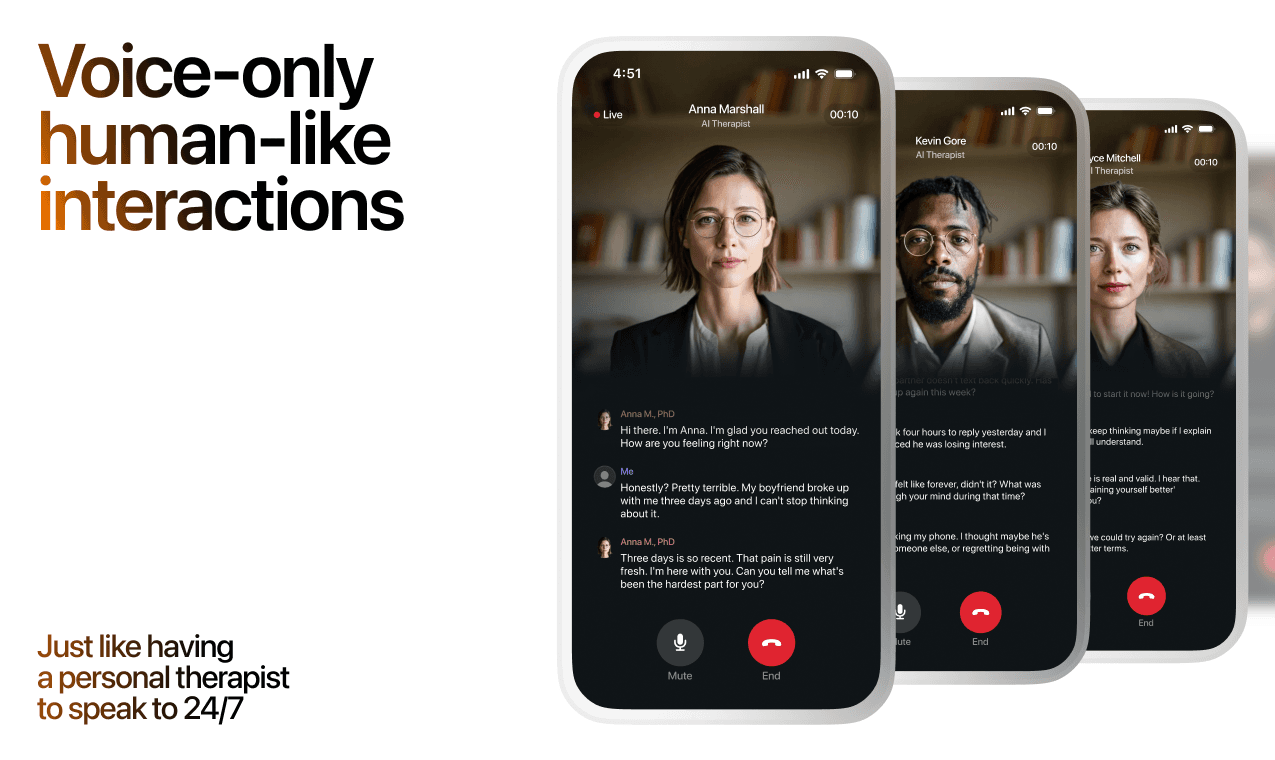
Here's what happens in a typical Lovon session:
You share what's on your mind
There's no script, no intake form, no waiting room. You speak or type whatever you're feeling — in your own words, at your own pace.
Lovon validates and explores
Using frameworks from CBT (Cognitive Behavioral Therapy) and motivational interviewing, Lovon acknowledges your feelings first, then gently helps you explore them. No dismissive "just move on" advice.
You build coping skills together
Lovon doesn't just listen — it actively works with you on evidence-based techniques: thought reframing, urge surfing, behavioral experiments, and more.
What a Session with Lovon Looks Like
When to Seek Professional Help
AI support is a valuable tool, but it's not a replacement for professional care. Please consider reaching out to a licensed therapist if you experience any of the following:
- Persistent thoughts of self-harm or suicide
- Inability to perform daily activities (work, eating, sleeping) for more than 2 weeks
- Turning to alcohol or substances to cope
- Intense anger or desire to harm your ex-partner
- Complete emotional numbness that doesn't improve over time
Crisis Resources (US): If you're in immediate danger, call 988 (Suicide & Crisis Lifeline) or text HOME to 741741 (Crisis Text Line). Available 24/7, free, and confidential.
Outside the US? Find a crisis line in your country
Ready to Start?
Your healing journey can begin right now
A 7-day trial. No judgment. Just a safe space to process what you're going through.
Frequently Asked Questions
Is Lovon a replacement for a real therapist?
Is my conversation with Lovon AI private?
How is Lovon different from ChatGPT for emotional support?
Can I use Lovon if I'm already seeing a therapist?
Can I try Lovon before subscribing?
About the Author
The Lovon Editorial Team
Mental Health & Wellness Content Team
The Lovon Editorial Team develops mental health and wellness content designed to make psychological concepts accessible and actionable. Our goal is to bridge the gap between clinical research and everyday life - helping you understand why your mind works the way it does and what you can do about it....
Related articles
- Understanding the Four PTSD Symptom Categories: Reexperiencing, Trigger Reactivity, Mood Alterations, and Altered Reactivity
A comprehensive guide to recognizing and understanding the core symptom groups that define post-traumatic stress…
- AI Therapy App for Autism Masking Burnout (2026 Pick)
Best ai therapy app for autism masking burnout in 2026: voice-first sessions, 24/7 access, and what to avoid. Lovon…
- How to Use an AI Life Coach for Motivation (2026)
Learn exactly how to use an AI life coach for motivation in 2026 — 7 steps, real commitments, and free sessions on Lovon…
- Free AI Therapist for ADHD Adults (2026 Guide)
The best free AI therapist for ADHD adults in 2026. Lovon delivers voice-first, on-demand emotional support and coping…
See also
Quizzes
- Shame Test: Do You Read Mistakes as Verdicts?
See which exit your shame takes, in 3 minutes.
- Alexithymia Test: Can You Name What You Feel?
See where your feelings lose their names, in 3 minutes.
Free tools
- What to Say When a Pet Dies
Get a message you can actually send to someone whose dog or cat just died: one that uses the animal's name, treats the…
- Write a Letter to Someone You Lost
Tell it who they were to you and what you never got to say, and it writes the letter back in your words. No account, no…
From the wiki
- What is inhibited grief?
Inhibited grief is grief that never gets out. The loss happened, you kept functioning, and the feeling stayed sealed…
Disclaimer: This article is for informational purposes only and does not constitute medical advice, diagnosis, or treatment. Always seek the advice of your physician or other qualified health provider with any questions you may have regarding a medical condition. If you are in crisis or think you may have an emergency, call 988 (Suicide & Crisis Lifeline) or go to the nearest emergency room. Outside the US? Find a crisis line in your country.