
Signs of Insecure Attachment in Adults (2026 Guide)
Signs of insecure attachment in adults, explained step by step: fear of abandonment, withdrawal, reassurance-seeking, and how to spot your pattern in 2026.

Key Takeaways
- 15-20 minutes of uninterrupted time to reflect honestly, not while distracted
- A recent relationship or friendship to use as a reference point — vague memories won't give you useful signal
- A notes app or journal to write down patterns as they surface
- Willingness to be specific rather than generous with yourself ("I get a little anxious" vs. "I check their location
- Optional: a short attachment style assessment, like the attachment style quiz on Lovon, to structure your reflection
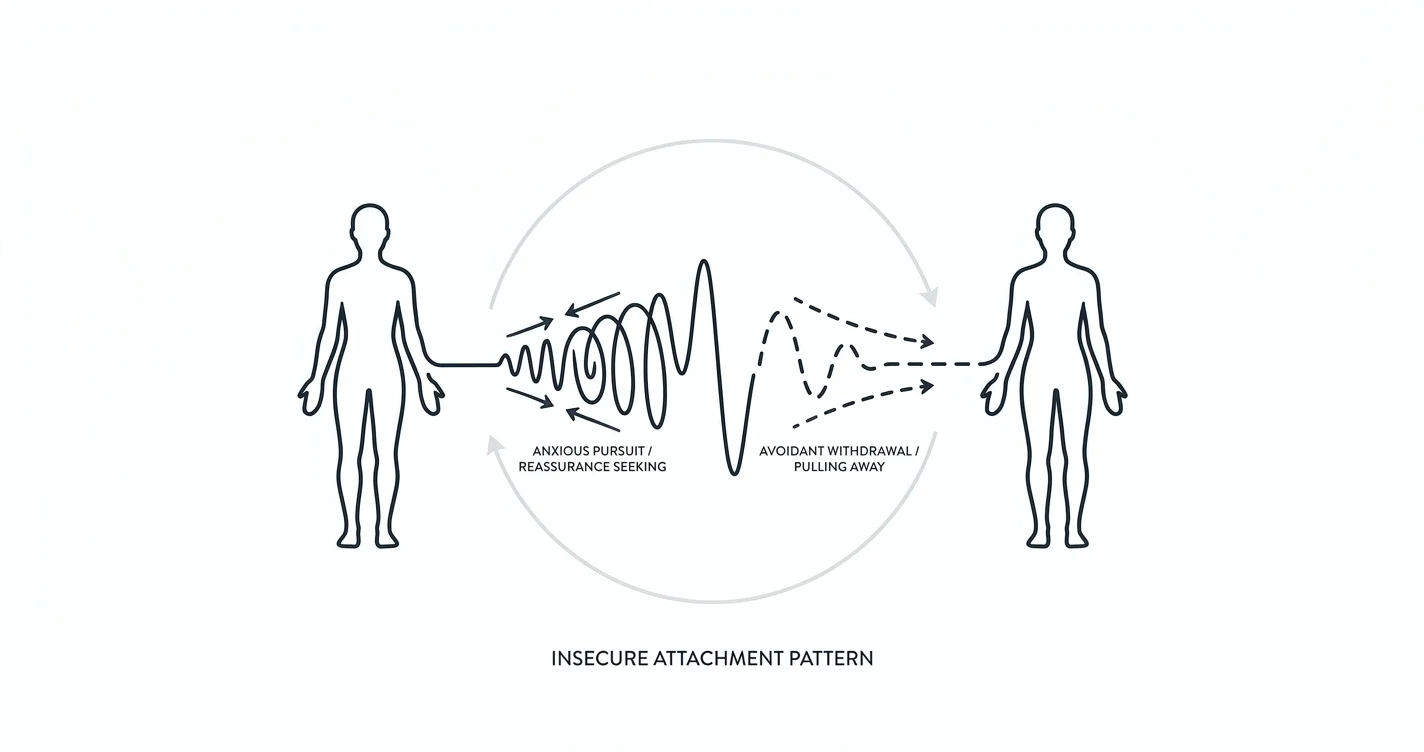
Insecure attachment shows up as patterns, not personality flaws — and once you know what to watch for, the signs are easy to spot in your own reactions to closeness, conflict, and distance.
TL;DR
Signs of insecure attachment in adults include a fear of abandonment, difficulty trusting a partner's intentions, pulling away when things get close, needing constant reassurance, and swinging between clinginess and coldness. Research on adult attachment estimates that roughly 40-50% of adults show some form of insecure attachment style rather than a fully secure one. The attachment style quiz on Lovon takes under two minutes and gives you a starting point, but the real work is noticing these patterns as they happen in real relationships in 2026, not just labeling them once and moving on. Verdict: if you recognize three or more signs below, treat this as worth active attention, not something to shrug off.
Why This Matters
Attachment style was formed early, usually before age five, and it quietly runs the show in adult relationships — who you pick, how you fight, and how fast you bail or cling.
Unrecognized insecure attachment doesn't just cause one bad relationship. It repeats. You date differently, but the same conflict shows up: the same jealousy, the same silent withdrawal, the same panic when someone doesn't text back in 2026's always-connected dating world.
Naming the pattern is the first practical step toward changing it. You can't regulate a nervous system response you haven't identified.
What You'll Need
- 15-20 minutes of uninterrupted time to reflect honestly, not while distracted
- A recent relationship or friendship to use as a reference point — vague memories won't give you useful signal
- A notes app or journal to write down patterns as they surface
- Willingness to be specific rather than generous with yourself ("I get a little anxious" vs. "I check their location four times a day")
- Optional: a short attachment style assessment, like the attachment style quiz on Lovon, to structure your reflection instead of guessing blind
The Steps
Step 1: Track your reaction to distance
Notice what happens in your body and thoughts when a partner doesn't respond within an hour or two. Insecure attachment — especially the anxious type — often produces racing thoughts, checking their social media, or drafting and deleting texts. A securely attached adult can tolerate a few hours of silence without spiraling into worst-case scenarios. Common mistake: assuming this is "just being a caring partner" instead of naming it as anxiety-driven monitoring.
Step 2: Watch what you do right before things get close
Insecure attachment, particularly the avoidant pattern, tends to trigger withdrawal exactly when intimacy increases — after a good date, after saying "I love you," after moving in together. Look for a sudden urge to create distance, pick a fight, or get busier with work right when things deepen. Expected outcome: you'll notice a repeating timing pattern, not a random one. Common mistake: blaming the relationship or the person instead of noticing the pattern follows you across different partners.
Step 3: Audit how you handle conflict
Securely attached adults can disagree and stay connected. Insecure patterns show up as either over-apologizing and shutting down (fawn/anxious) or stonewalling and going cold (avoidant). Write down your last three arguments and note whether you moved toward the person, away from them, or froze entirely. This single exercise usually reveals your dominant pattern faster than any quiz.
Step 4: Check your reassurance-seeking frequency
Count how many times per week you ask a partner or close friend some version of "do you still like me" or "are we okay." More than a couple times a week, especially without a clear trigger, points to anxious attachment. Common mistake: framing constant reassurance-seeking as "just communicating openly" when the real driver is fear, not information-gathering.
Step 5: Notice your self-worth's dependence on the relationship status
Insecurely attached adults often feel fine only when the relationship feels secure and fall apart emotionally the moment there's ambiguity — a canceled plan, a short text, a delayed reply. Ask yourself: does my mood swing hard based on relationship signals I haven't confirmed are actually bad? If yes, that's a signal worth tracking daily for a week, not dismissing after one bad night.
Step 6: Look at your history of picking unavailable people
A repeating pattern of choosing emotionally distant, inconsistent, or unavailable partners is one of the clearer signs of insecure attachment, especially fearful-avoidant. List your last three significant relationships and rate each partner's emotional availability from 1-10. If most scored under 5, this is pattern, not bad luck. Common mistake: treating each relationship as an isolated case instead of connecting the dots across years.
Step 7: Test your response to a request for space
Ask yourself honestly how you react when a partner says they need a night alone or some space. Insecure attachment often reads a normal request for space as rejection or abandonment, triggering panic, anger, or pursuit behavior (extra texts, showing up, demanding explanations). A securely attached response tolerates the request without needing constant check-ins. Expected outcome: you'll see whether space feels neutral or threatening to you.
Step 8: Compare your self-talk after a small relationship rupture
After a minor disagreement or a partner seeming distant for a day, write down your internal narrative. Anxious attachment tends to produce "they're going to leave me" thoughts. Avoidant attachment tends to produce "I don't need this anyway" detachment. Disorganized attachment can flip between both within the same hour. Naming which narrative shows up most consistently across 2026 relationships gives you your working pattern.
Troubleshooting
- I see signs of more than one style at once — this is common with disorganized attachment, which combines anxious fear of abandonment with avoidant fear of closeness. Track which one shows up first, not which one you'd prefer to have.
- My partner says I'm "too much" but I don't feel anxious — anxious attachment doesn't always feel like panic; sometimes it looks like control, over-planning, or excessive check-ins that feel logical from the inside.
- I only notice these patterns after the relationship ends — start writing brief daily notes now, during a current relationship or friendship, instead of relying on memory after the fact.
- I recognize the signs but nothing changes — insight alone rarely shifts attachment behavior; it requires practicing a different response in the actual triggering moment, repeatedly, over weeks.
- I think my partner has insecure attachment, not me — it's common for one anxious and one avoidant partner to pair up and reinforce each other's patterns; look at your own reactions before diagnosing theirs.
- The signs only show up with one specific person — that can point to a trauma response tied to that relationship's specific dynamics rather than a general attachment style, which is worth separating out.
Tools and Resources
- The attachment style quiz on Lovon (2-minute self-assessment) for a starting reference point
- Daily voice journaling with an AI voice support app like Lovon to talk through reactions in real time instead of reconstructing them from memory later
- A written log of your last five significant conflicts, rated by your response type (pursue, freeze, withdraw)
- Reading on avoidant attachment patterns if withdrawal is your dominant signal
What to Do Next
Once you've identified your dominant pattern, the next useful move is learning what a secure attachment style actually looks like day to day, so you have a concrete target instead of just an absence of anxiety or avoidance.
FAQ
What are the clearest signs of insecure attachment in adults? Fear of abandonment, difficulty trusting a partner without proof, pulling away right as intimacy deepens, and needing frequent reassurance are the clearest signs. These show up across anxious, avoidant, and disorganized attachment styles differently.
Can insecure attachment change in adulthood? Yes — attachment style is not fixed for life, and adults can shift toward secure attachment through consistent relationship experiences and active practice, per attachment research reviewed through 2026. It takes repeated practice in real triggering moments, not a single insight.
Is anxious attachment the same as being clingy? No, clinginess is one behavior anxious attachment can produce, but the underlying driver is fear of abandonment, not a personality trait. Someone anxiously attached might also over-apologize, over-plan, or constantly seek reassurance instead of visibly clinging.
How do I know if I have avoidant or anxious attachment? Anxious attachment shows up as fear of losing closeness and reassurance-seeking; avoidant attachment shows up as discomfort with closeness and a pull toward independence right when intimacy increases. Many adults show a mix, especially under stress.
Does insecure attachment cause relationship problems? Insecure attachment strongly correlates with recurring relationship conflict, including trust issues, communication breakdowns, and repeated breakups with similar patterns. It doesn't guarantee failed relationships, but it does raise the odds of the same conflict repeating across different partners.
Can an app help identify my attachment style? A short assessment like an attachment style quiz can give you a starting label, but real identification comes from tracking your actual reactions across weeks, not a single test result. Talking through specific incidents out loud, including with an AI voice therapy app, often surfaces patterns a quiz alone misses.
What percentage of adults have insecure attachment? Research estimates put insecure attachment at roughly 40-50% of adults, split across anxious, avoidant, and disorganized subtypes. That means insecure attachment is closer to common than rare.
Should I tell my partner I think I have insecure attachment? Naming your pattern to a partner usually helps, since it turns a confusing reaction ("why are you pulling away") into a shared, workable issue instead of a mystery. Frame it as information about your reactions, not an excuse for the behavior itself.
One Last Thing
The most overlooked sign isn't panic or withdrawal — it's how fast you decide a relationship is doomed the moment ambiguity shows up. Securely attached adults tolerate not knowing for a while; insecurely attached adults often need certainty immediately, and will manufacture a worst-case story rather than sit with the unknown for even a day in 2026's instant-reply culture.
Related Guides
How AI Support Helps You Heal
AI emotional support isn't about replacing human connection — it's about filling the gaps. The moments when you need to talk at 2 AM, when you don't want to burden your friends again, or when you simply need someone to listen without judgment.
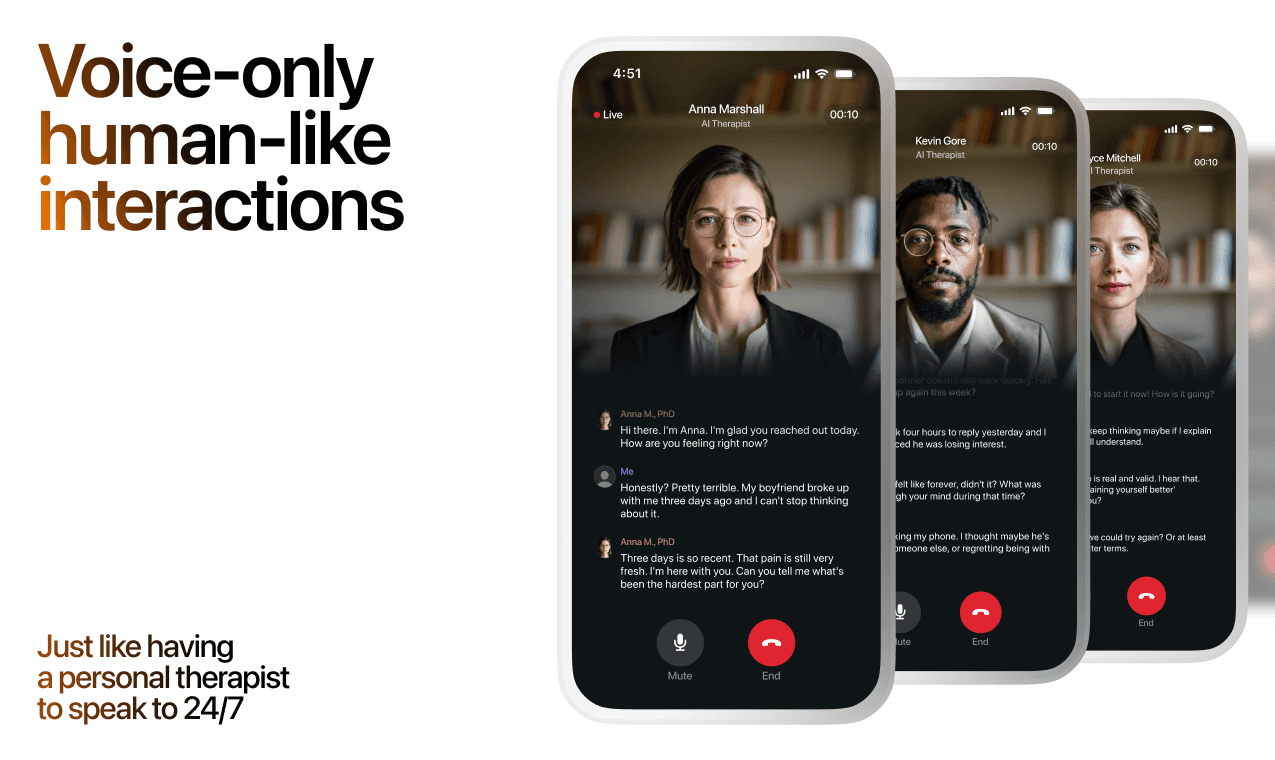
Here's what happens in a typical Lovon session:
You share what's on your mind
There's no script, no intake form, no waiting room. You speak or type whatever you're feeling — in your own words, at your own pace.
Lovon validates and explores
Using frameworks from CBT (Cognitive Behavioral Therapy) and motivational interviewing, Lovon acknowledges your feelings first, then gently helps you explore them. No dismissive "just move on" advice.
You build coping skills together
Lovon doesn't just listen — it actively works with you on evidence-based techniques: thought reframing, urge surfing, behavioral experiments, and more.
What a Session with Lovon Looks Like
When to Seek Professional Help
AI support is a valuable tool, but it's not a replacement for professional care. Please consider reaching out to a licensed therapist if you experience any of the following:
- Persistent thoughts of self-harm or suicide
- Inability to perform daily activities (work, eating, sleeping) for more than 2 weeks
- Turning to alcohol or substances to cope
- Intense anger or desire to harm your ex-partner
- Complete emotional numbness that doesn't improve over time
Crisis Resources (US): If you're in immediate danger, call 988 (Suicide & Crisis Lifeline) or text HOME to 741741 (Crisis Text Line). Available 24/7, free, and confidential.
Outside the US? Find a crisis line in your country
Ready to Start?
Your healing journey can begin right now
A 7-day trial. No judgment. Just a safe space to process what you're going through.
Frequently Asked Questions
Is Lovon a replacement for a real therapist?
Is my conversation with Lovon AI private?
How is Lovon different from ChatGPT for emotional support?
Can I use Lovon if I'm already seeing a therapist?
Can I try Lovon before subscribing?
About the Author
The Lovon Editorial Team
Mental Health & Wellness Content Team
The Lovon Editorial Team develops mental health and wellness content designed to make psychological concepts accessible and actionable. Our goal is to bridge the gap between clinical research and everyday life - helping you understand why your mind works the way it does and what you can do about it....
Related articles
- How to Develop Secure Attachment in 2026: 7 Steps
How to develop secure attachment in 2026: 7 practical steps, a real timeline (8-12 weeks), and fixes for anxious and…
- Anxious Preoccupied Attachment: Signs & How to Shift 2026
Anxious preoccupied attachment drives protest behavior like over-texting and reassurance-seeking. Get the signs and a…
- Abandonment Issues in Relationships: How to Overcome Them 2026
Overcome abandonment issues in relationships with 6 practical steps for 2026 — grounding routines, trigger logs, and…
- Anxious Attachment in Dating: Patterns to Watch (2026)
Anxious attachment in dating: spot the protest behaviors, triggers, and fixes that work in 2026. A step-by-step guide…
See also
Quizzes
- Insecurity Test: What Are You Bracing Against?
See what your insecurity actually runs on, in 3 minutes.
- Do I Have Abandonment Issues? 12-Question Self-Check
See how loudly the fear of being left runs things.
Free tools
- Attachment Trigger Plan for Anxious and Avoidant Patterns
Pick your pattern, tick the moments that set it off, and finish one card for each: your body signal, the thing you will…
- What Did They Actually Mean By That?
A chat for one sentence you cannot stop re-reading. Paste their exact words and what was happening around them, and get…
From the wiki
- What does clingy mean in a relationship?
Clingy is what people call behavior that asks for more contact or reassurance than the other person wants to give…
Disclaimer: This article is for informational purposes only and does not constitute medical advice, diagnosis, or treatment. Always seek the advice of your physician or other qualified health provider with any questions you may have regarding a medical condition. If you are in crisis or think you may have an emergency, call 988 (Suicide & Crisis Lifeline) or go to the nearest emergency room. Outside the US? Find a crisis line in your country.