
Communicate Better in a Relationship: 9 Steps for 2026
Learn how to communicate better in a relationship with 9 practical steps for 2026, from naming feelings first to scheduling repair conversations that stick.

Key Takeaways
- 20 uninterrupted minutes with your partner, phones away
- A specific issue to practice on (pick something small first, not the biggest fight of 2026)
- Willingness to slow down before responding
- A notebook or notes app for the reflection exercises in steps 3 and 8
- Optional: a structured space to rehearse hard conversations before you have them for real, which is where a tool
Most relationship fights aren't about the dishes or the calendar. They're about two people who never learned how to say what they actually mean, and by 2026 that gap shows up in therapy waitlists, breakup posts, and a lot of silent dinners. This guide gives you nine concrete steps to communicate better in a relationship, starting tonight.
TL;DR
Learning how to communicate better in a relationship comes down to naming your actual feeling before you speak, timing the conversation right, and reflecting back what your partner said before you respond. Couples who practice active listening report fewer repeated arguments, according to Gottman Institute research cited across 2026 relationship literature. If you're stuck in a pursuer-withdrawer loop or shutting down mid-conversation (stonewalling), the fix isn't more talking, it's better structure. Verdict: start with steps 1, 4, and 6 below — they solve most recurring fights.
Why this matters
Communication problems are the number one reason couples cite for seeking help, ahead of finances and intimacy combined in most 2026 relationship surveys. The cost isn't just the fight itself. Unresolved communication patterns compound — one unspoken resentment becomes three, then a pattern where one partner pursues and the other withdraws, as covered in this breakdown of the pursuer-withdrawer pattern.
The good news: communication is a skill, not a personality trait. It responds to practice the same way a golf swing does — awkward for two weeks, then automatic.
What you'll need
- 20 uninterrupted minutes with your partner, phones away
- A specific issue to practice on (pick something small first, not the biggest fight of 2026)
- Willingness to slow down before responding
- A notebook or notes app for the reflection exercises in steps 3 and 8
- Optional: a structured space to rehearse hard conversations before you have them for real, which is where a tool like Lovon's AI relationship advice for communication issues comes in — it's a voice-based practice space, not a replacement for the conversation itself
The 9 steps
1. Name the feeling before you name the complaint
Most fights start with a complaint ("you never help") that's covering a feeling ("I feel unseen"). Say the feeling first, out loud, even if it feels clumsy. This one shift changes the entire tone of the next ten minutes, because your partner hears an emotion instead of an accusation. Common mistake: leading with "you always" or "you never" — absolutes trigger defensiveness before you've said anything true.
2. Pick the timing, not just the words
Bringing up a hard topic at 11pm, mid-scroll, or five minutes before someone leaves for work guarantees a bad outcome regardless of how well you phrase it. Ask "is now a good time to talk about something?" and accept "no, but let's do 8pm" as a real answer. Expected outcome: the same words land completely differently when the timing is right — this alone resolves a surprising share of "we just can't talk" complaints.
3. Use one "I" statement per sentence
"I feel dismissed when plans change last minute" lands differently than "you're so inconsiderate." Keep each sentence to one feeling and one specific behavior — don't stack three complaints into one breath. Write two or three of these out beforehand if the conversation is high-stakes. Common mistake: disguising blame as an "I" statement — "I feel like you're being selfish" is still an accusation with an "I" in front of it.
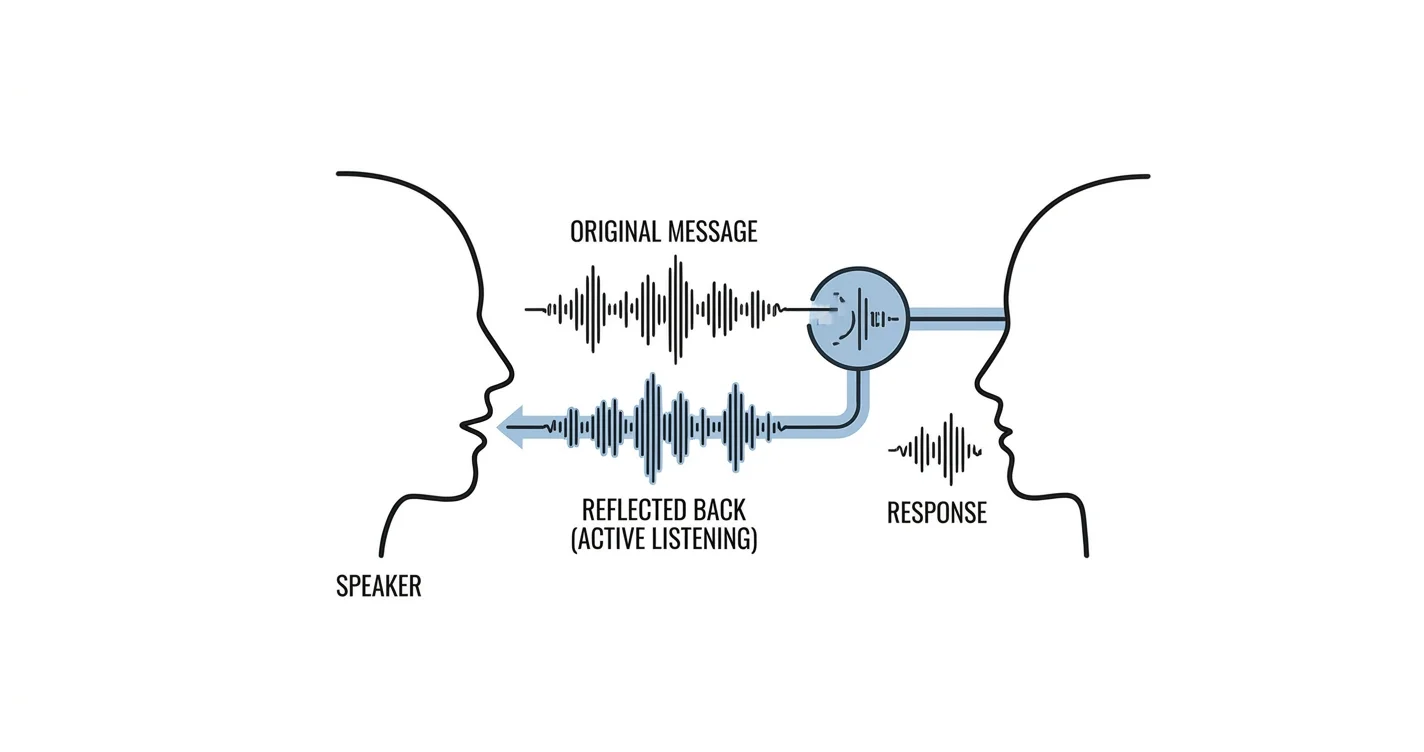
4. Reflect back before you respond
Before you defend or explain, repeat back what you heard: "So you're saying you felt ignored when I was on my phone during dinner — is that right?" This single habit, borrowed from Gottman-style couples work, is the fastest way to stop conversations from escalating. It also catches misunderstandings before they turn into a bigger fight. Expected outcome: your partner feels heard within the first 30 seconds, which lowers the emotional temperature for the rest of the talk.
5. Ask one clarifying question before you assume
"What did you mean by that?" beats guessing every time. Assumptions are where most miscommunication actually lives — not in what was said, but in what was silently filled in. If your partner tends to go quiet or shut down rather than answer, that's a pattern worth naming directly; see what's behind stonewalling and why partners do it for how to name it without escalating.
6. Take a real 20-minute break when things escalate
Physiologically, once your heart rate crosses roughly 100 bpm during conflict, you're flooded and no longer capable of productive listening — this is well-documented in Gottman's flooding research. Say "I need 20 minutes, I'm not walking away from this" and actually come back. Common mistake: using the break to build your next argument instead of calming down — that defeats the entire purpose.
7. Address one issue at a time
Kitchen-sinking — bringing up five old grievances in one conversation — guarantees nobody resolves anything. Pick the one issue on the table and finish it before opening another. If old resentments keep surfacing, that's often a sign of unresolved patterns worth examining on their own, not mid-argument.
8. Schedule a weekly 15-minute check-in
Most couples only talk about the relationship when something's already wrong. A standing weekly check-in — even just 15 minutes — catches small frustrations before they become the 11pm fight. Ask two questions each: "what felt good this week?" and "what's one thing you needed more of?" Expected outcome: fewer blow-up conversations because small issues get addressed at 2/10 intensity instead of 8/10.
9. Practice repair after every conflict
The fight isn't over when the talking stops — repair matters more than the argument itself. A short "I'm glad we talked that through" or a hug closes the loop emotionally. Couples who skip repair tend to accumulate resentment even when the actual issues get resolved. If repair consistently feels hard for one or both of you, structured practice through something like Lovon's AI couples therapy for communication problems can help you rehearse it between real conversations.
Troubleshooting
- Partner shuts down completely. Don't chase them for an immediate answer — name it ("I notice you're going quiet, let's pick this up in an hour") and give real space.
- You keep having the same fight. You're treating the symptom, not the pattern. Map whether one of you pursues and the other withdraws — this is the single most common repeating loop in long-term relationships.
- Conversations turn into blame matches within minutes. Slow down to one sentence at a time and reflect back (step 4) before adding anything new.
- One of you cries or gets defensive immediately. That's often a nervous system response, not a communication failure — a 20-minute break (step 6) resolves this faster than pushing through.
- You never find the right time to talk. Stop waiting for a perfect moment. Schedule it like an appointment — 8pm Tuesday, 15 minutes, both phones down.
- Text conversations spiral faster than in-person ones. Move anything emotionally loaded to voice or in-person — tone gets lost in text almost every time.
Tools and resources
- AI relationship coach for couples communication — practice framing hard conversations before you have them
- The pursuer-withdrawer pattern — for couples stuck in a chase-and-retreat cycle
- Stonewalling — if shutdown is the recurring problem, not blowups
- A notes app or notebook for the weekly check-in questions in step 8
What to do next
Once the basics in these nine steps feel less clumsy, the next layer is understanding why certain conversations trigger you specifically — attachment style plays a bigger role in communication breakdowns than most people realize, and it's worth mapping before you assume your partner is the problem.
FAQ
What's the best way to communicate better in a relationship? Start with reflecting back what your partner said before you respond — it's the single highest-leverage habit and it works within the first conversation you try it in.
Is it better to address issues immediately or wait? Wait for the right timing, not the right feeling — ask "is now good?" before diving in, since bringing up hard topics at the wrong moment sabotages even well-worded points.
How much does couples communication coaching cost in 2026? Traditional couples counseling in the US typically runs from roughly $100 to $250 per session without insurance in 2026, though rates vary widely by location and provider.
Can an AI relationship coach actually help with communication? It can help you rehearse and structure hard conversations before you have them in real life, but it works alongside real conversations with your partner, not instead of them.
What's the difference between stonewalling and needing space? Needing space is announced and time-boxed ("give me 20 minutes"); stonewalling is silent, undefined, and often used to avoid the conversation entirely.
How long does it take to see communication skills improve? Most couples notice a shift within two to three weeks of consistent practice — the awkwardness of the new habits fades faster than people expect.
What if my partner refuses to communicate at all? Consistent refusal to engage, especially over months, is a different problem than a bad communication habit — that's worth naming directly rather than working around indefinitely.
Does texting count as real communication in a relationship? Texting works for logistics, but tone and emotional nuance get lost almost every time — anything with emotional weight belongs in a voice or in-person conversation.
One last thing
The couples who actually get better at this aren't the ones who never fight — they're the ones who repair fast. A 90-second "I'm sorry, that came out harsher than I meant" closes more emotional distance than a perfectly worded apology delivered three days later. Speed of repair matters more than eloquence.
Related guides
How AI Support Helps You Heal
AI emotional support isn't about replacing human connection — it's about filling the gaps. The moments when you need to talk at 2 AM, when you don't want to burden your friends again, or when you simply need someone to listen without judgment.
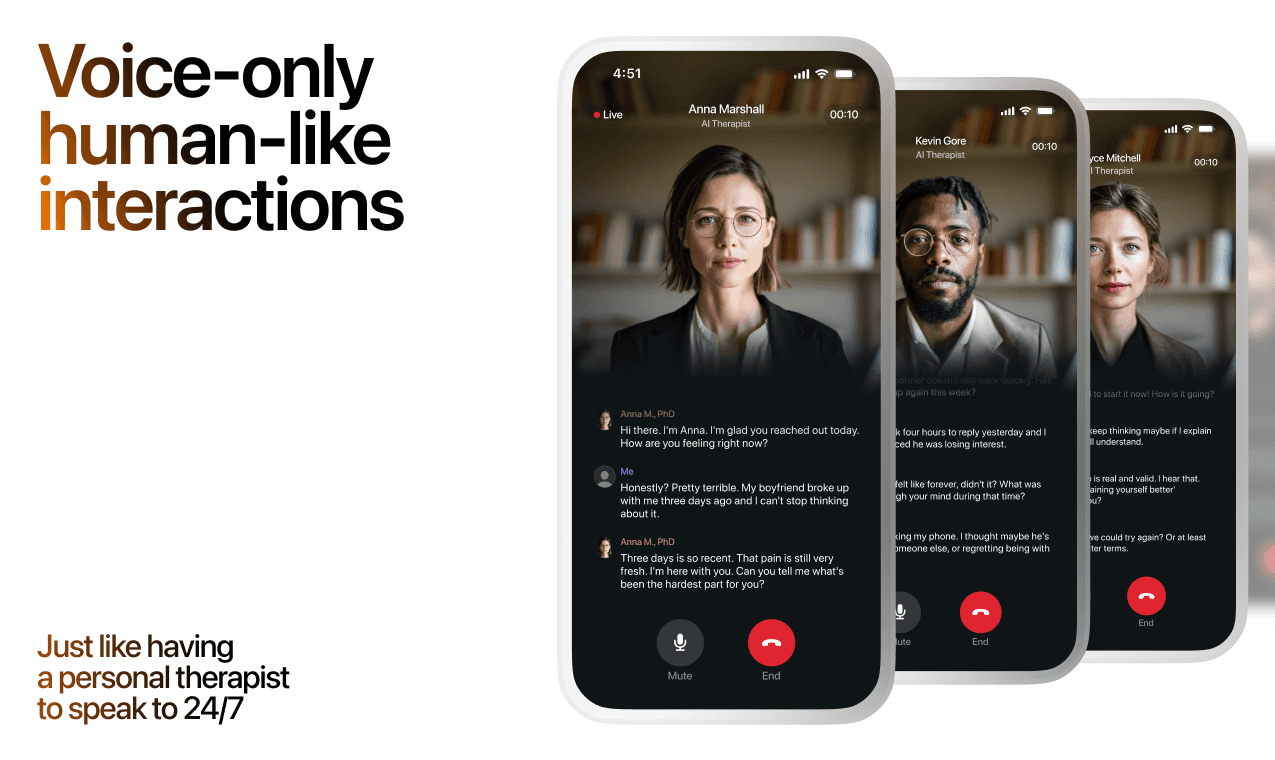
Here's what happens in a typical Lovon session:
You share what's on your mind
There's no script, no intake form, no waiting room. You speak or type whatever you're feeling — in your own words, at your own pace.
Lovon validates and explores
Using frameworks from CBT (Cognitive Behavioral Therapy) and motivational interviewing, Lovon acknowledges your feelings first, then gently helps you explore them. No dismissive "just move on" advice.
You build coping skills together
Lovon doesn't just listen — it actively works with you on evidence-based techniques: thought reframing, urge surfing, behavioral experiments, and more.
What a Session with Lovon Looks Like
When to Seek Professional Help
AI support is a valuable tool, but it's not a replacement for professional care. Please consider reaching out to a licensed therapist if you experience any of the following:
- Persistent thoughts of self-harm or suicide
- Inability to perform daily activities (work, eating, sleeping) for more than 2 weeks
- Turning to alcohol or substances to cope
- Intense anger or desire to harm your ex-partner
- Complete emotional numbness that doesn't improve over time
Crisis Resources (US): If you're in immediate danger, call 988 (Suicide & Crisis Lifeline) or text HOME to 741741 (Crisis Text Line). Available 24/7, free, and confidential.
Outside the US? Find a crisis line in your country
Ready to Start?
Your healing journey can begin right now
A 7-day trial. No judgment. Just a safe space to process what you're going through.
Frequently Asked Questions
Is Lovon a replacement for a real therapist?
Is my conversation with Lovon AI private?
How is Lovon different from ChatGPT for emotional support?
Can I use Lovon if I'm already seeing a therapist?
Can I try Lovon before subscribing?
About the Author
The Lovon Editorial Team
Mental Health & Wellness Content Team
The Lovon Editorial Team develops mental health and wellness content designed to make psychological concepts accessible and actionable. Our goal is to bridge the gap between clinical research and everyday life - helping you understand why your mind works the way it does and what you can do about it....
Related articles
- AI Relationship Advice for Long-Distance Couples 2026
The best AI relationship advice for long-distance couples in 2026. Lovon's voice-based AI coach gives on-demand support…
- Best AI couples therapy apps in 2026
Compare the best AI couples therapy apps in 2026. Choose voice support for solo reflection, and licensed couples therapy…
- AI Relationship Coach for Trust Issues (2026)
Find the best AI relationship coach for trust issues in 2026. Lovon offers voice-based, personalized sessions 24/7 — no…
- AI Life Coach for Relationship Goals 2026
The best AI life coach for relationship goals in 2026: voice-based, personalized sessions for communication, conflict…
See also
Quizzes
- Am I Sabotaging My Relationship? 12-Question Quiz
Find the move you reach for, in 2 minutes.
- Conflict Style Test: How You Fight and How You Repair
See how you fight, and whether you repair.
Free tools
- What to Say When They Are Struggling
A chat, not a list. Tell the coach who this person is to you, what they are going through, and what you already said…
- How to Respond to an Apology You're Not Sure About
A chat for how to respond to an apology that is sitting unanswered on your phone. Paste what they said, tell it what it…
From the wiki
- What does clingy mean in a relationship?
Clingy is what people call behavior that asks for more contact or reassurance than the other person wants to give…
Disclaimer: This article is for informational purposes only and does not constitute medical advice, diagnosis, or treatment. Always seek the advice of your physician or other qualified health provider with any questions you may have regarding a medical condition. If you are in crisis or think you may have an emergency, call 988 (Suicide & Crisis Lifeline) or go to the nearest emergency room. Outside the US? Find a crisis line in your country.