
Anxious Attachment in Dating: Patterns to Watch (2026)
Anxious attachment in dating: spot the protest behaviors, triggers, and fixes that work in 2026. A step-by-step guide, not just a list of red flags.

Key Takeaways
- A notes app or journal you'll actually open (not a new one you'll abandon in a week)
- 10 minutes a day for the first two weeks to log triggers
- A timer on your phone for the pause technique in Step 4
- Honesty about your last two or three dating patterns — this only works if you're specific, not general
- Optionally, a private space to talk through spirals out loud; some people use [an AI relationship coach built for
Anxious attachment in dating shows up as a pattern, not a single bad date: a tightening in your chest when a text goes unanswered, a pull to over-explain, a habit of testing a partner's interest before you feel safe enough to relax into it. This guide breaks the pattern into steps you can actually catch in real time and adjust before it drives a relationship into the ground in 2026.
TL;DR
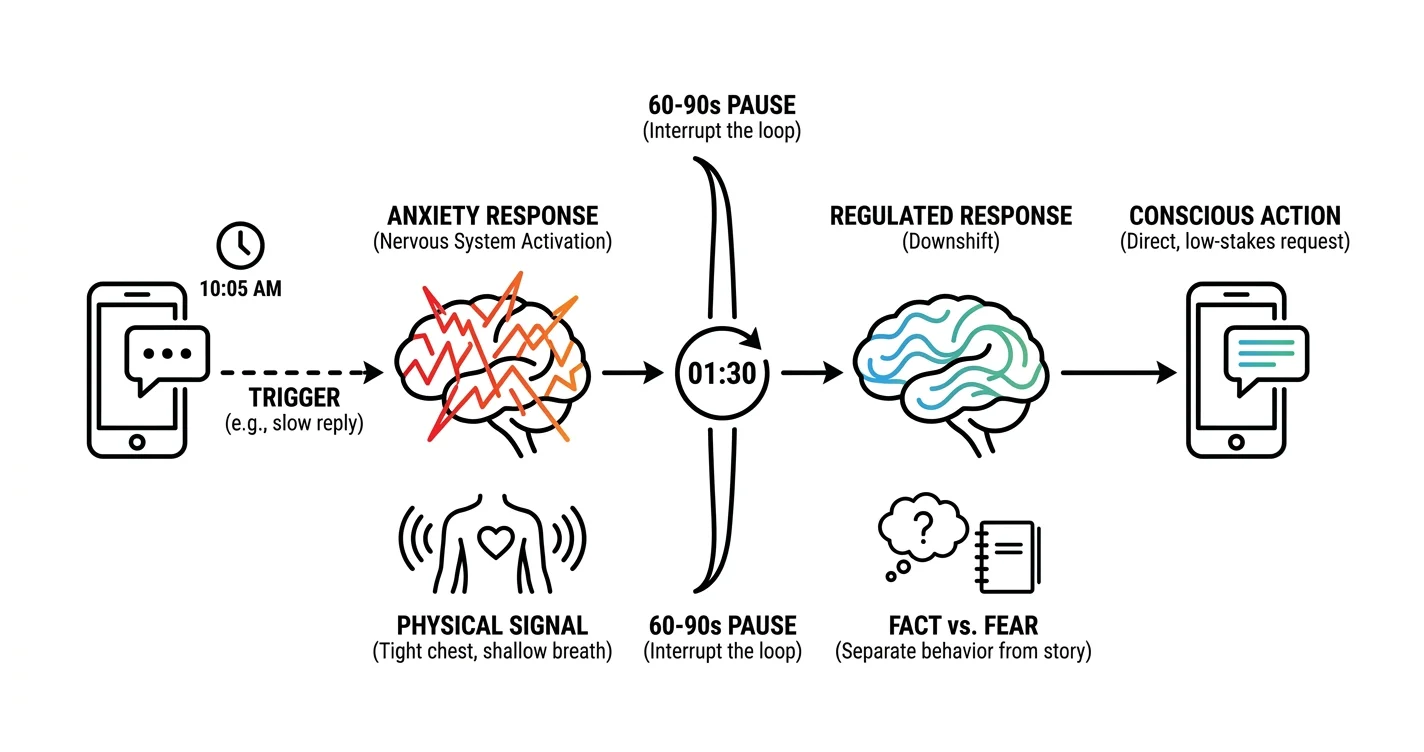
Anxious attachment in dating means your nervous system reads normal relationship uncertainty as danger, which triggers protest behaviors: over-texting, seeking reassurance, or spiraling after a slow reply. The fix isn't "stop caring" — it's building a 60-90 second pause between the trigger and the reaction, naming your specific triggers, and separating what a partner actually did from the fear story you built around it. Lovon's anxious attachment guide breaks down the underlying signs in more depth; verdict: manageable with consistent practice, not something you can think your way out of overnight.
Why this matters
Anxious attachment in dating isn't a personality flaw — it's a nervous system pattern usually shaped by inconsistent caregiving or past relationships where affection came and went unpredictably. Left unaddressed, it repeats: you pick partners who are hot-and-cold, or you turn a secure partner anxious through constant reassurance-seeking. The pattern peaks hardest in the first 90 days of dating, when the relationship has no established rhythm yet and every gap in contact feels like proof of rejection.
The good news: this is one of the more workable attachment patterns because the triggers are specific and repeatable. If you can name them, you can interrupt them before they run the show.
What you'll need
- A notes app or journal you'll actually open (not a new one you'll abandon in a week)
- 10 minutes a day for the first two weeks to log triggers
- A timer on your phone for the pause technique in Step 4
- Honesty about your last two or three dating patterns — this only works if you're specific, not general
- Optionally, a private space to talk through spirals out loud; some people use an AI relationship coach built for anxious attachment between dates when there's no one else to process with at 11pm
The steps
1. Log your protest behaviors for one week
Protest behavior is the term for what anxious attachment does under stress: double-texting, checking their social media, rereading old messages for hidden meaning, or picking a fight to force a reaction. Write down every time you catch yourself doing one of these in 2026's first weeks of a new dating situation, and note what happened right before it. Most people find the same two or three triggers repeat — a slow reply, an unanswered call, or a vague plan with no set time. Common mistake: logging the feeling ("I felt anxious") instead of the behavior ("I texted three times in 40 minutes") — the behavior is what you can actually change.
2. Track the body signal before the thought
Anxious attachment shows up in the body first — tight chest, shallow breathing, a hot flush — usually 5 to 15 seconds before the anxious thought fully forms. Once you can name the physical signal, it becomes your early warning system instead of something that ambushes you. Sit with the sensation for 10 seconds without acting on it; this alone breaks the automatic loop for a lot of people. Common mistake: trying to think your way calm instead of noticing the body first — the thought spiral is usually downstream of the physical activation.
3. Name your top three trigger situations specifically
Vague triggers ("when he pulls away") are hard to act on. Specific triggers ("when he doesn't reply within 4 hours after we made weekend plans") are actionable. Pull the three most common triggers from your week-one log and write the specific condition, not the general theme. This turns an overwhelming pattern into three concrete, nameable moments you can prepare for.
4. Build a 90-second pause before you respond
When a trigger hits, set a timer for 90 seconds before you send a message, check a profile, or react. This isn't about suppressing the urge — it's giving your nervous system time to downshift out of the alarm state so the response comes from you, not the spike. Most anxious-attachment texts sent in the first 60 seconds after a trigger get reread later with regret. Expected outcome: after two to three weeks of practice, the pause starts happening automatically, without the timer.
5. Create a self-soothing routine you use before reaching out
Before you send the reassurance-seeking text, run through a short grounding routine: three slow breaths, naming five things you can see, or a two-minute walk. The goal is regulating the nervous system first so the message you eventually send — if you still want to — comes from a calm state, not a panicked one. Common mistake: skipping this step when the urge feels "too strong to interrupt" — that's exactly when it matters most.
6. Separate the partner's actual behavior from your fear narrative
Write two columns: what the partner literally did ("didn't text back for 6 hours") and what story you built around it ("they're losing interest"). Anxious attachment consistently fills silence with worst-case narrative. Holding the two side by side, on paper, makes the gap between fact and fear visible — and often the fact alone doesn't justify the spiral. This is the single highest-leverage habit in the whole list.
7. Make one direct, low-stakes request instead of testing
Testing behavior — going quiet to see if they notice, or picking a small fight to gauge their reaction — erodes trust on both sides. Replace it with one direct ask: "Can we set a rough time to talk today?" instead of silently waiting to see if they reach out first. A direct request gives you real information; a test only gives you your own anxiety reflected back. Expected outcome: even if the answer isn't perfect, you get actual data instead of a guessing game.
Troubleshooting
- You did the pause but still sent the spiral text. That's normal for the first few weeks — the pause is a skill, not a switch. Log it anyway; the data still counts.
- Your partner is genuinely inconsistent, not just triggering your pattern. If the hot-and-cold behavior repeats across weeks with no explanation, that's information about them, not just your attachment style — read the pursuer-withdrawer pattern breakdown to tell the two apart.
- You feel calm one day and spiral the next with the same trigger. Attachment activation is state-dependent — poor sleep, hunger, and stress from other parts of life lower your threshold. Track those variables alongside your trigger log.
- The 90-second pause feels impossible in the moment. Start with 20 seconds and build up. A short pause you actually use beats a long pause you skip.
- You're doing all this alone and it's exhausting. That's common — anxious attachment work is easier with an outside perspective, even a non-clinical one, to catch patterns you can't see from inside the spiral.
- Nothing changes even after weeks of logging. That usually means the trigger list from Step 3 is still too vague — go back and get more specific about the exact condition, not the general feeling.
Tools and resources
- A trigger log (notes app or paper) — the single most useful tool on this list
- Attachment style quiz if you're not sure anxious attachment is even your primary pattern
- A grounding routine you can do in under two minutes (breathing, naming objects, or a short walk)
- Lovon's AI voice sessions for talking through a spiral in real time when it's 1am and no one else is awake
- A written "fact vs. fear" template you can reuse for every new trigger
What to do next
Once the pattern feels more visible than automatic, the next layer is understanding what secure attachment actually looks like day to day, so you know what you're building toward instead of just what you're moving away from.
FAQ
What is anxious attachment in dating? It's a pattern where uncertainty in a relationship — a slow reply, a vague plan, unclear intentions — triggers a stress response that leads to reassurance-seeking, over-texting, or spiraling thoughts. It's rooted in nervous system conditioning, not a character flaw.
Is anxious attachment the same as being needy? No. Needy is a judgment; anxious attachment is a describable pattern with specific triggers and a body-based stress response. The difference matters because a pattern can be worked with, while a label just feels like blame.
Can anxious attachment turn secure with practice? Yes, attachment research generally supports this — consistent new experiences and self-regulation practice can shift the pattern toward secure over time, though it isn't instant and usually takes months, not days.
How do you know if a partner is genuinely inconsistent versus you're just anxious? Look at the pattern across several weeks, not one bad night. Repeated hot-and-cold behavior with no explanation is a partner issue; a single delayed reply that spirals into panic is more likely the attachment pattern activating.
Why do I test partners instead of just asking directly? Testing feels safer because it doesn't expose the vulnerability of a direct question, but it also gives you unreliable data. A direct, low-stakes request gets you real information faster than any test.
How long does it take to notice a change in anxious attachment patterns? Most people who track triggers daily notice the pause getting easier within two to three weeks, with more durable shifts building over several months into 2026 and beyond.
Does anxious attachment only show up in romantic relationships? No — it can appear in friendships and family dynamics too, but dating tends to intensify it because the relationship has less established history and more ambiguity early on.
Is therapy required to work on anxious attachment? Not required, but outside perspective helps a lot. Some people use licensed therapy, others use structured self-work plus tools like an AI voice conversation for processing spirals in the moment, especially outside office hours.
One last thing
The protest behavior isn't the problem — it's the smoke, not the fire. The fire is the belief that if you don't act on the anxiety immediately, the relationship will disappear. Once you can sit with that belief for even 90 seconds without acting on it, the whole pattern loosens its grip faster than most people expect.
Related guides
How AI Support Helps You Heal
AI emotional support isn't about replacing human connection — it's about filling the gaps. The moments when you need to talk at 2 AM, when you don't want to burden your friends again, or when you simply need someone to listen without judgment.
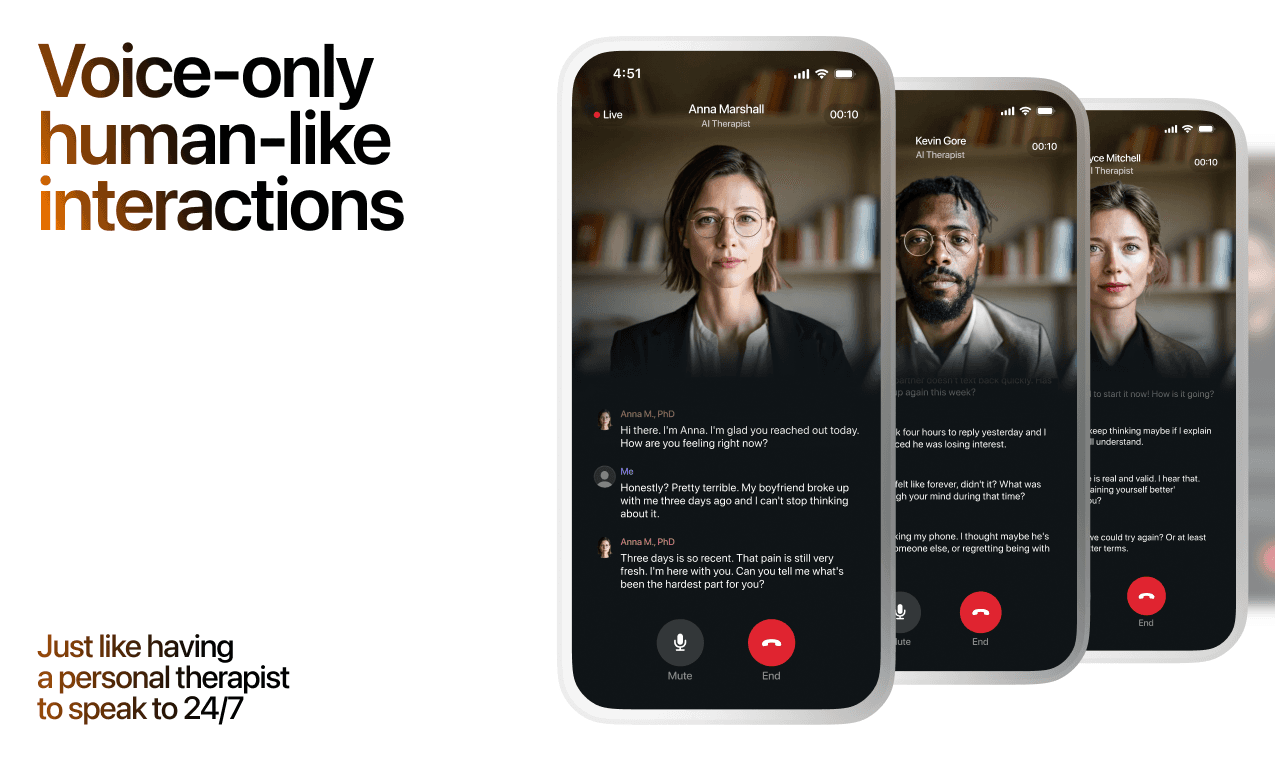
Here's what happens in a typical Lovon session:
You share what's on your mind
There's no script, no intake form, no waiting room. You speak or type whatever you're feeling — in your own words, at your own pace.
Lovon validates and explores
Using frameworks from CBT (Cognitive Behavioral Therapy) and motivational interviewing, Lovon acknowledges your feelings first, then gently helps you explore them. No dismissive "just move on" advice.
You build coping skills together
Lovon doesn't just listen — it actively works with you on evidence-based techniques: thought reframing, urge surfing, behavioral experiments, and more.
What a Session with Lovon Looks Like
When to Seek Professional Help
AI support is a valuable tool, but it's not a replacement for professional care. Please consider reaching out to a licensed therapist if you experience any of the following:
- Persistent thoughts of self-harm or suicide
- Inability to perform daily activities (work, eating, sleeping) for more than 2 weeks
- Turning to alcohol or substances to cope
- Intense anger or desire to harm your ex-partner
- Complete emotional numbness that doesn't improve over time
Crisis Resources (US): If you're in immediate danger, call 988 (Suicide & Crisis Lifeline) or text HOME to 741741 (Crisis Text Line). Available 24/7, free, and confidential.
Outside the US? Find a crisis line in your country
Ready to Start?
Your healing journey can begin right now
A 7-day trial. No judgment. Just a safe space to process what you're going through.
Frequently Asked Questions
Is Lovon a replacement for a real therapist?
Is my conversation with Lovon AI private?
How is Lovon different from ChatGPT for emotional support?
Can I use Lovon if I'm already seeing a therapist?
Can I try Lovon before subscribing?
About the Author
The Lovon Editorial Team
Mental Health & Wellness Content Team
The Lovon Editorial Team develops mental health and wellness content designed to make psychological concepts accessible and actionable. Our goal is to bridge the gap between clinical research and everyday life - helping you understand why your mind works the way it does and what you can do about it....
Related articles
- How to Heal Anxious Attachment on Your Own (2026)
Step-by-step guide to healing anxious attachment solo in 2026: triggers, nervous system work, boundaries, and tools that…
- Anxious Attachment Triggers: How to Defuse Them (2026)
Anxious attachment triggers explained: a 6-step sequence to name, regulate, and defuse them in 2026, plus…
- Break the Anxious Attachment Cycle: 2026 Step-by-Step Guide
Break the anxious attachment cycle in 2026 with 7 concrete steps, troubleshooting fixes, and tools for the moments…
- Anxious Attachment and Love Avoidant: Break the Cycle 2026
Anxious attachment and love avoidant partners create a push-pull cycle. Learn the pattern, 7 steps to break it, and…
See also
Quizzes
- Do They Like Me? 12-Question Quiz
Read the signs in 2 minutes.
- Why Am I Single? 12-Question Quiz With 5 Real Reasons
Find which of five reasons is actually yours.
Free tools
- First Date Questions Worth Asking
A chat for the hour before a first date. Say how you met, what you already know about them, and what you are worried…
- The 'What Are We?' Conversation, Planned in One Go
A chat for the conversation you keep rehearsing and not having. Say how long it has been and what you want it to be, and…
From the wiki
- How long does it take to fall in love?
There is no fixed timeline. Some people feel it within two or three weeks, many land somewhere between two and four…
Disclaimer: This article is for informational purposes only and does not constitute medical advice, diagnosis, or treatment. Always seek the advice of your physician or other qualified health provider with any questions you may have regarding a medical condition. If you are in crisis or think you may have an emergency, call 988 (Suicide & Crisis Lifeline) or go to the nearest emergency room. Outside the US? Find a crisis line in your country.