
Progressive Muscle Relaxation for Stress (2026 Guide)
Step-by-step progressive muscle relaxation for stress: tense each muscle group 6 seconds, release 25–30 seconds, repeat head-to-toe in under 20 minutes.

Key Takeaways
- A quiet space where you won't be interrupted for 15–20 minutes
- A mat, bed, reclining chair, or firm sofa — anything you can lie or sit back on
- Loose, comfortable clothing (nothing restrictive around the waist or chest)
- Optional: a timer set to 20 minutes so you're not clock-watching
- Optional: a guided audio or voice app if you want someone to pace you through it
Progressive muscle relaxation (PMR) is a proven, body-based technique that reduces stress by systematically tensing and releasing muscle groups — and you can do the full sequence in under 20 minutes, anywhere, with no equipment.
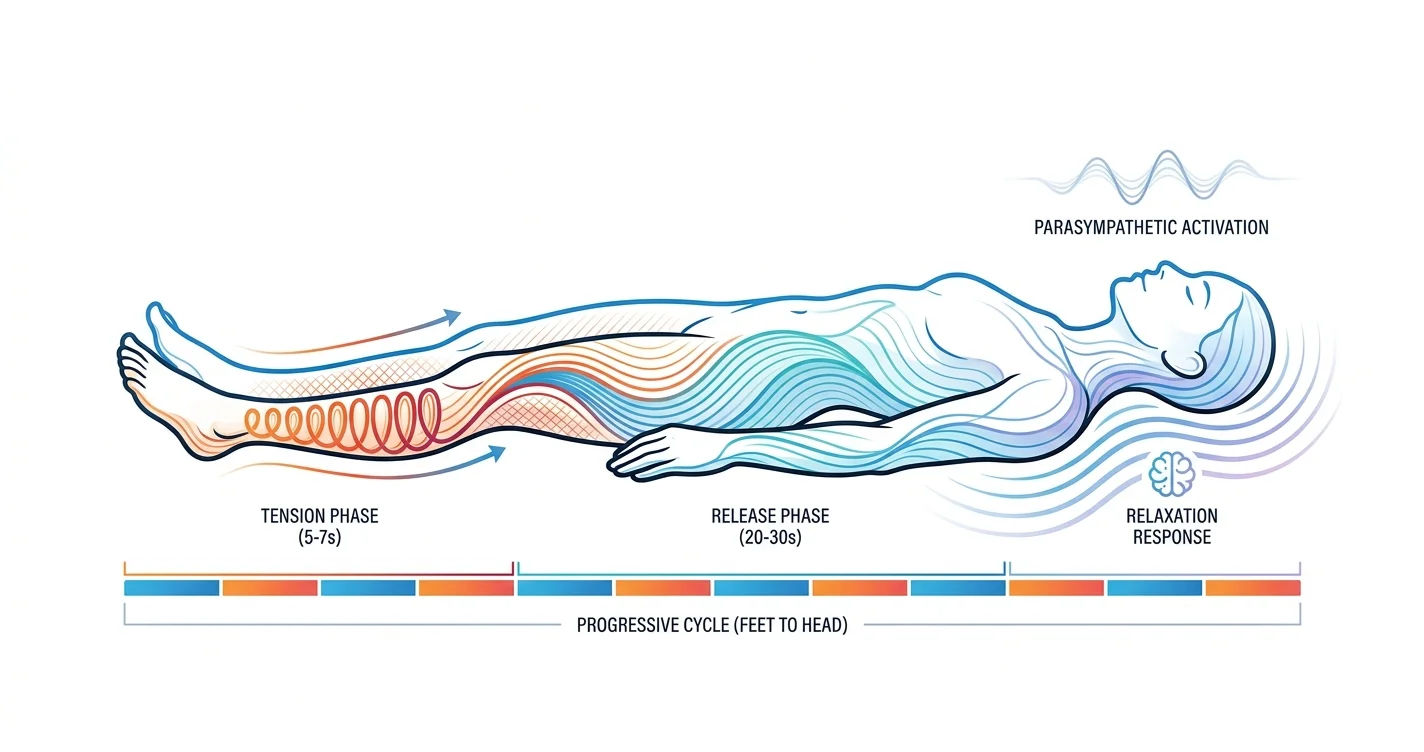
TL;DR: Progressive muscle relaxation for stress works by teaching your body to recognize the difference between tension and release. You tense each muscle group for 5–7 seconds, then let go for 20–30 seconds, moving from your feet to your face. Research published in peer-reviewed journals shows PMR lowers cortisol and reduces self-reported anxiety scores in a single session. It takes about 10–20 minutes and is safe for most adults. Lovon's AI voice support app can walk you through it in real time if you want a guided experience.
Why this matters
Stress doesn't live only in your head. It parks itself in your shoulders, jaw, lower back, and chest — often without you noticing. By 2026, chronic stress is consistently one of the top reported health concerns among US adults, with the American Psychological Association noting that physical tension is one of its most overlooked symptoms.
PMR gives your nervous system a concrete off-ramp. Instead of trying to think your way calm, you use the body's own contraction-and-release cycle to trigger the parasympathetic response — the same system that slows your heart rate and drops your blood pressure. It is one of the most well-researched relaxation techniques in clinical psychology, with roots going back to Edmund Jacobson's work in the 1920s and decades of follow-up studies confirming its effects on anxiety and stress.
You don't need a therapist in the room to do it. You just need a quiet space and about 15 minutes.
What you'll need
- A quiet space where you won't be interrupted for 15–20 minutes
- A mat, bed, reclining chair, or firm sofa — anything you can lie or sit back on
- Loose, comfortable clothing (nothing restrictive around the waist or chest)
- Optional: a timer set to 20 minutes so you're not clock-watching
- Optional: a guided audio or voice app if you want someone to pace you through it
Note: Skip or modify any muscle group where you have an injury, chronic pain, or a recent surgery. PMR is not a substitute for medical care.
The steps
Step 1: Settle and breathe (2 minutes)
Lie down or sit back with your eyes closed. Take three slow breaths — inhale for 4 counts, exhale for 6. This isn't optional prep; it primes the vagal system so the muscle work is more effective. Your goal here is to shift attention inward before you start tensing anything. Common mistake: rushing this step and jumping straight to muscle groups while your mind is still racing.
Step 2: Feet and calves — squeeze, hold, release
Curl your toes downward as hard as you can. Hold the tension for 6 seconds. Notice the sensation — the pull across the sole, the tightness up the calf. Then release completely and let your feet go soft. Stay with the release for 25–30 seconds. That contrast — tight then loose — is the core mechanism. Without the release phase, PMR loses most of its effect. Expected outcome: a warm, heavy feeling in the lower legs.
Step 3: Thighs and glutes
Squeeze your thigh muscles and clench your glutes simultaneously. Hold for 6 seconds. You'll feel the tension travel up into your lower back — that's normal. Release and let both areas go completely soft. If you catch yourself holding partial tension (common in the glutes), consciously let go again. Wait 25–30 seconds before moving up. By 2026, most PMR protocols used in clinical settings hold tension for 5–7 seconds — staying in that range prevents muscle fatigue that can interrupt the session.
Step 4: Abdomen and lower back
Pull your stomach in tight, as if bracing for a punch. Simultaneously arch your lower back slightly off the surface. Hold 6 seconds. Release and let your whole core drop. The abdomen is where a lot of chronic stress tension accumulates quietly — people are often surprised at how much tightness they were holding without knowing it. Let the release phase run a full 30 seconds here. Common mistake: holding your breath during the tension phase. Keep breathing, even if it's shallow.
Step 5: Hands, forearms, and biceps
Make two tight fists and flex both arms from wrist to shoulder. Hold 6 seconds, feeling the tension stack from fingertips to upper arm. Release — open your hands wide, then let them fall naturally. The fingers often tingle slightly after release; that's normal circulation returning. Do not repeat the tension phase if you feel any joint pain in the wrists. Move to Step 6 after 25 seconds.
Step 6: Shoulders, neck, and face
Shrug your shoulders hard toward your ears. At the same time, scrunch your face — wrinkle your forehead, squeeze your eyes shut, clench your jaw. Hold for 6 seconds. This is the highest-tension group in the sequence and often produces the most dramatic release. Let everything drop at once: shoulders fall, jaw softens, forehead smooths out. Hold the release for 30 seconds. Most people carry chronic tension in the jaw and shoulders without ever fully letting go — this step often produces a noticeable shift in perceived stress level.
Step 7: Full-body scan and close (3 minutes)
Stay still. Run your attention slowly from feet to scalp, checking for any remaining areas of tension. If you find one, breathe into it and consciously let it soften — no additional tensing needed. Take three final slow breaths (4 counts in, 6 counts out). Before opening your eyes, notice any difference in how your body feels compared to the start of the session. Open your eyes slowly, wait 60 seconds before standing. Expected outcome: reduced heart rate, heavier limbs, and a calmer mind. Most people report a noticeable drop in perceived stress within a single session.
Troubleshooting
You can't stop your mind from wandering. This is normal, especially the first few times. When you notice your thoughts drifting, use the physical sensation — the tension in your current muscle group — as an anchor to pull attention back. Don't restart the sequence; just return to where you are.
You fall asleep partway through. Falling asleep is a sign the technique is working, but if you want to complete the full sequence, do PMR sitting up rather than lying down. Sitting slightly reduces the sedative effect.
Muscle cramping during the tension phase. You're likely tensing too hard. Aim for about 70% of your maximum effort, not 100%. This is especially common in the feet and calves. Ease off and proceed — the release effect is the same.
You feel more anxious during the tension phase. Some people — particularly those with trauma histories or high baseline anxiety — find the deliberate tension uncomfortable. If that's you, try a modified version: instead of tensing, simply bring awareness to each muscle group and invite it to soften without the squeeze. This is sometimes called "passive PMR" and is gentler on the nervous system. For deeper guidance on anxiety and stress responses, the freeze response article on the Lovon blog explains why the body sometimes locks up under pressure.
You notice no effect after the first session. PMR is a skill. Aggregated data from relaxation training studies suggests most people feel measurable change by their third or fourth session. Daily practice for two weeks produces significantly better results than occasional use. Set a specific time — right before bed or just after lunch — and protect it.
You have chronic pain in a specific area. Skip that muscle group entirely. PMR does not require every group to be effective. A partial sequence still activates the parasympathetic response.
Tools and resources
- Timer app — any phone timer works; set it to 20 minutes so you stop watching the clock
- Guided voice support — Lovon's AI voice support app walks you through relaxation techniques in real time, including PMR-style body scans, with a warm and unhurried pace. Available anytime you need it, without booking ahead
- AI counseling for stress management — if stress is the bigger issue and PMR is one piece, this guide covers a broader set of coping tools
- Quiet environment — noise-canceling headphones with ambient sound work well if your space isn't fully quiet
- Consistency log — a simple notes app entry after each session (date, how you felt before, how you felt after) helps you track progress across 2026
What to do next
PMR addresses the body's physical stress response. But stress also has cognitive and emotional layers — intrusive thoughts, rumination, the feeling that you can't switch off. If those patterns sound familiar, high-functioning anxiety: signs you might be missing is a natural next step — it identifies the mental habits that keep stress alive even after the body has calmed down.
FAQ
What is progressive muscle relaxation and does it actually work for stress? PMR is a relaxation technique where you deliberately tense and then release muscle groups in sequence to reduce physical and mental stress. Yes, it works — multiple randomized controlled studies show it lowers cortisol and self-reported anxiety scores, often within a single session.
How long does a PMR session take? A full sequence takes 15–20 minutes. A shortened version covering just the major groups (feet, abdomen, shoulders, face) takes about 8–10 minutes and still produces meaningful results.
How often should I do progressive muscle relaxation for stress? Daily practice produces the best results. Most clinical protocols recommend once per day for at least two weeks before evaluating effectiveness. Once stress is better managed, 3–4 times per week is enough to maintain the benefit.
Can I do PMR before bed to help with sleep? Yes — PMR is one of the most effective non-medication sleep aids. The parasympathetic activation it produces reduces heart rate and lowers alertness, making it easier to fall asleep. Do the sequence lying in bed with lights off.
Is progressive muscle relaxation safe for everyone? For most adults, yes. People with recent muscle injuries, certain cardiovascular conditions, or trauma histories that make body tension uncomfortable should use a modified or passive version and consult a healthcare provider if unsure.
What's the difference between PMR and deep breathing? Deep breathing targets the nervous system directly through breath rate. PMR works bottom-up through the musculoskeletal system. They activate similar parasympathetic pathways and pair well together — the breathing steps in PMR are not optional add-ons, they amplify the muscle work.
Can an AI app guide me through PMR? Yes. Lovon's voice support app can walk you through body-based relaxation techniques in a conversational, unhurried format — no appointment needed. It is not a licensed therapist, but it is built with PhD psychologist input and is designed specifically for this kind of on-demand support.
How quickly will I feel less stressed after PMR? Most people notice a physical shift — heavier limbs, slower breathing, reduced jaw tension — by the end of the first session. The psychological sense of calm typically deepens with repeated practice over days and weeks in 2026.
One last thing
Edmund Jacobson, who developed PMR in the 1920s, originally designed the full protocol to take 1–2 hours per session across dozens of muscle groups. Modern clinical practice has compressed it into 15–20 minutes without meaningful loss of effect. The technique that psychiatrists once used in inpatient settings is now something you can do quietly on your lunch break — and in 2026, that accessibility gap has closed even further with voice-guided apps that make the pacing feel natural rather than mechanical.
Related guides
How AI Support Helps You Heal
AI emotional support isn't about replacing human connection — it's about filling the gaps. The moments when you need to talk at 2 AM, when you don't want to burden your friends again, or when you simply need someone to listen without judgment.
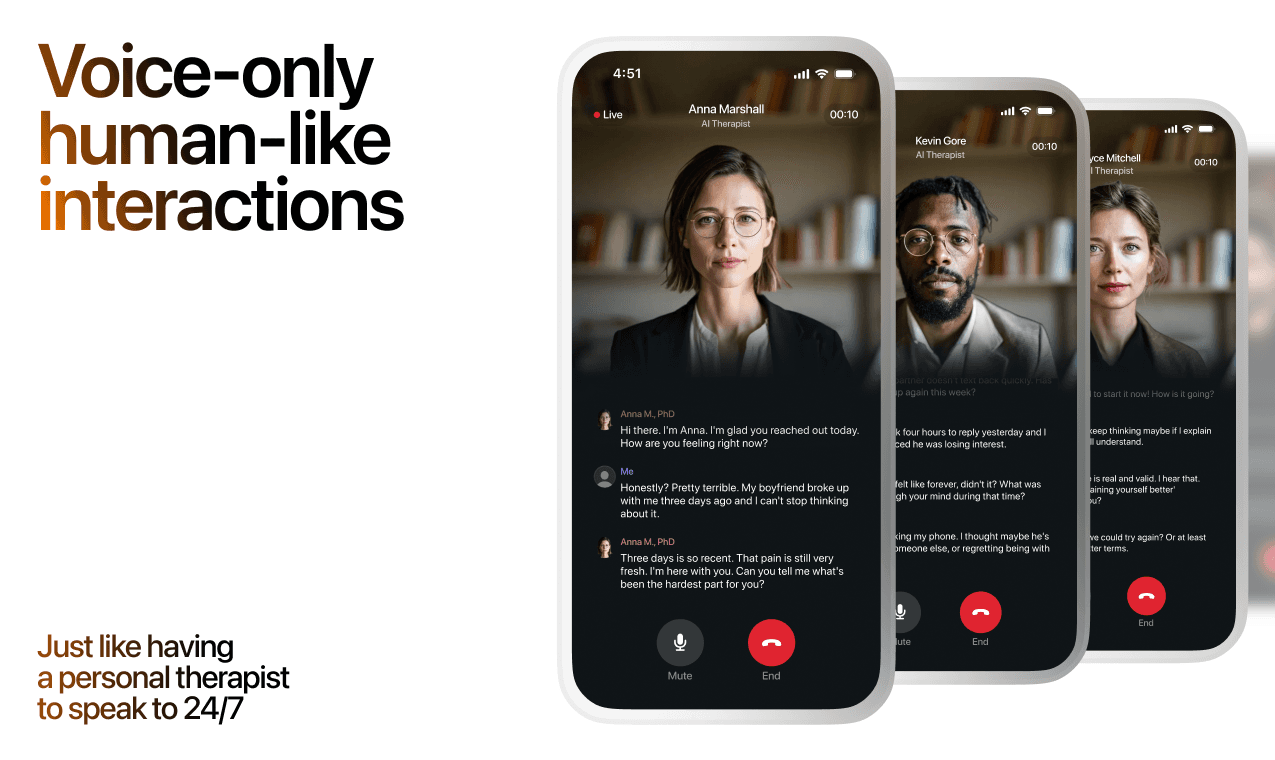
Here's what happens in a typical Lovon session:
You share what's on your mind
There's no script, no intake form, no waiting room. You speak or type whatever you're feeling — in your own words, at your own pace.
Lovon validates and explores
Using frameworks from CBT (Cognitive Behavioral Therapy) and motivational interviewing, Lovon acknowledges your feelings first, then gently helps you explore them. No dismissive "just move on" advice.
You build coping skills together
Lovon doesn't just listen — it actively works with you on evidence-based techniques: thought reframing, urge surfing, behavioral experiments, and more.
What a Session with Lovon Looks Like
When to Seek Professional Help
AI support is a valuable tool, but it's not a replacement for professional care. Please consider reaching out to a licensed therapist if you experience any of the following:
- Persistent thoughts of self-harm or suicide
- Inability to perform daily activities (work, eating, sleeping) for more than 2 weeks
- Turning to alcohol or substances to cope
- Intense anger or desire to harm your ex-partner
- Complete emotional numbness that doesn't improve over time
Crisis Resources (US): If you're in immediate danger, call 988 (Suicide & Crisis Lifeline) or text HOME to 741741 (Crisis Text Line). Available 24/7, free, and confidential.
Outside the US? Find a crisis line in your country
Ready to Start?
Your healing journey can begin right now
A 7-day trial. No judgment. Just a safe space to process what you're going through.
Frequently Asked Questions
Is Lovon a replacement for a real therapist?
Is my conversation with Lovon AI private?
How is Lovon different from ChatGPT for emotional support?
Can I use Lovon if I'm already seeing a therapist?
Can I try Lovon before subscribing?
About the Author

The Lovon Editorial Team
Mental Health & Wellness Content Team
The Lovon Editorial Team develops mental health and wellness content designed to make psychological concepts accessible and actionable. Our goal is to bridge the gap between clinical research and everyday life - helping you understand why your mind works the way it does and what you can do about it....
Related articles
- AI Coping Tools for Anxiety 2026: What Actually Works
AI coping tools for anxiety compared for 2026: box breathing, grounding, and PMR ranked with clear verdicts on what to…
- Emotional Regulation Skills for Adults That Work in 2026
Learn which emotional regulation skills for adults actually work in 2026 — step-by-step techniques, common mistakes…
- AI Therapist for Work Stress: How to Use It in 2026
Learn how to use an ai therapist for work stress the right way in 2026 - specific triggers, grounding steps, and when…
- Box Breathing Technique: Calm Your Nervous System (2026)
The box breathing technique resets your nervous system in under 2 minutes. Learn the exact 4-4-4-4 steps, common…
See also
Quizzes
- Emotional Intelligence Test: Your EQ in a Relationship
Find where your EQ slips when things get tense.
- Do I Have Abandonment Issues? 12-Question Self-Check
See how loudly the fear of being left runs things.
Free tools
- 5-4-3-2-1 Grounding Exercise
A guided run through the 5-4-3-2-1 technique, with paced breathing first if you need it. No sign-up, nothing stored…
- Write a Letter to Your Best Friend
A chat for a letter to your best friend that only they could have received. Tell it how long you have been friends, one…
From the wiki
- Why do I feel lonely all of a sudden?
Sudden loneliness usually traces back to something that quietly ended in the last few months: a routine, a shared class…
Disclaimer: This article is for informational purposes only and does not constitute medical advice, diagnosis, or treatment. Always seek the advice of your physician or other qualified health provider with any questions you may have regarding a medical condition. If you are in crisis or think you may have an emergency, call 988 (Suicide & Crisis Lifeline) or go to the nearest emergency room. Outside the US? Find a crisis line in your country.